Download Free Sample
Kindly complete the form below to receive a free sample of this Report
Germany Peripheral Neuropathy Market Research Report: Size, Share, Trend Analysis By Types (Diabetic Peripheral Neuropathy, Chemotherapy-induced Peripheral Neuropathy, Idiopathic Peripheral Neuropathy, HIV/AIDS Associated Peripheral Neuropathy), By Treatment (Pharmacological Therapies, Non-Pharmacological Therapies, Others), and By End-user (Hospitals and Clinics, Ambulatory Centers, Others) - Growth Outlook & Industry Forecast 2025 To 2035
As per Market Research Future analysis, the Germany Peripheral Neuropathy Market size was estimated at 176.4 USD Million in 2024. The Germany peripheral neuropathy market is projected to grow from 189.84 USD Million in 2025 to 395.5 USD Million by 2035, exhibiting a compound annual growth rate (CAGR) of 7.6% during the forecast period 2025 - 2035
The Germany peripheral neuropathy market is experiencing notable growth driven by increasing diabetes prevalence and advancements in treatment technologies.
| 2024 Market Size | 176.4 (USD Million) |
| 2035 Market Size | 395.5 (USD Million) |
| CAGR (2025 - 2035) | 7.62% |
Pfizer Inc (US), Johnson & Johnson (US), Boehringer Ingelheim (DE), AstraZeneca (GB), Novartis AG (CH), Eli Lilly and Company (US), Teva Pharmaceutical Industries Ltd (IL), Sanofi (FR), Mylan N.V. (US)
Our Impact
Enabled $4.3B Revenue Impact for Fortune 500 and Leading Multinationals
Partnering with 2000+ Global Organizations Each Year
30K+ Citations by Top-Tier Firms in the Industry
The Germany Peripheral Neuropathy Market is currently experiencing notable developments, driven by an increasing prevalence of neuropathic conditions and a growing awareness of treatment options. In Germany, the rise in diabetes cases has been a significant contributor to the demand for effective therapies, as diabetic neuropathy remains a common complication. Furthermore, advancements in medical technology and pharmaceuticals are enhancing the landscape of treatment modalities available to patients. This evolution is likely to foster a more competitive environment among healthcare providers, as they strive to offer innovative solutions tailored to individual patient needs. Moreover, the regulatory framework in Germany appears to support the growth of the peripheral neuropathy market. Initiatives aimed at improving patient access to therapies and promoting research into novel treatment options are becoming increasingly prevalent. The collaboration between healthcare professionals, researchers, and industry stakeholders is expected to yield promising results, potentially leading to breakthroughs in understanding and managing peripheral neuropathy. As the market continues to evolve, it may witness a shift towards personalized medicine, where treatments are customized based on genetic and environmental factors, thereby enhancing efficacy and patient outcomes.
The increasing number of diabetes cases in Germany is significantly impacting the peripheral neuropathy market. As diabetes is a leading cause of neuropathic complications, the demand for effective management strategies is on the rise. This trend is likely to drive innovation in treatment options, as healthcare providers seek to address the specific needs of diabetic patients.
Recent advancements in medical technology are transforming the peripheral neuropathy market. Innovative therapies, including neuromodulation techniques and regenerative medicine, are emerging as potential solutions for patients. These developments may enhance treatment efficacy and improve the quality of life for individuals suffering from neuropathic pain.
There is a growing emphasis on personalized medicine within the peripheral neuropathy market. Tailoring treatments to individual patient profiles, including genetic predispositions and lifestyle factors, appears to be a promising approach. This trend may lead to more effective management strategies and improved patient outcomes in the long term.
Germany's healthcare expenditure has been on an upward trajectory, which serves as a significant driver for the peripheral neuropathy market. The country allocates a substantial portion of its GDP to healthcare, with spending reaching approximately 11.7% in recent years. This financial commitment facilitates access to advanced medical treatments and technologies for neuropathy management. As healthcare budgets increase, there is a corresponding rise in the availability of innovative therapies and diagnostic tools within the peripheral neuropathy market. This trend suggests that patients will have greater access to effective treatments, thereby potentially improving their quality of life and driving market growth.
The peripheral neuropathy market is witnessing the emergence of novel therapeutics, which is a pivotal driver of growth. Recent advancements in pharmacological research have led to the development of new medications that target specific neuropathic pain pathways. These innovative treatments are designed to provide more effective relief with fewer side effects compared to traditional therapies. The introduction of such therapeutics is likely to enhance patient outcomes and satisfaction, thereby attracting more individuals to seek treatment. The peripheral neuropathy market must continue to invest in research and development to keep pace with these advancements and meet the evolving needs of patients.
There is a growing awareness regarding peripheral neuropathy in Germany, which is significantly impacting the market. Enhanced education among healthcare professionals and the public has led to improved diagnosis rates. Recent studies suggest that the diagnosis of neuropathic conditions has increased by approximately 30% over the past five years. This heightened awareness is crucial, as early detection can lead to better management and treatment outcomes. The peripheral neuropathy market is responding by developing more targeted therapies and educational programs aimed at both patients and healthcare providers. As awareness continues to rise, the market is likely to expand, driven by the need for effective treatment options and comprehensive care.
The integration of digital health solutions is transforming the peripheral neuropathy market in Germany. Telemedicine, mobile health applications, and wearable devices are becoming increasingly prevalent, offering patients new ways to manage their conditions. These technologies facilitate remote monitoring and provide valuable data for healthcare providers, enhancing treatment personalization. Recent surveys indicate that approximately 40% of patients with chronic conditions, including neuropathy, are utilizing digital health tools. This trend suggests a shift towards more patient-centered care, which is likely to drive demand for innovative solutions within the peripheral neuropathy market. As digital health continues to evolve, it may play a crucial role in improving patient engagement and treatment adherence.
The aging population in Germany is a critical driver for the peripheral neuropathy market. As individuals age, the risk of developing neuropathic conditions increases significantly. Data indicates that approximately 20% of the elderly population experiences some form of neuropathy, which correlates with the rising number of individuals aged 65 and older. This demographic shift is expected to continue, with projections suggesting that by 2030, over 25% of the population will be in this age group. Consequently, the demand for effective treatments and management strategies for peripheral neuropathy is likely to rise, thereby propelling the market forward. The peripheral neuropathy market must adapt to cater to this growing segment, focusing on innovative therapies and supportive care tailored to the needs of older adults.
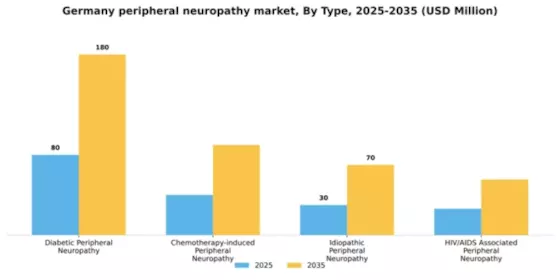
In the analysis of the type segment within the Germany peripheral neuropathy market, Diabetic Peripheral Neuropathy holds the largest market share, reflecting its high prevalence owing to the rising rates of diabetes in the region. This is followed by Chemotherapy-induced Peripheral Neuropathy, which, while smaller in overall share, is gaining attention due to increasing cancer treatment incidences and subsequent side-effects associated with chemotherapy. Growth trends show that Chemotherapy-induced Peripheral Neuropathy is emerging as the fastest-growing segment, driven by enhanced cancer treatment regimens and increased awareness of neuropathic side effects. Meanwhile, Diabetic Peripheral Neuropathy continues to expand, supported by the growing diabetic population and ongoing advancements in treatment options. Awareness campaigns and improved diagnostic tools are crucial drivers propelling this segment's growth.
Diabetic Peripheral Neuropathy (Dominant) vs. Chemotherapy-induced Peripheral Neuropathy (Emerging)
Diabetic Peripheral Neuropathy is the dominant segment within the Germany peripheral neuropathy market, characterized by its association with diabetes-related complications. The widespread occurrence of type 2 diabetes contributes significantly to its market strength, as healthcare providers focus on managing diabetic complications. This segment has well-established treatment protocols and a range of options available for patients. In contrast, Chemotherapy-induced Peripheral Neuropathy, while currently an emerging segment, is rapidly gaining recognition. The increasing number of cancer patients undergoing chemotherapy highlights the urgent need to address associated nerve damage, making the development of targeted therapies essential. Both segments require specialized healthcare approaches, but Diabetic Peripheral Neuropathy currently leads in market share due to established treatment pathways.
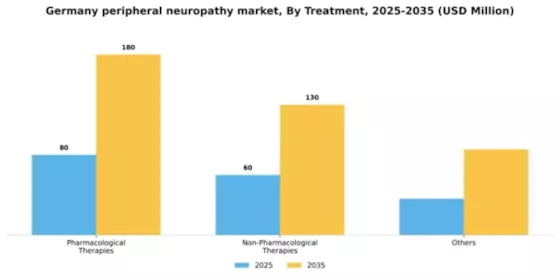
In the Germany peripheral neuropathy market, the distribution of market share is primarily led by pharmacological therapies, which account for a significant portion of the market. This segment is preferred by healthcare providers and patients alike due to the immediate relief it offers. Non-pharmacological therapies are gaining traction, representing a smaller share but showcasing notable growth as more patients seek holistic and alternative treatment options. Growth trends in this segment are driven by several factors, including an increase in peripheral neuropathy diagnoses and a growing awareness among patients about available treatment options. As the demand for more diverse treatment modalities increases, non-pharmacological therapies are expected to witness the fastest growth. This shift towards including non-invasive therapies reflects changing perceptions in treatment preferences, focusing on comprehensive care that addresses both symptoms and quality of life.
Pharmacological Therapies (Dominant) vs. Non-Pharmacological Therapies (Emerging)
Pharmacological therapies remain the dominant approach in the Germany peripheral neuropathy market, providing effective symptomatic relief for a majority of patients. These treatments often include various drug classes, such as anticonvulsants and analgesics, which are well-established in managing neuropathic pain. In contrast, non-pharmacological therapies, while emerging, are gaining acceptance as part of a broader treatment strategy. This segment encompasses therapies such as physical therapy, acupuncture, and dietary modifications, aiming to enhance patient well-being. The increasing endorsement of these alternatives by healthcare professionals is indicative of a shift toward integrated care models, further encouraging investment in and research on these innovative therapies.
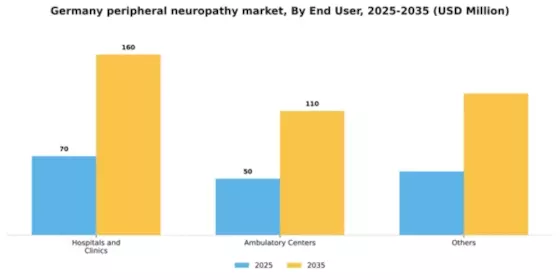
In the Germany peripheral neuropathy market, the segment distribution reveals that Hospitals and Clinics hold the largest share, driven by their established infrastructure and comprehensive patient care. Ambulatory Centers are emerging as a significant force, offering specialized services that cater to the increasing demand for outpatient care. The Others segment encompasses various facilities that contribute to the market but have a smaller overall share. Growth trends show that the Ambulatory Centers segment is rapidly gaining traction, influenced by a shift towards outpatient treatment options and advancements in medical technologies. The rising prevalence of peripheral neuropathy, along with an increased focus on patient-centric care, further propels this segment. Hospitals and Clinics, while currently dominant, are also adapting to these trends by incorporating more outpatient services to retain market relevance.
Hospitals and Clinics (Dominant) vs. Ambulatory Centers (Emerging)
The Hospitals and Clinics segment serves as the dominant player in the Germany peripheral neuropathy market, characterized by extensive resources, specialized medical staff, and comprehensive treatment options. This segment benefits from a robust referral network and established patient trust, allowing for high patient turnover and effective management of complex cases. On the other hand, Ambulatory Centers represent an emerging segment, marked by convenience and accessibility. These centers are designed for efficiency, focusing on diagnostic procedures and outpatient therapies. With the growing preference for outpatient services, they are becoming increasingly relevant, attracting patients seeking prompt attention and streamlined care, thus positioning themselves as a crucial component of the healthcare landscape.
Get more detailed insights about Germany Peripheral Neuropathy Market Request Free Sample
The peripheral neuropathy market in Germany is characterized by a competitive landscape that is increasingly shaped by innovation, strategic partnerships, and a focus on patient-centric solutions. Key players such as Pfizer Inc (US), Boehringer Ingelheim (DE), and Eli Lilly and Company (US) are actively engaged in developing advanced therapies and expanding their market presence. Pfizer Inc (US) has positioned itself as a leader in the market through its commitment to research and development, particularly in the area of neuropathic pain management. This focus on innovation is complemented by strategic collaborations aimed at enhancing treatment options for patients.The market structure appears moderately fragmented, with several companies vying for market share. Business tactics such as localizing manufacturing and optimizing supply chains are becoming increasingly important as companies seek to enhance operational efficiency and reduce costs. The collective influence of major players is significant, as they not only drive innovation but also set industry standards that smaller companies often follow.
In October Boehringer Ingelheim (DE) announced a partnership with a leading digital health company to develop a telehealth platform specifically for patients suffering from peripheral neuropathy. This strategic move is likely to enhance patient engagement and improve treatment adherence, reflecting a broader trend towards digital health solutions in the pharmaceutical industry. By integrating technology into patient care, Boehringer Ingelheim (DE) aims to differentiate itself in a competitive market.
In September Eli Lilly and Company (US) launched a new clinical trial for a novel neuropathic pain medication, which is expected to provide significant advancements in treatment efficacy. This initiative underscores the company's commitment to addressing unmet medical needs in the peripheral neuropathy space. The trial's outcomes could potentially reshape treatment protocols and solidify Eli Lilly's position as a key player in the market.
In August AstraZeneca (GB) expanded its portfolio by acquiring a biotech firm specializing in regenerative medicine for nerve repair. This acquisition is indicative of a strategic shift towards innovative therapies that address the underlying causes of peripheral neuropathy, rather than merely managing symptoms. Such moves are likely to enhance AstraZeneca's competitive edge and broaden its therapeutic offerings.
As of November the competitive trends in the peripheral neuropathy market are increasingly defined by digitalization, sustainability, and the integration of artificial intelligence (AI) in drug development. Strategic alliances are becoming more prevalent, as companies recognize the value of collaboration in driving innovation. The competitive landscape is shifting from traditional price-based competition to a focus on technological advancements, patient-centric solutions, and supply chain reliability. This evolution suggests that future differentiation will hinge on the ability to innovate and adapt to changing market dynamics.
Recent developments in the Germany Peripheral Neuropathy Market have centered around advancements in treatment options and ongoing research initiatives.
Notably, in August 2023, Teva Pharmaceuticals announced the launch of a new generic medication aimed at alleviating symptoms of peripheral neuropathy, reflecting the company's strategy to broaden its portfolio in this therapeutic area.
Growth in the market has also been influenced by a collaborative research effort involving Pfizer and UCB, focusing on novel therapies for diabetic neuropathy, which has gained traction over the past year.
In July 2023, AstraZeneca expanded its pipeline by acquiring a small biopharmaceutical firm that specializes in neurology, aiming to enhance its offerings in the peripheral neuropathy domain. The market is experiencing a positive trajectory, with an expected compounded annual growth rate over the next five years, driven by an aging population and increasing prevalence of diabetes in Germany.
Last year, in September 2022, Roche reinforced its commitment to peripheral neuropathy research through a partnership with NeuroMetrix to explore new diagnostic techniques. The German healthcare system continues to support innovative therapies, underscoring the significant potential for growth in the peripheral neuropathy market.
The Peripheral Neuropathy Market in Germany is projected to grow at a 7.62% CAGR from 2025 to 2035, driven by increasing prevalence and advancements in treatment options.
New opportunities lie in:
By 2035, the market is expected to achieve substantial growth, reflecting evolving treatment paradigms.
| MARKET SIZE 2024 | 176.4(USD Million) |
| MARKET SIZE 2025 | 189.84(USD Million) |
| MARKET SIZE 2035 | 395.5(USD Million) |
| COMPOUND ANNUAL GROWTH RATE (CAGR) | 7.62% (2025 - 2035) |
| REPORT COVERAGE | Revenue Forecast, Competitive Landscape, Growth Factors, and Trends |
| BASE YEAR | 2024 |
| Market Forecast Period | 2025 - 2035 |
| Historical Data | 2019 - 2024 |
| Market Forecast Units | USD Million |
| Key Companies Profiled | Pfizer Inc (US), Johnson & Johnson (US), Boehringer Ingelheim (DE), AstraZeneca (GB), Novartis AG (CH), Eli Lilly and Company (US), Teva Pharmaceutical Industries Ltd (IL), Sanofi (FR), Mylan N.V. (US) |
| Segments Covered | Type, Treatment, End User |
| Key Market Opportunities | Advancements in digital therapeutics and personalized medicine enhance treatment options in the peripheral neuropathy market. |
| Key Market Dynamics | Rising demand for innovative therapies drives competition in the peripheral neuropathy market amid evolving regulatory frameworks. |
| Countries Covered | Germany |
The market valuation was $176.4 Million in 2024.
The projected valuation for 2035 is $395.5 Million.
The expected CAGR is 7.62% during the forecast period 2025 - 2035.
Diabetic Peripheral Neuropathy had the highest valuation at $180.0 Million in 2024.
Key players include Pfizer Inc, Johnson & Johnson, Boehringer Ingelheim, AstraZeneca, Novartis AG, Eli Lilly and Company, Teva Pharmaceutical Industries Ltd, Sanofi, and Mylan N.V.
The valuation range for Chemotherapy-induced Peripheral Neuropathy was $40.0 Million to $90.0 Million in 2024.
Pharmacological Therapies, valued at $180.0 Million in 2024, are expected to grow significantly.
Non-Pharmacological Therapies had a valuation of $130.0 Million in 2024.
Hospitals and Clinics had the highest valuation at $160.0 Million in 2024.
The market is likely to experience robust growth, reaching $395.5 Million by 2035.



Kindly complete the form below to receive a free sample of this Report

“This is really good guys. Excellent work on a tight deadline. I will continue to use you going forward and recommend you to others. Nice job”


“Thanks. It’s been a pleasure working with you, please use me as reference with any other Intel employees.”


“Thanks for sending the report it gives us a good global view of the Betaïne market.”


“Thank you, this will be very helpful for OQS.”


“We found the report very insightful! we found your research firm very helpful. I'm sending this email to secure our future business.”


“I am very pleased with how market segments have been defined in a relevant way for my purposes (such as "Portable Freezers & refrigerators" and "last-mile"). In general the report is well structured. Thanks very much for your efforts.”


“I have been reading the first document or the study, ,the Global HVAC and FP market report 2021 till 2026. Must say, good info! I have not gone in depth at all parts, but got a good indication of the data inside!”


“We got the report in time, we really thank you for your support in this process. I also thank to all of your team as they did a great job.”


“The Automotive 48V ECU Components Procurement Intelligence Study” was a complex project, but the Market Research Future (MRFR) team handled it with quality, agility, and customer-centricity. They delivered all requested data on time and within the agreed scope. The team, including Shubhendra Anand and Rahul Gotadki, was always readily available to clarify questions and swiftly implement necessary adjustments, driving the project to a successful conclusion within a very demanding timeframe.
I would also like to specifically commend Akshay Agarwal for his responsiveness and support at every stage—from our initial inquiry on May 6th through to final delivery on June 18th. His dedication made the entire process seamless.”



