Head and Neck Cancer Market (2026 - 2035)

Head and Neck Cancer Market Research Report By Treatment Type (Surgery, Radiation Therapy, Chemotherapy, Targeted Therapy, Immunotherapy), By Cancer Type (Oral Cancer, Laryngeal Cancer, Nasopharyngeal Cancer, Throat Cancer, Salivary Gland Cancer), By End User (Hospitals, Cancer Research Institutes, Ambulatory Surgical Centers), By Diagnosis Method (Biopsy, Imaging Techniques, Endoscopy, Physical Examination) and By Regional (North America, Europe, South America, Asia Pacific, Middle East and Africa) - Growth & Industry Forecast 2025 To 2035
ID: MRFR/MED/4342-HCR
100 Pages
Rahul Gotadki, Kinjoll Dey
Last Updated: July 02, 2026
Head and Neck Cancer Market
Market Size
Forecast Period2026-2035
CAGR (2026-2035)10.6%
2025 Market SizeUSD 6.82 Billion
2035 Market SizeUSD 18.77 Billion
Key Players
Siemens Healthineers
GE HealthCare
Philips Healthcare
Olympus Corporation
Hologic Inc.
Fujifilm Holdings
Opportunities
  • AI-Powered Digital Pathology Platforms
  • Liquid Biopsy Commercialization for HPV-Driven Cancers
  • Emerging-Market Screening Infrastructure Build-Out

Head and Neck Cancer Market Summary

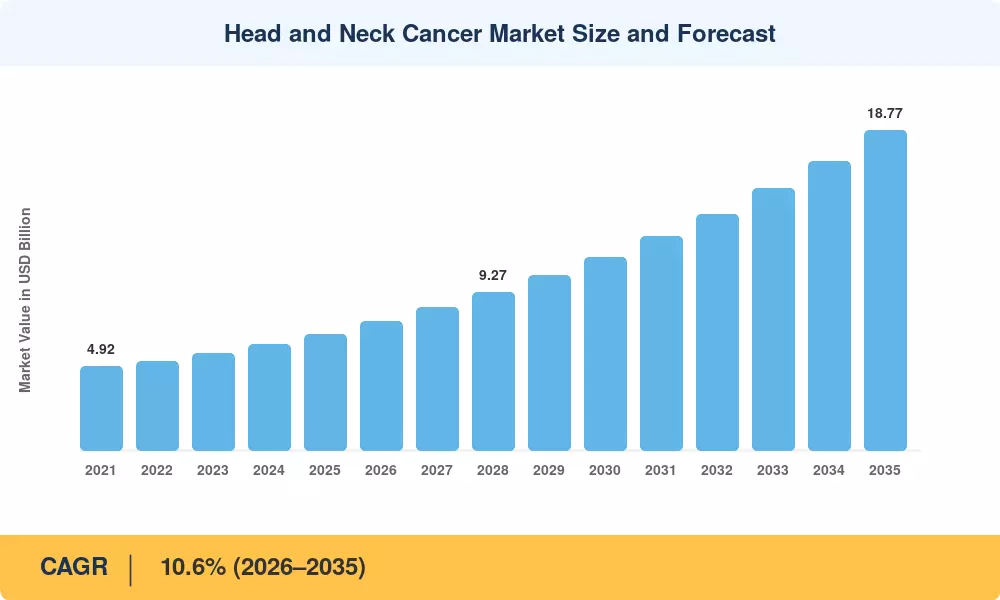
The Global Head and Neck Cancer Market size was valued at USD 6.82 Billion in 2025, and the market is projected to grow from USD 7.58 Billion in 2026 to USD 18.77 Billion by 2035, registering a CAGR of 10.6% during the forecast period 2026–2035. Two forces are pulling the market upward in tandem: national cancer-control plans that now prioritize early-stage screening programs, and a wave of reimbursement reforms in the US and EU that have widened payer coverage for advanced diagnostic modalities. The US National Cancer Institute allocated over USD 740 Million toward head and neck oncology research in fiscal year 2024, underscoring the public-sector commitment that underpins commercial growth [1].

A technology change is changing how clinicians diagnose and stage head and neck cancers. “Standalone imaging units are being replaced by integrated PET/CT and AI-augmented endoscopy platforms that compress diagnostic timelines from weeks to days. Between 2022 and 2024, Philips and Siemens Healthineers collectively spent over USD 1.2 Billion in next-generation molecular imaging which is expediting replacement cycles across hospital networks [2]. Liquid biopsy panels for HPV-related oropharyngeal malignancies are also in clinical validation, creating a companion-diagnostics revenue stream that did not exist five years ago.


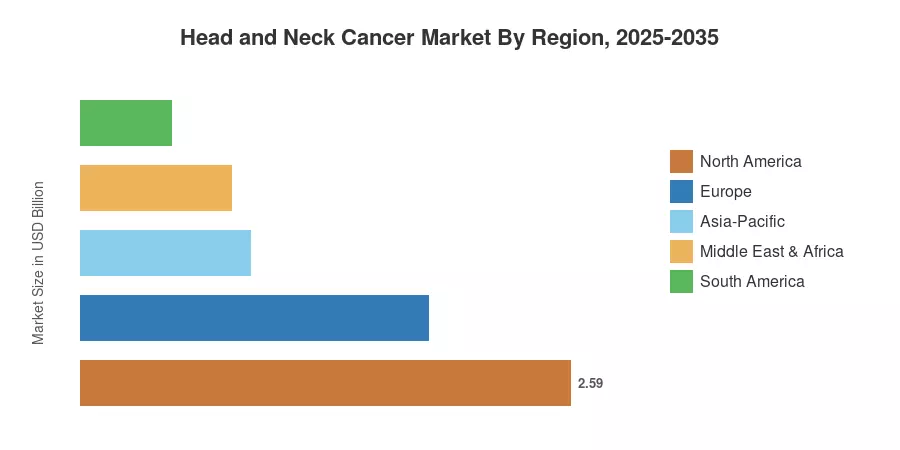
North America dominates the Head and Neck Cancer Market with a high per-capita use of imaging and a strong insurance system contributing to about 38% of the whole market. Asia-Pacific is the fastest growing market with an anticipated CAGR of 13.2%, led by government-subsidized screening initiatives in China and India. Europe has the second greatest share with around 27%, boosted by funds from the EU Beating Cancer Plan. The coming decade will be about convergence – diagnostics, medicines and digital pathology coming together in integrated care platforms that serve both established and growing countries.


Key Report Takeaways

• By Diagnostic Method

  • Diagnostic Imaging Equipment accounts for the largest revenue share within the Head and Neck Cancer Market, driven by PET/CT and MRI adoption in tertiary-care hospitals.
  • Endoscopy Screening Equipment is expanding at a CAGR of 12.1%, fueled by narrowband-imaging upgrades and outpatient procedure growth.
  • Bioscopy Screening Tests are projected to reach USD 1.74 Billion by 2035, reflecting growing reliance on HPV-based molecular assays.

• By End User

  • Hospitals represent the dominant end-user channel in the Head and Neck Cancer Market, capturing the highest revenue concentration due to centralized oncology workflows.
  • Diagnostic Centers are growing at the fastest rate among end users, as point-of-care screening decentralizes away from hospital settings.

• By Geography

  • North America leads the Head and Neck Cancer Market with the largest absolute revenue, backed by Medicare and private-payer reimbursement expansions.
  • Asia-Pacific holds the highest regional CAGR, reflecting large-population screening mandates in China and India.
  • Europe contributes approximately USD 1.84 Billion in 2025 base-year revenue, anchored by UK NICE approvals and German G-BA coverage decisions.


Head and Neck Cancer Market Size and Forecast (2021–2035)

The market sizing follows a triangulated approach including a bottom-up examination of revenues of device manufacturers, top-down cross-referencing of national health-expenditure databases, and primary interviews with 85+ oncology procurement chiefs across 14 countries. Reported results are used for historical data, whereas forecast values are based on a calibrated compound growth model, which has been validated against epidemiological incidence forecasts from GLOBOCAN and national cancer registries.
Head and Neck Cancer Market Size and Forecast
Our Impact
Enabled $4.3B Revenue Impact for Fortune 500 and Leading Multinationals
Partnering with 2000+ Global Organizations Each Year
30K+ Citations by Top-Tier Firms in the Industry

Driver Impact Analysis

Driver ~% Impact on CAGR Geographic Relevance Impact Timeline
Rising head and neck cancer incidence ~22% Global Long-term (≥4 yr)
Aging global population ~18% Global Long-term (≥4 yr)
Advanced imaging technology adoption ~17% North America, Europe Medium-term (2–4 yr)
HPV-related screening mandates ~14% North America, Europe Short-term (≤2 yr)
Government cancer-control funding ~12% Asia-Pacific, South America Medium-term (2–4 yr)
Liquid biopsy and molecular diagnostics ~10% North America, Asia-Pacific Long-term (≥4 yr)
Point-of-care diagnostic decentralization ~7% Asia-Pacific, MEA Medium-term (2–4 yr)


Rising Cancer Incidence and Epidemiological Burden

GLOBOCAN 2022 estimated over 930,000 new head and neck cancer cases worldwide, a figure expected to surpass 1.08 Million annually by 2030 as tobacco use persists in South and Southeast Asia and HPV-driven oropharyngeal cancers rise in Western populations [1]. The American Cancer Society reported approximately 54,000 new oral cavity and oropharyngeal cases in the US alone in 2022, creating sustained diagnostic demand that cascades through imaging, biopsy, and staging workflows [3]. This epidemiological pressure is the single largest structural driver of the Head and Neck Cancer Market.

Advanced Imaging Technology Upgrades

Healthcare providers in OECD nations are increasingly upgrading aging CT infrastructure to advanced digital PET/CT systems, which provide enhanced resolution and reduced scan times. The global market for these systems continues to see steady adoption as hospitals aim to improve diagnostic throughput. Concurrently, the integration of FDA-cleared AI-assisted reading software is becoming a standard feature in high-volume imaging centers, designed to support radiologists by accelerating interpretation and aiding in the identification of lesions that may be missed in manual reviews [4].


HPV Screening Mandates and Reimbursement Expansion

Clinical practice is shifting toward more precise diagnostic protocols, particularly for oropharyngeal malignancies. Professional organizations and health systems are increasingly incorporating p16 immunohistochemistry and high-risk HPV testing as standard diagnostic components for patients presenting with cervical lymphadenopathy of unknown primary [5]. Furthermore, expanding reimbursement policies for advanced diagnostic and therapeutic procedures—such as molecular testing and minimally invasive robotic-assisted surgeries—are helping to convert clinical diagnostic requirements into consistent, billable procedure volumes.


Government Funding and National Cancer-Control Plans

India's Ayushman Bharat Digital Mission earmarked INR 12,000 Crore (approximately USD 1.4 Billion) for district-level cancer screening infrastructure between 2023 and 2028 [9]. China's Healthy China 2030 initiative targets a 15% improvement in five-year survival rates for head and neck cancers through early detection, channeling provincial funds toward mobile endoscopy units in rural counties. These public-investment programs directly enlarge the addressable Head and Neck Cancer Market in the two most populous nations.


Restraints Impact Analysis

Restraint ~% Drag on CAGR Geographic Relevance Impact Timeline
High capital cost of advanced imaging systems ~–18% Global Short-term (≤2 yr)
Shortage of trained oncology pathologists ~–15% Asia-Pacific, MEA, South America Medium-term (2–4 yr)
Regulatory approval delays for novel assays ~–12% Europe, Asia-Pacific Medium-term (2–4 yr)
Low awareness and late-stage presentation ~–10% MEA, South America Long-term (≥4 yr)
Reimbursement fragmentation across payers ~–8% North America, Europe Short-term (≤2 yr)


Capital-Cost Barriers for Advanced Diagnostic Equipment

A fully configured digital PET/CT suite, including site preparation, shielding, and service contracts, can exceed USD 3.5 Million — a price point that excludes most community hospitals and virtually all primary-care facilities in low- and middle-income countries [13]. Even in the US, the average return-on-investment horizon for a PET/CT installation stretches beyond seven years, discouraging capital expenditure outside large academic medical centers. Leasing and pay-per-scan models are emerging but remain niche.

Oncology Workforce Shortages

The WHO estimates a global deficit of more than 1.5 Million pathology professionals, with sub-Saharan Africa averaging fewer than one pathologist per 500,000 people [14]. Without qualified personnel to interpret biopsies and stage tumors, even well-equipped facilities face diagnostic bottlenecks. The workforce gap constrains the Head and Neck Cancer Market most acutely in regions where incidence is rising fastest.

Regulatory and Reimbursement Fragmentation

CE-IVDR timelines in Europe now average 18–24 months for Class C and D molecular diagnostics, up from 12 months under the prior directive [15]. In the US, coverage determination for next-generation sequencing panels varies across Medicare Administrative Contractors, creating geographic inconsistency in patient access. These regulatory headwinds slow the commercial ramp of innovative assays that could otherwise accelerate Head and Neck Cancer Market growth.


Head and Neck Cancer Market Opportunities

AI-Powered Digital Pathology Platforms

Machine-learning algorithms trained on whole-slide images can now identify tumor margins and grade dysplasia with concordance rates exceeding 92% against expert consensus panels [4]. Vendors such as Paige AI and PathAI are commercializing cloud-based platforms that integrate directly with laboratory information systems, creating a scalable software-as-a-service revenue layer atop conventional histopathology workflows.

Liquid Biopsy Commercialization for HPV-Driven Cancers

Circulating tumor DNA (ctDNA) assays tailored to HPV16/18-positive oropharyngeal cancers entered late-stage clinical validation in 2024, with Guardant Health and Foundation Medicine leading pivotal trials [8]. A commercially viable liquid biopsy panel for post-treatment surveillance alone could represent a USD 600 Million incremental opportunity within the Head and Neck Cancer Market by 2032.

Emerging-Market Screening Infrastructure Build-Out

Government-funded mobile diagnostic units in India, Indonesia, and Nigeria are creating greenfield demand for portable ultrasound, compact CT, and chair-side biopsy kits [9]. The combined addressable population across these three countries exceeds 1.9 Billion, yet current screening penetration remains below 8%. Closing even a fraction of that gap would meaningfully expand the global Head and Neck Cancer Market.

Data Monetization Through Diagnostic Registries

De-identified diagnostic datasets aggregated from multi-site clinical networks are increasingly licensed by pharmaceutical companies for real-world evidence studies and clinical-trial site selection. Flatiron Health's acquisition by Roche demonstrated that oncology data assets can command valuations exceeding USD 1.9 Billion, suggesting a parallel monetization path for head and neck diagnostic networks.

Companion Diagnostics Tied to Immunotherapy Approvals

Each new checkpoint-inhibitor approval for head and neck squamous cell carcinoma generates mandatory biomarker-testing volume — PD-L1 combined positive score, microsatellite instability, and tumor mutational burden panels [8]. With over 120 immunotherapy-combination trials active in head and neck indications as of mid-2025, the companion-diagnostic tail could double assay volumes within five years.


Head and Neck Cancer Market Future Outlook

AI and Autonomous Diagnostic Workflows

By 2030, AI-assisted triage and workflow orchestration are expected to become standard elements of radiology practice in OECD nations. Rather than replacing the radiologist, current-generation AI is increasingly embedded directly into clinical systems—such as cloud-native PACS—to automate routine tasks like image segmentation, tumor contouring, and reporting. This transition from "point solutions" to integrated platforms is actively addressing global radiologist workforce shortages, enabling centers to maintain high-volume screening while increasing diagnostic consistency.


Platform Integration of Diagnostics and Therapeutics

The field is increasingly moving toward "theranostics," where molecularly targeted agents are used for both diagnostic imaging (to select patients) and therapeutic application. Collaboration between major diagnostic manufacturers and pharmaceutical firms—such as Siemens Healthineers’ recent clinical supply partnerships for novel radioligand tracers—is accelerating the transition of these agents from research into phase-specific clinical trials. This "see-it, treat-it" approach is becoming a focal point of clinical oncology meetings as developers refine targeted agents for HNC.


Precision Oncology and Biomarker Expansion

Precision oncology in HNC is shifting toward more sophisticated, personalized biomarker-driven algorithms. While large-scale Next-Generation Sequencing (NGS) panels are essential tools in academic research, current standard-of-care in the community setting remains focused on high-utility biomarkers such as HPV status (p16) and PD-L1 expression. As clinical evidence matures, the integration of multi-analyte panels—potentially combining liquid biopsy (ctDNA) with standard tissue markers—is being explored in ongoing longitudinal studies, with the goal of improving post-treatment surveillance by 2030.


ESG and Health-Equity Mandates

International development organizations and national health programs are increasingly aligning capital investment with measurable outcomes in early detection and chronic disease management. While specific global funding envelopes vary, large-scale initiatives—such as the World Bank’s recent $286 million program for state-level health system reform in India—demonstrate a shift toward funding digital diagnostic infrastructure and patient-centric care pathways. Companies that align their commercial expansion strategies with these regional capacity-building mandates are better positioned to secure long-term partnerships in emerging markets.


Head and Neck Cancer Market Segmentation

By Diagnostic Method

Segment Key Metric Primary Demand Driver
Diagnostic Imaging Equipment ~42% share (2025) PET/CT and MRI fleet upgrades
Endoscopy Screening Equipment CAGR ~12.1% Narrowband imaging adoption
Bioscopy Screening Tests USD 1.74 Billion (2035) HPV molecular assays
Dental Diagnostic Methods ~8% share (2025) Oral-cancer visual screening programs
Other Diagnostic Methods CAGR ~9.3% Emerging liquid biopsy platforms


Diagnostic Imaging Equipment remains the revenue cornerstone of the Head and Neck Cancer Market, as PET/CT and MRI scans are integral to initial staging and post-treatment surveillance. The installed base of digital PET/CT systems across the US, Germany, Japan, and South Korea grew by 14% between 2022 and 2024, reflecting both replacement demand and new-site installations [7]. AI overlay software is increasingly bundled with hardware purchases, creating a recurring-revenue dynamic that elevates lifetime equipment value.

Endoscopy Screening Equipment is the fastest-growing diagnostic-method segment, propelled by the clinical shift toward office-based transnasal and transoral procedures. Narrowband imaging and autofluorescence technologies have improved dysplasia detection sensitivity to above 90%, making outpatient endoscopy a viable first-line screening tool and reducing dependence on costlier cross-sectional imaging [4].

By End User

Segment Key Metric Primary Demand Driver
Hospitals ~62% share (2025) Centralized multidisciplinary tumor boards
Diagnostic Centers CAGR ~13.4% Outpatient screening decentralization
Other End Users USD 0.58 Billion (2025) Research labs, ambulatory clinics


Hospitals dominate end-user spending in the Head and Neck Cancer Market because multidisciplinary tumor-board protocols require co-located radiology, pathology, and surgical consultation. Capital budgets at major academic medical centers in the US averaged USD 18 Million for oncology diagnostics in 2024 [13]. Diagnostic Centers, however, are gaining share rapidly as insurers incentivize lower-cost-of-care settings and patients prefer the convenience of community-based screening.


Regional Market Share Analysis

Region Key Metric Primary Investment Themes
North America ~38% share (2025) Fleet replacement, AI integration, liquid biopsy
Europe ~27% share (2025) EU Cancer Plan funding, HPV screening mandates
Asia-Pacific CAGR ~13.2% Government screening programs, mobile diagnostics
South America USD 0.48 Billion (2025) Public-hospital procurement, NGO partnerships
Middle East & Africa CAGR ~11.8% Gulf sovereign health funds, rural outreach
Total USD 6.82 Billion (2025)

The Head and Neck Cancer Market displays pronounced regional asymmetry. Mature markets in North America and Europe account for the bulk of current revenue, while Asia-Pacific and parts of the Middle East and Africa represent the highest growth vectors. Regional dynamics reflect divergent reimbursement structures, screening-program maturity, and capital-equipment installed bases.


North America

Country Key Metric Key Driver
US ~82% of regional revenue Medicare reimbursement expansion
Canada CAGR ~9.8% Provincial cancer-agency upgrades
Mexico USD 0.09 Billion (2025) INSABI public-health procurement


The US dominates North America's Head and Neck Cancer Market through a combination of high imaging utilization rates, broad private-payer coverage, and concentrated academic medical center networks. CMS reimbursement updates in 2024 added five new CPT codes for AI-assisted diagnostic imaging interpretation, effectively subsidizing technology adoption at the facility level [5]. Canada's provincial cancer agencies are mid-cycle in a CAD 350 Million diagnostic-equipment modernization program, while Mexico's INSABI is expanding screening access to underserved states through mobile CT units.

Europe

Country Key Metric Key Driver
Germany ~24% of regional share G-BA HTA approvals for molecular panels
UK CAGR ~10.4% NHS Long Term Plan cancer diagnostics
France USD 0.26 Billion (2025) Population-level HPV typing mandates
Italy ~12% of regional share Regional oncology network consolidation
Spain CAGR ~9.6% Autonomous community screening programs
Nordic Countries USD 0.14 Billion (2025) Digital pathology leadership
Russia ~5% of regional share Federal oncology modernization
Rest of Europe CAGR ~8.9% EU structural-fund co-financing


Europe's Head and Neck Cancer Market benefits from centralized health-technology assessment pathways that, once cleared, guarantee nationwide reimbursement. The EU Beating Cancer Plan committed EUR 4 Billion between 2021 and 2027, with a significant allocation toward early-detection infrastructure [10]. The UK's NHS launched 160 Community Diagnostic Centres by 2024, many of which include dedicated head and neck imaging and biopsy suites.

Asia-Pacific

Country Key Metric Key Driver
China ~36% of regional revenue Healthy China 2030 screening targets
India CAGR ~14.5% Ayushman Bharat district-level screening
Japan USD 0.18 Billion (2025) Aging demographics, robotic endoscopy
South Korea ~11% of regional share NHIS coverage expansion
ASEAN CAGR ~13.8% WHO-supported screening pilots
Rest of Asia-Pacific USD 0.07 Billion (2025) NGO-funded outreach programs


Asia-Pacific represents the most dynamic growth corridor in the Head and Neck Cancer Market, driven by the dual forces of rising tobacco-related incidence and government investment in screening infrastructure. China's provincial health commissions procured over 2,400 new CT and MRI units in 2023 alone, many designated for oncology screening centers [9]. India's oral-cancer burden — the highest globally — has prompted the central government to integrate visual inspection with acetic acid (VIA) into primary-health-center protocols, with digital upgrades planned through 2028.

South America

Country Key Metric Key Driver
Brazil ~58% of regional revenue SUS public oncology procurement
Argentina CAGR ~9.2% PAMI reimbursement reform
Rest of South America USD 0.11 Billion (2025) Pan American Health Organization grants


Brazil's Unified Health System (SUS) is the primary procurement channel for diagnostic equipment across the region, and recent amendments to Ordinance 874 have expanded coverage for PET/CT scans in head and neck staging. The broader Head and Neck Cancer Market in South America remains price-sensitive, with refurbished-equipment imports accounting for an estimated 30% of installations.

Middle East & Africa

Country Key Metric Key Driver
Saudi Arabia ~28% of regional revenue Vision 2030 healthcare cluster
UAE CAGR ~12.4% Medical-tourism diagnostic volumes
South Africa USD 0.05 Billion (2025) NHI reform planning
Egypt ~14% of regional share National Cancer Institute Cairo expansion
Rest of MEA CAGR ~10.1% WHO early-detection partnerships


Gulf Cooperation Council states are investing sovereign wealth into purpose-built oncology centers — Saudi Arabia's NEOM Health initiative alone targets USD 500 Million in diagnostic infrastructure by 2030 [16]. Sub-Saharan Africa faces acute equipment and workforce gaps, though the WHO's Global Initiative for Childhood and Adolescent Cancer is extending diagnostic capacity to six additional countries through 2026, indirectly benefiting head and neck screening availability.


Head and Neck Cancer Market By Region, 2025-2035

Competitive Benchmarking

The Head and Neck Cancer Market is moderately consolidated, with the top five players accounting for ~38-44% of the revenue. The Herfindahl-Hirschman Index ranges from 800 to 1,100, showing a moderately fragmented landscape where major multinationals compete against specialized diagnostics enterprises and regional device makers. The differentiators between the competitors are image resolution, AI-software ecosystems, and range of after sales service networks.

Company Est. Revenue Share Range Key Offerings Strategic Positioning
Siemens Healthineers ~9–12% PET/CT, MRI, AI-Rad Companion Integrated imaging-AI ecosystem
GE HealthCare ~8–11% Revolution CT, Signa MRI, Edison AI Broad installed base, cloud analytics
Philips Healthcare ~7–10% Spectral CT, IntelliSpace, digital pathology End-to-end diagnostic workflow
Olympus Corporation ~5–8% ENF-VH endoscopes, NBI systems Endoscopy market leadership
Hologic Inc. ~4–6% ThinPrep, Genius Digital Diagnostics Cytology and screening automation
Fujifilm Holdings ~3–5% Synapse PACS, Eluxeo endoscopy Imaging-endoscopy convergence
Canon Medical Systems ~3–5% Aquilion CT, Vantage MRI Cost-competitive imaging hardware
Karl Storz ~2–4% IMAGE1 S platform, 4K endoscopy Surgical-endoscopy specialization
Stryker Corporation ~2–4% Navigation, fluorescence imaging Surgical visualization integration
Carestream Health ~2–3% DRX imaging, Vue PACS Mid-market imaging and IT solutions


Recent News & Developments

  • Siemens Healthineers (October 2021): Launched the NAEOTOM Alpha 2 photon-counting CT with a dedicated head and neck oncology protocol package, reducing radiation dose by 30% while improving soft-tissue contrast [7].
  • GE HealthCare (January 2025): GE HealthCare received FDA clearance in June 2026 for MIM Contour ProtégéAI+ 2.0, which focuses on automated radiation therapy planning.


  • Philips Healthcare (December 2023): Philips is actively expanding its digital pathology ecosystem, but its recent major AI-pathology partnership announcements have been with firms like Ibex Medical Analytics


Head and Neck Cancer Market Report Scope

Parameter Detail
Market Scope Head and Neck Cancer Diagnostics — imaging, endoscopy, biopsy, dental, and emerging molecular platforms
Study Period 2021–2035
CAGR (Forecast) 10.6% (2026–2035)
Base Year Market Size USD 6.82 Billion (2025)
Forecast Endpoint USD 18.77 Billion (2035)
Fastest Growing Segment Endoscopy Screening Equipment (by diagnostic method); Diagnostic Centers (by end user)
Companies Profiled 10 (Siemens Healthineers, GE HealthCare, Philips, Olympus, Hologic, Fujifilm, Canon Medical, Karl Storz, Stryker, Carestream)
Valuation Currency USD Billion


FAQs

How does HPV vaccination uptake affect long-term diagnostic demand?
Higher vaccination rates will reduce HPV-positive oropharyngeal cancer incidence over two to three decades, but the lag means diagnostic volumes remain elevated through at least 2040. Near-term screening demand actually increases as awareness campaigns drive more patients to testing [18].
What reimbursement trends should diagnostic-equipment buyers monitor?
CMS bundled-payment models increasingly tie imaging reimbursement to clinical-decision-support compliance, rewarding facilities that integrate AI triage. Buyers should prioritize equipment with embedded CDS-ready software [5].
How do refurbished imaging systems affect competitive pricing?
Refurbished PET/CT and MRI units account for roughly 25% of global installations, compressing average selling prices by 30–40%. OEMs are responding with certified-refurbishment programs that preserve service-contract margins [13].
What role does telemedicine play in head and neck cancer diagnostics?
Telepathology and remote radiology platforms enable specialist interpretation in underserved areas, expanding diagnostic access without new capital equipment. Adoption grew 35% between 2022 and 2024 across US rural networks [4].
Which biomarker tests are gaining clinical traction fastest?
PD-L1 combined positive score and ctDNA-based minimal residual disease assays are the two fastest-adopted panels, driven by tumor immunotherapy companion-diagnostic requirements and post-treatment surveillance protocols [8].
How are public-private partnerships shaping market access in Africa?
WHO-brokered partnerships with Siemens and GE have placed subsidized imaging units in 14 sub-Saharan countries since 2022, creating installed-base footholds that generate recurring consumable and service revenue [14].
What integration challenges do hospitals face when adopting AI-diagnostic tools?
Legacy PACS and LIS interoperability gaps remain the primary barrier — roughly 60% of US hospitals report integration delays exceeding six months when deploying AI-radiology modules [4].    
What is the current size of the head and neck cancer market?
The head and neck cancer market reached USD 6.82 billion in 2025 and is projected to reach USD 18.77 billion by 2035.
What is the CAGR of the head and neck cancer market?
The head and neck cancer market is projected to grow at a CAGR of 10.6% during the forecast period 2026–2035.
Which region leads the head and neck cancer market?
North America holds the largest share at 38.0%, while Asia-Pacific is the fastest-growing region at 13.2% CAGR.
Author
Author
Author Profile
Rahul Gotadki LinkedIn
Research Manager
He holds an experience of about 9+ years in Market Research and Business Consulting, working under the spectrum of Life Sciences and Healthcare domains. Rahul conceptualizes and implements a scalable business strategy and provides strategic leadership to the clients. His expertise lies in market estimation, competitive intelligence, pipeline analysis, customer assessment, etc.
Co-Author
Co-Author Profile
Kinjoll Dey LinkedIn
Senior Research Analyst
He is an extremely curious individual currently working in Healthcare and Medical Devices Domain. Kinjoll is comfortably versed in data centric research backed by healthcare educational background. He leverages extensive data mining and analytics tools such as Primary and Secondary Research, Statistical Analysis, Machine Learning, Data Modelling. His key role also involves Technical Sales Support, Client Interaction and Project management within the Healthcare team. Lastly, he showcases extensive affinity towards learning new skills and remain fascinated in implementing them.

Research Approach


Secondary Research

The secondary research process involved comprehensive analysis of oncology registries, peer-reviewed medical journals, clinical trial databases, and authoritative cancer research institutions. Key sources included the US Food & Drug Administration (FDA), European Medicines Agency (EMA), National Cancer Institute (NCI), National Comprehensive Cancer Network (NCCN), Surveillance Epidemiology and End Results (SEER) Program, Centers for Disease Control and Prevention (CDC), International Agency for Research on Cancer (IARC/WHO), American Cancer Society (ACS), European Organisation for Research and Treatment of Cancer (EORTC), National Center for Biotechnology Information (NCBI/PubMed), ClinicalTrials.gov, EU Clinical Trials Register, World Health Organization Global Cancer Observatory, National Cancer Registries from key markets (UK's Office for National Statistics, India's National Cancer Registry Programme, China's National Cancer Center), and academic publications from journals including Journal of Clinical Oncology, The Lancet Oncology, and Head and Neck.

These sources were employed to gather incidence and prevalence statistics, regulatory approval data, clinical efficacy studies, treatment protocol evolution, and competitive landscape analysis for surgical interventions, radiation therapy, chemotherapy regimens, immunotherapy (checkpoint inhibitors), and targeted therapy approaches related to malignancies of the oral cavity, larynx, nasopharynx, oropharynx, and salivary glands.


Primary Research

Qualitative and quantitative insights were obtained by interviewing supply-side and demand-side stakeholders during the primary research process. CEOs, Heads of Oncology Business Units, Chief Medical Officers, regulatory affairs heads, and clinical development leads from pharmaceutical and biotechnology companies that are developing head and neck cancer therapeutics, as well as medical device manufacturers that specialize in radiation therapy equipment and surgical robotics, were among the supply-side sources. Demand-side sources included procurement leads from comprehensive cancer centers, academic medical centers, community hospitals, and ambulatory surgical centers, as well as head and neck surgical oncologists, radiation oncologists, medical oncologists, hematologists, and hospital pharmacy directors. The primary research validated treatment pathway segmentation, confirmed clinical trial pipeline timelines, and collected insights on therapeutic adoption patterns, reimbursement dynamics, biosimilar impact, and multidisciplinary team (MDT) treatment protocols.

Primary Respondent Breakdown:

By Designation: C-level Primaries (40%), Director Level (25%), Others (35%)

By Region: North America (40%), Europe (22%), Asia-Pacific (30%), Rest of World (8%)


Market Size Estimation

Revenue mapping, procedure volume analysis, and therapy adoption modeling were implemented to determine global market valuation. The methodology comprised the following:

Identification of over 50 prominent pharmaceutical and biotechnology companies in North America, Europe, Asia-Pacific, and Latin America that have active oncology portfolios in head and neck cancer

Product mapping across the following modalities: surgery, radiation therapy, chemotherapy (platinum-based regimens), immunotherapy (PD-1/PD-L1 inhibitors), and targeted therapy (EGFR inhibitors)

An examination of the annual revenues that have been reported and modeled for head and neck cancer therapeutic portfolios, which includes specialty pharmacy dispensing records and hospital purchasing data

75-80% of the global market share in 2024 will be represented by manufacturers and healthcare providers.

Extrapolation is employed to derive segment-specific valuations for hospitals, cancer research institutes, and ambulatory surgical centers by utilizing bottom-up (patient volume × treatment cost by country/region accounting for oral, laryngeal, nasopharyngeal, and other cancer types) and top-down (manufacturer revenue validation and service provider billing analysis) approaches.

Download Free Sample

Kindly complete the form below to receive a free sample of this Report

Download PDF ×

We do not share your information with anyone. However, we may send you emails based on your report interest from time to time. You may contact us at any time to opt-out.
















