Download Free Sample
Kindly complete the form below to receive a free sample of this Report
Health and Wellness Packaged Food Market Size, Share, Industry Trend & Analysis Research Report Information By Product Type(Naturally Healthy Food [Fruits, Vegetable, Cereals]; Functional Food [Carotenoids, Probiotics]; Organic Food [Fruits & Vegetables]; Food Intolerance Products [Bakery, Confectionery, Dairy Products]), by Nature (organic, Inorganic) Distribution Channel (Online, Offline) And By Region (North America, Europe, Asia-Pacific, Latin America, and Middle East & Africa) - Forecast Till 2035
As per MRFR analysis, the Health Wellness Packaged Food Market was estimated at 820.74 USD Billion in 2024. The Health Wellness Packaged Food industry is projected to grow from 902.61 USD Billion in 2025 to 2090.64 USD Billion by 2035, exhibiting a compound annual growth rate (CAGR) of 8.83% during the forecast period 2025 - 2035.
The Health Wellness Packaged Food Market is experiencing a transformative shift towards health-oriented products and consumer preferences.
| 2024 Market Size | 820.74 (USD Billion) |
| 2035 Market Size | 2090.64 (USD Billion) |
| CAGR (2025 - 2035) | 8.83% |
The Health Wellness Packaged Food Market is currently experiencing a notable transformation, driven by evolving consumer preferences and a heightened awareness of health and nutrition. As individuals increasingly prioritize their well-being, there is a discernible shift towards products that not only satisfy hunger but also contribute positively to overall health. This market encompasses a diverse range of offerings, including organic snacks, fortified foods, and plant-based alternatives, all designed to cater to the growing demand for healthier options. Furthermore, the integration of innovative ingredients and sustainable practices appears to resonate well with consumers, who are becoming more discerning about the products they choose to incorporate into their diets. In addition to changing consumer behavior, the Health Wellness Packaged Food Market is influenced by advancements in technology and distribution channels. The rise of e-commerce platforms has facilitated greater accessibility to health-focused products, allowing consumers to explore a wider array of options from the comfort of their homes. This trend is complemented by an increasing emphasis on transparency in labeling, as consumers seek to make informed choices about the foods they consume. Overall, the market seems poised for continued growth, as it adapts to the dynamic landscape of health and wellness.
The Health Wellness Packaged Food Market is witnessing a surge in plant-based offerings, as consumers gravitate towards alternatives that align with their health goals and ethical considerations. This trend reflects a broader societal shift towards vegetarian and vegan diets, driven by concerns over sustainability and animal welfare.
There is a growing demand for clean label products within the Health Wellness Packaged Food Market. Consumers increasingly prefer items with minimal ingredients and transparent sourcing, indicating a desire for authenticity and trust in the brands they support.
The trend towards personalized nutrition is gaining traction in the Health Wellness Packaged Food Market. Consumers are seeking tailored solutions that address their specific dietary needs and preferences, leading to the development of customized meal plans and products that cater to individual health goals.
Urbanization plays a pivotal role in shaping the Global Health and Wellness Packaged Food Market Industry. As more individuals migrate to urban areas, lifestyles become increasingly fast-paced, resulting in a higher demand for convenient and nutritious food options. This shift is evident in the market's projected growth, with an expected value of 2674.1 USD Billion by 2035. Urban consumers often prioritize health and wellness, prompting manufacturers to innovate and provide packaged foods that are not only convenient but also rich in essential nutrients. This trend indicates a significant opportunity for growth within the industry.
The Global Health and Wellness Packaged Food Market Industry is projected to experience substantial growth over the coming years. With a market size anticipated to reach 921.4 USD Billion in 2024 and 2674.1 USD Billion by 2035, the industry is poised for a remarkable expansion. The compound annual growth rate (CAGR) of 10.17% from 2025 to 2035 indicates a robust demand for health-focused packaged foods. This growth is likely fueled by various factors, including rising health awareness, urbanization, and technological advancements in food processing, all contributing to a dynamic market landscape.
The Global Health and Wellness Packaged Food Market Industry experiences a notable surge in demand driven by increasing health consciousness among consumers. Individuals are becoming more aware of the nutritional content of their food, leading to a preference for products that promote health benefits. This trend is reflected in the projected market size of 921.4 USD Billion in 2024, as consumers actively seek out packaged foods that align with their health goals. The industry is adapting by offering a variety of options, including organic, gluten-free, and low-calorie products, catering to diverse dietary preferences and requirements.
The rise of e-commerce and online retail significantly influences the Global Health and Wellness Packaged Food Market Industry. With the convenience of online shopping, consumers can easily access a wide range of health-focused packaged foods. This trend is particularly pronounced among younger demographics who prefer the flexibility of purchasing products online. As e-commerce continues to expand, it is expected to contribute to the overall growth of the market, facilitating access to diverse health and wellness options. The industry's adaptability to digital platforms indicates a promising future for packaged food sales.
Sustainability has become a key consideration in the Global Health and Wellness Packaged Food Market Industry. Consumers are increasingly seeking products that are not only healthy but also produced through environmentally friendly practices. This shift towards sustainability is prompting manufacturers to adopt eco-friendly packaging and sourcing methods. As a result, the industry is likely to see a growing segment of consumers who prioritize sustainability alongside health benefits. This trend may lead to innovative product offerings that align with both health and environmental goals, further driving market growth.
Technological advancements in food processing are transforming the Global Health and Wellness Packaged Food Market Industry. Innovations such as improved preservation techniques and enhanced nutritional formulations allow manufacturers to create healthier packaged food options. These advancements not only extend shelf life but also maintain the integrity of nutrients, appealing to health-conscious consumers. As a result, the industry is likely to witness a compound annual growth rate (CAGR) of 10.17% from 2025 to 2035, reflecting the increasing integration of technology in food production and the growing demand for nutritious packaged foods.
In the Health Wellness Packaged Food Market, the segment distribution reveals Organic Food as the largest segment, capturing a significant portion of overall market share. This segment is favored for its natural and minimally processed qualities, appealing to health-conscious consumers seeking clean and ethical food choices. Following closely, Functional Food and Nutraceuticals are also prominent players, catering to specific health needs while integrating beneficial ingredients. Dietary Supplements, while smaller in share, continue to contribute positively to this diverse upfront. Growth trends indicate that the market for Health Wellness Packaged Food is evolving rapidly, with Nutraceuticals emerging as the fastest-growing segment, driven by increasing consumer awareness regarding health benefits and preventative care. Functional Food is also gaining momentum, promoted by innovations and the popularity of tailored nutrition. Sustainable practices and clean labeling are vital drivers, as consumers prioritize products made with organic and functional ingredients.
Organic Food: Dominant vs. Nutraceuticals: Emerging
Organic Food occupies a dominant position in the Health Wellness Packaged Food Market, characterized by its adherence to strict regulations avoiding synthetic pesticides and fertilizers. This segment witnesses robust consumer loyalty as buyers increasingly prioritize health, sustainability, and ethical sourcing. The demand for Organic Food aligns with trends in clean eating and transparency in food production. Conversely, Nutraceuticals represent an emerging segment that focuses on fortified products intended for medicinal purposes, such as vitamins and probiotics. With advancements in scientific research linking food with health, Nutraceuticals are rapidly gaining traction, appealing to consumers looking for dietary enhancements that offer tangible health benefits. The fusion of nutrition and convenience in Nutraceuticals makes it particularly attractive for the busy, health-minded consumer.
In the Health Wellness Packaged Food Market, the distribution channels exhibit varied market share dynamics. Supermarkets dominate the landscape, leveraging their extensive reach and customer base to capture a substantial portion of the market. Health Food Stores and Specialty Stores follow, serving niche markets with targeted offerings. Meanwhile, Online Retail is emerging strongly, appealing to a tech-savvy consumer base seeking convenience and a wider range of products.
Supermarkets (Dominant) vs. Online Retail (Emerging)
Supermarkets are the dominant force in the Health Wellness Packaged Food Market, benefiting from established infrastructure, consumer trust, and the ability to offer a comprehensive selection of products under one roof. They cater to a broad demographic, making health-focused foods accessible to everyday consumers. In contrast, Online Retail is emerging rapidly as a preferred shopping method, especially for younger generations who value convenience and access to specialized health products. This channel is characterized by dynamic marketing, personalized shopping experiences, and an extensive range of health wellness options, positioning it for significant growth in the coming years.
In the Health Wellness Packaged Food Market, the age group segment plays a significant role, contributing a major share to the overall market. Consumers aged 25-45, who prioritize health and wellness in their diets, are the largest segment, reflecting their preferences and spending power. Additionally, older consumers, particularly those above 55, are increasingly turning to health-focused products, albeit at a slower rate compared to younger demographics. Market growth is being largely driven by health-conscious consumers who are increasingly prioritizing nutrition in their purchases. This segment, particularly Millennials and Gen Z, is rapidly expanding and adapting to healthier lifestyle choices, showing a robust interest in organic, plant-based, and functional foods. The influences of social media and wellness trends have also fostered significant shifts in consumer preferences toward healthier options, making health consciousness the fastest-growing segment.
Age Group (Dominant) vs. Health Consciousness (Emerging)
The age group segment remains dominant in the Health Wellness Packaged Food Market due to the strong preferences of millennials and Generation X consumers, who are increasingly choosing health-oriented products. These consumers often seek foods that offer functional benefits, such as enhanced nutrition or organic sourcing. In contrast, the health consciousness segment, although emerging, is gaining traction, driven by increasing awareness about the benefits of a balanced diet, fitness, and well-being. This burgeoning group primarily comprises younger consumers, including Gen Z, who are actively concerned about long-term health implications, propelling a demand for innovative health-focused food products. Their evolving preferences toward clean labels and natural ingredients are reshaping the market landscape, compelling brands to adapt their offerings.
The Health Wellness Packaged Food Market is increasingly influenced by the packaging types employed, with recyclable packaging currently holding the largest market share. This segment is favored by environmentally conscious consumers and companies striving for sustainability. Biodegradable packaging, on the other hand, is witnessing rapid growth as consumers demand more sustainable options, making it the fastest-growing segment. The shift towards eco-friendly packaging solutions indicates a significant transformation in consumer preferences and industry standards.
As consumer awareness regarding environmental issues escalates, the demand for recyclable and biodegradable packaging is expected to surge. Major drivers include government regulations promoting sustainability, as well as consumer preferences for products that reflect their environmental values. Additionally, brands adopting these packaging types are experiencing enhanced brand loyalty, thereby influencing their long-term market strategies and positioning in the health wellness sector.
Recyclable Packaging (Dominant) vs. Bulk Packaging (Emerging)
Recyclable packaging continues to dominate the Health Wellness Packaged Food Market due to its widespread acceptance among consumers and manufacturers alike. Promoting circular economy principles, recyclable packaging assists brands in enhancing their sustainability profiles. In contrast, bulk packaging is emerging as a significant trend, particularly among health-focused consumers seeking minimal waste and value-driven purchasing options. Bulk packaging is characterized by larger quantities that reduce the overall environmental footprint, steering clear of excessive packaging waste. This dual-focus on recyclable and bulk packaging reflects an evolving consumer mindset towards responsible consumption, with brands innovating to meet the growing demands for sustainable solutions while balancing convenience and cost-effectiveness.
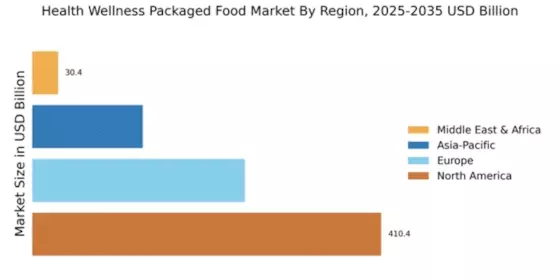
North America continues to lead the Health Wellness Packaged Food Market, holding a significant market share of $410.37M in 2024. The growth is driven by increasing health consciousness among consumers, a rise in demand for organic and natural products, and supportive regulatory frameworks promoting healthier food options. The region's robust distribution networks and innovative marketing strategies further enhance market penetration. The United States is the primary contributor to this market, with major players like Nestle, PepsiCo, and Coca-Cola leading the charge. The competitive landscape is characterized by continuous product innovation and strategic partnerships. Companies are increasingly focusing on sustainability and transparency in their supply chains to meet consumer expectations, ensuring a dynamic market environment.
Europe's Health Wellness Packaged Food Market is valued at $250.0M, reflecting a growing trend towards healthier eating habits. Factors such as increasing awareness of nutrition, government initiatives promoting healthy diets, and a shift towards plant-based foods are driving this growth. Regulatory bodies are also encouraging food manufacturers to reduce sugar and fat content, further supporting market expansion. Leading countries in this region include Germany, France, and the UK, where companies like Danone and Unilever are making significant strides. The competitive landscape is marked by a mix of established brands and innovative startups focusing on health and wellness. The presence of key players ensures a diverse product offering, catering to the evolving preferences of health-conscious consumers.
The Asia-Pacific region, with a market size of $130.0M, is witnessing rapid growth in the Health Wellness Packaged Food Market. This surge is attributed to rising disposable incomes, urbanization, and a growing awareness of health and nutrition among consumers. Regulatory support for healthier food options is also a significant driver, as governments promote initiatives to combat lifestyle-related diseases. Countries like China and India are at the forefront of this growth, with a burgeoning middle class increasingly seeking health-oriented products. The competitive landscape features both local and international players, including major brands like Nestle and PepsiCo. The market is characterized by innovation, with companies focusing on product diversification to cater to diverse consumer preferences.
The Middle East and Africa region, valued at $30.37M, presents untapped potential in the Health Wellness Packaged Food Market. The growth is driven by increasing health awareness, urbanization, and a shift towards healthier eating habits. Regulatory frameworks are evolving to support healthier food options, which is crucial for market development in this region. Countries like South Africa and the UAE are leading the way, with a growing number of local and international brands entering the market. The competitive landscape is still developing, but key players are beginning to establish a presence. Companies are focusing on product innovation and marketing strategies tailored to local tastes, which is essential for capturing market share in this diverse region.
The Health Wellness Packaged Food Market is currently characterized by a dynamic competitive landscape, driven by increasing consumer demand for healthier options and sustainable practices. Major players such as Nestle (CH), PepsiCo (US), and Danone (FR) are strategically positioning themselves through innovation and regional expansion. Nestle (CH) has focused on enhancing its product portfolio with plant-based alternatives, while PepsiCo (US) has been investing in healthier snack options, indicating a shift towards more health-conscious offerings. Danone (FR) emphasizes sustainability in its operations, which resonates with the growing consumer preference for environmentally friendly products. Collectively, these strategies not only enhance brand loyalty but also intensify competition within the market.Key business tactics employed by these companies include localizing manufacturing and optimizing supply chains to meet regional demands effectively. The market structure appears moderately fragmented, with several key players exerting substantial influence. This fragmentation allows for niche brands to emerge, catering to specific dietary needs, thereby enriching the overall market landscape.
In November Nestle (CH) announced a partnership with a leading plant-based protein supplier to expand its range of meat alternatives. This strategic move is significant as it aligns with the rising trend of plant-based diets, potentially capturing a larger market share among health-conscious consumers. By diversifying its offerings, Nestle (CH) not only addresses consumer preferences but also positions itself as a leader in the sustainable food sector.
In October PepsiCo (US) launched a new line of low-calorie snacks aimed at health-conscious consumers. This initiative reflects the company's commitment to innovation in response to changing consumer behaviors. By introducing healthier snack options, PepsiCo (US) is likely to enhance its competitive edge, appealing to a demographic increasingly focused on wellness and nutrition.
In September Danone (FR) unveiled a new sustainability initiative aimed at reducing its carbon footprint across its supply chain. This initiative is crucial as it not only addresses environmental concerns but also aligns with consumer expectations for corporate responsibility. By prioritizing sustainability, Danone (FR) strengthens its brand image and fosters consumer trust, which is essential in today’s market.
As of December current competitive trends indicate a strong emphasis on digitalization, sustainability, and the integration of AI technologies within the Health Wellness Packaged Food Market. Strategic alliances are increasingly shaping the landscape, allowing companies to leverage shared resources and expertise. Looking ahead, competitive differentiation is expected to evolve, with a notable shift from price-based competition to a focus on innovation, technology, and supply chain reliability. This transition underscores the importance of adaptability in meeting consumer demands and navigating market challenges.


June 2010: Danone company launched its organic new dairy & plant blend baby formula to meet the desire of parents for organic baby food.
December 2019: The Generals Mills company unveiled natural and organic innovative products at Expo West.
The Health Wellness Packaged Food Market is projected to grow at an 8.83% CAGR from 2025 to 2035, driven by increasing health consciousness, innovative product offerings, and rising disposable incomes.
New opportunities lie in:
By 2035, the market is expected to be robust, reflecting evolving consumer preferences and sustained growth.
| MARKET SIZE 2024 | 820.74(USD Billion) |
| MARKET SIZE 2025 | 902.61(USD Billion) |
| MARKET SIZE 2035 | 2090.64(USD Billion) |
| COMPOUND ANNUAL GROWTH RATE (CAGR) | 8.83% (2025 - 2035) |
| REPORT COVERAGE | Revenue Forecast, Competitive Landscape, Growth Factors, and Trends |
| BASE YEAR | 2024 |
| Market Forecast Period | 2025 - 2035 |
| Historical Data | 2019 - 2024 |
| Market Forecast Units | USD Billion |
| Key Companies Profiled | Nestle (CH), PepsiCo (US), Coca-Cola (US), General Mills (US), Kraft Heinz (US), Danone (FR), Unilever (GB), Mondelez International (US), Kellogg's (US) |
| Segments Covered | Product Type, Distribution Channel, Consumer Demographics, Packaging Type |
| Key Market Opportunities | Growing consumer demand for clean-label, nutritious options drives innovation in the Health Wellness Packaged Food Market. |
| Key Market Dynamics | Rising consumer demand for nutritious options drives innovation and competition in the Health Wellness Packaged Food Market. |
| Countries Covered | North America, Europe, APAC, South America, MEA |
As of 2024, the market valuation was 820.74 USD Billion.
The market is expected to reach a valuation of 2090.64 USD Billion by 2035.
The market is projected to grow at a CAGR of 8.83% from 2025 to 2035.
Functional Food is projected to grow from 250.0 USD Billion to 650.0 USD Billion during the forecast period.
Supermarkets are expected to expand from 300.0 USD Billion to 800.0 USD Billion, indicating a strong retail presence.


Kindly complete the form below to receive a free sample of this Report

“This is really good guys. Excellent work on a tight deadline. I will continue to use you going forward and recommend you to others. Nice job”


“Thanks. It’s been a pleasure working with you, please use me as reference with any other Intel employees.”


“Thanks for sending the report it gives us a good global view of the Betaïne market.”


“Thank you, this will be very helpful for OQS.”


“We found the report very insightful! we found your research firm very helpful. I'm sending this email to secure our future business.”


“I am very pleased with how market segments have been defined in a relevant way for my purposes (such as "Portable Freezers & refrigerators" and "last-mile"). In general the report is well structured. Thanks very much for your efforts.”


“I have been reading the first document or the study, ,the Global HVAC and FP market report 2021 till 2026. Must say, good info! I have not gone in depth at all parts, but got a good indication of the data inside!”


“We got the report in time, we really thank you for your support in this process. I also thank to all of your team as they did a great job.”


“The Automotive 48V ECU Components Procurement Intelligence Study” was a complex project, but the Market Research Future (MRFR) team handled it with quality, agility, and customer-centricity. They delivered all requested data on time and within the agreed scope. The team, including Shubhendra Anand and Rahul Gotadki, was always readily available to clarify questions and swiftly implement necessary adjustments, driving the project to a successful conclusion within a very demanding timeframe.
I would also like to specifically commend Akshay Agarwal for his responsiveness and support at every stage—from our initial inquiry on May 6th through to final delivery on June 18th. His dedication made the entire process seamless.”



