Author

Rahul Gotadki

Healthcare Cognitive Computing Market Research Report By Component (Hardware, Software, Services), By Application (Drug Discovery and Development, Clinical Research, Precision Medicine, Medical Imaging, Diagnostics), By End-user (Healthcare Providers, Pharmaceutical and Biotechnology Companies, Medical Research Institutions), By Deployment Model (Cloud-based, On-premises), By Technology (Machine Learning, Deep Learning, Natural Language Processing, Computer Vision) and By Regional (North America, Europe, South America, Asia Pacific, Middle East and Africa) - Growth & Industry Forecast 2025 To 2035
As per Market Research Future analysis, the Healthcare Cognitive Computing Market was estimated at 5.889 USD Billion in 2024. The Healthcare Cognitive Computing industry is projected to grow from 7.317 USD Billion in 2025 to 64.18 USD Billion by 2035, exhibiting a compound annual growth rate (CAGR) of 24.25% during the forecast period 2025 - 2035
The Healthcare Cognitive Computing Market is poised for substantial growth driven by technological advancements and increasing demand for personalized solutions.
| 2024 Market Size | 5.889 (USD Billion) |
| 2035 Market Size | 64.18 (USD Billion) |
| CAGR (2025 - 2035) | 24.25% |
IBM (US), Google (US), Microsoft (US), Amazon (US), Apple (US), Siemens (DE), Philips(NL), Cerner (US), Epic Systems (US)
Our Impact
Enabled $4.3B Revenue Impact for Fortune 500 and Leading Multinationals
Partnering with 2000+ Global Organizations Each Year
30K+ Citations by Top-Tier Firms in the Industry
The Healthcare Cognitive Computing Market is currently experiencing a transformative phase, driven by advancements in artificial intelligence and machine learning technologies. These innovations are enabling healthcare providers to analyze vast amounts of data, leading to improved patient outcomes and operational efficiencies. The integration of cognitive computing into healthcare systems appears to enhance decision-making processes, allowing for more personalized treatment plans and proactive patient care. Furthermore, the growing emphasis on data-driven insights is likely to foster collaboration among various stakeholders, including healthcare professionals, technology developers, and regulatory bodies.
In addition, the Healthcare Cognitive Computing Market seems to be influenced by the increasing demand for telehealth services and remote patient monitoring solutions. As healthcare systems adapt to evolving patient needs, cognitive computing tools are being utilized to streamline workflows and enhance patient engagement. This trend indicates a shift towards more patient-centered care, where technology plays a pivotal role in facilitating communication and improving access to healthcare services. Overall, the Healthcare Cognitive Computing Market is poised for continued growth as it embraces innovative solutions that address the complexities of modern healthcare delivery.
The Healthcare Cognitive Computing Market is witnessing a surge in the utilization of advanced data analytics tools. These tools enable healthcare providers to process and interpret large datasets, leading to more informed clinical decisions. By leveraging cognitive computing, organizations can identify patterns and trends that may not be immediately apparent, thus improving diagnostic accuracy and treatment efficacy.
A notable trend within the Healthcare Cognitive Computing Market is the shift towards personalized medicine. Cognitive computing technologies facilitate the analysis of individual patient data, allowing for tailored treatment plans that consider genetic, environmental, and lifestyle factors. This approach not only enhances patient satisfaction but also optimizes therapeutic outcomes.
The integration of artificial intelligence into clinical workflows is becoming increasingly prevalent in the Healthcare Cognitive Computing Market. AI-driven solutions are being adopted to automate routine tasks, thereby freeing up healthcare professionals to focus on more complex patient care activities. This trend suggests a potential for increased efficiency and reduced burnout among healthcare workers.
The growing focus on personalized medicine is reshaping the Healthcare Cognitive Computing Market. As healthcare providers increasingly recognize the importance of tailoring treatments to individual patient needs, cognitive computing technologies are becoming essential. These technologies facilitate the analysis of genetic, environmental, and lifestyle factors, enabling healthcare professionals to develop customized treatment plans. The market for personalized medicine is anticipated to reach USD 2.5 trillion by 2025, underscoring the potential for cognitive computing to enhance patient outcomes. By leveraging cognitive computing, healthcare providers can offer more precise and effective interventions, thereby improving overall patient satisfaction and health results.
Advancements in artificial intelligence (AI) are significantly influencing the Healthcare Cognitive Computing Market. AI technologies, such as machine learning and natural language processing, are being integrated into healthcare applications to improve diagnostics, treatment planning, and patient management. The ability of AI to process and analyze complex datasets allows for the identification of patterns that may not be apparent to human practitioners. This capability is expected to drive the market, with AI in healthcare projected to reach USD 31 billion by 2025. The integration of AI into cognitive computing systems enhances their functionality, making them indispensable tools for healthcare providers aiming to deliver personalized and efficient care.
Regulatory support for innovative technologies is a crucial driver of the Healthcare Cognitive Computing Market. Governments and regulatory bodies are increasingly recognizing the potential of cognitive computing to transform healthcare delivery. Initiatives aimed at fostering innovation, such as funding for research and development, are being implemented to encourage the adoption of cognitive technologies. This supportive regulatory environment is expected to propel market growth, as it facilitates the integration of cognitive computing solutions into existing healthcare frameworks. As a result, healthcare organizations are more likely to invest in these technologies, leading to enhanced patient care and operational efficiencies.
The increasing demand for efficient healthcare solutions is a primary driver of the Healthcare Cognitive Computing Market. As healthcare systems face mounting pressure to improve patient outcomes while reducing costs, cognitive computing technologies offer innovative solutions. These technologies enable healthcare providers to analyze vast amounts of data quickly, leading to more informed decision-making. According to recent estimates, the healthcare cognitive computing market is projected to reach USD 36 billion by 2025, reflecting a compound annual growth rate of approximately 30%. This growth is indicative of the healthcare sector's shift towards data-driven approaches, where cognitive computing plays a pivotal role in enhancing operational efficiency and patient care.
Increased investment in healthcare IT infrastructure is a significant driver of the Healthcare Cognitive Computing Market. As healthcare organizations strive to modernize their operations, there is a growing emphasis on upgrading IT systems to support advanced technologies. Investments in cloud computing, data analytics, and cybersecurity are essential for the successful implementation of cognitive computing solutions. The healthcare IT market is projected to reach USD 280 billion by 2025, indicating a robust trend towards digital transformation. This investment not only enhances the capabilities of healthcare providers but also creates a conducive environment for the adoption of cognitive computing technologies, ultimately improving patient care and operational efficiency.
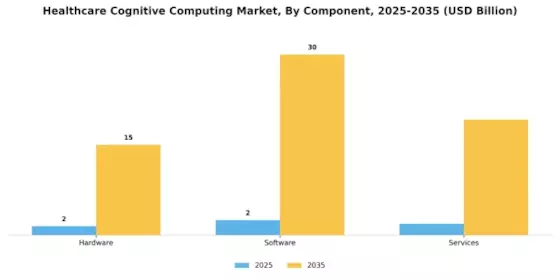
In the Healthcare Cognitive Computing Market, the 'Component' segment showcases a diverse distribution among its key values: Hardware, Software, and Services. Software emerges as the largest component, reflecting its essential role in driving cognitive applications and healthcare analytics. Hardware, while significant, plays a supportive role in the overall ecosystem, whereas Services are rapidly gaining traction, driven by the increasing demand for tailored solutions and integration capabilities.
Software (Dominant) vs. Services (Emerging)
Software, as the dominant player in the Healthcare Cognitive Computing Market, offers advanced analytics, machine learning, and AI-driven applications that enhance decision-making and operational efficiency in healthcare settings. It significantly improves patient outcomes and operational workflows. On the other hand, Services is identified as an emerging segment, which includes consulting, integration, and support services that enhance software applications. The growing complexity of healthcare data is stimulating demand for specialized services, positioning this segment for rapid growth as organizations seek efficient deployment and management of cognitive computing solutions.
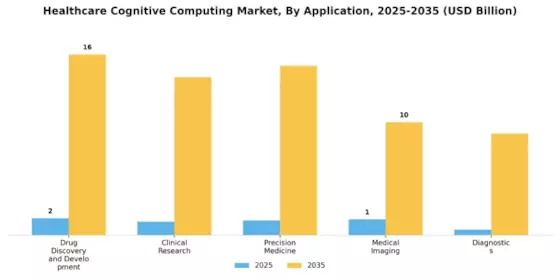
In the Healthcare Cognitive Computing Market, the application segment is diversified with Drug Discovery and Development leading in market share. This segment benefits from substantial investments due to its critical role in streamlining pharmaceutical research processes. Clinical Research follows, emphasizing improving patient outcomes through data-driven insights. Precision Medicine, Medical Imaging, and Diagnostics also play crucial roles, each contributing to the overall dynamics by leveraging AI and machine learning capabilities.
Drug Discovery and Development (Dominant) vs. Diagnostics (Emerging)
Drug Discovery and Development is a dominant application within the Healthcare Cognitive Computing Market, representing the backbone for innovative therapeutic development. It relies heavily on advanced algorithms to process vast datasets, achieving significant advancements in identifying potential drug candidates. Meanwhile, Diagnostics is an emerging field that is witnessing rapid growth, fueled by the increasing demand for personalized healthcare solutions and AI advancements. The focus on accuracy in diagnostic procedures supports its expansion, enabling clinicians to leverage cognitive computing for better patient care and outcomes.
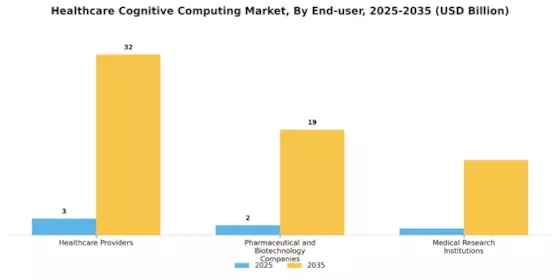
In the Healthcare Cognitive Computing Market, the distribution of market share is notable. Healthcare Providers represent the largest segment, capitalizing on the demand for improved patient care and operational efficiency through cognitive computing solutions. This segment encompasses various facilities including hospitals, clinics, and outpatient services, driving significant engagement in technology adoption. In parallel, Pharmaceutical and Biotechnology Companies are rapidly gaining traction, increasingly relying on cognitive computing to enhance drug discovery, clinical trials, and personalized medicine strategies. Their contributions are becoming more significant as they leverage advanced analytics for research and development initiatives.
Healthcare Providers (Dominant) vs. Pharmaceutical and Biotechnology Companies (Emerging)
Healthcare Providers are currently the dominant players within the Healthcare Cognitive Computing Market. They utilize cognitive technologies to streamline workflows, improve diagnostics, and enhance patient experiences, setting industry standards. Their comprehensive approach towards integrating cognitive solutions reflects a keen focus on operational excellence and patient care. Conversely, Pharmaceutical and Biotechnology Companies represent an emerging segment, harnessing cognitive computing to revolutionize their R&D processes. This segment focuses on utilizing AI for predictive analytics in drug development, increasing efficiency in clinical trials, and enhancing patient targeting strategies. As these technologies mature, they will likely disrupt traditional R&D paradigms and foster innovative therapeutic discoveries.
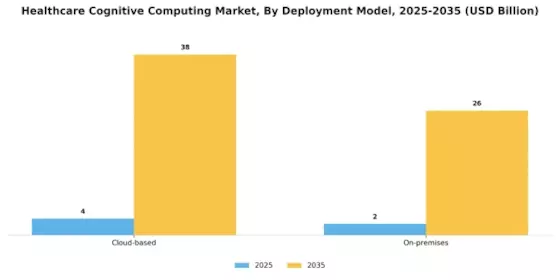
In the Healthcare Cognitive Computing Market, cloud-based models dominate the deployment model landscape, largely due to their scalability, cost-effectiveness, and ease of access. Most healthcare organizations are gravitating towards cloud solutions as they provide seamless integration with existing systems and data sources, enabling improved clinical decision-making and operational efficiency. On the other hand, the on-premises deployment model is also gaining traction, particularly among larger healthcare institutions that prioritize data security and regulatory compliance over the flexibility offered by cloud solutions.
Cloud-based (Dominant) vs. On-premises (Emerging)
Cloud-based deployment in the healthcare cognitive computing sector stands as the dominant approach, primarily attributed to its advantages in scalability and remote accessibility. This model allows healthcare providers to access advanced cognitive computing tools anytime and anywhere, facilitating data sharing and collaboration among caregivers. Conversely, the on-premises model is emerging, favored by organizations with stringent data privacy concerns. It provides high levels of control over data processing and security, catering specifically to institutions that must comply with rigorous regulatory standards. This duality between cloud and on-premises solutions illustrates a competitive landscape where evolving technological needs and privacy requirements actively shape strategic decisions in healthcare.
In the Healthcare Cognitive Computing Market, Machine Learning holds the largest share among the technology segments, driven by its wide application in predictive analytics and patient management. Natural Language Processing and Computer Vision also play crucial roles, providing innovative solutions for clinical documentation and imaging analysis. However, Deep Learning is rapidly gaining traction, becoming an essential tool for advanced image recognition and diagnostics, thereby expanding its market influence significantly.
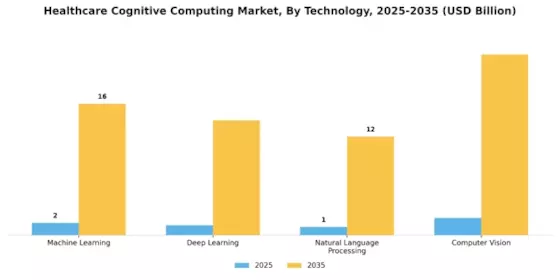
Technology: Machine Learning (Dominant) vs. Deep Learning (Emerging)
Machine Learning stands out as the dominant force in the healthcare cognitive computing landscape, offering a variety of algorithmic approaches that support everything from patient diagnosis to operational efficiency. Its capability to analyze vast datasets and extract valuable insights makes it indispensable in modern healthcare solutions. Conversely, Deep Learning, characterized by its ability to learn from unstructured data and perform complex tasks such as image and speech recognition, is emerging as a powerful tool, particularly in areas that require high accuracy in diagnostics and treatment suggestions. As healthcare continues to evolve, the synergy between these technologies is expected to further enhance patient outcomes and operational effectiveness.
Get more detailed insights about Healthcare Cognitive Computing Market Request Free Sample
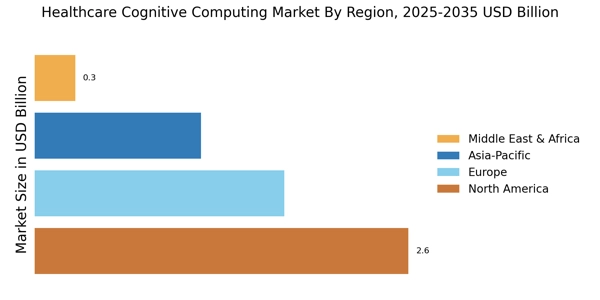
North America leads the Healthcare Cognitive Computing Market, holding approximately 45% of the global share, driven by advanced technology adoption, significant investments in healthcare IT, and a robust regulatory framework. The demand for personalized medicine and data analytics is surging, supported by government initiatives promoting digital health solutions. The U.S. is the largest market, followed by Canada, which contributes around 10% to the overall market share. The competitive landscape is characterized by the presence of major players such as IBM, Google, and Microsoft, which are at the forefront of innovation. These companies are leveraging AI and machine learning to enhance healthcare delivery and patient outcomes. The U.S. government's support for healthcare technology initiatives further strengthens the Healthcare Cognitive Computing Market, fostering an environment conducive to growth and collaboration among tech giants and healthcare providers.
Europe is witnessing a significant transformation in the Healthcare Cognitive Computing Market, holding around 30% of the global share. The region's growth is fueled by increasing investments in digital health technologies, a rising aging population, and supportive government policies aimed at enhancing healthcare efficiency. Countries like Germany and the UK are leading the charge, with Germany accounting for approximately 12% of the market share, driven by its strong healthcare infrastructure and innovation initiatives. The competitive landscape in Europe is diverse, with key players like Siemens and Philips making substantial contributions to the Healthcare Cognitive Computing Market. The presence of various startups and established companies fosters innovation and competition. Regulatory bodies are actively promoting the integration of cognitive computing in healthcare, ensuring compliance with data protection laws and enhancing patient care. The European Commission emphasizes the importance of digital health in its strategic plans for the region.
Asia-Pacific is rapidly emerging as a significant player in the Healthcare Cognitive Computing Market, accounting for approximately 20% of the global share. The region's growth is driven by increasing healthcare expenditure, a growing population, and the rising prevalence of chronic diseases. Countries like China and India are at the forefront, with China holding about 10% of the market share, supported by government initiatives promoting healthcare digitization and innovation. The competitive landscape is evolving, with both local and international players vying for market share. Companies like Cerner and Epic Systems are expanding their presence in the region, collaborating with local healthcare providers to enhance service delivery. The increasing adoption of telemedicine and AI-driven solutions is reshaping the healthcare landscape, making cognitive computing an essential component of future healthcare strategies. The region's diverse market dynamics present both challenges and opportunities for growth.
The Middle East and Africa region is gradually emerging in the Healthcare Cognitive Computing Market, holding around 5% of the global share. The growth is primarily driven by increasing investments in healthcare infrastructure, a rising demand for advanced healthcare solutions, and government initiatives aimed at improving healthcare access. Countries like South Africa and the UAE are leading the market, with the UAE focusing on digital health strategies to enhance patient care and operational efficiency. The competitive landscape is characterized by a mix of local and international players, with companies exploring partnerships to leverage technology in healthcare. The region's unique challenges, such as varying regulatory environments and economic disparities, present both hurdles and opportunities for market players. As governments prioritize healthcare innovation, the potential for cognitive computing solutions is significant, paving the way for future growth in this untapped market.
The Healthcare Cognitive Computing Market is currently characterized by a dynamic competitive landscape, driven by rapid advancements in artificial intelligence, data analytics, and machine learning technologies. Key players such as IBM (US), Google (US), and Microsoft (US) are at the forefront, leveraging their technological prowess to enhance healthcare delivery and operational efficiency. IBM (US) focuses on integrating AI into clinical workflows, while Google (US) emphasizes data-driven insights to improve patient outcomes. Microsoft (US) is strategically positioning itself through partnerships with healthcare providers to facilitate digital transformation, thereby shaping a competitive environment that prioritizes innovation and collaboration. The market structure appears moderately fragmented, with a mix of established players and emerging startups. Key business tactics include localizing manufacturing and optimizing supply chains to enhance responsiveness to market demands. The collective influence of major companies fosters a competitive atmosphere where agility and adaptability are paramount, as firms strive to meet the evolving needs of healthcare systems worldwide. In August 2025, IBM (US) announced a partnership with a leading hospital network to implement its Watson Health platform, aiming to streamline patient data management and enhance clinical decision-making. This strategic move underscores IBM's commitment to integrating cognitive computing into healthcare, potentially improving patient care and operational efficiency. The collaboration is likely to set a precedent for future partnerships, emphasizing the importance of data interoperability in healthcare. In September 2025, Google (US) launched a new AI-driven tool designed to assist healthcare professionals in diagnosing rare diseases. This initiative not only showcases Google's innovative capabilities but also highlights its strategic focus on addressing critical gaps in healthcare diagnostics. By harnessing vast datasets, Google aims to empower clinicians with actionable insights, thereby enhancing diagnostic accuracy and patient outcomes. In October 2025, Microsoft (US) expanded its Azure cloud services tailored for healthcare, introducing advanced analytics features that enable healthcare organizations to derive insights from patient data more effectively. This expansion reflects Microsoft's ongoing strategy to solidify its presence in the healthcare sector, facilitating a shift towards data-driven decision-making. The move is indicative of a broader trend where cloud computing and cognitive technologies converge to transform healthcare delivery. The Healthcare Cognitive Computing Market is growing significantly with the evolving technologies. As of October 2025, current competitive trends in the Healthcare Cognitive Computing Market are increasingly defined by digitalization, sustainability, and the integration of AI technologies. Strategic alliances among key players are shaping the landscape, fostering innovation and enhancing service delivery. Looking ahead, competitive differentiation is likely to evolve, with a pronounced shift from price-based competition to a focus on technological innovation, reliability in supply chains, and the ability to deliver superior patient outcomes.



The market growth is attributed to the increasing adoption of AI in healthcare, the rising demand for personalized medicine, and the growing need for efficient healthcare delivery. Key market players include IBM, Google, Microsoft, and Amazon Web Services.
In recent news, IBM announced a partnership with the Mayo Clinic to develop AI-powered solutions for cancer diagnosis and treatment. Google has launched a new AI platform called "Google Health" to provide patients with personalized health insights. These developments indicate the increasing importance of cognitive computing in healthcare and its potential to transform patient care and improve health outcomes.
The Healthcare Cognitive Computing Market is projected to grow at a 24.25% CAGR from 2025 to 2035, driven by advancements in AI, data analytics, and personalized medicine.
New opportunities lie in:
By 2035, the Healthcare Cognitive Computing Market is expected to be a cornerstone of healthcare innovation and efficiency.
| MARKET SIZE 2024 | 5.889(USD Billion) |
| MARKET SIZE 2025 | 7.317(USD Billion) |
| MARKET SIZE 2035 | 64.18(USD Billion) |
| COMPOUND ANNUAL GROWTH RATE (CAGR) | 24.25% (2025 - 2035) |
| REPORT COVERAGE | Revenue Forecast, Competitive Landscape, Growth Factors, and Trends |
| BASE YEAR | 2024 |
| Market Forecast Period | 2025 - 2035 |
| Historical Data | 2019 - 2024 |
| Market Forecast Units | USD Billion |
| Key Companies Profiled | IBM (US), Google (US), Microsoft (US), Amazon (US), Apple (US), Siemens (DE), Philips (NL), Cerner (US), Epic Systems (US) |
| Segments Covered | Component, Application, End-user, Deployment Model, Technology, Regional |
| Key Market Opportunities | Integration of artificial intelligence enhances diagnostic accuracy in the Healthcare Cognitive Computing Market. |
| Key Market Dynamics | Rising demand for personalized healthcare solutions drives innovation in cognitive computing technologies and applications. |
| Countries Covered | North America, Europe, APAC, South America, MEA |
The projected market valuation for the Healthcare Cognitive Computing Market by 2035 is 64.18 USD Billion.
The overall market valuation of the Healthcare Cognitive Computing Market was 5.889 USD Billion in 2024.
The expected CAGR for the Healthcare Cognitive Computing Market during the forecast period 2025 - 2035 is 24.25%.
Key players in the Healthcare Cognitive Computing Market include IBM, Google, Microsoft, Amazon, Apple, Siemens, Philips, Cerner, and Epic Systems.
The main components of the Healthcare Cognitive Computing Market include Hardware, Software, and Services, with valuations ranging from 1.5 to 30.0 USD Billion.
Applications driving growth in the Healthcare Cognitive Computing Market include Drug Discovery and Development, Clinical Research, Precision Medicine, Medical Imaging, and Diagnostics.
The market size for cloud-based deployment in the Healthcare Cognitive Computing Market is projected to reach 38.0 USD Billion.
Healthcare providers are expected to contribute significantly, with a market size of 32.09 USD Billion.
Technologies utilized in the Healthcare Cognitive Computing Market include Machine Learning, Deep Learning, Natural Language Processing, and Computer Vision.
The market size for medical research institutions in the Healthcare Cognitive Computing Market is projected to be 13.36 USD Billion.


The secondary research process involved comprehensive analysis of regulatory databases, peer-reviewed medical and technology journals, clinical publications, government health IT repositories, and authoritative technology and healthcare organizations. Key sources included the US Department of Health and Human Services (HHS), Office of the National Coordinator for Health Information Technology (ONC), Food and Drug Administration (FDA) Digital Health Center of Excellence, European Medicines Agency (EMA), European Commission's Digital Health and Care Directorate, National Institutes of Health (NIH) National Library of Medicine, National Center for Biotechnology Information (NCBI/PubMed), Agency for Healthcare Research and Quality (AHRQ), Centers for Medicare & Medicaid Services (CMS) Office of Information Technology, National Institute of Standards and Technology (NIST) Cybersecurity Framework, Healthcare Information and Management Systems Society (HIMSS), American Medical Informatics Association (AMIA), International Medical Informatics Association (IMIA), Organization for Economic Cooperation and Development (OECD) Health Statistics, World Health Organization (WHO) Digital Health Repository, World Bank Digital Development Global Practice, EU Eurostat Digital Economy and Society Statistics, and national digital health strategy reports from key markets including China's National Health Commission, India's Ministry of Health and Family Welfare Digital Health Mission, and Japan's Ministry of Health, Labour and Welfare.
Healthcare IT adoption statistics, regulatory approval data for AI/ML-based medical devices, clinical validation studies, interoperability standards, trends in healthcare spending, and competitive landscape analysis for machine learning platforms, natural language processing tools, computer vision systems, and deep learning frameworks used in clinical settings were all gathered from these sources.
In order to gather both qualitative and quantitative insights, supply-side and demand-side stakeholders were interviewed during the primary research process. CEOs, chief technology officers, vice presidents of artificial intelligence and data science, heads of regulatory affairs, chief medical informatics officers, and commercial directors from cloud service providers, medical device manufacturers, health IT vendors, and healthcare cognitive computing platform developers were examples of supply-side sources. Chief information officers, chief medical officers, clinical informaticists, heads of radiology departments, directors of pharmaceutical R&D, program leads for precision medicine, and procurement managers from integrated delivery networks, academic medical centers, specialty clinics, pharmaceutical companies, biotechnology companies, and contract research organizations were among the demand-side sources. In addition to confirming product pipeline timelines for FDA-cleared AI algorithms and gathering information on clinical adoption patterns, enterprise licensing strategies, data governance frameworks, and reimbursement pathways for cognitive computing solutions, primary research verified market segmentation across components (hardware, software, services), applications (drug discovery, clinical research, precision medicine, medical imaging, diagnostics), and deployment models (cloud-based, on-premises).
Primary Respondent Breakdown:
By Designation: C-level Primaries (32%), Director Level (31%), Others (37%)
By Region: North America (38%), Europe (25%), Asia-Pacific (28%), Rest of World (9%)
Global market valuation was derived through revenue mapping, enterprise contract value analysis, and healthcare IT expenditure modeling. The methodology included:
Identification of 50+ key technology vendors and healthcare AI developers across North America, Europe, Asia-Pacific, and Latin America
Product mapping across machine learning platforms, deep learning frameworks, natural language processing engines, computer vision systems, and associated hardware infrastructure
Analysis of reported and modeled annual revenues specific to healthcare cognitive computing portfolios, including cloud-based cognitive services, on-premises enterprise deployments, and professional services
Coverage of vendors representing 72-78% of global market share in 2024
Extrapolation using bottom-up (healthcare provider IT budgets × cognitive computing allocation by country, pharmaceutical R&D AI spending, procedure volume × AI-enabled diagnostic pricing) and top-down (vendor revenue validation, healthcare IT market share analysis) approaches to derive segment-specific valuations across technology types, clinical applications, and end-user verticals
Kindly complete the form below to receive a free sample of this Report

“This is really good guys. Excellent work on a tight deadline. I will continue to use you going forward and recommend you to others. Nice job”


“Thanks. It’s been a pleasure working with you, please use me as reference with any other Intel employees.”


“Thanks for sending the report it gives us a good global view of the Betaïne market.”


“Thank you, this will be very helpful for OQS.”


“We found the report very insightful! we found your research firm very helpful. I'm sending this email to secure our future business.”


“I am very pleased with how market segments have been defined in a relevant way for my purposes (such as "Portable Freezers & refrigerators" and "last-mile"). In general the report is well structured. Thanks very much for your efforts.”


“I have been reading the first document or the study, ,the Global HVAC and FP market report 2021 till 2026. Must say, good info! I have not gone in depth at all parts, but got a good indication of the data inside!”


“We got the report in time, we really thank you for your support in this process. I also thank to all of your team as they did a great job.”


“The Automotive 48V ECU Components Procurement Intelligence Study” was a complex project, but the Market Research Future (MRFR) team handled it with quality, agility, and customer-centricity. They delivered all requested data on time and within the agreed scope. The team, including Shubhendra Anand and Rahul Gotadki, was always readily available to clarify questions and swiftly implement necessary adjustments, driving the project to a successful conclusion within a very demanding timeframe.
I would also like to specifically commend Akshay Agarwal for his responsiveness and support at every stage—from our initial inquiry on May 6th through to final delivery on June 18th. His dedication made the entire process seamless.”



