×
Request Free Sample ×

Kindly complete the form below to receive a free sample of this Report

* Please use a valid business email

Leading companies partner with us for data-driven Insights

clients tt-cursor
Hero Background

Healthcare Payer Network Management Market

ID: MRFR/HC/22751-HCR
128 Pages
Rahul Gotadki
October 2025

Healthcare Payer Network Management Market Research Report By Payer Type (Commercial Payers, Government Payers), By Network Design (Exclusive Networks, Open Networks, Tiered Networks), By Network Management Services (Utilization Management, Credentialing and Contracting, Reporting and Analytics), By Integration with Healthcare IT Systems (Electronic Health Records (EHRs), Health Information Exchanges (HIEs), Payer Portals) and By Regional (North America, Europe, South America, Asia-Pacific, Middle East and Africa) - Forecast to 2035

Share:
Download PDF ×

We do not share your information with anyone. However, we may send you emails based on your report interest from time to time. You may contact us at any time to opt-out.

Healthcare Payer Network Management Market Infographic
Purchase Options

Healthcare Payer Network Management Market Summary

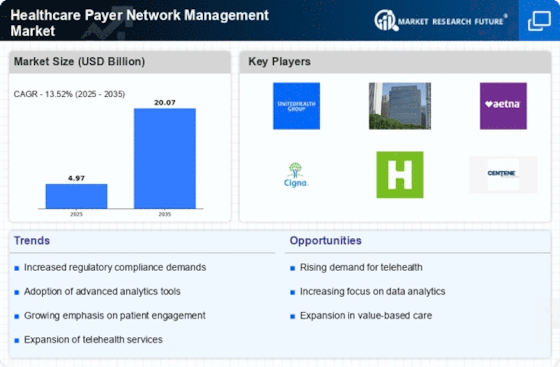
As per MRFR analysis, the Healthcare Payer Network Management Market Size was estimated at 4.974 USD Billion in 2024. The Healthcare Payer Network Management industry is projected to grow from 5.646 USD Billion in 2025 to 20.07 USD Billion by 2035, exhibiting a compound annual growth rate (CAGR) of 13.52 during the forecast period 2025 - 2035.

Key Market Trends & Highlights

The Healthcare Payer Network Management Market is experiencing a transformative shift towards data-driven and patient-centric approaches.

  • The market is witnessing an increased focus on data analytics to enhance decision-making and operational efficiency.
  • Integration of technology solutions is becoming prevalent, facilitating seamless network management and improved service delivery.
  • Value-based care is gaining traction, reflecting a broader industry shift towards patient outcomes and cost-effectiveness.
  • Rising demand for cost efficiency and regulatory compliance are driving growth, particularly among commercial payers in North America and government payers in the Asia-Pacific region.

Market Size & Forecast

2024 Market Size 4.974 (USD Billion)
2035 Market Size 20.07 (USD Billion)
CAGR (2025 - 2035) 13.52%

Major Players

UnitedHealth Group (US), Anthem (US), Aetna (US), Cigna (US), Humana (US), Centene Corporation (US), Molina Healthcare (US), WellCare Health Plans (US), Blue Cross Blue Shield (US)

Healthcare Payer Network Management Market Trends

The Healthcare Payer Network Management Market is currently experiencing a transformative phase, driven by the increasing complexity of healthcare systems and the need for efficient management of payer networks. As healthcare organizations strive to enhance operational efficiency, the demand for advanced network management solutions appears to be on the rise. This market is characterized by a growing emphasis on data analytics, interoperability, and the integration of technology to streamline processes. Stakeholders are increasingly recognizing the importance of robust network management strategies to navigate the evolving landscape of healthcare delivery and reimbursement models. Moreover, the Healthcare Payer Network Management Market seems poised for further growth as regulatory changes and consumer expectations continue to shape the industry. The shift towards value-based care is prompting payers to adopt innovative solutions that facilitate better collaboration with providers and improve patient outcomes. As a result, organizations are likely to invest in comprehensive network management tools that not only enhance operational capabilities but also support strategic decision-making. This evolving market landscape suggests a promising future for stakeholders who can adapt to the changing dynamics and leverage technology to optimize their payer networks.

Increased Focus on Data Analytics

The Healthcare Payer Network Management Market is witnessing a heightened emphasis on data analytics. Organizations are increasingly utilizing advanced analytics to gain insights into network performance, patient outcomes, and cost management. This trend indicates a shift towards data-driven decision-making, enabling payers to optimize their networks and improve overall efficiency.

Integration of Technology Solutions

There is a notable trend towards the integration of technology solutions within the Healthcare Payer Network Management Market. Payers are adopting innovative tools such as artificial intelligence and machine learning to enhance their network management capabilities. This integration appears to facilitate better communication and collaboration among stakeholders, ultimately leading to improved service delivery.

Emphasis on Value-Based Care

The transition towards value-based care is significantly influencing the Healthcare Payer Network Management Market. Payers are increasingly focusing on strategies that align incentives with patient outcomes. This trend suggests a growing recognition of the need for effective network management solutions that support the delivery of high-quality care while controlling costs.

Healthcare Payer Network Management Market Drivers

Rising Demand for Cost Efficiency

The Healthcare Payer Network Management Market is experiencing a notable shift towards cost efficiency as healthcare organizations seek to optimize their operations. With rising healthcare costs, payers are increasingly pressured to manage expenses while maintaining quality care. This demand for cost efficiency drives the adoption of advanced network management solutions that streamline processes and reduce administrative burdens. According to recent data, healthcare payers that implement effective network management strategies can achieve up to a 20% reduction in operational costs. This trend indicates a growing recognition of the importance of efficient network management in sustaining profitability and enhancing service delivery.

Regulatory Compliance and Standards

Regulatory compliance remains a critical driver within the Healthcare Payer Network Management Market. As healthcare regulations evolve, payers must adapt their network management practices to meet new standards. Compliance with regulations such as HIPAA and the Affordable Care Act necessitates robust network management solutions that ensure data security and patient privacy. The increasing complexity of regulatory requirements compels payers to invest in technologies that facilitate compliance, thereby enhancing their operational capabilities. It is estimated that organizations prioritizing compliance can reduce the risk of penalties and improve their market positioning, making this a vital aspect of network management.

Shift Towards Value-Based Care Models

The transition to value-based care models is significantly influencing the Healthcare Payer Network Management Market. Payers are increasingly focusing on outcomes rather than services rendered, which necessitates a reevaluation of network management strategies. This shift encourages the integration of performance metrics and patient satisfaction indicators into network management processes. As a result, payers are investing in analytics and reporting tools to assess the effectiveness of care delivery. Data suggests that organizations embracing value-based care can improve patient outcomes while reducing costs, thereby reinforcing the importance of effective network management in this evolving landscape.

Increased Focus on Patient-Centric Care

The emphasis on patient-centric care is becoming a pivotal driver in the Healthcare Payer Network Management Market. Payers are recognizing the need to align their network management strategies with the preferences and needs of patients. This focus on patient engagement and satisfaction is prompting payers to develop more flexible and responsive networks that cater to diverse patient populations. By prioritizing patient-centric approaches, payers can enhance care delivery and improve health outcomes. Data indicates that organizations adopting patient-centric models can see a significant increase in patient retention and satisfaction, underscoring the importance of effective network management in achieving these goals.

Technological Advancements in Network Management

Technological advancements are reshaping the Healthcare Payer Network Management Market, driving innovation and efficiency. The integration of artificial intelligence, machine learning, and big data analytics into network management systems enables payers to enhance decision-making processes and optimize resource allocation. These technologies facilitate real-time data analysis, allowing for proactive management of provider networks and improved patient care coordination. As a result, payers that leverage these advancements can achieve a competitive edge in the market. The ongoing evolution of technology suggests that the Healthcare Payer Network Management Market will continue to expand as organizations seek to harness these tools for better outcomes.


Market Segment Insights

By Payer Type: Commercial Payers (Largest) vs. Government Payers (Fastest-Growing)

In the Healthcare Payer Network Management Market, the market share is significantly skewed towards Commercial Payers, which dominate the landscape due to their ability to offer diverse and tailored services. These payers account for a substantial portion of the market, driven by the increasing demand for innovative healthcare solutions and personalized insurance products. Conversely, Government Payers, while smaller in market share at present, are quickly establishing their presence, attributed to rising government initiatives to enhance healthcare accessibility and affordability for the populace. The expansion of Medicare and Medicaid programs has also stimulated this growth, supporting a robust infrastructure for Government Payers. As the Healthcare Payer Network Management Market evolves, Government Payers are poised to witness rapid growth fueled by regulatory changes and the increasing emphasis on value-based care models. Businesses are adapting their strategies to accommodate the shift towards public healthcare funding, resulting in an uptick in technology adoption aimed at streamlining processes within the public sector. Meanwhile, Commercial Payers are focusing on leveraging digital health solutions to maintain their lead, offering innovative approaches that meet the needs of the modern consumer. Together, these segments are reshaping the healthcare landscape, making the market dynamic and competitive.

Commercial Payers (Dominant) vs. Government Payers (Emerging)

Commercial Payers are critical players in the Healthcare Payer Network Management Market, characterized by their flexible plans that cater to a wide array of demographics, from individuals to large corporations. Their dominance is enhanced by a well-established infrastructure and a strong focus on enhancing member experiences through innovative digital health solutions. On the other hand, Government Payers are emerging as vital contributors, supported by extensive legislative backing and programs aimed at improving healthcare accessibility. This segment is gradually evolving, pivoting towards value-based care methodologies that resonate with current healthcare trends. The interplay between these two segments highlights a competitive yet collaborative environment, as both adjust to the changing needs of healthcare delivery and reimbursement frameworks.

By Network Design: Exclusive Networks (Largest) vs. Open Networks (Fastest-Growing)

In the Healthcare Payer Network Management Market, Exclusive Networks account for a significant share due to their ability to control access and pricing. They provide a tailored network for specific groups or health plans, often resulting in lower costs for these groups. On the other hand, Open Networks have been gaining traction, appealing to providers seeking flexibility and broader patient access. As these models evolve, the distribution between Exclusive and Open Networks is increasingly shaping payer strategies.

Exclusive Networks (Dominant) vs. Open Networks (Emerging)

Exclusive Networks represent a dominant strategy in the market, as they restrict provider participation to a curated list, which enables payers to negotiate better rates and manage patient care more effectively. This closed approach fosters strong relationships with selected providers, ensuring quality care and coordinated services. Conversely, Open Networks are emerging as a competitive alternative, especially among younger, tech-savvy patients. They offer greater provider choice and streamlined access to services, catering to consumer demands for flexibility and convenience. As a result, Open Networks are rapidly evolving and attracting attention from health plans aiming to enhance member satisfaction.

By Network Management Services: Utilization Management (Largest) vs. Credentialing and Contracting (Fastest-Growing)

In the Healthcare Payer Network Management Market, Utilization Management dominates the segment with its extensive use in ensuring the effective allocation of resources while maintaining cost efficiency. Credentialing and Contracting follows closely as the fastest-growing segment, contributing significantly to the establishment of network adequacy and provider engagement. Furthermore, Reporting and Analytics serves as a crucial support function, enhancing decision-making processes across all areas of network management.

Utilization Management (Dominant) vs. Credentialing and Contracting (Emerging)

Utilization Management is a dominant force in the market due to its critical role in overseeing the appropriateness of healthcare services provided to patients. This segment emphasizes cost-control measures and ensures that patients receive necessary medical services while avoiding unnecessary expenses. In contrast, Credentialing and Contracting is emerging swiftly within the sector, driven by the increasing need for healthcare efficiency and compliance. This segment focuses on verifying provider qualifications and negotiating contracts, thus enhancing provider networks. As healthcare landscapes evolve, the significance of both segments in optimizing network performance and patient care becomes more apparent.

By Integration with Healthcare IT Systems: Electronic Health Records (EHRs) (Largest) vs. Payer Portals (Fastest-Growing)

In the Healthcare Payer Network Management Market, the market share distribution is prominently led by Electronic Health Records (EHRs), which hold a substantial portion of the segment due to their critical role in improving patient care coordination and operational efficiency. Health Information Exchanges (HIEs) also play a significant role but remain behind EHRs in terms of market penetration. Payer Portals, while smaller in market share compared to EHRs and HIEs, are rapidly gaining traction as more payers recognize the importance of direct engagement with members and providers.

EHRs (Dominant) vs. Payer Portals (Emerging)

Electronic Health Records (EHRs) are at the forefront of the integration with healthcare IT systems in the Healthcare Payer Network Management Market, predominating due to their comprehensive functionalities that streamline information flow and enhance patient care quality. Meanwhile, Payer Portals represent an emerging trend driven by the increasing demand for transparency and accessibility among patients and healthcare providers. These portals allow for efficient communication and claims management, enhancing member engagement. While EHRs currently dominate, the rapid growth of Payer Portals indicates a shift toward more interactive and user-friendly interfaces, showcasing an evolving landscape in network management.

Get more detailed insights about Healthcare Payer Network Management Market

Regional Insights

North America : Healthcare Innovation Leader

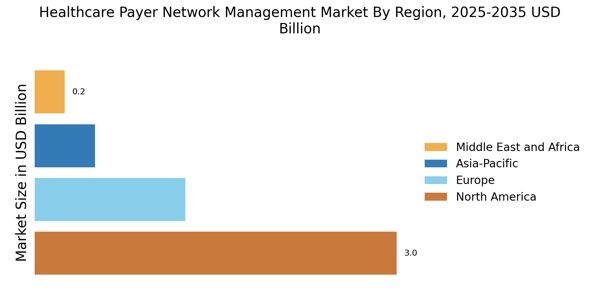
North America is the largest market for Healthcare Payer Network Management Market, holding approximately 60% of the global market share. The region's growth is driven by increasing healthcare expenditures, technological advancements, and a strong regulatory framework that encourages innovation. The demand for efficient payer management solutions is further fueled by the rising prevalence of chronic diseases and the need for cost-effective healthcare delivery. The United States is the leading country in this market, with major players like UnitedHealth Group, Anthem, and Aetna dominating the landscape. The competitive environment is characterized by strategic partnerships and mergers aimed at enhancing service offerings. The presence of advanced healthcare infrastructure and a focus on digital transformation are key factors contributing to the region's robust market position.

Europe : Emerging Market Dynamics

Europe is witnessing significant growth in the Healthcare Payer Network Management Market, accounting for approximately 25% of the global share. The region's expansion is driven by increasing regulatory requirements for healthcare transparency and efficiency, alongside a growing emphasis on patient-centered care. Countries are investing in digital health solutions to streamline operations and improve service delivery, which is further supported by EU regulations promoting interoperability. Leading countries in this market include Germany, the UK, and France, where key players like Cigna and Humana are actively expanding their operations. The competitive landscape is marked by collaborations between payers and technology providers to enhance service offerings. The focus on value-based care and the integration of AI and analytics into payer management systems are shaping the future of this market.

Asia-Pacific : Rapid Growth Potential

Asia-Pacific is rapidly emerging as a significant player in the Healthcare Payer Network Management Market, holding around 10% of the global market share. The region's growth is driven by increasing healthcare investments, a rising middle class, and the adoption of digital health technologies. Governments are implementing policies to enhance healthcare access and affordability, which is catalyzing demand for efficient payer management solutions across various countries. Key countries in this region include China, India, and Japan, where local and international players are competing to capture market share. The competitive landscape is characterized by a mix of traditional payers and new entrants focusing on innovative solutions. The presence of major healthcare reforms and a growing emphasis on preventive care are expected to further boost market growth in the coming years.

Middle East and Africa : Untapped Market Opportunities

The Middle East and Africa region is gradually emerging in the Healthcare Payer Network Management Market, accounting for about 5% of the global share. The growth is primarily driven by increasing healthcare investments, a rising demand for quality healthcare services, and government initiatives aimed at improving healthcare infrastructure. The region is witnessing a shift towards digital health solutions, which is expected to enhance payer management efficiency and patient care. Leading countries in this region include South Africa, UAE, and Saudi Arabia, where the competitive landscape is evolving with both local and international players entering the market. The presence of key players is growing, and partnerships between payers and technology firms are becoming more common. The focus on improving healthcare access and quality is likely to drive further growth in this sector.

Healthcare Payer Network Management Market Regional Image

Key Players and Competitive Insights

Major players in the Healthcare Payer Network Management Market are continuously innovating and developing new products and services to gain a competitive edge.Leading Healthcare Payer Network Management Market players are investing in research and development to improve the efficiency and effectiveness of their network management solutions. They are also partnering with other healthcare organizations to expand their reach and offer a wider range of services.The Healthcare Payer Network Management Market development is being driven by the increasing need for cost containment, improved quality of care, and enhanced patient satisfaction.

Healthcare payers are looking for ways to manage their networks more efficiently and effectively, and network management solutions can help them achieve these goals. The Healthcare Payer Network Management Market Competitive Landscape is expected to remain competitive in the coming years, with major players continuing to invest in innovation and development.OptumInsight, a leading company in the Healthcare Payer Network Management Market, offers a comprehensive suite of solutions that help payers manage their networks more effectively. The company's solutions include network analytics, provider contracting, and claims processing.

OptumInsight's network analytics solution provides payers with a real-time view of their network performance, allowing them to identify areas for improvement. The company's provider contracting solution helps payers negotiate and manage contracts with providers, ensuring that they are getting the best possible rates and terms.OptumInsight's claims processing solution helps payers process claims quickly and accurately, reducing the risk of errors and delays.

IBM, a competitor company in the Healthcare Payer Network Management Market, offers a range of solutions that help payers improve the efficiency and effectiveness of their network management. The company's solutions include network optimization, provider credentialing, and fraud detection.IBM's network optimization solution helps payers identify and address inefficiencies in their networks, such as duplicate services or unnecessary referrals. The company's provider credentialing solution helps payers verify the credentials of providers, ensuring that they are qualified to provide care.

IBM's fraud detection solution helps payers identify and prevent fraudulent claims, reducing the risk of financial losses.

Key Companies in the Healthcare Payer Network Management Market market include

Industry Developments

The Healthcare Payer Network Management Market is witnessing a surge in demand due to the increasing need for efficient and cost-effective healthcare services.

Technological advancements, such as the adoption of AI and cloud-based solutions, are driving market growth.

Key players in the market include Optum, McKesson, and Change Healthcare, who are focusing on strategic partnerships and acquisitions to expand their offerings.

The increasing prevalence of chronic diseases and the growing elderly population are also contributing to the market's growth.

Future Outlook

Healthcare Payer Network Management Market Future Outlook

The Healthcare Payer Network Management Market is projected to grow at a 13.52% CAGR from 2024 to 2035, driven by technological advancements, regulatory changes, and increasing demand for efficient healthcare solutions.

New opportunities lie in:

  • Integration of AI-driven analytics for network optimization
  • Development of telehealth partnerships to expand service reach
  • Implementation of blockchain for secure data sharing and transactions

By 2035, the market is expected to be robust, reflecting substantial growth and innovation.

Market Segmentation

Healthcare Payer Network Management Market Payer Type Outlook

  • Commercial Payers
  • Government Payers

Healthcare Payer Network Management Market Network Design Outlook

  • Exclusive Networks
  • Open Networks
  • Tiered Networks

Healthcare Payer Network Management Market Network Management Services Outlook

  • Utilization Management
  • Credentialing and Contracting
  • Reporting and Analytics

Healthcare Payer Network Management Market Integration with Healthcare IT Systems Outlook

  • Electronic Health Records (EHRs)
  • Health Information Exchanges (HIEs)
  • Payer Portals

Report Scope

MARKET SIZE 20244.974(USD Billion)
MARKET SIZE 20255.646(USD Billion)
MARKET SIZE 203520.07(USD Billion)
COMPOUND ANNUAL GROWTH RATE (CAGR)13.52% (2024 - 2035)
REPORT COVERAGERevenue Forecast, Competitive Landscape, Growth Factors, and Trends
BASE YEAR2024
Market Forecast Period2025 - 2035
Historical Data2019 - 2024
Market Forecast UnitsUSD Billion
Key Companies ProfiledMarket analysis in progress
Segments CoveredMarket segmentation analysis in progress
Key Market OpportunitiesIntegration of advanced analytics and artificial intelligence enhances efficiency in the Healthcare Payer Network Management Market.
Key Market DynamicsTechnological advancements and regulatory changes drive competitive dynamics in the Healthcare Payer Network Management Market.
Countries CoveredNorth America, Europe, APAC, South America, MEA

Leave a Comment

FAQs

What is the projected market valuation of the Healthcare Payer Network Management Market by 2035?

The projected market valuation is expected to reach 20.07 USD Billion by 2035.

What was the market valuation of the Healthcare Payer Network Management Market in 2024?

The market valuation was 4.974 USD Billion in 2024.

What is the expected CAGR for the Healthcare Payer Network Management Market during the forecast period 2025 - 2035?

The expected CAGR is 13.52% during the forecast period 2025 - 2035.

Which companies are considered key players in the Healthcare Payer Network Management Market?

Key players include UnitedHealth Group, Anthem, Aetna, Cigna, Humana, Centene Corporation, Molina Healthcare, WellCare Health Plans, and Blue Cross Blue Shield.

What are the main segments of the Healthcare Payer Network Management Market?

The main segments include Payer Type, Network Design, Network Management Services, and Integration with Healthcare IT Systems.

What was the valuation of Commercial Payers in the Healthcare Payer Network Management Market in 2024?

The valuation of Commercial Payers was 3.0 USD Billion in 2024.

What is the projected valuation for Government Payers by 2035?

The projected valuation for Government Payers is expected to reach 8.07 USD Billion by 2035.

How much is the market expected to grow in the segment of Reporting and Analytics from 2024 to 2035?

The market for Reporting and Analytics is projected to grow from 2.274 USD Billion in 2024 to 8.57 USD Billion by 2035.

What is the expected growth in the segment of Payer Portals from 2024 to 2035?

The valuation of Payer Portals is expected to increase from 2.236 USD Billion in 2024 to 9.32 USD Billion by 2035.

What are the projected valuations for Exclusive Networks and Open Networks by 2035?

Exclusive Networks are projected to reach 6.5 USD Billion, while Open Networks are expected to reach 7.5 USD Billion by 2035.

Download Free Sample

Kindly complete the form below to receive a free sample of this Report

Compare Licence

×
Features License Type
Single User Multiuser License Enterprise User
Price $4,950 $5,950 $7,250
Maximum User Access Limit 1 User Upto 10 Users Unrestricted Access Throughout the Organization
Free Customization
Direct Access to Analyst
Deliverable Format
Platform Access
Discount on Next Purchase 10% 15% 15%
Printable Versions