Heart Attack Diagnostics Market
Heart Attack Diagnostics Market Summary
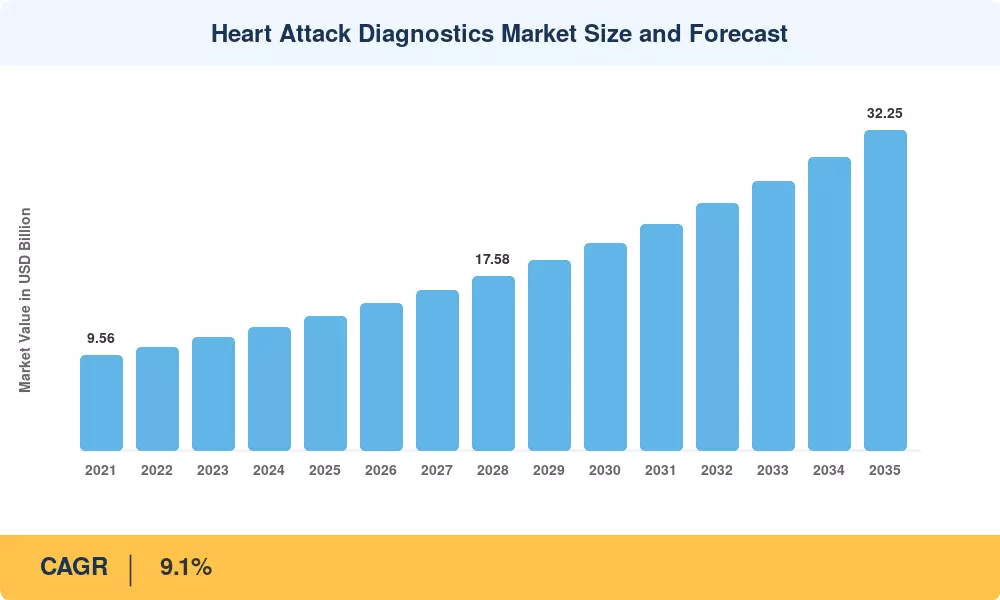
As per Market Research Future analysis, the Heart Attack Diagnostics Market was estimated at 12.26 USD Billion in 2024. The Heart Attack Diagnostics Market is projected to grow from 13.03 USD Billion in 2025 to 24.06 USD Billion by 2035, exhibiting a compound annual growth rate (CAGR) of 6.32% during the forecast period 2025 - 2035
Key Market Trends & Highlights
The Heart Attack Diagnostics Market is experiencing robust growth driven by technological advancements and increasing awareness.
- Technological advancements in diagnostics are reshaping the Heart Attack Diagnostics Market, particularly in North America.
- The integration of artificial intelligence is enhancing diagnostic accuracy and efficiency across various segments.
- Rising awareness and education about cardiovascular health are contributing to market expansion in the Asia-Pacific region.
- The increasing prevalence of cardiovascular diseases and advancements in diagnostic technologies are key drivers propelling market growth.
Market Size & Forecast
| 2024 Market Size | 12.26 (USD Billion) |
| 2035 Market Size | 24.06 (USD Billion) |
| CAGR (2025 - 2035) | 6.32% |
Major Players
Roche (CH), Abbott (US), Siemens Healthineers (DE), Thermo Fisher Scientific (US), Bayer (DE), Philips (NL), GE Healthcare (US), Ortho Clinical Diagnostics (US), Bio-Rad Laboratories (US)
Heart Attack Diagnostics Market Trends
The Heart Attack Diagnostics Market is currently experiencing a transformative phase, driven by advancements in technology and an increasing emphasis on early detection. Innovations in diagnostic tools, such as high-sensitivity troponin tests and advanced imaging techniques, are enhancing the accuracy of heart attack diagnoses. Furthermore, the integration of artificial intelligence and machine learning into diagnostic processes appears to streamline workflows and improve patient outcomes. As healthcare systems worldwide prioritize preventive measures, the demand for reliable and efficient diagnostic solutions is likely to rise, fostering a competitive landscape among key players in the market. In addition, the growing awareness of cardiovascular diseases and their risk factors is propelling the Heart Attack Diagnostics Market forward. Educational initiatives aimed at both healthcare professionals and the general public are contributing to a heightened understanding of symptoms and the importance of timely intervention. This shift in awareness may lead to increased patient engagement and a greater willingness to seek diagnostic services. As the market evolves, stakeholders must remain vigilant to emerging trends and adapt their strategies accordingly to meet the changing needs of patients and healthcare providers alike.
Technological Advancements in Diagnostics
The Heart Attack Diagnostics Market is witnessing rapid technological innovations that enhance diagnostic accuracy. New tools, including advanced imaging modalities and biomarker tests, are being developed to facilitate quicker and more precise identification of heart attacks.
Integration of Artificial Intelligence
Artificial intelligence is becoming increasingly prevalent in the Heart Attack Diagnostics Market. AI algorithms are being utilized to analyze complex data sets, potentially improving diagnostic efficiency and enabling personalized treatment plans for patients.
Rising Awareness and Education
There is a growing emphasis on public education regarding heart health. Increased awareness campaigns are likely to lead to more individuals recognizing symptoms of heart attacks, thereby driving demand for diagnostic services.
Heart Attack Diagnostics Market Drivers
Growing Geriatric Population
The expanding geriatric population is a crucial factor influencing the Heart Attack Diagnostics Market. As individuals age, the risk of developing cardiovascular diseases escalates, leading to a heightened need for effective diagnostic solutions. The World Health Organization projects that the number of people aged 60 years and older will double by 2050, which could significantly impact healthcare systems. This demographic shift necessitates the development of tailored diagnostic tools that cater to the unique needs of older adults. Consequently, the Heart Attack Diagnostics Market is likely to experience growth as healthcare providers adapt to the increasing demand for age-appropriate diagnostic services.
Rising Healthcare Expenditure
The upward trend in healthcare expenditure is another driving force behind the Heart Attack Diagnostics Market. As countries invest more in healthcare infrastructure and services, there is a corresponding increase in the availability and accessibility of diagnostic tools. This trend is particularly evident in emerging economies, where rising incomes and improved healthcare policies are facilitating greater access to advanced diagnostic technologies. Furthermore, increased spending on preventive healthcare measures is likely to enhance the demand for heart attack diagnostics, as early detection becomes a priority. As a result, the Heart Attack Diagnostics Market stands to benefit from this growing investment in healthcare, which is essential for improving patient outcomes.
Government Initiatives and Funding
Government initiatives aimed at reducing the burden of cardiovascular diseases are playing a pivotal role in shaping the Heart Attack Diagnostics Market. Various health organizations are allocating significant funding towards research and development of innovative diagnostic tools. For instance, initiatives that promote public awareness about heart health and encourage regular screenings are likely to increase the demand for diagnostic services. Additionally, policies that support the integration of advanced technologies in healthcare settings further stimulate market growth. As governments worldwide recognize the importance of early detection in improving health outcomes, the Heart Attack Diagnostics Market is expected to benefit from increased investments and supportive regulatory frameworks.
Advancements in Diagnostic Technologies
Technological innovations are significantly transforming the Heart Attack Diagnostics Market. The introduction of advanced imaging techniques, such as cardiac MRI and CT angiography, has improved the accuracy and speed of heart attack diagnosis. Moreover, the development of biomarker tests, which can detect heart damage at a molecular level, is revolutionizing the diagnostic landscape. These advancements not only enhance the precision of diagnoses but also facilitate timely interventions, which are crucial in emergency situations. As healthcare facilities increasingly adopt these cutting-edge technologies, the Heart Attack Diagnostics Market is poised for substantial growth, driven by the demand for more reliable and efficient diagnostic methods.
Increasing Prevalence of Cardiovascular Diseases
The rising incidence of cardiovascular diseases is a primary driver for the Heart Attack Diagnostics Market. According to recent statistics, cardiovascular diseases account for a substantial portion of global mortality rates, with heart attacks being a leading cause. This alarming trend has prompted healthcare systems to prioritize early detection and diagnosis, thereby increasing the demand for advanced diagnostic tools. As the population ages and lifestyle-related risk factors such as obesity and diabetes become more prevalent, the need for effective heart attack diagnostics is likely to grow. Consequently, this surge in cardiovascular conditions is expected to propel the Heart Attack Diagnostics Market forward, as healthcare providers seek innovative solutions to enhance patient outcomes.
Market Segment Insights
By Diagnostic Type: Electrocardiogram (ECG) (Largest) vs. Blood Tests (Fastest-Growing)
In the Heart Attack Diagnostics Market, the segment distribution showcases Electrocardiogram (ECG) as the largest contributor, widely used for its quick and effective detection capabilities. Blood Tests are emerging rapidly, gaining traction due to their ability to provide critical biomarkers that assist in diagnosing and assessing heart attack risks. Imaging Tests and Echocardiography, while important, hold smaller shares in the overall market, primarily used in specific clinical scenarios.
Electrocardiogram (ECG) (Dominant) vs. Blood Tests (Emerging)
The Electrocardiogram (ECG) is a dominant player in the Heart Attack Diagnostics Market, revered for its non-invasive nature and rapid results, making it indispensable in emergency situations. Healthcare providers rely on ECGs to promptly identify arrhythmias and ischemic changes. On the other hand, Blood Tests represent an emerging segment, leveraging advancements in biomarkers that enhance diagnosis accuracy. These tests are on an upward trajectory as they integrate with new technologies, offering a more personalized approach to heart health assessment.
By Application Area: Diagnosis of Acute Myocardial Infarction (Largest) vs. Risk Assessment for Cardiovascular Disease (Fastest-Growing)
In the Heart Attack Diagnostics Market, the Diagnosis of Acute Myocardial Infarction (AMI) is the largest application area, accounting for a significant share of the overall market. This segment's dominance can be attributed to the increasing prevalence of heart diseases and the growing awareness of timely diagnosis, fueled by advances in medical technology and diagnostic tools. Additionally, proper diagnosis is critical for effective treatment, thereby solidifying its position in the market. Conversely, the Risk Assessment for Cardiovascular Disease is emerging as the fastest-growing segment, driven by a rising emphasis on preventive healthcare. As healthcare providers shift focus towards risk stratification and personalized medicine, the demand for comprehensive risk assessment solutions is surging. Furthermore, innovative technologies and methodologies are enhancing the accuracy of risk assessments, propelling this segment's growth within the market.
Diagnosis of Acute Myocardial Infarction (Dominant) vs. Risk Assessment for Cardiovascular Disease (Emerging)
The Diagnosis of Acute Myocardial Infarction (AMI) serves as the dominant segment within the Heart Attack Diagnostics Market, primarily characterized by its critical role in identifying heart attacks promptly. This segment employs a range of diagnostic tools such as electrocardiograms, blood tests, and imaging techniques. Its established presence is underlined by widespread clinical acceptance and integration into treatment protocols. On the other hand, the Risk Assessment for Cardiovascular Disease is an emerging area, showcasing a shift towards preventative measures. This segment's growth is facilitated by advancements in technology that enable better identification of at-risk individuals, ultimately leading to tailored healthcare solutions that enhance patient outcomes.
By Technology: Traditional Diagnostics (Largest) vs. AI-Powered Diagnostics (Fastest-Growing)
The Heart Attack Diagnostics Market showcases a diverse technology landscape, where Traditional Diagnostics retains the largest market share. This segment primarily includes methods such as ECGs and echocardiograms that have been the cornerstone of heart attack detection for years. These methodologies continue to hold their ground due to established clinical protocols and widespread acceptance in healthcare practices. On the other hand, AI-Powered Diagnostics is emerging rapidly, showing the fastest growth trajectory. Powered by advanced algorithms and machine learning techniques, AI not only enhances the accuracy of diagnostics but also offers predictive capabilities. The need for timely and precise diagnosis in critical care settings is driving this growth, making AI a pivotal force in modern cardiology.
AI-Powered Diagnostics: Traditional Diagnostics (Dominant) vs. AI-Powered Diagnostics (Emerging)
Traditional Diagnostics in the Heart Attack Diagnostics Market, such as standard ECGs and imaging techniques, remains predominant due to their effectiveness and familiarity among healthcare providers. These technologies are deeply entrenched in clinical practices, providing reliable assessments of heart health. In contrast, AI-Powered Diagnostics represents an emerging frontier, utilizing algorithms to analyze large datasets for improved diagnostic accuracy and speed. This innovative technology is gaining traction as it addresses limitations inherent in traditional methods, offering enhanced predictive analytics. The growing emphasis on personalized medicine and telehealth solutions is fueling interest and investment in AI applications, positioning them as a critical player for future cardiac diagnostics.
By End-User: Hospitals and Clinics (Largest) vs. Diagnostic Laboratories (Fastest-Growing)
The 'End-User' segment in the Heart Attack Diagnostics Market showcases a diverse distribution of market share among four primary categories: Hospitals and Clinics, Diagnostic Laboratories, Home Healthcare Settings, and Emergency Medical Services. Among these, Hospitals and Clinics hold the largest share, attributed to their comprehensive resources and access to advanced diagnostic technologies. Conversely, Diagnostic Laboratories are recognized as the fastest-growing segment due to their increasing role in specialized testing and the demand for rapid results in heart attack diagnosis.
Hospitals and Clinics: Dominant vs. Home Healthcare Settings: Emerging
Hospitals and Clinics are the dominant players in the Heart Attack Diagnostics Market. They provide a wide array of diagnostic services using advanced technologies and equipment, thereby ensuring quick and accurate heart disease assessments. The concentration of specialists and integrated care facilities enhances their capabilities in emergency diagnosis. In contrast, Home Healthcare Settings are emerging in this sphere, driven by the rising preference for at-home medical care and advancements in portable diagnostic tools. This shift is significantly enhancing patient comfort and expanding access to diagnostic procedures for patients unable to visit traditional healthcare facilities. As demand for convenience rises, the potential for growth in this segment becomes more evident.
Regional Insights
North America : Leading Innovation and Demand
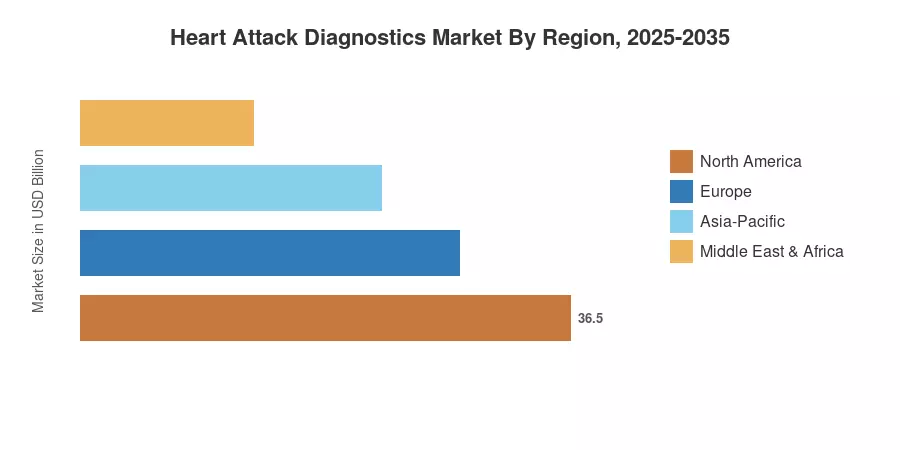
North America is the largest market for heart attack diagnostics, holding approximately 45% of the global market share. The region benefits from advanced healthcare infrastructure, high prevalence of cardiovascular diseases, and significant investments in research and development. Regulatory support from agencies like the FDA further drives innovation and adoption of new diagnostic technologies, enhancing patient outcomes. The United States is the primary contributor, with key players such as Abbott, GE Healthcare, and Thermo Fisher Scientific leading the competitive landscape. Canada also plays a significant role, focusing on improving healthcare access and technology integration. The presence of major companies fosters a robust market environment, ensuring continuous advancements in diagnostic solutions.
Europe : Regulatory Support and Growth
Europe is the second-largest market for heart attack diagnostics, accounting for around 30% of the global share. The region's growth is driven by increasing awareness of cardiovascular diseases, aging populations, and stringent regulatory frameworks that promote innovation. The European Medicines Agency (EMA) plays a crucial role in ensuring the safety and efficacy of diagnostic products, which boosts market confidence. Leading countries include Germany, France, and the UK, where companies like Siemens Healthineers and Roche are prominent. The competitive landscape is characterized by a mix of established players and innovative startups, fostering a dynamic environment for new technologies. Collaborative efforts between public and private sectors further enhance the market's growth potential.
Asia-Pacific : Rapid Growth and Adoption
Asia-Pacific is witnessing rapid growth in the heart attack diagnostics market, driven by increasing healthcare expenditure, rising awareness of cardiovascular diseases, and improving healthcare infrastructure. The region holds approximately 20% of the global market share, with countries like China and India leading the charge. Government initiatives aimed at enhancing healthcare access and affordability are significant growth catalysts. China is the largest market in the region, with a growing number of local and international players, including Philips and Bayer. India follows closely, focusing on expanding diagnostic capabilities and technology adoption. The competitive landscape is evolving, with a mix of established companies and emerging startups, creating opportunities for innovation and collaboration in the diagnostics space.
Middle East and Africa : Untapped Potential and Challenges
The Middle East and Africa region is gradually emerging in the heart attack diagnostics market, holding about 5% of the global share. The growth is driven by increasing healthcare investments, rising prevalence of cardiovascular diseases, and a growing focus on preventive healthcare. However, challenges such as limited access to advanced diagnostic technologies and varying healthcare standards across countries hinder rapid growth. Countries like South Africa and the UAE are at the forefront, with initiatives aimed at improving healthcare infrastructure and access to diagnostics. The competitive landscape is characterized by a mix of local and international players, with companies like Ortho Clinical Diagnostics and Bio-Rad Laboratories making strides in the market. Collaborative efforts between governments and private sectors are essential for addressing the unique healthcare needs of the region.
Key Players and Competitive Insights
Key Companies in the Heart Attack Diagnostics Market include
Industry Developments
The rising prevalence of cardiovascular diseases, increasing awareness about heart attacks, and technological advancements in diagnostic techniques drive market growth. Key recent developments include the FDA approval of Abbott's ARCHITECT STAT High-Sensitive Troponin-I assay, which aids in early detection of heart attacks, and Siemens Healthineers' launch of the Atellica IM Analyzer, offering rapid and accurate cardiac biomarker testing.
Future Outlook
Heart Attack Diagnostics Market Future Outlook
The Heart Attack Diagnostics Market is projected to grow at a 6.32% CAGR from 2025 to 2035, driven by technological advancements, increasing prevalence of cardiovascular diseases, and rising healthcare expenditure.
New opportunities lie in:
- Development of AI-driven diagnostic tools for early detection
- Expansion of telehealth services for remote patient monitoring
- Integration of wearable technology for continuous health tracking
By 2035, the market is expected to achieve substantial growth, driven by innovation and increased demand.
Market Segmentation
Heart Attack Diagnostics Market End-User Outlook
- Hospitals and Clinics
- Diagnostic Laboratories
- Home Healthcare Settings
- Emergency Medical Services
Heart Attack Diagnostics Market Technology Outlook
- Traditional Diagnostics
- Wearable ECG Devices
- AI-Powered Diagnostics
- Implantable Monitoring Systems
Heart Attack Diagnostics Market Diagnostic Type Outlook
- Electrocardiogram (ECG)
- Blood Tests
- Imaging Tests
- Echocardiography
Heart Attack Diagnostics Market Application Area Outlook
- Diagnosis of Acute Myocardial Infarction (AMI)
- Risk Assessment for Cardiovascular Disease
- Prognosis and Monitoring of Heart Failure
Report Scope
| MARKET SIZE 2024 | 12.26(USD Billion) |
| MARKET SIZE 2025 | 13.03(USD Billion) |
| MARKET SIZE 2035 | 24.06(USD Billion) |
| COMPOUND ANNUAL GROWTH RATE (CAGR) | 6.32% (2025 - 2035) |
| REPORT COVERAGE | Revenue Forecast, Competitive Landscape, Growth Factors, and Trends |
| BASE YEAR | 2024 |
| Market Forecast Period | 2025 - 2035 |
| Historical Data | 2019 - 2024 |
| Market Forecast Units | USD Billion |
| Key Companies Profiled | Roche (CH), Abbott (US), Siemens Healthineers (DE), Thermo Fisher Scientific (US), Bayer (DE), Philips (NL), GE Healthcare (US), Ortho Clinical Diagnostics (US), Bio-Rad Laboratories (US) |
| Segments Covered | Diagnostic Type, Application Area, Technology, End-User, Regional |
| Key Market Opportunities | Integration of artificial intelligence in Heart Attack Diagnostics Market enhances accuracy and efficiency in patient assessment. |
| Key Market Dynamics | Technological advancements in biomarker detection enhance diagnostic accuracy and drive competition in heart attack diagnostics. |
| Countries Covered | North America, Europe, APAC, South America, MEA |
FAQs
What is the projected market valuation of the Heart Attack Diagnostics Market by 2035?
The Heart Attack Diagnostics Market is projected to reach a valuation of 24.06 USD Billion by 2035.
What was the market valuation of the Heart Attack Diagnostics Market in 2024?
In 2024, the market valuation of the Heart Attack Diagnostics Market was 12.26 USD Billion.
What is the expected CAGR for the Heart Attack Diagnostics Market during the forecast period 2025 - 2035?
The expected CAGR for the Heart Attack Diagnostics Market during the forecast period 2025 - 2035 is 6.32%.
Which diagnostic type segment is projected to grow the most by 2035?
The Imaging Tests segment is projected to grow from 4.0 USD Billion in 2024 to 8.0 USD Billion by 2035.
What are the key players in the Heart Attack Diagnostics Market?
Key players in the market include Roche, Abbott, Siemens Healthineers, Thermo Fisher Scientific, Bayer, Philips, GE Healthcare, Ortho Clinical Diagnostics, and Bio-Rad Laboratories.
How does the market for wearable ECG devices compare to traditional diagnostics by 2035?
By 2035, the market for traditional diagnostics is expected to reach 10.0 USD Billion, while wearable ECG devices may reach 5.0 USD Billion.
What application area is expected to see the highest growth in the Heart Attack Diagnostics Market?
The Diagnosis of Acute Myocardial Infarction (AMI) is expected to grow from 4.91 USD Billion in 2024 to 9.82 USD Billion by 2035.
What is the projected growth for home healthcare settings in the Heart Attack Diagnostics Market?
The market for home healthcare settings is projected to grow from 2.46 USD Billion in 2024 to 4.92 USD Billion by 2035.
Which technology segment is anticipated to experience significant growth by 2035?
AI-Powered Diagnostics is anticipated to grow from 2.0 USD Billion in 2024 to 6.0 USD Billion by 2035.
What is the expected market size for diagnostic laboratories by 2035?
The market size for diagnostic laboratories is expected to reach 7.36 USD Billion by 2035.
Research Approach
Secondary Research
The secondary research process involved comprehensive analysis of regulatory databases, peer-reviewed medical journals, clinical publications, and authoritative health organizations. Key sources included:
Regulatory & Government Agencies:
US Food & Drug Administration (FDA) - 510(k) clearances, PMA approvals, and device recalls for cardiac diagnostic devices
European Medicines Agency (EMA) and CE marking databases for cardiovascular diagnostics
Centers for Medicare & Medicaid Services (CMS) - reimbursement codes and coverage determinations for cardiac testing
Centers for Disease Control and Prevention (CDC) - National Center for Health Statistics (NCHS) cardiovascular disease surveillance data
National Institutes of Health (NIH) - National Heart, Lung, and Blood Institute (NHLBI) clinical guidelines and epidemiological studies
Agency for Healthcare Research and Quality (AHRQ) - comparative effectiveness reviews for cardiac diagnostics
International Health Organizations:
World Health Organization (WHO) - Global Health Observatory cardiovascular disease mortality and morbidity statistics
World Heart Federation - global cardiovascular disease burden reports and policy guidelines
European Society of Cardiology (ESC) - clinical practice guidelines and registry data
American Heart Association (AHA) - Heart Disease and Stroke Statistics annual updates
American College of Cardiology (ACC) - appropriate use criteria for cardiac testing
Clinical & Scientific Databases:
National Center for Biotechnology Information (NCBI/PubMed) - peer-reviewed literature on troponin assays, ECG technologies, and imaging modalities
Cochrane Library - systematic reviews on diagnostic accuracy of cardiac biomarkers and imaging
ClinicalTrials.gov - ongoing and completed trials for novel diagnostic technologies
IQVIA Institute for Human Data Science - real-world evidence on diagnostic utilization patterns
Industry & Market Intelligence:
Global Trade Atlas - import/export data for diagnostic equipment
Organisation for Economic Co-operation and Development (OECD) Health Statistics - healthcare expenditure and diagnostic infrastructure by country
National health ministry reports from key markets (China NHC, India MoHFW, Japan MHLW, Brazil ANVISA)
Clinical safety and efficacy studies, regulatory approval timelines for high-sensitivity troponin assays and AI-enabled ECG devices, procedure volumes for ECG, echocardiography, cardiac catheterization, and cardiac biomarker testing, epidemiological trends in the incidence of acute myocardial infarction, and competitive landscape analysis across ECG systems, blood testing platforms, imaging modalities (CT/MRI), and emerging wearable technologies were gathered from these sources.
Primary Research
In order to gather both qualitative and quantitative insights, supply-side and demand-side stakeholders were interviewed during the primary research process. CEOs, VPs of Product Development, heads of regulatory affairs, R&D directors, and commercial directors from makers of cardiac diagnostic devices, in-vitro diagnostics firms, and medical imaging OEMs were examples of supply-side sources. Interventional cardiologists, emergency medicine doctors, clinical laboratory directors, hospital procurement managers, and healthcare administrators from academic medical institutions, community hospitals, diagnostic labs, and ambulatory surgery facilities were examples of demand-side sources. Primary research verified product pipeline timelines for next-generation biomarkers and AI-integrated diagnostics, validated market segmentation across diagnostic types (ECG, blood tests, imaging, echocardiography), and collected data on clinical adoption patterns, point-of-care testing expansion, pricing strategies, and reimbursement dynamics for advanced cardiac imaging and high-sensitivity troponin testing.
Primary Respondent Breakdown:
By Designation: C-level Primaries (28%), Director Level (35%), Others (37%)
By Region: North America (42%), Europe (25%), Asia-Pacific (28%), Rest of World (5%)
Market Size Estimation
Global market valuation was derived through revenue mapping and procedure volume analysis. The methodology included:
Identification of 50+ key manufacturers across North America, Europe, Asia-Pacific, Latin America, and Middle East & Africa, including Abbott Laboratories, Roche Diagnostics, Siemens Healthineers, GE Healthcare, Philips Healthcare, Boston Scientific, Medtronic, Bio-Rad Laboratories, Thermo Fisher Scientific, and Canon Medical Systems
Product mapping across electrocardiogram (ECG) devices, high-sensitivity troponin assays and cardiac biomarker testing platforms, echocardiography systems, cardiac computed tomography (CCTA) and magnetic resonance imaging (CMR) scanners, cardiac catheterization laboratory equipment, and emerging wearable ECG monitors and AI-powered diagnostic algorithms
Analysis of reported and modeled annual revenues specific to cardiac diagnostic portfolios, including breakdown between equipment sales, consumables/reagents, and software/services
Coverage of manufacturers representing 75-80% of global market share in 2024
Extrapolation using bottom-up (procedure volume × ASP by country, segmented by diagnostic type and healthcare setting) and top-down (manufacturer revenue validation and industry association benchmarking) approaches to derive segment-specific valuations for acute myocardial infarction diagnosis, cardiovascular risk assessment, and heart failure monitoring applications
Kindly complete the form below to receive a free sample of this Report
Customer Stories
“This is really good guys. Excellent work on a tight deadline. I will continue to use you going forward and recommend you to others. Nice job”
“Thanks. It’s been a pleasure working with you, please use me as reference with any other Intel employees.”
“Thanks for sending the report it gives us a good global view of the Betaïne market.”
“Thank you, this will be very helpful for OQS.”
“We found the report very insightful! we found your research firm very helpful. I'm sending this email to secure our future business.”
“I am very pleased with how market segments have been defined in a relevant way for my purposes (such as "Portable Freezers & refrigerators" and "last-mile"). In general the report is well structured. Thanks very much for your efforts.”
“I have been reading the first document or the study, ,the Global HVAC and FP market report 2021 till 2026. Must say, good info! I have not gone in depth at all parts, but got a good indication of the data inside!”
“We got the report in time, we really thank you for your support in this process. I also thank to all of your team as they did a great job.”