Expansion of Energy Sector
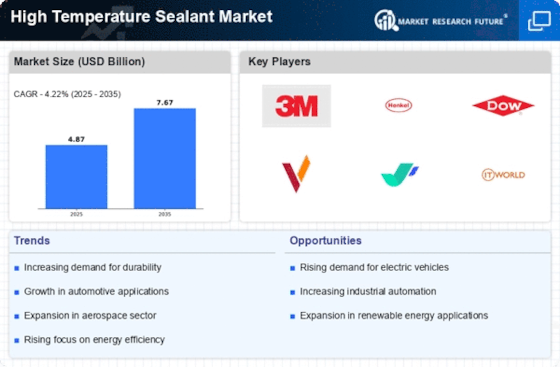
The energy sector, particularly in renewable energy applications, is driving the demand for high temperature sealants. As the industry shifts towards more sustainable energy sources, the need for materials that can withstand high temperatures and harsh environments becomes increasingly critical. The high temperature sealant market is adapting to this trend by offering products that meet the rigorous demands of solar and wind energy applications. The High Temperature Sealant Market is expected to grow at a compound annual growth rate of over 8% in the coming years, which may lead to increased opportunities for high temperature sealants. These materials are essential for ensuring the durability and efficiency of energy systems, thereby positioning the high temperature sealant market favorably within this expanding sector.
Increasing Regulatory Standards
The high temperature sealant market is being shaped by the rising regulatory standards across various sectors, including automotive, aerospace, and energy. Stricter regulations regarding emissions and safety are prompting manufacturers to seek high-performance sealants that can meet these requirements. As industries adapt to comply with these regulations, the demand for high temperature sealants is likely to increase. For instance, the automotive sector is facing more stringent emissions standards, which necessitate the use of advanced sealing solutions that can withstand high temperatures without degrading. This trend indicates a growing opportunity for the high temperature sealant market to provide innovative solutions that align with regulatory demands, thereby enhancing market growth.
Rising Demand in Aerospace Sector
The aerospace sector is experiencing a notable increase in demand for high temperature sealants, driven by the need for materials that can withstand extreme conditions. High temperature sealant market players are responding to this trend by developing advanced formulations that offer superior thermal resistance and durability. The aerospace industry is projected to grow at a compound annual growth rate of approximately 4.5% over the next few years, which is likely to further boost the demand for high temperature sealants. These sealants are essential for ensuring the integrity of aircraft components, particularly in engines and exhaust systems, where temperatures can exceed 1,000 degrees Fahrenheit. As the aerospace sector continues to expand, the high temperature sealant market is poised to benefit significantly from this upward trajectory.
Growth in Automotive Manufacturing
The automotive manufacturing sector is witnessing a surge in the adoption of high temperature sealants, primarily due to the increasing complexity of vehicle designs and the need for enhanced performance. High temperature sealant market stakeholders are focusing on developing products that can endure the high thermal and mechanical stresses found in modern vehicles. With the automotive industry projected to grow at a rate of around 3% annually, the demand for high temperature sealants is expected to rise correspondingly. These sealants play a crucial role in ensuring the reliability of engine components, exhaust systems, and other critical areas that experience elevated temperatures. As manufacturers strive to meet stringent regulatory standards and improve vehicle efficiency, the high temperature sealant market is likely to see sustained growth.
Technological Innovations in Manufacturing
Technological advancements in manufacturing processes are significantly influencing the high temperature sealant market. Innovations such as improved formulation techniques and enhanced application methods are enabling manufacturers to produce sealants with superior properties. These advancements are likely to result in products that offer better adhesion, flexibility, and thermal resistance. As industries increasingly seek high-performance materials, the high temperature sealant market is expected to benefit from these technological innovations. The introduction of automated application systems and advanced curing technologies may also streamline production processes, potentially reducing costs and improving product quality. This focus on innovation is crucial for maintaining competitiveness in a rapidly evolving market.























Leave a Comment