×
Request Free Sample ×

Kindly complete the form below to receive a free sample of this Report

* Please use a valid business email

Leading companies partner with us for data-driven Insights

clients tt-cursor
Hero Background

Hospital Acquired infections Market

ID: MRFR/HC/1936-HCR
200 Pages
Rahul Gotadki
October 2025

Hospital Acquired Infections Market Size, Growth Research Report By Pathogen Type (Bacteria, Viruses, Fungi, Parasites), By Infection Type (Surgical Site Infections, Ventilator-Associated Pneumonia, Catheter-Associated Urinary Tract Infections, Bloodstream Infections), By Hospital Department (Intensive Care Unit, Surgery Department, Emergency Department, Pediatric Department), By Treatment Type (Infection Control Products, Antibiotics, Disinfectants, Vaccines) - Competitor Industry Analysis and Trends Forecast Till 2035

Share:
Download PDF ×

We do not share your information with anyone. However, we may send you emails based on your report interest from time to time. You may contact us at any time to opt-out.

Hospital Acquired infections Market Infographic
Purchase Options

Hospital Acquired infections Market Summary

As per MRFR analysis, the Hospital Acquired Infections Market Size was estimated at 30.83 USD Billion in 2024. The Hospital Acquired infections industry is projected to grow from 31.26 USD Billion in 2025 to 36.0 USD Billion by 2035, exhibiting a compound annual growth rate (CAGR) of 1.42 during the forecast period 2025 - 2035.

Key Market Trends & Highlights

The Hospital Acquired Infections Market is poised for substantial growth driven by technological advancements and increasing awareness of patient safety.

  • Technological advancements in infection control are reshaping the landscape of the Hospital Acquired Infections Market.
  • North America remains the largest market, while the Asia-Pacific region is emerging as the fastest-growing area for infection control solutions.
  • Surgical Site Infections represent the largest segment, whereas Urinary Tract Infections are witnessing the fastest growth in prevalence.
  • The rising incidence of hospital acquired infections and increased regulatory pressure are key drivers propelling market expansion.

Market Size & Forecast

2024 Market Size 30.83 (USD Billion)
2035 Market Size 36.0 (USD Billion)
CAGR (2025 - 2035) 1.42%

Major Players

Johnson & Johnson (US), Becton Dickinson and Company (US), 3M Company (US), Medtronic plc (IE), Stryker Corporation (US), Abbott Laboratories (US), Thermo Fisher Scientific Inc. (US), Cardinal Health, Inc. (US)

Hospital Acquired infections Market Trends

The Hospital Acquired Infections Market is currently experiencing notable transformations driven by various factors. Increasing awareness regarding infection control and prevention measures is prompting healthcare facilities to adopt advanced technologies and practices. This shift is likely to enhance patient safety and reduce the incidence of infections acquired during hospital stays. Furthermore, the growing emphasis on regulatory compliance and quality assurance is compelling hospitals to invest in innovative solutions that address infection risks. As a result, the market appears poised for growth, with stakeholders focusing on developing effective strategies to combat hospital-acquired infections. In addition, the rising prevalence of antibiotic resistance is influencing the Hospital Acquired Infections Market. Healthcare providers are increasingly challenged by pathogens that are resistant to conventional treatments, necessitating the exploration of alternative therapeutic options. This situation may lead to heightened demand for novel antimicrobial agents and infection control products. Moreover, the integration of digital health technologies, such as telemedicine and data analytics, is likely to play a crucial role in monitoring and managing infection rates. Overall, the Hospital Acquired Infections Market is evolving, reflecting the dynamic nature of healthcare needs and the ongoing pursuit of improved patient outcomes.

Technological Advancements in Infection Control

The Hospital Acquired Infections Market is witnessing a surge in the adoption of advanced technologies aimed at infection prevention. Innovations such as automated disinfection systems and real-time monitoring tools are becoming increasingly prevalent. These technologies not only enhance the efficiency of infection control measures but also contribute to improved patient safety and outcomes.

Focus on Antimicrobial Stewardship

There is a growing emphasis on antimicrobial stewardship within the Hospital Acquired Infections Market. Healthcare institutions are recognizing the importance of responsible antibiotic use to combat the rise of resistant pathogens. This trend is likely to drive the development of guidelines and protocols that promote effective treatment strategies while minimizing the risk of resistance.

Integration of Digital Health Solutions

The integration of digital health solutions is transforming the Hospital Acquired Infections Market. Telehealth platforms and data analytics tools are being utilized to monitor infection rates and enhance communication among healthcare providers. This trend may facilitate timely interventions and improve overall infection management, ultimately benefiting patient care.

Hospital Acquired infections Market Drivers

Market Growth Projections

The Global Hospital Acquired Infections Market Industry is projected to experience substantial growth in the coming years. With an estimated market value of 37.5 USD Billion in 2024, it is expected to reach 60 USD Billion by 2035. This growth trajectory suggests a compound annual growth rate of 4.36% from 2025 to 2035, indicating a robust demand for infection control solutions. The increasing focus on patient safety, regulatory compliance, and technological advancements are likely to drive this expansion, making it a critical area of investment for healthcare providers globally.

Increase in Surgical Procedures

The growing number of surgical procedures worldwide is a significant factor driving the Global Hospital Acquired Infections Market Industry. As surgical interventions become more common, the risk of HAIs also escalates, necessitating enhanced infection control measures. Data indicates that millions of surgeries are performed annually, with a notable percentage resulting in infections. This trend compels healthcare facilities to adopt stringent infection prevention protocols and invest in advanced technologies to mitigate risks. Consequently, the market is poised for growth, reflecting the increasing demand for effective solutions to combat HAIs in surgical settings.

Government Initiatives and Regulations

Government initiatives aimed at reducing the incidence of hospital acquired infections significantly influence the Global Hospital Acquired Infections Market Industry. Various health authorities are implementing stringent regulations and guidelines to promote infection prevention practices. For example, the Centers for Disease Control and Prevention (CDC) and the World Health Organization (WHO) provide frameworks that healthcare facilities must adhere to. These regulations often mandate the reporting of HAIs, which encourages hospitals to adopt better infection control measures. Consequently, the market is likely to expand as healthcare providers seek compliance and invest in necessary resources to meet these standards.

Growing Awareness of Infection Prevention

The rising awareness among healthcare professionals and patients regarding the importance of infection prevention is a key driver for the Global Hospital Acquired Infections Market Industry. Educational campaigns and training programs are increasingly emphasizing the significance of hygiene practices, handwashing, and proper use of personal protective equipment. This heightened awareness is leading to a cultural shift within healthcare settings, where infection control is prioritized. As a result, hospitals are more inclined to invest in infection prevention technologies and practices, contributing to the market's growth trajectory, which is anticipated to reach 60 USD Billion by 2035.

Technological Advancements in Infection Control

Technological innovations play a crucial role in shaping the Global Hospital Acquired Infections Market Industry. The development of advanced sterilization equipment, antimicrobial surfaces, and real-time monitoring systems enhances infection prevention strategies. For instance, the introduction of automated disinfection robots has shown promising results in reducing pathogen transmission in healthcare settings. These advancements not only improve patient outcomes but also align with regulatory requirements for infection control. As hospitals increasingly adopt these technologies, the market is expected to grow, with a projected compound annual growth rate of 4.36% from 2025 to 2035.

Rising Incidence of Hospital Acquired Infections

The increasing prevalence of hospital acquired infections (HAIs) is a primary driver of the Global Hospital Acquired Infections Market Industry. Infections such as surgical site infections, bloodstream infections, and pneumonia are becoming more common, leading to heightened awareness and demand for effective prevention and control measures. According to recent data, the global burden of HAIs is substantial, with millions of cases reported annually. This trend is likely to propel the market, which is projected to reach 37.5 USD Billion in 2024, as healthcare facilities invest in advanced infection control technologies and protocols.
Market Segment Insights

By Infection Type: Surgical Site Infection (Largest) vs. Urinary Tract Infection (Fastest-Growing)

In the Hospital Acquired Infections Market, Surgical Site Infection (SSI) holds the largest market share among infection types, primarily because of the prevalence of surgical procedures in healthcare settings. The prevalence of SSIs is influenced by factors such as the type of surgery, patient health status, and the effectiveness of infection control measures implemented in hospitals. Urinary Tract Infection (UTI), although smaller in market share compared to SSI, is the fastest-growing infection type due to an increase in urinary catheter usage and a heightened awareness of hospital-acquired UTIs among healthcare professionals.

Surgical Site Infection (Dominant) vs. Bloodstream Infection (Emerging)

Surgical Site Infections (SSI) dominate the Hospital Acquired Infections Market owing to their direct correlation with surgical procedures. The rising incidence of surgeries, coupled with stringent regulations and hospital protocols, contribute to the significant focus on preventing SSIs. In contrast, Bloodstream Infections (BSI) are emerging as a critical area of concern with the rising incidence of central line-associated BSIs, particularly in intensive care units. Increased adoption of evidence-based practices for managing intravenous lines, along with advances in monitoring technologies, are fostering growth in this segment. As hospitals strive to improve patient outcomes, both SSI and BSI increasingly represent focal points for enhanced infection control strategies.

By Pathogen Type: Bacteria (Largest) vs. Viruses (Fastest-Growing)

In the Hospital Acquired Infections market, bacteria hold the largest share, primarily due to their prevalence in healthcare settings. Key bacteria such as Methicillin-resistant Staphylococcus aureus (MRSA) and Clostridium difficile are responsible for a significant number of infections. As the leading pathogen type, they tend to dominate infection rates, thus commanding more clinical attention and healthcare resources. Meanwhile, viruses, including those causing respiratory and gastrointestinal infections, are emerging as the fastest-growing segment. The rise of viral infections within hospitals is attributed to increased patient interaction, particularly with immunocompromised individuals. Growth trends within this segment reflect the expanding challenges faced by healthcare institutions. Enhanced diagnostic capabilities are enabling quicker identification of viral infections, thus increasing their reported cases. Additionally, factors such as changing patient demographics and the increased incidence of viral outbreaks contribute to this upward trajectory. As hospitals adapt stringent infection control protocols, a heightened focus on both bacterial and viral pathogens is shaping the market landscape, fostering innovation in treatment and prevention strategies.

Bacteria (Dominant) vs. Viruses (Emerging)

Bacteria dominate the Hospital Acquired Infections market, characterized by their higher incidence and lethality within hospital settings. Pathogens such as MRSA and C. difficile not only lead to prolonged hospital stays but also escalate healthcare costs significantly. Their resilience against treatment options has catalyzed the development of new antibiotics and alternative therapies. In contrast, viruses represent an emerging force in the market, driven by their capacity to mutate and adapt, posing challenges for vaccination and treatment. The recent pandemic has amplified awareness regarding viral infections, prompting healthcare providers to implement better surveillance and response systems. As the focus on infectious disease management evolves, both bacteria and viruses are shaping the future of hospital protocols and treatment methodologies.

By Treatment Type: Antibiotics (Largest) vs. Antifungals (Fastest-Growing)

In the Hospital Acquired Infections (HAI) market, the treatment type segment is largely dominated by antibiotics, which hold the largest market share due to their extensive usage in treating bacterial infections associated with hospital stays. Antifungals make up a smaller yet significant portion of the market, witnessing increased adoption as fungal infections become more prevalent in intensive care units and among immunocompromised patients. Together, these treatment types illustrate the differentiation in responding to various pathogens that contribute to hospital-acquired infections.

Antibiotics (Dominant) vs. Antifungals (Emerging)

Antibiotics remain the dominant treatment option in the Hospital Acquired Infections market, recognized for their efficacy in combating bacterial pathogens that are often resistant to other medications. This established presence is bolstered by ongoing research and development aimed at enhancing the effectiveness of existing antibiotics and creating novel agents to combat resistant strains. In contrast, antifungals represent an emerging segment, driven by a growing realization of the threat posed by fungal infections, particularly for patients with compromised immune systems. As healthcare practices evolve, the use of antifungals is expanding beyond traditional applications, with increasing emphasis on prevention and treatment protocols tailored to at-risk populations.

By Setting: Intensive Care Unit (Largest) vs. Emergency Department (Fastest-Growing)

The Hospital Acquired Infections (HAI) market reveals a dispersed landscape among different settings, with the Intensive Care Unit (ICU) holding the largest share, attributed to higher patient vulnerability and prolonged hospital stays. The General Ward and Surgical Unit also contribute significantly but display varying levels of infection rates which influence their respective shares. The Emergency Department, despite its smaller current share, shows promise due to increased acuity and rapid patient turnover, leading to a higher potential for infection rates.

Intensive Care Unit (Dominant) vs. Emergency Department (Emerging)

The Intensive Care Unit is characterized by higher incidences of HAIs due to the critical nature of patients and the complex medical interventions they often require. This setting not only hosts a vulnerable population but also utilizes advanced medical technologies that can become avenues for infections. Meanwhile, the Emergency Department is emerging as a notable area of concern, driven by its fast-paced environment and the immediate care it provides to a diverse patient demographic. As patient turnover increases, so do the risks associated with premature assessments and procedures, thereby suggesting an urgent need for targeted infection control measures.

By Patient Demographics: Adult Patients (Largest) vs. Geriatric Patients (Fastest-Growing)

The hospital acquired infections market is significantly influenced by patient demographics, with adult patients commanding the largest share. This segment includes individuals aged between 18 to 64 years, who are at considerable risk of acquiring infections during hospital stays. The adult demographics are characterized by a high prevalence of chronic diseases and surgical procedures, leading to an elevated susceptibility to infections, thereby amplifying the market share for this category. In contrast, geriatric patients, who are increasingly becoming the focus of healthcare innovations, represent the fastest-growing cohort within this market. With the aging population, there is a rise in hospital admissions among older adults, often due to comorbidities. This demographic presents unique challenges, such as a weakened immune response and the increased need for specialized care, driving growth in infection management solutions tailored for them.

Adult Patients (Dominant) vs. Geriatric Patients (Emerging)

Adult patients present a dominant segment within the hospital acquired infections market, predominantly due to their numbers and the complexity of their medical care. Typically, these patients undergo multiple interventions during hospital stays, which increases their exposure to healthcare-associated infections. They are also prone to infections from invasive devices such as catheters and ventilators. Geriatric patients, conversely, are seen as an emerging segment due to the rapid growth in their hospital admissions and the distinct challenges they face. This group often experiences longer hospital stays and is more susceptible to infections due to physiological changes and comorbidities. Both segments necessitate targeted infection prevention strategies, highlighting the dynamic interplay between their market needs.

Get more detailed insights about Hospital Acquired infections Market

Regional Insights

North America : Market Leader in Healthcare

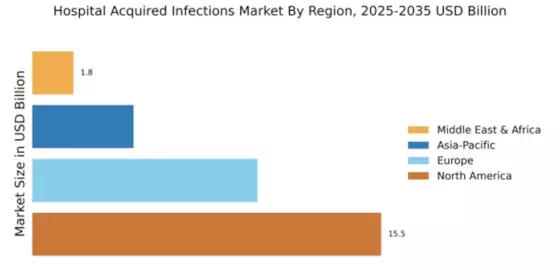
North America is poised to maintain its leadership in the Hospital Acquired Infections (HAI) market, holding a significant market share of 15.5 in 2024. The region's growth is driven by increasing healthcare expenditures, stringent regulations, and a rising focus on infection control measures. The demand for advanced medical technologies and effective infection prevention solutions is also on the rise, fueled by the growing awareness of HAIs among healthcare providers and patients alike. The competitive landscape in North America is robust, featuring key players such as Johnson & Johnson, Becton Dickinson, and 3M Company. These companies are at the forefront of innovation, developing cutting-edge products to combat HAIs. The U.S. remains the largest market, supported by a well-established healthcare infrastructure and significant investments in research and development. The presence of major healthcare organizations further enhances the region's market dynamics.

Europe : Emerging Regulatory Frameworks

Europe's Hospital Acquired Infections market is projected to reach a size of 10.0 by 2025, driven by stringent regulatory frameworks and a growing emphasis on patient safety. The European Union's initiatives to enhance healthcare quality and reduce HAIs are pivotal in shaping market dynamics. Increased funding for healthcare systems and a focus on innovative infection control technologies are also key growth drivers in the region. Leading countries such as Germany, France, and the UK are at the forefront of this market, with a competitive landscape featuring major players like Medtronic and Stryker Corporation. The presence of advanced healthcare facilities and a strong emphasis on research and development further bolster the market. The European market is characterized by collaboration between public and private sectors to enhance infection prevention strategies.

Asia-Pacific : Rapidly Growing Healthcare Sector

The Asia-Pacific region is witnessing significant growth in the Hospital Acquired Infections market, projected to reach 4.5 by 2025. This growth is driven by increasing healthcare investments, rising patient populations, and a growing awareness of infection control practices. Governments in countries like China and India are implementing policies to enhance healthcare infrastructure, which is expected to further boost market demand. Countries such as China, Japan, and India are leading the charge in this emerging market. The competitive landscape is evolving, with both local and international players striving to capture market share. Key players like Abbott Laboratories and Thermo Fisher Scientific are expanding their presence in the region, focusing on innovative solutions to address the rising incidence of HAIs. The market is characterized by a mix of traditional and advanced healthcare practices, creating unique opportunities for growth.

Middle East and Africa : Developing Healthcare Infrastructure

The Middle East and Africa region is gradually developing its Hospital Acquired Infections market, with a projected size of 1.83 by 2025. The growth is primarily driven by increasing healthcare investments and a rising focus on improving healthcare quality. Governments are prioritizing healthcare reforms and infrastructure development, which are essential for addressing the challenges posed by HAIs in the region. Countries like South Africa and the UAE are leading the market, with a growing number of healthcare facilities adopting advanced infection control measures. The competitive landscape is characterized by a mix of local and international players, striving to enhance their market presence. Despite challenges such as limited resources, the region is witnessing a gradual shift towards more effective infection prevention strategies, supported by international collaborations and investments.

Key Players and Competitive Insights

The Hospital Acquired infections Market is characterized by a competitive landscape that is increasingly shaped by innovation, strategic partnerships, and a focus on digital transformation. Key players such as Johnson & Johnson (US), Becton Dickinson and Company (US), and 3M Company (US) are actively pursuing strategies that enhance their market positioning. For instance, Johnson & Johnson (US) has been emphasizing the development of advanced infection prevention technologies, which aligns with the growing demand for effective solutions in healthcare settings. Meanwhile, Becton Dickinson and Company (US) is focusing on expanding its product portfolio through strategic acquisitions, thereby enhancing its capabilities in infection control. These collective strategies contribute to a dynamic competitive environment, where innovation and operational efficiency are paramount.

In terms of business tactics, companies are increasingly localizing manufacturing to reduce supply chain vulnerabilities and optimize operational efficiency. The market structure appears moderately fragmented, with several key players exerting influence over various segments. This fragmentation allows for a diverse range of products and solutions, catering to the specific needs of healthcare providers. The collective influence of these major players fosters a competitive atmosphere that encourages continuous improvement and innovation.

In November 2025, 3M Company (US) announced the launch of a new line of antimicrobial dressings designed to reduce the risk of surgical site infections. This strategic move is significant as it not only expands 3M's product offerings but also addresses a critical need in the market for effective infection prevention solutions. The introduction of these dressings is likely to enhance the company's competitive edge by providing healthcare professionals with advanced tools to combat hospital-acquired infections.

In October 2025, Medtronic plc (IE) unveiled a partnership with a leading technology firm to integrate AI-driven analytics into its infection control systems. This collaboration is indicative of a broader trend towards digitalization in the healthcare sector, where data-driven insights are becoming essential for effective infection management. By leveraging AI, Medtronic aims to enhance the predictive capabilities of its systems, thereby improving patient outcomes and operational efficiency.

In September 2025, Abbott Laboratories (US) expanded its global reach by entering into a strategic alliance with a prominent healthcare provider in Asia. This partnership is expected to facilitate the distribution of Abbott's infection prevention products in emerging markets, thereby tapping into new revenue streams. The strategic importance of this move lies in Abbott's ability to leverage local expertise and infrastructure, which could significantly enhance its market penetration in regions with rising healthcare demands.

As of December 2025, the competitive trends in the Hospital Acquired infections Market are increasingly defined by digitalization, sustainability, and the integration of AI technologies. Strategic alliances are playing a crucial role in shaping the current landscape, enabling companies to pool resources and expertise. Looking ahead, it appears that competitive differentiation will evolve from traditional price-based competition to a focus on innovation, technological advancements, and supply chain reliability. This shift underscores the necessity for companies to adapt and innovate continuously in order to maintain their competitive positions.

Key Companies in the Hospital Acquired infections Market market include

Industry Developments

  • Q2 2024: Pfizer receives FDA approval for new antibiotic to treat hospital-acquired infections Pfizer announced that the U.S. Food and Drug Administration has approved its new antibiotic, Zuvira, for the treatment of hospital-acquired bacterial pneumonia and ventilator-associated bacterial pneumonia.
  • Q2 2024: Merck acquires startup specializing in rapid diagnostics for hospital-acquired infections Merck completed the acquisition of PathoScan, a biotech startup developing rapid diagnostic tools for hospital-acquired infections, aiming to expand its infectious disease portfolio.
  • Q1 2024: BD launches new automated disinfection system for hospital settings BD (Becton, Dickinson and Company) introduced the BD Clean360, an automated disinfection system designed to reduce the risk of hospital-acquired infections in clinical environments.
  • Q2 2024: Thermo Fisher Scientific announces partnership with NHS to combat hospital-acquired infections Thermo Fisher Scientific entered a partnership with the UK National Health Service to deploy advanced molecular diagnostics for early detection of hospital-acquired infections.
  • Q1 2024: bioMérieux receives CE mark for new rapid test for hospital-acquired bloodstream infections bioMérieux announced that its new rapid diagnostic test for hospital-acquired bloodstream infections has received CE marking, enabling commercialization in the European Union.
  • Q2 2024: Roche launches new PCR-based test for detection of hospital-acquired infections Roche introduced a new PCR-based diagnostic test designed to quickly identify pathogens responsible for hospital-acquired infections, aiming to improve patient outcomes.
  • Q1 2025: Steris opens new manufacturing facility for infection control products Steris announced the opening of a new manufacturing facility in Ohio dedicated to producing infection control products for hospitals and healthcare facilities.
  • Q2 2025: Siemens Healthineers secures major contract with French hospitals for infection control solutions Siemens Healthineers won a multi-year contract to supply French hospitals with advanced infection control solutions, including automated sterilization and monitoring systems.
  • Q1 2025: Gilead Sciences appoints new Chief Medical Officer to lead hospital-acquired infection programs Gilead Sciences named Dr. Maria Lopez as Chief Medical Officer, tasking her with overseeing the company's hospital-acquired infection research and development initiatives.
  • Q2 2024: QuidelOrtho raises $150 million in public offering to expand hospital-acquired infection diagnostics QuidelOrtho completed a $150 million public offering, with proceeds earmarked for expanding its portfolio of diagnostics targeting hospital-acquired infections.
  • Q1 2024: 3M launches new antimicrobial surface coating for hospitals 3M unveiled a new antimicrobial surface coating designed to reduce the transmission of hospital-acquired infections on high-touch surfaces in healthcare settings.
  • Q2 2025: Abbott receives European approval for rapid hospital-acquired infection test Abbott announced that its new rapid test for detecting hospital-acquired infections has received regulatory approval in Europe, allowing for immediate market entry.

Future Outlook

Hospital Acquired infections Market Future Outlook

The Hospital Acquired Infections Market is projected to grow at 1.42% CAGR from 2024 to 2035, driven by advancements in infection control technologies and increased healthcare spending.

New opportunities lie in:

  • Development of advanced antimicrobial coatings for medical devices.
  • Implementation of AI-driven infection surveillance systems.
  • Expansion of telehealth services for post-discharge monitoring.

By 2035, the market is expected to maintain steady growth, reflecting ongoing innovations and heightened awareness.

Market Segmentation

Hospital Acquired infections Market Setting Outlook

  • Intensive Care Unit
  • General Ward
  • Surgical Unit
  • Emergency Department

Hospital Acquired infections Market Pathogen Type Outlook

  • Bacteria
  • Viruses
  • Fungi
  • Parasites

Hospital Acquired infections Market Infection Type Outlook

  • Surgical Site Infection
  • Bloodstream Infection
  • Pneumonia
  • Urinary Tract Infection

Hospital Acquired infections Market Treatment Type Outlook

  • Antibiotics
  • Antifungals
  • Antivirals
  • Supportive Care

Hospital Acquired infections Market Patient Demographics Outlook

  • Pediatric Patients
  • Adult Patients
  • Geriatric Patients
  • Immunocompromised Patients

Report Scope

MARKET SIZE 2024 30.83(USD Billion)
MARKET SIZE 2025 31.26(USD Billion)
MARKET SIZE 2035 36.0(USD Billion)
COMPOUND ANNUAL GROWTH RATE (CAGR) 1.42% (2024 - 2035)
REPORT COVERAGE Revenue Forecast, Competitive Landscape, Growth Factors, and Trends
BASE YEAR 2024
Market Forecast Period 2025 - 2035
Historical Data 2019 - 2024
Market Forecast Units USD Billion
Key Companies Profiled Johnson & Johnson (US), Becton Dickinson and Company (US), 3M Company (US), Medtronic plc (IE), Stryker Corporation (US), Abbott Laboratories (US), Thermo Fisher Scientific Inc. (US), Cardinal Health, Inc. (US)
Segments Covered Infection Type, Pathogen Type, Treatment Type, Setting, Patient Demographics
Key Market Opportunities Integration of advanced diagnostic technologies enhances infection control in the Hospital Acquired infections Market.
Key Market Dynamics Rising regulatory scrutiny and technological advancements drive innovation in the Hospital Acquired Infections Market.
Countries Covered North America, Europe, APAC, South America, MEA

Market Highlights

Author
Rahul Gotadki
Assistant Manager

He holds an experience of about 7+ years in Market Research and Business Consulting, working under the spectrum of Life Sciences and Healthcare domains. Rahul conceptualizes and implements a scalable business strategy and provides strategic leadership to the clients. His expertise lies in market estimation, competitive intelligence, pipeline analysis, customer assessment, etc. In addition to the above, his other responsibility includes strategic tracking of high growth markets & advising clients on the potential areas of focus they could direct their business initiatives

Leave a Comment

FAQs

What is the projected growth of the Hospital-Acquired Infections market?

The Hospital-Acquired Infections market is the expected increase in total market value of 36 USD billion over a defined forecast period 2025–2035. It is driven by factors such as demand trends, technological advances, regulatory changes, and geographic expansion.

What is the size of the Hospital-Acquired Infections market?

Hospital-Acquired Infections market size was valued at approximately 30.83 billion USD in 2024. This figure will reach 36 billion USD covering all regions (America, Europe, Asia, MEA and ROW), focusing its segments / services / distribution channels till 2035.

What is the CAGR of the Hospital-Acquired Infections market?

Hospital-Acquired Infections market is expected to grow at a CAGR of 1.42% between 2025 and 2035.

How much will the Hospital-Acquired Infections market be worth by 2035?

Hospital-Acquired Infections market is expected to be worth of 36 billion USD, reflecting growth driven by usage, technology and global demands by the end of 2035.

How will the Hospital-Acquired Infections market perform over the next 10 years?

Over the next 10 years the Hospital-Acquired Infections market is expected to shift from usd billion 30.83 to 36 billion USD, led by adoption of advanced tech, demographic trends, regulatory approvals, with potential headwinds from 2025 to 2035.

What will be the market size of the Global Hospital Acquired Infections Market by 2035?

By 2035, the Global Hospital Acquired Infections Market is projected to reach a value of 60.0 billion USD.

Which region is expected to dominate the Global Hospital Acquired Infections Market in 2024?

North America is expected to dominate the market, with a value of 15.0 billion USD in 2024.

What will be the market size for the Bacteria segment in 2035?

The Bacteria segment of the Global Hospital Acquired Infections Market is expected to be valued at 23.0 billion USD by 2035.

Who are the key players in the Global Hospital Acquired Infections Market?

Key players in the market include Pfizer, Abbott Laboratories, Hologic, BD, and Ecolab among others.

Which region is projected to experience the highest growth in the Global Hospital Acquired Infections Market by 2035?

The APAC region is expected to grow significantly, reaching a market size of 12.5 billion USD by 2035.

Download Free Sample

Kindly complete the form below to receive a free sample of this Report

Compare Licence

×
Features License Type
Single User Multiuser License Enterprise User
Price $4,950 $5,950 $7,250
Maximum User Access Limit 1 User Upto 10 Users Unrestricted Access Throughout the Organization
Free Customization
Direct Access to Analyst
Deliverable Format
Platform Access
Discount on Next Purchase 10% 15% 15%
Printable Versions