×
Request Free Sample ×

Kindly complete the form below to receive a free sample of this Report

* Please use a valid business email

Leading companies partner with us for data-driven Insights

clients tt-cursor
Hero Background

India Viscosupplementation Market

ID: MRFR/HC/47665-HCR
200 Pages
Rahul Gotadki
October 2025

India Viscosupplementation Market Research Report By Type (Stabilized Hyaluronic Acid, Standard hyaluronic) and By Procedure (Three-Injection Procedure)- Forecast to 2035

Share:
Download PDF ×

We do not share your information with anyone. However, we may send you emails based on your report interest from time to time. You may contact us at any time to opt-out.

India Viscosupplementation Market Infographic
Purchase Options

India Viscosupplementation Market Summary

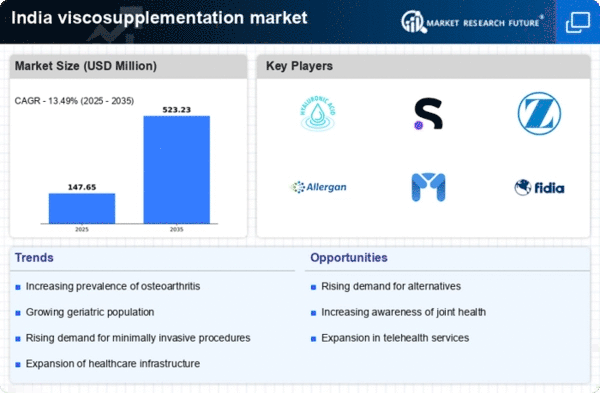
As per MRFR analysis, the viscosupplementation market Size was estimated at 130.1 USD Million in 2024. The viscosupplementation market is projected to grow from 147.65 USD Million in 2025 to 523.23 USD Million by 2035, exhibiting a compound annual growth rate (CAGR) of 13.49% during the forecast period 2025 - 2035.

Key Market Trends & Highlights

The India viscosupplementation market is experiencing robust growth driven by evolving patient needs and technological advancements.

  • The demand for non-surgical treatments is rising, reflecting a shift in patient preferences towards less invasive options.
  • Technological advancements in product development are enhancing the efficacy and safety of viscosupplementation therapies.
  • Patient education and awareness initiatives are increasing, leading to a more informed consumer base that actively seeks treatment options.
  • The growing aging population and rising incidence of osteoarthritis are key drivers propelling market expansion.

Market Size & Forecast

2024 Market Size 130.1 (USD Million)
2035 Market Size 523.23 (USD Million)
CAGR (2025 - 2035) 13.49%

Major Players

Hyaluronic Acid Co (US), Sanofi (FR), Zimmer Biomet (US), Allergan (US), MediKine (DE), Fidia Farmaceutici (IT), Seikagaku Corporation (JP), Stryker Corporation (US), Evolva Holding SA (CH)

India Viscosupplementation Market Trends

The viscosupplementation market is currently experiencing notable growth, driven by an increasing prevalence of osteoarthritis and other joint-related disorders. This rise in demand for effective treatment options has led to a greater acceptance of viscosupplementation therapies among healthcare professionals and patients alike. The market appears to be influenced by advancements in technology, which enhance the efficacy and safety of these treatments. Furthermore, the growing geriatric population in India is likely to contribute to the expansion of this market, as older individuals are more susceptible to joint issues. As awareness regarding the benefits of viscosupplementation increases, it seems that more patients are opting for these minimally invasive procedures, which may lead to a shift in treatment paradigms. In addition, the regulatory environment surrounding viscosupplementation products is evolving, with authorities focusing on ensuring product quality and safety. This regulatory scrutiny may foster innovation and encourage the development of new formulations that could further enhance patient outcomes. Moreover, the increasing number of healthcare facilities offering viscosupplementation treatments suggests a positive trend in accessibility. Overall, the viscosupplementation market appears poised for continued growth, driven by demographic changes, technological advancements, and a shift in patient preferences towards less invasive treatment options.

Rising Demand for Non-Surgical Treatments

There is a growing preference for non-surgical interventions among patients suffering from joint pain. Viscosupplementation offers a less invasive alternative to traditional surgical methods, appealing to individuals seeking effective pain relief without the associated risks of surgery. This trend is likely to continue as more patients become aware of the benefits of such treatments.

Technological Advancements in Product Development

Innovations in the formulation and delivery of viscosupplementation products are enhancing their effectiveness. New technologies are being developed to improve the viscosity and longevity of hyaluronic acid injections, which may lead to better patient outcomes. This trend indicates a shift towards more sophisticated treatment options in the market.

Increased Focus on Patient Education and Awareness

Healthcare providers are placing greater emphasis on educating patients about viscosupplementation therapies. This focus on awareness is likely to drive demand, as informed patients are more inclined to seek out these treatments. Enhanced communication regarding the benefits and risks associated with viscosupplementation may lead to increased adoption rates.

India Viscosupplementation Market Drivers

Growing Aging Population

The increasing aging population in India is a pivotal driver for the viscosupplementation market. As individuals age, they often experience joint-related issues, particularly osteoarthritis, which necessitates effective treatment options. According to recent estimates, approximately 15% of the Indian population is aged 60 and above, a demographic that is likely to expand in the coming years. This demographic shift is expected to elevate the demand for viscosupplementation therapies, as they provide a non-invasive alternative to surgical interventions. The viscosupplementation market is poised to benefit from this trend, as older adults seek to maintain mobility and quality of life. Furthermore, the growing awareness of joint health among this age group may lead to increased consultations with healthcare professionals, further driving market growth.

Rising Disposable Incomes

The increase in disposable incomes among the Indian population is a significant driver for the viscosupplementation market. As economic conditions improve, more individuals are willing to invest in their health and well-being. This trend is particularly evident in urban areas, where rising incomes enable consumers to seek advanced medical treatments, including viscosupplementation. The willingness to spend on healthcare services is likely to enhance the market's growth, as patients prioritize effective solutions for joint pain and mobility issues. Additionally, the availability of various financing options and health insurance plans may further facilitate access to viscosupplementation treatments. As disposable incomes continue to rise, the market is expected to expand, catering to a broader demographic seeking quality healthcare solutions.

Rising Incidence of Osteoarthritis

The prevalence of osteoarthritis in India is on the rise, significantly impacting the viscosupplementation market. Studies indicate that around 28% of the Indian population suffers from some form of arthritis, with osteoarthritis being the most common. This condition often leads to pain and reduced mobility, prompting patients to seek effective treatment options. Viscosupplementation, which involves the injection of hyaluronic acid into the joints, has emerged as a viable solution for alleviating symptoms associated with osteoarthritis. The increasing incidence of this condition is likely to drive demand for viscosupplementation products, as patients and healthcare providers look for alternatives to traditional pain management strategies. As awareness of the benefits of viscosupplementation grows, the market is expected to expand, catering to the needs of a larger patient population.

Increased Focus on Preventive Healthcare

The shift towards preventive healthcare in India is influencing the viscosupplementation market. As individuals become more health-conscious, there is a growing emphasis on early intervention and management of joint health. Preventive measures, including the use of viscosupplementation, are gaining traction among healthcare providers and patients alike. This trend is supported by initiatives aimed at educating the public about the importance of maintaining joint health and the potential benefits of viscosupplementation. As awareness increases, more patients may seek out these treatments as a proactive approach to managing joint issues. The market is likely to see growth as healthcare professionals advocate for viscosupplementation as a preventive measure, potentially reducing the need for more invasive procedures in the future.

Advancements in Healthcare Infrastructure

The ongoing improvements in healthcare infrastructure across India are contributing to the growth of the viscosupplementation market. With the government and private sectors investing in modern healthcare facilities, access to advanced treatment options is becoming more widespread. Enhanced healthcare infrastructure facilitates the availability of viscosupplementation therapies in urban and rural areas alike. As hospitals and clinics adopt new technologies and treatment modalities, the adoption of viscosupplementation is likely to increase. Furthermore, the establishment of specialized orthopedic centers is expected to provide patients with targeted care, thereby promoting the use of viscosupplementation as a preferred treatment option. This trend indicates a positive outlook for the market, as improved healthcare access may lead to higher patient engagement and treatment uptake.


Market Segment Insights

By Application: Osteoarthritis (Largest) vs. Sports Injuries (Fastest-Growing)

In the India viscosupplementation market, the application segment reveals a diversified landscape. Osteoarthritis holds the largest share due to the rising prevalence of this degenerative joint disease among the aging population. Following closely are indications like rheumatoid arthritis and sports injuries, which also represent significant market opportunities. Other orthopedic conditions contribute to the market but at a smaller scale, emphasizing the dominance of osteoarthritis in the overall application categorization. Growth trends in the application segment are primarily driven by increasing awareness and acceptance of viscosupplementation therapies among healthcare providers and patients. The burgeoning incidence of sports injuries, particularly among the youth and athletes, is propelling the demand for effective treatment options. Innovations in product formulations and the push for less invasive procedures further enhance the appeal of viscosupplementation therapies in treating various joint-related ailments.

Osteoarthritis (Dominant) vs. Sports Injuries (Emerging)

Osteoarthritis represents the dominant force in the application segment of the India viscosupplementation market, attributed to its widespread occurrence and significant impact on the quality of life. Treatments focusing on osteoarthritis are well-established, making them the first choice for many practitioners dealing with joint health issues. Conversely, sports injuries are emerging as a vital area of growth, recognizing the increasing number of active individuals participating in physical activities. This segment is gaining traction, driven by the need for rapid recovery solutions that allow athletes to return to their sport with minimal downtime. Both segments highlight the versatility and efficacy of viscosupplementation, influencing treatment modalities and shaping patient outcomes.

By Product Type: Hyaluronic Acid (Largest) vs. Protein-Based Products (Fastest-Growing)

In the India viscosupplementation market, the product types exhibit distinct market share distributions. Hyaluronic Acid leads as the dominant player, commanding a significant share of the market due to its widespread acceptance and efficacy in joint health. Following closely are Protein-Based Products, which, while smaller in proportion, are gaining traction owing to their innovative formulations that cater to specific patient needs. Steroid Injections and Platelet-Rich Plasma also contribute to the segment, but at lower volumes, with 'Other Viscosupplements' capturing niche applications. Growth trends in this segment suggest that Hyaluronic Acid will continue to thrive; however, Protein-Based Products are emerging as the fastest-growing segment. Increasing awareness among healthcare providers and patients regarding the benefits of these alternatives drives their adoption. Furthermore, advancements in product formulations and heightened clinical endorsements provide a solid foundation for their future growth, indicating a shift in preference towards more biologically derived alternatives.

Hyaluronic Acid (Dominant) vs. Protein-Based Products (Emerging)

Hyaluronic Acid remains the dominant product type in the India viscosupplementation market, celebrated for its ability to provide effective lubrication and shock absorption in joints. Its longstanding presence and clinical approval have instilled confidence among healthcare providers, making it the go-to option for many patients suffering from osteoarthritis. In contrast, Protein-Based Products are carving out a niche in the market with their innovative approaches and benefits, which include less invasiveness and tailored treatments. These products, while still emerging, are gaining popularity due to their favorable safety profiles and the growing trend toward personalized medicine. As a result, the landscape is shifting, with both segments poised to play critical roles in the future of viscosupplementation.

By Route of Administration: Intra-Articular Injection (Largest) vs. Intravenous Injection (Fastest-Growing)

In the India viscosupplementation market, the route of administration segment is primarily dominated by intra-articular injection, which holds a significant share due to its localized application and effectiveness in treating joint disorders. This method is preferred by patients and healthcare providers for its direct delivery to the affected area, leading to quicker and more visible outcomes. On the other hand, intravenous injection, though smaller in market share, is gaining traction for its systemic effects and suitability in various medical scenarios. The growth trends in this segment are driven by an increasing prevalence of osteoarthritis and other joint-related conditions, alongside rising awareness about the benefits of viscosupplementation therapies. Intravenous injection is emerging as the fastest-growing method, as it can offer broader applications beyond a single joint, appealing to a larger patient demographic. As the market continues to evolve, innovative technologies and formulations are expected to further enhance the applicability of both these methods, contributing to the overall growth of the segment.

Intra-Articular Injection (Dominant) vs. Intravenous Injection (Emerging)

Intra-articular injection is recognized as the dominant route of administration in the India viscosupplementation market, favored for its targeted delivery and effectiveness in managing localized joint pain and inflammation. Patients benefit from reduced side effects compared to systemic treatments, making this approach highly sought after by orthopedic specialists. Conversely, intravenous injection is identified as an emerging method, providing broader systemic relief and appealing to patients with multiple joint issues. This route is gaining popularity, particularly as advancements in formulations enhance its efficacy. The comparative advantages of these two routes contribute to a dynamic marketplace, where patient choice and treatment efficacy guide clinical decisions.

By End-Use: Hospitals (Largest) vs. Clinics (Fastest-Growing)

In the India viscosupplementation market, hospitals represent the largest share, significantly dominating the overall distribution among end-use segments. Following closely are clinics, which have been steadily increasing their market presence, indicating a strong shift towards outpatient care and accessible treatment options for patients with joint issues. Growth trends in this segment are primarily driven by the rising incidence of osteoarthritis and the increasing preference for minimally invasive procedures. Rehabilitation centers and ambulatory surgical centers are also witnessing notable growth; however, clinics are emerging as the fastest-growing segment due to their convenience and cost-effectiveness, appealing to a broader demographic seeking effective treatments without the need for extensive hospital stays.

Hospitals (Dominant) vs. Clinics (Emerging)

Hospitals in the India viscosupplementation market have established themselves as the dominant end-use segment, providing comprehensive facilities that support surgical interventions and advanced treatment options. Their robust infrastructure and medical expertise cater to a wide patient base, ensuring a steady demand. On the other hand, clinics represent an emerging segment characterized by their ability to offer specialized services in a more accessible manner. They attract patients looking for outpatient solutions, driving innovation in treatment options like viscosupplementation. This duality in the market reflects a changing preference among patients towards more flexible and less invasive treatments while still valuing the comprehensive care offered by hospitals.

Get more detailed insights about India Viscosupplementation Market

Key Players and Competitive Insights

The viscosupplementation market in India is characterized by a dynamic competitive landscape, driven by increasing prevalence of osteoarthritis and a growing aging population. Key players such as Hyaluronic Acid Co (US), Sanofi (FR), and Zimmer Biomet (US) are strategically positioned to leverage innovation and regional expansion. Hyaluronic Acid Co (US) focuses on developing advanced formulations that enhance patient outcomes, while Sanofi (FR) emphasizes partnerships with local healthcare providers to improve market penetration. Zimmer Biomet (US) is actively pursuing mergers and acquisitions to consolidate its market presence, thereby shaping a competitive environment that is increasingly collaborative yet fiercely competitive.

The market structure appears moderately fragmented, with several players vying for market share. Key business tactics include localizing manufacturing to reduce costs and optimize supply chains, which is crucial in a price-sensitive market like India. The collective influence of these major players fosters a competitive atmosphere where innovation and operational efficiency are paramount, allowing them to respond swiftly to market demands and regulatory changes.

In October 2025, Allergan (US) announced the launch of a new viscosupplement product specifically designed for the Indian market, which is expected to enhance its competitive edge. This strategic move underscores Allergan's commitment to addressing local needs and preferences, potentially increasing its market share significantly. The introduction of this product aligns with the growing trend of personalized medicine, which is becoming increasingly relevant in the viscosupplementation sector.

In September 2025, Stryker Corporation (US) expanded its distribution network in India by partnering with local medical device firms. This collaboration is likely to enhance Stryker's reach and operational efficiency, allowing for better service delivery and customer engagement. Such strategic partnerships are indicative of a broader trend where companies seek to leverage local expertise to navigate regulatory landscapes and consumer preferences more effectively.

In August 2025, Seikagaku Corporation (JP) entered into a joint venture with a prominent Indian pharmaceutical company to co-develop new viscosupplementation products. This strategic alliance not only facilitates knowledge transfer but also positions Seikagaku to tap into the burgeoning Indian market more effectively. The joint venture model appears to be a growing trend among key players, as it allows for shared risks and resources in a competitive landscape.

As of November 2025, the competitive trends in the viscosupplementation market are increasingly defined by digitalization, sustainability, and the integration of AI technologies. Companies are forming strategic alliances to enhance their innovation capabilities and streamline operations. The shift from price-based competition to a focus on technological advancements and supply chain reliability is evident, suggesting that future competitive differentiation will hinge on the ability to innovate and adapt to changing market dynamics.

Key Companies in the India Viscosupplementation Market market include

Industry Developments

The India Viscosupplementation Market has witnessed significant developments recently, particularly with the increasing prevalence of osteoarthritis leading to heightened demand for hyaluronic acid-based treatments. In September 2023, MediPath announced a partnership with Ark Therapeutics aimed at enhancing product distribution across India, which is expected to cater to the growing consumer base. 

Meanwhile, Lupin Pharmaceuticals is focusing on expanding its product line in the viscosupplementation sector by introducing innovative therapeutics. Notably, in February 2023, Hyaluronic Acid Laboratories established a new manufacturing facility in Bengaluru, aimed at bolstering local production capacities. There have been discussions surrounding mergers, with some reports indicating that Fidia Farmaceutici is exploring acquisition options to strengthen its market foothold in India. 

Over the past two years, Zimmer Biomet and Allergan have gained traction due to their robust Research and Development initiatives aiming to enhance the efficacy of viscosupplementation products. Such strategic movements suggest an active environment where major players are investing in innovation and regional capabilities to meet the surging market demand for viscosupplementation solutions in India.

Future Outlook

India Viscosupplementation Market Future Outlook

The Viscosupplementation Market is projected to grow at a 13.49% CAGR from 2024 to 2035, driven by increasing osteoarthritis prevalence and advancements in product formulations.

New opportunities lie in:

  • Development of customized viscosupplementation products for niche markets.
  • Expansion of telehealth services for remote patient consultations.
  • Partnerships with orthopedic clinics for integrated treatment solutions.

By 2035, the viscosupplementation market is expected to achieve substantial growth and innovation.

Market Segmentation

India Viscosupplementation Market End-Use Outlook

  • Hospitals
  • Clinics
  • Ambulatory Surgical Centers
  • Rehabilitation Centers

India Viscosupplementation Market Application Outlook

  • Osteoarthritis
  • Rheumatoid Arthritis
  • Sports Injuries
  • Joint Surgery
  • Other Orthopedic Conditions

India Viscosupplementation Market Product Type Outlook

  • Hyaluronic Acid
  • Protein-Based Products
  • Steroid Injections
  • Platelet-Rich Plasma
  • Other Viscosupplements

India Viscosupplementation Market Route of Administration Outlook

  • Intra-Articular Injection
  • Intravenous Injection
  • Intrasynovial Injection

Report Scope

MARKET SIZE 2024 130.1(USD Million)
MARKET SIZE 2025 147.65(USD Million)
MARKET SIZE 2035 523.23(USD Million)
COMPOUND ANNUAL GROWTH RATE (CAGR) 13.49% (2024 - 2035)
REPORT COVERAGE Revenue Forecast, Competitive Landscape, Growth Factors, and Trends
BASE YEAR 2024
Market Forecast Period 2025 - 2035
Historical Data 2019 - 2024
Market Forecast Units USD Million
Key Companies Profiled Hyaluronic Acid Co (US), Sanofi (FR), Zimmer Biomet (US), Allergan (US), MediKine (DE), Fidia Farmaceutici (IT), Seikagaku Corporation (JP), Stryker Corporation (US), Evolva Holding SA (CH)
Segments Covered Application, Product Type, Route of Administration, End-Use
Key Market Opportunities Emerging demand for innovative viscosupplementation solutions driven by aging population and increasing osteoarthritis prevalence.
Key Market Dynamics Rising demand for minimally invasive treatments drives growth in the viscosupplementation market amid evolving regulatory frameworks.
Countries Covered India

Leave a Comment

FAQs

What is the expected market size of the India Viscosupplementation Market in 2024?

The India Viscosupplementation Market is expected to be valued at 150.0 million USD in 2024.

What is the projected market size of the India Viscosupplementation Market by 2035?

By 2035, the market is anticipated to grow significantly to 580.0 million USD.

What is the expected CAGR for the India Viscosupplementation Market from 2025 to 2035?

The market is expected to witness a CAGR of 13.082% during the forecast period from 2025 to 2035.

Which type segment is valued higher in the India Viscosupplementation Market for 2024?

In 2024, the Stabilized Hyaluronic Acid segment is valued at 90.0 million USD, making it the higher valued segment.

What is the projected value of the Standard Hyaluronic segment by 2035?

The Standard Hyaluronic segment is expected to reach a value of 230.0 million USD by 2035.

Who are the major players in the India Viscosupplementation Market?

Key players include MediPath, MediKarma, Ark Therapeutics, and Lupin Pharmaceuticals among others.

Which segment is forecasted to grow the most between 2025 and 2035?

The Stabilized Hyaluronic Acid segment is forecasted to grow substantially, reaching 350.0 million USD by 2035.

What opportunities exist within the India Viscosupplementation Market?

The market presents opportunities driven by increasing awareness regarding joint health and advancements in viscosupplementation products.

How does the current market scenario affect the India Viscosupplementation Market?

Current trends and healthcare advancements positively impact the growth trajectory of the India Viscosupplementation Market.

What challenges are facing the India Viscosupplementation Market?

Challenges include regulatory hurdles and competition from alternative therapies affecting market expansion.

Download Free Sample

Kindly complete the form below to receive a free sample of this Report

Compare Licence

×
Features License Type
Single User Multiuser License Enterprise User
Price $4,950 $5,950 $7,250
Maximum User Access Limit 1 User Upto 10 Users Unrestricted Access Throughout the Organization
Free Customization
Direct Access to Analyst
Deliverable Format
Platform Access
Discount on Next Purchase 10% 15% 15%
Printable Versions