Industrial Microbiology Market

Key Players: Thermo Fisher Scientific, Danaher Corporation, bioMérieux SA, Charles River Laboratories, Merck KGaA, Sartorius AG, Agilent Technologies, Eurofins Scientific

Industrial Microbiology Market

Industrial Microbiology Market Research Report: Size, Share, Trend Analysis By Applications (Fermentation, Biotechnology, Pharmaceuticals, Food and Beverage, Environmental Monitoring), By Product Type (Bioprocessing Equipment, Microbial Culture Media, Laboratory Instruments, Testing Equipment), By Organism Type (Bacteria, Fungi, Viruses, Algae), By End Use (Healthcare, Agriculture, Food Industry, Water Treatment) andBy Regional (North America, Europe, South America, Asia Pacific, Middle East and Africa) - Growth Outlook & Industry Forecast 2025 To 2035
ID: MRFR/LS/41495-HCR
111 Pages
Rahul Gotadki, Kinjoll Dey
Last Updated: June 22, 2026

Industrial Microbiology Market Summary

The Global Industrial Microbiology Market size was valued at USD 14.48 Billion in 2025, and the market is projected to grow from USD 15.46 Billion in 2026 to USD 27.93 Billion by 2035, registering a CAGR of 6.8% during the forecast period 2026–2035. Two converging forces are pushing this trajectory: tightening pharmaceutical sterility regulations under FDA's revised guidance on aseptic processing, and the rapid commercial scale-up of cultivated-meat production facilities that require continuous microbial monitoring infrastructure [1][2].

The industry is experiencing a decisive technology shift away from manual colony-counting methods toward automated rapid microbiology detection platforms. Legacy culture-based sterility tests requiring 14-day incubation cycles are yielding ground to ATP bioluminescence, real-time PCR, and AI-powered contamination detection systems. Global investment in bioprocessing capacity exceeded USD 28 Billion in 2024 alone, with single-use bioreactor adoption accelerating demand for compatible microbial control consumables [3][4].

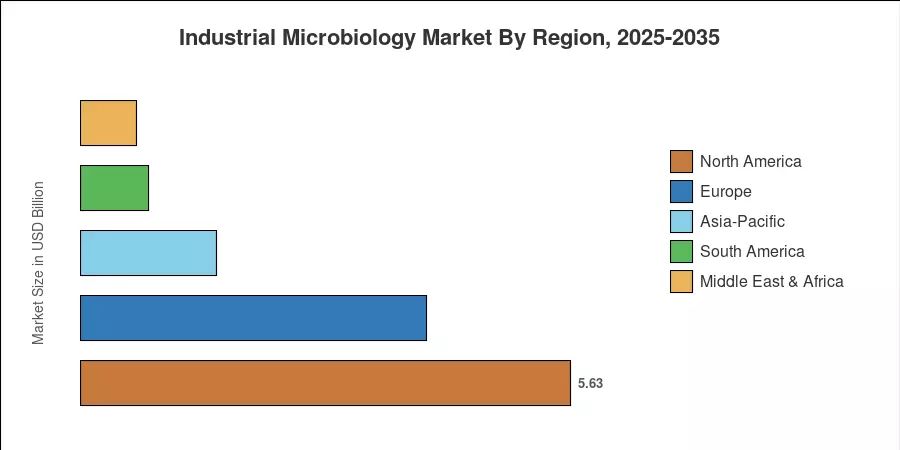
North America commands roughly 38.9% of the industrial microbiology market, anchored by the concentration of FDA-regulated pharmaceutical manufacturing. Asia-Pacific is the fastest-growing region at a 10.8% CAGR, driven by China and India's expanding biopharmaceutical sectors. Europe holds the second-largest share at approximately 27.5%, supported by the European Pharmacopoeia's harmonized testing mandates. The decade ahead will be defined by precision fermentation scale-up, ESG-linked bioremediation demand, and digital microbiology platform adoption.


Key Report Takeaways

• By Product Type

  • Consumables accounted for 55.5% of the industrial microbiology market in 2025, led by media and culture preparations used in quality-control workflows.
  • Reagents are forecast to expand at a 9.7% CAGR through 2035, driven by molecular-assay adoption in sterility validation.

• By Application

  • Food and beverage held 34.3% of the industrial microbiology market in 2025, reflecting mandatory pathogen-screening protocols across processed-food supply chains.
  • Pharmaceutical and biotechnology applications are advancing at a 10.7% CAGR to 2035.

• By Region

  • North America captured 38.9% of the industrial microbiology market share in 2025, underpinned by the largest installed base of cGMP-compliant testing laboratories.
  • Asia-Pacific is forecast to grow at a 10.8% CAGR through 2035.


Market Size and Forecast (2021–2035)

Market Research Future estimates are derived from a proprietary bottom-up model combining equipment shipment data, consumable procurement volumes, laboratory capacity audits, and validated forecasts from regulatory agencies and industry associations.
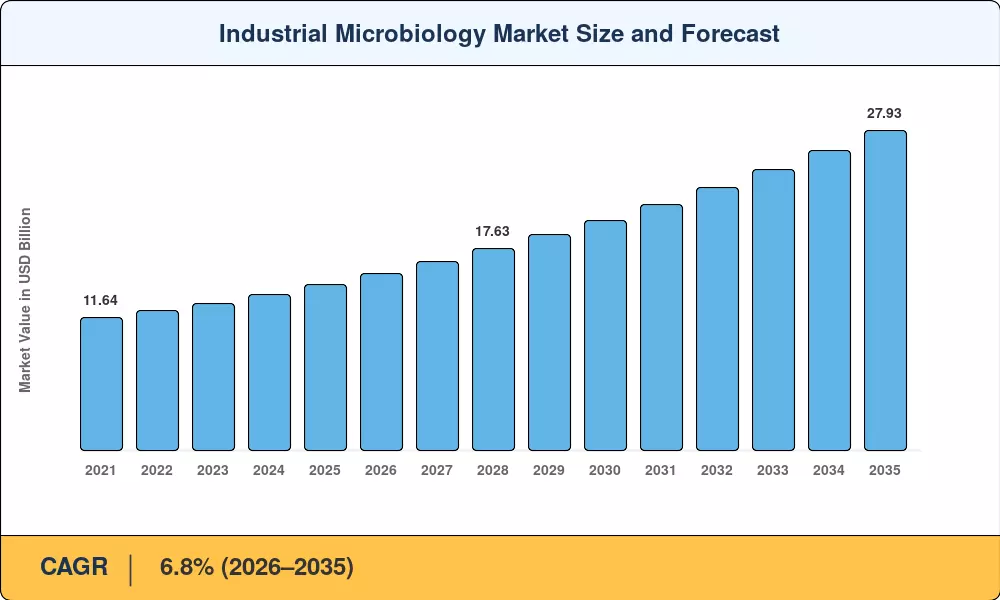
Industrial Microbiology Market Size and Forecast
Our Impact
Enabled $4.3B Revenue Impact for Fortune 500 and Leading Multinationals
Partnering with 2000+ Global Organizations Each Year
30K+ Citations by Top-Tier Firms in the Industry

Driver Impact Analysis

Driver ~% Impact on CAGR Geographic Relevance Impact Timeline
Pharmaceutical sterility regulation tightening +1.4% Global Short-term
Cultivated-meat and precision fermentation scale-up +1.1% North America, Europe Medium-term
Bioprocessing single-use technology adoption +0.9% Global Short-term
ESG-driven bioremediation mandates +0.8% Europe, Asia-Pacific Medium-term
AI/ML contamination detection platforms +0.7% North America, Europe Medium-term
Expansion of biosimilar manufacturing in Asia +0.6% Asia-Pacific Long-term
GMO oversight and environmental release monitoring +0.5% Global Long-term


Pharmaceutical Sterility Regulation Tightening

FDA's 2024 revised Guidance for Industry on Aseptic Processing mandates continuous environmental monitoring with validated rapid microbial methods for all sterile injectable drug facilities. The European Medicines Agency's Annex 1 revision, effective August 25, 2023 , similarly requires real-time viable and non-viable particle monitoring. These twin regulatory actions affect over 2,400 sterile manufacturing sites globally and are projected to drive USD 1.2 Billion in incremental testing equipment and consumables spending through 2028 [1][2]. Compliance timelines create short-term procurement urgency that directly benefits the industrial microbiology market.

Cultivated-Meat and Precision Fermentation Scale-Up

The cultivated-meat sector attracted USD 1.8 Billion in venture funding between 2022 and 2024 [9]. Every production-scale bioreactor requires sterility assurance, endotoxin screening, and mycoplasma testing protocols analogous to biopharmaceutical manufacturing. As commercial facilities move from pilot to 50,000-liter capacity, testing frequency per batch multiplies, creating a recurring consumable revenue stream for the industrial microbiology market.

AI-Driven Contamination Detection Platforms

Machine-learning algorithms trained on colony morphology datasets now achieve 97% detection accuracy within four hours versus 48–72 hours for traditional plate-count methods [11]. Vendors integrating AI modules into automated colony counters are commanding 20–30% price premiums. This technology shift is redefining laboratory throughput expectations and accelerating capital replacement cycles across the industrial microbiology market.


Restraints Impact Analysis

The restraint impacts below represent estimated negative pressure on market growth. They are directional assessments and not directly subtracted from the CAGR figure.

Restraint ~% Impact on CAGR Geographic Relevance Impact Timeline
High capital cost of automated rapid systems –0.6% Emerging Markets Short-term
Regulatory validation lag for novel methods –0.5% Global Medium-term
Skilled microbiologist workforce shortage –0.4% North America, Europe Long-term
Supply-chain concentration risk for critical consumables –0.3% Global Short-term
Cybersecurity vulnerabilities in connected lab instruments –0.2% North America, Europe Medium-term


High Capital Cost of Automated Rapid Systems

A fully configured automated sterility testing platform carries an installed cost of USD 250,000–450,000, excluding annual service contracts averaging 12–15% of purchase price. For contract testing laboratories in Southeast Asia and Latin America, this outlay represents 3–5x the cost of conventional culture-based setups, creating a meaningful adoption barrier. Despite long-term consumable savings, the payback period of 4–6 years limits penetration in price-sensitive segments of the industrial microbiology market [14].

Regulatory Validation Lag for Novel Methods

USP <1223> and EP 5.1.6 provide frameworks for alternative microbiological method validation, yet actual regulatory acceptance timelines stretch 18–36 months per method per market. Manufacturers must maintain parallel legacy testing throughout the validation window, effectively doubling quality-control costs. This regulatory friction slows the transition from traditional to rapid methods and dampens the upgrade cycle that drives premium-equipment revenue [15].


Industrial Microbiology Market Opportunities

Point-of-Manufacturing Rapid Testing in Emerging Pharma Hubs

India’s pharma industry, which supplies over 60 percent of global vaccination volumes, is spending extensively in WHO pre-qualification of more sterile medicine facilities. Every new facility requires a robust microbial testing infrastructure. Market Research Future (MRFR) believes that India alone might provide USD 1.4 Billion in incremental industrial microbiology market demand by 2032.


Data Monetization Through Digital Microbiology Platforms

Connected incubators and automated plate readers produce gigabytes of environmental monitoring data. Subscription-based analytics services are being developed by platform vendors to benchmark pollution trends across facilities. The software-as-a-service approach might provide recurring revenue margins of 60–70% and change vendor economics from hardware-centric to data-centric in the industrial microbiology sector.


Bioremediation and Industrial Waste Treatment

The EU Green Deal requirements provide for 55% reduction in municipal wastewater pollutants by 2030 [10]. Microbial consortia built for hydrocarbon degradation, heavy-metal sequestration and nutrient recovery are a USD 3.1 Billion addressable opportunity spanning European and North American industrial corridors. Testing and monitoring services after deployment will be provided.


Cultivated-Meat Regulatory Compliance Testing

Regulators in Singapore, the United States and Israel have authorized or are reviewing goods made from cultured beef. Current pharmacopeial approaches do not encompass species-specific microbiological screening panels needed by each jurisdiction. Vendors will produce purpose-built cultivated-protein testing kits, and first-mover benefits will be captured in this fast-emerging industry.


Mycoplasma and Adventitious Agent Testing for Cell and Gene Therapies

The global cell and gene therapy pipeline surpassed 3,700 active clinical trials in 2024 [18]. Every lot release demands mycoplasma and adventitious virus clearance testing. Rapid nucleic-acid-based mycoplasma detection kits priced at USD 150–300 per test represent high-margin consumable opportunities across the industrial microbiology market.


Industrial Microbiology Market Future Outlook

Autonomous Microbiology Laboratories

AI-orchestrated laboratory workflows will increasingly replace manual plate reading and colony counting by 2030. Robotic sample preparation integrated with machine-vision identification systems can process 10x the throughput of manual operations while reducing human-error contamination events by an estimated 85% [11]. The industrial microbiology market will shift toward platform-subscription pricing as automation commoditizes hardware revenue.

Precision Fermentation and Synthetic Biology

The precision fermentation sector, projected to reach USD 36 Billion globally by 2032 according to the Good Food Institute [9], demands continuous aseptic monitoring at scales unprecedented outside traditional brewing. Every 100,000-liter fermentation vessel requires inline microbial sensors, environmental monitoring systems, and rapid sterility validation. This expansion directly enlarges the addressable industrial microbiology market.

ESG-Linked Bioremediation at Industrial Scale

Corporate ESG commitments and regulatory mandates such as the EU Corporate Sustainability Reporting Directive will increase demand for verified microbial degradation monitoring. Testing service providers positioned to offer certified bioremediation efficacy measurement will tap a recurring revenue stream tied to environmental compliance auditing across the industrial microbiology market [10].

Cybersecurity and Data Integrity in Connected Labs

As laboratory instruments become network-connected, FDA 21 CFR Part 11 and EU Annex 11 data-integrity requirements extend to microbiology data systems. Vendors offering validated, cybersecurity-hardened platforms will differentiate in a market increasingly scrutinized by regulators for electronic-record integrity [17].


Industrial Microbiology Market Segmentation

By Product Type

Segment Key Metric Primary Demand Driver
Equipment & Systems USD 2.10 Billion (2025) Automated rapid-testing platform upgrades
Consumables 55.5% share (2025) Recurring media, culture prep, and single-use purchases
Reagents 9.7% CAGR (2026–2035) Molecular assay and rapid-detection kit adoption


Consumables dominate the industrial microbiology market because microbial testing is inherently consumable-intensive — every sterility test, environmental monitoring plate, and bioburden assay consumes culture media, swabs, and single-use accessories. The reagents segment is accelerating as molecular detection methods (qPCR, LAMP, next-generation sequencing) replace conventional growth-based assays, commanding higher per-test pricing.

By Application

Segment Key Metric Primary Demand Driver
Food & Beverage 34.3% share (2025) Mandatory pathogen screening (Salmonella, Listeria, E. coli)
Pharmaceutical & Biotechnology 10.7% CAGR (2026–2035) Sterility assurance and lot-release testing expansion
Environmental USD 1.59 Billion (2025) Wastewater and soil bioremediation monitoring
Energy & Agriculture 5.9% CAGR (2026–2035) Bioethanol fermentation QC, soil-health diagnostics


Food and beverage testing accounts for the largest application share in the industrial microbiology market, driven by FSMA (Food Safety Modernization Act) enforcement in the US and EU Regulation 2073/2005 on microbiological criteria for foodstuffs [20]. Pharmaceutical and biotechnology are the fastest-growing applications as biologic drug approvals increase and cell-therapy manufacturing multiplies lot-release testing volumes.

By Microbial Type

Segment Key Metric Primary Demand Driver
Bacteria 55.9% share (2025) Broadest pathogen panel across all industries
Fungi & Yeast USD 2.75 Billion (2025) Fermentation QC and environmental monitoring
Viruses & Phages 10.0% CAGR (2026–2035) Adventitious virus clearance in biologics


Bacteria testing dominates the industrial microbiology market because bacterial contamination represents the primary risk vector across food, pharmaceutical, and environmental applications. Viruses and phages represent the fastest-growing microbial testing category as cell-therapy and gene-therapy manufacturing require validated viral clearance verification per ICH Q5A guidelines [21].

By Test Type

Segment Key Metric Primary Demand Driver
Bioburden Testing 48.9% share (2025) Mandatory pre-sterilization microbial load assessment
Sterility Testing USD 2.82 Billion (2025) Lot-release requirement for all sterile products
Endotoxin Testing 9.7% CAGR (2026–2035) rFC adoption replacing LAL-based methods
Environmental Monitoring 6.4% CAGR (2026–2035) Continuous cleanroom surveillance


Bioburden testing commands the largest share of the industrial microbiology market because every sterilized pharmaceutical, medical device, and food product requires pre-sterilization microbial enumeration. Endotoxin testing is growing rapidly as recombinant Factor C (rFC) assays gain pharmacopeial acceptance, replacing horseshoe-crab-derived LAL reagents with sustainable synthetic alternatives [22].


Regional Market Share Analysis

Region Key Metric Primary Investment Themes
North America 38.9% share (2025) FDA sterility enforcement, cultivated-meat lab expansion
Europe 27.5% share (2025) Annex 1 compliance, Green Deal bioremediation
Asia-Pacific 10.8% CAGR (2026–2035) Biosimilar manufacturing build-out, food-export QC
South America USD 0.78 Billion (2025) Agri-food pathogen testing modernization
Middle East & Africa USD 0.64 Billion (2025) Halal certification microbiology, water treatment
**Total** **USD 14.48 Billion (2025)**

The industrial microbiology market displays distinct regional dynamics shaped by regulatory maturity, pharmaceutical manufacturing density, and food-safety enforcement intensity.


North America

Country Key Metric Key Driver
US 78.4% of regional share FDA cGMP enforcement, biopharma concentration
Canada 12.8% of regional share Cannabis and biologics testing mandates
Mexico 8.8% of regional share Nearshoring pharma manufacturing


The US accounts for the largest share of North America's industrial microbiology market, hosting over 1,100 FDA-registered sterile drug manufacturing sites. Canada's Cannabis Act testing requirements created an incremental demand layer for potency and microbial-limits testing since 2019 [19]. Mexico is attracting pharmaceutical nearshoring investment, with testing laboratory capacity expanding by approximately 15% annually since 2023.

Europe

Country Key Metric Key Driver
Germany 7.6% CAGR Biopharma and automotive bioprocessing
UK USD 1.05 Billion (2025) Cell-therapy manufacturing hub
France 6.9% CAGR Vaccine production modernization
Italy USD 0.52 Billion (2025) Food-safety enforcement
Spain 6.5% CAGR Agri-food export testing
Nordic Countries USD 0.41 Billion (2025) Green bioeconomy investment
Russia 5.8% CAGR Domestic pharma self-sufficiency drive
Rest of Europe USD 0.49 Billion (2025) Harmonized EP compliance


Europe's industrial microbiology market is defined by EMA Annex 1 implementation timelines, which mandate upgraded environmental monitoring across all sterile manufacturing sites by mid-2026 [2]. Germany's BioRegions program supports 380+ biotech firms requiring validated microbial QC services.

Asia-Pacific

Country Key Metric Key Driver
China 34.2% of regional share Biosimilar scale-up, NMPA enforcement
India 10.4% CAGR WHO-prequalification expansion
Japan USD 0.62 Billion (2025) Regenerative medicine testing
South Korea 9.8% CAGR CDMO capacity expansion
ASEAN USD 0.39 Billion (2025) Food-export microbiology compliance
Rest of Asia-Pacific 8.7% CAGR Emerging biopharma hubs


Asia-Pacific represents the fastest-growing region for the industrial microbiology market. China's National Medical Products Administration has tightened sterility standards for injectable biologics, triggering laboratory upgrades across 600+ domestic manufacturers. India's Production-Linked Incentive scheme for pharmaceuticals is driving greenfield sterile-facility construction, requiring complete microbiology infrastructure [12].

South America

Country Key Metric Key Driver
Brazil 58.3% of regional share ANVISA harmonization with ICH guidelines
Argentina 6.1% CAGR Bioethanol microbial monitoring
Rest of South America USD 0.14 Billion (2025) Food-export testing requirements


Brazil dominates South America's industrial microbiology market as ANVISA aligns its pharmaceutical inspection protocols with ICH Q7 standards, requiring validated microbial testing at every stage of API manufacturing.

Middle East & Africa

Country Key Metric Key Driver
Saudi Arabia 7.2% CAGR Vision 2030 biopharma investment
UAE USD 0.15 Billion (2025) Healthcare free-zone laboratory build-out
South Africa 6.4% CAGR Vaccine manufacturing hub
Egypt USD 0.09 Billion (2025) Food-safety modernization
Rest of MEA 5.9% CAGR Water-treatment microbiology


Saudi Arabia's Vision 2030 includes USD 5.3 Billion committed to domestic pharmaceutical manufacturing capacity, each facility requiring environmental monitoring and sterility assurance infrastructure. South Africa's Biovac Institute expansion is creating testing demand for vaccine lot-release microbiology.


Industrial Microbiology Market By Region, 2025-2035

Competitive Benchmarking

The industrial microbiology market exhibits medium concentration with the top five players holding an estimated 45–52% combined revenue share. Herfindahl-Hirschman Index estimates place the market around 600–750, indicating a moderately competitive structure with both large diversified life-science conglomerates and specialized niche players coexisting.

Company Est. Revenue Share Range Key Offerings Strategic Positioning
Thermo Fisher Scientific ~10–14% Rapid sterility systems, culture media, molecular reagents Full-spectrum portfolio across all test types
Danaher Corporation ~8–12% Automated colony counters, environmental monitoring Technology-led acquisitions in rapid methods
bioMérieux SA ~7–10% VITEK systems, endotoxin detection, food pathogen kits Dedicated microbiology-first positioning
Charles River Laboratories ~5–8% Endotoxin testing (Endosafe), microbial identification Pharma QC and lot-release specialization
Merck KGaA ~5–7% Milliflex rapid detection, culture media, sterility kits Integrated consumables-to-instruments strategy
Sartorius AG ~4–6% Microsart filtration systems, bioburden media Bioprocessing workflow integration
Becton, Dickinson and Company ~4–6% BD BACTEC systems, culture vials, diagnostic reagents Blood-culture and sterility-test market anchor
Agilent Technologies ~3–5% Microbial identification, lab informatics Data-centric laboratory solutions
Eurofins Scientific ~3–5% Contract microbiology testing services Outsourced testing network across 60+ countries
SGS SA ~2–4% Food and environmental microbiology testing Global inspection and certification platform


Recent News & Developments

  • Thermo Fisher (June 2025) weighs $4 billion sale of microbiology unit, opening door for acquisitions by consolidation-focused investors.
  • bioMérieux (2022 ): Acquired a majority stake in Specific Diagnostics to strengthen its AI-powered antimicrobial susceptibility testing platform for industrial applications [Ref 23].


Industrial Microbiology Market Report Scope

Parameter Detail
Market Scope Global Industrial Microbiology Market
Study Period 2021–2035
CAGR (Forecast Period) 6.8% (2026–2035)
Market Size (2025) USD 14.48 Billion
Market Size (2035) USD 27.93 Billion
Fastest Growing Segment Reagents (by product type); Pharmaceutical & Biotechnology (by application)
Companies Profiled 10
Valuation Currency USD Billion


FAQs

How does recombinant Factor C compare to traditional LAL for endotoxin testing in cost-per-assay terms?

rFC cartridge costs run USD 18–25 per test versus USD 12–18 for LAL, but rFC eliminates batch-to-batch variability and horseshoe-crab sourcing risk. Total cost of quality favors rFC in high-volume pharmaceutical environments [22].

What cybersecurity standards apply to networked microbiology laboratory instruments?

FDA's 2024 draft guidance extends 21 CFR Part 11 data-integrity requirements to connected lab devices. Vendors must demonstrate validated access controls, audit trails, and encrypted data transmission for compliance [17].

Which industrial microbiology market players offer subscription-based pricing models for automated systems?

Several vendors including bioMérieux and Thermo Fisher have introduced reagent-rental programs bundling instrument placement with per-test consumable pricing. These models lower upfront capital barriers for mid-tier laboratories [3][23].

How does cultivated-meat testing differ from traditional pharmaceutical sterility assurance?

Cultivated-meat processes use animal-cell lines requiring mycoplasma, adventitious virus, and species-authentication panels not standard in pharmacopeial sterility methods. Custom test-kit development is still nascent [9].

What role does next-generation sequencing play in the industrial microbiology market?

NGS enables comprehensive microbial community profiling for contamination root-cause analysis. Adoption remains limited to large pharma and contract labs due to USD 500+ per-sample costs and bioinformatics expertise requirements.

Are there trade restrictions affecting cross-border procurement of microbiology consumables?

Certain culture-media ingredients face phytosanitary import restrictions, and dual-use pathogen reference standards require export licenses under the Wassenaar Arrangement. Multi-source procurement strategies mitigate these risks [7][13].

How do single-use bioreactor systems impact microbial contamination risk profiles in the industrial microbiology market?

Single-use systems eliminate cross-batch contamination from inadequate CIP/SIP cycles but introduce extractables and leachables testing requirements. Net contamination risk drops 40–60% versus stainless-steel systems [4].    
Author
Author
Author Profile
Rahul Gotadki LinkedIn
Research Manager
He holds an experience of about 9+ years in Market Research and Business Consulting, working under the spectrum of Life Sciences and Healthcare domains. Rahul conceptualizes and implements a scalable business strategy and provides strategic leadership to the clients. His expertise lies in market estimation, competitive intelligence, pipeline analysis, customer assessment, etc.
Co-Author
Co-Author Profile
Kinjoll Dey LinkedIn
Senior Research Analyst
He is an extremely curious individual currently working in Healthcare and Medical Devices Domain. Kinjoll is comfortably versed in data centric research backed by healthcare educational background. He leverages extensive data mining and analytics tools such as Primary and Secondary Research, Statistical Analysis, Machine Learning, Data Modelling. His key role also involves Technical Sales Support, Client Interaction and Project management within the Healthcare team. Lastly, he showcases extensive affinity towards learning new skills and remain fascinated in implementing them.

Research Approach


Secondary Research

The secondary research process involved comprehensive analysis of regulatory databases, peer-reviewed scientific journals, industry publications, and authoritative health and biotechnology organizations. Key sources included the US Food and Drug Administration (FDA), European Medicines Agency (EMA), US Environmental Protection Agency (EPA), European Chemicals Agency (ECHA), International Union of Microbiological Societies (IUMS), American Society for Microbiology (ASM), Society for Industrial Microbiology and Biotechnology (SIMB), International Society for Pharmaceutical Engineering (ISPE), National Institutes of Health (NIH), National Center for Biotechnology Information (NCBI/PubMed), US Department of Agriculture (USDA), European Food Safety Authority (EFSA), World Health Organization (WHO) Global Health Observatory, Organisation for Economic Co-operation and Development (OECD) Biotechnology Statistics, United Nations Industrial Development Organization (UNIDO), and national biotechnology regulatory reports from key markets. These sources were used to collect fermentation process statistics, bioprocessing equipment regulatory approval data, clinical safety studies for microbial applications, environmental monitoring trends, and market landscape analysis for fermentation technology, bioprocessing equipment, microbial culture media, cell culture technology, and other industrial microbiology segments.

Specific Secondary Sources by Segment:

Regulatory & Compliance: FDA Center for Biologics Evaluation and Research (CBER), EMA Committee for Medicinal Products for Human Use (CHMP), USDA Animal and Plant Health Inspection Service (APHIS), EPA Office of Chemical Safety and Pollution Prevention

Biotechnology & Pharmaceuticals: Biotechnology Innovation Organization (BIO) industry reports, Pharmaceutical Research and Manufacturers of America (PhRMA) data, European Federation of Biotechnology (EFB) publications

Food & Beverage: Food and Agriculture Organization (FAO) Codex Alimentarius, International Food Protection Training Institute (IFPTI) guidelines, Global Food Safety Initiative (GFSI) benchmarks

Environmental Monitoring: United Nations Environment Programme (UNEP) reports, European Environment Agency (EEA) data, US Geological Survey (USGS) microbiological monitoring databases

Agriculture: International Seed Federation (ISF) reports, CropLife International biotechnology statistics, Consultative Group on International Agricultural Research (CGIAR) microbial research databases


Primary Research

Qualitative and quantitative insights were obtained by interviewing supply-side and demand-side stakeholders during the primary research process. Supply-side sources included CEOs, VPs of Product Development, Chief Scientific Officers, regulatory affairs heads, bioprocess engineers, and commercial directors from industrial microbiology equipment manufacturers, microbial strain suppliers, culture media producers, and biotechnology OEMs. fermentation scientists, quality control microbiologists, bioprocessing managers, laboratory directors from pharmaceutical manufacturing facilities, food and beverage production facilities, environmental testing laboratories, agricultural biotechnology centers, and contract manufacturing organizations (CMOs) were among the demand-side sources. Primary research has confirmed the product pipeline timelines for automated microbial detection systems, validated market segmentation across fermentation technology, bioprocessing equipment, microbial strains, and culture media, and gathered insights on bioprocessing adoption patterns, equipment pricing strategies, and regulatory compliance dynamics.

Primary Respondent Breakdown:

By Designation: C-level Primaries (32%), Director Level (31%), Others (37%)

By Region: North America (32%), Europe (30%), Asia-Pacific (28%), Rest of World (10%)

By Segment Focus: Biotechnology/Pharmaceuticals (40%), Food & Beverage (25%), Environmental Monitoring (20%), Agriculture (10%), Others (5%)

By Organization Type: Equipment Manufacturers (35%), Microbial Product Suppliers (25%), End-User Industries (30%), Research Institutions (10%)


Market Size Estimation

Global market valuation was derived through revenue mapping and bioprocessing volume analysis. The methodology included:

Identification of 50+ key manufacturers across North America, Europe, Asia-Pacific, and Latin America specializing in fermentation equipment, bioreactors, microbial detection systems, and culture media

Product mapping across fermentation technology, bioprocessing equipment, microbial culture media, laboratory instruments, microbial strains, enzymes, and downstream processing equipment categories

Analysis of reported and modeled annual revenues specific to industrial microbiology portfolios including bioprocessing equipment sales, consumables revenue, and service contracts

Coverage of manufacturers representing 72-78% of global market share in 2024, including leaders such as Thermo Fisher Scientific, Merck KGaA, Sartorius, Danaher Corporation, and Eppendorf

Download Free Sample

Kindly complete the form below to receive a free sample of this Report

Download PDF ×

We do not share your information with anyone. However, we may send you emails based on your report interest from time to time. You may contact us at any time to opt-out.














