Insulin Drugs GLP 1 Receptor Agaonist Market
Insulin Drugs GLP 1 Receptor Agaonist Market Summary
As per Market Research Future analysis, the Insulin Drugs and Glucagon-Like Peptide 1 Receptor Agonist Market was estimated at 67.77 USD Billion in 2024. The market is projected to grow from 70.71 USD Billion in 2025 to 108.14 USD Billion by 2035, exhibiting a compound annual growth rate (CAGR) of 4.34% during the forecast period 2025 - 2035
Key Market Trends & Highlights
The Insulin Drugs and Glucagon-Like Peptide 1 Receptor Agonist Market is experiencing dynamic growth driven by technological advancements and increasing diabetes prevalence.
- Technological advancements in drug delivery systems are enhancing patient compliance and treatment outcomes.
- The rise of personalized medicine is shaping treatment protocols, particularly in North America, the largest market.
- Integration of digital health solutions is becoming prevalent, especially in the Asia-Pacific region, which is the fastest-growing market.
- The increasing prevalence of diabetes and advancements in drug formulations are key drivers propelling market growth.
Market Size & Forecast
| 2024 Market Size | 67.77 (USD Billion) |
| 2035 Market Size | 108.14 (USD Billion) |
| CAGR (2025 - 2035) | 4.34% |
Major Players
Novo Nordisk (DK), Sanofi (FR), Boehringer Ingelheim (DE), Eli Lilly and Company (US), Merck & Co. (US), AstraZeneca (GB), Bristol-Myers Squibb (US), Amgen (US), Takeda Pharmaceutical Company (JP)
Insulin Drugs GLP 1 Receptor Agaonist Market Trends
The Insulin Drugs and Glucagon-Like Peptide 1 Receptor Agonist Market is currently experiencing notable transformations driven by advancements in technology and increasing awareness of diabetes management. The rise in diabetes prevalence globally has prompted a surge in demand for effective treatment options. Pharmaceutical companies are focusing on developing innovative formulations and delivery systems, which may enhance patient adherence and improve overall health outcomes. Furthermore, the integration of digital health solutions, such as mobile applications and telemedicine, appears to be reshaping how patients manage their conditions, potentially leading to better therapeutic results. In addition, the market is witnessing a shift towards personalized medicine, where treatments are tailored to individual patient profiles. This trend suggests a growing recognition of the need for customized approaches in diabetes care, which could lead to more effective management strategies. Regulatory bodies are also playing a crucial role in facilitating the approval of new therapies, thereby fostering a competitive landscape. As the Insulin Drugs and Glucagon-Like Peptide 1 Receptor Agonist Market evolves, stakeholders must remain vigilant to emerging trends and adapt their strategies accordingly to meet the changing needs of patients and healthcare providers.
Technological Advancements in Drug Delivery
Recent innovations in drug delivery systems are transforming the Insulin Drugs and Glucagon-Like Peptide 1 Receptor Agonist Market. New methods, such as smart insulin pens and continuous glucose monitoring devices, are enhancing patient convenience and compliance. These advancements may lead to improved glycemic control and overall health outcomes.
Rise of Personalized Medicine
The trend towards personalized medicine is gaining traction within the Insulin Drugs and Glucagon-Like Peptide 1 Receptor Agonist Market. Tailoring treatments to individual patient needs could enhance efficacy and minimize side effects, reflecting a broader shift in healthcare towards customized therapeutic approaches.
Integration of Digital Health Solutions
The incorporation of digital health technologies is reshaping the Insulin Drugs and Glucagon-Like Peptide 1 Receptor Agonist Market. Mobile applications and telehealth services are facilitating better patient engagement and self-management, potentially leading to improved adherence to treatment regimens.
Insulin Drugs GLP 1 Receptor Agaonist Market Drivers
Rising Geriatric Population
The aging population is a critical factor influencing the Insulin Drugs and Glucagon-Like Peptide 1 Receptor Agonist Market. As individuals age, the risk of developing type 2 diabetes increases, leading to a higher demand for insulin and GLP-1 receptor agonist therapies. Current demographic trends indicate that by 2050, the number of people aged 60 and above will double, creating a substantial market for diabetes management solutions. This demographic shift necessitates the development of tailored therapies that cater to the unique needs of older patients, including considerations for polypharmacy and comorbidities. As a result, pharmaceutical companies are likely to focus on creating formulations that are both effective and safe for the elderly, thereby driving growth in the insulin and GLP-1 receptor agonist market.
Advancements in Drug Formulations
Innovations in drug formulations are significantly influencing the Insulin Drugs and Glucagon-Like Peptide 1 Receptor Agonist Market. Recent developments have led to the creation of long-acting insulin analogs and novel GLP-1 receptor agonists that offer improved efficacy and patient compliance. For instance, the introduction of once-weekly formulations has transformed treatment regimens, making it easier for patients to manage their diabetes. Market data suggests that these advancements are contributing to a projected compound annual growth rate of over 8% in the insulin and GLP-1 market segment. As pharmaceutical companies continue to invest in research and development, the availability of more effective and user-friendly options is likely to attract a broader patient base, thereby driving market expansion.
Increasing Prevalence of Diabetes
The rising incidence of diabetes worldwide is a primary driver for the Insulin Drugs and Glucagon-Like Peptide 1 Receptor Agonist Market. According to recent statistics, the number of adults diagnosed with diabetes has surged, with projections indicating that by 2045, approximately 700 million individuals will be affected. This alarming trend necessitates the development and distribution of effective insulin therapies and GLP-1 receptor agonists, which are essential for managing blood glucose levels. As healthcare systems strive to address this growing epidemic, the demand for innovative insulin drugs and GLP-1 receptor agonists is expected to escalate, thereby propelling market growth. Furthermore, the increasing awareness of diabetes management among patients and healthcare providers is likely to enhance the adoption of these therapies, further solidifying their role in the market.
Growing Focus on Preventive Healthcare
The increasing emphasis on preventive healthcare is reshaping the Insulin Drugs and Glucagon-Like Peptide 1 Receptor Agonist Market. Healthcare providers are increasingly advocating for early intervention strategies to manage diabetes and its complications. This shift towards preventive measures is fostering a greater demand for insulin therapies and GLP-1 receptor agonists, as they play a crucial role in maintaining optimal blood glucose levels and preventing long-term health issues. Market analysis indicates that the preventive healthcare sector is expected to grow significantly, with a notable increase in screening programs and patient education initiatives. Consequently, this trend is likely to enhance the uptake of insulin drugs and GLP-1 receptor agonists, further driving market growth as patients seek effective solutions to manage their health proactively.
Increased Investment in Diabetes Research
The surge in investment for diabetes research is propelling the Insulin Drugs and Glucagon-Like Peptide 1 Receptor Agonist Market. Governments and private entities are allocating substantial funds to explore innovative treatment options and improve existing therapies. This influx of capital is fostering collaborations between academic institutions and pharmaceutical companies, leading to breakthroughs in drug development. Recent reports indicate that funding for diabetes research has increased by over 20% in the past few years, highlighting the commitment to addressing this pressing health issue. As new therapies emerge from this research, the market for insulin drugs and GLP-1 receptor agonists is expected to expand, providing patients with more effective and diverse treatment options.
Market Segment Insights
By Drug Class: Insulin Drugs (Largest) vs. Glucagon-Like Peptide 1 Receptor Agonist (Fastest-Growing)
The Insulin Drugs segment maintains a significant share in the market, providing essential treatment for diabetes management. This segment is well-established and widely utilized, comprising various formulations including short-acting and long-acting insulin, which continue to dominate the market landscape. On the other hand, Glucagon-Like Peptide 1 Receptor Agonists (GLP-1 RAs) are rapidly gaining traction with their effectiveness in managing blood glucose levels and promoting weight loss, resulting in a growing preference among patients and healthcare providers alike. The growth of the GLP-1 RAs segment is attributed to the increasing prevalence of obesity and type 2 diabetes, as well as rising awareness regarding the benefits of these medications. Innovative drug development, combined with favorable clinical outcomes and patient adherence, drives the demand for GLP-1 RAs, positioning them as a promising alternative in diabetes treatment. As the market evolves, the competition between these two classes will become more prominent, with GLP-1 RAs anticipated to capture a larger share in the near future.
Insulin Drugs (Dominant) vs. Glucagon-Like Peptide 1 Receptor Agonist (Emerging)
Insulin Drugs have long been the cornerstone of diabetes treatment, known for their reliability and proven efficacy in controlling blood sugar levels. Their established presence, coupled with various delivery methods—ranging from syringes to insulin pens—makes them a trusted choice among healthcare providers. Moreover, advancements in formulations, such as biosimilar insulin, continue to enhance accessibility and patient outcomes. In contrast, Glucagon-Like Peptide 1 Receptor Agonists represent an emerging segment, focused on dual benefits of glycemic control and weight management. As newer agents are launched, offering extended durations of action and improved safety profiles, they appeal to a growing patient demographic seeking comprehensive diabetes management solutions. This dynamic positions GLP-1 RAs as a vital component of modern therapy, increasingly influencing treatment paradigms.
By Formulation: Injectables (Largest) vs. Oral (Fastest-Growing)
In the Insulin Drugs and Glucagon-Like Peptide 1 Receptor Agonist Market, injectables currently dominate the formulation segment, capturing a significant share due to their long-standing presence and established efficacy in managing diabetes. This method of delivery is preferred by healthcare professionals because of its speed and reliability in regulating blood sugar levels, particularly for patients with Type 1 diabetes and certain Type 2 patients requiring more intensive management.
Formulation: Injectables (Dominant) vs. Oral (Emerging)
Injectables are positioned as the dominant formulation in the insulin drugs market, providing advantages such as rapid onset of action and direct delivery into the bloodstream, which is critical for patients needing immediate glucose control. In contrast, oral formulations are emerging rapidly, driven by advancements in drug delivery technologies and patient preference for convenience. As these oral therapies become more effective and widely accepted, they present a growing alternative, particularly appealing to patients looking for non-injection options, thus reshaping the landscape of diabetes management.
By Therapeutic Area: Type 2 Diabetes (Largest) vs. Obesity (Fastest-Growing)
The therapeutic area for insulin drugs and glucagon-like peptide 1 receptor agonists is primarily dominated by Type 2 Diabetes, which holds the largest market share due to its higher prevalence among global populations. As lifestyles evolve, Type 2 Diabetes continues to be a major health concern, reinforcing its strong market position. In contrast, Type 1 Diabetes, while significant, constitutes a smaller segment within the market. Obesity is emerging as a critical therapeutic area, reflecting the increasing recognition of its impact on diabetes management and overall health.
Type 2 Diabetes (Dominant) vs. Obesity (Emerging)
Type 2 Diabetes is regarded as the dominant segment in the insulin drug market due to its widespread occurrence and the chronic nature of the disease, necessitating long-term treatment solutions. Insulin therapy and glucagon-like peptide 1 receptor agonists cater to the unmet needs of Type 2 Diabetes patients, contributing to sustained demand. On the other hand, obesity is rapidly becoming an emerging segment as more healthcare professionals aim to address this epidemic through weight management strategies, recognizing its direct correlation with Type 2 Diabetes. Innovative treatments targeting obesity not only enhance weight loss but also effectively improve glycemic control, making them increasingly relevant in contemporary diabetes care.
By Administration Route: Subcutaneous (Largest) vs. Intravenous (Fastest-Growing)
In the Insulin Drugs and Glucagon-Like Peptide 1 Receptor Agonist Market, the administration route segment shows distinct preferences among patients and healthcare providers. Subcutaneous administration remains the largest segment due to its ease of use and patient convenience, capturing a significant market share. On the other hand, intravenous administration is rapidly gaining traction as healthcare systems seek to improve patient outcomes during emergencies and hospital settings, marking it as a growing contender in this market.
Subcutaneous (Dominant) vs. Intravenous (Emerging)
The Subcutaneous route dominates the insulin administration landscape, primarily due to its patient-friendly attributes and established presence in self-administration protocols. This method allows patients the flexibility to manage their medication at home, promoting adherence and lifestyle management. Meanwhile, Intravenous administration, categorized as an emerging segment, is experiencing exponential growth driven by advancements in technology and an increase in the number of healthcare professionals administering insulin in acute care settings. While traditionally used in hospital environments, its application is expanding, particularly in critical care, due to its ability to provide rapid and precise dosing.
By Distribution Channel: Online Pharmacies (Largest) vs. Retail Pharmacies (Fastest-Growing)
The distribution channels for insulin drugs and glucagon-like peptide 1 receptor agonists primarily include hospital pharmacies, retail pharmacies, and online pharmacies. Among these, online pharmacies hold the largest market share, benefiting from the shift toward digital healthcare solutions and increasing consumer comfort with online purchasing. Retail pharmacies, while significant, are emerging as the fastest-growing segment due to their accessibility and efforts to enhance customer services such as personalized consultations.
Retail Pharmacies (Dominant) vs. Online Pharmacies (Emerging)
Retail pharmacies are the dominant distribution channel for insulin drugs and glucagon-like peptide 1 receptor agonists, leveraging their established presence and direct customer engagement. These pharmacies offer the advantage of immediate access to medications and face-to-face consultations, appealing to patients who prefer in-person service. Conversely, online pharmacies are viewed as an emerging channel, driven by the convenience of home delivery and growing patient trust in telehealth trends. The rise of e-commerce in healthcare has compelled retail pharmacies to adapt by incorporating digital tools and improving their online offerings, fostering competition in this evolving market.
Regional Insights
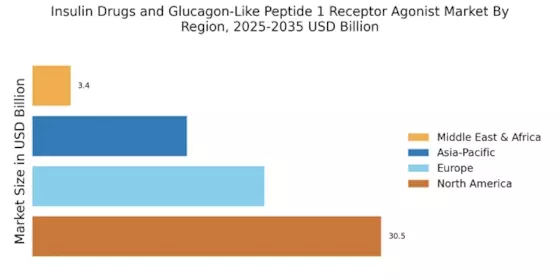
The Regional segment of the Global Insulin Drugs and Glucagon-Like Peptide 1 Receptor Agonist Market reveals significant insights into market dynamics, with North America holding a dominant position valued at 27.0 USD Billion in 2024, which is projected to grow to 42.5 USD Billion by 2035.
This majority holding is driven by a high prevalence of diabetes and advanced healthcare infrastructure. Europe follows, valued at 18.0 USD Billion in 2024 and expected to reach 28.6 USD Billion by 2035, showcasing a significant demand for innovative treatment options and rising geriatric populations.
The APAC region holds a value of 15.5 USD Billion in 2024, projected to grow to 24.2 USD Billion by 2035, reflecting increasing diabetes prevalence and healthcare reforms. In South America, the market value stands at 4.0 USD Billion in 2024, anticipated to grow to 6.2 USD Billion by 2035, while the MEA region starts at 3.27 USD Billion in 2024 and is expected to increase to 6.62 USD Billion by 2035.
While MEA and South America have smaller market sizes, they present growth opportunities due to improving healthcare access and awareness of diabetes management.The Global Insulin Drugs and Glucagon-Like Peptide 1 Receptor Agonist Market segmentation indicates a regional hierarchy where North America not only leads but provides a substantial share of overall global revenue.
Key Players and Competitive Insights
Key Companies in the Insulin Drugs GLP 1 Receptor Agaonist Market include
Industry Developments
Recent developments in the Global Insulin Drugs and Glucagon-Like Peptide 1 Receptor Agonist Market indicate a dynamic landscape, particularly with significant activities involving major companies such as Novo Nordisk, Eli Lilly, and Sanofi. The ongoing innovation in diabetes treatment is evident as Eli Lilly announced advancements in its GLP-1 receptor agonist portfolio, which could enhance therapeutic options available to patients.
Furthermore, Novo Nordisk continues to experience robust growth, leveraging its leadership position in insulin therapies and expanding its production capacity to meet rising demand. On the acquisition front, Sanofi’s strategic partnerships and investments aim to strengthen its position in the biologics space, with attention to insulin drugs' evolving complexities.
Additionally, GlaxoSmithKline is reportedly increasing its research budget for diabetes drugs, underscoring the intensifying competition among these key players. This uptick in investment points to a trend of heightened focus on effective diabetes management strategies as companies navigate regulatory approvals and market access challenges. The overall market valuation is witnessing substantial growth, suggesting a bullish outlook driven by technological advancements and the increasing prevalence of diabetes globally.
Future Outlook
Insulin Drugs GLP 1 Receptor Agaonist Market Future Outlook
The Insulin Drugs and Glucagon-Like Peptide 1 Receptor Agonist Market is projected to grow at a 4.34% CAGR from 2025 to 2035, driven by increasing diabetes prevalence and technological advancements.
New opportunities lie in:
- Development of personalized insulin delivery systems Expansion of telehealthservices for diabetes management Investment in AI-driven predictive analytics for treatment optimization
By 2035, the market is expected to achieve substantial growth, reflecting evolving patient needs and innovative solutions.
Market Segmentation
Insulin Drugs GLP 1 Receptor Agaonist Market Drug Class Outlook
- Insulin Drugs
- Glucagon-Like Peptide 1 Receptor Agonist
Insulin Drugs GLP 1 Receptor Agaonist Market Formulation Outlook
- Injectables
- Oral
Insulin Drugs GLP 1 Receptor Agaonist Market Therapeutic Area Outlook
- Type 1 Diabetes
- Type 2 Diabetes
- Obesity
Insulin Drugs GLP 1 Receptor Agaonist Market Administration Route Outlook
- Subcutaneous
- Intravenous
- Intramuscular
Insulin Drugs GLP 1 Receptor Agaonist Market Distribution Channel Outlook
- Hospital Pharmacies
- Retail Pharmacies
- Online Pharmacies
Report Scope
| MARKET SIZE 2024 | 67.77(USD Billion) |
| MARKET SIZE 2025 | 70.71(USD Billion) |
| MARKET SIZE 2035 | 108.14(USD Billion) |
| COMPOUND ANNUAL GROWTH RATE (CAGR) | 4.34% (2025 - 2035) |
| REPORT COVERAGE | Revenue Forecast, Competitive Landscape, Growth Factors, and Trends |
| BASE YEAR | 2024 |
| Market Forecast Period | 2025 - 2035 |
| Historical Data | 2019 - 2024 |
| Market Forecast Units | USD Billion |
| Key Companies Profiled | Novo Nordisk (DK), Sanofi (FR), Boehringer Ingelheim (DE), Eli Lilly and Company (US), Merck & Co. (US), AstraZeneca (GB), Bristol-Myers Squibb (US), Amgen (US), Takeda Pharmaceutical Company (JP) |
| Segments Covered | Drug Class, Formulation, Therapeutic Area, Administration Route, Distribution Channel, Regional |
| Key Market Opportunities | Advancements in personalized medicine enhance treatment options in the Insulin Drugs and Glucagon-Like Peptide 1 Receptor Agonist Market. |
| Key Market Dynamics | Rising demand for innovative therapies drives competition among insulin and glucagon-like peptide 1 receptor agonist manufacturers. |
| Countries Covered | North America, Europe, APAC, South America, MEA |
FAQs
What is the projected market valuation for the Insulin Drugs and Glucagon-Like Peptide 1 Receptor Agonist Market in 2035?
The projected market valuation for 2035 is 108.14 USD Billion.
What was the overall market valuation for the Insulin Drugs and Glucagon-Like Peptide 1 Receptor Agonist Market in 2024?
The overall market valuation was 67.77 USD Billion in 2024.
What is the expected CAGR for the Insulin Drugs and Glucagon-Like Peptide 1 Receptor Agonist Market during the forecast period 2025 - 2035?
The expected CAGR during the forecast period 2025 - 2035 is 4.34%.
Which companies are considered key players in the Insulin Drugs and Glucagon-Like Peptide 1 Receptor Agonist Market?
Key players include Novo Nordisk, Sanofi, Boehringer Ingelheim, Eli Lilly and Company, and Merck & Co.
What are the projected valuations for Insulin Drugs and Glucagon-Like Peptide 1 Receptor Agonist by 2035?
Insulin Drugs are projected to reach 64.0 USD Billion, while Glucagon-Like Peptide 1 Receptor Agonist may reach 44.14 USD Billion by 2035.
How do the formulations of insulin drugs and GLP-1 receptor agonists compare in terms of market size?
Injectables are projected to grow to 70.0 USD Billion, while oral formulations may reach 38.14 USD Billion by 2035.
What therapeutic areas are expected to drive growth in the Insulin Drugs and GLP-1 receptor agonist market?
Type 2 diabetes and obesity are anticipated to drive growth, with valuations of 50.0 USD Billion and 43.14 USD Billion, respectively, by 2035.
What distribution channels are expected to see growth in the Insulin Drugs and GLP-1 receptor agonist market?
Retail pharmacies are projected to grow to 40.0 USD Billion, while online pharmacies may reach 36.14 USD Billion by 2035.
What routes of administration are anticipated to dominate the market by 2035?
Subcutaneous administration is expected to dominate, reaching 64.0 USD Billion, followed by intravenous and intramuscular routes.
How does the market for Type 1 diabetes compare to Type 2 diabetes in terms of projected growth?
Type 2 diabetes is projected to reach 50.0 USD Billion, significantly outpacing Type 1 diabetes, which is expected to reach only 15.0 USD Billion by 2035.
Kindly complete the form below to receive a free sample of this Report
Customer Stories
“This is really good guys. Excellent work on a tight deadline. I will continue to use you going forward and recommend you to others. Nice job”
“Thanks. It’s been a pleasure working with you, please use me as reference with any other Intel employees.”
“Thanks for sending the report it gives us a good global view of the Betaïne market.”
“Thank you, this will be very helpful for OQS.”
“We found the report very insightful! we found your research firm very helpful. I'm sending this email to secure our future business.”
“I am very pleased with how market segments have been defined in a relevant way for my purposes (such as "Portable Freezers & refrigerators" and "last-mile"). In general the report is well structured. Thanks very much for your efforts.”
“I have been reading the first document or the study, ,the Global HVAC and FP market report 2021 till 2026. Must say, good info! I have not gone in depth at all parts, but got a good indication of the data inside!”
“We got the report in time, we really thank you for your support in this process. I also thank to all of your team as they did a great job.”