GLP-1 Drug Market
GLP-1 Drug Market Summary
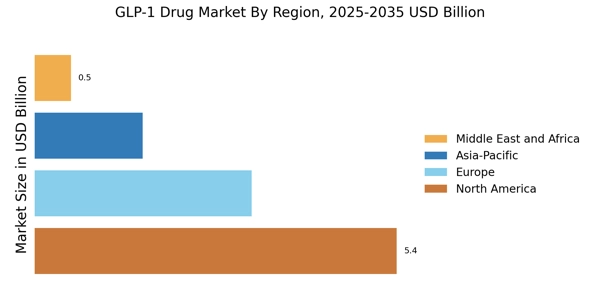
The Global GLP-1 Drug Market size was valued at USD 10.77 Billion in 2024, and the market is projected to grow from USD 12.19 Billion in 2025 to USD 42.0 Billion by 2035, registering a CAGR of 13.17% during the forecast period 2025–2035. North America led the market in 2024 with over 50.14% share, generating around USD 5.4 Billion in revenue.
Rising global prevalence of obesity and type 2 diabetes is a primary growth driver for the market. Increasing clinical adoption of GLP-1 receptor agonists for glycemic control and weight management is accelerating demand across developed and emerging healthcare systems. According to the World Health Organization (WHO), over 422 million people globally live with diabetes, while obesity has nearly tripled since 1975, with more than 1 billion individuals affected, significantly increasing demand for effective GLP-1-based therapeutic interventions worldwide.
Key Market Trends & Highlights
The GLP-1 drug market is experiencing robust growth driven by increasing demand for innovative therapies and digital health integration.
- North America leads with 50.14% share in 2024, supported by high diabetes prevalence and advanced treatment adoption.
- Europe holds 30% share, valued at USD 3.23 billion in 2024, driven by strong healthcare systems.
- Long-acting segment dominates with 57% share, while short-acting grows rapidly driven by flexible treatment demand globally.
- Subcutaneous route leads with 64% share, while oral formulations expand quickly with rising preference for non-invasive therapies.
Market Size & Forecast
| 2024 Market Size | 10.77 (USD Billion) |
| 2035 Market Size | 42.0 (USD Billion) |
| CAGR (2025 - 2035) | 13.17% |
Major Players
Companies such as Novo Nordisk (DK), Eli Lilly (US), Sanofi (FR), Boehringer Ingelheim (DE), AstraZeneca (GB), Merck & Co. (US), Bristol-Myers Squibb (US), Amgen (US) are some of the major participants in the global market.
GLP-1 Drug Market Trends
The GLP-1 Drug Market is currently experiencing a notable transformation, driven by an increasing prevalence of metabolic disorders, particularly type two diabetes and obesity. This shift appears to be influenced by a growing awareness of the benefits associated with GLP-1 receptor agonists, which are recognized for their efficacy in weight management and glycemic control.
Pharmaceutical companies are actively investing in research and development to expand their portfolios, introducing novel formulations and delivery methods. Furthermore, the integration of digital health technologies into treatment regimens seems to enhance patient adherence and monitoring, potentially leading to improved outcomes.
In addition, regulatory bodies are adapting to the evolving landscape, which may facilitate faster approvals for innovative therapies. The competitive environment within the GLP-1 Drug Market is intensifying, as established players and new entrants alike strive to capture market share.
This dynamic suggests a future where personalized medicine could play a pivotal role, tailoring treatments to individual patient profiles. As the market continues to evolve, stakeholders must remain vigilant to emerging trends and shifts in consumer preferences, which could significantly influence strategic decisions moving forward.
Rising Demand for Weight Management Solutions
The GLP-1 Drug Market is witnessing an increasing demand for medications that assist in weight management. As obesity rates continue to rise globally, more individuals are seeking effective pharmacological interventions. This trend indicates a shift in consumer attitudes towards proactive health management, with GLP-1 drugs being recognized for their dual benefits of weight loss and glycemic control.
- The Centers for Disease Control and Prevention reports that 42.4% of U.S. adults are affected by obesity, while the World Health Organization estimates that 1 billion people globally are living with obesity, reinforcing strong demand for GLP-1 drugs as effective pharmacological solutions for weight management and metabolic health improvement.
Advancements in Drug Formulations
Innovations in drug formulations are becoming a hallmark of the GLP-1 Drug Market. Pharmaceutical companies are exploring various delivery methods, including long-acting injectables and oral formulations. These advancements aim to enhance patient compliance and convenience, potentially leading to better health outcomes and increased market penetration.
- UNICEF highlights that over 340 million children and adolescents aged 5–19 are overweight or obese, while chronic disease burden continues rising globally, encouraging development of improved long-acting and patient-friendly drug formulations to enhance treatment adherence and long-term outcomes.
Integration of Digital Health Technologies
The incorporation of digital health technologies into the GLP-1 Drug Market is gaining traction. Tools such as mobile applications and telehealth services are being utilized to monitor patient progress and facilitate communication between healthcare providers and patients. This integration may improve adherence to treatment regimens and foster a more engaged patient population.
- The United Nations Population Fund reports that digital health adoption is expanding across aging populations, projected to exceed 1.6 billion individuals aged 65+ by 2050, while Médecins Sans Frontières highlights the growing role of telemedicine in improving treatment adherence in chronic diseases, supporting integration of digital tools with GLP-1 therapies for enhanced patient monitoring.
GLP-1 Drug Market Drivers
Innovations in Drug Delivery Systems
Advancements in drug delivery systems are poised to enhance the efficacy and patient compliance of GLP-1 therapies. The introduction of long-acting formulations and combination therapies is transforming the GLP-1 Drug Market.
For instance, recent innovations have led to the development of once-weekly injections, which significantly improve adherence compared to daily regimens. This shift not only benefits patients but also expands the market potential for pharmaceutical companies. As the industry continues to innovate, it is anticipated that these advancements will attract a broader patient base, thereby propelling the growth of the market. The integration of user-friendly devices for self-administration may further enhance patient experience and satisfaction.
- According to the World Health Organization (WHO), over 60% of countries have adopted digital and advanced healthcare delivery strategies, while adherence to chronic disease treatments improves by up to 50% with simplified dosing regimens, supporting innovation in long-acting GLP-1 delivery systems.
Increasing Prevalence of Obesity and Diabetes
The rising incidence of obesity and diabetes is a primary driver for the GLP-1 Drug Market. According to recent statistics, approximately 422 million people worldwide are living with diabetes, with obesity being a significant risk factor. This alarming trend has led to a heightened demand for effective pharmacological interventions, particularly GLP-1 receptor agonists, which have demonstrated efficacy in weight loss and glycemic control.
The market is projected to expand as healthcare providers increasingly prescribe these medications to manage chronic conditions associated with obesity. Furthermore, the World Health Organization has identified obesity as a global epidemic, which underscores the urgent need for innovative solutions within the market.
- The Institute for Health Metrics and Evaluation (IHME) estimates that high body mass index accounts for more than 160 million disability-adjusted life years globally, while diabetes prevalence continues to rise steadily, reinforcing demand for effective therapies like GLP-1 receptor agonists.
Rising Investment in Diabetes and Obesity Research
The surge in investment for research and development in diabetes and obesity is a significant driver for the GLP-1 Drug Market. Pharmaceutical companies are allocating substantial resources to discover and develop new GLP-1 receptor agonists and related therapies. This investment is fueled by the increasing burden of these chronic conditions on healthcare systems, prompting a need for innovative solutions.
Recent reports indicate that funding for diabetes research has increased by over 25% in the past year, reflecting a commitment to addressing these pressing health issues. As research yields new insights and potential therapies, the market is expected to benefit from a pipeline of novel products that could reshape treatment paradigms.
- The Centers for Disease Control and Prevention (CDC) reports that U.S. diabetes-related healthcare costs exceeded USD 327 billion annually, while research funding for metabolic disorders has increased significantly, supporting innovation and pipeline expansion in GLP-1 drug development.
Growing Awareness and Acceptance of GLP-1 Therapies
There is a notable increase in awareness and acceptance of GLP-1 therapies among both healthcare professionals and patients. Educational initiatives and marketing campaigns have effectively communicated the benefits of GLP-1 receptor agonists, leading to a more informed patient population.
As a result, the GLP-1 Drug Market is experiencing a surge in prescriptions, with a reported increase of over 30% in the last year alone. This trend is likely to continue as more patients seek effective treatments for weight management and diabetes. Additionally, the endorsement of these therapies by leading medical organizations further solidifies their position in the treatment landscape, thereby driving growth in the market.
- According to the Pan American Health Organization (PAHO), over 62 million people in the Americas live with diabetes, while awareness campaigns have expanded screening and treatment access across more than 35 countries, supporting increased adoption of advanced therapies including GLP-1 drugs.
Regulatory Support and Favorable Reimbursement Policies
Regulatory support and favorable reimbursement policies are critical factors influencing the GLP-1 Drug Market. Governments and health authorities are increasingly recognizing the importance of GLP-1 therapies in managing chronic diseases, leading to expedited approval processes for new drugs.
Additionally, many health insurance plans are beginning to cover GLP-1 medications, making them more accessible to patients. This trend is likely to encourage more healthcare providers to prescribe these therapies, thereby expanding the market. The alignment of regulatory frameworks with clinical guidelines further supports the adoption of GLP-1 drugs, indicating a positive trajectory for the market in the coming years.
- The European Centre for Disease Prevention and Control (ECDC) reports that chronic diseases account for over 80% of healthcare burden in Europe, while multiple EU countries have expanded reimbursement frameworks, improving access to innovative therapies like GLP-1 receptor agonists.
Market Segment Insights
By Type: Long-acting (Largest) vs. Short-acting (Fastest-Growing)
The market displays a notable distribution among its segment types, notably 'Short-acting', 'Long-acting', and 'Dual-action'. Long-acting formulations currently hold the largest GLP-1 Drug Market share at 57% due to their prolonged effects and ability to minimize patient dosing frequency. Conversely, 'Short-acting' segments are gaining momentum, appealing to patients seeking flexibility and rapid glycemic control, while 'Dual-action' is positioned as a novel entry catering to multifaceted therapeutic needs. In terms of growth trends, the demand for 'Short-acting' GLP-1 drugs is rising due to increasing awareness and preference for personalized treatment approaches, alongside substantial investment in clinical trials exploring their efficacy in broader patient populations. Additionally, technological advancements in drug delivery and ongoing patient education programs are bolstering 'Long-acting' formulations as they become increasingly recognized for their convenience and effectiveness in diabetes management.
Long-acting (Dominant) vs. Short-acting (Emerging)
The 'Long-acting' segment dominates market share due to its ability to provide sustained glycemic control, resulting in enhanced patient adherence and improved quality of life. These formulations usually require less frequent dosing, appealing to patients who prefer convenience. On the other hand, 'Short-acting' GLP-1 drugs are emerging as a rapidly growing alternative, specifically designed for patients who need immediate glycemic control following meals. The flexibility and quick onset of action are significant advantages, particularly for individuals looking for rapid adjustments in their diabetes management. Both segments highlight the increasing specialization in diabetes treatment, catering to diverse patient needs.
By Distribution Channel: Retail Pharmacies (Largest) vs. Online Pharmacies (Fastest-Growing)
The distribution of sales across various channels reveals that hospital pharmacies hold a significant share of the GLP-1 Drug Market at 46%, primarily due to their partnerships with healthcare providers and direct access to patients requiring specialized treatment. However, retail pharmacies dominate the landscape with the largest share, benefiting from traditional consumer trust and accessibility. Online pharmacies, while currently a smaller segment, are rapidly gaining traction, particularly among tech-savvy consumers seeking convenience and lower prices.
Retail Pharmacies (Dominant) vs. Online Pharmacies (Emerging)
Retail pharmacies have established themselves as the dominant distribution channel in the market share, primarily due to their wide-reaching presence and ability to offer personalized customer service. They stock a comprehensive range of GLP-1 medications, catering to the needs of diabetes and obesity patients. In contrast, online pharmacies represent an emerging force, capitalizing on e-commerce growth and the increasing preference for remote healthcare solutions. These platforms often provide competitive pricing and convenient access, appealing to a demographic that values efficiency. The rise of telehealth services is further propelling online pharmacies, positioning them as a significant player in the future of GLP-1 drug distribution.
By Indication: Type 2 Diabetes (Largest) vs. Obesity (Fastest-Growing)
In the GLP-1 Drug Market, the Indication segment is primarily driven by Type 2 Diabetes, which holds the largest market share at 52% due to its high prevalence and increasing awareness of chronic disease management. Following closely, obesity is gaining significant traction as a critical area of focus, especially as the global obesity epidemic continues to escalate, leading to more treatment solutions being developed for weight management. Cardiovascular diseases, though crucial, constitute a smaller share compared to the other two indications, reflecting a more specialized approach in GLP-1 drug applications for these diseases.
Type 2 Diabetes: Dominant vs. Obesity: Emerging
The Type 2 Diabetes segment remains dominant in the market share owing to the vast population affected by this chronic disease and the increasing tendency for healthcare providers to prescribe GLP-1 products for diabetes management. This market is characterized by well-established treatment protocols and a strong foundation of clinical data supporting the use of GLP-1 drugs. Conversely, the obesity segment is emerging as a vital player, fueled by a growing recognition of obesity as a health crisis coupled with rising consumer awareness and lifestyle changes. The developments in drug formulations and clinical trials dedicated to obesity treatment are making this segment increasingly appealing to pharmaceutical companies as they strive to capitalize on this rapidly expanding market.
By Administration Route: Subcutaneous Injection (Largest) vs. Oral (Fastest-Growing)
In the GLP-1 drug market, the route of administration plays a crucial role in patient adherence and treatment outcomes. Subcutaneous injections dominate this segment with a 64% market share, offering robust efficacy and established preference among healthcare providers. The ease of administration and familiarity contribute significantly to its larger market share. Conversely, the oral route is rapidly gaining traction, positioning itself as an appealing alternative for patients seeking less invasive options.
Subcutaneous Injection (Dominant) vs. Oral (Emerging)
Subcutaneous injections are the dominant administration route the market share, providing significant therapeutic advantages through more direct absorption and rapid onset of action. They have long been the standard approach, particularly for patients who require consistent dosing and have been found to facilitate higher adherence rates. The oral route, while still emerging, presents a compelling alternative that aligns with patient preference for convenience, providing an innovative method of drug delivery. As formulations improve and new products emerge, the oral segment is expected to grow significantly, appealing particularly to those who may have aversions to injections, thereby expanding patient access and acceptance.
Regional Insights
North America : Market Leader in Innovation
North America leads in the GLP-1 Drug Market size, accounting for over 50.14% of the global revenue in 2024. The region's growth is driven by increasing diabetes prevalence, rising healthcare expenditure, and favorable reimbursement policies. Regulatory support from agencies like the FDA has accelerated the approval of new therapies, enhancing market dynamics.
- According to the Centers for Disease Control and Prevention (CDC), over 37 million Americans have diabetes and approximately 96 million adults have prediabetes, while U.S. healthcare spending exceeded USD 4.5 trillion, supporting strong adoption of advanced therapies like GLP-1 drugs.
The demand for innovative treatments is further fueled by a growing focus on preventive healthcare and patient education initiatives. The United States is the primary contributor to this market, with significant participation from key players such as Novo Nordisk, Eli Lilly, and Merck & Co. Canada also plays a vital role, albeit smaller, in the GLP-1 landscape. The competitive landscape is characterized by continuous innovation and strategic partnerships among leading pharmaceutical companies, ensuring a robust pipeline of new products to meet patient needs.
Europe : Emerging Market with Growth Potential
Europe GLP-1 Drug Market size was valued at USD 3.23 billion in 2024, making it the second-largest regional market with a 30% share. The region benefits from increasing awareness of diabetes management and supportive healthcare policies. Regulatory bodies like the European Medicines Agency (EMA) are actively facilitating the approval of new GLP-1 therapies, which is expected to drive market expansion.
- According to the World Health Organization (WHO), over 60 million people in Europe live with diabetes, while noncommunicable diseases account for nearly 90% of deaths in the region, driving increased demand for effective treatments such as GLP-1 receptor agonists.
The rising prevalence of obesity and related metabolic disorders is also a key factor contributing to demand. Leading countries in this region include Germany, France, and the UK, where major pharmaceutical companies such as Sanofi and AstraZeneca are heavily invested. The competitive landscape is marked by a mix of established players and emerging biotech firms, fostering innovation. The presence of a well-structured healthcare system further supports the adoption of GLP-1 therapies, making Europe a promising market for future growth.
Asia-Pacific : Rapidly Growing Market Segment
The Asia-Pacific region is emerging as a significant player in the GLP-1 drug market, accounting for about 15% of the global share. The growth is driven by rising diabetes rates, urbanization, and increasing healthcare access. Countries like China and India are experiencing a surge in demand for diabetes management solutions, supported by government initiatives aimed at improving healthcare infrastructure. Regulatory bodies are also streamlining approval processes for new therapies, enhancing market accessibility.
China is the largest market in this region, with a growing number of local and international players entering the market. The competitive landscape is evolving, with companies like Boehringer Ingelheim and AstraZeneca leading the charge. The increasing focus on personalized medicine and innovative treatment options is expected to further boost the GLP-1 market in Asia-Pacific, making it a key area for investment and development.
Middle East and Africa : Untapped Potential in Healthcare
The Middle East and Africa (MEA) region is gradually emerging in the market, holding around 5% of the global share. The growth is primarily driven by increasing awareness of diabetes and obesity, coupled with rising healthcare investments. Governments are implementing policies to improve healthcare access and affordability, which is expected to catalyze market growth. The region's diverse healthcare landscape presents both challenges and opportunities for GLP-1 drug adoption.
Countries like South Africa and the UAE are leading the way in GLP-1 drug utilization, with a growing presence of international pharmaceutical companies. The competitive landscape is characterized by a mix of local and global players, focusing on innovative solutions to meet the rising demand. As healthcare systems evolve, the MEA region is poised for significant growth in the GLP-1 market, driven by increasing patient awareness and improved healthcare infrastructure.
Key Players and Competitive Insights
Sanofi (FR) is actively pursuing regional expansion, particularly in emerging markets, to capitalize on the growing demand for diabetes treatments. Collectively, these strategies contribute to a dynamic competitive environment, where innovation and market responsiveness are paramount. In terms of business tactics, companies are increasingly localizing manufacturing and optimizing supply chains to enhance efficiency and reduce costs. The GLP-1 drug market appears moderately fragmented, with several key players exerting significant influence. This structure allows for a diverse range of products and approaches, fostering competition that drives innovation and improves patient outcomes.
In August 2025, Eli Lilly (US) announced a collaboration with a leading technology firm to integrate artificial intelligence into its drug development processes. This strategic move is likely to enhance the efficiency of clinical trials and accelerate the time-to-market for new therapies. By leveraging AI, Eli Lilly (US) aims to streamline operations and improve decision-making, positioning itself as a leader in the digital transformation of the pharmaceutical industry.
In September 2025, Sanofi (FR) launched a new GLP-1 drug specifically targeting the Asian market, reflecting its commitment to regional expansion. This initiative not only addresses the rising diabetes rates in Asia but also demonstrates Sanofi's strategic focus on tailoring products to meet local needs. Such targeted approaches may enhance market penetration and strengthen brand loyalty among healthcare providers and patients alike.
In October 2025, Novo Nordisk (DK) unveiled a new sustainability initiative aimed at reducing the environmental impact of its manufacturing processes. This initiative underscores the growing importance of sustainability in the pharmaceutical sector and reflects Novo Nordisk's commitment to corporate social responsibility. By prioritizing sustainable practices, the company may enhance its reputation and appeal to environmentally conscious consumers and stakeholders.
As of October 2025, the competitive landscape is increasingly shaped by trends such as digitalization, sustainability, and the integration of advanced technologies like AI. Strategic alliances are becoming more prevalent, enabling companies to pool resources and expertise to drive innovation. Looking ahead, competitive differentiation is likely to evolve, with a shift from traditional price-based competition towards a focus on innovation, technological advancement, and supply chain reliability. This transition may redefine how companies position themselves in the GLP-1 drug market, emphasizing the need for agility and responsiveness to changing market dynamics.
Key Companies in the GLP-1 Drug Market include
Industry Developments
The Global GLP-1 Drug Market has recently seen significant developments, particularly with the increasing demand for diabetes medications and weight management treatments. Companies such as Novo Nordisk and Eli Lilly continue to lead the market with their innovative GLP-1 receptor agonists, contributing to a surge in global sales. In September 2023, Abbott Laboratories announced advancements in its GLP-1 obesity treatment, signaling strong competition among major players.
Additionally, in July 2023, Sandoz expanded its portfolio with the launch of a new biosimilar GLP-1 medication, enhancing market access. Recent mergers and acquisitions have also shaped the landscape; in August 2023, Merck acquired a smaller biotech firm specializing in GLP-1 compounds, aiming to bolster its pipeline. Furthermore, increased funding for Research and Development from AstraZeneca and Amgen indicates a commitment to innovation in this sector.
The market valuation has significantly increased, with analysts anticipating further growth in response to rising global obesity rates, leading to expanded treatment options and accessible GLP-1 therapies in various regions, further developing this vital segment of the pharmaceutical industry. Major events from the past few years, including the approval of several high-potency GLP-1 drugs in 2021 and 2022, have catalyzed this growth trajectory.
Future Outlook
GLP-1 Drug Market Future Outlook
The GLP-1 Drug Market size is projected to reach USD 42.0 billion by 2035, growing at a CAGR of 13.17%, driven by increasing diabetes prevalence, rising obesity rates, and advancements in drug formulations.
New opportunities lie in:
- Expansion into emerging markets with tailored GLP-1 therapies Development of combination therapies to enhance efficacy Investment in digital health platforms for patient engagement
By 2035, the GLP-1 Drug Market is expected to achieve substantial growth and innovation.
Market Segmentation
GLP-1 Drug Market Type Outlook
- Short-acting
- Long-acting
- Dual-action
GLP-1 Drug Market Indication Outlook
- Type 2 Diabetes
- Obesity
- Cardiovascular Diseases
GLP-1 Drug Market Administration Route Outlook
- Subcutaneous Injection
- Oral
- Inhalation
GLP-1 Drug Market Distribution Channel Outlook
- Hospital Pharmacies
- Retail Pharmacies
- Online Pharmacies
Report Scope
| MARKET SIZE 2024 | 10.77(USD Billion) |
| MARKET SIZE 2025 | 12.19(USD Billion) |
| MARKET SIZE 2035 | 42.0(USD Billion) |
| COMPOUND ANNUAL GROWTH RATE (CAGR) | 13.17% (2025 - 2035) |
| REPORT COVERAGE | Revenue Forecast, Competitive Landscape, Growth Factors, and Trends |
| BASE YEAR | 2024 |
| Market Forecast Period | 2025 - 2035 |
| Historical Data | 2019 - 2024 |
| Market Forecast Units | USD Billion |
| Key Companies Profiled | Novo Nordisk (DK), Eli Lilly (US), Sanofi (FR), Boehringer Ingelheim (DE), AstraZeneca (GB), Merck & Co. (US), Bristol-Myers Squibb (US), Amgen (US) |
| Segments Covered | Drug Type, Distribution Channel, Indication, Administration Route, Regional |
| Key Market Opportunities | Rising demand for obesity management therapies drives innovation in the market. |
| Key Market Dynamics | Rising demand for GLP-1 drugs driven by increasing prevalence of obesity and diabetes worldwide. |
| Countries Covered | North America, Europe, APAC, South America, MEA |
FAQs
What is the current valuation of the GLP-1 Drug Market as of 2024?
The GLP-1 Drug Market was valued at 10.77 USD Billion in 2024.
What is the projected market valuation for the market in 2035?
What is the expected CAGR for the GLP-1 Drug Market during the forecast period 2025 - 2035?
The expected CAGR for the GLP-1 Drug Market during the forecast period 2025 - 2035 is 13.17%.
Which companies are the key players in the market?
What are the different types of GLP-1 drugs and their market valuations?
The market valuations for GLP-1 drug types include Short-acting at 2.5 to 10.0 USD Billion, Long-acting at 5.0 to 20.0 USD Billion, and Dual-action at 3.27 to 12.0 USD Billion.
How is the GLP-1 Drug Market segmented by distribution channel?
The market is segmented by distribution channel with valuations of Hospital Pharmacies at 3.23 to 12.84 USD Billion, Retail Pharmacies at 4.31 to 17.24 USD Billion, and Online Pharmacies at 3.23 to 12.92 USD Billion.
What indications are covered in the market and their respective valuations?
What are the administration routes for GLP-1 drugs and their market valuations?
The administration routes for GLP-1 drugs include Subcutaneous Injection at 6.0 to 24.0 USD Billion, Oral at 3.0 to 12.0 USD Billion, and Inhalation at 1.77 to 6.0 USD Billion.
How does the GLP-1 Drug Market's growth compare to other pharmaceutical markets?
The GLP-1 Drug Market's growth appears robust, with a projected valuation increase from 10.77 USD Billion in 2024 to 42.0 USD Billion by 2035.
What factors are driving the growth of the market?
Research Approach
Secondary Research
The secondary research process involved comprehensive analysis of regulatory databases, peer-reviewed medical journals, clinical publications, and authoritative health organizations. Key sources included the US Food & Drug Administration (FDA), European Medicines Agency (EMA), Pharmaceuticals and Medical Devices Agency (PMDA) Japan, Medicines and Healthcare products Regulatory Agency (MHRA) UK, National Institutes of Health (NIH), National Center for Biotechnology Information (NCBI/PubMed), Centers for Disease Control and Prevention (CDC) National Diabetes Statistics Report, World Health Organization (WHO) Global Health Observatory, International Diabetes Federation (IDF) Diabetes Atlas, American Diabetes Association (ADA) Standards of Care, European Association for the Study of Diabetes (EASD) Guidelines, IQVIA Institute for Human Data Science, Evaluate Pharma, and national health ministry reports from key markets (China NMPA, India CDSCO, Brazil ANVISA). These sources were used to collect prescription statistics, regulatory approval data, clinical safety studies, epidemiological trends, and competitive landscape analysis for short-acting GLP-1 agonists, long-acting GLP-1 agonists, dual-action therapies, and emerging oral/inhalation formulations.
Primary Research
Qualitative and quantitative insights were obtained by interviewing supply-side and demand-side stakeholders during the primary research process. CEOs, VPs of R&D, regulatory affairs leaders, and commercial directors from biotechnology firms, CDMOs, and GLP-1 drug manufacturers comprised the supply-side sources. The demand-side sources included procurement leads from academic medical centers, diabetes clinics, hospital systems, and specialty pharmacy networks, as well as endocrinologists, cardiologists, bariatric specialists, and hospital pharmacy administrators. Market segmentation was validated, clinical pipeline timelines were confirmed, and insights regarding formulary adoption patterns, pricing strategies, and reimbursement dynamics were obtained through primary research.
Primary Respondent Breakdown:
By Designation: C-level Primaries (29%), Director Level (34%), Others (37%)
By Region: North America (32%), Europe (29%), Asia-Pacific (28%), Rest of World (11%)
Market Size Estimation
Global market valuation was derived through revenue mapping and prescription volume analysis. The methodology included:
Identification of 50+ key manufacturers across North America, Europe, Asia-Pacific, and Latin America
Product mapping across short-acting GLP-1 agonists, long-acting GLP-1 agonists, dual-action therapies (GLP-1/GIP), and emerging tri-agonist candidates
Analysis of reported and modeled annual revenues specific to GLP-1 drug portfolios
Coverage of manufacturers representing 75-80% of global market share in 2024
Extrapolation using bottom-up (prescription volume × ASP by country/region) and top-down (manufacturer revenue validation) approaches to derive segment-specific valuations across drug type (short-acting, long-acting, dual-action), distribution channel (hospital pharmacies, retail pharmacies, online pharmacies), indication (type 2 diabetes, obesity, cardiovascular diseases), and administration route (subcutaneous injection, oral, inhalation)
Kindly complete the form below to receive a free sample of this Report
Customer Stories
“This is really good guys. Excellent work on a tight deadline. I will continue to use you going forward and recommend you to others. Nice job”
“Thanks. It’s been a pleasure working with you, please use me as reference with any other Intel employees.”
“Thanks for sending the report it gives us a good global view of the Betaïne market.”
“Thank you, this will be very helpful for OQS.”
“We found the report very insightful! we found your research firm very helpful. I'm sending this email to secure our future business.”
“I am very pleased with how market segments have been defined in a relevant way for my purposes (such as "Portable Freezers & refrigerators" and "last-mile"). In general the report is well structured. Thanks very much for your efforts.”
“I have been reading the first document or the study, ,the Global HVAC and FP market report 2021 till 2026. Must say, good info! I have not gone in depth at all parts, but got a good indication of the data inside!”
“We got the report in time, we really thank you for your support in this process. I also thank to all of your team as they did a great job.”