×
Request Free Sample ×

Kindly complete the form below to receive a free sample of this Report

* Please use a valid business email

Leading companies partner with us for data-driven Insights

clients tt-cursor
Hero Background

Irritable Bowel Syndrome (IBS) Treatment Market

ID: MRFR/HC/5579-CR
105 Pages
Rahul Gotadki
January 2019

Irritable Bowel Syndrome (IBS) Treatment Market Research Report Information By Type (IBS-D, IBS-C, and IBS-M), By Drug Type (Lubiprostone, Linaclotide, Rifaximin, Eluxadoline, and Alosetron), By End-User (Hospitals, Clinics, Research Laboratories, and Others), And By Region (North America, Europe, Asia-Pacific, And the Rest Of The World) – IBS Therapeutics Industry Forecast Till 2035

Share:
Download PDF ×

We do not share your information with anyone. However, we may send you emails based on your report interest from time to time. You may contact us at any time to opt-out.

Irritable Bowel Syndrome Treatment Market Infographic
Purchase Options

Irritable Bowel Syndrome (IBS) Treatment Market Summary

As per MRFR analysis, the Irritable Bowel Syndrome Treatment Market Size was estimated at 2097.53 USD Million in 2024. The Irritable Bowel Syndrome Treatment industry is projected to grow from 2267.86 USD Million in 2025 to 4950.91 USD Million by 2035, exhibiting a compound annual growth rate (CAGR) of 8.12% during the forecast period 2025 - 2035.

Key Market Trends & Highlights

The Irritable Bowel Syndrome Treatment Market is experiencing a transformative shift towards personalized and technology-driven solutions.

  • The market is witnessing an increased focus on personalized medicine, particularly in North America, which remains the largest market.
  • Digital health solutions are on the rise, enhancing patient engagement and treatment adherence across both adult and pediatric patients.
  • Holistic approaches to treatment are gaining traction, especially in the Asia-Pacific region, which is recognized as the fastest-growing market.
  • The rising prevalence of Irritable Bowel Syndrome and advancements in pharmaceutical research are key drivers propelling market growth.

Market Size & Forecast

2024 Market Size 2097.53 (USD Million)
2035 Market Size 4950.91 (USD Million)
CAGR (2025 - 2035) 8.12%

Major Players

AbbVie (US), Boehringer Ingelheim (DE), Takeda Pharmaceutical (JP), GlaxoSmithKline (GB), AstraZeneca (GB), Pfizer (US), Bristol-Myers Squibb (US), Ironwood Pharmaceuticals (US)

Irritable Bowel Syndrome (IBS) Treatment Market Trends

The Irritable Bowel Syndrome Treatment Market is currently experiencing notable transformations driven by evolving patient needs and advancements in therapeutic options. As awareness of this gastrointestinal disorder increases, more individuals seek effective management strategies. This growing recognition is prompting healthcare providers to explore innovative treatments, including dietary modifications, pharmacological interventions, and psychological therapies. The market landscape is characterized by a diverse array of products aimed at alleviating symptoms and improving the quality of life for those affected by this condition. Moreover, the integration of technology into treatment approaches is becoming increasingly prevalent. Digital health solutions, such as mobile applications and telemedicine, are emerging as valuable tools for patient engagement and symptom tracking. These advancements not only enhance patient adherence to treatment regimens but also facilitate better communication between patients and healthcare professionals. As the Irritable Bowel Syndrome Treatment Market continues to evolve, it appears poised for further growth, driven by ongoing research and development efforts that aim to provide more personalized and effective solutions for individuals suffering from this challenging disorder.

Increased Focus on Personalized Medicine

The trend towards personalized medicine is gaining traction within the Irritable Bowel Syndrome Treatment Market. Tailoring treatments to individual patient profiles, including genetic, environmental, and lifestyle factors, may enhance therapeutic outcomes. This approach could lead to more effective management strategies that address the unique needs of each patient.

Rise of Digital Health Solutions

Digital health solutions are becoming increasingly integral to the Irritable Bowel Syndrome Treatment Market. Mobile applications and telehealth services are facilitating better patient engagement and symptom management. These technologies may empower patients to take an active role in their treatment, potentially improving adherence and overall health outcomes.

Growing Emphasis on Holistic Approaches

There is a noticeable shift towards holistic approaches in managing irritable bowel syndrome. This trend encompasses not only traditional medical treatments but also lifestyle modifications, dietary changes, and psychological support. Such comprehensive strategies may provide patients with a more rounded approach to managing their symptoms and improving their quality of life.

Irritable Bowel Syndrome (IBS) Treatment Market Drivers

Rising Prevalence of IBS

The increasing prevalence of Irritable Bowel Syndrome (IBS) globally is a primary driver for the Global Irritable Bowel Syndrome Treatment Market Industry. It is estimated that around 10 to 15% of the global population suffers from IBS, leading to a heightened demand for effective treatment options. This growing patient population is expected to contribute significantly to the market, with the industry projected to reach 2.1 USD Billion in 2024. As awareness of IBS continues to rise, healthcare providers are more likely to seek innovative therapies, further propelling market growth.

Rising Healthcare Expenditure

An increase in global healthcare expenditure is facilitating growth in the Global Irritable Bowel Syndrome Treatment Market Industry. As countries allocate more resources to healthcare, patients gain better access to diagnostic tools and treatment options for IBS. This trend is particularly evident in developed nations, where healthcare systems are increasingly prioritizing gastrointestinal disorders. The financial commitment to healthcare is likely to enhance the availability of IBS treatments, thus supporting market growth as more patients seek effective management solutions.

Advancements in Treatment Options

Innovations in treatment methodologies are shaping the Global Irritable Bowel Syndrome Treatment Market Industry. Recent developments in pharmacological therapies, including the introduction of new medications specifically targeting IBS symptoms, are enhancing patient outcomes. For instance, the approval of novel agents that address both constipation and diarrhea subtypes of IBS has expanded the therapeutic landscape. This evolution in treatment options is likely to attract more patients seeking relief, thereby driving the market's growth trajectory towards an anticipated valuation of 4.95 USD Billion by 2035.

Increased Awareness and Diagnosis

The growing awareness surrounding IBS and its symptoms is significantly influencing the Global Irritable Bowel Syndrome Treatment Market Industry. Enhanced educational initiatives by healthcare organizations are leading to improved diagnosis rates. As more individuals recognize their symptoms and seek medical advice, the demand for IBS treatments is expected to rise. This trend is likely to contribute to a compound annual growth rate (CAGR) of 8.11% from 2025 to 2035, reflecting a robust market expansion as more patients are diagnosed and treated effectively.

Growing Interest in Personalized Medicine

The shift towards personalized medicine is transforming the Global Irritable Bowel Syndrome Treatment Market Industry. Tailored treatment approaches that consider individual patient profiles are becoming more prevalent, leading to improved therapeutic outcomes. This trend is driven by advancements in genetic research and a deeper understanding of IBS pathophysiology. As healthcare providers adopt personalized strategies, the market is expected to benefit from increased patient satisfaction and adherence to treatment regimens, ultimately contributing to the overall growth of the industry.

Market Segment Insights

By Treatment Type: Pharmacological Treatment (Largest) vs. Dietary Management (Fastest-Growing)

The Irritable Bowel Syndrome Treatment Market is notably diverse, with various treatment types catering to patients’ specific needs. Pharmacological Treatment currently holds the largest market share, leveraging a wide range of medications that address symptoms effectively. This segment benefits from extensive research and development, leading to an array of pharmaceutical solutions that continue to dominate the market. In contrast, Dietary Management, though smaller in proportion, is emerging rapidly due to increasing awareness of the importance of nutrition in managing IBS symptoms. This shift reflects a growing preference for holistic approaches among patients, emphasizing lifestyle changes alongside medications.

Pharmacological Treatment (Dominant) vs. Dietary Management (Emerging)

Pharmacological Treatment remains the dominant force in the Irritable Bowel Syndrome Treatment Market, characterized by a myriad of prescription and over-the-counter medications aimed at alleviating symptoms. This segment's strength lies in its clinical backing and a broad range of available drugs, such as antispasmodics, laxatives, and antidepressants. On the other hand, Dietary Management is gaining momentum as an emerging segment, reflecting a paradigm shift towards preventive care. Patients are increasingly recognizing the role of tailored diets, which may include low FODMAP diets or increased fiber intake, in managing symptoms. The emergence of this treatment type is powered by a growing body of research that supports diet’s efficacy in symptom control, paving the way for integrative treatment approaches for IBS.

By Patient Type: Adult Patients (Largest) vs. Pediatric Patients (Fastest-Growing)

The Patient Type segment in the Irritable Bowel Syndrome Treatment Market is predominantly characterized by adult patients, who account for the largest share of treatment recipients. Adults often experience chronic symptoms that require ongoing management, thereby driving the demand for various treatment solutions tailored to this demographic. Conversely, pediatric patients, though smaller in number, represent a rapidly expanding market segment as awareness and diagnosis of IBS in children increases. This shift in focus is inspiring innovation in treatment options specifically designed for younger populations.

Adult Patients (Dominant) vs. Pediatric Patients (Emerging)

Adult patients are the dominant force within the Irritable Bowel Syndrome Treatment Market, largely due to the chronic nature of the condition in this age group. Their treatment protocols often involve a combination of dietary management, medication, and lifestyle changes, aimed at long-term symptom relief. On the other hand, pediatric patients are considered an emerging segment, with new treatment modalities being developed to cater to their unique physiological and psychological needs. This focus on younger patients is fueled by an increased understanding of IBS in children, creating opportunities for tailored therapies that address the condition effectively, which is crucial as healthcare providers seek to improve outcomes in this vulnerable population.

By Symptom Type: Diarrhea Predominant (Largest) vs. Constipation Predominant (Fastest-Growing)

The Irritable Bowel Syndrome (IBS) Treatment Market exhibits a varied distribution among its symptom-type segments, with Diarrhea Predominant accounting for the largest share. This segment is characterized by a significant patient population, leading to increased demand for effective treatment options. Conversely, the Constipation Predominant segment is witnessing substantial growth, driven by rising awareness of IBS and its symptoms. The Mixed Symptoms category maintains a moderate position in the market but plays a crucial role in guiding treatment decisions and patient management. Growth trends in the IBS Treatment Market are closely linked to evolving patient needs and advancements in treatment modalities. Innovations in drug formulations addressing specific symptoms are attracting considerable attention from consumers and healthcare providers. Additionally, the increasing prevalence of IBS across various demographics particularly underlines the importance of targeted therapies, with the Constipation Predominant segment leading in rapid expansion due to a growing acknowledgment of its impact on quality of life. Regulatory support and research advancements continue to propel market growth, making it a dynamic segment for stakeholders.

Diarrhea Predominant (Dominant) vs. Mixed Symptoms (Emerging)

Diarrhea Predominant remains the dominant segment in the IBS Treatment Market, largely due to the higher patient population experiencing such symptoms. The treatments targeted at this segment vary from antidiarrheal medications to newer therapeutic solutions that address the underlying conditions contributing to diarrhea. This segment's prominence is bolstered by heightened awareness among healthcare providers regarding the management of such symptoms. In contrast, the Mixed Symptoms segment is emerging rapidly as patients increasingly seek comprehensive treatment options. This segment reflects the heterogeneity of IBS symptoms, emphasizing the need for tailored therapeutic strategies. As healthcare systems evolve and offer more holistic approaches, both segments will likely witness advancements aimed at improving patient outcomes, bridging gaps in education, and ensuring effective management of varying IBS presentations.

By Route of Administration: Oral (Largest) vs. Injectable (Fastest-Growing)

In the Irritable Bowel Syndrome Treatment Market, the Route of Administration segment is predominantly driven by oral formulations, which hold the largest market share due to their convenience and ease of use for patients. Oral medications are favored for daily management of IBS symptoms, thus dominating market presence. Injectable treatments, while traditionally seen as more invasive, are gaining traction among patients seeking rapid relief from severe symptoms, leading to a dynamically changing landscape within this segment.

Oral (Dominant) vs. Injectable (Emerging)

Oral administration remains the dominant method for treating Irritable Bowel Syndrome, as patients prefer tablets and capsules that are easy to ingest and align with self-management routines. This method is not only convenient but also supports adherence due to the low burden on the patient. Conversely, injectable treatments are emerging as a critical option for patients struggling with chronic or severe forms of IBS, with innovations making them more patient-friendly and minimizing discomfort. As healthcare providers increasingly recognize the need for rapid response options, injectable treatments are positioned for significant growth, particularly in populations with complex cases of IBS who require immediate symptom control.

Get more detailed insights about Irritable Bowel Syndrome (IBS) Treatment Market

Regional Insights

North America : Market Leader in IBS Treatment

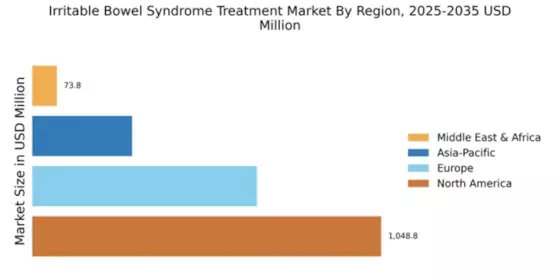
North America is poised to maintain its leadership in the Irritable Bowel Syndrome (IBS) treatment market, holding a significant market share of $1048.77M in 2024. The region's growth is driven by increasing awareness of IBS, advancements in treatment options, and supportive regulatory frameworks. The rising prevalence of IBS among the population further fuels demand, with healthcare policies increasingly focusing on digestive health and patient-centered care. The competitive landscape in North America is robust, featuring key players such as AbbVie, Pfizer, and Ironwood Pharmaceuticals. These companies are actively engaged in research and development to innovate treatment solutions. The U.S. remains the largest market, supported by a strong healthcare infrastructure and a high rate of prescription drug utilization. The presence of leading pharmaceutical firms ensures a continuous flow of new therapies, enhancing treatment options for patients.

Europe : Growing Market with Regulatory Support

Europe's IBS treatment market is expanding, with a market size of $675.0M in 2024. The growth is attributed to increasing healthcare expenditure, a rising number of IBS diagnoses, and favorable regulations promoting innovative therapies. The European Medicines Agency (EMA) has been instrumental in streamlining the approval process for new treatments, thereby enhancing market accessibility. The focus on patient-centric care and the integration of digital health solutions are also significant growth drivers. Leading countries in this region include Germany, France, and the UK, where healthcare systems are increasingly prioritizing digestive health. Major players like Boehringer Ingelheim and GlaxoSmithKline are investing in R&D to develop effective treatments. The competitive landscape is characterized by collaborations and partnerships aimed at enhancing therapeutic offerings, ensuring that patients have access to the latest innovations in IBS management.

Asia-Pacific : Emerging Market with Potential

The Asia-Pacific region is witnessing significant growth in the IBS treatment market, valued at $300.0M in 2024. Factors contributing to this growth include increasing awareness of IBS, rising healthcare spending, and a growing population with dietary changes leading to digestive issues. Governments are also focusing on improving healthcare infrastructure, which is crucial for enhancing access to IBS treatments. Regulatory bodies are beginning to recognize the importance of addressing gastrointestinal health, further supporting market expansion. Countries like Japan, China, and Australia are leading the charge in this market. Key players such as Takeda Pharmaceutical are actively involved in developing new therapies tailored to regional needs. The competitive landscape is evolving, with both multinational corporations and local firms striving to capture market share. As awareness and diagnosis rates increase, the demand for effective IBS treatments is expected to rise significantly in this region.

Middle East and Africa : Developing Market with Challenges

The Middle East and Africa (MEA) region is gradually emerging in the IBS treatment market, currently valued at $73.76M in 2024. The growth is driven by increasing healthcare investments, a rising prevalence of IBS, and a growing awareness of digestive health. However, challenges such as limited access to healthcare facilities and varying regulatory environments can hinder market growth. Governments are beginning to recognize the importance of gastrointestinal health, which may lead to improved healthcare policies in the future. Countries like South Africa and the UAE are at the forefront of this market, with increasing investments in healthcare infrastructure. The presence of key players is limited, but companies are beginning to explore opportunities in this region. As awareness of IBS grows, the demand for effective treatments is expected to rise, presenting significant growth potential for the market.

Key Players and Competitive Insights

The Irritable Bowel Syndrome Treatment Market is characterized by a dynamic competitive landscape, driven by increasing prevalence rates and a growing demand for effective therapies. Key players such as AbbVie (US), Takeda Pharmaceutical (JP), and Ironwood Pharmaceuticals (US) are strategically positioned to leverage innovation and partnerships to enhance their market presence. AbbVie (US) focuses on developing novel therapies that address unmet needs, while Takeda Pharmaceutical (JP) emphasizes regional expansion and localized manufacturing to optimize supply chains. Ironwood Pharmaceuticals (US) is actively pursuing collaborations to enhance its product pipeline, indicating a collective shift towards strategic alliances that shape the competitive environment.

The market structure appears moderately fragmented, with several players vying for market share. Companies are increasingly localizing manufacturing and optimizing supply chains to enhance efficiency and reduce costs. This competitive structure allows for a diverse range of treatment options, catering to varying patient needs. The influence of key players is significant, as their strategic initiatives often set industry standards and drive innovation across the market.

In November 2025, AbbVie (US) announced a partnership with a leading biotechnology firm to co-develop a new class of biologics aimed at treating IBS. This collaboration is expected to accelerate the development timeline and enhance AbbVie's portfolio, positioning it favorably against competitors. The strategic importance of this partnership lies in its potential to introduce groundbreaking therapies that could redefine treatment paradigms in IBS.

In October 2025, Takeda Pharmaceutical (JP) launched a new digital health platform designed to support patients with IBS through personalized treatment plans and real-time monitoring. This initiative not only enhances patient engagement but also aligns with the growing trend of digitalization in healthcare. By integrating technology into its treatment approach, Takeda is likely to improve patient outcomes and solidify its market position.

In September 2025, Ironwood Pharmaceuticals (US) expanded its collaboration with a major academic institution to explore novel therapeutic targets for IBS. This strategic move underscores Ironwood's commitment to innovation and research, potentially leading to the discovery of new treatment options. The emphasis on research partnerships reflects a broader trend in the industry, where companies are increasingly investing in R&D to stay competitive.

As of December 2025, current trends in the Irritable Bowel Syndrome Treatment Market indicate a strong focus on digitalization, sustainability, and the integration of artificial intelligence (AI) in treatment development. Strategic alliances are becoming more prevalent, as companies recognize the value of collaboration in driving innovation. The competitive differentiation is likely to evolve from traditional price-based competition towards a landscape where technology, innovation, and supply chain reliability play pivotal roles. This shift suggests that companies that prioritize these aspects will be better positioned to thrive in the future.

Key Companies in the Irritable Bowel Syndrome (IBS) Treatment Market market include

Industry Developments

  • Q1 2024: RedHill Biopharma Reports Positive Phase II Results for RHB-102 in IBS-D RedHill Biopharma announced positive top-line results from a Phase II clinical trial evaluating RHB-102 (Bekinda) for the treatment of diarrhea-predominant irritable bowel syndrome (IBS-D), supporting further development of the drug for this indication.
  • Q2 2024: AbbVie Receives FDA sNDA Approval for Linzess in Pediatric IBS-C Patients AbbVie announced that the U.S. FDA approved a supplemental New Drug Application (sNDA) for Linzess (linaclotide), expanding its use to pediatric patients aged 6-17 years with irritable bowel syndrome with constipation (IBS-C).
  • Q2 2024: AbbVie Launches Linzess 72 mcg for IBS-C in Japan AbbVie launched a new 72 mcg dose of Linzess (linaclotide) in Japan, expanding treatment options for patients with irritable bowel syndrome with constipation (IBS-C) in the region.
  • Q3 2024: FDA Approves Ardelyx’s Tenapanor for IBS-C The U.S. FDA approved Ardelyx’s Tenapanor for the treatment of irritable bowel syndrome with constipation (IBS-C), marking a new therapeutic option for patients.
  • Q3 2024: Takeda Announces Partnership with Microbiome Therapeutics for IBS-D Research Takeda Pharmaceuticals entered a research partnership with Microbiome Therapeutics to develop novel microbiome-based therapies targeting diarrhea-predominant irritable bowel syndrome (IBS-D).
  • Q4 2024: Ironwood Pharmaceuticals Appoints New CEO to Drive IBS Portfolio Expansion Ironwood Pharmaceuticals appointed a new Chief Executive Officer, citing a strategic focus on expanding its irritable bowel syndrome treatment portfolio, including Linzess.
  • Q4 2024: Salix Pharmaceuticals Opens New Manufacturing Facility for IBS Drugs Salix Pharmaceuticals, a division of Bausch Health, opened a new manufacturing facility in the U.S. to increase production capacity for its irritable bowel syndrome treatments, including Xifaxan.
  • Q1 2025: FDA Grants Fast Track Designation to Ardelyx’s IBS-D Drug Candidate The U.S. FDA granted Fast Track designation to Ardelyx for its investigational drug targeting diarrhea-predominant irritable bowel syndrome (IBS-D), expediting its development and review process.
  • Q2 2025: Nestlé Health Science Acquires Minority Stake in IBS Digital Therapeutics Startup Nestlé Health Science acquired a minority stake in a digital therapeutics startup focused on app-based management of irritable bowel syndrome, aiming to expand its presence in non-pharmacological IBS treatments.
  • Q2 2025: Alfasigma Receives EMA Approval for New Formulation of Rifaximin for IBS-D Alfasigma received European Medicines Agency (EMA) approval for a new formulation of rifaximin, specifically indicated for the treatment of diarrhea-predominant irritable bowel syndrome (IBS-D) in adults.
  • Q3 2025: Takeda Launches Phase III Trial of Novel Gut-Targeted Therapy for IBS Takeda Pharmaceuticals initiated a Phase III clinical trial for its novel gut-targeted therapy in patients with irritable bowel syndrome, aiming to address both IBS-C and IBS-D subtypes.
  • Q3 2025: Ironwood Pharmaceuticals Announces Strategic Collaboration with Telehealth Provider for IBS Care Ironwood Pharmaceuticals entered a strategic collaboration with a leading telehealth provider to improve access to irritable bowel syndrome treatments and patient support services across the U.S.

Future Outlook

Irritable Bowel Syndrome (IBS) Treatment Market Future Outlook

The Irritable Bowel Syndrome Treatment Market is projected to grow at 8.12% CAGR from 2024 to 2035, driven by increasing prevalence, innovative therapies, and rising awareness.

New opportunities lie in:

  • Development of personalized treatment plans leveraging genetic profiling
  • Expansion of telehealth services for remote patient management
  • Investment in probiotic and prebiotic product lines targeting IBS symptoms

By 2035, the market is expected to achieve substantial growth, reflecting evolving treatment paradigms and consumer demand.

Market Segmentation

Irritable Bowel Syndrome Treatment Market Patient Type Outlook

  • Adult Patients
  • Pediatric Patients
  • Geriatric Patients

Irritable Bowel Syndrome Treatment Market Symptom Type Outlook

  • Diarrhea Predominant
  • Constipation Predominant
  • Mixed Symptoms

Irritable Bowel Syndrome Treatment Market Treatment Type Outlook

  • Pharmacological Treatment
  • Dietary Management
  • Psychological Therapy
  • Alternative Medicine

Irritable Bowel Syndrome Treatment Market Route of Administration Outlook

  • Oral
  • Injectable
  • Topical

Report Scope

MARKET SIZE 2024 2097.53(USD Million)
MARKET SIZE 2025 2267.86(USD Million)
MARKET SIZE 2035 4950.91(USD Million)
COMPOUND ANNUAL GROWTH RATE (CAGR) 8.12% (2024 - 2035)
REPORT COVERAGE Revenue Forecast, Competitive Landscape, Growth Factors, and Trends
BASE YEAR 2024
Market Forecast Period 2025 - 2035
Historical Data 2019 - 2024
Market Forecast Units USD Million
Key Companies Profiled AbbVie (US), Boehringer Ingelheim (DE), Takeda Pharmaceutical (JP), GlaxoSmithKline (GB), AstraZeneca (GB), Pfizer (US), Bristol-Myers Squibb (US), Ironwood Pharmaceuticals (US)
Segments Covered Treatment Type, Patient Type, Symptom Type, Route of Administration
Key Market Opportunities Emergence of personalized therapies and digital health solutions in the Irritable Bowel Syndrome Treatment Market.
Key Market Dynamics Rising demand for personalized therapies drives innovation and competition in the Irritable Bowel Syndrome Treatment Market.
Countries Covered North America, Europe, APAC, South America, MEA

Market Highlights

Author
Rahul Gotadki
Assistant Manager

He holds an experience of about 7+ years in Market Research and Business Consulting, working under the spectrum of Life Sciences and Healthcare domains. Rahul conceptualizes and implements a scalable business strategy and provides strategic leadership to the clients. His expertise lies in market estimation, competitive intelligence, pipeline analysis, customer assessment, etc. In addition to the above, his other responsibility includes strategic tracking of high growth markets & advising clients on the potential areas of focus they could direct their business initiatives

Leave a Comment

FAQs

What is the projected growth of the Irritable Bowel Syndrome Treatment market?

The Irritable Bowel Syndrome Treatment market is the expected increase in total market value of 4.95 USD billion over a defined forecast period 2025–2035. It is driven by factors such as demand trends, technological advances, regulatory changes, and geographic expansion.

What is the size of the Irritable Bowel Syndrome Treatment market?

Irritable Bowel Syndrome Treatment market size was valued at approximately 2.1 billion USD in 2024. This figure will reach 4.95 billion USD covering all regions (America, Europe, Asia, MEA and ROW), focusing its segments / services / distribution channels till 2035.

What is the CAGR of the Irritable Bowel Syndrome Treatment market?

Irritable Bowel Syndrome Treatment market is expected to grow at a CAGR of 8.12% between 2025 and 2035.

How much will the Irritable Bowel Syndrome Treatment market be worth by 2035?

Irritable Bowel Syndrome Treatment market is expected to be worth of 4.95 billion USD, reflecting growth driven by usage, technology and global demands by the end of 2035.

How will the Irritable Bowel Syndrome Treatment market perform over the next 10 years?

Over the next 10 years the Irritable Bowel Syndrome Treatment market is expected to shift from usd billion 2.1 to 4.95 billion USD, led by adoption of advanced tech, demographic trends, regulatory approvals, with potential headwinds from 2025 to 2035.

Which region held the largest market revenue share in the irritable bowel syndrome treatment market?

North America had the largest revenue share of the global market.

Download Free Sample

Kindly complete the form below to receive a free sample of this Report

Compare Licence

×
Features License Type
Single User Multiuser License Enterprise User
Price $4,950 $5,950 $7,250
Maximum User Access Limit 1 User Upto 10 Users Unrestricted Access Throughout the Organization
Free Customization
Direct Access to Analyst
Deliverable Format
Platform Access
Discount on Next Purchase 10% 15% 15%
Printable Versions