Rising Geriatric Population
The increasing geriatric population in Italy is a significant driver for the ultrasound gastroscopes market. As individuals age, they are more susceptible to various gastrointestinal disorders, necessitating regular monitoring and diagnostic evaluations. The demographic shift towards an older population is evident, with projections indicating that by 2030, nearly 25% of the Italian population will be over 65 years old. This trend is likely to create a higher demand for effective diagnostic tools, including ultrasound gastroscopes, which offer a non-invasive approach to gastrointestinal assessment. Healthcare providers are expected to adapt to this demographic change by incorporating advanced ultrasound technologies into their practices, thereby fostering market growth.
Growing Awareness of Preventive Healthcare
There is a notable increase in awareness regarding preventive healthcare among the Italian population, which is positively impacting the ultrasound gastroscopes market. Patients are becoming more proactive in seeking regular check-ups and screenings for gastrointestinal health, leading to a rise in demand for non-invasive diagnostic tools. This shift in patient behavior is supported by healthcare campaigns promoting early detection of gastrointestinal diseases. As a result, healthcare providers are likely to adopt ultrasound gastroscopes more widely, recognizing their role in preventive care. The market is expected to benefit from this trend, as more individuals opt for routine screenings, thereby increasing the utilization of ultrasound technology in clinical settings.
Supportive Government Policies and Funding
Supportive government policies and funding initiatives are playing a crucial role in the growth of the ultrasound gastroscopes market. The Italian government has been investing in healthcare infrastructure and technology, aiming to enhance diagnostic capabilities across the nation. Recent budget allocations indicate a commitment to improving medical equipment availability, which includes ultrasound gastroscopes. This financial backing is likely to encourage healthcare facilities to upgrade their diagnostic tools, thereby increasing the adoption of ultrasound technology. Furthermore, government initiatives aimed at reducing healthcare costs may lead to a preference for non-invasive procedures, further driving the ultrasound gastroscopes market.
Technological Innovations in Imaging Techniques
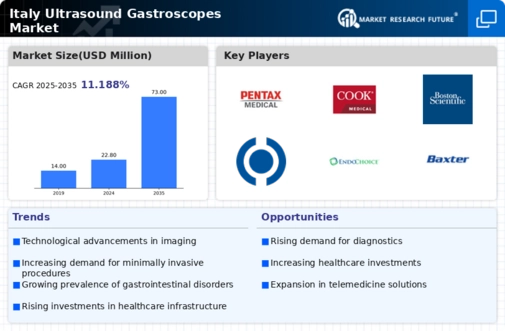
Technological advancements in imaging techniques are significantly influencing the ultrasound gastroscopes market. Innovations such as high-definition imaging, real-time visualization, and enhanced Doppler capabilities are improving the accuracy and efficiency of gastrointestinal examinations. In Italy, the integration of artificial intelligence (AI) in ultrasound technology is emerging, potentially streamlining diagnostic processes and reducing the time required for image interpretation. The market for ultrasound gastroscopes is projected to expand as healthcare facilities invest in these cutting-edge technologies, aiming to provide superior patient care. The introduction of portable ultrasound devices also appears to facilitate access to diagnostic services in remote areas, further driving market growth.
Increasing Prevalence of Gastrointestinal Disorders
The rising incidence of gastrointestinal disorders in Italy is a primary driver for the ultrasound gastroscopes market. Conditions such as gastroesophageal reflux disease (GERD), peptic ulcers, and inflammatory bowel disease are becoming more common, necessitating advanced diagnostic tools. According to recent health statistics, approximately 30% of the Italian population experiences some form of gastrointestinal issue, leading to a heightened demand for effective diagnostic solutions. This trend is likely to propel the adoption of ultrasound gastroscopes, which offer non-invasive and accurate imaging capabilities. As healthcare providers seek to enhance patient outcomes, the ultrasound gastroscopes market is expected to witness substantial growth, driven by the need for timely and precise diagnosis of these prevalent conditions.























Leave a Comment