Download Free Sample
Kindly complete the form below to receive a free sample of this Report
Japan Biomaterials Market Research Report By Application (Medical Devices, Tissue Engineering, Drug Delivery, Orthopedics, Wound Care), By Type (Natural Biomaterials, Synthetic Biomaterials, Modified Biomaterials), By Source (Plant-based, Animal-based, Microbial-based) andBy End Use (Healthcare, Pharmaceuticals, Cosmetics) - Growth & Industry Forecast 2025 To 2035
As per Market Research Future analysis, the Japan biomaterial market Size was estimated at 3540.0 USD Million in 2024. The Japan biomaterial market is projected to grow from 3816.12 USD Million in 2025 to 8090.0 USD Million by 2035, exhibiting a compound annual growth rate (CAGR) of 7% during the forecast period 2025 - 2035
The Japan biomaterial market is experiencing robust growth driven by sustainability and innovation.
| 2024 Market Size | 3540.0 (USD Million) |
| 2035 Market Size | 8090.0 (USD Million) |
| CAGR (2025 - 2035) | 7.8% |
BASF SE (DE), DuPont de Nemours Inc (US), Covestro AG (DE), Mitsubishi Chemical Corporation (JP), Evonik Industries AG (DE), NatureWorks LLC (US), 3M Company (US), Futerro (BE)
Our Impact
Enabled $4.3B Revenue Impact for Fortune 500 and Leading Multinationals
Partnering with 2000+ Global Organizations Each Year
30K+ Citations by Top-Tier Firms in the Industry
The biomaterial market in Japan is currently experiencing a notable evolution, driven by increasing awareness of sustainability and environmental concerns. As industries seek alternatives to traditional materials, biomaterials are gaining traction due to their renewable nature and potential for biodegradability. This shift is particularly evident in sectors such as packaging, automotive, and healthcare, where the demand for eco-friendly solutions is on the rise. Furthermore, government initiatives aimed at promoting green technologies are likely to bolster the growth of this market, encouraging innovation and investment in biomaterial research and development. In addition, the Japanese biomaterial market is characterized by a growing emphasis on advanced technologies, such as bioprinting and tissue engineering. These innovations are paving the way for new applications in medical devices and regenerative medicine, which could transform patient care. The collaboration between academic institutions and industry players appears to be fostering a robust ecosystem for biomaterial development. As the market continues to mature, it may witness further diversification in product offerings, catering to various industries and consumer needs, ultimately contributing to a more sustainable future.
The demand for sustainable packaging is rising in Japan, as consumers increasingly prefer eco-friendly options. Biomaterials are being utilized to create packaging that is both functional and biodegradable, reducing environmental impact. This trend aligns with government policies promoting waste reduction and recycling.
Innovations in biomaterials are enhancing medical applications, particularly in tissue engineering and regenerative medicine. Japanese companies are investing in research to develop materials that can mimic natural tissues, improving patient outcomes and expanding treatment options.
There is a growing trend of collaboration between academia and industry in Japan's biomaterial market. This partnership fosters innovation and accelerates the development of new biomaterials, as researchers and companies work together to address challenges and explore new applications.
The healthcare sector is emerging as a significant driver for the biomaterial market in Japan. With an aging population and increasing healthcare needs, there is a rising demand for innovative medical solutions. Biomaterials are being utilized in various applications, including drug delivery systems, tissue engineering, and surgical implants. The market for biomaterials in healthcare is projected to reach $2 billion by 2025, reflecting a growing recognition of their benefits. This trend is further supported by advancements in medical technology and an increasing focus on personalized medicine. As healthcare providers seek to improve patient outcomes, the biomaterial market is likely to experience substantial growth, driven by the need for safe and effective medical solutions.
Government policies and regulations significantly influence the biomaterial market in Japan. The Japanese government has implemented various initiatives aimed at promoting the use of biomaterials, particularly in sectors such as packaging and healthcare. For example, the introduction of subsidies for companies developing sustainable materials is likely to encourage innovation and investment in the biomaterial market. Additionally, regulatory frameworks that favor biodegradable and compostable materials are expected to create a conducive environment for market growth. In 2025, it is estimated that government support could lead to a 20% increase in the adoption of biomaterials across various industries. This proactive approach by the government not only fosters a sustainable economy but also enhances the competitiveness of the biomaterial market.
The increasing consumer awareness regarding environmental sustainability is driving the biomaterial market in Japan. As consumers become more conscious of their ecological footprint, there is a notable shift towards eco-friendly products. This trend is reflected in the packaging sector, where biomaterials are increasingly utilized to replace traditional plastics. In 2025, the market for biodegradable packaging in Japan is projected to reach approximately $1.5 billion, indicating a robust growth trajectory. The biomaterial market is likely to benefit from this demand, as companies strive to innovate and offer sustainable alternatives. Furthermore, government initiatives promoting green technologies and materials are expected to bolster this trend, creating a favorable environment for the biomaterial market to thrive.
Collaboration between different sectors is becoming increasingly vital for the growth of the biomaterial market in Japan. Partnerships between academia, industry, and government entities are fostering innovation and accelerating the development of new biomaterials. These collaborations often lead to the sharing of knowledge, resources, and technology, which can enhance the overall efficiency of the biomaterial market. In 2025, it is expected that collaborative projects will account for a significant portion of new product developments in the biomaterial sector. This synergy not only promotes the exchange of ideas but also helps in addressing challenges related to scalability and commercialization. As industries work together, the biomaterial market is poised to benefit from enhanced research capabilities and a more robust product pipeline.
Technological advancements play a crucial role in shaping the biomaterial market in Japan. Innovations in material science, such as the development of new biopolymers and composites, are enhancing the performance and applicability of biomaterials across various sectors. For instance, the introduction of advanced bio-based materials in the automotive and construction industries is gaining traction. In 2025, the biomaterial market is anticipated to grow at a CAGR of 12%, driven by these technological breakthroughs. Companies are increasingly investing in research and development to create high-performance biomaterials that meet stringent regulatory standards. This focus on innovation not only enhances product offerings but also positions the biomaterial market as a key player in Japan's transition towards sustainable industrial practices.
The Japan biomaterial market showcases a diverse segmentation, with Medical Devices leading the allocation of market share. This segment is prominently positioned due to its extensive applications in surgical procedures, diagnostics, and implantable devices. Tissue Engineering follows closely, characterized by its innovative applications aimed at regenerating biological tissues, contributing significantly to the overall market dynamics. Growth trends indicate a robust expansion within the Tissue Engineering segment, fueled by advancements in regenerative medicine and increasing investments in healthcare infrastructure. Factors such as the aging population, coupled with a rising demand for biocompatible materials in medical applications, are driving this growth trajectory. Furthermore, the ongoing research and development initiatives continue to bolster the adoption of biomaterials across various medical applications.
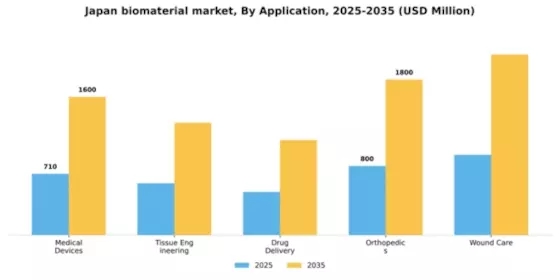
Medical Devices: Medical Devices (Dominant) vs. Wound Care (Emerging)
The Medical Devices segment stands out as the dominant force in the Japan biomaterial market, primarily due to its wide-ranging applications including implants, prosthetics, and various diagnostic tools. This segment holds a robust position, driven by technological advancements and a strong inclination towards enhanced patient care. In contrast, the Wound Care segment is emerging rapidly, predominantly fueled by the rising incidence of chronic wounds and a focus on innovative treatment solutions. While Medical Devices leverage established technologies, Wound Care is characterized by a growing portfolio of advanced dressings and healing products that cater to specific wound types, reflecting an agile response to evolving healthcare needs.
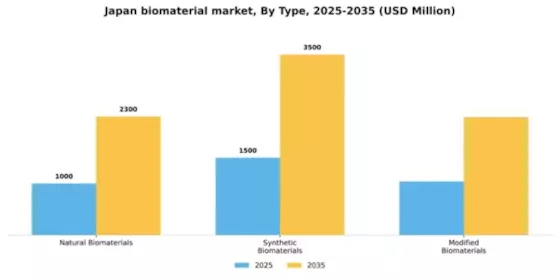
In the Japan biomaterial market, the distribution of market share among the segment values shows that natural biomaterials command the largest portion due to their eco-friendliness and biodegradability. Synthetic biomaterials, while representing a smaller share, demonstrate significant growth potential, attributed to advancements in technology and increased demand across various industrial applications. Growth trends indicate that natural biomaterials are increasingly preferred in industries like healthcare and packaging, driven by a shift towards sustainable practices. Conversely, synthetic biomaterials are gaining traction in the automotive and electronics sectors, where performance and durability are crucial. The demand for customized solutions and innovative application methods is propelling this segment’s growth, marking a considerable shift in market dynamics.
Natural Biomaterials (Dominant) vs. Synthetic Biomaterials (Emerging)
Natural biomaterials are characterized by their origin from renewable resources, such as plants and animals, making them highly appealing for sustainable practices and reducing environmental impact. They dominate the Japan biomaterial market given their compatibility with biological systems, making them ideal for medical applications like tissue engineering and drug delivery. On the other hand, synthetic biomaterials, produced through chemical processes, are considered emerging due to their versatility and the ability to tailor properties for specific applications. These materials are increasingly used in industries like electronics and automotive, where their enhanced performance and durability make them preferable. The ongoing research into bio-compatible synthetic options is likely to strengthen their market position further.
In the Japan biomaterial market, the market share is predominantly led by plant-based sources, which are preferred for their sustainability and environmental benefits. Animal-based options, while established, account for a smaller portion of the market. Microbial-based sources are emerging, capturing attention due to their innovative applications and potential for sustainable production. The distribution among these sources reflects consumer preferences shifting towards eco-friendly options, with plant-based materials at the forefront. Growth trends in the Japan biomaterial market show that plant-based materials are supported by government policies encouraging sustainable practices and increasing demand in various sectors. Microbial-based biomass is the fastest-growing segment, driven by advancements in biotechnology and the growing need for renewable alternatives to fossil fuels. This dynamic indicates a robust future for innovative biomaterials as industries seek to reduce environmental impacts.
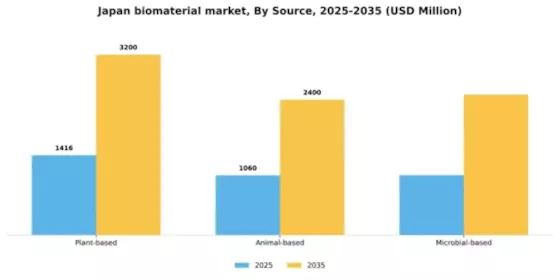
Plant-based (Dominant) vs. Animal-based (Emerging)
The plant-based segment stands as the dominant force in the Japan biomaterial market, reflecting not only consumer preference but also strong governmental support aimed at sustainability. These materials are often associated with organic certification and health benefits, making them highly sought after across aesthetic and functional markets. In contrast, the animal-based segment, while traditionally significant, faces challenges in consumer perception related to ethical considerations and sustainability. However, this segment is emerging with niche applications, leveraging unique properties for specific uses in industries like fashion and pharmaceuticals. The evolving consumer landscape presents opportunities for animal-based materials to carve out a sustainable niche.
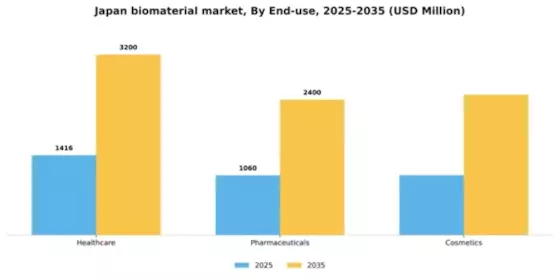
In the Japan biomaterial market, the end-use segment is characterized by a distinct distribution of shares across various sectors. Healthcare holds the largest share, driven by an increasing demand for biocompatible materials used in medical applications, surgical implants, and wound care products. Following closely is the pharmaceuticals segment, which is rapidly gaining traction due to the increasing focus on drug delivery systems that utilize biomaterials for enhanced efficacy and safety. Growth trends in this segment are influenced by several key drivers, including advancements in technology and an aging population. The healthcare segment's dominance is supported by ongoing innovations in biomaterials that improve patient outcomes. Meanwhile, the pharmaceuticals sector is the fastest-growing due to expanding research in personalized medicine and a shift towards sustainable materials that align with environmental considerations, making biomaterials a pivotal focus for pharmaceutical companies.
Healthcare: Dominant vs. Pharmaceuticals: Emerging
The healthcare segment is marked by its extensive use of biomaterials in various products, including implants, prostheses, and regenerative medicine applications. This sector's dominance is attributed to the critical need for durable, biocompatible materials that ensure patient safety and enhance recovery times. On the other hand, the pharmaceuticals sector is emerging as a vital area within the Japan biomaterial market, with a strong focus on biopharmaceutical advancements, including drug delivery systems that leverage biomaterials to create more effective therapeutic agents. The increasing investment in research and development for pharmaceuticals showcases a growing recognition of biomaterials’ role in enhancing drug formulations and patient adherence, establishing this segment as one to watch in the coming years.
Get more detailed insights about Japan Biomaterial Market Request Free Sample
The biomaterial market in Japan is characterized by a dynamic competitive landscape, driven by increasing demand for sustainable materials and innovative applications across various industries. Key players such as BASF SE (DE), DuPont de Nemours Inc (US), and Mitsubishi Chemical Corporation (JP) are at the forefront, each adopting distinct strategies to enhance their market positioning. BASF SE (DE) focuses on innovation through extensive R&D investments, aiming to develop advanced biomaterials that meet evolving consumer needs. Meanwhile, DuPont de Nemours Inc (US) emphasizes strategic partnerships to bolster its product offerings and expand its market reach. Mitsubishi Chemical Corporation (JP) is actively pursuing regional expansion, particularly in Asia, to capitalize on the growing demand for eco-friendly materials. Collectively, these strategies contribute to a competitive environment that is increasingly oriented towards sustainability and technological advancement.In terms of business tactics, companies are localizing manufacturing to reduce lead times and enhance supply chain efficiency. The market structure appears moderately fragmented, with several players vying for market share while also collaborating on sustainability initiatives. This collective influence of key players fosters a competitive atmosphere where innovation and operational efficiency are paramount.
In October BASF SE (DE) announced a partnership with a leading Japanese university to develop biodegradable polymers aimed at reducing plastic waste. This collaboration underscores BASF's commitment to sustainability and positions it to leverage academic research for innovative product development. The strategic importance of this partnership lies in its potential to enhance BASF's product portfolio while addressing pressing environmental concerns.
In September DuPont de Nemours Inc (US) launched a new line of bio-based materials designed for the automotive sector, which are expected to reduce carbon emissions by up to 30%. This initiative not only aligns with global sustainability goals but also strengthens DuPont's competitive edge in a rapidly evolving market. The introduction of these materials reflects a strategic pivot towards eco-friendly solutions that meet regulatory demands and consumer preferences.
In August Mitsubishi Chemical Corporation (JP) expanded its production capacity for bioplastics in response to rising demand from the packaging industry. This expansion is significant as it positions Mitsubishi to capture a larger market share while reinforcing its commitment to sustainable practices. The move indicates a proactive approach to meet the increasing consumer and regulatory pressures for sustainable packaging solutions.
As of November current competitive trends in the biomaterial market are heavily influenced by digitalization, sustainability, and the integration of AI technologies. Strategic alliances are becoming increasingly vital, enabling companies to pool resources and expertise to drive innovation. Looking ahead, competitive differentiation is likely to evolve from traditional price-based competition to a focus on technological advancements, sustainability, and supply chain reliability. This shift suggests that companies that prioritize innovation and sustainable practices will be better positioned to thrive in the future.


In recent developments, the Japan Biomaterials Market is witnessing significant growth driven by increased demand for sustainable and biocompatible materials across various industries. Companies like Kewpie Corporation and Kuraray are expanding their product lines to cater to the rising interest in eco-friendly alternatives. In September 2023, Daicel Corporation announced a breakthrough in biodegradable polymers, enhancing their market presence and contributing to a circular economy. Furthermore, in July 2023, Nippon Shokubai collaborated with prominent research institutions to innovate in bio-based chemicals, reinforcing their commitment to sustainable practices.
Mitsubishi Chemical and Showa Denko have reported increased investments in Research and Development to advance their biomaterials technologies.
Notably, in August 2023, Kaneka Corporation acquired assets from a smaller bioplastics firm, expanding its market share in the biodegradable segment. The consistent financial growth among these companies is reflected in stock performance and increasing market valuations, bolstering the overall market landscape. Looking back, major advancements from 2021 to 2022, including the entry of new biopolymers by Toray Industries, set a strong foundation for ongoing innovation within the Japan Biomaterials Market.
The Biomaterial Market in Japan is projected to grow at a 7.8% CAGR from 2025 to 2035, driven by advancements in sustainable materials and increasing healthcare applications.
New opportunities lie in:
By 2035, the biomaterial market is expected to achieve substantial growth and innovation.
| MARKET SIZE 2024 | 3540.0(USD Million) |
| MARKET SIZE 2025 | 3816.12(USD Million) |
| MARKET SIZE 2035 | 8090.0(USD Million) |
| COMPOUND ANNUAL GROWTH RATE (CAGR) | 7.8% (2025 - 2035) |
| REPORT COVERAGE | Revenue Forecast, Competitive Landscape, Growth Factors, and Trends |
| BASE YEAR | 2024 |
| Market Forecast Period | 2025 - 2035 |
| Historical Data | 2019 - 2024 |
| Market Forecast Units | USD Million |
| Key Companies Profiled | BASF SE (DE), DuPont de Nemours Inc (US), Covestro AG (DE), Mitsubishi Chemical Corporation (JP), Evonik Industries AG (DE), NatureWorks LLC (US), 3M Company (US), Futerro (BE) |
| Segments Covered | Application, Type, Source, End-use |
| Key Market Opportunities | Growing demand for sustainable packaging solutions drives innovation in the biomaterial market. |
| Key Market Dynamics | Rising demand for sustainable materials drives innovation and competition in the biomaterial market. |
| Countries Covered | Japan |
The overall market valuation was $3540.0 Million in 2024.
The projected valuation for 2035 is $8090.0 Million.
The expected CAGR for the market during the forecast period 2025 - 2035 is 7.8%.
In 2024, the Wound Care application segment had a valuation of $930.0 Million.
The Medical Devices segment is projected to reach $1600.0 Million by 2035.
In 2024, natural biomaterials were valued at $1000.0 Million, while synthetic biomaterials were valued at $1500.0 Million.
The Orthopedics segment is expected to grow to $1800.0 Million by 2035.
Key players include BASF SE, DuPont de Nemours Inc, Covestro AG, and Mitsubishi Chemical Corporation.
The Drug Delivery segment had a valuation of $500.0 Million in 2024.
The Plant-based biomaterials segment is projected to reach $3200.0 Million by 2035.



Kindly complete the form below to receive a free sample of this Report

“This is really good guys. Excellent work on a tight deadline. I will continue to use you going forward and recommend you to others. Nice job”


“Thanks. It’s been a pleasure working with you, please use me as reference with any other Intel employees.”


“Thanks for sending the report it gives us a good global view of the Betaïne market.”


“Thank you, this will be very helpful for OQS.”


“We found the report very insightful! we found your research firm very helpful. I'm sending this email to secure our future business.”


“I am very pleased with how market segments have been defined in a relevant way for my purposes (such as "Portable Freezers & refrigerators" and "last-mile"). In general the report is well structured. Thanks very much for your efforts.”


“I have been reading the first document or the study, ,the Global HVAC and FP market report 2021 till 2026. Must say, good info! I have not gone in depth at all parts, but got a good indication of the data inside!”


“We got the report in time, we really thank you for your support in this process. I also thank to all of your team as they did a great job.”


“The Automotive 48V ECU Components Procurement Intelligence Study” was a complex project, but the Market Research Future (MRFR) team handled it with quality, agility, and customer-centricity. They delivered all requested data on time and within the agreed scope. The team, including Shubhendra Anand and Rahul Gotadki, was always readily available to clarify questions and swiftly implement necessary adjustments, driving the project to a successful conclusion within a very demanding timeframe.
I would also like to specifically commend Akshay Agarwal for his responsiveness and support at every stage—from our initial inquiry on May 6th through to final delivery on June 18th. His dedication made the entire process seamless.”



