Download Free Sample
Kindly complete the form below to receive a free sample of this Report
Japan Positron Emission Tomography Devices Market Research Report: Size, Share, Trend Analysis By Applications (Oncology, Cardiology, Neurology, Infectious Diseases), By Product Type (Integrated PET-CT Systems, Standalone PET Systems, PET-MRI Systems), By End Users (Hospitals, Diagnostic Imaging Centers, Research Institutes) andBy Technology (Time-of-Flight PET, Digital PET, Analog PET) - Growth Outlook & Industry Forecast 2025 To 2035
As per Market Research Future analysis, the Japan positron emission-tomography-devices market Size was estimated at 247.5 USD Million in 2024. The Japan positron emission-tomography-devices market is projected to grow from 265.59 USD Million in 2025 to 537.67 USD Million by 2035, exhibiting a compound annual growth rate (CAGR) of 7.3% during the forecast period 2025 - 2035
The Japan positron emission-tomography-devices market is poised for growth driven by technological advancements and demographic shifts.
| 2024 Market Size | 247.5 (USD Million) |
| 2035 Market Size | 537.67 (USD Million) |
| CAGR (2025 - 2035) | 7.31% |
Siemens Healthineers (DE), GE Healthcare (US), Philips Healthcare (NL), Canon Medical Systems (JP), Elekta (SE), Medtronic (US), Hitachi Medical Corporation (JP), Nuclear Imaging (US)
Our Impact
Enabled $4.3B Revenue Impact for Fortune 500 and Leading Multinationals
Partnering with 2000+ Global Organizations Each Year
30K+ Citations by Top-Tier Firms in the Industry
The positron emission-tomography-devices market is currently experiencing notable advancements. These advancements are driven by technological innovations and an increasing demand for precise diagnostic tools. In Japan, the integration of artificial intelligence and machine learning into imaging technologies appears to enhance the accuracy and efficiency of PET scans. This trend is likely to improve patient outcomes and streamline workflows in healthcare facilities. Furthermore, the aging population in Japan is contributing to a rising prevalence of chronic diseases, which in turn fuels the need for advanced imaging solutions. As healthcare providers seek to adopt state-of-the-art equipment, the positron emission-tomography-devices market is poised for growth. Moreover, the regulatory environment in Japan is evolving to support the adoption of new technologies in medical imaging. Government initiatives aimed at promoting healthcare innovation may facilitate the entry of advanced positron emission-tomography devices into the market. This supportive framework could encourage manufacturers to invest in research and development, leading to the introduction of more sophisticated devices. As a result, the positron emission-tomography-devices market is likely to witness a surge in product offerings, catering to the diverse needs of healthcare providers and patients alike.
The positron emission-tomography-devices market is witnessing rapid technological advancements, particularly in the integration of AI and machine learning. These innovations are enhancing imaging capabilities, allowing for more accurate diagnostics and improved patient management.
Japan's aging demographic is significantly impacting the positron emission-tomography-devices market. As the prevalence of chronic diseases rises, the demand for advanced imaging solutions is expected to increase, driving market growth.
The evolving regulatory landscape in Japan is fostering innovation within the positron emission-tomography-devices market. Government initiatives aimed at promoting healthcare technology are likely to facilitate the introduction of new devices, enhancing market dynamics.
Japan's healthcare expenditure has been on the rise, which positively impacts the positron emission-tomography-devices market. The government has been increasing its budget allocation for healthcare services, aiming to improve medical infrastructure and access to advanced diagnostic tools. In 2025, healthcare spending is expected to reach approximately $500 billion, with a significant portion directed towards imaging technologies. This financial commitment indicates a robust market environment for PET devices, as hospitals and clinics seek to upgrade their equipment to provide high-quality care. The increased funding is likely to facilitate the adoption of innovative PET technologies, thereby enhancing the overall growth of the positron emission-tomography-devices market.
The increasing emphasis on early diagnosis of diseases, particularly cancer, is driving the positron emission-tomography-devices market in Japan. With advancements in imaging technology, healthcare providers are increasingly adopting PET devices to enhance diagnostic accuracy. The market is projected to grow at a CAGR of approximately 8% from 2025 to 2030, reflecting the rising demand for non-invasive diagnostic tools. This trend is further supported by the growing awareness among patients regarding the benefits of early detection, which can lead to better treatment outcomes. Consequently, the positron emission-tomography-devices market is likely to witness a surge in demand as healthcare facilities invest in advanced imaging technologies to meet patient needs.
The increasing prevalence of chronic diseases, particularly cancer and cardiovascular conditions, is significantly influencing the positron emission-tomography-devices market in Japan. As the population ages, the demand for effective diagnostic tools to manage these diseases is escalating. PET devices are recognized for their ability to provide detailed images that assist in the diagnosis and monitoring of chronic conditions. The market is projected to expand as healthcare providers seek to incorporate PET technology into their diagnostic protocols. This trend indicates a growing recognition of the importance of advanced imaging in the management of chronic diseases, thereby driving the positron emission-tomography-devices market.
The positron emission-tomography-devices market in Japan is experiencing growth due to heightened research and development activities in the medical imaging sector. Japanese institutions and companies are investing significantly in R&D to innovate and improve PET technologies. This focus on R&D is expected to lead to the introduction of advanced PET devices with enhanced capabilities, such as improved resolution and faster imaging times. As a result, the market is likely to benefit from the introduction of cutting-edge technologies that can cater to the evolving needs of healthcare providers. The emphasis on R&D not only fosters innovation but also positions Japan as a leader in the positron emission-tomography-devices market.
Collaboration between public and private sectors is emerging as a key driver for the positron emission-tomography-devices market in Japan. Joint initiatives aimed at enhancing healthcare delivery and technological advancements are becoming increasingly common. These partnerships often result in shared resources, knowledge, and funding, which can accelerate the development and deployment of PET technologies. For instance, collaborations between universities and medical device manufacturers have led to breakthroughs in imaging techniques. Such synergies are likely to create a more dynamic market environment, fostering innovation and improving access to advanced diagnostic tools in the positron emission-tomography-devices market.
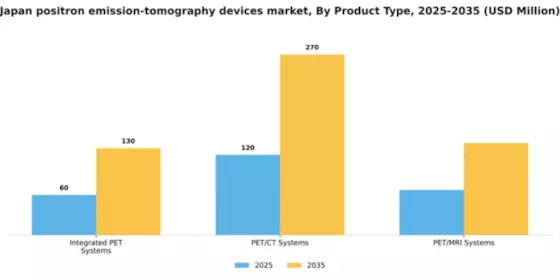
The Japan positron emission-tomography-devices market exhibits a diverse distribution among product types, with Integrated PET Systems holding the largest market share. This segment benefits from widespread adoption in clinical settings, driven by its comprehensive diagnostic capabilities. On the other hand, PET/CT Systems also maintain a significant share, appealing to facilities that require versatility and integrated functionalities. Growth trends in the Japan positron emission-tomography-devices market are strongly influenced by advancements in imaging technology and increasing demand for precise diagnostics. PET/MRI Systems are emerging rapidly, capturing interest due to their superior image quality and lower radiation exposure. This surge is complemented by a growing aging population and rising awareness of early disease detection, underpinning the overall market momentum in this segment.
Technology: Integrated PET Systems (Dominant) vs. PET/MRI Systems (Emerging)
Integrated PET Systems dominate the product segment with their integrated features that enhance diagnostic efficiency and patient outcomes. These systems are preferred in many hospitals and imaging centers due to their reliability and advanced capabilities. Conversely, PET/MRI Systems represent an emerging segment characterized by innovative imaging techniques that allow for greater detail and safety in patient imaging. The rise of these systems is driven by technological advancements aimed at providing clearer images and reducing patient exposure to radiation, making them appealing for institutions prioritizing patient care and technological excellence.
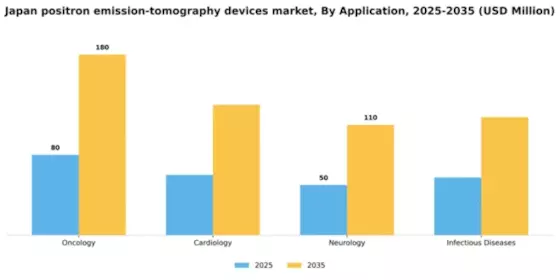
In the Japan positron emission-tomography-devices market, the application segments are witnessing a distinct market share distribution. Oncology remains the leading application, significantly contributing to the overall demand for PET devices, followed by cardiology and neurology. The market for infectious diseases is smaller, yet it plays a crucial role in specific clinical settings. This distribution highlights the preference of healthcare facilities for advanced imaging techniques in oncology, which is primarily driven by the rising cancer incidence in the region. Growth trends in the application segment reflect a dynamic landscape influenced by technological advancements and changing healthcare needs. While oncology maintains its dominance, neurology is emerging as the fastest-growing segment, fueled by increased awareness and diagnosis of neurological disorders. Additionally, investments in research and development, along with collaboration across healthcare sectors, are propelling the adoption of PET technology for various applications, leading to accelerated growth rates in these areas.
Oncology (Dominant) vs. Neurology (Emerging)
Oncology is the dominant application in the Japan positron emission-tomography-devices market, characterized by its robust demand for accurate cancer diagnosis and treatment monitoring. The use of PET in oncology allows for early detection and assessment of treatment efficacy, making it an invaluable tool in oncology practices. Conversely, neurology is emerging as a significant segment, driven by growing recognition of neurological disorders and the need for precise diagnostic imaging. The advancements in PET technology are enhancing the capabilities of neurological assessments, leading to increased investments and heightened focus on this segment. Together, these applications reflect a balanced yet evolving landscape in the Japan positron emission-tomography-devices market.
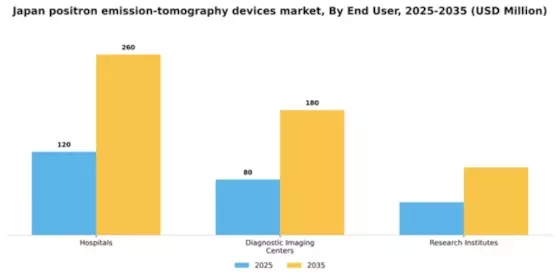
In the Japan positron emission-tomography-devices market, hospitals dominate the end-user segment, capturing a significant share of the market. This is attributed to their extensive patient base and the necessity for advanced imaging technologies in diagnostic processes. Meanwhile, diagnostic imaging centers have emerged as a crucial part of the market, increasing their presence by offering specialized services that cater to outpatient needs. The growth trends indicate that while hospitals maintain their dominant position, diagnostic imaging centers are rapidly gaining momentum, driven by technological advancements and an increased focus on non-invasive diagnostic procedures. Furthermore, research institutes play an important role by pushing innovation and improving the efficacy of PET devices. The collaboration between these entities fosters an environment conducive to growth and development in the sector of medical imaging.
Hospitals (Dominant) vs. Research Institutes (Emerging)
Hospitals represent the dominant end-user segment in the Japan positron emission-tomography-devices market, leveraging their comprehensive facilities and established patient interactions. They utilize PET devices not only for diagnostics but also for treatment planning, playing a pivotal role in patient outcomes. On the other hand, research institutes are emerging players that contribute to the evolution of PET technology. They focus on innovative research and development, collaborating with manufacturers to enhance device capabilities and create new applications in clinical settings. This dynamic interaction between hospitals and research institutes is crucial for the advancement of imaging technologies, promoting better healthcare solutions in the Japan positron emission-tomography-devices market.
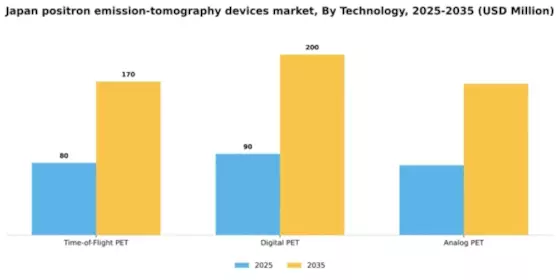
In the Japan positron emission-tomography-devices market, the digital PET segment holds the largest market share, driven by advancements in technological integration and improved imaging capabilities. Time-of-flight PET is gaining traction as the fastest-growing segment, attracting attention due to its precision and ability to enhance diagnostic accuracy. As the healthcare sector embraces innovative solutions, the distribution of market shares among these technologies continues to evolve, reflecting changing demands and preferences in imaging techniques. Growth trends in this segment are significantly influenced by the increasing prevalence of chronic diseases and the rising geriatric population in Japan. The shift towards personalized medicine and non-invasive diagnostic techniques further propels the adoption of digital PET and time-of-flight PET technologies. Additionally, ongoing research and development efforts aim to enhance the functionality and efficiency of these PET devices, ultimately expanding their application across various medical domains.
Technology: Digital PET (Dominant) vs. Time-of-Flight PET (Emerging)
Digital PET stands out as the dominant technology, offering superior image quality and greater diagnostic capabilities than its analog counterparts, which enhances its appeal among healthcare providers. This technology employs advanced digital detectors, resulting in faster processing speeds and improved patient outcomes. On the other hand, time-of-flight PET, while an emerging technology, is rapidly gaining importance due to its ability to accurately pinpoint cancerous tissues and other anomalies. The remarkable sensitivity and specificity of time-of-flight PET scanners present significant prospects for early detection and treatment planning. As research progresses, both technologies are poised to redefine the landscape of diagnostic imaging in the healthcare system.
Get more detailed insights about Japan Positron Emission Tomography Devices Market Request Free Sample
The positron emission-tomography-devices market in Japan is characterized by a dynamic competitive landscape, driven by technological advancements and increasing demand for precise diagnostic tools. Major players such as Siemens Healthineers (DE), GE Healthcare (US), and Canon Medical Systems (JP) are at the forefront, each adopting distinct strategies to enhance their market presence. Siemens Healthineers (DE) focuses on innovation, particularly in integrating artificial intelligence (AI) into imaging technologies, which appears to enhance diagnostic accuracy and operational efficiency. Meanwhile, GE Healthcare (US) emphasizes strategic partnerships, collaborating with local healthcare providers to tailor solutions that meet specific regional needs, thereby strengthening its foothold in the market. Canon Medical Systems (JP) is also notable for its commitment to sustainability, investing in eco-friendly manufacturing processes that resonate with the growing demand for environmentally responsible healthcare solutions.The business tactics employed by these companies reflect a concerted effort to optimize operations and adapt to local market conditions. Localizing manufacturing has become a prevalent strategy, allowing firms to reduce costs and improve supply chain efficiency. The market structure is moderately fragmented, with several key players exerting influence, yet the collective actions of these companies suggest a trend towards consolidation as they seek to leverage synergies and enhance competitive advantages.
In October Siemens Healthineers (DE) announced the launch of a new AI-driven PET imaging system designed to improve patient outcomes through enhanced image quality and reduced scan times. This strategic move not only reinforces Siemens' commitment to innovation but also positions the company to capture a larger share of the growing demand for advanced imaging technologies in Japan. The integration of AI into their systems is likely to set a new standard in the industry, compelling competitors to accelerate their own technological advancements.
In September GE Healthcare (US) expanded its collaboration with a leading Japanese hospital network to implement a comprehensive imaging solution that includes PET technology. This partnership is indicative of GE's strategy to deepen its market penetration by aligning its offerings with the specific needs of local healthcare providers. Such collaborations may enhance GE's reputation and reliability in the region, potentially leading to increased market share as healthcare facilities seek integrated solutions that improve patient care.
In August Canon Medical Systems (JP) unveiled a new line of eco-friendly PET devices that utilize sustainable materials and energy-efficient technologies. This initiative not only aligns with global sustainability trends but also positions Canon as a leader in environmentally conscious healthcare solutions. The strategic importance of this move lies in its potential to attract environmentally aware consumers and healthcare institutions, thereby differentiating Canon in a competitive market.
As of November the competitive trends in the positron emission-tomography-devices market are increasingly defined by digitalization, sustainability, and the integration of AI technologies. Strategic alliances among key players are shaping the landscape, fostering innovation and enhancing service delivery. Looking ahead, it appears that competitive differentiation will increasingly pivot from price-based strategies to a focus on technological innovation, reliability in supply chains, and sustainable practices. This evolution suggests that companies that prioritize these aspects may gain a competitive edge in the rapidly evolving healthcare market.



Recent developments in the Japan Positron Emission Tomography Devices Market have revealed notable progress among key players such as Siemens Healthineers, United Imaging Healthcare, and Philips Healthcare. In October 2023, Siemens Healthineers announced advancements in digital PET technology, increasing the accuracy and efficiency of diagnostics in oncology.
The market is also witnessing growth in demand for high-resolution imaging systems due to Japan's aging population, which is driving the need for more sophisticated medical imaging solutions. Significant mergers and acquisitions have unfolded, with Canon Medical Systems acquiring a niche imaging technology firm in September 2023, bolstering their product offerings in the PET space.
The latest economic reports indicate an expected rise in market valuation driven by increased investments in healthcare technology. In the last two years, from September 2021 to October 2023, Mizuho Bank projected a steady growth trajectory for the PET device market in Japan, enhancing the competitive landscape among companies like GE Healthcare, Mitsubishi Electric, and Hitachi.
This emphasizes the pivotal role of innovation and collaboration in meeting the evolving healthcare needs of the Japanese population.
The Positron Emission Tomography Devices Market is projected to grow at 7.31% CAGR from 2025 to 2035, driven by technological advancements and increasing healthcare investments.
New opportunities lie in:
By 2035, the market is expected to achieve substantial growth, driven by innovation and strategic collaborations.
| MARKET SIZE 2024 | 247.5(USD Million) |
| MARKET SIZE 2025 | 265.59(USD Million) |
| MARKET SIZE 2035 | 537.67(USD Million) |
| COMPOUND ANNUAL GROWTH RATE (CAGR) | 7.31% (2025 - 2035) |
| REPORT COVERAGE | Revenue Forecast, Competitive Landscape, Growth Factors, and Trends |
| BASE YEAR | 2024 |
| Market Forecast Period | 2025 - 2035 |
| Historical Data | 2019 - 2024 |
| Market Forecast Units | USD Million |
| Key Companies Profiled | Siemens Healthineers (DE), GE Healthcare (US), Philips Healthcare (NL), Canon Medical Systems (JP), Elekta (SE), Medtronic (US), Hitachi Medical Corporation (JP), Nuclear Imaging (US) |
| Segments Covered | Product Type, Application, End User, Technology |
| Key Market Opportunities | Advancements in imaging technology enhance diagnostic accuracy in the positron emission-tomography-devices market. |
| Key Market Dynamics | Technological advancements and regulatory changes drive growth in the positron emission-tomography-devices market. |
| Countries Covered | Japan |
The market valuation was $247.5 Million in 2024.
The projected market size is $537.67 Million by 2035.
The expected CAGR is 7.31% during the forecast period 2025 - 2035.
The PET/CT Systems segment shows the highest valuation, ranging from $120.0 Million to $270.0 Million.
Key applications include Oncology, Cardiology, Neurology, and Infectious Diseases, with Oncology valued between $80.0 Million and $180.0 Million.
Hospitals hold the largest market share, with valuations between $120.0 Million and $260.0 Million.
Technological advancements include Time-of-Flight PET, Digital PET, and Analog PET, with Digital PET valued between $90.0 Million and $200.0 Million.
Key players include Siemens Healthineers, GE Healthcare, Philips Healthcare, and Canon Medical Systems.
The PET/MRI Systems segment has a valuation range of $67.5 Million to $137.67 Million.
The market for diagnostic imaging centers is valued between $80.0 Million and $180.0 Million, which is lower than the hospital segment.


Kindly complete the form below to receive a free sample of this Report

“This is really good guys. Excellent work on a tight deadline. I will continue to use you going forward and recommend you to others. Nice job”


“Thanks. It’s been a pleasure working with you, please use me as reference with any other Intel employees.”


“Thanks for sending the report it gives us a good global view of the Betaïne market.”


“Thank you, this will be very helpful for OQS.”


“We found the report very insightful! we found your research firm very helpful. I'm sending this email to secure our future business.”


“I am very pleased with how market segments have been defined in a relevant way for my purposes (such as "Portable Freezers & refrigerators" and "last-mile"). In general the report is well structured. Thanks very much for your efforts.”


“I have been reading the first document or the study, ,the Global HVAC and FP market report 2021 till 2026. Must say, good info! I have not gone in depth at all parts, but got a good indication of the data inside!”


“We got the report in time, we really thank you for your support in this process. I also thank to all of your team as they did a great job.”


“The Automotive 48V ECU Components Procurement Intelligence Study” was a complex project, but the Market Research Future (MRFR) team handled it with quality, agility, and customer-centricity. They delivered all requested data on time and within the agreed scope. The team, including Shubhendra Anand and Rahul Gotadki, was always readily available to clarify questions and swiftly implement necessary adjustments, driving the project to a successful conclusion within a very demanding timeframe.
I would also like to specifically commend Akshay Agarwal for his responsiveness and support at every stage—from our initial inquiry on May 6th through to final delivery on June 18th. His dedication made the entire process seamless.”



