Medical Device Connectivity Market (2025 - 2035)

Medical Device Connectivity Market Research Report: Size, Share, Trend Analysis By Applications (Remote Patient Monitoring, Data Management, Clinical Decision Support, Smart Hospitals), By Device Type (Wearable Devices, Implantable Devices, Stationary Devices, Portable Devices), By Connectivity Technology (Wi-Fi, Bluetooth, Zigbee, Cellular), By End Use (Hospitals, Home Care, Clinics, Diagnostic Centers) and By Regional (North America, Europe, South America, Asia Pacific, Middle East and Africa) - Growth Outlook & Industry Forecast 2025 To 2035
ID: MRFR/HS/4583-HCR
200 Pages
Rahul Gotadki, Kinjoll Dey
Last Updated: July 08, 2026
Medical Device Connectivity Market
Market Size
Forecast Period2025-2035
CAGR (2025-2035)21.1%
2025 Market SizeUSD 4.18 Billion
2035 Market SizeUSD 28.80 Billion
Key Players
Medtronic plc
GE HealthCare Technologies
Koninklijke Philips N.V.
Cisco Systems Inc.
Honeywell International Inc.
Masimo Corporation
Opportunities
  • AI-Powered Alarm Management Platforms
  • Home Healthcare Connectivity Ecosystems
  • Emerging-Market Hospital Digitization

Medical Device Connectivity Market Summary

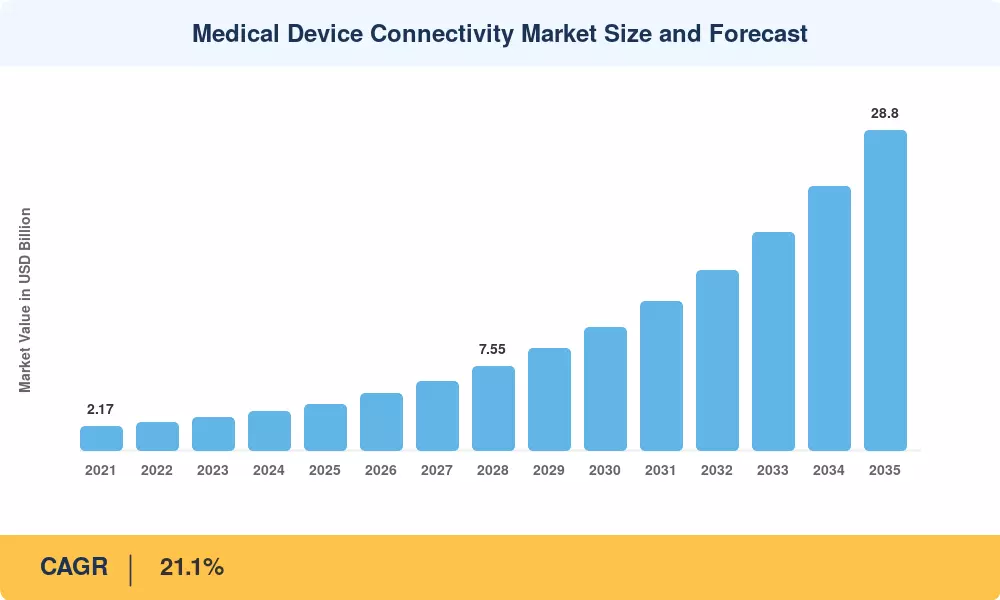
The Medical Device Connectivity Market size was valued at USD 4.18 Billion in 2025, and the market is projected to grow from USD 5.15 Billion in 2026 to USD 28.80 Billion by 2035, registering a CAGR of 21.1% during the forecast period 2026–2035. This growth trajectory reflects a fundamental shift in how clinical devices communicate with enterprise health IT systems — a shift catalyzed by the US 21st Century Cures Act's information-blocking provisions and the European Health Data Space regulation, both of which penalize proprietary data silos and incentivize open-standard connectivity [1][2]. Hospital systems that once tolerated manual transcription of bedside-device readings now face workforce shortages severe enough that automated data capture is no longer optional; it is an operational imperative.

The technology space is clearly shifting away from antiquated serial-port interfaces and point-to-point middleware to cloud-native integration engines based on HL7 FHIR and IEEE 11073 standards. In 2024, global healthcare IT capital spending exceeded USD 630 billion, with a greater share of spending going toward connection infrastructure as health organizations look to real-time clinical decision support and predictive analytics [3]. In the US, EU and Japan, regulatory agencies are increasing cybersecurity requirements for connected medical devices, forcing manufacturers to include secure communication protocols at the design stage rather than adding them to legacy gear.


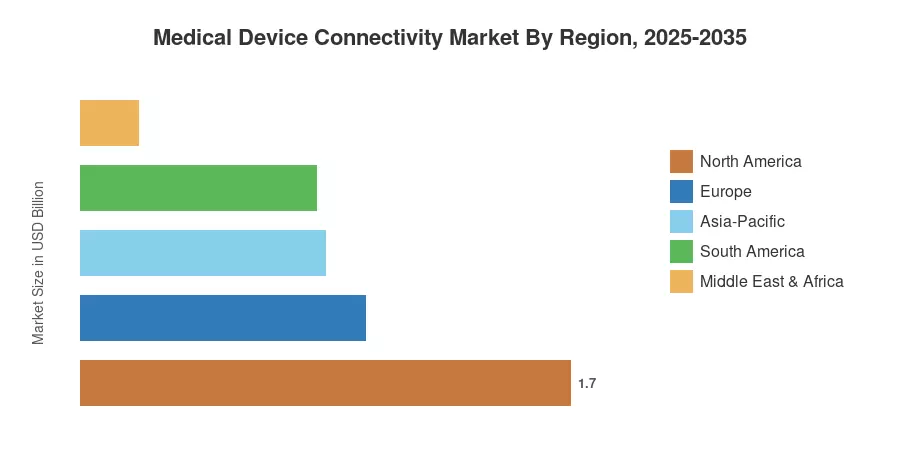
North America accounted for a share of around 40.7% of the Medical Device Connectivity Market in 2025, owing to high acute-care IT investment and mature EHR adoption rates around 95% across US hospitals [4]. Europe is the fastest-expanding region, supported by the EU4Health digital transformation strategy and increased post-pandemic telemedicine deployments. The Asia-Pacific region garnered the second-largest share of 20.3%, supported by India’s Ayushman Bharat Digital Mission and China’s rise in smart-hospital building [5]. The Medical Device Connectivity Market is poised for continued double-digit increase through 2035, with 5G and early 6G research providing ultra-reliable low-latency links for critical care.


Key Report Takeaways

• By Component

  • Connectivity solutions accounted for 67.3% of the Medical Device Connectivity Market share in 2025, reflecting strong demand for device interface modules and gateway hardware.
  • Connectivity services are forecast to grow at a 23.2% CAGR through 2035, with implementation and integration engagements driving recurring revenue.

• By Technology

  • Wired interfaces held 61.4% of the Medical Device Connectivity Market in 2025, though wireless technologies are expanding rapidly as hospitals upgrade to Wi-Fi 6E and Bluetooth 5.3 infrastructure.
  • Wireless connectivity is projected to register a 22.9% CAGR between 2026 and 2035.

• By Application

  • Continuous patient monitoring represented 49.2% of the Medical Device Connectivity Market in 2025, fueled by sepsis-alert and early-warning-score algorithms that require uninterrupted device data streams.
  • Tele-ICU and tele-stroke applications are forecast to advance at a 24.2% CAGR, reflecting specialist-shortage pressures across rural and mid-size hospitals.

• By End User

  • Hospitals and clinics commanded 71.4% of the Medical Device Connectivity Market share in 2025.
  • Home healthcare is poised for the fastest segment growth at a 24.8% CAGR, as chronic-disease management shifts to decentralized settings.

• By Geography

  • North America led with 40.7% of global revenue in 2025.
  • Europe is set to expand at the highest regional CAGR, supported by cross-border data exchange mandates.
  • Asia-Pacific represented USD 0.85 billion in 2025 and is accelerating through government-backed digitization programs.


Market Size and Forecast (2021–2035)

Historical period (2021–2024) data is based on verified industry disclosures, public corporate filings and regulatory databases. A custom bottom-up model was used for the projected period (2026-2035), which was benchmarked against primary interviews with hospital CIOs, device OEMs, and integration specialists. All amounts are at unchanged 2025 exchange rates, in USD billion.
Medical Device Connectivity Market Size and Forecast
Our Impact
Enabled $4.3B Revenue Impact for Fortune 500 and Leading Multinationals
Partnering with 2000+ Global Organizations Each Year
30K+ Citations by Top-Tier Firms in the Industry

Driver Impact Analysis

Driver ~% Impact on CAGR Geographic Relevance Impact Timeline
Information-blocking regulation 18–22% North America, Europe Short-term (≤2 yr)
Clinician workforce shortage 15–18% Global Medium-term (2–4 yr)
Value-based reimbursement expansion 12–15% North America, Europe Medium-term (2–4 yr)
5G / Wi-Fi 6E infrastructure rollout 10–14% Global Medium-term (2–4 yr)
AI-enabled clinical decision support 8–12% North America, Asia-Pacific Long-term (≥4 yr)
Cybersecurity regulatory mandates 7–10% Global Short-term (≤2 yr)
Home healthcare decentralization 6–9% Europe, Asia-Pacific Long-term (≥4 yr)


Information-Blocking Regulation

The ONC's HTI-1 final rule, effective January 2024, expanded the definition of information blocking to include device-generated data, compelling hospital networks to replace proprietary gateways with certified, standards-based connectivity [1]. Penalties of up to USD 1 million per violation have transformed connectivity from a discretionary IT upgrade into a compliance mandate. European regulators reinforced this trend through the EHDS regulation, which requires cross-border portability of clinical data by 2027, directly increasing demand for interoperable device interfaces across the continent's 15,000-plus acute-care facilities [2].

Clinician Workforce Shortage

The WHO projects a global shortfall of 10 million healthcare workers by 2030, with nursing vacancy rates already exceeding 18% in US hospitals [11]. Automated device connectivity eliminates an estimated 30 minutes of manual documentation per nurse per shift, translating into measurable labor-cost savings. Health systems such as Kaiser Permanente have reported 22% reductions in transcription errors after deploying enterprise-wide device integration platforms, reinforcing the ROI case for connectivity investment across the Medical Device Connectivity Market.

Value-Based Reimbursement Expansion

CMS's bundled-payment programs now cover more than 40% of Medicare discharges, tying reimbursement directly to patient outcomes and readmission rates [12]. Continuous device-to-EHR data flow enables real-time deterioration scoring, which clinical evidence links to 15–20% reductions in ICU readmissions. Private payers are following suit: Aetna and UnitedHealth Group introduced connectivity-dependent quality bonuses in 2024, extending the financial incentive to deploy connected-device infrastructure beyond the Medicare population.

5G and Next-Generation Wireless Infrastructure

Private 5G networks are moving from pilot to production in hospital campuses, offering sub-10-millisecond latency that supports real-time waveform streaming from ventilators, infusion pumps, and physiological monitors [10]. The US FCC allocated an additional 100 MHz of mid-band spectrum for healthcare in late 2024, while Japan's NTT Docomo partnered with three national university hospitals to trial 6G connectivity for robotic-surgery teleoperation. These infrastructure investments create a secular tailwind for wireless device connectivity across the Medical Device Connectivity Market.


Restraints Impact Analysis

Restraint ~% Drag on CAGR Geographic Relevance Impact Timeline
Legacy device installed base –8 to –12% Global Long-term (≥4 yr)
Cybersecurity liability exposure –6 to –9% North America, Europe Short-term (≤2 yr)
Interoperability standards fragmentation –5 to –8% Global Medium-term (2–4 yr)
Capital budget constraints in public hospitals –4 to –7% South America, MEA Medium-term (2–4 yr)
Data sovereignty and privacy regulations –3 to –6% Europe, Asia-Pacific Long-term (≥4 yr)


Legacy Device Installed Base

An estimated 60–70% of the world's bedside monitors, ventilators, and infusion pumps in active clinical use predate IEEE 11073 and HL7 FHIR standards [15]. These devices rely on RS-232 serial ports or proprietary protocols that require costly adapter hardware and custom middleware. Replacement cycles for capital medical equipment average 8–12 years, meaning that a significant portion of the installed base will remain connectivity-resistant through 2030. This drag on the Medical Device Connectivity Market is most pronounced in public hospital systems with constrained procurement budgets.

Cybersecurity Liability Exposure

The FDA's premarket cybersecurity guidance, finalized in 2023, requires device manufacturers to provide a software bill of materials (SBOM) and maintain post-market vulnerability patching for the product's entire lifecycle [8]. While this regulation drives long-term security improvements, it raises short-term compliance costs by an estimated 12–18% per connected device, discouraging smaller OEMs from entering the Medical Device Connectivity Market.

Interoperability Standards Fragmentation

Despite convergence around FHIR R4, competing profiles from IHE, Continua Health Alliance, and regional SDOs create ambiguity for multinational device manufacturers [16]. Hospitals in Germany, for instance, must comply with ISiK interoperability specifications that diverge from US Certified Health IT requirements, forcing connectivity vendors to maintain parallel protocol stacks and increasing integration complexity.


Medical Device Connectivity Market Opportunities

AI-Powered Alarm Management Platforms

Alarm fatigue remains one of the top patient-safety hazards identified by ECRI, with clinical staff exposed to more than 350 alarms per bed per day in high-acuity settings [13]. Connected-device data streams, when paired with machine-learning models, can suppress non-actionable alerts by up to 85% while surfacing genuine clinical deterioration events. This opportunity is tightly linked to the driver dynamics in and represents a high-margin software overlay for connectivity vendors.

Home Healthcare Connectivity Ecosystems

As chronic-disease management shifts to the home, patients with conditions like COPD, heart failure, and diabetes require continuous remote monitoring that feeds directly into provider EHR systems [14]. The home healthcare segment of the Medical Device Connectivity Market is forecast to grow at a 24.8% CAGR, creating demand for lightweight gateway devices, cellular-enabled wearables, and patient-facing dashboards. Payers are accelerating adoption through Remote Patient Monitoring (RPM) reimbursement codes introduced by CMS in 2024.

Emerging-Market Hospital Digitization

India's Ayushman Bharat Digital Mission allocated USD 1.6 billion toward health information exchange infrastructure through 2027, while Indonesia's national health insurance program (JKN) is mandating electronic claims submission from all network hospitals by 2026 [5][17]. These programs create greenfield demand for end-to-end connectivity solutions in markets with minimal legacy-system drag.

Connectivity-as-a-Service Business Models

Capital-constrained health systems are increasingly receptive to subscription-based connectivity platforms that bundle hardware, middleware, and managed services under a per-bed monthly fee. This operating-expenditure model lowers adoption barriers for mid-size community hospitals and creates predictable recurring revenue for vendors. Several major players in the Medical Device Connectivity Market have launched CaaS tiers since 2023, and early adopters report 30% faster deployment timelines versus traditional capital procurement [19].

Data Monetization and Population Health Analytics

De-identified, device-generated physiological datasets carry significant value for pharmaceutical clinical trials, medical-device post-market surveillance, and population health registries. Health systems that deploy enterprise-wide connectivity architectures can license aggregated datasets to life sciences companies, creating a new revenue stream that partially offsets connectivity infrastructure costs.


Medical Device Connectivity Market Future Outlook

AI-Augmented Clinical Workflows

The integration of generative AI and predictive analytics into device connectivity platforms will transform raw physiological data into actionable clinical intelligence. By 2030, an estimated 40% of connected-device deployments in the Medical Device Connectivity Market will include an AI-overlay module capable of real-time sepsis prediction, hemodynamic instability scoring, or ventilator-weaning readiness assessment [13]. The economic value lies in reduced ICU length-of-stay — a metric that directly impacts hospital margins under value-based contracts.

Platform Economics and Vendor Consolidation

The Medical Device Connectivity Market is transitioning from point-solution sales to platform ecosystems where connectivity, analytics, and workflow orchestration are bundled. Large EHR vendors such as Epic and Oracle Health are embedding native device-integration modules, raising competitive pressure on standalone connectivity specialists. Expect a consolidation wave between 2027 and 2032, with top-tier players acquiring niche middleware firms to build end-to-end platform offerings.

Wireless Infrastructure Evolution

Private 5G campus networks are already operational in leading US academic medical centers, and early 6G research programs in Japan and South Korea target sub-millisecond latency for haptic-feedback surgical robotics by 2033 [10]. The Medical Device Connectivity Market will increasingly favor wireless-first architectures as next-generation spectrum delivers the reliability historically reserved for wired connections. Wi-Fi 7 adoption in hospitals is projected to reach 60% penetration by 2030, according to IEEE working-group forecasts.

ESG and Sustainability Reporting in Healthcare IT

Hospital systems face growing pressure from investors, regulators, and accreditation bodies to report the environmental footprint of their IT infrastructure. Connected-device platforms that reduce paper-based documentation, enable energy-efficient alarm management, and support predictive maintenance — extending equipment lifecycles by 15–20% — will carry a sustainability premium [24]. The Medical Device Connectivity Market will see ESG-aligned procurement criteria influence purchasing decisions, particularly in European and North American health systems subject to CSRD reporting obligations.


Medical Device Connectivity Market Segmentation

By Component

Segment Metric Primary Demand Driver
Connectivity Solutions 67.3% share (2025) Device interface module replacement cycles
Connectivity Services 23.2% CAGR (2026–2035) Implementation and integration complexity


Connectivity solutions — encompassing device interface modules, integration engines, and gateway hardware — anchor the Medical Device Connectivity Market by revenue because every net-new connected bed requires physical infrastructure. Device interface modules translate proprietary serial or USB protocols into standardized digital outputs and represent the highest-volume hardware category. The solutions segment benefits from a captive replacement cycle as hospitals refresh bedside equipment on 7–10 year intervals.

Connectivity services, meanwhile, are the faster-growing segment because integration engagements span multi-year deployment timelines. A typical 500-bed hospital integration project runs 12–18 months and requires clinical workflow consulting, HL7/FHIR mapping, and go-live support. Managed-services contracts — where vendors assume ongoing maintenance and monitoring — are gaining share within this segment, reflecting hospitals' preference for operational simplicity.

By Technology

Segment Metric Primary Demand Driver
Wired 61.4% share (2025) Reliability requirements in ICU/OR settings
Wireless 22.9% CAGR (2026–2035) Wi-Fi 6E/7 and BLE 5.3 hospital rollouts


Wired connectivity dominates the Medical Device Connectivity Market in high-acuity environments where uninterrupted data flow is clinically non-negotiable — ICUs, operating rooms, and catheterization labs. Ethernet-based connections offer deterministic latency and immunity to RF interference, which remain critical for real-time waveform streaming from ventilators and anesthesia machines.

Wireless technologies are closing the reliability gap rapidly. Wi-Fi 6E introduced the 6 GHz band, virtually eliminating congestion in dense hospital environments, while Bluetooth Low Energy 5.3 supports mesh networks of patient-worn sensors across entire ward floors. The wireless segment's growth trajectory in the Medical Device Connectivity Market reflects a structural shift: new hospital construction increasingly specifies wireless-first connectivity architectures that reduce cabling costs by 25–35%.

By Application

Segment Metric Primary Demand Driver
Continuous Patient Monitoring 49.2% share (2025) Sepsis-alert and early-warning algorithms
Tele-ICU & Tele-Stroke 24.2% CAGR (2026–2035) Specialist shortage in rural hospitals
Asset Management USD 0.31 Billion (2025) RTLS-enabled equipment tracking
Clinical Documentation 18.5% CAGR (2026–2035) Auto-charting from device data


Continuous patient monitoring is the single largest application in the Medical Device Connectivity Market because it touches every connected bed in acute and step-down units. High-acuity monitoring generates 200+ data points per patient per hour, and automated EHR capture is the only scalable way to manage this volume without increasing nursing FTEs.

Tele-ICU and tele-stroke represent the fastest-growing application segment, powered by hub-and-spoke models where a central intensivist team monitors 150–200 remote ICU beds simultaneously. The American Telemedicine Association estimates that tele-ICU programs reduce mortality by 15–20% in covered units, creating strong clinical and financial justification for hospitals to invest in the underlying connectivity infrastructure [9].

By End User

Segment Metric Primary Demand Driver
Hospitals & Clinics 71.4% share (2025) Regulatory compliance and quality reporting
Home Healthcare 24.8% CAGR (2026–2035) RPM reimbursement code expansion
Ambulatory Surgical Centers USD 0.18 Billion (2025) Outpatient volume migration
Diagnostic Laboratories 17.2% CAGR (2026–2035) LIS-to-EHR data exchange requirements


Hospitals and clinics dominate the Medical Device Connectivity Market because they concentrate the highest density of connected devices per facility — a 500-bed academic medical center typically deploys 3,000–5,000 networkable devices across its campus. Regulatory mandates around quality reporting and information blocking make connectivity a compliance prerequisite rather than an elective upgrade.

Home healthcare connectivity is expanding as payer reimbursement removes adoption barriers. CMS's 2024 expansion of RPM billing codes now covers 175+ device categories, from blood-pressure cuffs to continuous glucose monitors, enabling providers to bill for device-sourced data interpretation at home. This structural reimbursement shift will sustain above-market growth rates in the home segment through 2035 [14].


Regional Market Share Analysis

Region Metric Primary Investment Themes
North America 40.7% share (2025) EHR-device integration mandates, 5G hospital networks
Europe 23.8% CAGR (2026–2035) EHDS compliance, cross-border data exchange
Asia-Pacific USD 0.85 Billion (2025) Smart-hospital construction, government digitization
South America 19.5% CAGR (2026–2035) Public-hospital modernization, telemedicine expansion
Middle East & Africa USD 0.20 Billion (2025) Greenfield smart-city hospitals, PPP models
Total USD 4.18 Billion (2025)

The Medical Device Connectivity Market exhibits pronounced regional asymmetry, with mature markets in North America and Europe accounting for the bulk of current revenue. At the same time, emerging regions offer higher growth velocity.


North America

Country Metric Key Driver
United States 78.5% of regional share ONC information-blocking enforcement [1]
Canada 14.2% CAGR Ontario Health digital transformation [20]
Mexico USD 0.05 Billion (2025) IMSS hospital modernization program


The United States remains the anchor of the Medical Device Connectivity Market in North America, with more than 6,100 acute-care hospitals and near-universal EHR adoption creating a ready substrate for device integration. CMS quality-reporting requirements now include device-sourced vital-sign data for sepsis bundles, directly tying connectivity to reimbursement eligibility [12].

Europe

Country Metric Key Driver
Germany 26.3% of regional share ISiK interoperability mandate [16]
United Kingdom 22.7% CAGR NHS Federated Data Platform [21]
France USD 0.14 Billion (2025) Ségur du Numérique funding [22]
Italy 18.9% CAGR PNRR digital-health investment
Spain USD 0.07 Billion (2025) Autonomous-community telemedicine rollouts
Nordic Countries 24.1% CAGR Nordic eHealth cooperation framework
Russia USD 0.04 Billion (2025) EGISZ health information system expansion
Rest of Europe 19.8% CAGR EU4Health program funding


Europe's position as the fastest-growing region for the Medical Device Connectivity Market reflects a regulatory convergence: the EHDS mandates device-data portability, France's Ségur du Numérique allocated EUR 2 billion to hospital digital upgrades, and Germany's ISiK specification requires all hospitals to expose standardized FHIR endpoints by 2026 [2][22]. The UK's NHS is piloting a Federated Data Platform that aggregates device data from 42 integrated care systems.

Asia-Pacific

Country Metric Key Driver
China 35.8% of regional share Smart-hospital grade standards [5]
India 27.4% CAGR Ayushman Bharat Digital Mission
Japan USD 0.12 Billion (2025) Society 5.0 healthcare strategy
South Korea 22.5% CAGR K-Health digital infrastructure program
ASEAN USD 0.08 Billion (2025) Public-hospital IT modernization
Rest of Asia-Pacific 20.1% CAGR Telemedicine adoption in tier-2 cities


China's National Health Commission requires all Grade III hospitals — numbering more than 3,000 — to achieve smart-hospital certification by 2027, a mandate that includes end-to-end device connectivity as a core evaluation criterion [5]. India's digital health ecosystem grew 45% year-on-year in 2024, with Ayushman Bharat Health IDs exceeding 500 million registrations and creating the identity layer needed for device-to-cloud data linkage.

South America

Country Metric Key Driver
Brazil 58.2% of regional share SUS digital health modernization
Argentina 21.3% CAGR Telehealth regulation expansion
Rest of South America USD 0.04 Billion (2025) IDB-funded hospital digitization


Brazil's Unified Health System (SUS) serves 150 million citizens across 6,700 public hospitals, and the Ministry of Health's digital transformation roadmap mandates bedside-device integration in all federal tertiary facilities by 2028 [17]. Vendor-neutral connectivity platforms that support Portuguese-language clinical interfaces are gaining traction across the broader region.

Middle East & Africa

Country Metric Key Driver
Saudi Arabia 32.5% of regional share Vision 2030 health infrastructure
UAE 28.6% CAGR Smart-city hospital projects
South Africa USD 0.03 Billion (2025) NHI implementation roadmap
Egypt 22.8% CAGR Universal health insurance rollout
Rest of MEA USD 0.04 Billion (2025) WHO-supported facility digitization


Saudi Arabia's Vision 2030 healthcare transformation includes 35 new hospital construction projects with connectivity-by-design specifications, while the UAE's DHA has mandated real-time device-data reporting across all Dubai Health Authority facilities [23]. These greenfield deployments allow emerging-market hospitals to bypass legacy infrastructure constraints that slow adoption in mature markets.


Medical Device Connectivity Market By Region, 2025-2035

Competitive Benchmarking

The Medical Device Connectivity Market is moderately concentrated, with the top five manufacturers accounting for an estimated 35-42% of the total revenue share. The competitive landscape includes large-cap medical device OEMs with embedded connectivity stacks, enterprise IT conglomerates with horizontal integration platforms and pure play connectivity experts. M&A increased during 2023-2025 as EHR vendors and device manufacturers sought vertical integration methods.

Company Est. Revenue Share Range Key Offerings for Medical Device Connectivity Market Strategic Positioning
Medtronic plc 8–11% Vital Sync patient management, device integration middleware Vertically integrated OEM with >500 connected device models
GE HealthCare Technologies 7–10% Mural virtual care, CARESCAPE connectivity Strength in critical-care monitoring ecosystems
Koninklijke Philips N.V. 7–9% Capsule Medical Device Information Platform Pure-play connectivity heritage via Capsule Technologies
Cisco Systems Inc. 5–8% Connected Health solutions, Meraki hospital networking Horizontal IT infrastructure with healthcare overlay
Honeywell International Inc. 4–7% Honeywell Forge for Healthcare, asset connectivity Industrial-IoT expertise applied to clinical environments
Masimo Corporation 3–5% Masimo SafetyNet, Hospital Automation platform Sensor-to-cloud integration for remote monitoring
Nihon Kohden Corporation 3–5% CNS-series central monitoring, HL7 integration suite Strong position in Japan and the Asia-Pacific acute care
Qualcomm Technologies Inc. 2–4% Qualcomm Life 2net, cellular gateway modules Chipset-level connectivity enabling wireless medical devices
Bernoulli Health Systems Inc. 2–3% Bernoulli: One enterprise platform, alarm management Specialist in vendor-neutral device integration
Oracle Health (Cerner) 2–4% CareAware Connect, device-to-EHR middleware EHR-native connectivity with installed base leverage


Recent News & Developments


  • FDA (March 2024): Finalized post-market cybersecurity guidance requiring all Class II and III connected devices to submit SBOMs and maintain vulnerability-disclosure programs [8].
  • Cisco Systems (January 2024): Partnered with three US academic medical centers to deploy Wi-Fi 6E campus networks optimized for medical-device traffic segmentation [10].
  • Masimo (November 2023): Introduced SafetyNet remote patient monitoring gateway with cellular failover for home-healthcare deployments, supporting continuous SpO2 and respiratory-rate data transfer [14].


Medical Device Connectivity Market Report Scope

Parameter Details
Market Scope Global Medical Device Connectivity Market covering connectivity solutions, services, wired/wireless technologies, applications, and end-user segments
Study Period 2021–2035
CAGR (2026–2035) 21.1%
Base Year Value USD 4.18 Billion (2025)
Forecast Endpoint USD 28.80 Billion (2035)
Fastest Growing Segment Home Healthcare (24.8% CAGR)
Companies Profiled 10 (Medtronic, GE HealthCare, Philips, Cisco, Honeywell, Masimo, Nihon Kohden, Qualcomm, Bernoulli, Oracle Health)
Valuation Currency USD Billion


FAQs

What total cost of ownership should a 300-bed hospital expect for enterprise-wide device connectivity?
A typical 300-bed facility spends USD 1.2–2.0 million over five years, covering hardware, middleware licensing, and managed services [19]. Subscription-based CaaS models can reduce upfront capital outlay by 40–50%.
How do connectivity vendors handle proprietary device protocols from different OEMs?
Vendors deploy device interface modules with pre-built protocol translators that convert proprietary serial, USB, or Bluetooth outputs into HL7v2 or FHIR-formatted messages [16]. Most platforms support 300+ device driver libraries.
What cybersecurity certifications should buyers verify before selecting a connectivity platform?
Buyers should confirm IEC 62443 compliance, SOC 2 Type II attestation, and alignment with FDA post-market cybersecurity guidance [8]. UL 2900 certification for software cybersecurity adds a third-party validation layer.
Can device connectivity platforms integrate with both Epic and Oracle Health EHR systems simultaneously?
Yes — leading vendor-neutral platforms maintain certified bi-directional interfaces with Epic, Oracle Health, MEDITECH, and Altera Digital Health EHR systems [19]. Multi-EHR support is standard in enterprise-tier offerings.
How does 5G compare to Wi-Fi 6E for in-hospital medical device connectivity?
5G offers superior handoff reliability and carrier-grade SLAs, while Wi-Fi 6E provides higher throughput at lower per-device cost [10]. Most large hospitals deploy both, segmenting by clinical-criticality level.
What role do clinical engineering teams play in connectivity deployment success?
Clinical engineering teams define device prioritization, validate alarm thresholds, and manage ongoing device-driver updates post go-live [15]. Early engagement reduces deployment timelines by an estimated 25%.
Are there reimbursement incentives specifically tied to device connectivity infrastructure?
CMS RPM billing codes (99453–99458) reimburse for device-sourced data collection and interpretation, indirectly subsidizing connectivity infrastructure [14]. MIPS quality measures also credit automated device-to-EHR documentation.    
Author
Author
Author Profile
Rahul Gotadki LinkedIn
Research Manager
He holds an experience of about 9+ years in Market Research and Business Consulting, working under the spectrum of Life Sciences and Healthcare domains. Rahul conceptualizes and implements a scalable business strategy and provides strategic leadership to the clients. His expertise lies in market estimation, competitive intelligence, pipeline analysis, customer assessment, etc.
Co-Author
Co-Author Profile
Kinjoll Dey LinkedIn
Senior Research Analyst
He is an extremely curious individual currently working in Healthcare and Medical Devices Domain. Kinjoll is comfortably versed in data centric research backed by healthcare educational background. He leverages extensive data mining and analytics tools such as Primary and Secondary Research, Statistical Analysis, Machine Learning, Data Modelling. His key role also involves Technical Sales Support, Client Interaction and Project management within the Healthcare team. Lastly, he showcases extensive affinity towards learning new skills and remain fascinated in implementing them.

Research Approach


Secondary Research

The secondary research process involved comprehensive analysis of regulatory frameworks, connectivity standards, peer-reviewed clinical engineering journals, and healthcare IT publications. Key sources included the US Food & Drug Administration (FDA) Center for Devices and Radiological Health (CDRH), European Commission Medical Device Coordination Group (MDCG), Health Canada Medical Devices Bureau, Therapeutic Goods Administration (TGA) Australia, Pharmaceuticals and Medical Devices Agency (PMDA) Japan, National Medical Products Administration (NMPA) China, Federal Communications Commission (FCC) Office of Engineering and Technology, National Institute of Standards and Technology (NIST) Cybersecurity Framework, Healthcare Information and Management Systems Society (HIMSS), Association for the Advancement of Medical Instrumentation (AAMI), Institute of Electrical and Electronics Engineers (IEEE) 11073 standards for device communication, Health Level Seven International (HL7), Integrating the Healthcare Enterprise (IHE), Digital Imaging and Communications in Medicine (DICOM) Committee, ECRI Institute, AdvaMed (Advanced Medical Technology Association), MedTech Europe, China Association for Medical Devices Industry (CAMDI), Office of the National Coordinator for Health Information Technology (ONC), Centers for Medicare & Medicaid Services (CMS) interoperability regulations, National Health Service (NHS) Digital UK, PubMed/MEDLINE (for clinical studies on connected device outcomes), IEEE Xplore Digital Library, Journal of Medical Internet Research, Biomedical Instrumentation & Technology, Healthcare IT News, and OECD Health Statistics. These sources were used to collect regulatory compliance data (FDA 510(k) clearances for connected devices, MDR CE markings), wireless spectrum allocation standards, cybersecurity vulnerability databases, hospital IT infrastructure adoption rates, and clinical workflow integration studies for patient monitoring systems, infusion pumps, ventilators, diagnostic imaging equipment, and point-of-care devices.


Primary Research

To gather qualitative and quantitative insights on the problems of health system integration, cybersecurity protocols, and medical device interoperability, the major research process involved interviewing stakeholders from both the supply and demand sides. Sources from the supply side included the following: chief executive officers, vice presidents of connected care and digital health, heads of medical device integration engineering, regulatory affairs specialists (FDA 21 CFR Part 820/MDR compliance), directors of internet of things healthcare, chief information security officers (medical device cybersecurity), product managers for device integration platforms, and heads of business development (eHR partnership strategies). Executives in charge of healthcare IT, clinical engineers, biomedical equipment technicians, department heads in critical care, radiology, and perioperative services (where device connectivity is mission-critical), directors of telemedicine programs, and coordinators of home healthcare technology made up the demand-side sources. The primary research provided evidence of cybersecurity implementation timescales, verified market segmentation across wired and wireless connectivity modalities, and uncovered insights into reimbursement dynamics for remote patient monitoring, interoperability investment priorities, and HL7 FHIR adoption patterns.

Primary Respondent Breakdown:

• By Designation: C-level Executives (40%), Director Level (32%), Managers/Specialists (28%)

• By Region: North America (32%), Europe (30%), Asia-Pacific (28%), Rest of World (10%)


Market Size Estimation

Global market valuation was derived through revenue mapping and medical device installation base analysis. The methodology included:

• Identification of 35+ key manufacturers across North America, Europe, Asia-Pacific, and Latin America specializing in medical device integration hardware, middleware software, and cybersecurity solutions

• Product mapping across integration technologies (Wi-Fi, Bluetooth, Zigbee, wired Ethernet), medical device categories (patient monitors, infusion pumps, ventilators, anesthesia machines, imaging systems), software platforms (device integration engines, analytics dashboards), and support services (implementation, cybersecurity hardening, compliance consulting)

• Analysis of reported and modeled annual revenues specific to medical device connectivity portfolios, including recurring software license fees and cybersecurity update services

• Coverage of manufacturers representing 72-76% of global market share in 2024, including major medical device OEMs with native connectivity features and third-party integration solution providers

• Extrapolation using bottom-up (hospital bed count × connected device density × ASP by country/region, ambulatory surgery center installations, home healthcare monitoring device connectivity rates) and top-down (manufacturer revenue validation, EHR vendor partnership values, healthcare IT spending allocation percentages) approaches to derive segment-specific valuations for integrated wired solutions, wireless connectivity platforms, and hybrid connectivity systems

Download Free Sample

Kindly complete the form below to receive a free sample of this Report

Download PDF ×

We do not share your information with anyone. However, we may send you emails based on your report interest from time to time. You may contact us at any time to opt-out.
















