Medical Imaging Market

Key Players: Companies such as Siemens Healthineers (DE), GE Healthcare (US), Philips Healthcare (NL), Canon Medical Systems (JP), Fujifilm Holdings Corporation (JP), Hitachi Medical Corporation (JP), Hologic, Inc. (US), Agfa-Gevaert Group (BE), Mindray Medical International Limited (CN) are some of the major participants in the global market.

Medical Imaging Market

Medical Imaging Market Research Report: Size, Share, Trend Analysis By Imaging Technique (MRI, CT Scan, Ultrasound, X-Ray, Nuclear Imaging), By End Use (Hospitals, Diagnostic Imaging Centers, Research Institutes, Outpatient Facilities), By Modality (Radiography, Tomography, Magnetic Resonance Imaging, Ultrasonography), By Product Type (Consumables, Equipment, Software) and By Regional (North America, Europe, South America, Asia Pacific, Middle East and Africa) - Growth Outlook & Industry Forecast Till 2035
ID: MRFR/MED/1463-CR
200 Pages
Satyendra Maurya, Rahul Gotadki
Last Updated: June 09, 2026

Medical Imaging Market Summary

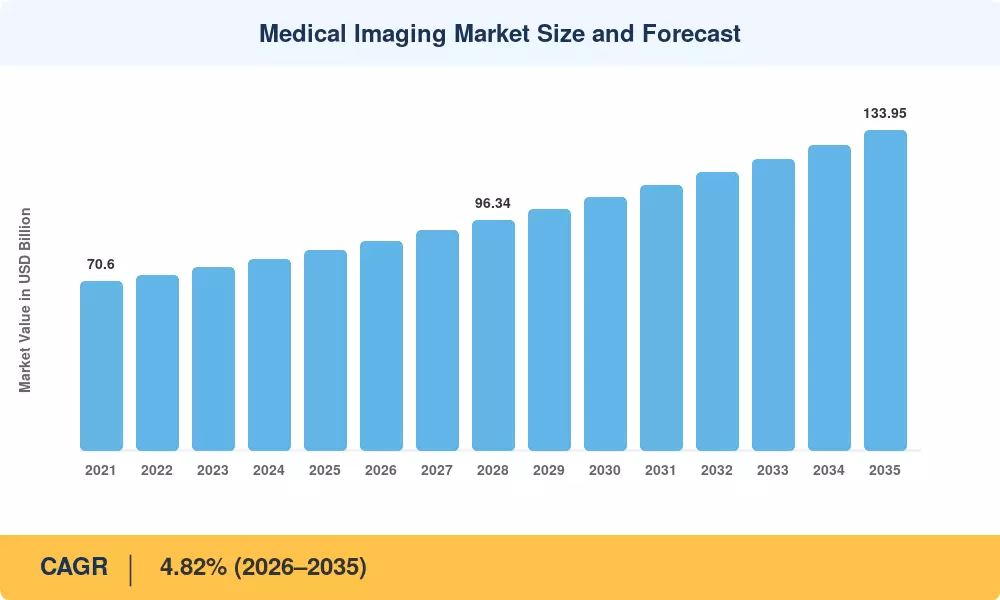
The Global Medical Imaging Market size was valued at USD 40.13 Billion in 2024, and the market is projected to grow from USD 41.99 Billion in 2025 to USD 66.02 Billion by 2035, registering a CAGR of 4.60% during the forecast period 2026–2035. North America led the market in 2024 with over 38.00% share, generating around USD 15.25 Billion in revenue.
 
The Medical Imaging Market is expanding due to rising prevalence of chronic diseases and increasing demand for early and accurate diagnosis. Key trends include advancements in imaging technologies such as MRI, CT, and ultrasound, integration of AI for image analysis, and growing adoption of portable and point-of-care imaging systems globally. The Centers for Disease Control and Prevention highlights that early detection through diagnostic imaging improves treatment outcomes and reduces healthcare costs, encouraging adoption of advanced imaging technologies worldwide.


According to the World Health Organization, noncommunicable diseases account for approximately 43 million deaths annually, representing nearly 75% of all global deaths, reinforcing the growing need for advanced diagnostic imaging technologies to support timely disease detection and management worldwide.

Key Market Trends & Highlights

The Medical Imaging Market is poised for substantial growth driven by technological advancements and increasing healthcare demands.

  • Hospitals represented nearly 62% of market demand in 2024 due to extensive diagnostic infrastructure investments.
  • Equipment generated approximately 71% of product segment revenue in 2024, reflecting high-value imaging system deployments.
  • North America dominated the market in 2024, contributing over 40.12% of total global revenue.
  • Europe generated approximately USD 12.04 billion in 2024, maintaining its position as the second-largest regional market.

Market Size & Forecast

2024 Market Size 40.13 (USD Billion)
2035 Market Size 66.02 (USD Billion)
CAGR (2025 - 2035) 4.63%

Major Players

Companies such as Siemens Healthineers (DE), GE Healthcare (US), Philips Healthcare (NL), Canon Medical Systems (JP), Fujifilm Holdings Corporation (JP), Hitachi Medical Corporation (JP), Hologic, Inc. (US), Agfa-Gevaert Group (BE), Mindray Medical International Limited (CN) are some of the major participants in the global market.

Our Impact
Enabled $4.3B Revenue Impact for Fortune 500 and Leading Multinationals
Partnering with 2000+ Global Organizations Each Year
30K+ Citations by Top-Tier Firms in the Industry

Medical Imaging Market Trends

The Medical Imaging Market is currently experiencing a transformative phase, driven by advancements in technology and increasing demand for accurate diagnostic tools. Innovations such as artificial intelligence and machine learning are enhancing imaging techniques, leading to improved patient outcomes and more efficient workflows in healthcare settings.

Furthermore, the integration of telemedicine is reshaping how imaging services are delivered, allowing for remote consultations and interpretations. This shift not only broadens access to medical imaging but also optimizes resource allocation within healthcare systems. In addition to technological advancements, the market is influenced by a growing emphasis on preventive healthcare.

As awareness of early disease detection rises, healthcare providers are increasingly adopting imaging modalities that facilitate timely diagnosis. This trend is further supported by government initiatives aimed at promoting health screenings and preventive measures. Overall, the market appears poised for continued growth, with innovations and changing healthcare paradigms driving its evolution.

Technological Advancements

The market is witnessing rapid technological progress, particularly in the realms of artificial intelligence and machine learning. These innovations are enhancing image quality and diagnostic accuracy, thereby improving patient care and operational efficiency. Research from the Institute for Health Metrics and Evaluation shows that early and accurate diagnosis plays a key role in reducing the burden of major diseases, supporting the adoption of AI-enhanced imaging solutions.

  • Siemens Healthineers continues accelerating innovation through AI-powered imaging platforms and advanced diagnostic software designed to improve workflow efficiency and image precision. Strategic collaborations with healthcare institutions and research organizations further strengthen technology adoption. The company's expanding portfolio of intelligent imaging solutions supports faster diagnosis, enhanced clinical decision-making, and improved patient outcomes, reflecting the industry's shift toward digitally enabled radiology ecosystems.

Telemedicine Integration

The integration of telemedicine into the global market is reshaping service delivery. Remote consultations and interpretations are becoming more prevalent, allowing healthcare providers to extend their reach and optimize resource utilization. The European Centre for Disease Prevention and Control highlights the growing use of digital health platforms and remote healthcare technologies to strengthen healthcare delivery and cross-border medical collaboration.

  • GE Healthcare is expanding its digital imaging ecosystem through portfolio enhancements and clinical imaging solutions that support remote diagnostics and telehealth-enabled workflows. Regulatory clearances for advanced imaging technologies and continued investments in healthcare digitalization are improving accessibility to diagnostic services. These developments enable healthcare providers to deliver imaging consultations remotely while supporting greater operational efficiency and broader patient reach.

Focus on Preventive Healthcare

There is a notable shift towards preventive healthcare within the global industry. Increased awareness of early disease detection is driving the adoption of imaging modalities that support timely diagnosis, supported by government initiatives. According to the Centers for Disease Control and Prevention, chronic diseases account for nearly 90% of healthcare spending in the U.S., emphasizing the importance of early detection and preventive care strategies.

  • Philips Healthcare continues advancing preventive healthcare through innovative diagnostic imaging solutions designed to support early disease detection and population health management. Regulatory approvals for advanced imaging systems and AI-assisted diagnostic tools strengthen clinical confidence and adoption. Growing emphasis on preventive screening programs is increasing demand for imaging technologies that facilitate timely diagnosis, risk assessment, and improved long-term healthcare outcomes.

Medical Imaging Market Drivers

Aging Population

The demographic shift towards an aging population is significantly influencing the Medical Imaging Industry. As individuals age, they typically experience a higher incidence of health complications that require diagnostic imaging. The World Health Organization has reported that the proportion of the population aged 60 years and older is expected to double by 2050, which will likely increase the demand for imaging services.
 
This demographic trend suggests that healthcare systems will need to invest in advanced imaging technologies to cater to the needs of older patients. Consequently, the global market may see substantial growth as healthcare providers seek to enhance their diagnostic capabilities to address age-related health challenges.
 

  • According to World Bank demographic data, the global population aged 65 years and older exceeded 800 million people, with the proportion continuing to rise across major healthcare markets. This expanding elderly population is increasing demand for diagnostic imaging procedures associated with age-related conditions, supporting long-term growth opportunities for advanced medical imaging technologies.

Increased Healthcare Expenditure

Rising healthcare expenditure across various regions is a crucial driver for the Medical Imaging Industry. Governments and private sectors are investing more in healthcare infrastructure, which includes the acquisition of advanced imaging equipment. Data indicates that healthcare spending is expected to rise, with many countries allocating a larger portion of their budgets to medical technologies.
 
This trend is likely to facilitate the adoption of state-of-the-art imaging systems, thereby enhancing diagnostic capabilities. As healthcare providers strive to improve patient care, the global market stands to gain from increased investments in imaging technologies.
 

  • Global healthcare spending continues to rise across developed and emerging economies. World Bank data indicates healthcare expenditure accounts for more than 10% of global GDP in many advanced healthcare markets, creating favorable conditions for investments in modern imaging infrastructure, advanced diagnostic equipment, and next-generation radiology technologies.

Growing Awareness of Early Diagnosis

There is a growing awareness of the importance of early diagnosis in disease management, which is positively impacting the Medical Imaging Industry. Patients and healthcare providers alike recognize that early detection can lead to better treatment outcomes and lower healthcare costs. This awareness is driving demand for imaging services, as more individuals seek preventive screenings and diagnostic tests.
 
Market data suggests that the demand for imaging services is expected to rise, particularly in areas such as oncology and cardiology. As healthcare systems adapt to this shift in patient expectations, the market is likely to experience robust growth.
 

  • PubMed-published clinical studies consistently demonstrate that early disease detection significantly improves treatment outcomes and survival rates across oncology, cardiovascular, and neurological conditions. Increasing adoption of preventive screening programs and diagnostic imaging protocols is driving utilization of advanced imaging technologies for earlier intervention and improved patient management.

Rising Incidence of Chronic Diseases

The increasing prevalence of chronic diseases such as cancer, cardiovascular disorders, and diabetes is a primary driver of the Medical Imaging Industry. As these conditions require regular monitoring and advanced diagnostic techniques, the demand for imaging modalities like MRI, CT scans, and ultrasound is expected to rise.
 
According to recent data, the incidence of cancer alone is projected to increase, necessitating enhanced imaging capabilities for early detection and treatment planning. This trend indicates a growing need for sophisticated imaging technologies, which could potentially lead to a market expansion valued at several billion dollars over the next few years. The market is thus poised to benefit from the urgent need for effective diagnostic tools to manage chronic health issues.

Technological Innovations in Imaging Techniques

Technological advancements in imaging modalities are transforming the Medical Imaging Industry. Innovations such as 3D imaging, artificial intelligence integration, and improved imaging software are enhancing diagnostic accuracy and efficiency. For instance, AI algorithms are being developed to assist radiologists in interpreting images more effectively, potentially reducing diagnostic errors.
 
The global market for advanced imaging technologies is projected to grow significantly, with estimates suggesting a compound annual growth rate of over 5% in the coming years. These innovations not only improve patient outcomes but also streamline workflows in healthcare facilities, thereby driving the market forward.

Market Segment Insights

By Imaging Technique: Magnetic Resonance Imaging (MRI) (Largest) vs. Computed Tomography (CT) (Fastest-Growing)

The Medical Imaging Market is significantly characterized by the distribution of a 31% market share across various imaging techniques. Magnetic Resonance Imaging (MRI) commands the largest share due to its extensive use in neurological and musculoskeletal imaging. Computed Tomography (CT), while currently smaller in market share, is rapidly gaining traction due to advancements in imaging technology and increasing patient demand for faster diagnosis. Other segments like Ultrasound, X-Ray, and Nuclear Imaging also contribute to the market but to a lesser extent, showing varied applications in clinical practices.

Canon Medical Systems continues expanding its MRI portfolio with advanced imaging platforms designed to improve diagnostic precision and workflow efficiency. MRI remains one of the most utilized modalities for neurological and musculoskeletal assessments, supporting its estimated 31% share within the imaging technique segment through increasing adoption in specialized diagnostic applications.

By End Use: Hospitals (Largest) vs. Diagnostic Imaging Centers (Fastest-Growing)

Hospitals represent the largest end-use segment, accounting for a significant 62% share of overall Medical Imaging Market demand due to their extensive resources and the breadth of imaging services they provide. This segment is characterized by a high reliance on advanced imaging technologies to support various medical specialties including surgery, oncology, and emergency care, contributing greatly to its dominance in the market. Conversely, diagnostic imaging centers are emerging as the fastest-growing segment, driven by the increasing demand for outpatient imaging services and advancements in imaging technology. These centers offer specialized imaging services with improved accessibility for patients, and their growth is further propelled by rising awareness of preventative healthcare measures, leading to increased imaging procedures.

Fujifilm Holdings Corporation continues strengthening hospital-based imaging solutions through integrated diagnostic systems and digital radiology technologies. Hospitals remain the primary setting for advanced imaging procedures due to their comprehensive clinical infrastructure, supporting an estimated 62% market share within the end-use segment.

By Modality: Radiography (Largest) vs. Magnetic Resonance Imaging (Fastest-Growing)

Radiography holds the largest share of the Medical Imaging Market, accounting for 39%, due to its widespread application in clinical settings for diagnosing various conditions. It remains a fundamental imaging technique owing to its efficiency and cost-effectiveness. Conversely, Magnetic Resonance Imaging (MRI) is rapidly gaining traction, appealing to healthcare professionals for its non-invasive nature and detailed imaging capabilities. It has seen significant adoption in specialized medical fields, leading to an expanding share in the market.

Hitachi Medical Corporation continues supporting radiography adoption through advanced digital imaging systems designed for high-volume clinical environments. Radiography remains among the most frequently performed diagnostic imaging procedures globally, contributing to its estimated 39% share due to affordability, accessibility, and broad clinical applications.

By Product Type: Equipment (Largest) vs. Consumables (Fastest-Growing)

In the Medical Imaging Market, the segment distribution showcases Equipment as the largest contributor, accounting for 71% of the overall market. This segment's dominance is attributed to the high demand for advanced imaging technologies and their integration into healthcare facilities. Consumables, while smaller in market share, are emerging rapidly, driven by their essential role in facilitating imaging procedures and, consequently, their increasing usage in clinical settings.

Agfa-Gevaert Group continues investing in diagnostic imaging equipment and enterprise imaging solutions that enhance healthcare workflow efficiency. The high capital value of imaging systems including MRI, CT, ultrasound, and X-ray platforms supports Equipment's dominant estimated 71% share within the product type segment.

Get more detailed insights about Medical Imaging Market

Regional Insights

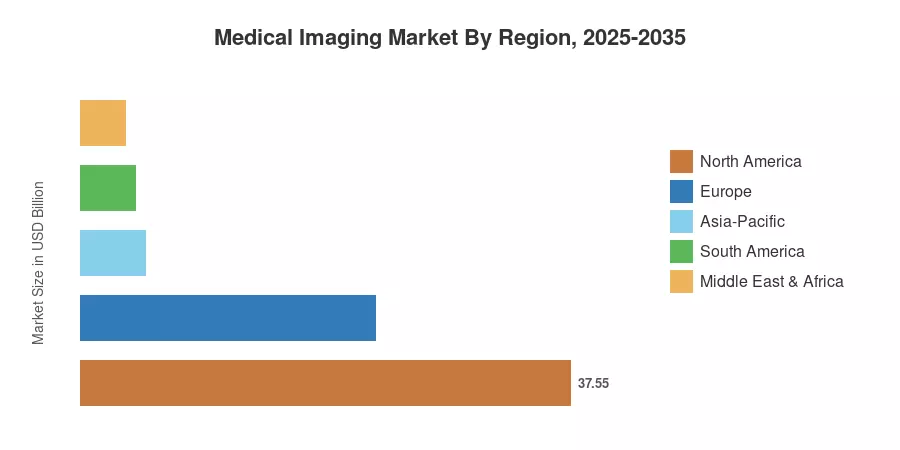
The Regional segmentation of the Global Medical Imaging Market reveals significant insights with North America leading the way, valued at 15.25 USD Billion in 2024, and expected to grow to 25.0 USD Billion by 2035. Europe follows closely with a valuation of 12.9 USD Billion in 2024 and projected growth to 20.0 USD Billion in 2035, indicating strong demand for advanced imaging technologies. 

The Asia-Pacific (APAC) region, with a valuation of 8.3 USD Billion in 2024 and rising to 12.5 USD Billion by 2035, is experiencing rapid expansion due to improving healthcare infrastructure and increased investments in medical technologies.South America and the Middle East and Africa (MEA) contribute smaller shares with values of 2.4 USD Billion and 1.28 USD Billion, respectively, in 2024, growing to 4.0 USD Billion and 4.5 USD Billion by 2035.

The significant growth in North America and Europe reflects their advanced healthcare systems and the high adoption rate of cutting-edge medical imaging equipment, while the APAC’s growth indicates a shift towards modernization in healthcare practices. These regional dynamics highlight the diverse opportunities and challenges within the Global Medical Imaging Market, driving innovation and technological advancements across segments.

Medical Imaging Market Regional Image

Key Players and Competitive Insights

The Global Medical Imaging Market is a dynamic and rapidly evolving sector that boasts a significant presence due to the increasing demand for advanced healthcare solutions and diagnostic capabilities. As healthcare systems worldwide strive to enhance patient outcomes and deliver precise diagnostics, numerous players have emerged, each vying to capture a share of this lucrative market.  The competitive landscape is characterized by continuous innovation, strategic collaborations, technological advancements, and a growing focus on personalized medicine.
 
The market is influenced by various factors, including rising incidence of chronic diseases, advancements in imaging technologies, increasing investments in healthcare infrastructure, and changing regulatory frameworks. Companies in this space are focusing on developing cutting-edge imaging solutions to cater to the diverse needs of healthcare providers and patients. These dynamics present a rich field for competitive insights as firms seek to establish their foothold in both established and emerging markets.AgfaGevaert is a prominent player in the Global Medical Imaging Market known for its comprehensive portfolio of imaging solutions.
 
The company specializes in providing innovative imaging systems that meet the needs of healthcare providers, with a strong emphasis on quality and efficiency. AgfaGevaert's strengths lie in its advanced digital radiography and its ability to integrate imaging solutions across various healthcare settings, enhancing workflow and patient care. The company has carved out a significant market presence due to its commitment to research and development, which enables it to stay at the forefront of technological advancements in medical imaging.
 
By focusing on automation and patient engagement, AgfaGevaert continues to strengthen its competitive position, providing valuable solutions that help healthcare practitioners deliver superior diagnostics. Esaote is another key player in the Global Medical Imaging Market, specializing in ultrasound and MRI systems.  The company distinguishes itself through its commitment to innovation and the development of solutions that cater to both clinical and research needs. Key products offered by Esaote include compact MRI systems and advanced ultrasound technologies, which are widely adopted in hospitals and imaging centers across the globe.
 
Esaote's market presence is bolstered by its dedication to partnerships and collaborations, enabling the company to expand its product offerings and enhance its technological capabilities. Additionally, Esaote actively pursues mergers and acquisitions to strengthen its portfolio and increase market share. The company's strengths lie in its ability to deliver targeted solutions that empower healthcare professionals to make informed decisions, ultimately improving patient care and outcomes in the global medical imaging landscape.

Key Companies in the Medical Imaging Market include

Industry Developments

AI-integrated MRI and CT platforms gained rapid adoption in 2025, with manufacturers launching real-time image reconstruction systems that reduce scan time and enhance clarity, transforming hospital workflow efficiency.

The Global Medical Imaging Market has recently seen notable developments, with significant advancements in technology and strategic collaborations. Companies such as Philips Healthcare and Siemens Healthineers have been enhancing their imaging solutions, particularly in areas like artificial intelligence and cloud-based analytics. In terms of mergers and acquisitions, AgfaGevaert announced its acquisition of a key imaging technology firm in March 2023, aiming to strengthen its portfolio in radiology. Additionally, Fujifilm Holdings acquired a smaller imaging company in January 2023 to accelerate innovation in digital imaging solutions.

The market is projected to grow, driven by the increasing demand for diagnostic imaging and enhancements in healthcare infrastructure globally. 

A notable trend has been the integration of automation and AI in imaging devices, leading to improved accuracy and efficiency in diagnostics. The emergence of new imaging modalities, particularly owing to advancements in ultrasound and MRI, is further reshaping the landscape. From 2021 to 2023, the market has expanded significantly, attributed to rising healthcare expenditure and technological evolution. Companies like GE Healthcare and Canon Medical Systems continue to innovate, contributing to the overall growth and competitiveness of the global market.

Future Outlook

Medical Imaging Market Future Outlook

The Medical Imaging Market size is projected to reach USD 66.02 billion by 2035, growing at a CAGR of 4.6%, driven by technological advancements, increasing healthcare demands, and rising chronic diseases.

New opportunities lie in:

  • Integration of AI-driven diagnostic tools in imaging systems. Expansion of telemedicine services for remote imaging consultations. Development of portable imaging devices for point-of-care diagnostics.

By 2035, the Medical Imaging Market is expected to be robust, reflecting substantial growth and innovation.

Market Segmentation

Medical Imaging Market End Use Outlook

  • Hospitals
  • Diagnostic Imaging Centers
  • Research Institutes
  • Outpatient Facilities

Medical Imaging Market Modality Outlook

  • Radiography
  • Tomography
  • Magnetic Resonance Imaging
  • Ultrasonography

Medical Imaging Market Product Type Outlook

  • Consumables
  • Equipment
  • Software

Medical Imaging Market Imaging Technique Outlook

  • Magnetic Resonance Imaging (MRI)
  • Computed Tomography (CT)
  • Ultrasound
  • X-Ray
  • Nuclear Imaging

Report Scope

MARKET SIZE 2024 40.13(USD Billion)
MARKET SIZE 2025 41.99(USD Billion)
MARKET SIZE 2035 66.02(USD Billion)
COMPOUND ANNUAL GROWTH RATE (CAGR) 4.63% (2025 - 2035)
REPORT COVERAGE Revenue Forecast, Competitive Landscape, Growth Factors, and Trends
BASE YEAR 2024
Market Forecast Period 2026 - 2035
Historical Data 2019 - 2024
Market Forecast Units USD Billion
Key Companies Profiled Siemens Healthineers (DE), GE Healthcare (US), Philips Healthcare (NL), Canon Medical Systems (JP), Fujifilm Holdings Corporation (JP), Hitachi Medical Corporation (JP), Hologic, Inc. (US), Agfa-Gevaert Group (BE), Mindray Medical International Limited (CN)
Segments Covered Imaging Technique, End Use, Modality, Product Type, Regional
Key Market Opportunities Integration of artificial intelligence in diagnostic imaging enhances accuracy and efficiency in the Medical Imaging Market.
Key Market Dynamics Technological advancements drive innovation in medical imaging, enhancing diagnostic accuracy and patient outcomes.
Countries Covered North America, Europe, APAC, South America, MEA

FAQs

What is the current valuation of the Medical Imaging Market as of 2024?

The Medical Imaging Market was valued at 40.13 USD Billion in 2024.

What is the projected market size for the Medical Imaging Market in 2035?

The market is projected to reach 66.02 USD Billion by 2035.

What is the expected CAGR for the Medical Imaging Market during the forecast period 2025 - 2035?

The expected CAGR for the Medical Imaging Market during 2025 - 2035 is 4.63%.

Which imaging technique segment is expected to show the highest growth?

The Magnetic Resonance Imaging (MRI) segment is projected to grow from 12.0 to 20.0 USD Billion.

How does the market size for hospitals compare to diagnostic imaging centers?

In 2024, hospitals accounted for 15.0 to 25.0 USD Billion, while diagnostic imaging centers ranged from 10.0 to 15.0 USD Billion.

What are the key product types in the Medical Imaging Market?

Key product types include equipment, consumables, and software, with equipment projected to grow from 25.0 to 40.0 USD Billion.

Which companies are leading the Medical Imaging Market?

Key players include Siemens Healthineers, GE Healthcare, Philips Healthcare, and Canon Medical Systems.

What is the expected growth for the ultrasound segment in the coming years?

The ultrasound segment is anticipated to grow from 8.0 to 12.0 USD Billion by 2035.

How does the modality segment of radiography perform in the market?

Radiography is expected to grow from 10.0 to 16.0 USD Billion during the forecast period.

What is the significance of research institutes in the Medical Imaging Market?

Research institutes are projected to contribute between 5.0 to 10.0 USD Billion in the Medical Imaging Market.

Author
Author
Author Profile
Satyendra Maurya LinkedIn
Research Analyst
An accomplished research analyst with high proficiency in market forecasting, data visualization, competitive benchmarking, and others. He holds a pronounced track record in research and consulting projects for sectors such as life sciences, medical devices, and healthcare IT. His capabilities in qualitative and quantitative analysis have resulted in positive client outcomes. Working on niche market trends, opportunities, sales, and forecasted value is part of his skill set.
Co-Author
Co-Author Profile
Rahul Gotadki LinkedIn
Research Manager
He holds an experience of about 9+ years in Market Research and Business Consulting, working under the spectrum of Life Sciences and Healthcare domains. Rahul conceptualizes and implements a scalable business strategy and provides strategic leadership to the clients. His expertise lies in market estimation, competitive intelligence, pipeline analysis, customer assessment, etc.
Leave a Comment

Research Approach


Secondary Research

The secondary research process involved comprehensive analysis of regulatory databases, peer-reviewed radiology journals, clinical imaging publications, and authoritative healthcare organizations. Key sources included the US Food & Drug Administration (FDA) 510(k) Premarket Notification Database and Center for Devices and Radiological Health (CDRH), European Medicines Agency (EMA) Medical Device Regulations, NHS England Diagnostic Imaging Dataset, Centers for Medicare & Medicaid Services (CMS) Physician Fee Schedule, Centers for Disease Control and Prevention (CDC) National Health Statistics Reports, National Institutes of Health (NIH) National Library of Medicine (PubMed/MEDLINE), World Health Organization (WHO) Global Health Observatory, OECD Health Statistics, Eurostat Healthcare Database, Radiological Society of North America (RSNA) Journals, European Society of Radiology (ESR) White Papers, American College of Radiology (ACR) Appropriateness Criteria, American Institute of Ultrasound in Medicine (AIUM) Practice Guidelines, Society of Nuclear Medicine and Molecular Imaging (SNMMI) Procedure Volumes, Health Canada Medical Devices Active Licenses Listing, Pharmaceuticals and Medical Devices Agency (PMDA) Japan, National Medical Products Administration (NMPA) China, and national health ministry statistics from key markets. These sources were used to collect imaging procedure volumes, regulatory approval data, installed base statistics, reimbursement codes, radiation safety studies, demographic trends, and market landscape analysis for magnetic resonance imaging (MRI), computed tomography (CT), X-ray systems, ultrasound devices, nuclear medicine systems (SPECT/PET), and mammography platforms.


Primary Research

Qualitative and quantitative insights were obtained by interviewing supply-side and demand-side stakeholders during the primary research process. CEOs, Heads of Marine Solutions, project directors from shipyards and EPC contractors, regulatory compliance officers, and commercial directors from floating power vessel operators and LNG infrastructure providers comprised the supply-side sources. The demand-side sources included chief technology officers of independent power producers (IPPs), energy ministry officials from island nations, procurement leaders from utility companies, and port authority directors. The primary research validated market segmentation between power barges and power ships, confirmed vessel delivery timelines, and gathered insights on LNG offtake agreements, charter rates, and regulatory approval pathways for floating storage regasification units (FSRUs) integrated with power generation.

Primary Respondent Breakdown:

By Designation: C-level Primaries (40%), Director Level (30%), Others (30%)

By Region: North America (32%), Europe (30%), Asia-Pacific (28%), Rest of World (10%)


Market Size Estimation

Global market valuation was derived through revenue mapping, installed base analysis, and procedure volume estimation. The methodology included:

Identification of 35+ key manufacturers across North America, Europe, Asia-Pacific, and Latin America specializing in MRI, CT scanners, X-ray systems, ultrasound equipment, nuclear imaging systems, and mammography devices

Product mapping across high-field MRI (3T+), mid-slice CT, portable X-ray, 3D/4D ultrasound, PET/CT hybrid systems, and digital mammography categories

Analysis of reported and modeled annual revenues, unit shipments, and service contract values specific to diagnostic imaging portfolios

Coverage of manufacturers representing 75-80% of global market share in 2024

Extrapolation using bottom-up (installed base × service/maintenance revenue + new unit sales by country) and top-down (manufacturer revenue validation and imaging procedure volume × reimbursement rates) approaches to derive segment-specific valuations and regional market sizing

This methodology maintains the same rigorous structure while adapting the sources and metrics specifically for capital medical equipment and diagnostic imaging modalities.

Download Free Sample

Kindly complete the form below to receive a free sample of this Report

Download PDF ×

We do not share your information with anyone. However, we may send you emails based on your report interest from time to time. You may contact us at any time to opt-out.