Medical Marijuana Market

Key Players: Canopy Growth Corporation, Tilray Brands Inc., Jazz Pharmaceuticals plc, Aurora Cannabis Inc., Curaleaf Holdings Inc., Trulieve Cannabis Corp., Green Thumb Industries Inc., Cronos Group Inc.

Medical Marijuana Market

Medical Marijuana Market Research Report: Size, Share, Trend Analysis By Applications (Chronic Pain, Neurological Disorders, Cancer, Mental Health Disorders, Appetite Loss), By Formulation (Cannabinoid Oils, Dried Flowers, Edibles, Tinctures, Topicals), By Distribution Channel (Pharmacies, Online Stores, Dispensaries, Hospitals), By End Use (Medical Institutions, Homecare Settings, Research Institutions) and By Regional (North America, Europe, South America, Asia Pacific, Middle East and Africa)- Industry Forecast to 2035
ID: MRFR/MED/5008-CR
200 Pages
Rahul Gotadki, Kinjoll Dey
Last Updated: June 18, 2026

Medical Marijuana Market Summary

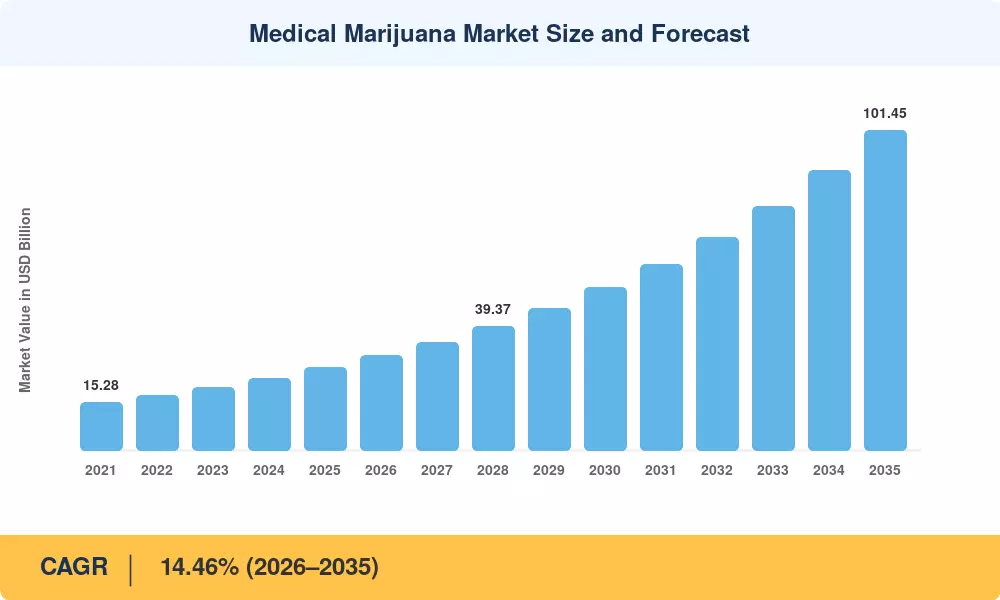
The Global Medical Marijuana Market size was valued at USD 26.24 Billion in 2025, and the market is projected to grow from USD 30.08 Billion in 2026 to USD 101.45 Billion by 2035, registering a CAGR of 14.46% during the forecast period 2026–2035. Two catalysts are accelerating this trajectory: the wave of evidence-based legislative reforms sweeping OECD nations, and the integration of cannabis-derived molecules into Phase 3 clinical pipelines targeting chronic pain and oncology indications. Institutional investor allocations to the sector exceeded USD 4.8 Billion globally in 2024, signaling a decisive shift from speculative venture bets to pharmaceutical-grade capital deployment.

A transformation is underway in how cannabis medicines move from cultivation to the patient. Legacy cottage-style grow operations are being replaced by controlled-environment vertical farms equipped with AI-driven phenotyping, automated nutrient dosing, and EU-GMP-certified extraction lines [3]. The U.S. Drug Enforcement Administration's rescheduling review, combined with Health Canada's expanded research-license framework and Germany's 2024 partial-legalization act, has opened cross-border clinical validation pathways that were unthinkable five years ago [4]. Pharmaceutical firms are now securing FDA orphan-drug designations for cannabinoid formulations, pulling the Medical Marijuana Market firmly into mainstream healthcare.

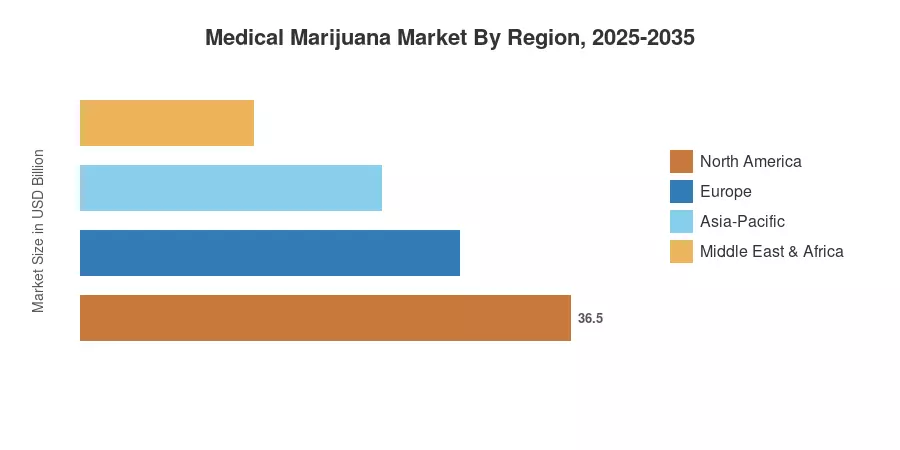
North America commands roughly 45.3% of the global Medical Marijuana Market revenue, anchored by mature dispensary networks across 40 U.S. states and Canada's federal licensing system. Asia-Pacific represents the fastest-growing region at a 17.5% CAGR through 2035, driven by regulatory pilots in Australia, Thailand, and South Korea [5]. Europe holds the second-largest share at approximately 24.8%, with Germany, Italy, and the United Kingdom leading prescriber adoption. As insurance reimbursement expands and batch-to-batch variability declines, the Medical Marijuana Market is poised for sustained double-digit growth well into the next decade.


Key Report Takeaways

• By Formulation Type

  • Oil-based formulations held 45.2% of Medical Marijuana Market revenue in 2025, reflecting strong patient preference for precise dosing and sublingual delivery.
  • Topical and transdermal gel formats are expanding at an 18.25% CAGR through 2035, supported by dermatology and localized pain applications.

• By Cannabinoid Composition & Route of Administration

  • CBD-dominant products represented 46.1% of the Medical Marijuana Market in 2025, benefiting from broader regulatory acceptance and lower scheduling hurdles.
  • Oral delivery captured 47.8% of revenue in 2025, while sublingual formats recorded a 17.4% CAGR through 2035.

• By Application & Distribution Channel

  • Chronic pain accounted for 35.7% of the Medical Marijuana Market in 2025.
  • Online distribution platforms exhibit an 18.8% CAGR to 2035, reflecting telehealth integration and direct-to-patient fulfillment models.

• By Region

  • North America contributed 45.3% of the global Medical Marijuana Market revenue in 2025.
  • Asia-Pacific is projected to grow at a 17.5% CAGR, making it the fastest-expanding regional market through 2035.


Medical Marijuana Market Size and Forecast (2021–2035)

Market sizing combines bottom-up revenue modeling from licensed cultivators, pharmaceutical distributors, and dispensary point-of-sale data with top-down cross-referencing against national health-authority prescription registries and trade databases. Historical figures (2021–2024) reflect audited company filings and government import-export records; the 2025 base year incorporates preliminary Q3 2025 data. Forecast projections apply a calibrated CAGR of 14.46% across 2026–2035, adjusted for anticipated regulatory inflection points and capacity additions.
Medical Marijuana Market Size and Forecast
Our Impact
Enabled $4.3B Revenue Impact for Fortune 500 and Leading Multinationals
Partnering with 2000+ Global Organizations Each Year
30K+ Citations by Top-Tier Firms in the Industry

Driver Impact Analysis

Driver ~% Impact on CAGR Geographic Relevance Impact Timeline
Legislative rescheduling and decriminalization 3.5–4.0% North America, Europe Short-term (≤2 yr)
Expanding clinical trial pipelines 2.5–3.0% Global Medium-term (2–4 yr)
Insurance reimbursement inclusion 2.0–2.5% Europe, North America Medium-term (2–4 yr)
Vertical farming and EU-GMP automation 1.5–2.0% Global Long-term (≥4 yr)
Telehealth-enabled prescribing platforms 1.0–1.5% North America, Asia-Pacific Short-term (≤2 yr)
Cross-border cultivation-pharma partnerships 1.5–2.0% Europe, South America Medium-term (2–4 yr)
Aging population and chronic disease prevalence 1.0–1.5% Global Long-term (≥4 yr)


Legislative Rescheduling and Decriminalization

The U.S. DEA's ongoing review under the Controlled Substances Act has already shifted cannabis from Schedule I toward Schedule III consideration, a move that would unlock 280E tax relief for operators and open federally funded clinical research budgets estimated at USD 1.2 Billion annually [3]. Germany's April 2024 Cannabis Act legalized adult personal use while simultaneously creating a dedicated Medical Marijuana Market prescriber pathway backed by statutory health insurance, adding an estimated 250,000 new patients to the system within eighteen months [4]. These legislative shifts directly reduce compliance costs, attract institutional capital, and normalize prescribing behavior among physicians who previously faced career risk.

Expanding Clinical Trial Pipelines

Over 380 cannabinoid-related clinical trials were registered on ClinicalTrials.gov in 2024, a 42% increase from 2022 [7]. Jazz Pharmaceuticals' Epidiolex has already demonstrated that an FDA-approved cannabinoid can generate over USD 900 Million in annual revenue, establishing a commercial proof point that is pulling additional Phase 2 and Phase 3 programs into oncology supportive care, treatment-resistant epilepsy, and PTSD indications. Each successful trial de-risks the broader Medical Marijuana Market by reinforcing evidence-based adoption among payers and prescribers.

Insurance Reimbursement Inclusion

Germany's statutory health insurers reimbursed cannabis prescriptions worth EUR 230 Million in 2024, up from EUR 160 Million in 2022, according to the Federal Institute for Drugs and Medical Devices [8]. Denmark, the Czech Republic, and Israel have followed with national reimbursement pilots. Payer inclusion converts the Medical Marijuana Market from an out-of-pocket consumer segment into a sustained prescription revenue stream, dramatically improving patient retention and lifetime value for licensed producers.

Vertical Farming and EU-GMP Automation

Controlled-environment agriculture facilities equipped with LED spectral tuning and AI-monitored fertigation now achieve cannabinoid yields 30–40% higher per square meter than traditional greenhouse operations, while meeting EU-GMP batch-consistency thresholds that pharmaceutical distributors require [9]. Capital expenditure per licensed facility has fallen roughly 18% since 2022, and at least twelve large-scale indoor farms became operational across Canada and the Netherlands in 2024 alone, expanding pharmaceutical-grade supply that underpins the Medical Marijuana Market.


Restraints Impact Analysis

Restraint ~% Impact on CAGR Geographic Relevance Impact Timeline
Fragmented international scheduling frameworks –1.5 to –2.0% Global Long-term (≥4 yr)
Banking and financial services restrictions –1.0 to –1.5% North America Short-term (≤2 yr)
Stigma-driven prescriber hesitancy –1.0 to –1.5% Asia-Pacific, MEA Medium-term (2–4 yr)
Quality control and product standardization gaps –0.5 to –1.0% Emerging markets Medium-term (2–4 yr)
Illicit market price competition –0.5 to –1.0% North America, South America Short-term (≤2 yr)


Fragmented International Scheduling Frameworks

Despite progress in individual jurisdictions, the United Nations Single Convention on Narcotic Drugs still classifies cannabis under Schedule I/IV internationally, creating friction for cross-border shipments and clinical data recognition [13]. Export licenses can take 6–12 months to process in many EU member states, adding carrying costs and supply unpredictability that hamper the Medical Marijuana Market's ability to achieve true global distribution efficiency.

Banking and Financial Services Restrictions

In the United States, federal prohibition forces many licensed operators to rely on state-chartered banks or cash-intensive operations. The SAFE Banking Act has stalled in Congress multiple times since 2019, leaving operators without access to standard merchant processing, commercial loans, and capital-market instruments that peer pharmaceutical companies take for granted [14]. This capital-access gap inflates the weighted average cost of capital by an estimated 400–600 basis points, constraining reinvestment across the Medical Marijuana Market.

Stigma-Driven Prescriber Hesitancy

Surveys conducted by the International Association for Cannabinoid Medicines indicate that roughly 35% of physicians in OECD countries remain uncomfortable prescribing cannabis-derived medicines, citing insufficient training and reputational concerns [15]. In Asia-Pacific and the Middle East, cultural and legal stigma compounds the problem, slowing the patient funnel despite supportive regulations in select jurisdictions.


Medical Marijuana Market Opportunities

Personalized Cannabinoid Therapeutics

The academic research examining pharmacogenomic testing which maps an individual’s CYP450 enzyme profile to ideal THC-to-CBD ratios is making its way into clinical practice. Companies that embed companion diagnostics into their dispensing workflows stand to differentiate on outcomes, gain premium pricing in the Medical Marijuana Market and lower adverse-event rates that drive prescriber skepticism.


Emerging-Market Regulatory Openings

Thailand’s 2022 decriminalization and pilot medicinal programs in South Korea, Brazil, and Colombia have opened up new target populations of over 500 million people. First-mover producers in these locations that earn Good Agricultural and Collection Practices certificates can develop distribution moats before second-wave entrants.


Digital Health and Telehealth Integration

Virtual physician consults, e-prescribing, and home-delivery logistics add value to platforms, reducing patient acquisition expenses by 25–35% compared to brick-and-mortar dispensary models [10]. The combination of telemedicine with cannabis delivery is especially appealing in rural areas where the density of dispensaries is minimal, opening up the Medical Marijuana Market to underserved people.


Data Monetization Through Real-World Evidence Platforms

Dispensaries and licensed producers sit on massive datasets – patient demographics, dose titration curves, outcome self-reports – that pharmaceutical corporations and payers need for Health Technology Assessment filings. Anonymized real-world evidence platforms can monetise this data and enhance the clinical legitimacy of the Medical Marijuana Market.


Cannabis-Pharmaceutical Co-Development Agreements

Life-science firms increasingly seek co-development partnerships with licensed cultivators to fast-track cannabinoid-based drug candidates through Phase 2/3 trials. These agreements combine the cultivator's botanical supply-chain expertise with the pharmaceutical partner's regulatory and distribution capabilities, accelerating time-to-market and sharing the financial risk inherent in novel therapeutic development.


Medical Marijuana Market Future Outlook

AI-Driven Precision Cultivation and Quality Assurance

Artificial intelligence is set to reshape cultivation economics within the Medical Marijuana Market over the coming decade. Machine-vision systems already detect nutrient deficiencies and pest infestations 48–72 hours earlier than manual inspection, and predictive analytics platforms are optimizing harvest timing to maximize target cannabinoid concentrations [9]. The International Energy Agency estimates that indoor agricultural facilities, including cannabis, could reduce energy consumption per kilogram of output by 25% through AI-managed LED spectral scheduling by 2030.

Platform Economics and Direct-to-Patient Models

The dispensary landscape is consolidating around platform models that integrate prescriber telehealth consultations, electronic health records, inventory management, and last-mile delivery into unified digital ecosystems. Multi-state operators in the United States and pan-European distributors are racing to build these platforms, aiming to capture recurring prescription revenue. By 2030, platform-based dispensaries are expected to account for over 30% of Medical Marijuana Market transactions, up from roughly 12% in 2025 [10].

Regulatory Convergence and International Harmonization

The European Medicines Agency's increasing engagement with cannabis-derived pharmaceutical applications, combined with growing WHO Expert Committee activity on cannabinoid scheduling, points toward greater international regulatory alignment by the early 2030s [13]. Harmonized analytical testing standards, mutual recognition of GMP certificates, and streamlined import-export documentation will reduce compliance costs and enable the Medical Marijuana Market to function more like traditional pharmaceutical supply chains.

ESG, Social Equity, and Sustainability Reporting

Environmental, social, and governance expectations are shaping capital allocation in the Medical Marijuana Market. Indoor cultivation's energy intensity — estimated at 2,000–3,000 kWh per kilogram of dried flower — has drawn scrutiny from institutional investors applying Scope 2 emission screens [20]. Companies investing in renewable-powered facilities, water-recirculation systems, and social-equity licensing programs will enjoy preferential access to green bonds and sustainability-linked credit facilities that lower their long-term cost of capital.


Medical Marijuana Market Segmentation

By Formulation Type

Segment Key Metric Primary Demand Driver
Oils 45.2% share (2025) Precise dosing, sublingual absorption
Capsules USD 4.46 Billion (2025) Pharmaceutical familiarity, discreet consumption
Topicals & Transdermal Gels 18.25% CAGR (2026–2035) Localized pain, dermatology applications
Edibles & Other Formats USD 2.89 Billion (2025) Patient preference, slow-release profiles


Oil-based formulations continue to anchor the Medical Marijuana Market by formulation type, commanding 45.2% of revenue in 2025. Physicians prefer oils for titration precision — patients can adjust doses in 0.1 mL increments, an important clinical advantage for conditions requiring individualized regimens such as epilepsy and chemotherapy-induced nausea. Topical and transdermal formats are the fastest-growing sub-segment, propelled by rheumatology and sports-medicine clinics adopting localized cannabinoid delivery for joint inflammation and muscle recovery without systemic psychoactive effects.

By Cannabinoid Composition

Segment Key Metric Primary Demand Driver
CBD-Dominant 46.1% share (2025) Broad regulatory acceptance, non-psychoactive profile
THC-Dominant 22.6% CAGR (2026–2035) Oncology supportive care, appetite stimulation
Balanced THC:CBD USD 3.94 Billion (2025) Neuropathic pain, entourage-effect research


CBD-dominant products hold the largest share of the Medical Marijuana Market by cannabinoid composition, supported by scheduling advantages in jurisdictions that distinguish CBD from THC. THC-dominant formulations, though smaller in absolute terms, are growing rapidly as oncologists and palliative-care specialists integrate them into supportive-care protocols for chemotherapy-induced nausea, cachexia, and treatment-resistant pain.

By Route of Administration

Segment Key Metric Primary Demand Driver
Oral 47.8% share (2025) Ease of use, extended duration of effect
Inhalation USD 5.12 Billion (2025) Rapid onset, acute symptom relief
Sublingual 17.4% CAGR (2026–2035) Fast absorption without pulmonary risk
Topical & Other USD 2.36 Billion (2025) Localized delivery, dermatological use


Oral administration dominates the Medical Marijuana Market due to patient convenience and extended pharmacokinetic profiles. Sublingual routes are gaining ground as the preferred alternative for patients who need onset times under 15 minutes without the respiratory concerns associated with inhalation, and several EU-registered sublingual sprays have received reimbursement status in Germany and the United Kingdom.

By Application

Segment Key Metric Primary Demand Driver
Chronic Pain 35.7% share (2025) Opioid-alternative prescribing mandates
Neurological Disorders 19.7% CAGR (2026–2035) Epilepsy, multiple sclerosis, Parkinson's
Arthritis USD 3.15 Billion (2025) Aging population, anti-inflammatory evidence
Migraine 14.8% CAGR (2026–2035) Serotonin-receptor interaction research
Oncology & Other USD 3.41 Billion (2025) Palliative care, appetite stimulation


Chronic pain remains the single largest application within the Medical Marijuana Market, accounting for 35.7% of revenue in 2025. Opioid-crisis response legislation in the United States and Canada has explicitly encouraged cannabis-based alternatives, and several state Medicaid programs now require a cannabinoid trial before authorizing long-term opioid prescriptions. Neurological disorders represent the fastest-growing application, with Epidiolex's commercial success in treatment-resistant epilepsy establishing a template for additional cannabinoid neurologic indications.

By Distribution Channel

Segment Key Metric Primary Demand Driver
Retail Dispensaries 52.0% share (2025) In-person consultation, regulatory compliance
Hospital Pharmacies USD 5.38 Billion (2025) Inpatient formulary inclusion
Online Platforms 18.8% CAGR (2026–2035) Telehealth prescribing, home delivery


Retail dispensaries retain the majority of the Medical Marijuana Market distribution revenue, driven by state and provincial regulations that mandate in-person identity verification and counseling for first-time patients. Online platforms, however, are the clear growth story. Telehealth consultations that end with an electronic prescription fulfilled through licensed home-delivery services are reshaping patient access — particularly in rural regions where dispensary proximity remains a barrier.


Regional Market Share Analysis

Region Key Metric Primary Investment Themes
North America 45.3% revenue share (2025) State-level expansion, federal rescheduling, dispensary consolidation
Europe USD 6.51 Billion (2025) Insurance reimbursement, EU-GMP supply build-out
Asia-Pacific 17.5% CAGR (2026–2035) Regulatory pilots, domestic cultivation licensing
South America USD 1.57 Billion (2025) Export-oriented cultivation, treaty-based access
Middle East & Africa 12.8% CAGR (2026–2035) Selective medical licensing, South African cultivation
Total USD 26.24 Billion (2025)


North America

Country Key Metric Key Driver
United States 78.4% of regional share State-by-state legalization, rescheduling review
Canada 17.2% of regional share Federal licensing maturity, export capacity
Mexico 9.8% CAGR (2026–2035) 2021 Supreme Court ruling, pending regulatory framework


The United States remains the gravitational center of the North American Medical Marijuana Market, with over 40 states operating active medical-cannabis programs and combined dispensary counts exceeding 14,000 locations. Canada's mature federal system continues to serve as a global export hub, while Mexico's regulatory framework, still awaiting full secondary legislation after the 2021 Supreme Court ruling, represents latent demand that could add meaningful volume once licensing commences [4].

Europe

Country Key Metric Key Driver
Germany USD 2.18 Billion (2025) Statutory health insurance reimbursement
United Kingdom 16.7% CAGR (2026–2035) Private-clinic prescribing growth
France 11.2% CAGR (2026–2035) National pilot experimentation program
Italy USD 0.62 Billion (2025) Military-supervised cultivation expansion
Spain 10.5% CAGR (2026–2035) Regional cannabis club frameworks
Nordic Countries USD 0.39 Billion (2025) Denmark's pilot export model
Russia 7.1% CAGR (2026–2035) Limited research-only access
Rest of Europe USD 0.88 Billion (2025) Czech Republic, Poland emerging prescriber networks


Germany's Cannabis Act has catalyzed the entire European Medical Marijuana Market, and its statutory health insurance channel reimbursed over 370,000 prescriptions in 2024 [8]. The United Kingdom's private-clinic model, while operating outside the National Health Service, has grown patient registrations by over 60% year-over-year, demonstrating that even restrictive regulatory environments cannot fully suppress demand when clinical evidence supports prescribing.

Asia-Pacific

Country Key Metric Key Driver
China USD 0.48 Billion (2025) Industrial hemp extraction licensing
India 13.4% CAGR (2026–2035) Ayurvedic integration, state-level pilot programs
Japan USD 0.41 Billion (2025) 2023 Cannabis Control Act amendment
South Korea 15.8% CAGR (2026–2035) Orphan-drug import pathway
ASEAN 18.1% CAGR (2026–2035) Thailand decriminalization precedent
Rest of Asia-Pacific USD 0.52 Billion (2025) Australia TGA approval pathway


Asia-Pacific's emergence as the fastest-growing region in the Medical Marijuana Market reflects a patchwork of cautious but accelerating regulatory reform. Thailand's 2022 decriminalization opened the door for domestic cultivation, and Japan's 2023 amendment to the Cannabis Control Act now permits cannabinoid-based pharmaceuticals while maintaining strict controls on recreational use [5]. Australia's Therapeutic Goods Administration has approved over 350,000 Special Access Scheme applications since 2016, creating a high-volume prescriber base.

South America

Country Key Metric Key Driver
Brazil 48.3% of regional share ANVISA Resolution 327, patient import permits
Argentina 14.6% CAGR (2026–2035) 2024 production and commercialization decree
Rest of South America USD 0.38 Billion (2025) Colombia and Uruguay export cultivation


South America positions itself as a cost-competitive cultivation hub for the global Medical Marijuana Market, with Colombia offering outdoor growing costs roughly 75% below Canadian indoor equivalents. Brazil's patient-import framework has created a rapidly growing demand channel, with ANVISA processing over 150,000 import authorizations in 2024 alone [18].

Middle East & Africa

Country Key Metric Key Driver
Saudi Arabia 6.2% CAGR (2026–2035) Research-only institutional licensing
UAE USD 0.08 Billion (2025) Free-zone pharmaceutical R&D
South Africa 15.4% CAGR (2026–2035) 2018 Constitutional Court ruling, export licensing
Egypt 7.8% CAGR (2026–2035) Nascent research authorization
Rest of MEA USD 0.14 Billion (2025) Lesotho and Malawi cultivation licensing


The Middle East & Africa region remains the smallest contributor to the Medical Marijuana Market in absolute terms, yet pockets of activity are emerging. South Africa's 2018 Constitutional Court ruling decriminalized personal use and spurred a commercial licensing framework now attracting foreign cultivators, while Lesotho became one of the first African nations to issue cultivation licenses for export to European GMP buyers [19].


Medical Marijuana Market By Region, 2025-2035

Competitive Benchmarking

The Medical Marijuana Market exhibits medium concentration, with an estimated Herfindahl-Hirschman Index below 1,200 and the top five companies collectively holding approximately 22–30% of global revenue. The sector remains partially fragmented because state and national licensing regimes limit cross-border consolidation, though M&A activity has intensified since 2023 as operators pursue scale economies and vertically integrated supply chains.

Company Est. Revenue Share Range Key Offerings Strategic Positioning
Canopy Growth Corporation ~5–8% Oils, capsules, vaporizer devices Vertically integrated Canadian LP with global distribution
Tilray Brands Inc. ~5–7% Dried flower, extracts, edibles Pan-European GMP exporter, U.S. craft-beer diversification
Jazz Pharmaceuticals plc ~4–7% Epidiolex (CBD oral solution) FDA-approved cannabinoid pharmaceutical, neurology focus
Aurora Cannabis Inc. ~3–6% Medical oils, softgels, EU-GMP flower EU medical export leader, cost restructuring underway
Curaleaf Holdings Inc. ~4–6% Dispensary retail, branded flower, vapes Largest U.S. multi-state operator by dispensary count
Trulieve Cannabis Corp. ~3–5% Flower, concentrates, topicals Southeast U.S. dominance, vertical integration
Green Thumb Industries Inc. ~3–5% Branded consumer products, retail Premium brand portfolio across 15 U.S. states
Cronos Group Inc. ~2–4% Extracts, dermatological formulations Altria strategic investment, R&D-centric model
Charlotte's Web Holdings ~2–4% Hemp-derived CBD wellness, capsules U.S. retail distribution, brand recognition
Organigram Holdings Inc. ~2–3% Dried flower, edibles, hash Atlantic Canada cultivation hub, innovation pipeline


Recent News & Developments

  • Jazz Pharmaceuticals (April 20, 2021 ): Received European Commission marketing authorization for Epidiolex in tuberous sclerosis complex, expanding addressable indications across 27 EU member states [7].


  • U.S. DEA (May 2024 ): Published a Notice of Proposed Rulemaking to reschedule cannabis from Schedule I to Schedule III, triggering a public-comment period that attracted over 40,000 submissions [3].


Medical Marijuana Market Report Scope

Parameter Detail
Market Scope Global Medical Marijuana Market covering cultivation, extraction, formulation, distribution, and retail
Study Period 2021–2035
CAGR 14.46% (2026–2035)
Base Year Value USD 26.24 Billion (2025)
Forecast Endpoint USD 101.45 Billion (2035)
Fastest Growing Segment THC-dominant formulations (22.6% CAGR); Asia-Pacific by region (17.5% CAGR)
Companies Profiled 10 (Canopy Growth, Tilray, Jazz Pharmaceuticals, Aurora, Curaleaf, Trulieve, GTI, Cronos, Charlotte's Web, Organigram)
Valuation Currency USD Billion


FAQs

How does cannabis rescheduling in the U.S. affect operator profitability?

Schedule III status eliminates Section 280E tax penalties, which currently prevent operators from deducting standard business expenses. This single change could lift net margins by 15–25 percentage points for U.S.-licensed companies [3].

What distinguishes pharmaceutical-grade cannabinoid products from dispensary-grade offerings?

Pharmaceutical-grade products undergo cGMP manufacturing, rigorous batch testing, and regulatory agency approval before reaching patients. Dispensary-grade products follow state-level quality rules that vary widely in stringency [16].

Which Medical Marijuana Market segments are most attractive for new entrants?

Online distribution platforms and sublingual delivery formats present the lowest capital-entry barriers with the highest projected growth rates through 2035. Both segments benefit from telehealth adoption and regulatory tailwinds [10].

How are intellectual-property strategies evolving in the Medical Marijuana Market?

Companies are shifting from plant-variety patents toward formulation and delivery-device patents that are harder to design around. Jazz Pharmaceuticals holds over 50 granted cannabinoid-related patents globally [7].

What role does genetics play in cannabinoid product differentiation within the Medical Marijuana Market?

Proprietary cultivar breeding programs allow producers to target specific cannabinoid and terpene profiles consistently. Genetic intellectual property is becoming a key competitive moat as batch consistency drives prescriber loyalty [9].

How do payer reimbursement models differ across major Medical Marijuana Market regions?

Germany reimburses through statutory health insurance, the U.K. relies on private-clinic self-pay, and Australia uses a government Special Access Scheme. Each model shapes patient volume and pricing dynamics differently [8].

What sustainability metrics are investors tracking in the Medical Marijuana Market?

Kilowatt-hours per gram of dried flower, water-use efficiency ratios, and Scope 2 carbon emissions are the three primary ESG metrics. Facilities powered by renewable energy command valuation premiums of 10–15% [20].


FAQs

What is the current valuation of the Medical Marijuana Market?

The Medical Marijuana Market was valued at 18.34 USD Billion in 2024.

What is the projected market size for the Medical Marijuana Market by 2035?

The market is projected to reach 44.99 USD Billion by 2035.

What is the expected CAGR for the Medical Marijuana Market during the forecast period?

The expected CAGR for the Medical Marijuana Market from 2025 to 2035 is 8.5%.

Which companies are considered key players in the Medical Marijuana Market?

Key players include Curaleaf, Trulieve, Green Thumb Industries, Cresco Labs, Aphria, Canopy Growth, Aurora Cannabis, MedMen, and Harvest Health & Recreation.

What are the primary applications driving the Medical Marijuana Market?

Chronic pain, neurological disorders, cancer, mental health disorders, and appetite loss are the primary applications.

How much revenue is generated from the Chronic Pain segment in the Medical Marijuana Market?

The Chronic Pain segment generated 6.0 USD Billion in 2024 and is projected to reach 14.5 USD Billion by 2035.

What formulation types are prevalent in the Medical Marijuana Market?

Cannabinoid oils, dried flowers, edibles, tinctures, and topicals are prevalent formulation types.

What is the revenue projection for the Dried Flowers segment by 2035?

The Dried Flowers segment is projected to generate 12.0 USD Billion by 2035.

Which distribution channels are most significant in the Medical Marijuana Market?

Dispensaries, pharmacies, online stores, and hospitals are significant distribution channels.

What is the expected revenue from Medical Institutions by 2035?

Revenue from Medical Institutions is expected to reach 15.0 USD Billion by 2035.

Author
Author
Author Profile
Rahul Gotadki LinkedIn
Research Manager
He holds an experience of about 9+ years in Market Research and Business Consulting, working under the spectrum of Life Sciences and Healthcare domains. Rahul conceptualizes and implements a scalable business strategy and provides strategic leadership to the clients. His expertise lies in market estimation, competitive intelligence, pipeline analysis, customer assessment, etc.
Co-Author
Co-Author Profile
Kinjoll Dey LinkedIn
Senior Research Analyst
He is an extremely curious individual currently working in Healthcare and Medical Devices Domain. Kinjoll is comfortably versed in data centric research backed by healthcare educational background. He leverages extensive data mining and analytics tools such as Primary and Secondary Research, Statistical Analysis, Machine Learning, Data Modelling. His key role also involves Technical Sales Support, Client Interaction and Project management within the Healthcare team. Lastly, he showcases extensive affinity towards learning new skills and remain fascinated in implementing them.

Research Approach


Secondary Research

The secondary research process involved comprehensive analysis of controlled substance regulatory frameworks, peer-reviewed cannabinoid research journals, clinical pharmacology publications, and authoritative public health organizations. Key sources included the US Food & Drug Administration (FDA) Center for Drug Evaluation and Research, US Drug Enforcement Administration (DEA) Controlled Substances Act schedules, National Institute on Drug Abuse (NIDA), National Institutes of Health (NIH) Cannabis Research Inventory, Health Canada Cannabis Regulations and Licensed Producer database, European Medicines Agency (EMA) Cannabinoid Therapeutics Committee, UN Single Convention on Narcotic Drugs monitoring reports, WHO Expert Committee on Drug Dependence critical reviews, National Conference of State Legislatures (NCSL) State Medical Cannabis Laws database, Marijuana Policy Project (MPP) legislative tracking, National Cannabis Industry Association (NCIA) market data, Prohibition Partners regulatory intelligence, Arcview Market Research industry reports, BDS Analytics retail tracking, and national ministry of health reports from Germany, Australia, Israel, and Uruguay. These sources were used to collect prescription registry statistics, licensing data for cultivation and distribution, clinical efficacy studies for chronic pain and epilepsy applications, regulatory compliance frameworks, and competitive landscape analysis for flower, oil, tincture, and isolate product categories.


Primary Research

To gather both qualitative and quantitative insights, supply-side and demand-side stakeholders were interviewed during the primary research phase. CEOs, VPs of cultivation operations, compliance officers, and heads of retail operations from licensed producers, medical cannabis dispensaries, and multi-state operators (MSOs) were examples of supply-side sources. Board-certified pain management experts, neurologists, oncologists, palliative care doctors, clinical pharmacists with expertise in cannabis therapy, and procurement leads from specialty clinics and hospital pharmacies were among the demand-side sources. In addition to confirming cultivation capacity expansion timelines and validating market segmentation across THC-dominant and CBD-dominant formulations, primary research also collected data on patient adherence trends, insurance reimbursement dynamics, physician prescribing patterns, and dosing standardization issues.

Primary Respondent Breakdown:

• By Designation: C-level Primaries (30%), Director Level (35%), Others (35%)

• By Region: North America (40%), Europe (25%), Asia-Pacific (28%), Rest of World (7%)


Market Size Estimation

Global market valuation was derived through licensed producer revenue mapping and patient population analysis. The methodology included:

• Identification of 60+ licensed cultivators and processors across North America, Europe, Latin America, and Asia-Pacific

• Product mapping across dried flower, full-spectrum oils, isolates (THC/CBD), capsules, and topical formulations

• Analysis of reported and modeled revenues specific to medical cannabis portfolios, excluding adult-use/recreational segments

• Coverage of licensed producers and dispensary networks representing 65-70% of global medical market share in 2024

• Extrapolation using bottom-up (registered patient count × average monthly consumption × retail ASP by country) and top-down (licensed producer revenue validation) approaches to derive segment-specific valuations, adjusted for black market-to-legal conversion rates and prescription fulfillment gaps

Download Free Sample

Kindly complete the form below to receive a free sample of this Report

Download PDF ×

We do not share your information with anyone. However, we may send you emails based on your report interest from time to time. You may contact us at any time to opt-out.
















