Download Free Sample
Kindly complete the form below to receive a free sample of this Report
Mental Health Consulting Services Market Research Report By Client Type (Adults, Adolescents, Children, Elderly, Corporate Clients), By Service Type (Individual Counseling, Group Therapy, Crisis Intervention, Teletherapy, Workplace Mental Health Programs), By Delivery Method (In-Person Sessions, Online Sessions, Hybrid Sessions, Workshops, Seminars), By Duration Of Service (Short-Term Counseling, Long-Term Therapy, One-Time Consultation, Ongoing Support, Intensive Therapy Programs), By Therapeutic Approach (Cognitive Behavioral Therapy, Psychodynamic Therapy, Humanistic Therapy, Mindfulness-Based Therapy, Solution-Focused Therapy) And By Region (North America, Europe, Asia-Pacific, And Rest Of The World) – Market Forecast Till 2035.
As per MRFR analysis, the Mental Health Consulting Services Market was estimated at 12.5 USD Billion in 2024. The Mental Health Consulting Services industry is projected to grow from 13.31 USD Billion in 2025 to 25.0 USD Billion by 2035, exhibiting a compound annual growth rate (CAGR) of 6.5% during the forecast period 2025 - 2035.
The Mental Health Consulting Services Market is experiencing robust growth driven by technological integration and rising awareness.
| 2024 Market Size | 12.5 (USD Billion) |
| 2035 Market Size | 25.0 (USD Billion) |
| CAGR (2025 - 2035) | 6.5% |
Cigna (US), UnitedHealth Group (US), Anthem (US), Kaiser Permanente (US), Magellan Health (US), Optum (US), Beacon Health Options (US), LifeStance Health (US), Talkspace (US), BetterHelp (US)
Our Impact
Enabled $4.3B Revenue Impact for Fortune 500 and Leading Multinationals
Partnering with 2000+ Global Organizations Each Year
30K+ Citations by Top-Tier Firms in the Industry
The Mental Health Consulting Services Market is currently experiencing a notable evolution, driven by an increasing awareness of mental health issues and the growing demand for professional support. Organizations and individuals alike are recognizing the importance of mental well-being, leading to a surge in the utilization of consulting services. This shift appears to be influenced by a broader societal acceptance of mental health discussions, which has encouraged more people to seek help. As a result, consulting firms are adapting their offerings to meet diverse needs, ranging from corporate wellness programs to personalized therapy sessions. Moreover, the landscape of the Mental Health Consulting Services Market is becoming increasingly competitive, with a variety of players entering the field. This influx of new entrants seems to be fostering innovation, as companies strive to differentiate themselves through unique service offerings and advanced technological solutions. The integration of digital platforms for remote consultations and mental health resources is particularly noteworthy, as it enhances accessibility for clients. Overall, the market appears poised for continued growth, with evolving consumer preferences and technological advancements shaping its future trajectory.
The Mental Health Consulting Services Market is witnessing a rise in telehealth solutions, as clients seek convenient and accessible options for mental health support. This trend reflects a shift towards remote consultations, allowing individuals to connect with professionals from the comfort of their homes.
Organizations are increasingly prioritizing mental health initiatives within the workplace. This trend indicates a growing recognition of the impact of employee well-being on productivity and overall organizational success, prompting companies to invest in consulting services that promote mental wellness.
The incorporation of technology into mental health consulting is becoming more prevalent. This trend suggests that firms are leveraging digital tools and platforms to enhance service delivery, improve client engagement, and provide innovative solutions tailored to individual needs.
The emphasis on employee well-being is significantly influencing the Mental Health Consulting Services Market. Companies are increasingly acknowledging that mental health is integral to productivity and employee satisfaction. As a result, many organizations are implementing mental health programs and seeking consulting services to develop effective strategies. Research indicates that businesses that invest in mental health initiatives can see a return on investment of up to 4:1, highlighting the financial benefits of prioritizing mental health. This trend is likely to continue, as organizations strive to create supportive environments that promote mental wellness. The Mental Health Consulting Services Market is thus poised for growth, driven by the corporate sector's commitment to enhancing employee mental health.
The increasing awareness surrounding mental health issues is a pivotal driver for the Mental Health Consulting Services Market. As societies become more cognizant of mental health's impact on overall well-being, individuals and organizations are seeking professional guidance. This heightened awareness has led to a surge in demand for mental health consulting services, with the market projected to grow at a compound annual growth rate of approximately 7.5% over the next few years. Organizations are recognizing the importance of mental health in the workplace, prompting them to invest in consulting services to foster a healthier work environment. Consequently, the Mental Health Consulting Services Market is experiencing a transformative shift, as more stakeholders prioritize mental health initiatives.
The growing recognition of mental health in educational settings is a vital driver for the Mental Health Consulting Services Market. Schools and universities are increasingly aware of the impact of mental health on student performance and overall well-being. Consequently, educational institutions are seeking consulting services to develop mental health programs and support systems for students. Research indicates that students with access to mental health resources are more likely to succeed academically and socially. This trend is expected to continue, as educational institutions prioritize mental health initiatives. The Mental Health Consulting Services Market is thus positioned for growth, as more schools and universities invest in mental health consulting services to support their students.
Legislative support for mental health initiatives is emerging as a crucial driver for the Mental Health Consulting Services Market. Governments are increasingly recognizing the importance of mental health and are enacting policies that promote mental health services. This includes funding for mental health programs and incentives for organizations to provide mental health support to employees. Such legislative measures not only enhance access to mental health services but also encourage businesses to seek consulting services to comply with regulations and improve their mental health offerings. The Mental Health Consulting Services Market stands to benefit from these developments, as more organizations seek to align with governmental standards and enhance their mental health strategies.
Technological advancements are reshaping the Mental Health Consulting Services Market. The integration of digital tools and platforms is facilitating access to mental health resources, making consulting services more efficient and effective. Innovations such as teletherapy, mobile applications, and AI-driven mental health assessments are becoming increasingly prevalent. These technologies not only enhance service delivery but also expand the reach of mental health consulting services to underserved populations. As technology continues to evolve, the Mental Health Consulting Services Market is likely to experience significant growth, driven by the demand for innovative solutions that cater to diverse mental health needs.
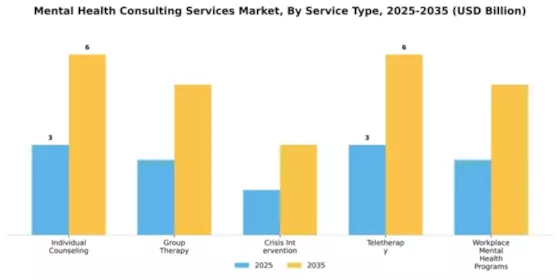
The Mental Health Consulting Services Market has seen a diverse distribution across various service types. Individual counseling remains the largest segment, sought after by many for personalized and confidential support. Group therapy follows closely, as it offers a supportive environment for patients facing similar challenges. Other significant segments include crisis intervention services, which are crucial during emergencies, and workplace mental health programs, designed to support employees. Teletherapy, while a smaller segment currently, is rapidly gaining popularity as it provides accessible mental health services remotely, especially post-pandemic.
Individual Counseling: Dominant vs. Teletherapy: Emerging
Individual counseling stands out as the dominant force in the Mental Health Consulting Services Market, offering tailored support and a deep connection between therapist and client. It caters to a wide demographic, making it a go-to choice for those seeking targeted intervention. Teletherapy, on the other hand, is an emerging trend, driven by the need for convenience and accessibility. With advancements in technology and shifts in consumer behavior, teletherapy is expanding its market presence, appealing especially to younger clients who prefer online interactions. Both service types are vital, yet they cater to different needs and preferences within the mental health landscape.
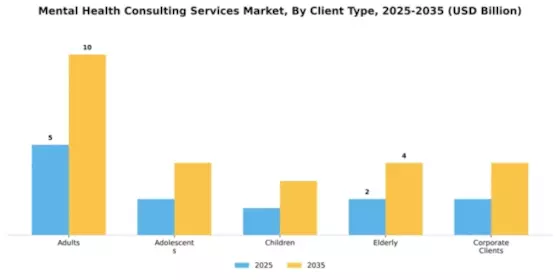
In the Mental Health Consulting Services Market, the client type segment is primarily dominated by adults, accounting for the largest share due to the increasing awareness of mental health issues among the adult population. This segment has seen a substantial rise in demand for various consulting services as adults seek help for stress, anxiety, and other mental health concerns. Conversely, adolescents are emerging as the fastest-growing client segment. This growth is driven by a heightened focus on adolescent mental health, fueled by societal changes and increased recognition of mental health challenges in this age group.
Adolescents: (Emerging) vs. Adults (Dominant)
The adolescents segment in the Mental Health Consulting Services Market is gaining traction, characterized by its growing prominence due to increasing rates of anxiety and depression among younger populations. Service providers are tailoring their approaches by incorporating technology and innovative therapeutic methods to engage this demographic effectively. Conversely, the adult segment remains dominant, driven by the expansion of digital therapy platforms and corporate wellness programs. Adults often seek therapy for stress management, relationship issues, and career-related challenges. While adults represent the larger client base, adolescents are quickly becoming a critical focus area for many consulting services aiming to address early-stage mental health concerns.
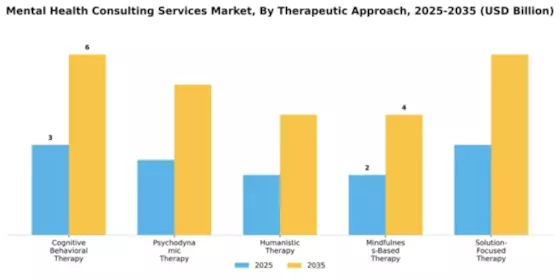
In the Mental Health Consulting Services Market, Cognitive Behavioral Therapy (CBT) holds the largest market share due to its established effectiveness and widespread acceptance among practitioners and clients. It is favored for treating various mental health issues, including depression and anxiety, which has led to its dominance. Following CBT, Psychodynamic Therapy and Humanistic Therapy also maintain a significant presence, but their market shares are continually challenged as newer therapies gain traction. Mindfulness-Based Therapy is witnessing the most rapid growth, appealing especially to younger demographics seeking holistic treatment options.
Cognitive Behavioral Therapy (Dominant) vs. Mindfulness-Based Therapy (Emerging)
Cognitive Behavioral Therapy, as the dominant therapeutic approach, is characterized by its structured nature and focus on problem-solving. It equips clients with practical skills to confront challenges and modify negative thought patterns, making it highly sought after for its empirical support. In contrast, Mindfulness-Based Therapy has emerged as a significant contender in the mental health landscape, prioritizing emotional awareness and stress reduction. Its focus on present-moment awareness resonates with individuals living in fast-paced societies, reflecting a growing inclination towards holistic mental health practices. Both therapies serve distinct client needs, yet the increasing mindfulness trend indicates a shift in therapeutic preferences.
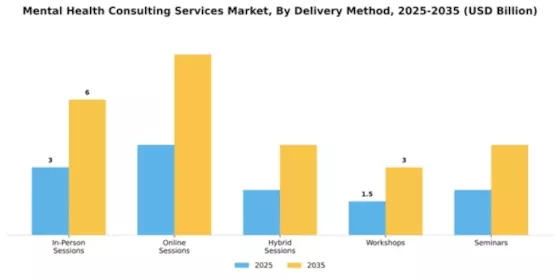
In the Mental Health Consulting Services Market, the delivery method segment showcases a unique landscape. In-Person Sessions currently dominate this market, appealing to clients who prioritize face-to-face interactions for their therapeutic needs. Meanwhile, Online Sessions are rapidly gaining traction, particularly among younger demographics and individuals seeking flexible alternatives to traditional methods. Hybrid Sessions also contribute to the segment, combining the benefits of both in-person and virtual formats, catering to various client preferences. Growth trends indicate a significant shift towards Online and Hybrid Sessions. The COVID-19 pandemic accelerated the adoption of digital solutions, fostering acceptance of online therapy. Furthermore, growing awareness of mental health issues and the increasing demand for accessible services continue to drive this shift, making Online Sessions a central focus in upcoming market expansions. Workshops and seminars also support this trend but at a slower pace, primarily attracting clients seeking group dynamics and specialized topics.
In-Person Sessions (Dominant) vs. Hybrid Sessions (Emerging)
In-Person Sessions have established themselves as the dominant delivery method in the mental health consulting space, offering personalized and direct interaction that many clients find essential for effective therapy. These sessions are preferred by individuals who thrive on the tactile support of their therapists and value the structured environment provided in traditional settings. In contrast, Hybrid Sessions represent an emerging trend, blending the strengths of in-person and online consultations. They allow clients greater flexibility, accommodating various lifestyles and preferences, enabling an evolving landscape where the convenience of remote access is paired with the comfort of face-to-face interactions. This hybrid approach is especially appealing to those who may be hesitant to fully engage in either format alone, reflecting a necessary adaptation of services in the evolving mental health industry.
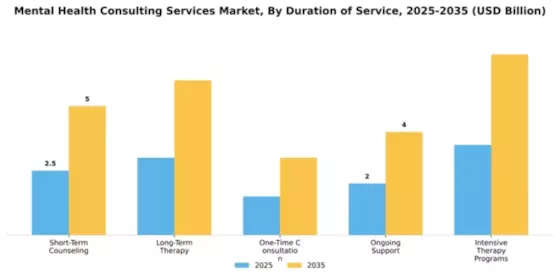
In the Mental Health Consulting Services Market, the distribution of market share among duration of service segments reveals that Short-Term Counseling currently holds the largest share, appealing to clients seeking immediate relief and quick resolutions to their mental health challenges. Following this, Ongoing Support is gaining traction as mental health awareness burgeons, pushing consumers towards more consistent therapy options that promote sustained well-being throughout life scenarios.
Short-Term Counseling (Dominant) vs. Ongoing Support (Emerging)
Short-Term Counseling serves as a dominant force in the Mental Health Consulting Services Market, favored for its accessibility and swift results, allowing individuals to engage in solution-focused approaches. This type of service typically spans a few sessions and is ideal for specific concerns that require immediate attention. Conversely, Ongoing Support has emerged as a vital service, reflecting a shift towards long-term mental health maintenance. It caters to clients who prefer regular check-ins and extended therapeutic relationships, addressing ongoing challenges and emphasizing the importance of mental well-being in daily life. As awareness of mental health issues amplifies, more individuals are recognizing the value of Ongoing Support in their overall health journey.
Get more detailed insights about Mental Health Consulting Services Market Request Free Sample
North America is the largest market for mental health consulting services, holding a significant share of 6.25 in 2024. The growth is driven by increasing awareness of mental health issues, rising demand for telehealth services, and supportive regulatory frameworks. The region's focus on mental health parity laws and insurance coverage expansion has catalyzed market growth, making mental health services more accessible to the population. The competitive landscape is robust, with key players like Cigna, UnitedHealth Group, and Anthem leading the charge. These companies are investing heavily in technology and innovative service delivery models to enhance patient engagement and outcomes. The presence of numerous startups and established firms in the region fosters a dynamic environment, ensuring a wide range of services tailored to diverse needs.
Europe's mental health consulting services market is valued at 3.75, reflecting a growing recognition of mental health's importance. Factors such as increasing mental health disorders, government initiatives, and funding for mental health programs are driving this growth. The European Union's focus on mental health policies and integration into healthcare systems is a significant regulatory catalyst, promoting better access and quality of care across member states. Leading countries like Germany, France, and the UK are at the forefront of this market, with a competitive landscape featuring both established firms and innovative startups. Key players are adapting to local needs, offering tailored services that address specific mental health challenges. The presence of organizations like the NHS in the UK and various public health initiatives across Europe further supports the market's expansion.
The Asia-Pacific region, with a market size of 2.5, is witnessing rapid growth in mental health consulting services. This surge is driven by increasing urbanization, rising awareness of mental health issues, and government initiatives aimed at improving mental health care. Countries like India and China are focusing on integrating mental health services into primary healthcare, supported by regulatory frameworks that promote mental health awareness and treatment accessibility. The competitive landscape is evolving, with both local and international players entering the market. Key players are leveraging technology to provide innovative solutions, such as teletherapy and online counseling. The presence of organizations like the World Health Organization is also pivotal in shaping policies and promoting mental health initiatives across the region.
The Middle East and Africa region, with a market size of 0.75, is in the early stages of developing mental health consulting services. The growth is driven by increasing awareness of mental health issues and a gradual shift in societal attitudes towards mental health care. However, challenges such as stigma and limited resources hinder rapid development. Governments are beginning to recognize the importance of mental health, leading to initiatives aimed at improving access and quality of care. Countries like South Africa and the UAE are taking the lead in establishing mental health frameworks and services. The competitive landscape is still developing, with a mix of local providers and international organizations entering the market. Efforts to enhance mental health services are supported by various NGOs and health organizations, aiming to create a more supportive environment for mental health care.
The Mental Health Consulting Services Market is currently characterized by a dynamic competitive landscape, driven by increasing awareness of mental health issues and a growing demand for accessible mental health services. Key players such as Cigna (US), UnitedHealth Group (US), and Talkspace (US) are strategically positioning themselves through digital transformation and innovative service offerings. Cigna (US) has focused on integrating mental health services into its broader health plans, enhancing accessibility for its members. Meanwhile, UnitedHealth Group (US) emphasizes a data-driven approach, utilizing analytics to tailor mental health solutions to individual needs. These strategies collectively foster a competitive environment that prioritizes patient-centric care and technological integration.The market structure appears moderately fragmented, with a mix of large established players and emerging digital platforms. Key business tactics include localizing services to meet regional needs and optimizing supply chains to enhance service delivery. The influence of major players is significant, as they set benchmarks for service quality and innovation, thereby shaping market expectations and competitive dynamics.In November Cigna (US) announced a partnership with a leading telehealth provider to expand its mental health service offerings, aiming to enhance access for underserved populations. This strategic move is likely to bolster Cigna's market position by addressing gaps in service availability and aligning with the growing trend of telehealth adoption. Such partnerships may also facilitate a more integrated approach to mental health care, combining physical and mental health services.In October UnitedHealth Group (US) launched a new AI-driven platform designed to provide personalized mental health support. This initiative reflects a broader trend towards the integration of artificial intelligence in healthcare, potentially improving patient outcomes through tailored interventions. The strategic importance of this development lies in its ability to leverage technology to enhance service delivery and patient engagement, positioning UnitedHealth Group as a leader in innovative mental health solutions.In September Talkspace (US) expanded its service offerings by introducing a subscription model that includes unlimited messaging therapy. This move is indicative of a shift towards more flexible and accessible mental health services, catering to the evolving needs of consumers. The strategic significance of this expansion lies in its potential to attract a broader customer base, particularly among younger demographics seeking convenient mental health support.As of December current competitive trends in the Mental Health Consulting Services Market are heavily influenced by digitalization, sustainability, and the integration of AI technologies. Strategic alliances are increasingly shaping the landscape, enabling companies to enhance their service offerings and reach. Looking ahead, competitive differentiation is likely to evolve from traditional price-based competition to a focus on innovation, technology, and the reliability of service delivery. This shift underscores the importance of adapting to consumer needs and leveraging technological advancements to maintain a competitive edge.

The Mental Health Consulting Services Market is projected to grow at a 6.5% CAGR from 2025 to 2035, driven by increasing awareness and demand for mental health support.
New opportunities lie in:
By 2035, the market is expected to be robust, reflecting a strong commitment to mental health services.
| MARKET SIZE 2024 | 12.5(USD Billion) |
| MARKET SIZE 2025 | 13.31(USD Billion) |
| MARKET SIZE 2035 | 25.0(USD Billion) |
| COMPOUND ANNUAL GROWTH RATE (CAGR) | 6.5% (2025 - 2035) |
| REPORT COVERAGE | Revenue Forecast, Competitive Landscape, Growth Factors, and Trends |
| BASE YEAR | 2024 |
| Market Forecast Period | 2025 - 2035 |
| Historical Data | 2019 - 2024 |
| Market Forecast Units | USD Billion |
| Key Companies Profiled | Cigna (US), UnitedHealth Group (US), Anthem (US), Kaiser Permanente (US), Magellan Health (US), Optum (US), Beacon Health Options (US), LifeStance Health (US), Talkspace (US), BetterHelp (US) |
| Segments Covered | Service Type, Client Type, Therapeutic Approach, Delivery Method, Duration of Service |
| Key Market Opportunities | Integration of digital platforms enhances accessibility and personalization in the Mental Health Consulting Services Market. |
| Key Market Dynamics | Rising demand for personalized mental health solutions drives innovation and competition among consulting service providers. |
| Countries Covered | North America, Europe, APAC, South America, MEA |
The market valuation was 12.5 USD Billion in 2024.
The market is projected to reach 25.0 USD Billion by 2035.
The expected CAGR for the market from 2025 to 2035 is 6.5%.
Key players include Cigna, UnitedHealth Group, Anthem, and Kaiser Permanente, among others.
Service types include Individual Counseling, Group Therapy, Crisis Intervention, and Teletherapy.
The market segments by client type include Adults, Adolescents, Children, Elderly, and Corporate Clients.
Prevalent therapeutic approaches include Cognitive Behavioral Therapy, Psychodynamic Therapy, and Mindfulness-Based Therapy.
Delivery methods include In-Person Sessions, Online Sessions, and Hybrid Sessions.
Durations of service include Short-Term Counseling, Long-Term Therapy, and Intensive Therapy Programs.
The market appears poised for growth, with a projected increase to 25.0 USD Billion by 2035.


Kindly complete the form below to receive a free sample of this Report

“This is really good guys. Excellent work on a tight deadline. I will continue to use you going forward and recommend you to others. Nice job”


“Thanks. It’s been a pleasure working with you, please use me as reference with any other Intel employees.”


“Thanks for sending the report it gives us a good global view of the Betaïne market.”


“Thank you, this will be very helpful for OQS.”


“We found the report very insightful! we found your research firm very helpful. I'm sending this email to secure our future business.”


“I am very pleased with how market segments have been defined in a relevant way for my purposes (such as "Portable Freezers & refrigerators" and "last-mile"). In general the report is well structured. Thanks very much for your efforts.”


“I have been reading the first document or the study, ,the Global HVAC and FP market report 2021 till 2026. Must say, good info! I have not gone in depth at all parts, but got a good indication of the data inside!”


“We got the report in time, we really thank you for your support in this process. I also thank to all of your team as they did a great job.”


“The Automotive 48V ECU Components Procurement Intelligence Study” was a complex project, but the Market Research Future (MRFR) team handled it with quality, agility, and customer-centricity. They delivered all requested data on time and within the agreed scope. The team, including Shubhendra Anand and Rahul Gotadki, was always readily available to clarify questions and swiftly implement necessary adjustments, driving the project to a successful conclusion within a very demanding timeframe.
I would also like to specifically commend Akshay Agarwal for his responsiveness and support at every stage—from our initial inquiry on May 6th through to final delivery on June 18th. His dedication made the entire process seamless.”



