×
Request Free Sample ×

Kindly complete the form below to receive a free sample of this Report

* Please use a valid business email

Leading companies partner with us for data-driven Insights

clients tt-cursor
Hero Background

North America Green Steel Market

ID: MRFR/CnM/47019-HCR
111 Pages
Chitranshi Jaiswal
October 2025

North America Green Steel Market Research Report: By Method of Production (Hydrogen-Based Reduction, Electrolysis, Biomass Direct Reduction, Recycling), By End Use Industry (Construction, Automotive, Manufacturing, Energy), By Form (Flat Steel, Long Steel, Steel Products), By Quality Grade (High Strength Steel, Low Alloy Steel, Stainless Steel) andBy Regional (US, Canada)- Forecast to 2035

Share:
Download PDF ×

We do not share your information with anyone. However, we may send you emails based on your report interest from time to time. You may contact us at any time to opt-out.

North America Green Steel Market Infographic
Purchase Options

North America Green Steel Market Summary

As per MRFR analysis, the North America green steel market Size was estimated at 191.69 USD Million in 2024. The North America green steel market is projected to grow from 217.41 USD Million in 2025 to 765.61 USD Million by 2035, exhibiting a compound annual growth rate (CAGR) of 13.42% during the forecast period 2025 - 2035.

Key Market Trends & Highlights

The North America green steel market is poised for substantial growth driven by technological advancements and regulatory support.

  • Technological advancements are enhancing the efficiency of green steel production processes in the US.
  • Regulatory support is fostering a favorable environment for green steel initiatives, particularly in Canada.
  • Rising consumer demand for sustainable products is influencing manufacturers to adopt greener practices across the region.
  • Increased investment in sustainable technologies and government incentives for low-carbon solutions are key drivers propelling market growth.

Market Size & Forecast

2024 Market Size 191.69 (USD Million)
2035 Market Size 765.61 (USD Million)
CAGR (2025 - 2035) 13.42%

Major Players

SSAB (SE), ArcelorMittal (LU), Thyssenkrupp (DE), Nucor Corporation (US), Cleveland-Cliffs (US), POSCO (KR), Tata Steel (IN), Salzgitter AG (DE), Hyundai Steel (KR)

North America Green Steel Market Trends

The green steel market is currently experiencing a transformative phase, driven by increasing environmental awareness and regulatory pressures. In North America, stakeholders are actively seeking sustainable alternatives to traditional steel production methods, which are often associated with high carbon emissions. This shift is not merely a trend but appears to be a fundamental change in how steel is produced and consumed. The adoption of innovative technologies, such as hydrogen-based reduction processes and electric arc furnaces, is gaining traction. These advancements suggest a potential for significant reductions in greenhouse gas emissions, aligning with broader climate goals set by various governments. Moreover, the demand for green steel is likely to be influenced by the construction and automotive sectors, which are increasingly prioritizing sustainability in their supply chains. As companies commit to reducing their carbon footprints, the green steel market may see a surge in interest and investment. This evolving landscape indicates that the future of steel production in North America could be characterized by a greater emphasis on sustainability, efficiency, and technological innovation. The interplay between regulatory frameworks and market dynamics will likely shape the trajectory of this market in the coming years.

Technological Advancements

Innovations in production methods are reshaping the green steel market. Technologies such as hydrogen reduction and electric arc furnaces are becoming more prevalent, potentially leading to lower emissions and enhanced efficiency. These advancements may attract investment and drive growth in the sector.

Regulatory Support

Government policies are increasingly favoring sustainable practices. Incentives and regulations aimed at reducing carbon emissions are likely to bolster the green steel market. This support may encourage manufacturers to adopt greener technologies and practices.

Rising Consumer Demand

There is a growing preference for sustainable products among consumers. As awareness of environmental issues increases, demand for green steel is expected to rise. This trend may influence manufacturers to prioritize eco-friendly materials in their offerings.

North America Green Steel Market Drivers

Corporate Sustainability Initiatives

Many corporations in North America are adopting sustainability initiatives that directly influence the green steel market. These initiatives often include commitments to reduce carbon footprints and enhance supply chain transparency. A recent survey indicates that over 70% of major manufacturers are prioritizing sustainable sourcing, which includes green steel. This shift is not merely a trend; it is becoming a fundamental aspect of corporate strategy. As companies strive to meet consumer expectations and regulatory requirements, the demand for green steel is expected to rise. Consequently, the green steel market is poised for growth as businesses align their operations with sustainability goals.

Consumer Awareness and Ethical Sourcing

Consumer awareness regarding environmental issues is driving demand for ethically sourced products, including green steel. In North America, a significant portion of consumers is willing to pay a premium for products that are produced sustainably. Recent studies suggest that approximately 60% of consumers prioritize sustainability when making purchasing decisions. This shift in consumer behavior is compelling manufacturers to adopt greener practices and invest in the green steel market. As awareness continues to grow, the green steel market is likely to see increased demand, prompting companies to enhance their sustainability efforts and align with consumer expectations.

Rising Energy Costs and Resource Scarcity

The green steel market in North America is also influenced by rising energy costs and resource scarcity. As traditional energy sources become more expensive and less reliable, manufacturers are seeking alternative methods to produce steel that are both cost-effective and environmentally friendly. The transition to renewable energy sources, such as wind and solar, is becoming essential for steel production. In 2025, it is anticipated that energy costs could rise by 20%, prompting a shift towards green steel solutions. This trend indicates a growing recognition of the need for sustainable practices within the green steel market, as companies adapt to changing economic conditions.

Government Incentives for Low-Carbon Solutions

Government policies in North America are increasingly favoring low-carbon solutions, which significantly impacts the green steel market. Various federal and state-level incentives are being introduced to encourage the adoption of green technologies. For example, tax credits and grants for companies investing in carbon-neutral steel production are becoming more common. In 2025, it is projected that these incentives could lead to a 15% increase in the adoption of green steel technologies among manufacturers. This supportive regulatory environment not only fosters innovation but also enhances the competitiveness of the green steel market, making it an attractive option for businesses aiming to reduce their environmental impact.

Increased Investment in Sustainable Technologies

The green steel market in North America is experiencing a surge in investment aimed at sustainable technologies. Companies are allocating substantial resources to develop innovative production methods that minimize carbon emissions. For instance, investments in electric arc furnaces and hydrogen-based steelmaking processes are gaining traction. In 2025, it is estimated that investments in these technologies could reach $10 billion, reflecting a growing commitment to sustainability. This influx of capital not only enhances production efficiency but also positions companies favorably in a market increasingly driven by environmental considerations. As stakeholders prioritize sustainability, the green steel market is likely to benefit from enhanced technological capabilities and improved market competitiveness.

Market Segment Insights

By Method of Production: Hydrogen-Based Reduction (Largest) vs. Electrolysis (Fastest-Growing)

In the North America green steel market, the method of production segment showcases a diverse array of techniques, with Hydrogen-Based Reduction standing as the largest contributor to market share. This method benefits from advancements in hydrogen generation and storage technologies, making it a preferable choice among manufacturers focused on reducing carbon emissions. Conversely, Electrolysis is capturing attention as the fastest-growing method, driven by significant investment and research aimed at improving its efficiency and cost-effectiveness in steel production. The growth trends within this segment are fueled by increasing regulatory standards demanding lower emissions and a push towards sustainable manufacturing practices. Hydrogen-Based Reduction is favored due to its established protocols and infrastructure, whereas Electrolysis is rapidly evolving, with innovative technologies emerging that promise lower operational costs and higher production volumes. The focus on circular economy principles also boosts interest in these methods, particularly as companies seek more sustainable production processes.

Hydrogen-Based Reduction (Dominant) vs. Electrolysis (Emerging)

Hydrogen-Based Reduction is currently the dominant method in the North America green steel market, characterized by its efficient use of hydrogen to reduce iron ore into steel. This method leverages existing knowledge and technology, allowing for smoother integration into existing production frameworks. It appeals to producers aiming to meet stringent carbon footprint regulations while maintaining output levels. In contrast, Electrolysis represents an emerging method that is gaining traction due to its low environmental impact. By using electricity to drive the reduction process, it opens avenues for renewable energy integration, presenting itself as a viable alternative for future steel manufacturing. With continued technological advancements and increasing investment, Electrolysis is set to become a key player in the transition towards sustainable steel production.

By End Use Industry: Construction (Largest) vs. Automotive (Fastest-Growing)

In the North America green steel market, the construction sector commands the largest share, leveraging the increasing demand for sustainable building materials. As urbanization continues to rise, construction companies are shifting towards green steel to enhance their environmental footprint while meeting building codes that favor sustainability. The automotive industry follows as a significant player, rapidly adopting green steel solutions to align with stringent emissions regulations and consumer preferences for eco-friendly vehicles. Growth in this segment is driven by a combination of regulatory pressures and changing consumer behaviors. The push towards decarbonization in manufacturing processes supports the automotive sector's transition to green steel, with electric vehicle production particularly benefiting. Additionally, the ongoing investments in infrastructure development within the construction sector stimulate demand for high-quality, sustainable materials, fostering a competitive landscape for green steel.

Construction: Dominant vs. Automotive: Emerging

In the competitive landscape of green steel, the construction segment is currently dominant due to its wide applications in building and infrastructure projects. This sector is characterized by significant investments in sustainable technologies and innovative construction practices. On the other hand, the automotive segment is emerging as a vital market, experiencing rapid progress driven by the shift towards electric vehicles and stringent emissions standards. As manufacturers seek to reduce their carbon footprints, the adoption of green steel is accelerating. The automotive industry is increasingly integrating green steel into production processes, enhancing vehicle efficiency and contributing to a sustainable automotive future. Both segments are pivotal in shaping the dynamics of the green steel market, with construction leading and automotive quickly gaining ground.

By Form: Flat Steel (Largest) vs. Long Steel (Fastest-Growing)

In the green steel market, Flat Steel holds the largest market share due to its widespread application across various industries, including automotive and construction. Its versatility and efficiency in production processes contribute to its dominant positioning. Alternatively, Long Steel follows closely, representing a significant portion of the market share thanks to its essential role in structural applications. The growing demand for sustainable building materials bolsters its relevance. Growth trends indicate that while Flat Steel maintains its lead, Long Steel is experiencing rapid expansion driven by infrastructural developments and increased investments in eco-friendly construction. Moreover, technological advancements in production practices are enhancing both segments' sustainability profiles, fostering wider adoption. The emphasis on reducing carbon footprints further accelerates the transition towards greener steel solutions in these categories.

Flat Steel (Dominant) vs. Steel Products (Emerging)

Flat Steel remains the dominant player in the market due to its extensive utilization in manufacturing processes and its adaptability to various applications, from automotive to white goods. Its production methods are becoming increasingly environmentally friendly, appealing to eco-conscious manufacturers. Conversely, Steel Products are emerging as a significant category, driven by innovations that introduce new applications and enhance performance. This segment is characterized by the variety of specialized products, including lightweight and high-strength solutions that cater to evolving industrial needs. The growth in Steel Products is fueled by demand for innovative and sustainable solutions that improve efficiency and reduce emissions in manufacturing.

By Quality Grade: High Strength Steel (Largest) vs. Stainless Steel (Fastest-Growing)

In the Quality Grade segment of the green steel market, High Strength Steel holds the largest market share, driven by its increasing demand in automotive and construction sectors. Low Alloy Steel contributes significantly but trails behind, as industries shift towards more sustainable options. Stainless Steel, while smaller in share, is gaining traction due to its superior corrosion resistance and recyclability, appealing to environmentally conscious consumers. Growth trends in this segment are predominantly influenced by the rising emphasis on sustainability and regulatory requirements. High Strength Steel remains the go-to choice for its robustness, yet Stainless Steel is emerging rapidly, presenting a valuable alternative. Consumer preferences are shifting towards long-lasting, eco-friendly materials, propelling the demand for innovative steel solutions.

High Strength Steel (Dominant) vs. Stainless Steel (Emerging)

High Strength Steel is celebrated for its robustness, making it a preferred material in high-stress applications like vehicles and structural components. Its ability to reduce weight without compromising strength enhances fuel efficiency, positioning it well amidst environmental regulations. Conversely, Stainless Steel is carving out a significant niche as an emerging choice, renowned for its excellent corrosion resistance and aesthetic appeal. As industries increasingly prioritize sustainability, Stainless Steel's recyclability aligns perfectly with modern standards, lending it a competitive edge in sectors such as architecture and food processing. Together, these materials are pivotal in advancing green steel initiatives and addressing the evolving market demands.

Get more detailed insights about North America Green Steel Market

Regional Insights

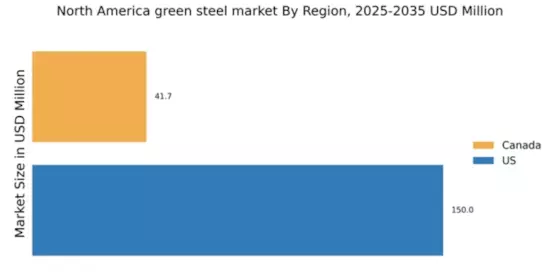
US : Innovative Policies Drive Growth

Key markets include states like Michigan, Ohio, and Pennsylvania, where major players like Nucor Corporation and Cleveland-Cliffs are establishing a strong foothold. The competitive landscape is characterized by a mix of established steel manufacturers and emerging green technology firms. Local dynamics are influenced by a growing emphasis on sustainability across industries, particularly in automotive and construction sectors, which are increasingly adopting green steel solutions.

Canada : Strong Demand Fuels Development

Key provinces include Ontario and Quebec, where cities like Toronto and Montreal are pivotal markets. The competitive landscape features players like ArcelorMittal and Tata Steel, who are adapting to local demands. The business environment is increasingly favorable, with a focus on innovation and sustainability. Industries such as construction and manufacturing are actively seeking green steel solutions to meet regulatory requirements and consumer preferences.

North America Green Steel Market Regional Image

Key Players and Competitive Insights

The green steel market is currently characterized by a dynamic competitive landscape, driven by increasing demand for sustainable manufacturing practices and stringent regulatory frameworks. Key players are actively pursuing strategies that emphasize innovation, regional expansion, and partnerships to enhance their market positioning. For instance, Nucor Corporation (US) has been focusing on technological advancements in electric arc furnace (EAF) technology, which allows for lower emissions and higher efficiency in steel production. Similarly, ArcelorMittal (LU) is investing heavily in carbon capture and storage technologies, indicating a strong commitment to reducing its carbon footprint while maintaining production levels. These strategic initiatives collectively shape a competitive environment that is increasingly focused on sustainability and technological innovation.

In terms of business tactics, companies are localizing manufacturing to reduce transportation emissions and optimize supply chains. The market structure appears moderately fragmented, with several key players vying for market share while also collaborating on sustainability initiatives. This collective influence of major companies fosters a competitive atmosphere where innovation and operational efficiency are paramount.

In October 2025, Cleveland-Cliffs (US) announced a partnership with a leading technology firm to develop a new process for producing green steel using hydrogen as a reducing agent. This strategic move is significant as it positions Cleveland-Cliffs at the forefront of the hydrogen-based steel production trend, potentially reducing emissions by up to 90%. Such advancements not only enhance their competitive edge but also align with global sustainability goals.

In September 2025, Thyssenkrupp (DE) unveiled plans to expand its green steel production capabilities in North America, with an investment of €1 billion aimed at establishing a new facility that utilizes renewable energy sources. This expansion is crucial as it reflects Thyssenkrupp's commitment to meeting the growing demand for green steel while also enhancing its operational capacity in a key market.

In August 2025, SSAB (SE) launched a new product line of fossil-free steel, which has garnered significant attention from automotive manufacturers seeking to reduce their carbon emissions. This initiative not only showcases SSAB's innovative approach but also highlights the increasing demand for sustainable materials in various industries, further solidifying its market position.

As of November 2025, current trends in the green steel market indicate a strong emphasis on digitalization, sustainability, and the integration of AI technologies. Strategic alliances among key players are shaping the landscape, fostering collaboration on research and development initiatives. Looking ahead, competitive differentiation is likely to evolve from traditional price-based competition to a focus on innovation, technological advancements, and supply chain reliability, as companies strive to meet the growing expectations of environmentally conscious consumers.

Key Companies in the North America Green Steel Market market include

Industry Developments

Recent developments in the North America Green Steel Market have focused heavily on sustainability initiatives by major players including Nucor, ArcelorMittal, and United States Steel. In October 2023, Alcoa announced a significant investment in low-carbon technologies aimed at reducing emissions, aligning with state and federal regulations under the Biden administration’s infrastructure and climate change initiatives. Steel Dynamics has also reported advancements in its green steel capabilities, with new solar-powered production operations expected to come online in early 2024.

In terms of mergers and acquisitions, Liberty Steel Group made headlines in September 2023 with the acquisition of a minority stake in a local recycling firm to strengthen its green steel supply chain. The market has seen a valuation increase, driven by heightened demand for sustainable materials amid new government policies promoting eco-friendly practices. Notably, standards for carbon emissions are tightening, increasing the pressure on companies like ClevelandCliffs and BHP to innovate.

Over the past two years, collaborations between steel producers and tech firms have escalated, paving the way for research and development advancements in carbon capture technologies, while also receiving support from U.S. Department of Energy grants.

Future Outlook

North America Green Steel Market Future Outlook

The green steel market is projected to grow at a 13.42% CAGR from 2024 to 2035, driven by sustainability initiatives, technological advancements, and regulatory support.

New opportunities lie in:

  • Investment in hydrogen-based steel production facilities.
  • Development of carbon capture technologies for steel manufacturing.
  • Partnerships with renewable energy providers for sustainable operations.

By 2035, the green steel market is expected to achieve substantial growth and innovation.

Market Segmentation

North America Green Steel Market Form Outlook

  • Flat Steel
  • Long Steel
  • Steel Products

North America Green Steel Market Quality Grade Outlook

  • High Strength Steel
  • Low Alloy Steel
  • Stainless Steel

North America Green Steel Market End Use Industry Outlook

  • Construction
  • Automotive
  • Manufacturing
  • Energy

North America Green Steel Market Method of Production Outlook

  • Hydrogen-Based Reduction
  • Electrolysis
  • Biomass Direct Reduction
  • Recycling

Report Scope

MARKET SIZE 2024191.69(USD Million)
MARKET SIZE 2025217.41(USD Million)
MARKET SIZE 2035765.61(USD Million)
COMPOUND ANNUAL GROWTH RATE (CAGR)13.42% (2024 - 2035)
REPORT COVERAGERevenue Forecast, Competitive Landscape, Growth Factors, and Trends
BASE YEAR2024
Market Forecast Period2025 - 2035
Historical Data2019 - 2024
Market Forecast UnitsUSD Million
Key Companies Profiled["SSAB (SE)", "ArcelorMittal (LU)", "Thyssenkrupp (DE)", "Nucor Corporation (US)", "Cleveland-Cliffs (US)", "POSCO (KR)", "Tata Steel (IN)", "Salzgitter AG (DE)", "Hyundai Steel (KR)"]
Segments CoveredMethod of Production, End Use Industry, Form, Quality Grade
Key Market OpportunitiesIncreasing demand for sustainable materials drives innovation in the green steel market.
Key Market DynamicsRising regulatory pressures drive innovation and investment in sustainable practices within the green steel market.
Countries CoveredUS, Canada

Leave a Comment

FAQs

What is the projected market size of the North America Green Steel Market in 2024?

The North America Green Steel Market is projected to be valued at 582.0 million USD in 2024.

What is the expected market size of the North America Green Steel Market by 2035?

By 2035, the market is expected to reach a valuation of 10,000.0 million USD.

What is the expected CAGR for the North America Green Steel Market from 2025 to 2035?

The market is anticipated to grow at a compound annual growth rate (CAGR) of 29.503% from 2025 to 2035.

Which region holds the largest market share within the North America Green Steel Market?

The United States holds the largest market share, expected to be valued at 400.0 million USD in 2024.

How much is the Canadian Green Steel Market valued at in 2024?

The Canadian segment of the Green Steel Market is valued at 182.0 million USD in 2024.

What are the major methods of production in the North America Green Steel Market?

The major production methods include Hydrogen-Based Reduction, Electrolysis, Biomass Direct Reduction, and Recycling.

Which production method is expected to see significant growth by 2035?

Hydrogen-Based Reduction is projected to grow significantly from 175.0 million USD in 2024 to 3,500.0 million USD in 2035.

Who are the key players in the North America Green Steel Market?

Major players in the market include SSAB, Pacific Steel, ArcelorMittal, and Nucor, among others.

What is the expected market value for Recycling in the North America Green Steel Market by 2035?

The Recycling segment is expected to reach a market value of 4,000.0 million USD by 2035.

What is the anticipated market value of Electrolysis in 2024?

The Electrolysis segment is projected to be valued at 150.0 million USD in 2024.

Download Free Sample

Kindly complete the form below to receive a free sample of this Report

Compare Licence

×
Features License Type
Single User Multiuser License Enterprise User
Price $4,950 $5,950 $7,250
Maximum User Access Limit 1 User Upto 10 Users Unrestricted Access Throughout the Organization
Free Customization
Direct Access to Analyst
Deliverable Format
Platform Access
Discount on Next Purchase 10% 15% 15%
Printable Versions