Download Free Sample
Kindly complete the form below to receive a free sample of this Report
North America Intraoral Camera Market Research Report: Information By Product (Intraoral Wand and Single Lens Reflex (SLR) Cameras), By End Use (Hospitals, Dental Clinics, and Others) –and North America Market Forecast Till 2035
As per analysis, the North America Intraoral Cameras Market is projected to grow from USD 465.5 Million in 2024 to USD 496.65 Million in 2025, ultimately reaching USD 889.0 Million by 2035, exhibiting a compound annual growth rate (CAGR) of 6.06% during the forecast period (2025 - 2035).
The North America Intraoral Cameras Market is poised for substantial growth driven by technological advancements and increasing patient engagement.
| 2024 Market Size | 465.5 (USD Million) |
| 2035 Market Size | 889.0 (USD Million) |
| CAGR (2025 - 2035) | 6.06% |
Carestream Dental (US), Dentsply Sirona (US), Planmeca Oy (FI), 3Shape (DK), Sirona Dental Systems (US), Convergent Dental (US), XDR Radiology (US), Dental Wings (CA)
Our Impact
Enabled $4.3B Revenue Impact for Fortune 500 and Leading Multinationals
Partnering with 2000+ Global Organizations Each Year
30K+ Citations by Top-Tier Firms in the Industry
The North America Intraoral Cameras Market is currently experiencing a notable transformation, driven by advancements in dental technology and an increasing emphasis on patient-centered care. Dental professionals are increasingly adopting intraoral cameras to enhance diagnostic accuracy and improve patient communication. These devices allow for real-time imaging, enabling practitioners to capture high-quality visuals of oral conditions, which can be shared with patients for better understanding and engagement in their treatment plans. As a result, the market is witnessing a surge in demand, particularly among dental clinics that prioritize modern technology to elevate patient experiences. Moreover, the North America Intraoral Cameras Market is influenced by the growing trend of preventive dentistry. As awareness regarding oral health continues to rise, patients are seeking more comprehensive dental services. Intraoral cameras play a crucial role in preventive care by facilitating early detection of dental issues, thus allowing for timely interventions. This shift towards preventive measures is likely to propel the market further, as dental practices increasingly recognize the value of these tools in enhancing patient outcomes and satisfaction. Overall, the North America Intraoral Cameras Market appears poised for continued growth, driven by technological advancements and evolving patient expectations.
The North America Intraoral Cameras Market is witnessing a growing emphasis on preventive care within dental practices. Intraoral cameras play a crucial role in early detection of dental issues, allowing for timely interventions. This shift towards preventive care aligns with broader healthcare trends aimed at reducing long-term costs and improving patient outcomes. As dental professionals increasingly prioritize preventive measures, the demand for intraoral cameras is likely to rise. The market could see a significant uptick, with estimates suggesting a 15% increase in camera sales as practices invest in technologies that support preventive strategies.
In the North America Intraoral Cameras Market, there is a notable trend towards increased patient engagement. Dental professionals are utilizing intraoral cameras to provide patients with visual evidence of their oral health conditions. This transparency fosters trust and encourages patients to participate actively in their treatment plans. As patients become more informed, they are more likely to accept recommended procedures, thereby driving demand for intraoral cameras. The market is expected to expand as dental practices adopt these tools to enhance patient education and satisfaction, potentially leading to a 10% increase in camera adoption rates.
The North America Intraoral Cameras Market benefits from supportive regulatory frameworks that promote the adoption of advanced dental technologies. Regulatory bodies are establishing standards that ensure the safety and efficacy of intraoral cameras, which encourages dental practices to invest in these tools. Additionally, government initiatives aimed at improving oral health care access are likely to bolster market growth. As regulations evolve to support innovative technologies, the market may experience a boost, with projections indicating a potential 12% increase in market size over the next few years.
The North America Intraoral Cameras Market is also influenced by the rising demand for aesthetic dentistry. Patients are increasingly seeking cosmetic dental procedures, which require precise imaging for effective treatment planning. Intraoral cameras provide detailed visuals that assist dentists in designing tailored aesthetic solutions. This trend is expected to drive the adoption of intraoral cameras, as practitioners aim to meet patient expectations for high-quality results. The market could see a growth rate of around 9% as aesthetic dentistry continues to gain popularity among consumers.
The North America Intraoral Cameras Market is experiencing a surge in technological advancements that enhance imaging quality and efficiency. Innovations such as high-definition imaging, 3D visualization, and real-time feedback are becoming increasingly prevalent. These advancements not only improve diagnostic accuracy but also facilitate better patient communication. The integration of artificial intelligence in image analysis is also gaining traction, potentially streamlining workflows in dental practices. As a result, the market is projected to grow at a compound annual growth rate (CAGR) of approximately 8% over the next five years, driven by these technological improvements.
Within the North America Intraoral Cameras Market, the application segment is segmented into Dental Examination, Diagnosis, Patient Education, and Treatment Planning. The Dental Examination segment holds the largest share due to its essential role in routine dental assessments. Following this, the Diagnosis segment is emerging rapidly, with a growing share as advancements in imaging technology enhance diagnostic capabilities, resulting in an improved rate of adoption among dental professionals. The growth trends are largely driven by increased awareness of oral health and the rising prevalence of dental diseases. The adoption of intraoral cameras for Diagnosis is particularly noteworthy, as their capability to provide clear images facilitates better communication between dentists and patients. As dental practices emphasize improved patient education and treatment planning, the overall demand for these applications is expected to rise significantly, contributing to robust market expansion over the coming years.
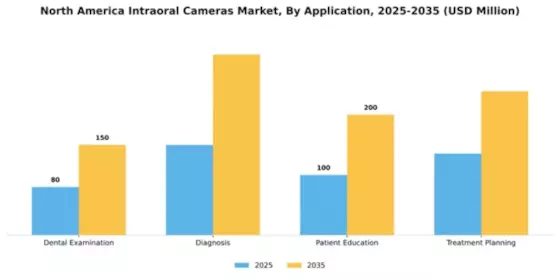
Dental Examination (Dominant) vs. Treatment Planning (Emerging)
The Dental Examination segment remains dominant in the North America Intraoral Cameras Market, primarily due to its widespread use in identifying dental issues during routine check-ups. This segment is characterized by the integration of high-resolution imaging technology that aids dental professionals in delivering accurate assessments. Enhanced visualization capabilities have bolstered the segment’s importance, as it enables better patient outcomes and supports preventive care strategies. On the other hand, the Treatment Planning segment is emerging as a critical focus area, leveraging intraoral cameras to develop tailored dental care plans. Dentists are increasingly utilizing these cameras to aid in the visualization of treatment options, improving patient consent and satisfaction. As practices continue to evolve, both segments are expected to thrive within the competitive landscape.
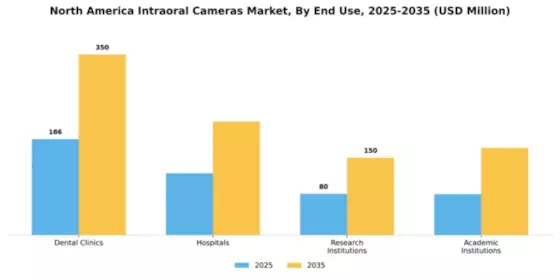
In the North America Intraoral Cameras Market, dental clinics represent the largest share of the end-use segment. They cater to the daily diagnostic needs of patients, leveraging intraoral cameras for enhanced patient care and communication. Hospitals and academic institutions also hold significant shares, but they are overshadowed by the robust operations of dental clinics, which are equipped with advanced imaging technologies to boost efficiency and treatment quality. The growth trends in this segment indicate a rising demand for intraoral cameras in research institutions, thanks to innovations in dental imaging and education. As healthcare professionals seek to enhance diagnostic accuracy, the research sector shows promise for rapid development. This is bolstered by increasing investments in dental research, establishing it as the fastest-growing segment alongside traditional uses in dental clinics and hospitals.
Dental Clinics (Dominant) vs. Hospitals (Emerging)
Dental clinics remain the dominant force in the North America Intraoral Cameras Market, as they heavily rely on advanced imaging technologies to provide precise diagnostics and improve patient interactions. These clinics utilize intraoral cameras for real-time imaging that enhances treatment planning and boosts overall patient satisfaction. Conversely, hospitals represent an emerging segment, as they gradually start to adopt intraoral cameras for broader dental care applications, including surgical interventions and interdisciplinary collaborations. The shift towards integrating high-definition imaging in hospitals is propelled by the need for improved surgical outcomes, making them a compelling and maturing user of intraoral imaging technology.
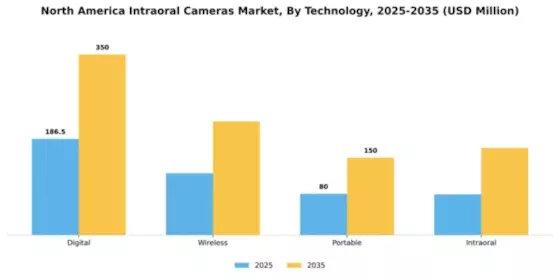
In the North America Intraoral Cameras Market, the digital segment dominates, holding a significant share of the market due to its advanced imaging capabilities and integration with digital workflows. Digital intraoral cameras enable enhanced diagnostics and treatment planning, making them a preferred choice among dental professionals. Meanwhile, the wireless segment has been gaining popularity, attributed to its convenience and ease of use in various dental procedures. Wireless technology is rapidly transforming the dental imaging landscape by offering more flexibility than traditional wired systems. Growth trends in this segment are largely driven by the increasing demand for advanced dental imaging solutions that enhance patient care and operational efficiency. The rising adoption of digital solutions in dental practices is fostering rapid advancements in wireless technology, making it an attractive option for practitioners looking to improve workflow efficiency. Additionally, the incorporation of portable intraoral cameras in tele-dentistry and remote patient consultations is contributing to the emergence of new growth opportunities in the market.
Digital (Dominant) vs. Wireless (Emerging)
The digital intraoral camera segment acts as a dominant player in the North America market, characterized by its high-resolution imaging and ability to integrate seamlessly into existing digital infrastructures in dental practices. Its superior image quality and diagnostic capabilities make it an essential tool for dental professionals, thereby maintaining a significant lead among competitors. In contrast, the wireless intraoral camera segment is emerging rapidly, appealing due to its portability and user-friendliness, which facilitate quick scans without the constraints of cables. The move towards smaller, more efficient designs for wireless cameras is also enhancing adoption rates, making it a frontrunner in innovation within the market, particularly as practitioners seek solutions that align with the growing trend of minimally invasive dentistry.
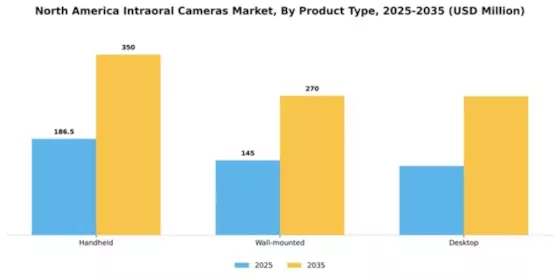
In the North America Intraoral Cameras Market, the product type segment is distinctly divided among handheld, wall-mounted, and desktop categories. The handheld segment currently claims the largest market share due to its convenience and portability, making it a preferred choice among dental practitioners. In contrast, the wall-mounted cameras are gaining traction rapidly, with their share increasing as they offer enhanced features for detailed imaging and ease of use in a clinical setting. Growth trends are heavily influenced by advances in technology and the rising demand for effective dental imaging solutions. Handheld cameras continue to dominate due to their versatility, while wall-mounted systems are being driven by innovations that enhance image quality and integration with dental software. As practices look for efficient ways to improve patient care and diagnostic capabilities, both segments are poised for continued expansion in the coming years.
Handheld (Dominant) vs. Wall-mounted (Emerging)
The handheld intraoral cameras are recognized as the dominant force in the North America market, prized for their flexibility, ease of use, and ability to capture high-quality images in various clinical scenarios. Their portability makes them ideal for dental examinations, aligning with the fast-paced nature of dental practices. On the other hand, wall-mounted intraoral cameras are emerging as a strong contender due to their enhanced functionalities, such as superior imaging capabilities and integrated features that streamline workflows. These systems are increasingly being adopted for their ability to maintain hygienic standards while offering real-time feedback during procedures, signaling a shift toward more advanced imaging solutions in dental care.
Get more detailed insights about North America Intraoral Camera Market Request Free Sample
Key markets include California, Texas, and New York, where dental practices are rapidly adopting intraoral cameras. The competitive landscape features major players like Carestream Dental and Dentsply Sirona, which dominate the market with innovative products. Local dynamics are characterized by a strong emphasis on patient care and technological integration. The dental industry is increasingly focusing on preventive care and diagnostics, driving the demand for intraoral cameras.
Key markets include Ontario and British Columbia, where dental practices are increasingly adopting intraoral cameras. The competitive landscape features players like Dental Wings, which is gaining traction with innovative solutions. Local market dynamics emphasize collaboration between dental professionals and technology providers. The industry is focusing on enhancing patient experience and diagnostic accuracy, which is driving the adoption of intraoral cameras.
The Intraoral Cameras Market in North America is characterized by a competitive landscape that is increasingly shaped by technological advancements and strategic collaborations. Key growth drivers include the rising demand for minimally invasive dental procedures and the integration of digital technologies in dental practices. Major players such as Carestream Dental (US), Dentsply Sirona (US), and 3Shape (DK) are at the forefront, focusing on innovation and expanding their product offerings. Their strategies, which encompass partnerships and technological enhancements, collectively contribute to a dynamic competitive environment that is responsive to evolving consumer needs.
In terms of business tactics, companies are localizing manufacturing and optimizing supply chains to enhance operational efficiency. The market structure appears moderately fragmented, with several key players exerting influence over market dynamics. This fragmentation allows for a variety of competitive strategies, enabling companies to differentiate themselves through unique product features and customer service approaches.
In December 2025, Carestream Dental (US) announced the launch of its latest intraoral camera model, which incorporates advanced imaging technology aimed at improving diagnostic accuracy. This strategic move is significant as it not only enhances Carestream's product portfolio but also positions the company as a leader in innovation within the market. The introduction of this model is likely to attract dental professionals seeking cutting-edge solutions for patient care.
In November 2025, Dentsply Sirona (US) entered into a strategic partnership with a leading software developer to integrate AI capabilities into its intraoral cameras. This collaboration is poised to enhance the functionality of their devices, allowing for real-time analysis and improved patient outcomes. The integration of AI represents a critical step towards digital transformation in dentistry, potentially setting new standards for diagnostic practices.
In October 2025, 3Shape (DK) expanded its presence in North America by acquiring a regional distributor, thereby enhancing its distribution network. This acquisition is strategically important as it enables 3Shape to better serve its customer base and respond to market demands more effectively. The move is indicative of a broader trend where companies are seeking to strengthen their market positions through strategic acquisitions and partnerships.
As of January 2026, current competitive trends in the Intraoral Cameras Market include a pronounced focus on digitalization, sustainability, and the integration of AI technologies. Strategic alliances are increasingly shaping the landscape, allowing companies to leverage complementary strengths. Looking ahead, competitive differentiation is likely to evolve from traditional price-based competition towards a focus on innovation, technological advancements, and supply chain reliability. This shift underscores the importance of adaptability and forward-thinking strategies in maintaining a competitive edge.



The North America Intraoral Cameras Market is projected to grow at a 6.06% CAGR from 2025 to 2035, driven by technological advancements, increasing dental procedures, and rising patient awareness.
New opportunities lie in:
By 2035, the market is expected to be robust, driven by innovation and increased adoption.
| MARKET SIZE 2024 | 465.5(USD Million) |
| MARKET SIZE 2025 | 496.65(USD Million) |
| MARKET SIZE 2035 | 889.0(USD Million) |
| COMPOUND ANNUAL GROWTH RATE (CAGR) | 6.06% (2024 - 2035) |
| REPORT COVERAGE | Revenue Forecast, Competitive Landscape, Growth Factors, and Trends |
| BASE YEAR | 2024 |
| Market Forecast Period | 2025 - 2035 |
| Historical Data | 2019 - 2024 |
| Market Forecast Units | USD Million |
| Key Companies Profiled | Carestream Dental (US), Dentsply Sirona (US), Planmeca Oy (FI), 3Shape (DK), Sirona Dental Systems (US), Convergent Dental (US), XDR Radiology (US), Dental Wings (CA) |
| Segments Covered | Application, End Use, Technology, Product Type |
| Key Market Opportunities | Integration of advanced imaging technologies enhances diagnostic capabilities in the North America Intraoral Cameras Market. |
| Key Market Dynamics | Technological advancements and increasing demand for diagnostic precision drive growth in the North America Intraoral Cameras Market. |
| Countries Covered | US, Canada |
The projected market valuation for the North America Intraoral Cameras Market is expected to reach 889.0 USD Million by 2035.
The overall market valuation of the North America Intraoral Cameras Market was 465.5 USD Million in 2024.
The expected CAGR for the North America Intraoral Cameras Market during the forecast period 2025 - 2035 is 6.06%.
Key players in the North America Intraoral Cameras Market include Carestream Dental, Dentsply Sirona, Planmeca Oy, and 3Shape.
The main applications of intraoral cameras include Dental Examination, Diagnosis, Patient Education, and Treatment Planning.
The Diagnosis segment generated revenue between 150.0 and 300.0 USD Million in the North America Intraoral Cameras Market.
The revenue range for the Dental Clinics segment is between 186.0 and 350.0 USD Million.
The types of technology utilized include Digital, Wireless, Portable, and Intraoral.
The revenue range for handheld intraoral cameras is between 186.5 and 350.0 USD Million.
The revenue for the Treatment Planning application ranges from 135.5 to 239.0 USD Million, indicating a competitive position among other applications.



Kindly complete the form below to receive a free sample of this Report

“This is really good guys. Excellent work on a tight deadline. I will continue to use you going forward and recommend you to others. Nice job”


“Thanks. It’s been a pleasure working with you, please use me as reference with any other Intel employees.”


“Thanks for sending the report it gives us a good global view of the Betaïne market.”


“Thank you, this will be very helpful for OQS.”


“We found the report very insightful! we found your research firm very helpful. I'm sending this email to secure our future business.”


“I am very pleased with how market segments have been defined in a relevant way for my purposes (such as "Portable Freezers & refrigerators" and "last-mile"). In general the report is well structured. Thanks very much for your efforts.”


“I have been reading the first document or the study, ,the Global HVAC and FP market report 2021 till 2026. Must say, good info! I have not gone in depth at all parts, but got a good indication of the data inside!”


“We got the report in time, we really thank you for your support in this process. I also thank to all of your team as they did a great job.”


“The Automotive 48V ECU Components Procurement Intelligence Study” was a complex project, but the Market Research Future (MRFR) team handled it with quality, agility, and customer-centricity. They delivered all requested data on time and within the agreed scope. The team, including Shubhendra Anand and Rahul Gotadki, was always readily available to clarify questions and swiftly implement necessary adjustments, driving the project to a successful conclusion within a very demanding timeframe.
I would also like to specifically commend Akshay Agarwal for his responsiveness and support at every stage—from our initial inquiry on May 6th through to final delivery on June 18th. His dedication made the entire process seamless.”



