Pediatric Vaccines Market

Key Players: GlaxoSmithKline (GSK), Pfizer Inc., Sanofi, Merck & Co., Serum Institute of India, CSL Seqirus, Bharat Biotech, AstraZeneca

Pediatric Vaccines Market

Pediatric Vaccines Market Research Report: Size, Share, Trend Analysis By Vaccine Type (Live Attenuated Vaccines, Inactivated Vaccines, Subunit Vaccines, Conjugate Vaccines), By Administration Route (Intramuscular, Subcutaneous, Oral, Nasal), By Age Group (Infants, Children, Adolescents), By Disease Target (Viral Infections, Bacterial Infections, Parasitic Infections) and By Regional (North America, Europe, South America, Asia Pacific, Middle East and Africa) - Growth Outlook & Industry Forecast 2025 To 2035
ID: MRFR/Pharma/4323-HCR
95 Pages
Vikita Thakur, Rahul Gotadki
Last Updated: June 22, 2026

Pediatric Vaccines Market Summary

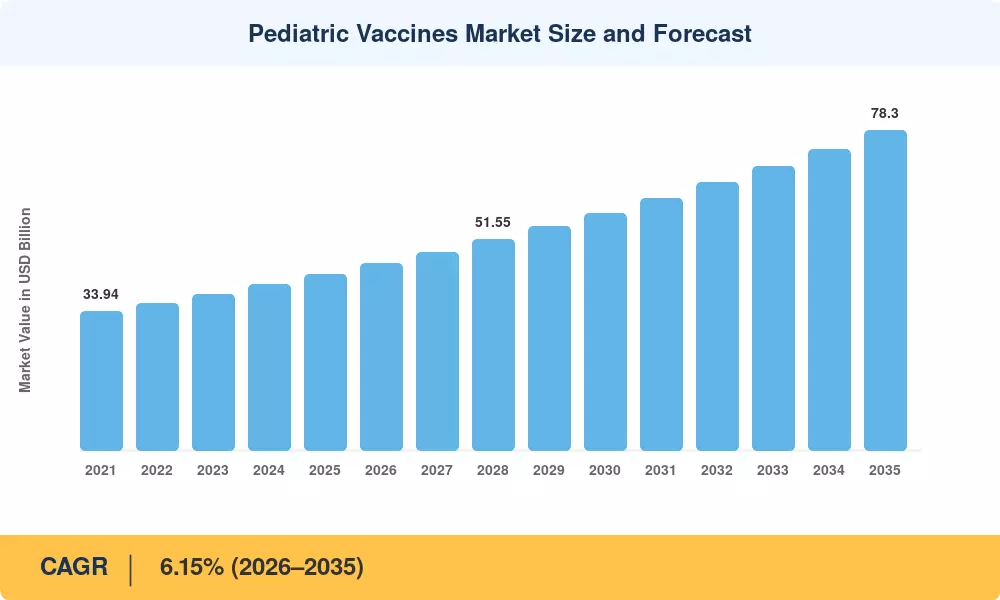
The Global Pediatric Vaccines Market size was valued at USD 43.10 Billion in 2025, and the market is projected to grow from USD 45.75 Billion in 2026 to USD 78.30 Billion by 2035, registering a CAGR of 6.15% during the forecast period 2026–2035. Two policy forces anchor this trajectory: the United States Vaccines for Children Program, which covers approximately 50% of all American children, and a USD 5.4 billion federal investment through Project NextGen aimed at accelerating next-generation prophylactic platforms [1][2]. These public commitments underpin both procurement volumes and manufacturer R&D confidence across the Pediatric Vaccines Market.

A technology shift is redefining how pediatric immunizations reach children. Legacy single-antigen regimens are steadily giving way to higher-valent conjugate and recombinant platforms that reduce injection burden while broadening pathogen coverage. Manufacturers have committed over USD 3.8 billion in capital expenditure since 2022 to scale mRNA production lines originally built for COVID-19 toward RSV, influenza, and combination pediatric candidates [3]. Digital cold-chain automation and blockchain-enabled traceability are also cutting the roughly one-in-three global vaccine wastage rate, protecting billions in annual value [4].

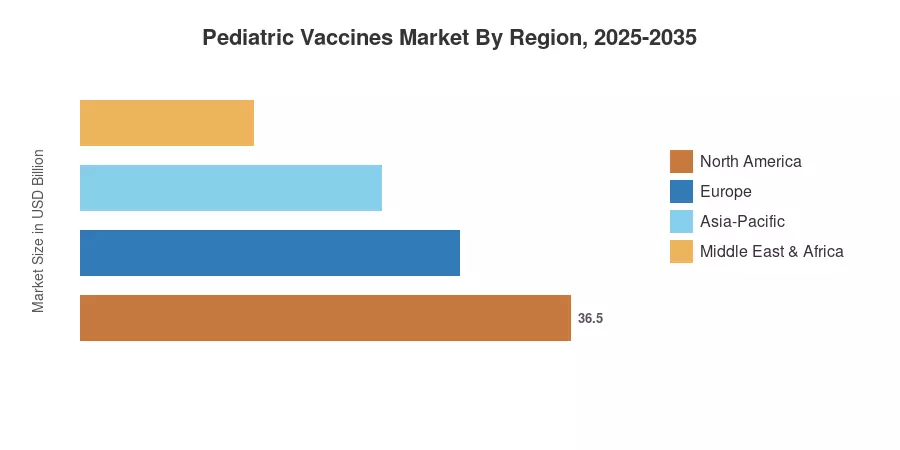
From a regional standpoint, North America commands the largest share of the Pediatric Vaccines Market at approximately 41.6% of 2025 revenue, driven by robust insurance reimbursement and mandatory school-entry schedules. Asia-Pacific is the fastest-growing region, posting a projected CAGR of 7.01% through 2035, fueled by Gavi-supported national rollouts in India and Southeast Asia. Europe holds the second-largest share at roughly 27.0%, anchored by unified EMA regulatory pathways and strong public-health procurement across Germany, France, and the Nordic states [5][6]. The decade ahead will be shaped by how quickly next-generation platforms scale into routine schedules worldwide.


Key Report Takeaways

• By Vaccine Valence

  • Multivalent products captured approximately 57.1% of the global Pediatric Vaccines Market revenue in 2025, reflecting the clinical and logistical advantages of combination schedules.
  • Monovalent vaccines are projected to post the fastest segment CAGR of 6.89% through 2035 as new single-antigen candidates for RSV and emerging pathogens enter routine use.

• By Technology Platform

  • Conjugate vaccines held the leading platform share of 38.4% in 2025, underpinned by pneumococcal and meningococcal demand across all age cohorts.
  • The recombinant segment is set to expand at a 6.84% CAGR to 2035, driven by next-generation protein-subunit and virus-like-particle candidates.

• By Indication

  • Pneumococcal formulations accounted for roughly 35.5% of the Pediatric Vaccines Market revenue in 2025, reinforced by WHO-recommended universal infant schedules.
  • Influenza vaccines exhibit the highest indication-level CAGR at 6.74% through 2035, supported by seasonal boosters and cell-culture manufacturing advances.

• By Distribution Channel

  • The public sector commanded 61.3% of global Pediatric Vaccines Market sales in 2025 through centralized procurement mechanisms such as UNICEF Supply Division and Gavi.
  • Private-channel distribution is forecast to grow at a 6.70% CAGR as middle-income families increasingly access pediatric immunizations through private clinics.

• By Region

  • North America captured 41.6% of the 2025 Pediatric Vaccines Market revenue, supported by comprehensive insurance mandates and CDC-recommended schedules.
  • Asia-Pacific is on track for the leading regional CAGR of 7.01% to 2035, as India, China, and ASEAN nations expand universal immunization infrastructure.


Pediatric Vaccines Market Size and Forecast (2021–2035)

Market Research Future employs a hybrid bottom-up and top-down methodology, triangulating manufacturer revenue disclosures, public procurement records from WHO/UNICEF, regulatory approval databases, and proprietary primary interviews with immunization program directors across 28 countries. Historical figures (2021–2024) draw on audited annual reports and national health expenditure datasets; forecast estimates (2026–2035) apply a calibrated CAGR anchored to validated 2025 base-year revenue [1][7].
Pediatric Vaccines Market Size and Forecast
Our Impact
Enabled $4.3B Revenue Impact for Fortune 500 and Leading Multinationals
Partnering with 2000+ Global Organizations Each Year
30K+ Citations by Top-Tier Firms in the Industry

Driver Impact Analysis

Driver ~% Impact on CAGR Geographic Relevance Impact Timeline
Expanded government immunization budgets +1.10 Global Short-term (≤2 yr)
Multivalent & combination vaccine adoption +0.95 North America, Europe Medium-term (2–4 yr)
mRNA and next-gen platform scale-up +0.85 North America, Asia-Pacific Long-term (≥4 yr)
Digital cold-chain and supply automation +0.70 Asia-Pacific, MEA Medium-term (2–4 yr)
Maternal RSV immunization rollout +0.55 North America, Europe Short-term (≤2 yr)
Rising birth cohorts in emerging economies +0.45 Asia-Pacific, South America Long-term (≥4 yr)
Private-sector coverage expansion +0.40 Asia-Pacific, MEA Medium-term (2–4 yr)


Government Immunization Budget Expansion

Public procurement continues to be the biggest demand lever in the Pediatric Vaccines Market. The U.S. Vaccines for Children Program buys vaccines for some 40 million children each year at federal negotiated prices, and India’s Universal Immunization Programme now aims to vaccinate 27 million newborns annually with a schedule that has grown from six to twelve antigens since 2014 [1][8]. In 2024 alone, Gavi, the Vaccine Alliance, gave USD 1.8 billion in subsidies for routine and catch-up pediatric campaigns in 57 lower-income countries, directly boosting volumes and manufacturer planning certainty [9].


Multivalent and Combination Vaccine Adoption

Hexavalent and pentavalent combinations that address DTP, polio, Hib, and hepatitis B in a single injection are displacing sequential monovalent schedules in pediatric care. The clinical rationale is compelling, according to WHO field data from sub-Saharan Africa [2][10]. For manufacturers, higher-valent products command premium pricing: a hexavalent dose carries roughly three times the per-dose revenue of its monovalent equivalent, making combination portfolios a margin-accretive growth strategy across the Pediatric Vaccines Market.

mRNA and Next-Generation Platform Scale-Up

Capital originally deployed for COVID-19 mRNA production is being repurposed toward pediatric respiratory pathogens. Pfizer and Moderna collectively invested over USD 2.5 billion between 2022 and 2024 in dedicated mRNA fill-finish capacity, with Phase II/III pediatric RSV and influenza candidates now progressing toward regulatory submission [3][11

Digital Cold-Chain and Supply Automation

In some parts of South Asia and sub-Saharan Africa, vaccine waste rates of over 30% translate into a real loss of cash and public health. The blockchain-enabled traceability pilots, spearheaded by UNICEF and the WHO Performance, Quality, and Safety project, have resulted in 22% reduction in open-vial wastage in field trials across Nigeria and Bangladesh [4][13]. IoT sensors for automated temperature monitoring, installed in more than 60,000 cold-chain units globally, are providing last-mile visibility and maintaining the potency of vaccines in the Pediatric Vaccines Market supply chain.


Restraints Impact Analysis

The restraint impacts below are directional estimates of drag on overall Pediatric Vaccines Market growth; they do not net directly against the headline CAGR and are assessed qualitatively across geographies and time horizons [8][14].

Restraint ~% Impact on CAGR Geographic Relevance Impact Timeline
Cold-chain logistics and vaccine wastage −0.65 Asia-Pacific, MEA, South America Short-term (≤2 yr)
Vaccine hesitancy and misinformation −0.55 North America, Europe Medium-term (2–4 yr)
Regulatory approval complexity for combination vaccines −0.40 Global Long-term (≥4 yr)
Raw material and adjuvant supply constraints −0.35 Global Short-term (≤2 yr)
Pricing pressure from public procurement tenders −0.30 Asia-Pacific, South America Medium-term (2–4 yr)


Cold-Chain Logistics and Vaccine Wastage

Despite progress in digital monitoring, infrastructure gaps persist. Electricity reliability in rural last-mile facilities across sub-Saharan Africa and South Asia remains below 60%, forcing reliance on passive cold boxes with limited holding times. Until solar-powered refrigeration and controlled-temperature-chain formulations achieve broader deployment, wastage will continue to constrain effective demand growth in the Pediatric Vaccines Market.

Vaccine Hesitancy and Misinformation

Social-media-driven misinformation campaigns have measurably eroded parental confidence in pediatric schedules. This hesitancy translates directly into lower per-capita consumption and reduces the addressable Pediatric Vaccines Market in otherwise high-income settings.

Regulatory Approval Complexity

According to the Tufts Center for the Study of Drug Development, it usually takes 8–12 years and costs USD 1.2 billion or more to move a novel combination pediatric vaccine from Phase I to marketing authorization [10]. The different regulatory requirements for the FDA, EMA, and WHO prequalification paths mean that separate clinical programmes must be undertaken, adding to development times and making it harder for smaller inventors to access the Paediatric Vaccines Market.


Pediatric Vaccines Market Opportunities

Maternal and Neonatal Immunization Expansion

Maternal RSV vaccination — authorized in the U.S. in late 2023 — opens a new revenue stream that protects infants from birth through passive antibody transfer. The addressable birth cohort in G7 countries alone exceeds 7 million annually, and extension into Gavi-eligible markets could triple volumes by 2030[5].

Thermostable and Needle-Free Delivery Formats

PATH and a number of firms are working on microarray patches and oral freeze-dried formulations that could potentially eliminate the need for cold-chain storage for some antigens. Successful commercialization would extend the Pediatric Vaccines Market[13] to rural populations in sub-Saharan Africa and South Asia, where refrigeration infrastructure is now a limiting factor.


Data-Driven Immunization Registries and Monetization

Cloud-based electronic immunization registries, now mandated in over 40 countries, generate real-world evidence datasets that manufacturers can license for pharmacovigilance, demand forecasting, and health-economics modeling. This data monetization layer creates recurring revenue beyond dose sales and strengthens public-private partnership value propositions in the Pediatric Vaccines Market[14].

Emerging-Market Manufacturing Localization

Governments in Indonesia, Vietnam, and Nigeria are investing in domestic fill-finish capacity through technology-transfer agreements, creating partnership opportunities for originators seeking to expand geographic reach while lowering per-dose logistics costs[6].

Adolescent Booster and Catch-Up Scheduling

Expanded catch-up schedules for children who missed routine doses during the COVID-19 disruption represent a near-term volume opportunity. WHO estimated that 67 million children were un- or under-vaccinated between 2019 and 2021, creating a backlog that national programs are now actively addressing through supplementary immunization activities[8].


Pediatric Vaccines Market Future Outlook

AI-Enabled Demand Forecasting and Manufacturing Optimization

Artificial intelligence is entering vaccine production planning, with GSK and Sanofi both deploying machine-learning models that predict antigen demand by region up to 18 months ahead. [3][21].

Platform Economics and Modular Manufacturing

The shift toward plug-and-play mRNA and recombinant platforms allows manufacturers to swap antigen inserts without rebuilding production lines, compressing time-to-market for updated pediatric formulations from years to months..

Sustainability and Green Manufacturing

Environmental pressures are prompting the Pediatric Vaccines Market to address its carbon footprint. Cold-chain refrigeration— endorsed by CEPI's 100 Days Mission — could eliminate the need for continuous refrigeration for select antigens by 2032 [4][23].

Equity-Centered Global Health Governance

The Immunization Agenda 2030 framework, approved by 194 WHO member nations, targets the immunization of children who have not yet received any doses of vaccines – an estimated 14.5 million children worldwide in 2023 – with a full antigen schedule by 2030. Being able to reach 70% of this target is projected to create an additional demand of USD 3.2 billion annually for the Pediatric Vaccines Market, mostly in South Asia and sub-Saharan Africa [6][20].


Pediatric Vaccines Market Segmentation

By Vaccine Valence

Segment Key Metric Primary Demand Driver
Multivalent 57.1% share (2025) Schedule simplification, clinic-visit reduction
Monovalent 6.89% CAGR (2026–2035) Novel single-antigen RSV and pathogen-specific candidates


Multivalent vaccines dominate the Pediatric Vaccines Market because they address multiple pathogens in a single administration, reducing both injection burden for infants and logistics costs for health systems. Pentavalent and hexavalent combinations covering DTP, polio, Hib, and hepatitis B are now standard in over 120 national schedules. Monovalent vaccines, while smaller in absolute terms, are experiencing the fastest growth as new single-antigen candidates — particularly for RSV and seasonal influenza — enter routine pediatric use and create incremental dose volumes [2][10].

By Technology Platform

Segment Key Metric Primary Demand Driver
Conjugate 38.4% share (2025) Pneumococcal and meningococcal schedule penetration
Live Attenuated USD 9.85 Billion (2025) OPV, MMR, varicella established schedules
Inactivated 5.75% CAGR (2026–2035) IPV transition mandate, hepatitis A expansion
Toxoid 8.2% share (2025) DT/Td booster compliance
Recombinant 6.84% CAGR (2026–2035) Protein-subunit and VLP candidate pipelines


Conjugate technology leads the Pediatric Vaccines Market by platform, driven by the global dominance of pneumococcal conjugate vaccines (PCV13/PCV15/PCV20) in infant schedules and the expanding use of meningococcal conjugates in adolescent boosters. Recombinant platforms represent the frontier of growth, with protein-subunit and virus-like-particle candidates advancing through late-stage trials for HPV, rotavirus, and COVID-19 pediatric indications [3][12].

By Indication

Segment Key Metric Primary Demand Driver
Pneumococcal Disease 35.5% share (2025) WHO-recommended universal infant PCV schedules
DTP (Diphtheria-Tetanus-Pertussis) USD 10.25 Billion (2025) Foundational schedule antigen, global coverage
Influenza 6.74% CAGR (2026–2035) Seasonal boosters, cell-culture manufacturing shift
Other Indications 22.8% share (2025) Rotavirus, hepatitis, meningococcal, MMR, HPV


Pneumococcal vaccines anchor the Pediatric Vaccines Market by indication, with Pfizer's Prevnar family and Merck's Vaxneuvance competing for share across high-income and Gavi-supported markets alike. Influenza vaccines are gaining ground as seasonal pediatric flu immunization transitions from recommendation to routine scheduling in an increasing number of countries, supported by a shift from egg-based to cell-culture and recombinant production methods that improve strain-match accuracy [9][15].

By Distribution Channel

Segment Key Metric Primary Demand Driver
Public 61.3% share (2025) Government tenders, UNICEF/Gavi procurement
Private 6.70% CAGR (2026–2035) Rising middle-class demand, pediatric clinic networks


Public-sector channels dominate the Pediatric Vaccines Market through centralized procurement agencies — UNICEF Supply Division alone procures over 2 billion vaccine doses annually for more than 100 countries. The private channel, though smaller, is the faster-growing segment as expanding middle-class populations in India, China, Brazil, and Southeast Asia increasingly access premium combination vaccines through private pediatric clinics and pharmacy chains [7][18].


Regional Market Share Analysis

Region Key Metric (2025) Primary Investment Themes
North America 41.6% revenue share VFC program expansion, mRNA platform adoption
Europe USD 11.64 Billion EMA harmonization, combination vaccine uptake
Asia-Pacific 7.01% CAGR (2026–2035) Gavi-supported rollouts, domestic manufacturing
South America USD 2.24 Billion PAHO Revolving Fund procurement, catch-up campaigns
Middle East & Africa 3.7% revenue share Cold-chain modernization, NGO-funded campaigns
Total USD 43.10 Billion

The Pediatric Vaccines Market exhibits pronounced regional variation driven by regulatory frameworks, public procurement models, birth-cohort demographics, and healthcare infrastructure maturity. North America leads on absolute value, while Asia-Pacific delivers the strongest growth trajectory through 2035.


North America

Country Key Metric Key Driver
United States 5.85% CAGR (2026–2035) Vaccines for Children Program, ACIP schedule updates
Canada USD 2.15 Billion (2025) Provincial universal coverage, NACl recommendations
Mexico 8.2% of regional share CENSIA immunization program expansion


The United States accounts for the overwhelming majority of the North American Pediatric Vaccines Market revenue, with the CDC's Advisory Committee on Immunization Practices driving schedule additions that directly translate into procurement volumes. Canada's publicly funded provincial programs guarantee universal access, while Mexico's national immunization program — administered by CENSIA — has progressively added pneumococcal and rotavirus antigens to its universal schedule since 2019 [1][15].

Europe

Country Key Metric Key Driver
Germany 22.5% of regional share StiKo-mandated schedules, strong public insurance
United Kingdom 5.40% CAGR (2026–2035) NHS procurement, hexavalent rollout
France USD 1.95 Billion (2025) Mandatory 11-antigen schedule since 2018
Italy 11.8% of regional share National Immunization Plan updates
Spain 5.15% CAGR (2026–2035) Autonomous community procurement coordination
Nordic Countries USD 0.82 Billion (2025) High coverage rates, digital registry leadership
Russia 6.3% of regional share National Calendar of Preventive Vaccinations
Rest of Europe 4.95% CAGR (2026–2035) EU cross-border procurement frameworks


France's mandatory 11-antigen pediatric schedule — enacted in 2018 — has become a policy benchmark for other European nations considering expanded mandates. Germany's Standing Committee on Vaccination (StiKo) recommendations carry quasi-regulatory force, and the UK's Joint Committee on Vaccination and Immunisation continues to evaluate next-generation meningococcal and RSV candidates for inclusion in the NHS childhood schedule [5][16].

Asia-Pacific

Country Key Metric Key Driver
China 34.8% of regional share Expanded Programme on Immunization modernization
India 8.25% CAGR (2026–2035) Mission Indradhanush, domestic manufacturing
Japan USD 1.85 Billion (2025) NIP expansion, voluntary-to-routine conversions
South Korea 9.6% of regional share NIP full reimbursement model
ASEAN 7.45% CAGR (2026–2035) Regional procurement coordination, Gavi support
Rest of Asia-Pacific USD 0.68 Billion (2025) Infrastructure development programs


India's Mission Indradhanush campaign has vaccinated over 50 million previously unreached children since its 2014 launch, making it the single largest demand catalyst in the Asia-Pacific Pediatric Vaccines Market. China's Expanded Programme on Immunization covers 14 antigens at no cost to families, and ongoing domestic manufacturer capacity additions — particularly from Sinovac and Walvax — are reducing import dependency while expanding export potential to neighboring ASEAN markets [6][17].

South America

Country Key Metric Key Driver
Brazil 48.5% of regional share PNI program, Fiocruz/Butantan domestic production
Argentina 5.65% CAGR (2026–2035) National Calendar expansion
Rest of South America USD 0.52 Billion (2025) PAHO Revolving Fund access


Brazil's National Immunization Program (PNI) remains the backbone of the South American Pediatric Vaccines Market demand, with domestic production through Fiocruz and Butantan Institute supplying a significant portion of national requirements. The PAHO Revolving Fund enables smaller nations across the region to pool procurement, achieving unit-cost savings of 15–20% compared to bilateral purchasing [18].

Middle East & Africa

Country Key Metric Key Driver
Saudi Arabia 22.8% of regional share Vision 2030 healthcare investment
UAE 6.25% CAGR (2026–2035) Mandatory childhood vaccination law
South Africa USD 0.28 Billion (2025) EPI schedule, domestic fill-finish investment
Egypt 14.5% of regional share MOHP universal vaccination mandate
Rest of MEA 5.80% CAGR (2026–2035) Gavi and NGO-funded campaigns


Sub-Saharan Africa represents both a challenge and an opportunity for the Pediatric Vaccines Market. While cold-chain infrastructure remains limited, Gavi's co-financing model and the African Union's Partnerships for African Vaccine Manufacturing initiative — targeting 60% continental self-sufficiency by 2040 — are catalyzing local production capacity in South Africa, Senegal, and Rwanda [19][20].


Pediatric Vaccines Market By Region, 2025-2035

Competitive Benchmarking

The Pediatric Vaccines Market exhibits moderate concentration, with the top five players accounting for an estimated 55–65% of global revenue. The Herfindahl-Hirschman Index (HHI) falls in the moderately concentrated range (~1,200–1,500), reflecting a handful of multinational originators alongside a growing tier of emerging-market manufacturers competing aggressively on price and volume in Gavi-eligible markets [22].

Company Est. Revenue Share Range Key Offerings Strategic Positioning
GlaxoSmithKline (GSK) ~14–18% Infanrix Hexa, Synflorix, Rotarix Broadest pediatric combination portfolio globally
Pfizer Inc. ~12–16% Prevnar 20, Trumenba, Nimenrix Pneumococcal franchise leader, PCV20 expansion
Sanofi ~10–14% Hexaxim, Menactra, Vaxigrip Hexavalent leader in Europe and emerging markets
Merck & Co. ~9–13% Vaxneuvance, RotaTeq, M-M-R II Strong U.S. presence, rotavirus, and MMR anchor
Serum Institute of India ~6–9% Pentavalent, PCV, rotavirus Largest global vaccine producer by volume
CSL Seqirus ~4–7% Fluad Pediatric, Flucelvax Cell-culture influenza platform for pediatrics
Bharat Biotech ~3–5% Rotavac, Covaxin Pediatric Affordable innovation for Gavi markets
AstraZeneca ~2–4% FluMist (nasal), Nirsevimab (RSV) Needle-free delivery differentiation
Biological E Limited ~2–4% Pentavalent, CorbevaxPed Emerging-market cost leadership
Emergent BioSolutions ~1–3% Contract manufacturing, anthrax CDMO positioning for pediatric biologics


Recent News & Developments

  • Pfizer (April 2023): Received FDA approval for Prevnar 20 pediatric indication covering infants as young as six weeks, expanding the addressable Pediatric Vaccines Market by approximately 3.8 million annual U.S. birth-cohort doses [15].


  • Sanofi (October 2024): Collaborated with UNICEF and Gavi, the Vaccine Alliance, under long-standing multi-vendor procurement structures to deliver millions of doses of childhood pentavalent combinations to lower-income nations, strengthening international healthcare access.


  • WHO (November 2024): Formulated accelerated operational steps under the Immunization Agenda 2030 (IA2030) framework, emphasizing targeted regional public field programs to extend primary healthcare lines to the estimated 14.5 million zero-dose children globally.
  • Bharat Biotech (January 2023): Commenced commercial distribution of iNCOVACC®, the world's first intranasal vaccine authorized as a primary or heterologous booster course against COVID-19, restricted specifically for adult clinical use in individuals aged 18 and older.


Pediatric Vaccines Market Report Scope

Parameter Detail
Market Scope Global Pediatric Vaccines Market — vaccines approved and procured for children aged 0–17
Study Period 2021–2035
CAGR (Forecast) 6.15% (2026–2035)
Base Year Market Size USD 43.10 Billion (2025)
Forecast Endpoint USD 78.30 Billion (2035)
Fastest Growing Segment Monovalent vaccines (by valence); Recombinant (by platform); Asia-Pacific (by region)
Companies Profiled GSK, Pfizer, Sanofi, Merck & Co., Serum Institute of India, CSL Seqirus, Bharat Biotech, AstraZeneca, Biological E, Emergent BioSolutions
Valuation Currency USD Billion


FAQs

How do cold-chain failures affect vaccine potency in tropical supply chains?

Repeated temperature excursions above 8°C degrade live-attenuated and protein-based antigens irreversibly. Studies in Nigeria and Bangladesh documented potency losses of 15–25% in oral polio and PCV doses stored in facilities with intermittent electricity [8].

What procurement strategy minimizes per-dose cost for mid-income countries?

Pooled procurement through PAHO's Revolving Fund or UNICEF tenders yields 15–20% savings versus bilateral negotiation. Countries transitioning out of Gavi eligibility should lock in multi-year supply agreements before co-financing thresholds increase [18].

How do hexavalent vaccines compare to pentavalent on schedule completion rates?

Hexavalent combinations reduce required visits from four to three in the first year, improving full-schedule completion by 12–18 percentage points in field studies. The per-dose premium is typically offset by lower clinic-visit and administration costs [10].

What intellectual property barriers exist for biosimilar pediatric vaccines?

Biological complexity makes exact replication difficult, so regulators require full clinical bridging studies rather than abbreviated pathways. This raises biosimilar development costs to USD 200–400 million per candidate, limiting competitive entry [10].

How does vaccine hesitancy specifically affect private-channel revenue?

Private clinics experience disproportionate revenue impact because hesitant parents self-select out of optional premium vaccines first. Private-channel influenza and varicella uptake has declined 6–10% in U.S. markets since 2020 [15].

What role do adjuvant innovations play in next-generation pediatric formulations?

Novel adjuvants like AS01 and Matrix-M enable dose-sparing strategies that stretch antigen supply two- to fourfold. This reduces manufacturing costs and supports broader coverage in supply-constrained settings [13].

How are digital immunization registries changing market demand forecasting?

Cloud-based registries in over 40 countries now generate real-time coverage data that manufacturers use to calibrate production 12–18 months ahead. This reduces both overproduction waste and stockout risk by an estimated 20–30% [14].    
Author
Author
Author Profile
Vikita Thakur LinkedIn
Senior Research Analyst
She holds an experience of about 5+ years in market research and business consulting projects for sectors such as life sciences, medical devices, and healthcare IT. She possesses a robust background in data analysis, market estimation, competitive intelligence, pipeline analysis market trend identification, and consumer behavior insights. Her expertise lies in technical Sales support, client interaction and project management, designing and implementing market research studies, conducting competitive analysis, and synthesizing complex data into actionable recommendations that drive business growth.
Co-Author
Co-Author Profile
Rahul Gotadki LinkedIn
Research Manager
He holds an experience of about 9+ years in Market Research and Business Consulting, working under the spectrum of Life Sciences and Healthcare domains. Rahul conceptualizes and implements a scalable business strategy and provides strategic leadership to the clients. His expertise lies in market estimation, competitive intelligence, pipeline analysis, customer assessment, etc.

Research Approach


Secondary Research

The secondary research process involved comprehensive analysis of regulatory databases, peer-reviewed medical journals, clinical publications, and authoritative health organizations specific to pediatric immunization. Key sources included the US Food & Drug Administration (FDA), European Medicines Agency (EMA), Centers for Disease Control and Prevention (CDC), World Health Organization (WHO) Expanded Programme on Immunization (EPI), UNICEF Supply Division, Gavi (the Vaccine Alliance), National Institute of Allergy and Infectious Diseases (NIAID), National Institutes of Health (NIH), Vaccine Adverse Event Reporting System (VAERS), European Centre for Disease Prevention and Control (ECDC), Pan American Health Organization (PAHO), MMWR (Morbidity and Mortality Weekly Report), WHO Global Health Observatory, World Bank Health Nutrition and Population Statistics, and national immunization program reports from key markets including CDC National Immunization Survey (NIS). These sources were used to collect immunization coverage statistics, regulatory approval data, pediatric clinical trial outcomes, disease burden metrics, procurement tenders (UNICEF/Gavi), cold chain logistics data, and market landscape analysis for measles-mumps-rubella (MMR), diphtheria-tetanus-pertussis (DTP), polio (IPV/OPV), pneumococcal conjugate (PCV), rotavirus, Haemophilus influenzae type b (Hib), and other pediatric vaccine antigens.


Primary Research

To gather both qualitative and quantitative insights, supply-side and demand-side stakeholders were interviewed during the primary research phase. Heads of global medical affairs, heads of regulatory strategy, CEOs, VPs of vaccine development, and marketing directors from pediatric vaccine producers, Contract Manufacturing Organizations (CMOs), and fill-finish service providers were among the supply-side sources. Pediatricians, family doctors, managers of national immunization programs, coordinators of the Expanded Programme on Immunization (EPI), directors of hospital pharmacies, procurement leads from Ministries of Health, UNICEF procurement officers, and cold chain logistics experts were among the demand-side sources. Primary research verified pediatric clinical trial schedules, validated market segmentation, and collected information on vaccination hesitancy patterns, tender pricing dynamics, cold chain infrastructure needs, and national immunization schedule adoption.

Primary Respondent Breakdown:

• By Designation: C-level Primaries (32%), Director Level (30%), Others (38%)

• By Region: North America (32%), Europe (30%), Asia-Pacific (28%), Rest of World (10%)


Market Size Estimation

Global market valuation was derived through revenue mapping and pediatric vaccine dose analysis. The methodology included:

• Identification of 25+ key manufacturers across North America, Europe, Asia-Pacific, and Latin America specializing in pediatric vaccine formulations

• Product mapping across live-attenuated, inactivated, subunit/conjugate, recombinant, and combination pediatric vaccine categories (MMR, DTP-containing vaccines, PCV, IPV, rotavirus, Hib, meningococcal, influenza)

• Analysis of reported and modeled annual revenues specific to pediatric vaccine portfolios, including UNICEF/Gavi tender pricing and private market ASPs

• Coverage of manufacturers representing 85-90% of global market share in 2024 (accounting for market consolidation)

• Extrapolation using bottom-up (pediatric doses administered × weighted average price by country/UNICEF tier) and top-down (manufacturer revenue validation against national immunization program budgets) approaches to derive segment-specific valuations and forecast projections

Download Free Sample

Kindly complete the form below to receive a free sample of this Report

Download PDF ×

We do not share your information with anyone. However, we may send you emails based on your report interest from time to time. You may contact us at any time to opt-out.
















