×
Request Free Sample ×

Kindly complete the form below to receive a free sample of this Report

Leading companies partner with us for data-driven Insights

clients tt-cursor
Hero Background

Peripheral Angioplasty Market

ID: MRFR/HC/14606-HCR
128 Pages
Rahul Gotadki
October 2025

Peripheral Angioplasty Market Research Report Information By Product (Balloon Catheters, Stents, and Guidewires), By End User (Hospitals, Ambulatory Surgical Centers, and Cardiac Catheterization Centers) And By Region (North America, Europe, Asia-Pacific, And Rest Of The World) –Market Forecast Till 2035

Share:
Download PDF ×

We do not share your information with anyone. However, we may send you emails based on your report interest from time to time. You may contact us at any time to opt-out.

Peripheral Angioplasty Market Infographic
Purchase Options

Peripheral Angioplasty Market Summary

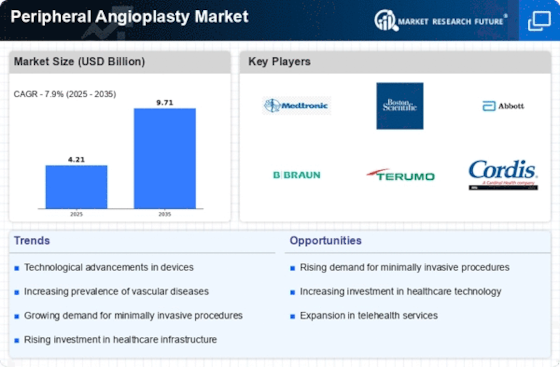
As per MRFR analysis, the Peripheral Angioplasty Market Size was estimated at 4.208 USD Billion in 2024. The Peripheral Angioplasty industry is projected to grow from 4.541 USD Billion in 2025 to 9.714 USD Billion by 2035, exhibiting a compound annual growth rate (CAGR) of 7.9 during the forecast period 2025 - 2035.

Key Market Trends & Highlights

The Peripheral Angioplasty Market is poised for substantial growth driven by technological advancements and increasing awareness of vascular health.

  • Technological advancements in angioplasty devices are enhancing procedural outcomes and patient safety.
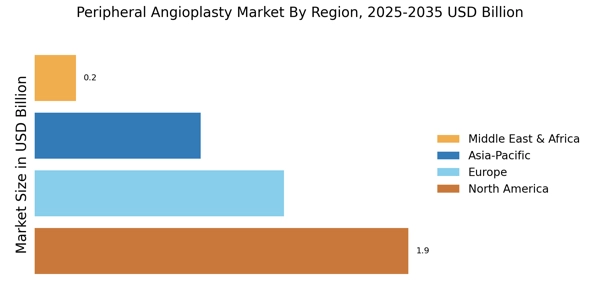
  • North America remains the largest market, while the Asia-Pacific region is emerging as the fastest-growing market for peripheral angioplasty.
  • Balloon catheters dominate the market, whereas stents are witnessing the fastest growth due to their increasing adoption in clinical settings.
  • The rising prevalence of peripheral artery disease and supportive regulatory frameworks are key drivers propelling market expansion.

Market Size & Forecast

2024 Market Size 4.208 (USD Billion)
2035 Market Size 9.714 (USD Billion)
CAGR (2025 - 2035) 7.9%

Major Players

Medtronic (US), Boston Scientific (US), Abbott Laboratories (US), B. Braun Melsungen AG (DE), Terumo Corporation (JP), Cordis Corporation (US), Cook Medical (US), AngioDynamics (US), Asahi Intecc Co., Ltd. (JP)
Peripheral Angioplasty Market Trends

The Peripheral Angioplasty Market is currently experiencing a notable transformation, driven by advancements in medical technology and an increasing prevalence of vascular diseases. As healthcare systems worldwide prioritize minimally invasive procedures, the demand for peripheral angioplasty devices is on the rise. This shift is largely attributed to the growing awareness of the benefits associated with angioplasty, such as reduced recovery times and lower complication rates compared to traditional surgical methods. Furthermore, the aging population is contributing to a higher incidence of conditions requiring angioplasty, thereby expanding the market's potential. In addition to technological innovations, regulatory support is playing a crucial role in shaping the Peripheral Angioplasty Market. Governments are increasingly recognizing the importance of improving patient outcomes through enhanced treatment options. This has led to streamlined approval processes for new devices and therapies, fostering a more competitive landscape. Moreover, the integration of digital health solutions, such as telemedicine and remote monitoring, is likely to enhance patient engagement and follow-up care, further driving market growth. As the industry evolves, stakeholders must remain vigilant to emerging trends and adapt their strategies accordingly to capitalize on the opportunities presented by this dynamic market.

Technological Advancements

The Peripheral Angioplasty Market is witnessing rapid technological advancements, particularly in the development of innovative devices and materials. These enhancements are aimed at improving the efficacy and safety of procedures, thereby attracting more healthcare providers to adopt angioplasty as a preferred treatment option.

Regulatory Support

Regulatory bodies are increasingly facilitating the approval of new angioplasty devices, which is likely to stimulate market growth. This support not only accelerates the introduction of advanced technologies but also ensures that patients have access to the latest treatment options.

Integration of Digital Health Solutions

The incorporation of digital health solutions into the Peripheral Angioplasty Market is becoming more prevalent. These technologies, including telemedicine and remote patient monitoring, may enhance patient care and follow-up, potentially leading to improved outcomes and satisfaction.

Peripheral Angioplasty Market Drivers

Rising Geriatric Population

The rising geriatric population is a significant driver of the Peripheral Angioplasty Market. As individuals age, they are more susceptible to cardiovascular diseases, including PAD. The World Health Organization projects that the number of people aged 60 years and older will double from 12% to 22% of the global population by 2050. This demographic shift is likely to increase the demand for angioplasty procedures as older adults seek effective treatments for their vascular conditions. Consequently, the Peripheral Angioplasty Market is expected to expand in response to the growing needs of this population, highlighting the importance of tailored healthcare solutions.

Supportive Regulatory Frameworks

Supportive regulatory frameworks are playing a crucial role in shaping the Peripheral Angioplasty Market. Regulatory bodies are increasingly approving new devices and technologies that enhance the safety and efficacy of angioplasty procedures. This regulatory support fosters innovation and encourages manufacturers to invest in research and development. As a result, the market is likely to see a surge in the introduction of advanced angioplasty solutions. Furthermore, streamlined approval processes can expedite the availability of these innovations to healthcare providers, thereby enhancing patient care and driving growth in the Peripheral Angioplasty Market.

Rising Prevalence of Peripheral Artery Disease

The increasing incidence of peripheral artery disease (PAD) is a primary driver for the Peripheral Angioplasty Market. As populations age, the prevalence of conditions such as diabetes and hypertension rises, leading to higher rates of PAD. According to recent estimates, PAD affects approximately 8 to 12 million individuals in the United States alone. This growing patient population necessitates effective treatment options, including angioplasty procedures. The Peripheral Angioplasty Market is likely to expand as healthcare providers seek to address the needs of these patients, offering innovative solutions to improve vascular health and reduce complications associated with PAD.

Technological Innovations in Angioplasty Devices

Technological advancements in angioplasty devices are significantly influencing the Peripheral Angioplasty Market. Innovations such as drug-eluting balloons and bioresorbable stents have enhanced the efficacy and safety of angioplasty procedures. These devices are designed to reduce restenosis rates and improve patient outcomes. The market for these advanced devices is projected to grow, with estimates suggesting a compound annual growth rate of over 6% in the coming years. As healthcare providers increasingly adopt these technologies, the Peripheral Angioplasty Market is expected to witness substantial growth, driven by the demand for improved treatment options.

Increasing Awareness and Education on Vascular Health

The growing awareness and education surrounding vascular health are contributing to the expansion of the Peripheral Angioplasty Market. Public health campaigns and educational initiatives aimed at promoting awareness of PAD and its risk factors are encouraging individuals to seek medical attention sooner. This proactive approach leads to earlier diagnosis and treatment, including angioplasty procedures. As more patients become informed about their vascular health, the demand for effective interventions is likely to rise, thereby propelling the Peripheral Angioplasty Market forward. Healthcare providers are responding by enhancing their services to meet this increasing demand.

Market Segment Insights

By Product: Balloon Catheters (Largest) vs. Stents (Fastest-Growing)

In the Peripheral Angioplasty Market, Balloon Catheters hold the largest market share, attributed to their fundamental role in angioplasty procedures. This segment is well-established, with a broad adoption rate among healthcare professionals due to their effectiveness in dilating narrowed arteries. On the other hand, Stents are rapidly gaining traction, showcasing significant growth due to technological advancements that enhance patient outcomes and the increasing prevalence of peripheral artery diseases. The growing awareness and acceptance of stenting among patients and clinicians are driving this emerging segment.

Balloon Catheters (Dominant) vs. Stents (Emerging)

Balloon Catheters are considered the dominant product in the Peripheral Angioplasty Market due to their reliability and essential role during angioplasty. They are primarily used for expanding narrowed arteries and play a critical role in restoring blood flow. Meanwhile, Stents are an emerging technology with significant potential for growth. Recent advancements in stent design and materials, such as drug-eluting stents, are making them increasingly popular for their ability to prevent restenosis. Both segments are vital for improving patient outcomes, with Balloon Catheters leading the market and Stents rapidly expanding their presence.

By End User: Hospitals (Largest) vs. Cardiac Catheterization Centers (Fastest-Growing)

The Peripheral Angioplasty Market is largely dominated by hospitals, which account for the majority of procedures conducted in this sector. This preference is influenced by hospitals having more advanced facilities and specialist personnel capable of managing complex angioplasty cases. Ambulatory surgical centers, while significant, hold a smaller market share owing to their limited capacity for comprehensive patient care compared to hospitals. Cardiac catheterization centers present a notable segment as they are specifically designed for cardiovascular procedures, which is key in enhancing the quality of peripheral angioplasty treatments.

Hospitals (Dominant) vs. Cardiac Catheterization Centers (Emerging)

Hospitals are the predominant end-user segment in the Peripheral Angioplasty Market, primarily due to their extensive resources, including advanced medical technologies and experienced specialists. They provide a broad range of services, which not only attract a larger patient base but also ensure safer and more comprehensive treatment options. In contrast, cardiac catheterization centers are rapidly emerging, specializing solely in cardiovascular conditions. Their growth is driven by the increasing prevalence of peripheral vascular diseases and technological advancements that allow for safer, faster procedures. As these centers develop, their unique positioning may potentially shift patient preferences, leading to a competitive but complementary market relationship.

Get more detailed insights about Peripheral Angioplasty Market

Regional Insights

North America : Market Leader in Innovation

North America is the largest market for peripheral angioplasty, accounting for approximately 45% of the global market share. The region's growth is driven by advanced healthcare infrastructure, increasing prevalence of peripheral artery disease, and favorable reimbursement policies. Regulatory support from agencies like the FDA further catalyzes innovation and adoption of new technologies, enhancing patient outcomes. The United States is the primary contributor, with significant investments from key players such as Medtronic, Boston Scientific, and Abbott Laboratories. The competitive landscape is characterized by continuous product development and strategic partnerships. The presence of established companies ensures a robust supply chain and access to cutting-edge technologies, solidifying North America's position as a leader in the peripheral angioplasty market.

Europe : Emerging Market with Growth Potential

Europe is witnessing significant growth in the peripheral angioplasty market, holding approximately 30% of the global share. The region benefits from an aging population, increasing awareness of cardiovascular diseases, and advancements in medical technology. Regulatory frameworks, such as the Medical Device Regulation (MDR), are enhancing safety and efficacy standards, driving market growth and innovation. Germany, France, and the UK are the leading countries in this market, with a strong presence of key players like B. Braun Melsungen AG and Terumo Corporation. The competitive landscape is marked by collaborations and mergers aimed at expanding product portfolios. The focus on minimally invasive procedures and improved patient outcomes is shaping the future of peripheral angioplasty in Europe.

Asia-Pacific : Rapid Growth and Investment

The Asia-Pacific region is emerging as a significant player in the peripheral angioplasty market, accounting for about 20% of the global share. Factors such as rising disposable incomes, increasing healthcare expenditure, and a growing prevalence of lifestyle-related diseases are driving demand. Government initiatives aimed at improving healthcare access and infrastructure are also contributing to market growth. Countries like Japan, China, and India are at the forefront, with a mix of local and international players like Asahi Intecc Co., Ltd. and Cook Medical. The competitive landscape is evolving, with a focus on innovation and affordability. The region's diverse market dynamics present both challenges and opportunities for growth in the peripheral angioplasty sector.

Middle East and Africa : Untapped Market with Potential

The Middle East and Africa region is gradually developing in the peripheral angioplasty market, holding around 5% of the global share. The growth is driven by increasing awareness of cardiovascular diseases, improving healthcare infrastructure, and rising investments in medical technology. Government initiatives to enhance healthcare access are also playing a crucial role in market expansion. Countries like South Africa and the UAE are leading the way, with a growing presence of international players. The competitive landscape is characterized by a mix of local and global companies, focusing on affordability and accessibility. As healthcare systems evolve, the potential for growth in the peripheral angioplasty market in this region is significant, presenting opportunities for investment and innovation.

Peripheral Angioplasty Market Regional Image

Key Players and Competitive Insights

Leading market players are putting a lot of money on R&D to expand their product lines, which will drive the peripheral angioplasty market's expansion. Additionally, market players are engaging in a range of calculated initiatives to increase their worldwide presence, with important market developments involving the introduction of new products, contracts, M&A transactions, increased investment, and cooperation with other enterprises. To grow and endure in an increasingly cutthroat and dynamic market, Peripheral Angioplasty industry must provide reasonably priced goods.

Manufacturing locally is one of the primary business techniques used by manufacturers to cut operational costs in the  Peripheral Angioplasty industry to help customers and expand the market segment. In recent years, the Peripheral Angioplasty industry has provided some of the biggest benefits to medicine. Major players in the Peripheral Angioplasty Market, including Edwards Lifesciences Corporation, B. Braun Melsungen AG, Cook Medical, Johnson & Johnson, Terumo Corporation, Medtronic, Abbott Laboratories, Boston Scientific Corporation, and others, are engaging in research and development activities in an effort to boost market demand.

Boston Scientific Corporation ("BSC") is a worldwide biomedical/biotechnology engineering company that produces medical devices for use in a variety of interventional medical disciplines, such as interventional cardiology and radiology. On June 29, 1979, Boston Scientific was established in Watertown, Massachusetts, forty-four years ago, as a holding company for Medi-Tech, Inc., a medical goods company, with the goal of positioning the latter for expansion into the field of interventional medicine. Itzhak Bentov, a Czech who immigrated to Israel and later the US, was the creator of Medi-Tech.

In January 2021, Boston declared that it will pay up to $1.2 billion to acquire Minneapolis-based Preventice Solutions, Inc. and its suite of mobile heart health solutions.

Abbott Laboratories is a worldwide medical equipment and healthcare firm. In addition to selling medical equipment, diagnostics, branded generic medications, and nutritional goods, the company was established in 1888 by Chicago physician Wallace Calvin Abbott to develop well-known drugs. In 2013, it divided into AbbVie and separated its research-based pharmaceutical division. MitraClip, Glucerna, Ensure, ZonePerfect, FreeStyle Libre, i-STAT, Similac, Pedialyte, and BinaxNOW are among the products made by Abbott. In January 2022, Abbott unveiled Lingo, a set of consumer biowearable sensors that gathers biological data to enhance diet and exercise plans.

Key Companies in the Peripheral Angioplasty Market market include

Industry Developments

June 2022: Cardio Flow, Inc. is a medical device business that produces less invasive peripheral vascular gadgets for peripheral artery disease treatment (PAD). The company recently announced that the FreedomFlow Peripheral Guidewire it makes has received FDA approval.

January 2022: Cook Medical was awarded breakthrough device designation by the FDA in the United States for a unique drug-eluting below-the-knee (BTK) stent. The purpose of this novel stent is to treat patients with chronic ischemia that poses a hazard to their limbs.

May 2022:Medtronic stated that the USA Food and Drug Administration (FDA) has approved the IN. PACTTM paclitaxel-coated percutaneous transluminal angioplasty device, also known as the Balloon Catheter.

Future Outlook

Peripheral Angioplasty Market Future Outlook

The Peripheral Angioplasty Market is projected to grow at a 7.9% CAGR from 2024 to 2035, driven by technological advancements, increasing prevalence of vascular diseases, and rising healthcare expenditure.

New opportunities lie in:

  • Development of biodegradable stents for enhanced patient outcomes.
  • Expansion of telehealth services for remote patient monitoring post-procedure.
  • Investment in AI-driven analytics for personalized treatment plans.

By 2035, the Peripheral Angioplasty Market is expected to achieve substantial growth and innovation.

Market Segmentation

Peripheral Angioplasty Market Product Outlook

  • Balloon Catheters
  • Stents
  • Guidewires

Peripheral Angioplasty Market End User Outlook

  • Hospitals
  • Ambulatory Surgical Centers
  • Cardiac Catheterization Centers

Report Scope

MARKET SIZE 20244.208(USD Billion)
MARKET SIZE 20254.541(USD Billion)
MARKET SIZE 20359.714(USD Billion)
COMPOUND ANNUAL GROWTH RATE (CAGR)7.9% (2024 - 2035)
REPORT COVERAGERevenue Forecast, Competitive Landscape, Growth Factors, and Trends
BASE YEAR2024
Market Forecast Period2025 - 2035
Historical Data2019 - 2024
Market Forecast UnitsUSD Billion
Key Companies ProfiledMarket analysis in progress
Segments CoveredMarket segmentation analysis in progress
Key Market OpportunitiesIntegration of advanced imaging technologies enhances precision in the Peripheral Angioplasty Market.
Key Market DynamicsTechnological advancements and regulatory changes drive competitive dynamics in the Peripheral Angioplasty Market.
Countries CoveredNorth America, Europe, APAC, South America, MEA

Leave a Comment

FAQs

What is the projected market valuation of the Peripheral Angioplasty Market by 2035?

The Peripheral Angioplasty Market is projected to reach a valuation of 9.714 USD Billion by 2035.

What was the market valuation of the Peripheral Angioplasty Market in 2024?

In 2024, the Peripheral Angioplasty Market was valued at 4.208 USD Billion.

What is the expected CAGR for the Peripheral Angioplasty Market during the forecast period 2025 - 2035?

The expected CAGR for the Peripheral Angioplasty Market during the forecast period 2025 - 2035 is 7.9%.

Which product segment had the highest valuation in 2024 within the Peripheral Angioplasty Market?

In 2024, the Stents segment had the highest valuation at 1.6824 USD Billion.

What is the projected valuation for Balloon Catheters by 2035?

The projected valuation for Balloon Catheters is expected to reach 2.8836 USD Billion by 2035.

Which end user segment is anticipated to grow the most by 2035?

The Hospitals segment is anticipated to grow the most, reaching a projected valuation of 4.1 USD Billion by 2035.

Download Free Sample

Kindly complete the form below to receive a free sample of this Report

Compare Licence

×
Features License Type
Single User Multiuser License Enterprise User
Price $4,950 $5,950 $7,250
Maximum User Access Limit 1 User Upto 10 Users Unrestricted Access Throughout the Organization
Free Customization
Direct Access to Analyst
Deliverable Format
Platform Access
Discount on Next Purchase 10% 15% 15%
Printable Versions