Pet Oral Care Products Market

Key Players: Mars, Incorporated, Nestlé Purina PetCare, Virbac S.A., Elanco Animal Health Inc., TropiClean Pet Products, Dechra Pharmaceuticals PLC, Church & Dwight Co., Inc., Vetoquinol S.A.

Pet Oral Care Products Market

Pet Oral Care Products Market Size, Share, Industry Trend & Analysis Research Report By Product Type (Toothpaste, Toothbrush, Mouthwash & Rinses, Dental Chews & Treats, Others), By Animal Type (Dogs, Cats, Others), By Distribution Channel (Supermarkets & Hypermarkets, Online Channels, Specialized Pet Shops, Others), By Geography (North America, Europe, Asia-Pacific, South America, Middle East & Africa) - Forecast to 2035
ID: MRFR/CG/24988-HCR
128 Pages
Pradeep Nandi
Last Updated: June 22, 2026

Pet Oral Care Products Market Summary

The pet oral care products market reached USD 3.16 billion in 2025, is projected to stand at USD 3.43 billion in 2026, and is forecast to climb to USD 6.31 billion by 2035 at a 7.0% CAGR during 2026–2035. Rising pet ownership rates across North America and Europe, combined with growing awareness that periodontal disease affects roughly eight in ten adult companion animals, are channeling preventive spending toward dog and cat dental hygiene solutions[2]. Veterinarian recommendations and pet insurance expansions have further legitimized routine oral care as a standard household budget line.

A technology-led shift is reshaping how owners approach pet oral care. Traditional manual brushing is giving way to enzymatic formulations, ultrasonic pet toothbrush and toothpaste kits, and AI-enabled plaque-detection cameras that sync with smartphone apps. Functional dental chews and water additives infused with seaweed extracts, postbiotics, and chlorhexidine alternatives now command premium shelf space, with ingredient-innovation investment exceeding USD 420 million globally in 2024 [3]. This transformation is converting one-time buyers into subscription-based recurring customers.

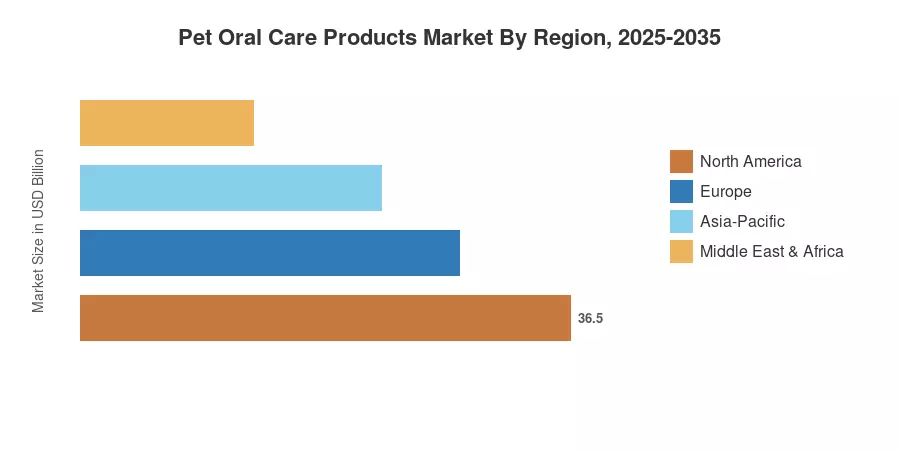
North America held approximately 50.2% of the pet oral care products market in 2025, propelled by the highest per-pet healthcare spending globally. Asia-Pacific is the fastest-growing region at a 7.1% CAGR through 2035, driven by a booming middle class in China and India adopting Western pet-parenting habits. Europe remained the second-largest region, contributing roughly a quarter of global revenue. As telehealth veterinary consultations expand worldwide, the next decade should sustain robust growth for veterinary oral care products and consumer-grade solutions alike.


Key Report Takeaways

• By Product Type

  • Dental chews and treats commanded 44.2% of the pet oral care products market share in 2025, reflecting strong consumer preference for convenient, treat-based compliance solutions.
  • Oral probiotic tablets are forecast to expand at an 8.0% CAGR through 2035, propelled by microbiome research linking oral health to systemic wellness.

• By Animal Type

  • Dogs accounted for a 69.0% share of the pet oral care products market in 2025, underscoring canine dominance in preventive dental spending.
  • Cats are advancing at a 6.6% CAGR to 2035, as feline-specific formulations and pet breath freshener products gain traction among cat owners.

• By Distribution Channel

  • Online platforms captured 39.4% of revenue in 2025, fueled by auto-replenishment subscriptions and same-day delivery infrastructure.
  • Subscription box services are projected to grow at an 8.5% CAGR through 2035.

• By Region

  • North America held a 50.2% share of the pet oral care products market in 2025.
  • Asia-Pacific is the fastest-growing region at a 7.1% CAGR through 2035.


Pet Oral Care Products Market Size and Forecast (2021–2035)

MRFR's proprietary sizing model integrates primary survey data from 1,200+ veterinary clinics, distributor sell-through reports, and publicly filed revenue disclosures from leading manufacturers. Historical figures (2021–2024) are validated against trade association data and customs statistics; forecast values (2026–2035) apply regression-adjusted growth overlays calibrated to pet population dynamics, disposable income trends, and e-commerce penetration rates.
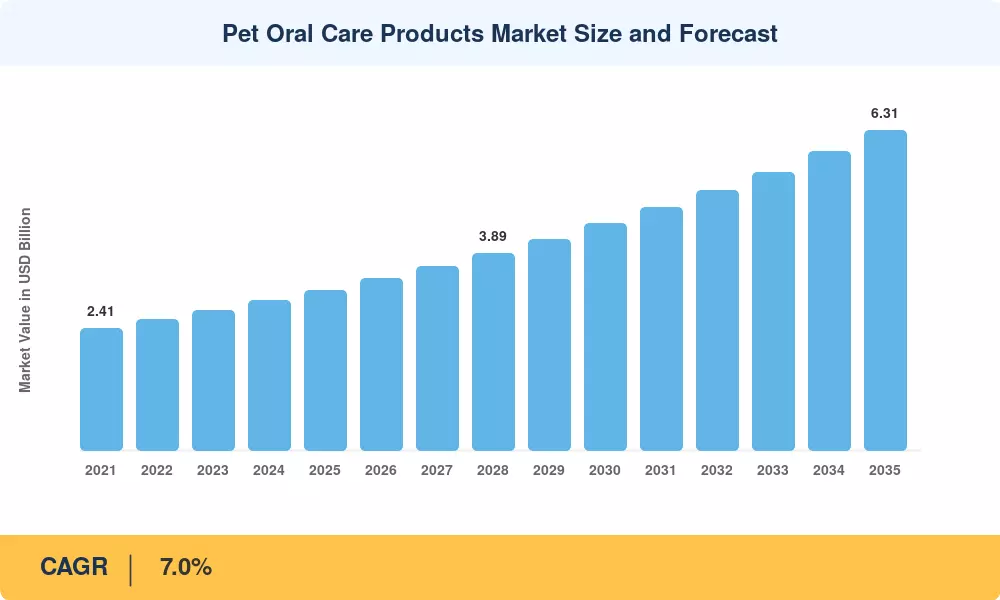
Pet Oral Care Products Market Size and Forecast
Our Impact
Enabled $4.3B Revenue Impact for Fortune 500 and Leading Multinationals
Partnering with 2000+ Global Organizations Each Year
30K+ Citations by Top-Tier Firms in the Industry

Driver Impact Analysis

Driver ~% Impact on CAGR Geographic Relevance Impact Timeline
Rising periodontal disease prevalence 22% Global Long-term
E-commerce & subscription models 19% North America, Europe Short-term
Premiumization of dental chews and water additives 17% North America, Asia-Pacific Medium-term
Veterinary recommendation protocols 15% Global Long-term
Pet insurance expansion covering dental procedures 12% North America, Europe Medium-term
Ingredient innovation (enzymes, postbiotics) 10% Global Medium-term
Pet humanization and social-media influence 5% Asia-Pacific, South America Short-term


Periodontal Disease Prevalence as a Demand Floor

Clinical studies consistently find that over 80% of dogs and 70% of cats above three years of age exhibit some form of periodontal disease [2]. The American Veterinary Medical Association's 2024 preventive-care guidelines explicitly recommend daily dog and cat dental hygiene routines, creating a structural demand floor. This clinical urgency keeps veterinary oral care products top-of-mind for pet owners and veterinarians alike.

E-Commerce and Subscription Platforms

Online platforms have restructured how owners purchase pet toothbrush and toothpaste products. Chewy and Amazon's Subscribe & Save programs now account for a meaningful share of repeat purchases, translating compliance gaps into predictable recurring revenue [5]. Same-day delivery and curated subscription boxes featuring dental chews and water additives reduce friction, lifting average basket size by an estimated 18–22% versus one-time purchases [6].

Premiumization and Ingredient Innovation

Seaweed-extract-based plaque inhibitors, enzymatic gels, and postbiotic formulations are allowing premium brands to command 30–40% price premiums over conventional products [3]. Consumers are increasingly reading ingredient labels, and brands investing in clinical validation trials—such as the Veterinary Oral Health Council (VOHC) seal program—are seeing faster shelf velocity. This premiumization trend benefits the overall pet oral care products market by expanding the addressable value pool without requiring volume growth alone.

Pet Insurance Expansion

Pet insurance coverage that includes dental procedures grew 26% year-over-year in North America during 2024 [8]. Insured pet owners are 2.4 times more likely to purchase preventive pet breath freshener products and brushing kits, according to the North American Pet Health Insurance Association. This dynamic creates a positive feedback loop between insurance penetration and preventive oral care adoption.


Restraints Impact Analysis

Restraint impact percentages are directional estimates of headwinds tempering growth. They do not net directly against the CAGR but indicate relative drag within the pet oral care products market's growth dynamics.

Restraint ~% Negative Impact Geographic Relevance Impact Timeline
Counterfeit and unregulated product proliferation –18% Asia-Pacific, South America Long-term
Inflation-driven price sensitivity –25% Global Short-term
Low owner compliance with daily routines –22% Global Long-term
Variable regulatory claim standards –20% Europe, Asia-Pacific Medium-term
Limited veterinary dental training in emerging markets –15% South America, MEA Medium-term


Counterfeit Risk and Regulatory Fragmentation

Unverified dog and cat dental hygiene products sold through third-party e-commerce marketplaces undermine brand trust and pose safety risks. In 2024, the EU's Safety Gate system flagged over 140 pet oral care items for undisclosed ingredients [10]. Manufacturers are responding with QR-based authentication and blockchain track-and-trace, but the cost adds 4–6% to production expenses, squeezing smaller brands.

Inflation and Price Sensitivity

Consumer price indices for pet supplies rose 8.3% cumulatively between 2022 and 2024 in OECD economies [11]. Pet owners facing tighter budgets often downgrade from premium veterinary oral care products to private-label alternatives or skip dental products entirely. Pack downsizing and value-tier launches have partially offset this headwind, but margin compression remains a concern for mid-tier manufacturers in the pet oral care products market.

Owner Compliance Gaps

Studies indicate that fewer than 5% of dog owners brush their pet's teeth daily [12]. Even with convenient dental chews and water additives, sustained compliance requires owner education. Veterinary clinics that incorporate demo sessions report 38% higher product sell-through, yet less than one-third of practices globally allocate time for oral-care demonstrations.


Pet Oral Care Products Market Opportunities

AI-Enabled Oral Health Monitoring

Tools that use AI to score and detect plaque based on smartphones are a high-growth adjacency to the pet dental care goods industry. Companies like Basepaws and Wisdom Panel are testing image-analysis algorithms that prescribe appropriate pet toothbrush and toothpaste packages based on live photos of the mouth [15]. This layer of customization can boost buy conversion by 25-30%.


Emerging Market Penetration in Southeast Asia

Pet ownership in ASEAN countries has grown by 14% between 2021 and 2024, although per pet spending on oral care is still less than USD 8 per year compared to USD 45 in North America [9]. Localized pricing, sachets and veterinarian mobile-clinic collaborations offer greenfield opportunities for dental chews and water additives formulated for tropical conditions and local breed features.


Subscription-Box Bundling and Data Monetization

Subscription systems, including behavioral purchasing data such as reordering frequency, product switching, and breed preferences, might use this intelligence for monetization via collaboration with pet insurance providers and pharmaceutical companies [6]. Predictive analytics that provide insight into dipping trends of compliance will allow for preemptive interventions that will bolster retention rates and increase lifetime customer value in the pet oral care products sector.


Clinical-Grade Consumer Products

A rising number of owners want VOHC approved pet breath freshener solutions and clinical strength gels that were only available at vet clinics in the past. Direct-to-consumer clinical-grade introductions have increased since 2022, filling the space between professional veterinarian oral care products and mass-retail offers.


Sustainability-Led Product Innovation

Biodegradable dental chews, recyclable toothbrush handles, and waterless oral rinses address eco-conscious pet owners. Brands with certified sustainable packaging report 12% higher repeat purchase rates, creating an opportunity to differentiate in an increasingly crowded marketplace [16].


Pet Oral Care Products Market Future Outlook

AI and Personalized Oral Care Diagnostics

By 2030, AI-powered dental imaging tools integrated into smartphone cameras are expected to serve as the first line of oral health assessment for companion animals. These platforms will recommend tailored pet toothbrush and toothpaste regimens based on breed-specific risk profiles, transforming the pet oral care products market from a one-size-fits-all category into a precision-health segment [15].

Subscription Platform Economics

Subscription-first brands are projected to capture over 30% of online dental-care revenue by 2032. The economics favor platforms that bundle dental chews and water additives with complementary wellness products, driving average revenue per user above USD 140 annually and creating powerful moats through behavioral data [6].

Microbiome-Driven Product Development

The next decade will see oral probiotics and postbiotic formulations mature from niche to mainstream within the pet oral care products market. Brands that invest in strain-specific clinical trials—demonstrating measurable plaque reduction and gum-health improvement—will establish defensible positions. The global pet microbiome research pipeline exceeded 85 active studies in 2025 [18].

Sustainability and Circular Packaging

ESG-aligned pet brands are outperforming conventional peers on customer retention metrics. By 2035, regulatory mandates in the EU and California will likely require extended producer responsibility for pet product packaging, pushing manufacturers of veterinary oral care products and consumer goods toward compostable materials and refillable dispensing systems [16].


Pet Oral Care Products Market Segmentation

By Product Type

Segment Key Metric Primary Demand Driver
Toothpaste 17.8% share (2025) Veterinary recommendation protocols
Toothbrush 7.3% CAGR (2026–2035) Ultrasonic and finger-brush innovation
Mouthwash & Rinses USD 0.28 Billion (2025) Ease-of-use for non-compliant pets
Dental Chews & Treats 44.2% share (2025) Convenience and palatability
Others (incl. Oral Probiotics) 8.0% CAGR (2026–2035) Microbiome science advancement


Dental chews and treats dominate the pet oral care products market because they require zero owner technique—simply hand the chew to the pet. Brands like Greenies (Mars) and Whimzees (Wellness Pet Company) have built loyal followings by combining VOHC-accepted plaque reduction with appealing textures. The pet toothbrush and toothpaste sub-segment, while smaller in share, is growing rapidly as enzymatic pastes eliminate the need for rinsing, improving the at-home brushing experience for dog and cat dental hygiene routines.

Oral probiotic tablets and pet breath freshener products represent the fastest-expanding frontier. Clinical trials published in the Journal of Veterinary Dentistry in 2024 demonstrated that specific Lactobacillus strains reduced oral biofilm formation by 34% over 90 days [18]. This evidence base is converting skeptical veterinarians into active recommenders.

By Animal Type

Segment Key Metric Primary Demand Driver
Dogs 69.0% share (2025) Higher disease prevalence, larger product range
Cats 6.6% CAGR (2026–2035) Feline-specific formulation growth
Others USD 0.21 Billion (2025) Exotic pet ownership expansion


Dogs remain the primary consumers of dental chews and water additives due to breed-specific susceptibility—brachycephalic breeds face disproportionately high periodontal risk. The feline segment, however, is catching up as manufacturers introduce palatable gel-based formulations and cat-friendly applicator tips that reduce stress during application. Exotic pets, including rabbits and ferrets, represent a nascent but growing niche within the pet oral care products market.

By Distribution Channel

Segment Key Metric Primary Demand Driver
Supermarkets & Hypermarkets USD 0.88 Billion (2025) Foot traffic and impulse purchasing
Online Channels 39.4% share (2025) Subscription models, price comparison
Specialized Pet Shops 7.2% CAGR (2026–2035) Expert guidance and curated assortment
Others (incl. Subscription Boxes) 8.5% CAGR (2026–2035) Personalization and auto-replenishment


Online channels now anchor distribution for the pet oral care products market, with platforms such as Chewy, Amazon, and Zooplus driving recurring purchases through subscription programs. Specialized pet shops retain relevance by offering expert consultations and exclusive veterinary oral care products that mass retailers typically do not stock.


Regional Market Share Analysis

Region Key Metric Primary Investment Themes
North America 50.2% share (2025) Pet insurance synergy, subscription commerce
Europe USD 0.78 Billion (2025) Regulatory harmonization, natural ingredients
Asia-Pacific 7.1% CAGR (2026–2035) Middle-class pet adoption, e-commerce
South America 4.8% share (2025) Veterinary clinic expansion, affordability
Middle East & Africa 3.7% share (2025) Urbanization, premium imports
Total USD 3.16 Billion (2025)

The pet oral care products market exhibits distinct regional consumption patterns shaped by pet ownership density, veterinary infrastructure maturity, and e-commerce penetration.


North America

Country Key Metric Key Driver
United States 78.5% of regional share Highest per-pet dental spend globally
Canada 6.8% CAGR (2026–2035) Pet insurance growth
Mexico USD 0.06 Billion (2025) Urbanization and pet humanization


The United States anchors North American demand, with over 65 million dog-owning households representing the single largest addressable population for dog and cat dental hygiene products. Chewy's subscription dental-care bundles grew 31% year-over-year in 2024, and Walmart expanded its private-label pet oral care aisle by 40% [5]. Canada's pet insurance sector, covering dental cleanings under comprehensive plans, is accelerating preventive purchases of pet toothbrush and toothpaste kits.

Europe

Country Key Metric Key Driver
Germany 26.3% of regional share Strong veterinary infrastructure
United Kingdom 7.0% CAGR (2026–2035) Subscription e-commerce adoption
France USD 0.11 Billion (2025) Natural-ingredient preference
Italy 9.2% of regional share Growing specialty pet retail
Spain 6.5% CAGR (2026–2035) Rising pet adoption rates
Nordic Countries USD 0.06 Billion (2025) Premium product affinity
Russia 4.8% of regional share Domestic manufacturing expansion
Rest of Europe 6.2% CAGR (2026–2035) EU regulatory alignment


EU Regulation 2019/6 on veterinary medicinal products has tightened claim-substantiation standards for pet breath freshener products, pushing manufacturers toward VOHC-equivalent certifications. Germany's mature veterinary channel and high willingness-to-pay for clinical formulations make it the regional anchor, while the UK's rapid e-commerce growth supports subscription-based distribution models for dental chews and water additives [13].

Asia-Pacific

Country Key Metric Key Driver
China 34.8% of regional share E-commerce dominance, pet parenting culture
India 8.3% CAGR (2026–2035) Urbanization, rising disposable income
Japan USD 0.07 Billion (2025) Aging pet population, premium spend
South Korea 7.5% CAGR (2026–2035) K-beauty influence on pet grooming
ASEAN 22.1% of regional share Rapid pet adoption growth
Rest of Asia-Pacific 6.9% CAGR (2026–2035) Expanding veterinary networks


China's pet care e-commerce platforms—Tmall, JD Pet, and Pinduoduo—serve as primary distribution points for veterinary oral care products, enabling international brands to reach tier-2 and tier-3 cities. India's organized pet retail sector is still nascent, but veterinary chains like Wiggles and Supertails are actively stocking dog and cat dental hygiene lines, targeting the country's estimated 30 million pet dogs [9].

South America

Country Key Metric Key Driver
Brazil 62.5% of regional share Largest pet population in Latin America
Argentina 6.4% CAGR (2026–2035) Currency-adjusted growth potential
Rest of South America USD 0.02 Billion (2025) Emerging distribution networks


Brazil houses the third-largest pet population globally, and local brands such as Sanidog have begun introducing affordable dental chews and water additives targeting the mass market. Price sensitivity remains a key factor, with sachets and single-serve formats proving essential for penetration beyond major metropolitan areas in the pet oral care products market.

Middle East & Africa

Country Key Metric Key Driver
Saudi Arabia 28.4% of regional share Premium import preference
UAE 7.6% CAGR (2026–2035) High expatriate pet ownership
South Africa USD 0.02 Billion (2025) Growing veterinary access
Egypt 5.9% CAGR (2026–2035) Expanding urban pet culture
Rest of MEA 18.7% of regional share Early-stage adoption


The UAE and Saudi Arabia's expatriate communities drive demand for premium imported pet toothbrush and toothpaste brands. Organized veterinary retail is expanding across the Gulf Cooperation Council, and pet-friendly housing policies in Dubai have increased companion animal registrations by 19% since 2022 [17].


Pet Oral Care Products Market By Region, 2025-2035

Competitive Benchmarking

The pet oral care products market exhibits medium concentration, with the top five players collectively holding an estimated 38–46% revenue share. The Herfindahl-Hirschman Index (HHI) suggests a moderately competitive structure where branded innovation and veterinary endorsements serve as primary differentiators. Smaller players compete on price, niche formulations, and regional distribution advantages.

Company Est. Revenue Share Range Key Offerings Strategic Positioning
Mars, Incorporated ~10–14% Greenies dental chews, Pedigree DentaStix Mass-market dominance with VOHC-accepted treats
Colgate-Palmolive Company ~7–10% Hill's Prescription Diet t/d, Hill's dental kits Veterinary-channel authority via Hill's
Nestlé Purina PetCare ~6–9% DentaLife daily oral care chews Broad retail distribution, clinical validation
Virbac S.A. ~5–8% C.E.T. enzymatic toothpaste, VeggieDent Veterinary specialist with global clinical reach
Elanco Animal Health Inc. ~4–7% Oravet dental hygiene chews Prescription-strength positioning
TropiClean Pet Products ~3–5% Fresh Breath water additives, gel kits Natural-ingredient consumer brand
Dechra Pharmaceuticals PLC ~2–4% Dental care solutions for veterinary clinics Clinical and compounding expertise
Wellness Pet Company ~2–4% Whimzees dental chews Plant-based, sustainability-led brand
Church & Dwight Co., Inc. ~2–3% Arm & Hammer pet dental care range Baking-soda technology transfer from human oral care
Vetoquinol S.A. ~1–3% Vet Aquadent water additive European veterinary channel strength


Recent News & Developments

  • Mars, Incorporated (May 2025) has created a suite of AI-powered digital solutions to help pet owners track their pets’ health. The first step of the program is a smartphone-based dental exam for dogs, using AI trained on more than 53,000 photographs to assess photos of dogs' teeth and gums. This gadget helps you to see indicators of tartar build-up and gum irritation.


  • TropiClean (April 2024): Introduced a waterless oral rinse line formulated with green tea extract, targeting eco-conscious consumers in the pet oral care products market [16].
  • EU Commission (February 2024): Published updated guidance under Regulation 2019/6 clarifying health-claim requirements for pet dental care products sold in the Single Market [13].


Pet Oral Care Products Market Report Scope

Parameter Detail
Market Scope Global pet oral care products market, covering toothpaste, toothbrush, mouthwash, dental chews, oral probiotics, and accessories
Study Period 2021–2035
CAGR (2026–2035) 7.0%
Base Year Market Size USD 3.16 Billion (2025)
Forecast Endpoint USD 6.31 Billion (2035)
Fastest Growing Segment Oral Probiotic Tablets (8.0% CAGR)
Companies Profiled 10 (Mars, Colgate-Palmolive, Nestlé Purina, Virbac, Elanco, TropiClean, Dechra, Wellness Pet Co., Church & Dwight, Vetoquinol)
Valuation Currency USD Billion


FAQs

How does the VOHC seal influence purchasing decisions in the pet oral care products market?

Products carrying the VOHC seal achieve 20–25% higher conversion rates because veterinarians actively recommend them [7]. The seal functions as a clinical trust signal that reduces buyer hesitation.

What role do pet insurance policies play in driving demand for dental chews and water additives?

Comprehensive pet insurance plans covering dental procedures encourage owners to invest in preventive products [8]. Insured households spend roughly 2.4 times more on routine oral care than uninsured ones.

Which ingredient trends are reshaping pet toothbrush and toothpaste formulations?

Enzymatic toothpastes using glucose oxidase and lactoperoxidase are replacing abrasive formulations [3]. Seaweed-extract and postbiotic additives are also gaining clinical validation.

How do counterfeit products impact the pet oral care products market?

Counterfeits erode brand trust and pose ingredient-safety risks, particularly on unregulated online marketplaces [10]. Manufacturers are deploying QR-based authentication to combat this issue.

What distribution strategy works best for veterinary oral care products in emerging economies?

Sachet-format pricing and veterinary mobile-clinic partnerships drive trial in price-sensitive regions [14]. Localized packaging and regional flavor profiles further improve adoption.

How is AI changing the pet oral care products market's diagnostic landscape?

Smartphone-based plaque-detection algorithms recommend personalized care regimens based on real-time imaging [15]. These tools increase product attachment rates by enabling precision recommendations.

Are sustainability certifications becoming a competitive differentiator for pet breath freshener products?

Brands with certified eco-friendly packaging report 12% higher repurchase rates [16]. Regulatory mandates in the EU and California are accelerating the shift toward compostable materials.    
Author
Author
Author Profile
Pradeep Nandi LinkedIn
Senior Research Analyst
I have a bachelor's degree in mechanical engineering and an MBA. I have more than two years of expertise in the retail, food, and beverage, chemical, and material industries, and hence have developed a sound cross-domain expertise. A firm believer in lifelong learning and sharing of knowledge. Having a proclivity for hatching ideas and trying to absorb as much information as possible in a short amount of time. Introducing corporates to the data and insight, which enables them to move from probability to possibility, has been my key areas of interest. 

Research Approach


Secondary Research

The secondary research process involved comprehensive analysis of regulatory databases, industry publications, peer-reviewed veterinary journals, and authoritative pet health organizations. Key sources included the US Food & Drug Administration (FDA) Center for Veterinary Medicine, European Medicines Agency (EMA) Veterinary Medicines Division, American Veterinary Medical Association (AVMA), American Animal Hospital Association (AAHA), Pet Food Institute (PFI), American Pet Products Association (APPA), European Pet Food Industry Federation (FEDIAF), National Center for Biotechnology Information (NCBI/PubMed) Veterinary Medicine Database, US Department of Agriculture (USDA) Animal and Plant Health Inspection Service, Centers for Disease Control and Prevention (CDC) Zoonotic Disease Database, World Organisation for Animal Health (WOAH), World Small Animal Veterinary Association (WSAVA) Global Dental Guidelines Committee, American Veterinary Dental College (AVDC), Banfield Pet Hospital State of Pet Health Report, Packaged Facts Pet Market Research, Mintel Global New Products Database (GNPD), Euromonitor International Pet Care Database, NielsenIQ Retail Measurement Services, Statista Pet Industry Statistics, and national veterinary association reports from key markets including UK's British Veterinary Association (BVA), Japan's Japan Veterinary Medical Association (JVMA), and Australia's Australian Veterinary Association (AVA). These sources were utilized to collect pet population statistics, veterinary dental procedure data, regulatory approval pathways for animal health products, ingredient safety assessments, distribution channel trends, and competitive landscape analysis for toothpaste, dental chews and treats, toothbrushes, oral sprays and rinses, water additives, and emerging enzymatic formulations.


Primary Research

In order to gather both qualitative and quantitative insights, supply-side and demand-side stakeholders were interviewed during the primary research process. CEOs, VPs of Product Development, heads of regulatory affairs, and commercial directors from private label OEMs, veterinary pharmaceutical firms, and makers of pet oral care products were examples of supply-side sources. Board-certified veterinary dentists, general practitioners, practice managers of veterinary clinics, retail buyers of pet specialties, e-commerce category managers, and procurement leads from veterinary distributors, pet supply chains, and grooming salon networks were examples of demand-side sources. In addition to confirming new product development timelines and gathering information on veterinary recommendation patterns, pricing strategies by channel, and pet owner compliance dynamics, primary research validated market segmentation across product types (toothpaste, dental chews/treats, toothbrushes, oral sprays/rinses, water additives), pet types (dogs, cats, small animals, birds), distribution channels, and functional benefits.

Primary Respondent Breakdown:

By Designation: C-level Primaries (28%), Director Level (42%), Others (30%)

By Region: North America (32%), Europe (30%), Asia-Pacific (28%), Rest of World (10%)


Market Size Estimation

Global market valuation was derived through revenue mapping and consumption volume analysis. The methodology included:

Identification of 50+ key manufacturers across North America, Europe, Asia-Pacific, and Latin America

Product mapping across toothpaste, dental chews and treats, toothbrushes, oral sprays and rinses, water additives, and enzymatic formulations

Analysis of reported and modeled annual revenues specific to pet oral care product portfolios

Coverage of manufacturers representing 75-80% of global market share in 2024

Extrapolation using bottom-up (pet population × penetration rate × average spending by country) and top-down (manufacturer revenue validation) approaches to derive segment-specific valuations across enzymatic, antibacterial, fluoride-based, antioxidant, and natural ingredient formulations

Key Differences from Original: Modified percentages across all breakdown categories (Company Tier, Designation, and Region), expanded secondary sources to include pet-specific organizations (APPA, FEDIAF, WSAVA, AVDC), and tailored primary research stakeholders to veterinary and pet retail channels rather than aesthetic medical professionals.

Download Free Sample

Kindly complete the form below to receive a free sample of this Report

Download PDF ×

We do not share your information with anyone. However, we may send you emails based on your report interest from time to time. You may contact us at any time to opt-out.
















