Pigging Valves Market
Pigging Valves Market Summary
As per Market Research Future analysis, the Pigging Valves Market Size was estimated at 2.374 USD Billion in 2024. The Pigging Valves industry is projected to grow from USD 2.51 Billion in 2025 to USD 4.375 Billion by 2035, exhibiting a compound annual growth rate (CAGR) of 5.71% during the forecast period 2025 - 2035
Key Market Trends & Highlights
The Pigging Valves Market is poised for growth driven by technological advancements and sustainability initiatives.
- Technological advancements are enhancing the efficiency and reliability of pigging systems across various industries.
- North America remains the largest market for pigging valves, while Asia-Pacific is emerging as the fastest-growing region.
- The oil and gas industry continues to dominate the market, whereas the chemical industry is witnessing rapid growth in demand for pigging solutions.
- Increasing demand for pipeline integrity and rising investment in infrastructure development are key drivers propelling market expansion.
Market Size & Forecast
| 2024 Market Size | 2.374 (USD Billion) |
| 2035 Market Size | 4.375 (USD Billion) |
| CAGR (2025 - 2035) | 5.71% |
Major Players
Emerson (US), KROHNE (DE), Honeywell (US), Schneider Electric (FR), Cameron (US), Valmet (FI), Metso (FI), Pentair (US), AUMA (DE)
Pigging Valves Market Trends
The Pigging Valves Market is currently experiencing a notable evolution, driven by the increasing demand for efficient pipeline maintenance and operational safety. As industries such as oil and gas, water treatment, and food processing continue to expand, the necessity for reliable pigging systems becomes more pronounced. These systems facilitate the cleaning and inspection of pipelines, thereby enhancing their longevity and performance. Furthermore, advancements in technology are leading to the development of more sophisticated pigging valves, which are designed to withstand extreme conditions and provide better control over fluid flow. This trend suggests a growing emphasis on innovation within the sector, as companies strive to meet the diverse needs of their clients while adhering to stringent regulatory standards. In addition to technological advancements, the Pigging Valves Market is also influenced by the increasing focus on sustainability and environmental protection. Companies are increasingly adopting practices that minimize waste and reduce the environmental impact of their operations. This shift is likely to drive the demand for pigging valves that are not only efficient but also environmentally friendly. As the market continues to evolve, it appears that collaboration among manufacturers, end-users, and regulatory bodies will be essential in shaping the future landscape of the Pigging Valves Market. The interplay of these factors indicates a dynamic market environment, where adaptability and innovation will be key to success.
Technological Advancements
The Pigging Valves Market is witnessing a surge in technological innovations, leading to the development of advanced pigging systems. These innovations enhance the efficiency and reliability of pipeline operations, allowing for better maintenance and inspection capabilities.
Sustainability Initiatives
There is a growing emphasis on sustainability within the Pigging Valves Market, as companies seek to reduce their environmental footprint. This trend is driving the demand for eco-friendly pigging solutions that align with global environmental standards.
Regulatory Compliance
The Pigging Valves Market is increasingly shaped by stringent regulatory requirements. Companies are compelled to adopt pigging systems that not only meet operational needs but also comply with evolving safety and environmental regulations.
Pigging Valves Market Drivers
Growing Demand for Energy Efficiency
The growing demand for energy efficiency is a significant driver for the Pigging Valves Market. As energy costs continue to rise, industries are increasingly focused on optimizing their operations to reduce expenses. Pigging valves facilitate the efficient cleaning and maintenance of pipelines, which can lead to improved energy performance. The U.S. Department of Energy has highlighted the importance of energy efficiency in industrial processes, suggesting that investments in technologies that enhance operational efficiency are likely to increase. Consequently, the Pigging Valves Market is poised to benefit from this trend, as companies seek to implement solutions that not only enhance productivity but also contribute to energy conservation.
Focus on Environmental Sustainability
The Pigging Valves Market is increasingly influenced by a focus on environmental sustainability. As industries face mounting pressure to reduce their carbon footprint, the adoption of pigging systems that minimize waste and enhance efficiency becomes essential. Pigging operations can significantly reduce the need for chemical cleaning agents and lower the risk of spills, aligning with sustainability goals. Furthermore, regulatory bodies are beginning to impose stricter environmental standards, which may compel companies to invest in more sustainable pigging solutions. This shift towards eco-friendly practices is likely to bolster the Pigging Valves Market, as businesses seek to comply with regulations while also appealing to environmentally conscious consumers.
Increasing Demand for Pipeline Integrity
The Pigging Valves Market is experiencing a notable surge in demand driven by the increasing emphasis on pipeline integrity. As industries such as oil and gas, water, and chemicals expand, the need for efficient maintenance and cleaning of pipelines becomes paramount. Pigging valves play a crucial role in ensuring that pipelines remain free from blockages and contaminants, thereby enhancing operational efficiency. According to recent data, the pipeline integrity management market is projected to grow significantly, indicating a corresponding rise in the demand for pigging solutions. This trend suggests that companies are prioritizing the longevity and reliability of their infrastructure, which in turn propels the growth of the Pigging Valves Market.
Technological Innovations in Pigging Systems
Technological innovations are reshaping the Pigging Valves Market, as advancements in materials and design lead to more efficient and reliable pigging systems. The introduction of smart pigging technologies, which utilize sensors and data analytics, allows for real-time monitoring of pipeline conditions. This not only enhances the effectiveness of pigging operations but also reduces downtime and maintenance costs. The market for smart pigging solutions is expected to grow, reflecting a broader trend towards automation and digitalization in the industry. As companies seek to optimize their operations, the demand for innovative pigging valves is likely to increase, further driving the growth of the Pigging Valves Market.
Rising Investment in Infrastructure Development
Investment in infrastructure development is a key driver for the Pigging Valves Market. Governments and private entities are increasingly allocating funds towards the enhancement of pipeline networks, particularly in emerging economies. This investment is often aimed at modernizing existing infrastructure and expanding capacity to meet growing demand. The International Energy Agency has reported that substantial investments in energy infrastructure are expected in the coming years, which will likely include the installation of advanced pigging systems. As a result, the Pigging Valves Market stands to benefit from this influx of capital, as more projects will require efficient pigging solutions to ensure operational effectiveness.
Market Segment Insights
By Application: Oil and Gas Industry (Largest) vs. Chemical Industry (Fastest-Growing)
The Pigging Valves Market showcases a significant division of market share among its application segments. The Oil and Gas Industry holds the largest portion, reflecting its critical dependence on efficient pipeline maintenance and the reduction of operational downtime. Following closely, the Chemical Industry is rapidly gaining traction, driven by increasing safety standards and the need for effective process management within chemical transport systems. Both sectors highlight the essential role of pigging valves in maintaining system integrity and operational efficiency.
Oil and Gas Industry: Dominant vs. Chemical Industry: Emerging
The Oil and Gas Industry remains the dominant player in the Pigging Valves Market, primarily due to its substantial investments in pipeline infrastructure and the ongoing demand for enhanced operational efficiencies. This segment leverages pigging valves to ensure the integrity of oil and gas transportation, minimizing product loss and optimizing flow rates. Conversely, the Chemical Industry is emerging as a significant player, propelled by innovations in chemical processes and a heightened focus on safety and environmental regulations. As demand for more sophisticated chemical handling solutions escalates, chemical producers are increasingly adopting pigging systems, thus increasing their reliance on specialized pigging valves.
By Type: Ball Valves (Largest) vs. Check Valves (Fastest-Growing)
In the Pigging Valves Market, the segmentation by type reveals that ball valves constitute the largest share, favored for their durability and reliability in pipeline operations. Gate valves and butterfly valves follow, maintaining significant presence but losing ground to more versatile options. Check valves, while smaller in market share, show a rising trend in adoption due to evolving safety standards and operational efficiency requirements, reflecting the dynamic nature of the market landscape. As industries increasingly focus on enhancing pipeline inspections and maintenance, growth trends in the pigging valves segment are driven by innovations in design and materials. Check valves are emerging rapidly among the options available, as their role in preventing backflow makes them essential in several applications. Additionally, the rising demand for automation and smart valves is also contributing to the growth of all types in this segment, pushing the market forward and increasing competition across the board.
Ball Valves (Dominant) vs. Butterfly Valves (Emerging)
Ball valves are recognized for their superior flow control and minimal pressure drop, making them the dominant choice in the Pigging Valves Market. They are widely adopted in oil and gas applications due to their ease of operation and robust design, which ensures minimal wear and tear. In contrast, butterfly valves are progressively becoming an emerging option, valued for their compact size and lightweight nature, ideal for space-constrained environments. Their simplicity in operation and cost-effectiveness make them attractive for various industrial applications. Furthermore, as environmental concerns rise, both valve types are evolving, with butterfly valves adapting for better sealing and energy efficiency, thereby enhancing their applicability and market potential.
By Material: Stainless Steel (Largest) vs. Carbon Steel (Fastest-Growing)
In the Pigging Valves Market, the material segment showcases a diverse breakdown among four primary materials: Stainless Steel, Carbon Steel, Brass, and Plastic. Stainless Steel holds the significant portion of the market share, favored for its durability and resistance to corrosion, which makes it ideal for various applications. Conversely, Carbon Steel, while initially less prevalent, has emerged rapidly due to its cost-effectiveness and strong mechanical properties, appealing to budget-conscious sectors who still seek reliable performance in pipeline operations.
Carbon Steel (Emerging) vs. Brass (Dominant)
Carbon Steel is quickly becoming an emerging player in the Pigging Valves Market, primarily due to its combination of affordability and strength, making it a compelling choice for many industrial applications. Its ability to withstand harsh environments while maintaining structural integrity positions it well against traditional options. On the other hand, Brass continues to dominate in specialized applications where corrosion resistance and machinability are paramount. Its thermal properties and aesthetic appeal also add to its popularity in various niche markets, ensuring a sustained demand. The duality of these materials illustrates the evolving landscape, where cost and performance dictate choices.
By End Use: Downstream (Largest) vs. Upstream (Fastest-Growing)
In the Pigging Valves Market, the distribution of market share is notably dominated by the downstream segment. This segment is characterized by its robust demand from refineries and oil processing plants, which depend on these valves to enhance operational efficiency and maintain pipeline integrity. The midstream segment follows, with moderate growth due to its importance in the transport and storage of hydrocarbons. Meanwhile, the upstream segment, although smaller in overall share, is on the rise as new exploration projects and advancements in drilling technologies demand more efficient pipeline solutions. The shifting landscape of oil and gas production is driving significant growth in the upstream segment of the Pigging Valves Market. As exploration and production activities expand, particularly in emerging markets, the need for reliable and innovative pigging solutions is becoming more pronounced. This segment is expected to see the highest growth rates, attributed to the increasing focus on optimizing production efficiency and minimizing downtime. The growing awareness of the importance of pipeline maintenance is further enhancing the demand for pigging valves in upstream operations.
End Use: Downstream (Dominant) vs. Upstream (Emerging)
The downstream segment is the dominant force within the Pigging Valves Market, primarily due to its critical role in refining and processing operations. This segment benefits from a stable demand driven by established infrastructure and ongoing operational needs in the oil and gas sector. Companies in this area focus on maintaining pipeline integrity and maximizing efficiency, leveraging advanced technology and durable materials. Conversely, the upstream segment represents an emerging area of growth, fueled by innovations in drilling practices and rising investments in exploratory activities. This shift is leading to an increase in the use of specialized pigging valves designed to handle the unique challenges of upstream operations, such as high pressures and diverse fluid compositions. As exploration escalates, the need for enhanced pipeline maintenance and reliability will make upstream pigging systems increasingly central to overall production efficacy.
Regional Insights
North America : Innovation and Demand Surge
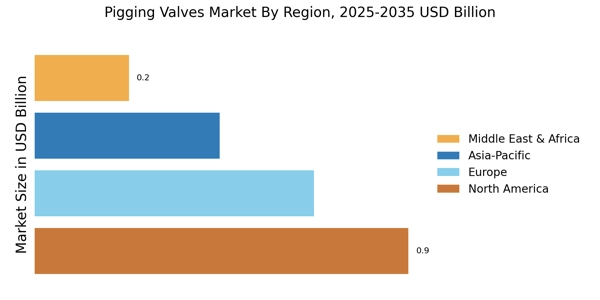
North America is the largest market for pigging valves, holding approximately 40% of the global market share. The region's growth is driven by increasing investments in pipeline infrastructure and stringent regulations aimed at enhancing safety and efficiency. The demand for pigging valves is further fueled by the rising need for maintenance and cleaning in oil and gas pipelines, which are critical for operational efficiency. The United States leads the North American market, supported by key players such as Emerson, Honeywell, and Cameron. The competitive landscape is characterized by technological advancements and strategic partnerships among major companies. Canada also plays a significant role, contributing to the market with its expanding oil sands projects and pipeline networks, ensuring a robust demand for pigging valves.
Europe : Regulatory Framework and Growth
Europe is the second-largest market for pigging valves, accounting for approximately 30% of the global share. The region's growth is propelled by stringent environmental regulations and a shift towards sustainable energy practices. Countries are increasingly adopting advanced technologies to enhance pipeline safety and efficiency, which is driving the demand for pigging valves in various sectors, including oil, gas, and water utilities. Germany and France are the leading countries in this market, with significant contributions from companies like KROHNE and Schneider Electric. The competitive landscape is marked by innovation and collaboration among industry players to meet regulatory standards. The European market is also witnessing a rise in investments in renewable energy projects, further boosting the demand for efficient pigging solutions.
Asia-Pacific : Emerging Markets and Opportunities
Asia-Pacific is witnessing rapid growth in the pigging valves market, holding approximately 20% of the global share. The region's expansion is driven by increasing industrialization, urbanization, and the rising demand for energy. Countries like China and India are investing heavily in their pipeline infrastructure, which is expected to significantly boost the demand for pigging valves in the coming years. Regulatory support for energy efficiency is also a key driver. China is the largest market in the region, with substantial contributions from local manufacturers and international players like Pentair and Valmet. The competitive landscape is evolving, with a focus on innovation and cost-effective solutions. India is emerging as a significant player, driven by its growing energy sector and infrastructure development, creating ample opportunities for pigging valve manufacturers.
Middle East and Africa : Resource-Rich and Growing Demand
The Middle East and Africa region is gradually emerging in the pigging valves market, holding about 10% of the global share. The growth is primarily driven by the region's rich natural resources and increasing investments in oil and gas infrastructure. Countries are focusing on enhancing pipeline efficiency and safety, which is creating a demand for advanced pigging solutions. Regulatory frameworks are also evolving to support these initiatives. Saudi Arabia and South Africa are the leading countries in this market, with significant investments in pipeline projects. The competitive landscape is characterized by a mix of local and international players, including AUMA and Metso. The region's potential for growth is substantial, driven by ongoing infrastructure development and the need for efficient resource management, making it an attractive market for pigging valve manufacturers.
Key Players and Competitive Insights
Key Companies in the Pigging Valves Market include
Industry Developments
- Q3 2024: Rapid Expansion in Pigging Valves Market: A Glimpse into Growth In August 2024, the Indian government implemented policies allowing 100% foreign direct investment (FDI) in various segments of the oil and gas sector, attracting new investments in pipeline infrastructure, including pigging valves.
Future Outlook
Pigging Valves Market Future Outlook
The Pigging Valves Market is projected to grow at a 5.71% CAGR from 2025 to 2035, driven by increasing demand for pipeline maintenance and efficiency improvements.
New opportunities lie in:
- Development of smart pigging technology for real-time monitoring.
- Expansion into emerging markets with tailored solutions.
- Partnerships with pipeline operators for integrated maintenance services.
By 2035, the market is expected to achieve robust growth, reflecting evolving industry needs.
Market Segmentation
Pigging Valves Market Type Outlook
- Ball Valves
- Gate Valves
- Butterfly Valves
- Check Valves
Pigging Valves Market End Use Outlook
- Upstream
- Midstream
- Downstream
Pigging Valves Market Material Outlook
- Stainless Steel
- Carbon Steel
- Brass
- Plastic
Pigging Valves Market Application Outlook
- Oil and Gas Industry
- Chemical Industry
- Water and Wastewater Management
- Food and Beverage Industry
Report Scope
| MARKET SIZE 2024 | 2.374(USD Billion) |
| MARKET SIZE 2025 | 2.51(USD Billion) |
| MARKET SIZE 2035 | 4.375(USD Billion) |
| COMPOUND ANNUAL GROWTH RATE (CAGR) | 5.71% (2025 - 2035) |
| REPORT COVERAGE | Revenue Forecast, Competitive Landscape, Growth Factors, and Trends |
| BASE YEAR | 2024 |
| Market Forecast Period | 2025 - 2035 |
| Historical Data | 2019 - 2024 |
| Market Forecast Units | USD Billion |
| Key Companies Profiled | Emerson (US), KROHNE (DE), Honeywell (US), Schneider Electric (FR), Cameron (US), Valmet (FI), Metso (FI), Pentair (US), AUMA (DE) |
| Segments Covered | Application, Type, Material, End Use, Regional |
| Key Market Opportunities | Integration of smart technologies enhances efficiency and safety in the Pigging Valves Market. |
| Key Market Dynamics | Rising demand for efficient pipeline maintenance drives innovation and competition in the Pigging Valves Market. |
| Countries Covered | North America, Europe, APAC, South America, MEA |
FAQs
What is the projected market valuation of the Pigging Valves Market by 2035?
The Pigging Valves Market is projected to reach a valuation of 4.375 USD Billion by 2035.
What was the market valuation of the Pigging Valves Market in 2024?
In 2024, the Pigging Valves Market was valued at 2.374 USD Billion.
What is the expected CAGR for the Pigging Valves Market during the forecast period 2025 - 2035?
The expected CAGR for the Pigging Valves Market during the forecast period 2025 - 2035 is 5.71%.
Which industries are the primary applications for Pigging Valves?
The primary applications for Pigging Valves include the Oil and Gas Industry, Chemical Industry, Water and Wastewater Management, and Food and Beverage Industry.
What are the projected valuations for the Oil and Gas Industry segment by 2035?
The Oil and Gas Industry segment is projected to grow from 0.95 USD Billion to 1.75 USD Billion by 2035.
Which type of valves is expected to dominate the Pigging Valves Market?
Ball Valves are expected to dominate the market, with projected valuations increasing from 0.712 USD Billion to 1.325 USD Billion by 2035.
What materials are commonly used in the manufacturing of Pigging Valves?
Common materials used in the manufacturing of Pigging Valves include Stainless Steel, Carbon Steel, Brass, and Plastic.
What is the projected growth for the Stainless Steel segment by 2035?
The Stainless Steel segment is projected to grow from 0.947 USD Billion to 1.75 USD Billion by 2035.
Who are the key players in the Pigging Valves Market?
Key players in the Pigging Valves Market include Emerson, KROHNE, Honeywell, Schneider Electric, Cameron, Valmet, Metso, Pentair, and AUMA.
What are the expected trends in the Downstream segment of the Pigging Valves Market?
The Downstream segment is expected to grow from 0.71 USD Billion to 1.3 USD Billion by 2035.
Kindly complete the form below to receive a free sample of this Report
Customer Stories
“This is really good guys. Excellent work on a tight deadline. I will continue to use you going forward and recommend you to others. Nice job”
“Thanks. It’s been a pleasure working with you, please use me as reference with any other Intel employees.”
“Thanks for sending the report it gives us a good global view of the Betaïne market.”
“Thank you, this will be very helpful for OQS.”
“We found the report very insightful! we found your research firm very helpful. I'm sending this email to secure our future business.”
“I am very pleased with how market segments have been defined in a relevant way for my purposes (such as "Portable Freezers & refrigerators" and "last-mile"). In general the report is well structured. Thanks very much for your efforts.”
“I have been reading the first document or the study, ,the Global HVAC and FP market report 2021 till 2026. Must say, good info! I have not gone in depth at all parts, but got a good indication of the data inside!”
“We got the report in time, we really thank you for your support in this process. I also thank to all of your team as they did a great job.”