×
Request Free Sample ×

Kindly complete the form below to receive a free sample of this Report

Leading companies partner with us for data-driven Insights

clients tt-cursor
Hero Background

Pine Tar Market

ID: MRFR/CnM/24379-HCR
111 Pages
Chitranshi Jaiswal
October 2025

Pine Tar Market Research Report: By Type (Kiln Tar, Retort Tar), By Application (Industrial, Wood Treatment, Marine, Pharmaceutical, Personal Care), By Grade (Virgin, Refined, Technical, Pharmaceutical, Cosmetic) and By Regional (North America, Europe, South America, Asia Pacific, Middle East and Africa) - Forecast to 2035.

Share:
Download PDF ×

We do not share your information with anyone. However, we may send you emails based on your report interest from time to time. You may contact us at any time to opt-out.

Pine Tar Market Infographic
Purchase Options

Pine Tar Market Summary

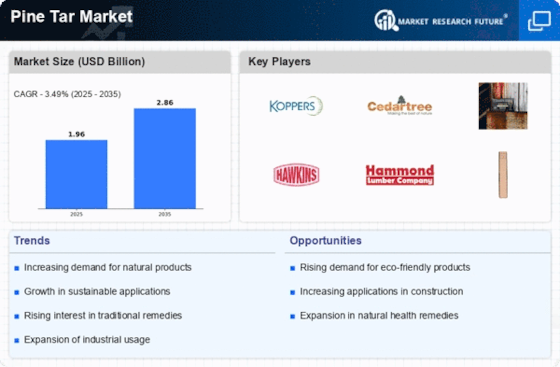
As per MRFR analysis, the Pine Tar Market Size was estimated at 1.962 USD Billion in 2024. The Pine Tar industry is projected to grow from 2.03 in 2025 to 2.862 by 2035, exhibiting a compound annual growth rate (CAGR) of 3.49 during the forecast period 2025 - 2035.

Key Market Trends & Highlights

The Pine Tar Market is experiencing a notable shift towards eco-friendly applications and traditional practices.

  • North America remains the largest market for pine tar, driven by its established industrial applications.
  • The Asia-Pacific region is emerging as the fastest-growing market, fueled by increasing demand for natural products.
  • Kiln tar continues to dominate the market, while retort tar is witnessing rapid growth due to its versatility.
  • Key market drivers include the rising interest in natural remedies and the increasing use of pine tar in construction and building materials.

Market Size & Forecast

2024 Market Size 1.962 (USD Billion)
2035 Market Size 2.862 (USD Billion)
CAGR (2025 - 2035) 3.49%

Major Players

Koppers Inc (US), Cedar Tree (US), Pine Tar Co (US), Hawkins Inc (US), Hammond Lumber Company (US), Pine Tar Products (US), Sierra Pine (US), Pine Chemical Group (US)

Pine Tar Market Trends

The Pine Tar Market is currently experiencing a notable evolution, driven by various factors that influence its demand and supply dynamics. This sector, which encompasses the production and distribution of pine tar derived from the distillation of pine wood, appears to be gaining traction across multiple industries. The growing awareness of natural and eco-friendly products is likely contributing to an increased interest in pine tar, particularly in applications such as wood preservation, medicinal uses, and even in the cosmetic sector. Furthermore, the rise in sustainable practices among manufacturers may enhance the appeal of pine tar as a viable alternative to synthetic chemicals, thereby expanding its market reach. In addition, the Pine Tar Market seems to be benefiting from a shift towards traditional and organic materials, as consumers increasingly seek products that align with their values. This trend may lead to a diversification of applications, with potential growth in sectors such as agriculture and construction. As the market continues to evolve, stakeholders are likely to explore innovative uses for pine tar, which could further solidify its position in various industries. Overall, the Pine Tar Market appears poised for growth, driven by a combination of consumer preferences and industry shifts towards sustainability and natural solutions.

Rising Demand for Eco-Friendly Products

The Pine Tar Market is witnessing an increase in demand for natural and environmentally friendly products. This trend is largely driven by consumer preferences shifting towards sustainable alternatives, which may enhance the appeal of pine tar in various applications.

Expansion into New Applications

There is a noticeable trend of expanding the use of pine tar into new sectors, such as agriculture and construction. This diversification could potentially open up new revenue streams and enhance the market's overall growth.

Focus on Traditional Practices

The Pine Tar Market appears to be influenced by a resurgence in traditional practices, as consumers seek authenticity and natural solutions. This inclination may lead to a greater emphasis on the historical uses of pine tar, further solidifying its relevance.

Pine Tar Market Drivers

Expansion of the Agricultural Sector

The Pine Tar Market is benefiting from the expansion of the agricultural sector, where pine tar is utilized as a natural pesticide and soil conditioner. The increasing focus on organic farming practices is driving the demand for natural alternatives to synthetic chemicals. Market data reveals that the organic farming sector is expected to grow at a rate of 10% per year, which could significantly influence the consumption of pine tar in agricultural applications. As farmers seek sustainable solutions to enhance crop yield and soil health, the role of pine tar as an eco-friendly option is likely to gain traction, thereby fostering growth in the Pine Tar Market.

Growing Awareness of Environmental Sustainability

The Pine Tar Market is increasingly influenced by the growing awareness of environmental sustainability among consumers and businesses alike. As the global community becomes more conscious of the ecological impact of products, there is a shift towards natural and biodegradable materials. Pine tar, being a renewable resource, aligns well with these sustainability goals. Market data suggests that the eco-friendly product market is expanding at a rate of 8% annually, indicating a favorable environment for the Pine Tar Market. This trend may encourage manufacturers to adopt more sustainable practices, further enhancing the appeal of pine tar in various applications.

Technological Advancements in Production Processes

The Pine Tar Market is poised for growth due to technological advancements in production processes. Innovations in extraction and refining techniques are enhancing the efficiency and quality of pine tar production. These advancements not only reduce production costs but also improve the overall sustainability of the manufacturing process. Market data indicates that companies investing in modern technologies are likely to see a 15% increase in output efficiency. As production becomes more streamlined, the Pine Tar Market may experience a surge in supply, meeting the rising demand across various sectors, including construction, agriculture, and personal care.

Increasing Use in Construction and Building Materials

The Pine Tar Market is experiencing a notable increase in demand due to its application in construction and building materials. Pine tar is recognized for its preservative properties, making it an attractive option for treating wood and enhancing durability. The market data indicates that the construction sector is projected to grow at a compound annual growth rate of approximately 5.5% over the next five years. This growth is likely to drive the demand for pine tar as builders seek sustainable and effective solutions for wood treatment. Furthermore, the trend towards using natural materials in construction aligns with the increasing consumer preference for eco-friendly products, thereby bolstering the Pine Tar Market.

Rising Interest in Natural Remedies and Health Products

The Pine Tar Market is witnessing a surge in interest due to the growing consumer inclination towards natural remedies and health products. Pine tar has been traditionally used in various medicinal applications, including skin treatments and as a natural antiseptic. Recent market data suggests that the herbal and natural product sector is expanding, with an estimated growth rate of 7% annually. This trend indicates a potential for pine tar to penetrate new markets, particularly in the health and wellness sector. As consumers become more health-conscious, the demand for natural ingredients in personal care products is likely to enhance the visibility and sales of pine tar, thereby positively impacting the Pine Tar Market.


Market Segment Insights

By Type: Kiln Tar (Largest) vs. Retort Tar (Fastest-Growing)

In the Pine Tar Market, Kiln Tar holds a significant share, being the preferred choice due to its traditional production methods and established applications in various industries. It has a long-standing reputation for its quality and effectiveness, prompting a consistent demand among users across sectors such as pharmaceuticals, cosmetics, and construction. On the other hand, Retort Tar, although currently smaller in market share, is rapidly gaining traction as innovative applications and production techniques emerge, appealing to new customer segments seeking sustainable and alternative solutions.

Pine Tar Market: Kiln Tar (Dominant) vs. Retort Tar (Emerging)

Kiln Tar is characterized by its traditional production process, which involves the distillation of pine wood in a kiln. This method results in a high-quality product that is extensively used in medicinal applications, as well as being a popular choice for waterproofing and wood preservation. Its long-standing market presence makes it a dominant force, catering to a loyal customer base. In contrast, Retort Tar, derived from retorting processes, is considered an emerging segment within the Pine Tar Market. It is gaining popularity due to its potential for lower environmental impact and the rise in demand for eco-friendly products. The innovative applications of Retort Tar, especially in industries prioritizing sustainability, are driving its growth and creating new competitive dynamics within the market.

By Application: Wood Treatment (Largest) vs. Industrial (Fastest-Growing)

The Pine Tar Market exhibits a diverse application landscape, with wood treatment commanding the largest market share due to its traditional use in preserving and enhancing the durability of wooden structures. This segment benefits from a strong consumer preference for natural and eco-friendly products, which drives demand in both residential and commercial applications. Simultaneously, the industrial application segment is gaining traction, focusing on specialized uses in manufacturing, coatings, and adhesives, leading to a dynamic market distribution among these segments. Growth trends in the Pine Tar Market are propelled by the increasing adoption of natural products across various sectors. The wood treatment segment is expected to benefit from sustainable forestry practices and a surge in DIY home improvement projects that favor natural preservatives. Conversely, the industrial application is emerging as the fastest-growing segment, fueled by innovations in product formulations and a rising demand for sustainable industrial solutions that leverage the unique properties of pine tar, such as its adhesive and preservative qualities.

Wood Treatment (Dominant) vs. Industrial (Emerging)

Wood treatment stands out as the dominant application segment in the Pine Tar Market due to its historical significance and trusted effectiveness in protecting wooden surfaces from decay, moisture, and pests. This sector is characterized by a robust consumer base, including both professional contractors and DIY enthusiasts, who prefer eco-friendly solutions over synthetic chemicals. On the other hand, the industrial application segment, while currently emerging, showcases promising potential driven by an increasing trend towards sustainability. This segment is leveraging pine tar's adhesive traits and preservative features for use in various industrial applications, including coatings and sealants. Companies are innovating to harness these qualities, indicating a shift in market dynamics and providing opportunities for growth in this segment.

By Grade: Virgin (Largest) vs. Refined (Fastest-Growing)

In the Pine Tar Market, the Grade segment showcases a diverse distribution, with Virgin and Refined pine tar leading the market share. Virgin pine tar, known for its untouched quality and traditional uses, holds the largest share due to its preference among traditional consumers. This segment's appeal lies in its natural characteristics, making it a go-to choice for various applications. On the other hand, the Refined segment is gaining traction as more consumers seek high-purity products for specialized applications, thereby rapidly increasing its market presence.

Virgin: Traditional (Dominant) vs. Refined: High-Purity (Emerging)

The Virgin segment of the Pine Tar Market is characterized by its traditional appeal and authenticity, catering to consumers who prioritize natural products. It leverages the historical usage of pine tar in various industries, including roofing, sealants, and medicinal applications. Conversely, the Refined segment represents a more modern approach, focusing on high-purity and specialized uses. Its fast growth is driven by demand from industries requiring advanced formulations, such as cosmetics and pharmaceuticals, leading to an increase in innovation and application diversity. This emerging value caters to a new generation of consumers focusing on quality and efficiency.

Get more detailed insights about Pine Tar Market

Regional Insights

North America : Market Leader in Pine Tar Market

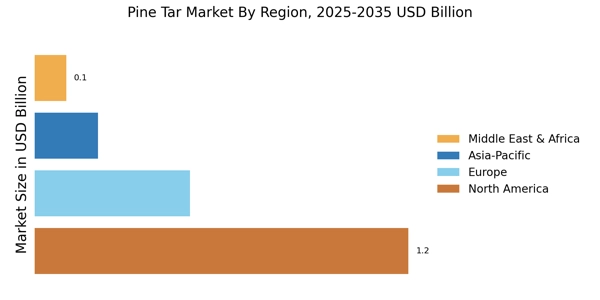
North America is the largest market for pine tar, accounting for approximately 60% of the global share. The region's growth is driven by increasing demand in industries such as construction, automotive, and agriculture. Regulatory support for sustainable forestry practices and eco-friendly products further catalyzes market expansion. The U.S. government promotes the use of natural products, enhancing the appeal of pine tar in various applications. The United States is the leading country in this market, with key players like Koppers Inc, Cedar Tree, and Pine Tar Market Co dominating the landscape. The competitive environment is characterized by innovation and a focus on quality, with companies investing in research and development to enhance product offerings. The presence of established firms ensures a robust supply chain, meeting the growing demand effectively.

Europe : Emerging Market Potential

Europe is witnessing a growing interest in pine tar, driven by increasing awareness of sustainable and eco-friendly products. The region holds approximately 25% of the global market share, with countries like Germany and Sweden leading the demand. Regulatory frameworks promoting green products and sustainable forestry practices are significant growth drivers. The European Union's commitment to environmental sustainability is a catalyst for the pine tar market's expansion. Germany and Sweden are at the forefront of this market, with a competitive landscape featuring both established and emerging players. Companies are focusing on innovation and sustainability, aligning their products with consumer preferences for natural and organic materials. The presence of key players, along with a supportive regulatory environment, positions Europe as a promising market for pine tar.

Asia-Pacific : Rapid Growth and Demand

Asia-Pacific is rapidly emerging as a significant market for pine tar, driven by increasing industrialization and demand for natural products. The region holds about 10% of the global market share, with countries like China and India showing substantial growth potential. The rising awareness of the benefits of natural products in various applications, including construction and agriculture, is a key driver. Government initiatives promoting sustainable practices further support market growth. China and India are the leading countries in this region, with a competitive landscape that includes both local and international players. The market is characterized by increasing investments in production capabilities and a focus on quality. Key players are adapting to local preferences, ensuring a steady supply of pine tar to meet the growing demand in various sectors.

Middle East and Africa : Untapped Market Opportunities

The Middle East and Africa region presents untapped opportunities in the pine tar market, holding approximately 5% of the global share. The growth is driven by increasing industrial activities and a rising demand for natural products in sectors like construction and agriculture. Regulatory frameworks are gradually evolving to support sustainable practices, which could enhance the market's appeal. The region's diverse climate and natural resources provide a favorable environment for pine tar production. Countries like South Africa and the UAE are emerging as key players in this market, with a competitive landscape that includes both local and international firms. The presence of key players is growing, and there is an increasing focus on innovation and sustainability. As the market matures, the potential for growth in the Middle East and Africa is significant, driven by both local demand and export opportunities.

Pine Tar Market Regional Image

Key Players and Competitive Insights

Major players in the Pine Tar Market industry are continuously striving to develop new and innovative products to meet the evolving demands of customers. Leading Pine Tar Market players are also focusing on expanding their presence through strategic partnerships and acquisitions. The Pine Tar Market industry is a highly competitive sector, with key industry players competing for market shares through performance and quality. Numerous products and service offerings in the Pine Tar Market industry present a wide array of options to the end-users.

Factors such as technological advancements, increasing consumer awareness, and the rising demand from the industry are driving the market growth. However, the market is also facing challenges, such as fluctuating raw material prices and stringent regulatory policies.Pine Chemicals Association is one of the leading companies in the Pine Tar Market. The company was founded in 2008 and has its headquarters in Atlanta, GA. Pine Chemicals Association operates as a supplier of pine chemicals and related products. The company offers a wide array of Pine Tar Market products, such as wood tar, pine tar oil, and pine tar pitch, among others.

Pine Chemicals Association has a broad customer base and a robust distribution network. Additionally, Pine Chemicals Association is a relatively large company in terms of employee size.Ashland Holdings Inc. is a leading Pine Chemicals Association company and was founded in 1924. The company is headquartered in Covington, KY and operates as a specialty chemicals company. Ashland Holdings offers a wide range of pine tar market products, including pine tar, pine tar oil, and pine tar pitch. Additionally, the company has a strong distribution and sales network and a relatively large customer and employee base.

Key Companies in the Pine Tar Market market include

Industry Developments

The pine tar market is projected to reach USD 2.5 billion by 2032, exhibiting a CAGR of 3.49% during the forecast period. Rising demand for pine tar in various industries, including pharmaceuticals, construction, and personal care, is driving market growth. Increasing awareness of the health benefits of pine tar, such as its antiseptic and anti-inflammatory properties, is further contributing to market expansion. Recent developments include the launch of new pine tar-based products, such as shampoos, soaps, and skincare creams, which are expected to boost market growth in the coming years.

Strategic partnerships and collaborations among market players are also expected to contribute to market consolidation and growth.

Future Outlook

Pine Tar Market Future Outlook

The Pine Tar Market is projected to grow at a 3.49% CAGR from 2024 to 2035, driven by increasing demand in various industries and sustainable product trends.

New opportunities lie in:

  • Expansion into bio-based product lines
  • Development of customized pine tar formulations
  • Strategic partnerships with eco-friendly brands

By 2035, the Pine Tar Market is expected to achieve robust growth, reflecting evolving consumer preferences and industry innovations.

Market Segmentation

Pine Tar Market Type Outlook

  • Kiln Tar
  • Retort Tar

Pine Tar Market Grade Outlook

  • Virgin
  • Refined
  • Technical
  • Pharmaceutical
  • Cosmetic

Pine Tar Market Application Outlook

  • Industrial
  • Wood Treatment
  • Marine
  • Pharmaceutical
  • Personal Care

Report Scope

MARKET SIZE 20241.962(USD Billion)
MARKET SIZE 20252.03(USD Billion)
MARKET SIZE 20352.862(USD Billion)
COMPOUND ANNUAL GROWTH RATE (CAGR)3.49% (2024 - 2035)
REPORT COVERAGERevenue Forecast, Competitive Landscape, Growth Factors, and Trends
BASE YEAR2024
Market Forecast Period2025 - 2035
Historical Data2019 - 2024
Market Forecast UnitsUSD Billion
Key Companies ProfiledMarket analysis in progress
Segments CoveredMarket segmentation analysis in progress
Key Market OpportunitiesGrowing demand for natural wood preservatives and eco-friendly products in the Pine Tar Market.
Key Market DynamicsRising demand for eco-friendly products drives innovation and competition in the Pine Tar Market.
Countries CoveredNorth America, Europe, APAC, South America, MEA

Leave a Comment

FAQs

What is the projected market valuation of the Pine Tar Market by 2035?

The Pine Tar Market is projected to reach a valuation of 2.862 USD Billion by 2035.

What was the market valuation of the Pine Tar Market in 2024?

In 2024, the Pine Tar Market was valued at 1.962 USD Billion.

What is the expected CAGR for the Pine Tar Market during the forecast period 2025 - 2035?

The expected CAGR for the Pine Tar Market during the forecast period 2025 - 2035 is 3.49%.

Which companies are considered key players in the Pine Tar Market?

Key players in the Pine Tar Market include Koppers Inc, Cedar Tree, Pine Tar Co, Hawkins Inc, Hammond Lumber Company, Pine Tar Products, Sierra Pine, and Pine Chemical Group.

What are the main applications of pine tar in the market?

The main applications of pine tar include Industrial, Wood Treatment, Marine, Pharmaceutical, and Personal Care.

How did the segment of Kiln Tar perform in 2024?

In 2024, the Kiln Tar segment was valued at 0.986 USD Billion and is projected to grow to 1.431 USD Billion.

What is the valuation of the Retort Tar segment in 2024?

The Retort Tar segment was valued at 0.976 USD Billion in 2024, with a projection to reach 1.431 USD Billion.

What are the different grades of pine tar available in the market?

The different grades of pine tar available include Virgin, Refined, Technical, Pharmaceutical, and Cosmetic.

What is the projected growth for the Industrial application of pine tar by 2035?

The Industrial application of pine tar is projected to grow from 0.8 USD Billion in 2024 to 1.2 USD Billion by 2035.

How does the market for Pharmaceutical applications of pine tar appear to be evolving?

The Pharmaceutical application segment is expected to grow from 0.2 USD Billion in 2024 to 0.3 USD Billion by 2035.

Download Free Sample

Kindly complete the form below to receive a free sample of this Report

Compare Licence

×
Features License Type
Single User Multiuser License Enterprise User
Price $4,950 $5,950 $7,250
Maximum User Access Limit 1 User Upto 10 Users Unrestricted Access Throughout the Organization
Free Customization
Direct Access to Analyst
Deliverable Format
Platform Access
Discount on Next Purchase 10% 15% 15%
Printable Versions