×
Request Free Sample ×

Kindly complete the form below to receive a free sample of this Report

Leading companies partner with us for data-driven Insights

clients tt-cursor
Hero Background

Pine Needle Oil Market

ID: MRFR/HC/26121-HCR
100 Pages
Rahul Gotadki
October 2025

Pine Needle Oil Market Research Report By Application (Pharmaceutical, Personal Care Products, Flavors and Fragrances, Food and Beverages), By Extraction Method (Steam Distillation, Solvent Extraction), By Grade (Therapeutic Grade, Commercial Grade), By Source (Pinus sylvestris, Pinus ponderosa, Pinus nigra) and By Regional (North America, Europe, South America, Asia Pacific, Middle East and Africa) - Forecast to 2035

Share:
Download PDF ×

We do not share your information with anyone. However, we may send you emails based on your report interest from time to time. You may contact us at any time to opt-out.

Pine Needle Oil Market Infographic
Purchase Options

Pine Needle Oil Market Summary

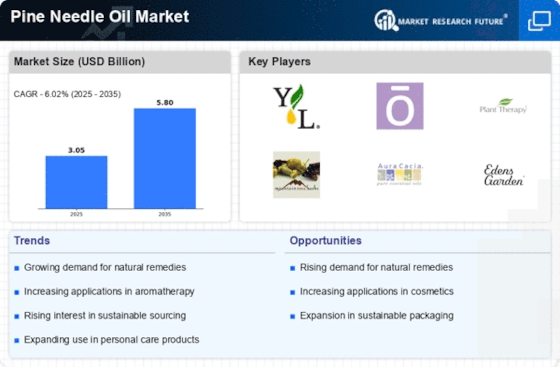
As per MRFR analysis, the Pine Needle Oil Market Size was estimated at 3.05 USD Billion in 2024. The Pine Needle Oil industry is projected to grow from 3.234 USD Billion in 2025 to 5.803 USD Billion by 2035, exhibiting a compound annual growth rate (CAGR) of 6.02 during the forecast period 2025 - 2035.

Key Market Trends & Highlights

The Pine Needle Oil Market is experiencing robust growth driven by increasing consumer preference for natural products.

  • The demand for natural products continues to rise, particularly in North America, which remains the largest market for pine needle oil.
  • The wellness industry is expanding, with a notable increase in the popularity of aromatherapy, particularly in the Asia-Pacific region.
  • E-commerce platforms are facilitating greater accessibility to pine needle oil, contributing to its market growth.
  • Key drivers include increasing awareness of health benefits and the rising popularity of eco-friendly products, particularly in the pharmaceutical and personal care segments.

Market Size & Forecast

2024 Market Size 3.05 (USD Billion)
2035 Market Size 5.803 (USD Billion)
CAGR (2025 - 2035) 6.02%

Major Players

Young Living Essential Oils (US), doTERRA International (US), Plant Therapy Essential Oils (US), Mountain Rose Herbs (US), Aura Cacia (US), Edens Garden (US), Florihana (FR), NHR Organic Oils (GB), Pine Needle Oil Co (US)

Pine Needle Oil Market Trends

The Pine Needle Oil Market is currently experiencing a notable evolution, driven by a growing awareness of natural and organic products among consumers. This shift towards holistic health solutions appears to be influencing demand for essential oils, particularly those derived from natural sources. Pine needle oil, known for its therapeutic properties, is gaining traction in various sectors, including aromatherapy, cosmetics, and food and beverage. The increasing inclination towards sustainable and eco-friendly products may further bolster the market, as consumers seek alternatives that align with their values. Additionally, the rise of e-commerce platforms facilitates broader access to these products, potentially expanding the consumer base and enhancing market growth. Moreover, the Pine Needle Oil Market seems to be benefiting from a surge in interest from the wellness industry. As more individuals prioritize mental and physical well-being, the demand for natural remedies and essential oils is likely to increase. This trend is complemented by ongoing research into the health benefits of pine needle oil, which may further validate its use in various applications. The market landscape is evolving, with manufacturers exploring innovative extraction methods and product formulations to meet the diverse needs of consumers. Overall, the Pine Needle Oil Market appears poised for continued growth, driven by changing consumer preferences and an expanding range of applications.

Rising Demand for Natural Products

There is an increasing consumer preference for natural and organic products, which is likely to drive the demand for pine needle oil. This trend reflects a broader shift towards holistic health solutions, as individuals seek alternatives to synthetic ingredients.

Growth in Wellness Industry

The wellness sector is experiencing a surge in interest, with more individuals prioritizing mental and physical health. This focus on well-being may lead to heightened demand for natural remedies, including pine needle oil, as consumers explore its therapeutic benefits.

Expansion of E-commerce Platforms

The proliferation of e-commerce platforms is facilitating greater access to pine needle oil products. This trend may enhance market growth by reaching a wider audience and catering to the increasing demand for convenient shopping options.

Pine Needle Oil Market Drivers

Rising Popularity of Aromatherapy

The Pine Needle Oil Market is benefiting from the growing popularity of aromatherapy practices. Aromatherapy, which utilizes essential oils for therapeutic benefits, has gained traction among consumers seeking holistic wellness solutions. Pine needle oil, with its refreshing scent and potential calming effects, is increasingly incorporated into aromatherapy products. Market Research Future indicates that the aromatherapy market is expected to expand significantly, with a projected growth rate of around 10% annually. This expansion may lead to heightened demand for pine needle oil as consumers explore its applications in diffusers, massage oils, and personal care products. Consequently, the Pine Needle Oil Market stands to gain from this trend as more individuals embrace the benefits of aromatherapy.

Innovations in Product Development

The Pine Needle Oil Market is likely to experience growth due to ongoing innovations in product development. Manufacturers are increasingly exploring new formulations and applications for pine needle oil, which may enhance its appeal to consumers. Innovations such as combining pine needle oil with other essential oils or incorporating it into novel delivery systems could broaden its market reach. Additionally, the rise of personalized wellness products may lead to tailored formulations that include pine needle oil, catering to specific consumer needs. Market trends indicate that the essential oils market is evolving, with a focus on unique and effective products. This suggests that the Pine Needle Oil Market could see increased interest as brands innovate and diversify their offerings.

Increasing Awareness of Health Benefits

The Pine Needle Oil Market is experiencing a notable surge in consumer awareness regarding the health benefits associated with pine needle oil. This essential oil is recognized for its potential anti-inflammatory, antimicrobial, and antioxidant properties, which appeal to health-conscious consumers. As individuals increasingly seek natural remedies for various ailments, the demand for pine needle oil is likely to rise. Market data indicates that the essential oils segment, which includes pine needle oil, is projected to grow at a compound annual growth rate of approximately 8% over the next five years. This trend suggests that the Pine Needle Oil Market could see substantial growth as more consumers turn to natural alternatives for health and wellness.

Sustainability and Eco-Friendly Products

The Pine Needle Oil Market is poised for growth due to the rising consumer preference for sustainable and eco-friendly products. As environmental concerns become more pronounced, consumers are increasingly inclined to choose products that align with their values. Pine needle oil, derived from renewable natural resources, appeals to this demographic. Market data suggests that the demand for sustainable personal care and wellness products is on the rise, with consumers willing to pay a premium for eco-friendly options. This trend indicates that the Pine Needle Oil Market could experience increased sales as brands emphasize sustainability in their product offerings, thereby attracting environmentally conscious consumers.

Expansion of Natural Personal Care Products

The Pine Needle Oil Market is witnessing growth driven by the expansion of natural personal care products. As consumers become more discerning about the ingredients in their personal care items, there is a marked shift towards products that feature natural and organic components. Pine needle oil, known for its beneficial properties, is increasingly being incorporated into skincare, haircare, and body care formulations. Market analysis reveals that the natural personal care market is projected to grow at a rate of approximately 9% annually. This growth suggests that the Pine Needle Oil Market may benefit from the increasing integration of pine needle oil into a variety of personal care products, catering to the demand for clean and effective formulations.


Market Segment Insights

By Application: Pharmaceutical (Largest) vs. Personal Care Products (Fastest-Growing)

In the Pine Needle Oil Market, the application segment is notably diverse, with the Pharmaceutical sector taking the lead in market share. This sector benefits from the oil's well-documented therapeutic properties, particularly in respiratory health and anti-inflammatory applications. Personal Care Products, while currently smaller in market share, are rapidly gaining traction, driven by an increasing consumer preference for natural and organic ingredients in cosmetics and skincare items. Growth trends indicate a significant uptick in demand for Pine Needle Oil Market within the Personal Care sector, as brands increasingly highlight natural ingredients and eco-friendly formulations. This movement is propelled by rising consumer awareness around sustainability and holistic wellness. Meanwhile, the Pharmaceutical segment remains robust, with pharmaceutical firms seeking to integrate bioactive compounds found in Pine Needle Oil Market into new therapeutic solutions, ensuring sustained demand.

Pharmaceutical (Dominant) vs. Flavors and Fragrances (Emerging)

Within the Pine Needle Oil Market, the Pharmaceutical application stands out as the dominant segment, largely owing to the oil’s rich content of beneficial compounds, including antioxidants and essential oils that promote health. This segment leverages extensive research backing the efficacy of Pine Needle Oil Market in treating respiratory ailments and supporting immune health. On the other hand, the Flavors and Fragrances application is emerging as a significant player, owing to an increasing trend towards natural flavoring agents in food and beverages. This segment is expected to grow as it caters to the evolving preferences of consumers who prioritize clean label products. Both segments exhibit distinct characteristics: the Pharmaceutical sector focuses on health benefits, while Flavors and Fragrances appeals to sensory experience and innovative culinary applications.

By Extraction Method: Steam Distillation (Largest) vs. Solvent Extraction (Fastest-Growing)

In the Pine Needle Oil Market, the extraction methods comprise significant segments, with steam distillation leading in market share. This method is widely recognized for its efficiency and the purity of the oil it yields. In contrast, solvent extraction, while currently smaller in market share, is rapidly gaining traction as it offers an alternative for producing oil from materials that are more delicate or sensitive to heat. As a result, both methods are essential in catering to diverse consumer needs and preferences in the market.

Extraction Method: Steam Distillation (Dominant) vs. Solvent Extraction (Emerging)

Steam distillation remains the dominant extraction method in the Pine Needle Oil Market, praised for its ability to preserve the natural properties and aroma of the oil. This process utilizes heat and steam to extract oil efficiently and is favored by producers for its reliability and quality results. On the other hand, solvent extraction is emerging as a notable trend due to its effectiveness in extracting oils from varied plant materials with lower thermal sensitivity. This method allows for a broader range of applications and meets the demands of a market that increasingly seeks innovative extraction techniques. Producers are starting to invest in this method to tap into the growing popularity of natural products, indicating a shift in market dynamics.

By Grade: Therapeutic Grade (Largest) vs. Commercial Grade (Fastest-Growing)

In the Pine Needle Oil Market, the therapeutic grade stands out as the largest segment, driven by increasing awareness of its health benefits in aromatherapy and holistic practices. It holds a significant market share as consumers increasingly seek natural remedies for various ailments, leading to a steady demand. In contrast, the commercial grade, although currently smaller, is poised for rapid growth as industries recognize its potential in manufacturing and personal care products, indicating a shift in market dynamics.

Grade: Therapeutic (Dominant) vs. Commercial (Emerging)

Therapeutic grade pine needle oil is characterized by its high purity and quality, making it the preferred choice for health-conscious consumers and practitioners in aromatherapy. This segment is well-established, with a loyal customer base seeking natural alternatives to synthetic products. Meanwhile, commercial grade pine needle oil is emerging rapidly due to its versatility in various applications, including cleaning agents, cosmetics, and industrial uses. As sustainability trends gain traction, the commercial grade is expected to experience significant growth, attracting new entrants to the market while expanding its consumer base.

By Source: Pinus sylvestris (Largest) vs. Pinus ponderosa (Fastest-Growing)

In the Pine Needle Oil Market, the source segment is primarily dominated by Pinus sylvestris, which holds the largest market share due to its widespread availability and the high quality of oil extracted. Following it, Pinus ponderosa is emerging as a significant player, particularly in the natural and organic oil niches, although it currently holds a smaller share compared to Pinus sylvestris. Pinus nigra, while valuable, occupies a lesser position in the overall market distribution.

Pinus sylvestris (Dominant) vs. Pinus ponderosa (Emerging)

Pinus sylvestris is recognized not only for its quality but also for its therapeutic properties, making it the preferred choice among manufacturers in the Pine Needle Oil Market. This dominant species leverages its established market presence and robust distribution channels for expanded reach. On the other hand, Pinus ponderosa is gaining traction due to the rising consumer preference for natural and sustainable products, indicating an exciting growth trajectory. As the market shifts toward herbal remedies and holistic wellness, this emerging segment is expected to capture the interest of new consumers, further enhancing its growth potential against a backdrop of increasing awareness of natural ingredients.

Get more detailed insights about Pine Needle Oil Market

Regional Insights

North America : Market Leader in Pine Needle Oil Market

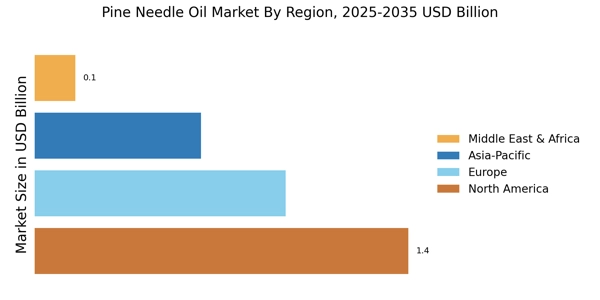
North America is the largest market for pine needle oil, accounting for approximately 45% of the global share. The region's growth is driven by increasing consumer awareness of natural products, rising demand for aromatherapy, and regulatory support for essential oils. The U.S. leads this market, followed closely by Canada, which holds about 15% of the market share. Regulatory frameworks promoting organic and natural products further catalyze growth in this sector. The competitive landscape in North America is robust, featuring key players such as Young Living Essential Oils, doTERRA International, and Plant Therapy Essential Oils. These companies leverage innovative marketing strategies and product diversification to capture consumer interest. The presence of established distribution channels and a growing trend towards holistic health practices further enhance market dynamics, making North America a pivotal region for pine needle oil.

Europe : Emerging Market for Essential Oils

Europe is witnessing a significant rise in the demand for pine needle oil, holding approximately 30% of the global market share. The growth is fueled by increasing consumer preference for natural and organic products, alongside stringent regulations promoting sustainable sourcing. Germany and France are the leading countries in this market, contributing to about 12% and 10% of the market share, respectively. Regulatory bodies are emphasizing the importance of quality and safety in essential oils, which is driving market growth. The competitive landscape in Europe is characterized by a mix of established brands and emerging players. Companies like Florihana and NHR Organic Oils are gaining traction by focusing on organic certifications and sustainable practices. The market is also supported by a growing trend in wellness and aromatherapy, with consumers increasingly seeking natural alternatives for health and well-being. This trend positions Europe as a key player in the pine needle oil market.

Asia-Pacific : Rapidly Growing Market Potential

Asia-Pacific is emerging as a significant player in the pine needle oil market, currently holding about 20% of the global share. The region's growth is driven by increasing health consciousness among consumers and a rising trend towards natural remedies. Countries like China and Australia are at the forefront, with China accounting for approximately 10% of the market share. The regulatory environment is becoming more favorable, encouraging the use of natural products in various applications, including cosmetics and wellness. The competitive landscape in Asia-Pacific is evolving, with both local and international players entering the market. Companies are focusing on product innovation and expanding their distribution networks to meet the growing demand. The presence of key players such as Mountain Rose Herbs and Aura Cacia is notable, as they adapt their strategies to cater to the unique preferences of Asian consumers. This dynamic environment positions Asia-Pacific as a promising market for pine needle oil.

Middle East and Africa : Untapped Market Opportunities

The Middle East and Africa region is gradually recognizing the potential of pine needle oil, currently holding about 5% of the global market share. The growth is primarily driven by increasing interest in natural health products and the rising popularity of aromatherapy. Countries like South Africa and the UAE are leading this trend, with a growing number of consumers seeking organic and natural alternatives. Regulatory frameworks are beginning to support the use of essential oils, which is expected to boost market growth in the coming years. The competitive landscape in this region is still developing, with a mix of local producers and international brands entering the market. The presence of companies focusing on organic certifications and sustainable practices is becoming more prominent. As awareness of the benefits of pine needle oil increases, the market is expected to expand, offering significant opportunities for growth and investment in the Middle East and Africa.

Pine Needle Oil Market Regional Image

Key Players and Competitive Insights

Major players in the Pine Needle Oil Market are constantly striving to gain a competitive edge by adopting various strategies. These strategies include product innovation, geographical expansion, mergers and acquisitions, and partnerships.

Leading Pine Needle Oil Market players are also investing heavily in research and development to create new and improved products that meet the evolving needs of consumers. The Pine Needle Oil Market is characterized by intense competition, with several key players vying for market share.

Some of the prominent players in this market include Firmenich, Symrise, Givaudan, International Flavors & Fragrances Inc. (IFF), and Robertet. These companies are focusing on expanding their product portfolios, investing in research and development, and strengthening their distribution networks to gain a competitive edge.

Firmenich is a leading provider of fragrance and flavor ingredients, including pine needle oil. The company has a strong global presence and a wide range of products that cater to the needs of various industries, including cosmetics, personal care, and food and beverage.

Firmenich is committed to innovation and sustainability, and it invests heavily in research and development to create new and improved products. The company also has a strong focus on customer service and is known for its high-quality products and technical support.

Symrise is another major player in the Pine Needle Oil Market. The company is known for its expertise in creating fragrances and flavors for a wide range of applications. Symrise has a global presence and a diverse product portfolio that includes pine needle oil.

The company is focused on innovation and sustainability, and it invests heavily in research and development to create new and improved products. Symrise also has a strong focus on customer service and is known for its high-quality products and technical support.

Key Companies in the Pine Needle Oil Market market include

Industry Developments

The rising demand for pine needle oil in the pharmaceutical and personal care industries is driving market growth. Pine needle oil is used in a wide range of products, including cough syrups, decongestants, and skincare products. The growing popularity of aromatherapy and the increasing use of essential oils in household cleaning products are also contributing to the market's growth.

Key industry developments include the launch of new pine needle oil-based products and the expansion of production facilities by major players.

For instance, in 2023, Robertet launched a new range of pine needle oil-based fragrances for use in personal care products. Additionally, companies like doTERRA and NOW Foods have expanded their production facilities to meet the growing demand for pine needle oil.

Future Outlook

Pine Needle Oil Market Future Outlook

The Pine Needle Oil Market is projected to grow at a 6.02% CAGR from 2024 to 2035, driven by increasing demand in aromatherapy, cosmetics, and natural cleaning products.

New opportunities lie in:

  • Expansion into emerging markets with tailored marketing strategies.
  • Development of eco-friendly packaging solutions to attract environmentally conscious consumers.
  • Partnerships with wellness brands to create co-branded product lines.

By 2035, the Pine Needle Oil Market is expected to achieve robust growth and increased market penetration.

Market Segmentation

Pine Needle Oil Market Grade Outlook

  • Therapeutic Grade
  • Commercial Grade

Pine Needle Oil Market Source Outlook

  • Pinus sylvestris
  • Pinus ponderosa
  • Pinus nigra

Pine Needle Oil Market Application Outlook

  • Pharmaceutical
  • Personal Care Products
  • Flavors and Fragrances
  • Food and Beverages

Pine Needle Oil Market Extraction Method Outlook

  • Steam Distillation
  • Solvent Extraction

Report Scope

MARKET SIZE 20243.05(USD Billion)
MARKET SIZE 20253.234(USD Billion)
MARKET SIZE 20355.803(USD Billion)
COMPOUND ANNUAL GROWTH RATE (CAGR)6.02% (2024 - 2035)
REPORT COVERAGERevenue Forecast, Competitive Landscape, Growth Factors, and Trends
BASE YEAR2024
Market Forecast Period2025 - 2035
Historical Data2019 - 2024
Market Forecast UnitsUSD Billion
Key Companies ProfiledMarket analysis in progress
Segments CoveredMarket segmentation analysis in progress
Key Market OpportunitiesGrowing demand for natural wellness products drives expansion in the Pine Needle Oil Market.
Key Market DynamicsRising consumer preference for natural products drives demand for pine needle oil across various industries.
Countries CoveredNorth America, Europe, APAC, South America, MEA

Leave a Comment

FAQs

What is the current valuation of the Pine Needle Oil Market?

As of 2024, the Pine Needle Oil Market was valued at 3.05 USD Billion.

What is the projected market size for the Pine Needle Oil Market in 2035?

The Pine Needle Oil Market is projected to reach 5.803 USD Billion by 2035.

What is the expected CAGR for the Pine Needle Oil Market during the forecast period?

The expected CAGR for the Pine Needle Oil Market from 2025 to 2035 is 6.02%.

Which application segment is anticipated to show the highest growth in the Pine Needle Oil Market?

The Food and Beverages segment, valued at 1.11 USD Billion in 2024, is expected to grow to 2.09 USD Billion by 2035.

What extraction methods are utilized in the Pine Needle Oil Market?

The primary extraction methods include Steam Distillation and Solvent Extraction, with valuations of 1.83 USD Billion and 1.22 USD Billion in 2024, respectively.

Which grade of Pine Needle Oil is projected to dominate the market?

The Commercial Grade, valued at 1.83 USD Billion in 2024, is likely to dominate the market, reaching 3.55 USD Billion by 2035.

What are the leading companies in the Pine Needle Oil Market?

Key players in the Pine Needle Oil Market include Young Living Essential Oils, doTERRA International, and Plant Therapy Essential Oils.

Which source of Pine Needle Oil is expected to have the highest valuation by 2035?

Pinus sylvestris, valued at 1.22 USD Billion in 2024, is projected to reach 2.25 USD Billion by 2035.

How does the Pine Needle Oil Market compare across different segments?

In 2024, the Pharmaceutical segment was valued at 0.76 USD Billion, while the Flavors and Fragrances segment was at 0.57 USD Billion, indicating varied growth potential.

What trends are influencing the growth of the Pine Needle Oil Market?

Increasing demand for natural products in personal care and food applications appears to be driving growth in the Pine Needle Oil Market.

Download Free Sample

Kindly complete the form below to receive a free sample of this Report

Compare Licence

×
Features License Type
Single User Multiuser License Enterprise User
Price $4,950 $5,950 $7,250
Maximum User Access Limit 1 User Upto 10 Users Unrestricted Access Throughout the Organization
Free Customization
Direct Access to Analyst
Deliverable Format
Platform Access
Discount on Next Purchase 10% 15% 15%
Printable Versions