×
Request Free Sample ×

Kindly complete the form below to receive a free sample of this Report

* Please use a valid business email

Leading companies partner with us for data-driven Insights

clients tt-cursor
Hero Background

Plant Based Vaccine Market

ID: MRFR/HC/36876-HCR
100 Pages
Rahul Gotadki
October 2025

Plant-Based Vaccine Market Research Report By Technology (Transgenic Plants, Plant Viral Vectors, Plant Cell Culture), By Application (Human Vaccines, Animal Vaccines, Therapeutic Proteins), By Route of Administration (Oral, Injectable, Nasal), By End Use (Research Institutions, Pharmaceutical Companies, Agricultural Sector) and By Regional (North America, Europe, South America, Asia Pacific, Middle East and Africa) - Forecast to 2035

Share:
Download PDF ×

We do not share your information with anyone. However, we may send you emails based on your report interest from time to time. You may contact us at any time to opt-out.

Plant Based Vaccine Market Infographic
Purchase Options

Plant Based Vaccine Market Summary

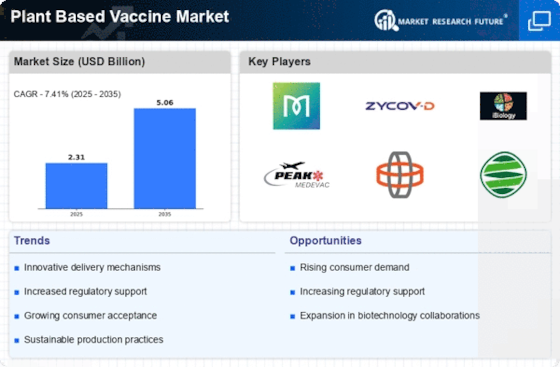
As per MRFR analysis, the Plant Based Vaccine Market Size was estimated at 2.305 USD Billion in 2024. The Plant Based Vaccine industry is projected to grow from 2.476 USD Billion in 2025 to 5.061 USD Billion by 2035, exhibiting a compound annual growth rate (CAGR) of 7.41 during the forecast period 2025 - 2035.

Key Market Trends & Highlights

The Plant Based Vaccine Market is poised for substantial growth driven by technological advancements and increasing sustainability efforts.

  • North America remains the largest market for plant based vaccines, driven by robust research and development initiatives.
  • The Asia-Pacific region is emerging as the fastest-growing market, fueled by rising investments in biotechnology and healthcare.
  • Transgenic plants dominate the market as the largest segment, while plant cellular culture is rapidly gaining traction as the fastest-growing segment.
  • Key market drivers include the rising demand for sustainable solutions and advancements in biotechnology, which are shaping the future of vaccine development.

Market Size & Forecast

2024 Market Size 2.305 (USD Billion)
2035 Market Size 5.061 (USD Billion)
CAGR (2025 - 2035) 7.41%

Major Players

Medicago (CA), ZyCoV-D (IN), iBio (US), MediVax (US), Vaxart (US), GreenLight Biosciences (US), PlantForm Corporation (CA), PhytoPharma (US)

Plant Based Vaccine Market Trends

The Plant Based Vaccine Market is currently experiencing a notable evolution, driven by advancements in biotechnology and increasing consumer awareness regarding health and sustainability. This market appears to be gaining traction as researchers explore the potential of plant-based systems for vaccine production, which may offer advantages such as lower production costs and reduced environmental impact. Furthermore, the growing demand for alternative vaccine sources, particularly in regions with limited access to traditional manufacturing facilities, suggests a shift towards more decentralized production methods. As a result, the Plant Based Vaccine Market is likely to witness a surge in innovation and investment, fostering a competitive landscape that encourages collaboration among various stakeholders. In addition, regulatory bodies are beginning to recognize the potential of plant-based vaccines, which may lead to more streamlined approval processes. This evolving regulatory environment could facilitate faster market entry for new products, thereby enhancing the overall growth trajectory of the Plant Based Vaccine Market. Moreover, public perception appears to be shifting positively, as consumers increasingly seek out sustainable and ethically produced healthcare solutions. This trend may further propel the market forward, as companies strive to meet the rising expectations of environmentally conscious consumers. Overall, the Plant Based Vaccine Market is poised for significant growth, driven by technological advancements, regulatory support, and changing consumer preferences.

Technological Advancements in Production

Recent innovations in biotechnology are enhancing the efficiency and effectiveness of plant-based vaccine production. Techniques such as genetic engineering and molecular farming are being utilized to optimize yield and potency, which may lead to more effective vaccines. This trend indicates a promising future for the Plant Based Vaccine Market, as ongoing research continues to unlock new possibilities.

Increased Focus on Sustainability

The growing emphasis on sustainable practices within the healthcare sector is influencing the Plant Based Vaccine Market. As consumers become more environmentally conscious, there is a rising demand for vaccines produced through eco-friendly methods. This shift towards sustainability may encourage companies to adopt plant-based solutions, aligning with broader environmental goals.

Regulatory Support and Collaboration

The evolving regulatory landscape is becoming more favorable for plant-based vaccines, potentially expediting the approval process for new products. Collaborative efforts between governments, research institutions, and private companies are likely to enhance the development and distribution of these vaccines, fostering a more robust market environment.

Plant Based Vaccine Market Drivers

Advancements in Biotechnology

Technological innovations in biotechnology are significantly influencing the Plant Based Vaccine Market. Recent advancements in genetic engineering and plant molecular farming have enabled the development of more effective and safer vaccines. For instance, the use of plants as biofactories allows for the rapid production of antigens, which can be crucial during outbreaks. The ability to produce vaccines in a cost-effective manner is particularly appealing to emerging markets, where healthcare resources may be limited. As a result, the market is witnessing an influx of new players and products, which could potentially reshape the competitive landscape. The integration of these biotechnological advancements is likely to enhance the efficacy and accessibility of vaccines, thereby driving growth in the Plant Based Vaccine Market.

Supportive Regulatory Frameworks

The Plant Based Vaccine Market is experiencing favorable regulatory environments that encourage innovation and market entry. Regulatory agencies are increasingly recognizing the potential of plant-based vaccines and are streamlining approval processes to facilitate their development. This supportive framework is crucial for attracting investment and fostering collaboration among stakeholders. Recent initiatives by regulatory bodies to establish clear guidelines for plant-based vaccine development have been instrumental in reducing barriers to market entry. As a result, more companies are likely to invest in this sector, leading to a diversification of products available to consumers. The establishment of a robust regulatory framework is expected to enhance the credibility and acceptance of plant-based vaccines, thereby driving growth in the Plant Based Vaccine Market.

Growing Awareness of Vaccine Safety

The Plant Based Vaccine Market is benefiting from an increasing public awareness regarding vaccine safety. As consumers become more informed about vaccine ingredients and production methods, there is a rising preference for vaccines derived from natural sources. Plant-based vaccines are often perceived as safer alternatives, as they typically contain fewer synthetic additives. This perception is bolstered by ongoing educational campaigns aimed at demystifying vaccine technology. Consequently, the demand for plant-based options is likely to rise, as consumers seek transparency and safety in their healthcare choices. Market analysts suggest that this trend could lead to a substantial increase in the adoption of plant-based vaccines, further propelling the growth of the Plant Based Vaccine Market.

Rising Demand for Sustainable Solutions

The Plant Based Vaccine Market is experiencing a notable surge in demand for sustainable healthcare solutions. As consumers become increasingly aware of environmental issues, there is a growing preference for products that minimize ecological impact. This trend is reflected in the rising investments in plant-based technologies, which are perceived as more environmentally friendly compared to traditional vaccine production methods. According to recent data, the market for plant-based vaccines is projected to grow at a compound annual growth rate of approximately 15% over the next five years. This shift towards sustainability not only aligns with consumer preferences but also encourages pharmaceutical companies to innovate and adopt greener practices, thereby enhancing their market position within the Plant Based Vaccine Market.

Increased Investment in Research and Development

Investment in research and development is a critical driver for the Plant Based Vaccine Market. Pharmaceutical companies and research institutions are allocating substantial resources to explore the potential of plant-based vaccines. This focus on R&D is essential for overcoming existing challenges, such as scalability and regulatory approval processes. Recent reports indicate that funding for plant-based vaccine projects has increased by over 20% in the past year, reflecting a strong commitment to innovation. This influx of capital not only accelerates the development of new vaccines but also fosters collaboration between academia and industry, which is vital for advancing the science behind plant-based immunization. As a result, the Plant Based Vaccine Market is poised for significant growth, driven by a robust pipeline of innovative products.

Market Segment Insights

By Technology: Transgenic Plants (Largest) vs. Plant Cellular Culture (Fastest-Growing)

In the Plant Based Vaccine Market, Transgenic Plants hold the largest market share, driven by their ability to produce vaccines efficiently and effectively. This technology leverages genetic engineering to create plants that can express foreign proteins, crucial for vaccine production. Following closely, Plant Cell Culture represents a rapidly expanding segment that is gaining attention for its scalability and ability to produce high-quality biopharmaceuticals in a controlled environment. This segment's innovative approaches are reshaping the landscape of vaccine development.

Technology: Transgenic Plants (Dominant) vs. Plant Viral Vectors (Emerging)

Transgenic Plants have established a dominant position within the Plant Based Vaccine Market due to their robust production capabilities and cost-efficiency. This technology facilitates the development of vaccines that can be produced at large scales, making them a preferred choice for many manufacturers. In contrast, Plant Viral Vectors are emerging as a novel approach in vaccine delivery systems. They utilize plant viruses to induce immune responses, serving as innovative platforms for developing vaccines that target a variety of pathogens. Although currently a smaller segment, their potential for customization and efficacy is fueling interest and investment in this area.

By Application: Human Vaccines (Largest) vs. Animal Vaccines (Fastest-Growing)

In the Plant Based Vaccine Market, the application segment is primarily led by human vaccines, commanding a significant share of the overall market. Human vaccines continue to dominate due to their critical role in public health and preventive healthcare strategies. On the other hand, animal vaccines, while currently smaller in market share, are rapidly gaining traction, particularly in veterinary medicine, owing to increased awareness of zoonotic diseases and the need for disease prevention among livestock and pets. The growth trends in this segment are influenced by various factors, such as a rising global focus on vaccine research and development, advancements in plant-based immunization technologies, and escalating demand for sustainable and eco-friendly vaccine production methods. Additionally, the COVID-19 pandemic has heightened interest in vaccines, propelling R&D efforts towards both human and animal applications, thereby creating a unique opportunity for growth within the plant-based vaccine sector.

Human Vaccines: Dominant vs. Animal Vaccines: Emerging

Human vaccines represent a dominant force in the Plant Based Vaccine Market, characterized by their extensive research backing and established application in immunization programs worldwide. Driven by stringent regulatory frameworks and a public emphasis on health, these vaccines leverage plant-based technology to enhance safety and efficacy. Conversely, animal vaccines are emerging as a critical area of growth, especially amidst rising concerns over animal health and the safety of food supplies. This segment is witnessing innovative approaches utilizing plant-based vectors to deliver vaccines effectively, catering to the unique immunization needs of livestock and pets. As veterinary healthcare continues to evolve, the demand for animal vaccines is expected to surge, presenting new opportunities for product differentiation and market expansion in the plant-based domain.

By Route of Administration: Injectable (Largest) vs. Oral (Fastest-Growing)

In the Plant Based Vaccine Market, the distribution of routes of administration reveals notable differences in market share. Injectable vaccines dominate the landscape due to their established efficacy and widespread use, making them the preferred choice among healthcare providers. Meanwhile, oral vaccines are emerging as a significant contender, appealing to those seeking patient-friendly alternatives, and gaining traction in various global markets.

Injectable (Dominant) vs. Oral (Emerging)

Injectable vaccines remain the dominant route of administration in the Plant Based Vaccine Market, leveraging convenience for mass immunization and quicker responses to outbreaks. Their robust technology is supported by strong clinical backing, driving their preference among healthcare professionals. In contrast, oral vaccines are classified as emerging due to their recent introductions and the increasing consumer preference for needle-free options. They offer significant advantages in ease of administration and patient compliance, though they require further investment in research and development to navigate regulatory pathways successfully.

By End Use: Pharmaceutical Companies (Largest) vs. Research Institutions (Fastest-Growing)

The Plant Based Vaccine Market is predominantly driven by the pharmaceutical companies sector, which holds the largest share among end users due to their extensive resources and capacity for large-scale production. Research institutions are emerging as a significant segment as they are increasingly engaged in the development and trial phases of plant-based vaccines, drawn by the benefits of innovative treatments and sustainable practices, thus capturing a growing market share. Growth trends within the Plant Based Vaccine Market reflect the rising awareness and demand for plant-based solutions across various sectors, particularly in pharmaceuticals. The surge in investment from pharmaceutical companies, coupled with governmental support for research institutions, is bolstering the rapid advancements in this field. Additionally, the agricultural sector continues to play a pivotal role in supplying raw materials, further propelling the growth of plant-based vaccine development.

Pharmaceutical Companies (Dominant) vs. Research Institutions (Emerging)

Pharmaceutical companies represent the dominant force in the Plant Based Vaccine Market, leveraging substantial funds for research and development. These companies have established infrastructure that allows them to innovate and produce vaccines efficiently. They focus on mass production and scalability, making them crucial players in bringing plant-based vaccines to the mainstream market. On the other hand, research institutions, categorized as an emerging segment, are essential for pioneering research and initial testing of innovative plant-based solutions. They often collaborate with pharmaceutical firms to transition successful developments into viable products, thus bridging the gap between academic research and commercial application. Their agility and focus on groundbreaking research position them as vital contributors to the evolving landscape of plant-based vaccines.

Get more detailed insights about Plant Based Vaccine Market

Regional Insights

North America : Innovation and Research Hub

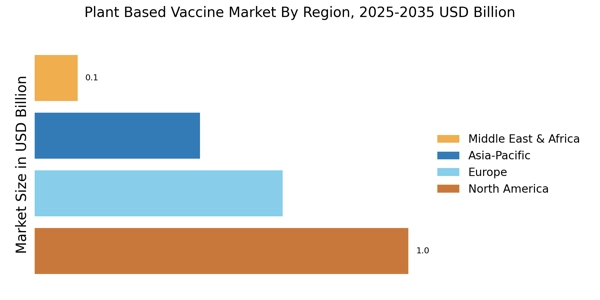
North America is the largest market for plant-based vaccines, holding approximately 45% of the global share. The region benefits from strong research and development initiatives, significant funding from both public and private sectors, and a growing demand for sustainable healthcare solutions. Regulatory support from agencies like the FDA further catalyzes market growth, encouraging innovation in plant-based technologies. The United States and Canada are the leading countries in this sector, with key players such as Medicago, iBio, and GreenLight Biosciences driving advancements. The competitive landscape is characterized by collaborations between biotech firms and academic institutions, enhancing the development of novel vaccines. The presence of established companies and a robust infrastructure for clinical trials positions North America as a leader in the plant-based vaccine market.

Europe : Regulatory Support and Growth

Europe is the second-largest market for plant-based vaccines, accounting for approximately 30% of the global market share. The region is witnessing a surge in demand for innovative healthcare solutions, driven by increasing public awareness of vaccine safety and efficacy. Regulatory frameworks established by the European Medicines Agency (EMA) are pivotal in fostering a conducive environment for research and commercialization of plant-based vaccines. Leading countries in Europe include Germany, France, and the UK, where numerous biotech firms are actively engaged in developing plant-based vaccine technologies. The competitive landscape is marked by collaborations among universities, research institutions, and private companies. Notable players like PlantForm Corporation and PhytoPharma are contributing to the region's growth, enhancing its position in the global market.

Asia-Pacific : Rapidly Growing Market Potential

Asia-Pacific is rapidly emerging as a significant player in the plant-based vaccine market, holding about 20% of the global share. The region's growth is driven by increasing investments in biotechnology, rising healthcare needs, and supportive government policies aimed at enhancing vaccine production capabilities. Countries like India and China are at the forefront, with a focus on developing affordable and effective vaccine solutions. India, in particular, is home to key players like ZyCoV-D and MediVax, which are making strides in plant-based vaccine development. The competitive landscape is evolving, with a mix of established companies and startups innovating in this space. The region's diverse population and varying healthcare challenges present unique opportunities for tailored vaccine solutions, further propelling market growth.

Middle East and Africa : Emerging Market with Challenges

The Middle East and Africa region is gradually recognizing the potential of plant-based vaccines, currently holding about 5% of the global market share. The growth is primarily driven by increasing healthcare investments and a rising demand for innovative vaccine solutions to combat endemic diseases. However, challenges such as regulatory hurdles and limited infrastructure can impede rapid market expansion. Countries like South Africa and Kenya are leading the charge, with initiatives aimed at enhancing local vaccine production capabilities. The competitive landscape is still developing, with a few key players beginning to emerge. Collaborations between governments and international organizations are essential to foster growth and innovation in this sector, paving the way for future advancements in plant-based vaccines.

Plant Based Vaccine Market Regional Image

Key Players and Competitive Insights

The Plant Based Vaccine Market is currently characterized by a dynamic competitive landscape, driven by innovation, strategic partnerships, and a growing emphasis on sustainability. Key players such as Medicago (CA), iBio (US), and GreenLight Biosciences (US) are at the forefront, each adopting distinct strategies to enhance their market positioning. Medicago (CA) focuses on leveraging its proprietary plant-based technology to develop vaccines that are not only effective but also environmentally sustainable. Meanwhile, iBio (US) emphasizes its innovative manufacturing processes, which allow for rapid production and scalability, thereby addressing urgent public health needs. GreenLight Biosciences (US) is strategically positioned to integrate advanced genomic technologies into its vaccine development, potentially revolutionizing the speed and efficacy of vaccine production. Collectively, these strategies contribute to a competitive environment that is increasingly centered on technological advancement and sustainability.

In terms of business tactics, companies are increasingly localizing manufacturing to reduce supply chain vulnerabilities and enhance responsiveness to market demands. The Plant Based Vaccine Market appears moderately fragmented, with several players vying for market share while also collaborating on research and development initiatives. This competitive structure allows for a diverse range of products and innovations, fostering an environment where companies can leverage each other's strengths through partnerships and collaborations.

In August 2025, Medicago (CA) announced a strategic partnership with a leading agricultural biotechnology firm to enhance its plant-based vaccine production capabilities. This collaboration is expected to streamline the manufacturing process, thereby reducing costs and increasing output efficiency. Such a move not only strengthens Medicago's operational framework but also positions it to respond more effectively to emerging health threats, thereby enhancing its competitive edge in the market.

In September 2025, iBio (US) launched a new initiative aimed at expanding its production facilities in Texas, which is anticipated to double its output capacity. This expansion is crucial as it aligns with the growing demand for plant-based vaccines and positions iBio to meet future market needs more effectively. The strategic importance of this initiative lies in its potential to enhance supply chain reliability and operational efficiency, which are critical in a market that is increasingly focused on rapid response capabilities.

In July 2025, GreenLight Biosciences (US) secured a significant investment to further develop its mRNA vaccine platform, which is expected to accelerate the development of plant-based vaccines. This investment underscores the growing recognition of mRNA technology in vaccine development and positions GreenLight as a key player in the future landscape of the Plant Based Vaccine Market. The strategic importance of this development lies in its potential to enhance the efficacy and speed of vaccine production, thereby addressing public health challenges more effectively.

As of October 2025, the competitive trends in the Plant Based Vaccine Market are increasingly defined by digitalization, sustainability, and the integration of advanced technologies such as AI. Strategic alliances are playing a pivotal role in shaping the current landscape, enabling companies to pool resources and expertise to drive innovation. Looking ahead, it is likely that competitive differentiation will evolve from traditional price-based competition to a focus on innovation, technological advancement, and supply chain reliability, reflecting the growing importance of these factors in the market.


Key Companies in the Plant Based Vaccine Market market include

Industry Developments

  • Q1 2024: Medicago’s plant-based COVID-19 vaccine receives full Health Canada approval Medicago, a Canadian biopharmaceutical company, received full regulatory approval from Health Canada for its plant-based COVID-19 vaccine, making it the first plant-derived vaccine to achieve this milestone in the country.
  • Q2 2024: iBio Announces Strategic Partnership with Azitra to Develop Plant-Based Vaccine Candidates iBio, Inc. announced a strategic partnership with Azitra, Inc. to co-develop new plant-based vaccine candidates, leveraging iBio’s FastPharming platform and Azitra’s expertise in protein engineering.
  • Q2 2024: Leaf Expression Systems Opens New Plant-Based Vaccine Manufacturing Facility in the UK Leaf Expression Systems inaugurated a new manufacturing facility dedicated to the production of plant-based vaccines, aiming to scale up commercial supply and accelerate clinical development programs.
  • Q3 2024: Kentucky BioProcessing Announces Expansion of Plant-Based Vaccine Production Capacity Kentucky BioProcessing, a subsidiary of British American Tobacco, announced the expansion of its plant-based vaccine production facility to meet growing demand for rapid-response vaccine manufacturing.
  • Q3 2024: Medicago partners with GSK to co-develop next-generation plant-based influenza vaccines Medicago entered into a partnership with GlaxoSmithKline (GSK) to co-develop and commercialize next-generation plant-based influenza vaccines, combining Medicago’s plant technology with GSK’s adjuvant systems.
  • Q4 2024: PlantForm secures $20 million Series B funding to advance plant-based vaccine pipeline PlantForm Corporation raised $20 million in Series B funding to accelerate the development and clinical trials of its plant-based vaccine candidates targeting infectious diseases.
  • Q4 2024: Bayer invests in Canadian plant-based vaccine startup Medicago Bayer AG made a strategic investment in Medicago to support the expansion of its plant-based vaccine research and manufacturing capabilities.
  • Q1 2025: iBio Appoints Dr. Linda Armstrong as Chief Medical Officer to Lead Plant-Based Vaccine Programs iBio, Inc. appointed Dr. Linda Armstrong as Chief Medical Officer to oversee the company’s clinical development of plant-based vaccine candidates.
  • Q1 2025: Medicago and Serum Institute of India Announce Collaboration on Plant-Based Polio Vaccine Medicago and the Serum Institute of India announced a collaboration to develop a plant-based polio vaccine, aiming to address global supply challenges and improve vaccine accessibility.
  • Q2 2025: Kentucky BioProcessing wins U.S. government contract for rapid plant-based vaccine production Kentucky BioProcessing was awarded a contract by the U.S. government to provide rapid-response plant-based vaccine manufacturing services for pandemic preparedness.
  • Q2 2025: Leaf Expression Systems partners with CEPI to accelerate plant-based vaccine development Leaf Expression Systems entered a partnership with the Coalition for Epidemic Preparedness Innovations (CEPI) to accelerate the development of plant-based vaccines for emerging infectious diseases.
  • Q3 2025: PlantForm opens new R&D center for plant-based vaccine innovation in Canada PlantForm Corporation opened a new research and development center in Canada focused on advancing plant-based vaccine technologies and expanding its product pipeline.

Future Outlook

Plant Based Vaccine Market Future Outlook

The Plant Based Vaccine Market is projected to grow at a 7.41% CAGR from 2024 to 2035, driven by technological advancements, increasing health awareness, and sustainable practices.

New opportunities lie in:

  • Development of scalable production facilities for rapid vaccine deployment.
  • Strategic partnerships with biotech firms for innovative vaccine formulations.
  • Expansion into emerging markets with tailored vaccination programs.

By 2035, the market is expected to be robust, driven by innovation and strategic collaborations.

Market Segmentation

Plant Based Vaccine Market End Use Outlook

  • Research Institutions
  • Pharmaceutical Companies
  • Agricultural Sector

Plant Based Vaccine Market Technology Outlook

  • Transgenic Plants
  • Plant Viral Vectors
  • Plant Cell Culture

Plant Based Vaccine Market Application Outlook

  • Human Vaccines
  • Animal Vaccines
  • Therapeutic Proteins

Plant Based Vaccine Market Route of Administration Outlook

  • Oral
  • Injectable
  • Nasal

Report Scope

MARKET SIZE 20242.305(USD Billion)
MARKET SIZE 20252.476(USD Billion)
MARKET SIZE 20355.061(USD Billion)
COMPOUND ANNUAL GROWTH RATE (CAGR)7.41% (2024 - 2035)
REPORT COVERAGERevenue Forecast, Competitive Landscape, Growth Factors, and Trends
BASE YEAR2024
Market Forecast Period2025 - 2035
Historical Data2019 - 2024
Market Forecast UnitsUSD Billion
Key Companies ProfiledMarket analysis in progress
Segments CoveredMarket segmentation analysis in progress
Key Market OpportunitiesAdvancements in genetic engineering enhance efficacy and scalability in the Plant Based Vaccine Market.
Key Market DynamicsRising consumer demand for sustainable solutions drives innovation and competition in the Plant Based Vaccine Market.
Countries CoveredNorth America, Europe, APAC, South America, MEA

Leave a Comment

FAQs

What is the projected market valuation of the Plant Based Vaccine Market by 2035?

The Plant Based Vaccine Market is projected to reach a valuation of 5.061 USD Billion by 2035.

What was the market valuation of the Plant Based Vaccine Market in 2024?

In 2024, the market valuation of the Plant Based Vaccine Market was 2.305 USD Billion.

What is the expected CAGR for the Plant Based Vaccine Market during the forecast period 2025 - 2035?

The expected CAGR for the Plant Based Vaccine Market during the forecast period 2025 - 2035 is 7.41%.

Which companies are considered key players in the Plant Based Vaccine Market?

Key players in the Plant Based Vaccine Market include Medicago, ZyCoV-D, iBio, MediVax, Vaxart, GreenLight Biosciences, PlantForm Corporation, and PhytoPharma.

What are the main technology segments within the Plant Based Vaccine Market?

The main technology segments include Transgenic Plants, Plant Viral Vectors, and Plant Cell Culture, with valuations of 1.999, 1.5, and 1.562 USD Billion respectively by 2035.

How do the application segments of the Plant Based Vaccine Market compare?

By 2035, Human Vaccines are projected to reach 2.575 USD Billion, while Animal Vaccines and Therapeutic Proteins are expected to reach 1.545 and 0.941 USD Billion respectively.

What routes of administration are prevalent in the Plant Based Vaccine Market?

The prevalent routes of administration include Injectable, Oral, and Nasal, with projected valuations of 2.575, 1.546, and 0.94 USD Billion respectively by 2035.

What end-use sectors are driving the Plant Based Vaccine Market?

The end-use sectors driving the market include Pharmaceutical Companies, Research Institutions, and the Agricultural Sector, with projected valuations of 2.275, 1.275, and 1.511 USD Billion respectively by 2035.

How does the Plant Based Vaccine Market's growth potential appear in comparison to traditional vaccine markets?

The growth potential of the Plant Based Vaccine Market appears robust, with a projected CAGR of 7.41% from 2025 - 2035, indicating a strong upward trajectory.

What factors might influence the future growth of the Plant Based Vaccine Market?

Factors influencing future growth may include advancements in technology, increasing demand for sustainable vaccine production, and the expanding applications in both human and animal health.

Download Free Sample

Kindly complete the form below to receive a free sample of this Report

Compare Licence

×
Features License Type
Single User Multiuser License Enterprise User
Price $4,950 $5,950 $7,250
Maximum User Access Limit 1 User Upto 10 Users Unrestricted Access Throughout the Organization
Free Customization
Direct Access to Analyst
Deliverable Format
Platform Access
Discount on Next Purchase 10% 15% 15%
Printable Versions