Author

Rahul Gotadki

Predictive Genetic Testing & Consumer/Wellness Genomics Market Research Report Information by Test Type (Predictive Testing [Genetic Susceptibility Test, Predictive Diagnostic, and Population Screening], Consumer Genomics, and Wellness Genomics [Nutria Genetic, Skin & Metabolism Genetics, and Others], by Application (Breast & Ovarian Cancer, Cardiovascular Screening, Diabetic Screening & Monitoring, Colon Cancer, Parkinsonism/Alzheimer’s Disease, Urologic Screening/Prostate Cancer Screening, Orthopedic & Musculoskeletal, and Others), by Setting Type (Proteomic Testing, Metabolic Testing, and Genomic Testing), by Region (North America, Europe, Asia-Pacific, and Rest of the World) - Forecast till 2035
As per MRFR analysis, the Predictive Genetic Testing and Consumer Wellness Genomics Market was estimated at 4650.03 USD Million in 2024. The market is projected to grow from 5097.17 USD Million in 2025 to 11421.09 USD Million by 2035, exhibiting a compound annual growth rate (CAGR) of 8.47% during the forecast period 2025 - 2035.
The Predictive Genetic Testing and Consumer Wellness Genomics Market is experiencing robust growth driven by technological advancements and increasing consumer engagement.
| 2024 Market Size | 4650.03 (USD Million) |
| 2035 Market Size | 11421.09 (USD Million) |
| CAGR (2025 - 2035) | 8.47% |
23andMe (US), Ancestry (US), MyHeritage (IL), Invitae (US), Color Genomics (US), Gene by Gene (US), Fulgent Genetics (US), Genetic Technologies (AU), Pathway Genomics (US)
Our Impact
Enabled $4.3B Revenue Impact for Fortune 500 and Leading Multinationals
Partnering with 2000+ Global Organizations Each Year
30K+ Citations by Top-Tier Firms in the Industry
The Predictive Genetic Testing and Consumer Wellness Genomics Market is currently experiencing a notable evolution, driven by advancements in technology and increasing consumer awareness regarding health and wellness. This market encompasses a range of services that allow individuals to gain insights into their genetic predispositions, enabling proactive health management.
As consumers become more health-conscious, the demand for personalized health solutions is rising, leading to a greater interest in genetic testing. Companies are responding by developing innovative products that cater to diverse consumer needs, from ancestry tracing to health risk assessments. Moreover, the integration of artificial intelligence and machine learning into genetic testing processes is enhancing the accuracy and efficiency of results.
This technological progress not only improves the consumer experience but also fosters trust in the reliability of genetic information. As the market continues to expand, regulatory frameworks are evolving to ensure consumer protection and data privacy, which are critical for maintaining public confidence in genetic testing services. The future of the Predictive Genetic Testing and Consumer Wellness GenomicsMarket appears promising, with ongoing research and development likely to yield new opportunities for growth and innovation.
There is a growing trend towards personalized health solutions within the Predictive Genetic Testing and Consumer Wellness Genomics Market. Consumers increasingly seek tailored health insights that align with their unique genetic profiles. This shift is prompting companies to develop more customized testing options, allowing individuals to make informed decisions about their health and wellness.
The integration of advanced technologies, such as artificial intelligence and machine learning, is transforming the Predictive Genetic Testing and Consumer Wellness Genomics Market. These technologies enhance the accuracy of genetic analyses and streamline the testing process, thereby improving the overall consumer experience. As a result, consumers are more likely to trust and utilize these services.
As the Predictive Genetic Testing and Consumer Wellness Genomics Market expands, there is an increasing emphasis on data privacy and security. Consumers are becoming more aware of the importance of safeguarding their genetic information. Companies are therefore prioritizing robust data protection measures to build trust and ensure compliance with evolving regulatory standards.
The Predictive Genetic Testing and Consumer Wellness Genomics Market is experiencing a surge in consumer awareness regarding genetic health. As individuals become more informed about the implications of their genetic makeup, they are increasingly seeking predictive genetic testing services. This heightened awareness is driven by educational campaigns and the proliferation of information through digital platforms. According to recent data, approximately 60 percent of consumers express interest in understanding their genetic predispositions to various health conditions. This trend suggests a growing market potential, as consumers are more likely to invest in genetic testing to make informed health decisions.
The evolving regulatory landscape is a significant driver for the Predictive Genetic Testing and Consumer Wellness Genomics Market. Governments and regulatory bodies are establishing frameworks that support the safe and effective use of genetic testing. These regulations aim to ensure consumer protection while fostering innovation in the field. As regulatory clarity improves, companies are more likely to invest in research and development, leading to the introduction of new testing services. This supportive environment is expected to enhance consumer confidence in genetic testing, thereby driving market growth.
Technological advancements play a pivotal role in shaping the Predictive Genetic Testing and Consumer Wellness Genomics Market. Innovations in sequencing technologies, such as next-generation sequencing, have significantly reduced the cost and time required for genetic testing. This has made predictive genetic testing more accessible to a broader audience. The market has seen a compound annual growth rate of around 15 percent, driven by these technological improvements. Enhanced accuracy and efficiency in testing processes are likely to further stimulate consumer demand, as individuals seek reliable insights into their genetic health.
The increasing emphasis on preventive healthcare is a key driver in the Predictive Genetic Testing and Consumer Wellness Genomics Market. As healthcare systems shift from reactive to proactive approaches, individuals are more inclined to utilize genetic testing to identify potential health risks before they manifest. This trend aligns with a broader societal movement towards wellness and preventive measures. Market data indicates that the preventive healthcare segment is projected to grow at a rate of 12 percent annually, reflecting a significant opportunity for genetic testing services that cater to this demand.
The integration of predictive genetic testing into mainstream healthcare systems is transforming the Predictive Genetic Testing and Consumer Wellness Genomics Market. Healthcare providers are increasingly recognizing the value of genetic insights in personalizing treatment plans and improving patient outcomes. This integration is facilitated by collaborations between genetic testing companies and healthcare institutions, which aim to streamline testing processes and enhance accessibility. As a result, the market is witnessing a shift towards more comprehensive healthcare solutions that incorporate genetic testing, potentially increasing the adoption rate among patients.
The Predictive Genetic Testing and Consumer Wellness Genomics Market exhibits a diverse application landscape, with Disease Risk Assessment currently commanding the largest market share. This area focuses on evaluating an individual’s genetic predisposition to various diseases, which significantly aids in preventive healthcare strategies. Carrier Testing and Nutrigenomicsfollow closely, contributing meaningful shares as they cater to consumer demands for personalized health insights and nutrition-related genetic information. Growth trends in this segment are primarily driven by increasing health awareness and advancements in genetic technology. Pharmacogenomics, which analyzes how genes affect a person's response to drugs, has emerged as the fastest-growing segment. The rising interest in personalized medicine and tailored healthcare solutions supports its expansion, alongside an increase in investment in genetic research and technology-driven healthcare services.
Disease Risk Assessment (Dominant) vs. Nutrigenomics (Emerging)
Disease Risk Assessment is a dominant segment within the Predictive Genetic Testing and Consumer Wellness Genomics Market due to its critical role in preventive healthcare. It empowers consumers to understand their genetic vulnerabilities and adopt proactive health measures, making it a preferred choice among healthcare providers. On the other hand, Nutrigenomics is an emerging segment that focuses on how genetics influence individual responses to nutrients and dietary choices. This area is gaining traction as health-conscious consumers seek tailored dietary recommendations to optimize their well-being. The growing body of research linking nutrition and genetics positions Nutrigenomics as a significant player for future market growth, appealing particularly to those looking to enhance their wellness through dietary personalization.
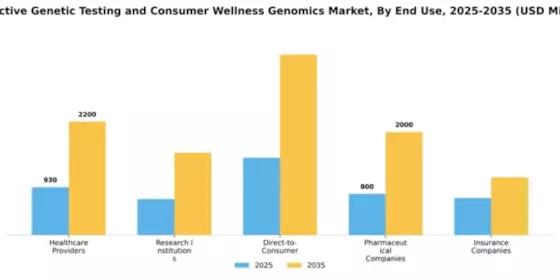
The Predictive Genetic Testing and Consumer Wellness Genomics Market showcases diverse end-use segments. Healthcare Providers currently hold the largest share as they leverage genetic testing to enhance patient care, promoting precision medicine and personalized treatment plans. In contrast, the Direct-to-Consumer segment is rapidly gaining traction as consumers are increasingly inclined towards self-managed health solutions, promoting awareness and access to genetic insights. Growth trends in this segment are significantly influenced by the rise in health consciousness and technological advancements, enabling consumers and professionals alike. Healthcare Providers are adopting these technologies to expand service offerings, while Direct-to-Consumer pathways are benefiting from reduced costs and growing e-commerce platforms that facilitate easy access. This dynamic is fostering increased competition and innovation in the market, aligning with evolving consumer preferences and global health trends.
Healthcare Providers: Dominant vs. Direct-to-Consumer: Emerging
Healthcare Providers dominate the end use segment of the Predictive Genetic Testing and Consumer Wellness Genomics Market by integrating genetic testing into routine patient care. Their established relationships with patients enable them to utilize predictive genetics effectively, enhancing overall treatment outcomes and preventative strategies. On the other hand, the Direct-to-Consumer segment is emerging rapidly, facilitated by advancements in technology that empower consumers with genetic information for personal health decisions. This segment appeals to a growing demographic that prioritizes proactive health management, seeking convenience and accessibility via online platforms. Together, these two segments are shaping the future of the market, driven by the dual focus on personalized medicine and consumer empowerment.
In the Predictive Genetic Testing and Consumer Wellness Genomics Market, the technology segment reveals a varied distribution among its segments. Next Generation Sequencing (NGS) stands out as the largest technology, accounting for a significant portion of the market share due to its ability to quickly sequence large portions of DNA. Other methods like Polymerase Chain Reaction (PCR) and Microarray Technology also play crucial roles, but their shares are comparatively smaller. Sanger Sequencing, once the gold standard, now occupies a niche position as newer technologies gain prominence. The growth trends in this segment are primarily driven by the increasing demand for personalized medicine and consumer wellness applications. Next Generation Sequencing continues to dominate as platforms become more accessible, while Whole Genome Sequencing is rapidly emerging as a popular choice for comprehensive genetic analysis, fueled by advancements in technology and decreasing costs. As consumers increasingly seek proactive health management, these technologies are expected to see robust growth in the coming years.
Technology: Next Generation Sequencing (Dominant) vs. Whole Genome Sequencing (Emerging)
Next Generation Sequencing (NGS) is recognized as the dominant technology in the Predictive Genetic Testing and Consumer Wellness Genomics Market due to its high throughput capabilities and cost-effectiveness. It allows for extensive analysis of genetic variations, essential for personalized treatments and wellness initiatives. Meanwhile, Whole Genome Sequencing, classified as an emerging technology, is gaining traction as it provides a complete picture of an individual's genetic makeup. It is valuable for detecting rare genetic disorders and tailoring wellness programs to individual needs, thereby appealing to health-conscious consumers. As advancements in sequencing technologies continue, both NGS and Whole Genome Sequencing will shape the future landscape of genomics in health and wellness.
The Predictive Genetic Testing and Consumer Wellness Genomics Market exhibits diverse segment values that cater to varying consumer needs. Among these, Predictive Testing holds the largest market share, reflecting its established position in genetic testing, providing essential insights for assessing health risks. In contrast, Prenatal Testing is carving out a significant niche, capturing the attention of expectant parents seeking to understand genetic conditions in their unborn children, thus marking it as a notable player in the market.
Testing Methods: Predictive Testing (Dominant) vs. Prenatal Testing (Emerging)
Predictive Testing serves as a dominant force within the Predictive Genetic Testing and Consumer Wellness Genomics Market. It specializes in forecasting potential genetic disorders, leading to informed health decisions. This segment benefits from increased awareness and acceptance of genetic insights among consumers. On the other hand, Prenatal Testing is rapidly emerging as a vital segment by providing critical information to expectant parents. With technological advancements enhancing accuracy and accessibility, this segment is experiencing significant growth, driven by societal trends that prioritize maternal and fetal health. Additionally, the proactive approach of parents-to-be towards genetic testing positions Prenatal Testing as a key driver in the evolution of consumer wellness genomics.
In the Predictive Genetic Testing and Consumer Wellness Genomics Market, the landscape is shaped by a diverse array of consumer segments. The largest segment, Health Conscious Individuals, demonstrates a prominent appetite for personal wellness and is driven by an increasing awareness of preventive healthcare practices. This demographic comprises a significant portion of overall consumer interest, as they leverage genetic insights to make informed lifestyle choices and uphold optimal health. Conversely, Families with Genetic Disorders are emerging as the fastest-growing segment within this market. The rising prevalence of genetic disorders has heightened the demand for predictive testing among families seeking proactive health management solutions. This segment's growth is further propelled by advancements in genetic testing technologies and increased accessibility to results, enabling informed decisions regarding familial health and long-term planning.
Health Conscious Individuals (Dominant) vs. Families with Genetic Disorders (Emerging)
Health Conscious Individuals represent a dominant force in the Predictive Genetic Testing and Consumer Wellness Genomics Market, driven by a growing trend toward personal health optimization. This segment actively seeks genetic insights to enhance their lifestyle choices, making them early adopters of genetic testing technologies. Their engagement is characterized by a willingness to invest in health and wellness, influencing market dynamics and pushing for innovation in genetic testing services. On the other hand, Families with Genetic Disorders are classified as an emerging segment. Their need for predictive genetic testing stems from the desire for risk assessment and early intervention. As healthcare systems evolve, this segment's growth reflects a critical demand for tailored solutions that ensure informed healthcare decisions and enhance family planning strategies.
Get more detailed insights about Predictive Genetic Testing and Consumer Wellness Genomics Market Request Free Sample
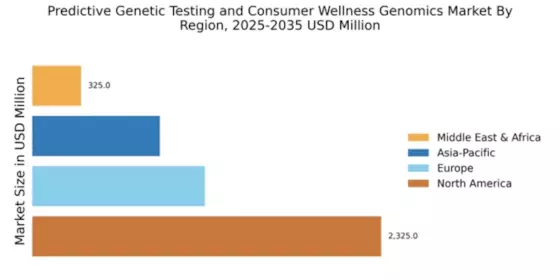
North America continues to lead the Predictive Genetic Testing and Consumer Wellness Genomics Market, holding a significant market share of $2325.01M in 2025. The growth is driven by increasing consumer awareness, advancements in technology, and supportive regulatory frameworks. The demand for personalized health insights and preventive healthcare solutions is on the rise, further fueled by the integration of genetic testing in routine health assessments. The competitive landscape is robust, with key players like 23andMe, Ancestry, and Invitae dominating the market. The U.S. is the primary contributor, supported by a strong healthcare infrastructure and a high adoption rate of genetic testing services. The presence of innovative companies and ongoing research initiatives positions North America as a hub for advancements in genomics and personalized medicine.
Europe's Predictive Genetic Testing and Consumer Wellness Genomics Market is valued at $1150.0M in 2025, reflecting a growing interest in genetic testing among consumers. The market is driven by increasing health consciousness, regulatory support for genetic testing, and advancements in technology. Countries are implementing policies to promote genetic research and testing, enhancing accessibility and affordability for consumers. Leading countries in this region include Germany, the UK, and France, where significant investments in healthcare technology are being made. The competitive landscape features companies like MyHeritage and Color Genomics, which are expanding their services. The European market is characterized by a mix of established players and emerging startups, fostering innovation and collaboration in the genomics space.
The Asia-Pacific region is witnessing a surge in the Predictive Genetic Testing and Consumer Wellness Genomics Market, valued at $850.0M in 2025. This growth is attributed to rising disposable incomes, increasing health awareness, and a growing population interested in preventive healthcare. Regulatory bodies are also beginning to recognize the importance of genetic testing, leading to more supportive policies and frameworks. Countries like Australia, Japan, and China are at the forefront of this market, with a growing number of companies entering the space. Key players such as Genetic Technologies and Fulgent Genetics are expanding their reach. The competitive landscape is evolving, with both local and international firms vying for market share, indicating a promising future for genetic testing in the region.
The Middle East and Africa region is gradually developing its Predictive Genetic Testing and Consumer Wellness Genomics Market, currently valued at $325.02M in 2025. The growth is driven by increasing awareness of genetic health issues and a rising demand for personalized healthcare solutions. However, challenges such as regulatory hurdles and limited access to advanced healthcare technologies persist, impacting market growth. Countries like South Africa and the UAE are leading the way in adopting genetic testing services. The competitive landscape is characterized by a mix of local and international players, with companies beginning to invest in the region. As awareness grows, the market is expected to expand, driven by both consumer demand and governmental support for healthcare initiatives.
The Predictive Genetic Testing and Consumer Wellness Genomics Market is currently characterized by a dynamic competitive landscape, driven by technological advancements and increasing consumer awareness regarding health and wellness. Major players such as 23andMe (US), Ancestry (US), and Invitae (US) are at the forefront, each adopting distinct strategies to enhance their market positioning. 23andMe (US) focuses on innovation through its direct-to-consumer model, emphasizing user-friendly genetic testing kits that provide actionable health insights. Ancestry (US), on the other hand, leverages its extensive genealogical database to offer unique ancestry-related genetic testing, thereby creating a niche market. Invitae (US) is strategically positioned towards clinical applications, aiming to integrate genetic testing into routine healthcare, which reflects a broader trend towards personalized medicine. Collectively, these strategies contribute to a competitive environment that is increasingly centered on consumer engagement and technological integration. In terms of business tactics, companies are increasingly localizing manufacturing and optimizing supply chains to enhance efficiency and reduce costs. The market structure appears moderately fragmented, with a mix of established players and emerging startups. This fragmentation allows for diverse offerings and innovation, although the collective influence of key players like 23andMe (US) and Ancestry (US) remains substantial, shaping market trends and consumer expectations. In November 2025, 23andMe (US) announced a partnership with a leading health insurance provider to offer genetic testing as part of preventive health measures. This strategic move is likely to enhance accessibility to genetic testing, potentially increasing consumer adoption and reinforcing the company's position in the market. By integrating genetic insights into health insurance plans, 23andMe (US) not only broadens its customer base but also aligns itself with the growing trend of preventive healthcare. In October 2025, Ancestry (US) launched a new feature that combines genetic testing with personalized health recommendations based on ancestry data. This initiative appears to deepen user engagement by providing tailored health insights, thereby enhancing the overall value proposition of its services. Such innovations may attract a broader audience, particularly those interested in both ancestry and health, further solidifying Ancestry's competitive edge. In September 2025, Invitae (US) expanded its genetic testing portfolio by acquiring a smaller genomics company specializing in rare diseases. This acquisition seems to reflect Invitae's commitment to broadening its clinical applications and enhancing its service offerings. By integrating specialized tests for rare conditions, Invitae (US) positions itself as a comprehensive provider in the genetic testing landscape, catering to a wider range of consumer needs. As of December 2025, current competitive trends in the market are heavily influenced by digitalization, sustainability, and the integration of artificial intelligence (AI) into testing processes. Strategic alliances among key players are shaping the landscape, fostering innovation and enhancing service delivery. Looking ahead, it appears that competitive differentiation will increasingly pivot from price-based strategies to a focus on innovation, technological advancements, and supply chain reliability. This shift suggests that companies that prioritize these elements may gain a significant advantage in the evolving market.






The Predictive Genetic Testing and Consumer Wellness Genomics Market is projected to grow at an 8.47% CAGR from 2025 to 2035, driven by technological advancements and increasing consumer awareness.
New opportunities lie in:
By 2035, the market is expected to be robust, driven by innovation and consumer demand.
| MARKET SIZE 2024 | 4650.03(USD Million) |
| MARKET SIZE 2025 | 5097.17(USD Million) |
| MARKET SIZE 2035 | 11421.09(USD Million) |
| COMPOUND ANNUAL GROWTH RATE (CAGR) | 8.47% (2025 - 2035) |
| REPORT COVERAGE | Revenue Forecast, Competitive Landscape, Growth Factors, and Trends |
| BASE YEAR | 2024 |
| Market Forecast Period | 2025 - 2035 |
| Historical Data | 2019 - 2024 |
| Market Forecast Units | USD Million |
| Key Companies Profiled | 23andMe (US), Ancestry (US), MyHeritage (IL), Invitae (US), Color Genomics (US), Gene by Gene (US), Fulgent Genetics (US), Genetic Technologies (AU), Pathway Genomics (US) |
| Segments Covered | Application, End Use, Technology, Sample Type, Test Type |
| Key Market Opportunities | Integration of artificial intelligence in predictive genetic testing enhances personalized consumer wellness solutions. |
| Key Market Dynamics | Rising consumer demand for personalized health insights drives innovation and competition in predictive genetic testing and wellness genomics. |
| Countries Covered | North America, Europe, APAC, South America, MEA |
The market is projected to reach approximately 11421.09 USD Million by 2035.
The overall market valuation was 4650.03 USD Million in 2024.
The expected CAGR for the market during 2025 - 2035 is 8.47%.
Key players include 23andMe, Ancestry, MyHeritage, Invitae, and Color Genomics.
The Disease Risk Assessment segment had the highest valuation at 1860.01 USD Million in 2024.


The secondary research process involved comprehensive analysis of regulatory databases, peer-reviewed genomic journals, clinical publications, and authoritative health organizations. Key sources included the US Food & Drug Administration (FDA), Centers for Medicare & Medicaid Services (CMS), National Institutes of Health (NIH), National Human Genome Research Institute (NHGRI), National Center for Biotechnology Information (NCBI/PubMed), CDC National Center for Health Statistics, World Health Organization (WHO) Genomics and World Health Observatory, European Medicines Agency (EMA), European Commission's Directorate-General for Health and Food Safety (DG SANTE), Genomics England, Global Alliance for Genomics and Health (GA4GH), American College of Medical Genetics and Genomics (ACMG), National Society of Genetic Counselors (NSGC), American Society of Human Genetics (ASHG), Human Genome Organization (HUGO), EU Eurostat Health Database, OECD Health Statistics, and national genomics initiatives from key markets including Genome Canada, Australian Genomics, and Japan Agency for Medical Research and Development (AMED). These sources were used to collect genomic testing adoption statistics, regulatory approval data for direct-to-consumer genetic tests, clinical validation studies, population genomics initiatives, demographic trends, and market landscape analysis for predictive testing, consumer genomics, nutrigenomics, pharmacogenomics, and wellness genomics technologies.
In order to gather both qualitative and quantitative insights, supply-side and demand-side stakeholders were interviewed during the primary research process. CEOs, VPs of Product Development, heads of regulatory affairs, directors of bioinformatics, and commercial directors from genetic testing labs, genomics service providers, makers of sequencing platforms, and direct-to-consumer genetic testing businesses were examples of supply-side sources. Clinical geneticists, genetic counselors, molecular pathologists, medical directors of precision medicine programs, procurement leads from hospital genomics labs, research scientists from academic genomics centers, and directors of wellness programs from corporate health initiatives were among the demand-side sources. Primary research gathered information on clinical adoption patterns of NGS technologies, pricing strategies for consumer genomics products, reimbursement dynamics for predictive genetic testing, and data privacy frameworks in genomic medicine. It also validated market segmentation across test types and applications and confirmed product pipeline timelines for novel genetic assays.
Primary Respondent Breakdown:
By Designation: C-level Primaries (32%), Director Level (31%), Others (37%)
By Region: North America (38%), Europe (29%), Asia-Pacific (26%), Rest of World (7%)
Global market valuation was derived through revenue mapping and testing volume analysis across predictive genetic testing and consumer wellness genomics segments. The methodology included:
Identification of 50+ key manufacturers and service providers across North America, Europe, Asia-Pacific, and Latin America
Product mapping across predictive testing (genetic susceptibility, predictive diagnostic, population screening), consumer genomics, and wellness genomics (nutrigenetic, skin & metabolism genetics) categories
Technology assessment across Next Generation Sequencing (NGS), microarray technology, Sanger sequencing, PCR technology, and bioinformatics platforms
Analysis of reported and modeled annual revenues specific to genetic testing portfolios and DTC genomics services
Coverage of manufacturers and service providers representing 72-78% of global market share in 2024
Extrapolation using bottom-up (testing volume × ASP by country/region across cancer screening, cardiovascular, diabetic, and neurological applications) and top-down (manufacturer revenue validation) approaches to derive segment-specific valuations for proteomic testing, metabolic testing, and genomic testing settings
Kindly complete the form below to receive a free sample of this Report

“This is really good guys. Excellent work on a tight deadline. I will continue to use you going forward and recommend you to others. Nice job”


“Thanks. It’s been a pleasure working with you, please use me as reference with any other Intel employees.”


“Thanks for sending the report it gives us a good global view of the Betaïne market.”


“Thank you, this will be very helpful for OQS.”


“We found the report very insightful! we found your research firm very helpful. I'm sending this email to secure our future business.”


“I am very pleased with how market segments have been defined in a relevant way for my purposes (such as "Portable Freezers & refrigerators" and "last-mile"). In general the report is well structured. Thanks very much for your efforts.”


“I have been reading the first document or the study, ,the Global HVAC and FP market report 2021 till 2026. Must say, good info! I have not gone in depth at all parts, but got a good indication of the data inside!”


“We got the report in time, we really thank you for your support in this process. I also thank to all of your team as they did a great job.”


“The Automotive 48V ECU Components Procurement Intelligence Study” was a complex project, but the Market Research Future (MRFR) team handled it with quality, agility, and customer-centricity. They delivered all requested data on time and within the agreed scope. The team, including Shubhendra Anand and Rahul Gotadki, was always readily available to clarify questions and swiftly implement necessary adjustments, driving the project to a successful conclusion within a very demanding timeframe.
I would also like to specifically commend Akshay Agarwal for his responsiveness and support at every stage—from our initial inquiry on May 6th through to final delivery on June 18th. His dedication made the entire process seamless.”



