Prefilled Syringes Market

Key Players: BD (Becton, Dickinson), Gerresheimer AG, Schott AG, West Pharmaceutical Services, Stevanato Group, Nipro Corporation, Baxter International, Terumo Corporation

Prefilled Syringes Market

Prefilled Syringes Market Research Report: Size, Share, Trend Analysis By Applications (Vaccination, Autoimmune Diseases, Diabetes Management, Hormonal Therapy, Oncology), By Material Type (Plastic, Glass, Metal), By Filling Type (Liquid, Lyophilized, Powder), By End Use (Hospitals, Home Healthcare, Pharmaceutical Companies, Research Laboratories) and By Regional (North America, Europe, South America, Asia Pacific, Middle East and Africa) - Growth Outlook & Industry Forecast 2025 To 2035
ID: MRFR/MED/4708-CR
157 Pages
Rahul Gotadki
Last Updated: June 05, 2026
 

Prefilled Syringes Market Summary

The Prefilled Syringes Market was valued at USD 10.42 billion in 2025 and is projected to reach USD 11.58 billion in 2026 before climbing to USD 29.68 billion by 2035, registering a CAGR of 11.72% during the 2026–2035 forecast window. Two catalysts are anchoring this trajectory: the global biologics pipeline — which now exceeds 8,000 active clinical-stage molecules requiring cold-chain-compatible single-dose drug delivery formats — and tightening occupational safety mandates such as the EU Sharps Directive (2010/32/EU), which compel hospitals to adopt safety-engineered needle-based drug administration systems [2][3].

A generational shift in primary packaging is underway across the pharmaceutical supply chain. Legacy vial-and-syringe workflows are giving way to ready-to-use injectable devices that reduce overfill waste by 15–20% and cut bedside preparation time from minutes to seconds. Cyclic-olefin polymer barrels are challenging decades of borosilicate glass dominance, offering break-resistance, lower extractables, and compatibility with sensitive biologics prefilled packaging requirements. Global investment in fill-finish capacity additions surpassed USD 4.8 billion in 2024 alone, with Schott, Gerresheimer, and Stevanato Group commissioning new high-speed lines across the U.S. and Southeast Asia [4][5].

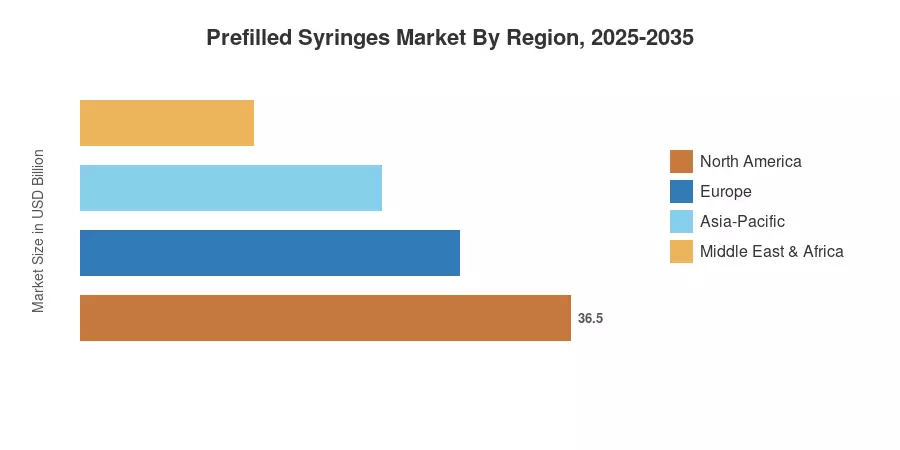
North America commands roughly 41% of the Prefilled Syringes Market, powered by Medicare Part B reimbursement reforms that favor physician-administered biologics in autoinjector pen systems. Asia-Pacific is the fastest-growing region at an estimated 13.15% CAGR, fueled by India's production-linked incentive scheme for medical devices and China's volume-based procurement expansion. Europe holds the second-largest share, anchored by Germany's robust biosimilar adoption and the EU's Pharmaceutical Strategy for Europe. The decade ahead will see these dynamics intensify as payers globally push treatment settings from hospitals toward home healthcare


Key Report Takeaways

• By Material

  • Glass dominated the Prefilled Syringes Market with approximately 73% of 2025 revenue, supported by decades of regulatory precedent in borosilicate barrel manufacturing
  • Polymer is advancing at a CAGR of 11.84% through 2035, driven by biologics prefilled packaging requirements that demand low-protein-adsorption surfaces

• By Application

  • Diabetes accounted for roughly 37% of prefilled syringe shipments in 2025, reflecting the global insulin pen installed base exceeding 300 million units
  • Vaccines represent the fastest-expanding application at a 14.58% CAGR, propelled by pandemic-preparedness stockpiling and WHO prequalification of single-dose drug delivery formats

• By End User

  • Hospitals & clinics held a 44.8% share of the Prefilled Syringes Market in 2025, driven by needlestick-injury compliance mandates
  • Home healthcare is growing at a 12.74% CAGR as autoinjector pen systems simplify self-administration of biologics

• By Region

  • North America contributed approximately USD 4.27 billion in 2025 Prefilled Syringes Market value
  • Asia-Pacific is projected to post a 13.15% CAGR through 2035, led by China and India


Prefilled Syringes Market Size and Forecast (2021–2035)

MRFR's market sizing integrates bottom-up revenue modeling from over 45 fill-finish contract manufacturers and top-down validation against pharmaceutical industry secondary shipment data. Historical figures (2021–2024) are reconciled with company filings, while the 2026–2035 forecast applies a calibrated compound growth model anchored to biologics pipeline progression and regional reimbursement trends.
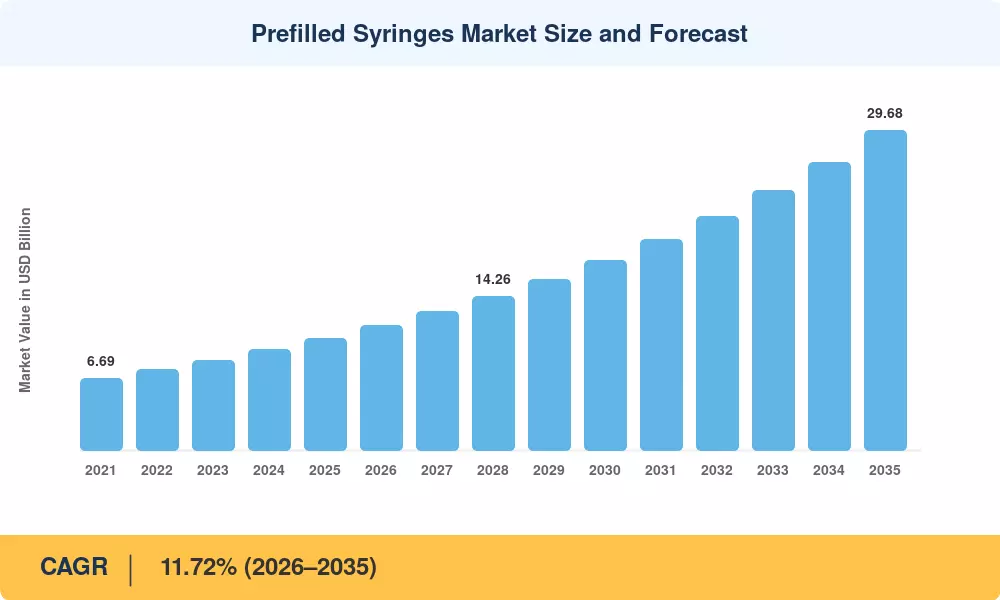
Prefilled Syringes Market Size and Forecast
Our Impact
Enabled $4.3B Revenue Impact for Fortune 500 and Leading Multinationals
Partnering with 2000+ Global Organizations Each Year
30K+ Citations by Top-Tier Firms in the Industry
 

Driver Impact Analysis

Driver ~% Impact on CAGR Geographic Relevance Impact Timeline
Biologics pipeline expansion ~25% Global Long-term (≥4 yr)
GLP-1 / obesity drug uptake ~18% North America, Europe Short-term (≤2 yr)
Needlestick safety regulations ~14% Europe, North America Medium-term (2–4 yr)
Home healthcare shift ~13% Global Long-term (≥4 yr)
Vaccine preparedness programs ~12% Asia-Pacific, Africa Medium-term (2–4 yr)
Polymer barrel material innovation ~10% Global Medium-term (2–4 yr)
Connected-device telemetry integration ~8% North America, Europe Long-term (≥4 yr)


Biologics Pipeline Expansion

As of 2025, there were over 8,200 active compounds in the worldwide biologics pipeline, with 62% of Phase III candidates being monoclonal antibodies and fusion proteins [3]. In order to preserve protein stability during storage and administration, each licensed biologic usually needs a ready-to-use injectable device format. The FDA set a record in 2024 by approving 17 new biologics, and each approval increases the need for single-dose drug delivery systems across several years. By entering into five- to ten-year supply contracts with major packaging suppliers, pharmaceutical companies are establishing a structural demand floor for the prefilled syringe market through at least 2032 [4].


GLP-1 Receptor Agonist Surge

Semaglutide and tirzepatide prescriptions exceeded 45 million annualized scripts in the U.S. by Q4 2024, a 67% year-over-year increase [9]. Both drugs ship predominantly in autoinjector pen systems, and Novo Nordisk's Tyvyt facility in Clayton, NC — a USD 4.1 billion investment — will add 1.2 billion single-dose drug delivery units annually by 2027. This single therapeutic class now represents an estimated 12% of global prefilled syringe demand.

Needlestick Safety Mandates

The EU Sharps Directive and OSHA's Bloodborne Pathogens Standard collectively cover over 18 million healthcare workers across Europe and North America [2]. Compliance requires adoption of safety-engineered needle-based drug administration devices with passive or semi-passive shielding mechanisms. Hospitals that fail audits face penalties up to EUR 500,000 per incident in Germany, creating non-discretionary demand for shielded prefilled formats.

Home Healthcare Transition

At-home self-injection for at least one biologic category is currently reimbursed by payers in 28 OECD nations, up from 14 in 2019 [10]. By directing demand toward user-friendly autoinjector pen systems made for unskilled patients, the shift supports the prefilled syringe market and reduces per-administration costs by 40–60% when compared to outpatient infusion.


Restraints Impact Analysis

Restraint impact estimates follow the same directional methodology as Section 4 — they indicate headwinds rather than precise deductions from the CAGR.

Restraint ~% Negative Impact on CAGR Geographic Relevance Impact Timeline
Borosilicate glass supply constraints ~–6% Global Short-term (≤2 yr)
High fill-finish validation costs ~–5% Global Medium-term (2–4 yr)
Cold-chain infrastructure gaps ~–4% Africa, South America Long-term (≥4 yr)
Silicone oil interaction concerns ~–3% North America, Europe Medium-term (2–4 yr)
Biosimilar price erosion ~–3% Europe, Asia-Pacific Long-term (≥4 yr)


Borosilicate Glass Supply Bottlenecks

More than 70% of the production of pharmaceutical-grade Type I borosilicate tubing is controlled by Schott and Nippon Electric Glass [5]. Tank furnace commissioning for capacity expansions requires lead periods of 18 to 24 months, and the unpredictability of European energy prices in 2024 increased the cost of glass per ton by 11%. These bottlenecks limit the scale-up of single-dose medication delivery and put pressure on prices throughout the prefilled syringe market, especially for small and mid-sized contract fill-finish operators.


Validation Cost Barriers

It takes 12 to 18 months of extractables and leachables testing, device combination product submissions, and process validation runs to convert a drug product from vial to prefilled format, which can cost USD 8 to 15 million per SKU [13]. Smaller biotech companies frequently postpone the transition, which delays the rise of addressable volume for injectable devices that are ready for use.


Cold-Chain Gaps in Emerging Economies

Sub-Saharan Africa and parts of South America lack continuous 2–8°C logistics networks, limiting penetration of biologics prefilled packaging that demands unbroken cold-chain custody [11]. WHO estimates that 25% of vaccines reaching low-income countries experience at least one temperature excursion, undermining confidence in prefilled delivery.


Prefilled Syringes Market Opportunities

Cyclic-Olefin Polymer Adoption Wave

Polymer barrels eliminate breakage risk, reduce weight by 50%, and enable silicone-oil-free plunger systems — directly addressing two top restraints Daikyo Crystal Zenith and West Pharmaceutical's Daikyo-partnered COP platform are winning design-in awards from top-20 pharmaceutical companies, positioning polymer ready-to-use injectable devices for 18–22% share of the Prefilled Syringes Market by 2032 [5][14].

Connected and Smart Prefilled Devices

Embedded NFC tags and Bluetooth-enabled dose-tracking sensors are converting prefilled syringes from passive containers into digital health endpoints. Payers in Germany and the U.S. are piloting adherence-linked reimbursement models, creating a data-monetization layer atop the physical device [12]. Companies offering connected autoinjector pen systems with companion apps can command 10–15% price premiums over standard formats.

Emerging-Market Vaccine Industrialization

India's Serum Institute, Biological E, and Bharat Biotech are collectively investing USD 1.9 billion in prefilled-format vaccine lines to serve WHO-prequalified export markets [7]. Africa's Pasteur Institute network in Senegal, Rwanda, and South Africa is commissioning mRNA fill-finish suites designed exclusively for single-dose drug delivery. These investments could unlock 350–500 million incremental prefilled units annually by 2030

Dual-Chamber and Reconstitution Devices

Lyophilized biologics that currently require bedside reconstitution are migrating to dual-chamber prefilled syringes that combine diluent and drug in one barrel. Vetter Pharma and Gerresheimer have both commercialized dual-chamber platforms, targeting the roughly USD 1.2 billion reconstitution-device niche [6].

Biosimilar Prefilled Packaging Expansion

With 48 biosimilar approvals in the EU and 38 in the U.S. through 2024, each switching to a ready-to-use injectable device from a legacy vial creates incremental packaging demand [15]. Biosimilar manufacturers typically prefer prefilled formats to differentiate on convenience, expanding the Prefilled Syringes Market even as per-dose drug prices decline.


Prefilled Syringes Market Future Outlook

AI-Driven Quality Assurance in Fill-Finish Operations

Machine-vision inspection systems powered by deep learning are achieving defect-detection rates above 99.7% on high-speed prefilled syringe lines, compared with 97–98% for conventional camera-based systems [12]. By 2030, an estimated 60% of new fill-finish lines globally will integrate AI-based particle inspection as standard, reducing batch rejection rates and improving yield for biologics prefilled packaging.

Platform Economics and Device Standardization

The industry is converging toward standardized nest-and-tub configurations (ISO 11040-compliant) that enable cross-manufacturer interchangeability on robotic fill-finish platforms. This platformization lowers switching costs for pharmaceutical companies and fosters competitive pricing across the Prefilled Syringes Market, while enabling contract manufacturers to serve multiple clients from a single high-speed line [6][13].

Sustainability and ESG Reporting Pressures

Glass syringe recycling rates remain below 15% globally, and the carbon footprint of borosilicate production is under increasing scrutiny. Polymer barrels offer a 30–40% reduction in lifecycle carbon emissions versus glass, and several tier-1 pharma companies have committed to carbon-neutral primary packaging by 2035 [5][14]. ESG-linked procurement policies will tilt material selection toward polymer-based ready-to-use injectable devices.

Subcutaneous Large-Volume Delivery and Wearable Injectors

The rise of high-concentration biologic formulations requiring 2–10 mL subcutaneous delivery is stretching the boundaries of traditional 1 mL prefilled syringes. Wearable on-body injectors — essentially oversized autoinjector pen systems — are emerging as the next-generation format, with Enable Injections, West Pharmaceutical, and BD all commercializing platforms by 2027 [10][16]. This segment could represent USD 3–4 billion in incremental Prefilled Syringes Market opportunity by 2034.


Prefilled Syringes Market Segmentation

By Material

Segment Key Metric Primary Demand Driver
Glass ~73% of 2025 revenue Established regulatory dossier base
Polymer 11.84% CAGR (2026–2035) Biologics compatibility and break-resistance


Glass continues to anchor the Prefilled Syringes Market because every major pharmacopeia recognizes Type I borosilicate as a reference container material. Switching to polymer requires bridging studies that add 12–18 months to development timelines, sustaining glass dominance in the near term. However, polymer barrels are gaining accelerating traction for high-value biologics prefilled packaging, where silicone-oil-free closure systems reduce aggregation risk. COP and COC materials from Daikyo and Zeon Corporation are now qualified for over 35 commercial drug products globally [5][14].

By Application

Segment Key Metric Primary Demand Driver
Diabetes ~37% of 2025 share Insulin and GLP-1 pen installed base
Rheumatoid Arthritis USD 1.87 Billion (2025) TNF-inhibitor and JAK-inhibitor self-injection
Vaccines 14.58% CAGR (2026–2035) Pandemic preparedness and WHO prequalification
Anticoagulants ~11% of 2025 share LMWH home-administration protocols
Other Applications USD 0.94 Billion (2025) Oncology supportive care, fertility hormones


Diabetes-related single-dose drug delivery remains the volume backbone of prefilled syringe consumption, with insulin pens and GLP-1 autoinjector pen systems generating over 4.5 billion unit-doses annually. Vaccines are the growth story: WHO's Immunization Agenda 2030 targets a 50% reduction in zero-dose children, requiring massive scale-up of prefilled vaccine formats across low- and middle-income countries [11].

By End User

Segment Key Metric Primary Demand Driver
Hospitals & Clinics ~44.8% of 2025 share Needlestick compliance and biologic infusion suites
Ambulatory Surgical Centers USD 1.15 Billion (2025) Outpatient procedure growth
Home Healthcare Settings 12.74% CAGR (2026–2035) Payer-driven site-of-care shift
Other End Users ~7% of 2025 share Long-term care facilities, pharmacies


Hospitals and clinics purchase the largest volume of needle-based drug administration devices because they administer IV biologics, perioperative anticoagulants, and emergency medications. Yet home healthcare is rapidly gaining share as payers reward lower-cost self-injection pathways using ready-to-use injectable devices that eliminate the need for professional oversight [10].


Regional Market Share Analysis

Region Key Metric Primary Investment Themes
North America ~41% of 2025 revenue GLP-1 fill-finish capacity, biosimilar self-injection
Europe USD 3.02 Billion (2025) Sharps Directive compliance, biosimilar packaging
Asia-Pacific 13.15% CAGR (2026–2035) Vaccine industrialization, PLI incentives
South America USD 0.52 Billion (2025) Public immunization programs, local fill-finish
Middle East & Africa 10.48% CAGR (2026–2035) mRNA facility build-out, WHO prequalification
Total USD 10.42 Billion (2025)

The Prefilled Syringes Market exhibits a North America–led structure, though Asia-Pacific is closing the gap as biologics manufacturing localizes. Regional dynamics reflect divergent regulatory environments, reimbursement maturity, and cold-chain infrastructure readiness for needle-based drug administration.


North America

Country Key Metric Key Driver
US ~82% of regional share GLP-1 and biologic autoinjector pen systems
Canada USD 0.38 Billion (2025) Provincial formulary biologics coverage
Mexico 9.85% CAGR (2026–2035) COFEPRIS fast-track device registrations


The U.S. Prefilled Syringes Market benefits from the largest installed base of biologic self-injection patients globally, with an estimated 22 million Americans using prefilled autoinjectors for chronic conditions. CMS reimbursement changes under the Inflation Reduction Act are accelerating biosimilar adoption in the single-dose drug delivery format, while the FDA's 2024 guidance on combination-product cybersecurity is shaping connected-device specifications [9][12].

Europe

Country Key Metric Key Driver
Germany ~24% of regional share Biosimilar substitution mandates
UK USD 0.46 Billion (2025) NHS home-care biologics pathways
France 11.36% CAGR (2026–2035) ANSM safety-device requirements
Italy ~12% of regional share Chronic-disease prefilled pen programs
Spain USD 0.27 Billion (2025) Regional health service formulary expansion
Nordic Countries 10.92% CAGR (2026–2035) High per-capita biologic spend
Russia ~5% of regional share Import-substitution pharma manufacturing
Rest of Europe USD 0.34 Billion (2025) Central European fill-finish capacity


Europe's regulatory environment remains the most prescriptive globally for needle-based drug administration safety. Germany's Techniker Krankenkasse reported a 34% increase in self-injection biologic prescriptions between 2022 and 2024, directly expanding demand for ready-to-use injectable devices [2][8].

Asia-Pacific

Country Key Metric Key Driver
China ~38% of regional share Volume-based procurement of biologics
India 14.62% CAGR (2026–2035) PLI medical-device scheme
Japan USD 0.42 Billion (2025) Aging population and insulin demand
South Korea ~9% of regional share Biosimilar export-oriented manufacturing
ASEAN 13.48% CAGR (2026–2035) Vaccine self-sufficiency programs
Rest of Asia-Pacific USD 0.11 Billion (2025) Emerging biologics access programs


China's National Medical Products Administration approved 12 biosimilar products in prefilled formats during 2024, accelerating the shift from vial-based workflows in tier-2 and tier-3 hospitals. India's production-linked incentive scheme allocated INR 3,420 crore (approximately USD 410 million) for medical-device manufacturing, with prefilled syringe fill-finish lines among eligible categories [7].

South America

Country Key Metric Key Driver
Brazil ~58% of regional share SUS national immunization program
Argentina USD 0.11 Billion (2025) ANMAT biologics pathway
Rest of South America 10.14% CAGR (2026–2035) Pan-American Health Organization procurement


Brazil's Fiocruz and Butantan Institute are investing in prefilled vaccine packaging lines to reduce dependence on imported ready-to-use injectable devices, with combined capacity additions of 200 million units annually by 2028 [11].

Middle East & Africa

Country Key Metric Key Driver
Saudi Arabia ~28% of regional share Vision 2030 healthcare localization
UAE USD 0.06 Billion (2025) Medical tourism and specialty pharma
South Africa 11.25% CAGR (2026–2035) Aspen Pharmacare fill-finish expansion
Egypt ~12% of regional share VACSERA local vaccine production
Rest of MEA USD 0.09 Billion (2025) WHO-prequalified vaccine programs


The African Union's Partnerships for African Vaccine Manufacturing targets 60% continental self-sufficiency in vaccine production by 2040, creating long-term demand for single-dose drug delivery infrastructure across the Prefilled Syringes Market [11].


Prefilled Syringes Market By Region, 2025-2035
 

Competitive Benchmarking

The Prefilled Syringes Market exhibits medium concentration, with the top five players capturing an estimated 52–58% of global revenue. The Herfindahl-Hirschman Index sits in the 1,200–1,500 range, reflecting a mix of vertically integrated glass suppliers, specialized device assemblers, and diversified medical-technology conglomerates. Competition is intensifying around polymer platform IP, connected-device capabilities, and integrated fill-finish service offerings.

Company Est. Revenue Share Range Key Offerings for Prefilled Syringes Market Strategic Positioning
BD (Becton, Dickinson) ~14–18% Neopak, Hypak glass/polymer barrels, safety devices Vertically integrated, the largest syringe barrel supplier
Gerresheimer AG ~8–11% Gx RTF glass and COP barrels, MultiShell containers European leader in ready-to-use injectable devices
Schott AG ~7–10% syriQ glass/polymer, iQ platform Type I glass tubing and finished syringe innovation
West Pharmaceutical Services ~6–9% Daikyo Crystal Zenith COP, NovaPure components Elastomer-to-device integration specialist
Stevanato Group ~5–8% EZ-fill nested tubs, Alba glass barrels Integrated glass-forming and assembly
Nipro Corporation ~4–6% Glass prefilled syringes, safety needles High-volume Asian manufacturing base
Baxter International ~3–5% Prefilled flush syringes, IV delivery Hospital-channel stronghold
Terumo Corporation ~3–5% PLAJEX COP syringes, safety devices Polymer syringe pioneer in Japan
Catalent (now part of Novo Holdings) ~2–4% Fill-finish CDMO services Biologics fill-finish scale
Vetter Pharma ~2–4% Clinical and commercial fill-finish Dual-chamber prefilled syringe specialist


Recent News & Developments

  • BD (October 2025): collaboration to combine Ypsomed's YpsoMate 2.25 autoinjector with the BD Neopak XtraFlow glass prefilled syringe. This specifically addresses the requirements of more recent GLP-1 therapies by focusing on the delivery of high-viscosity biologic medications (>15cP).


  • Alkem Labs (March 2026) Launched India’s first Semaglutide single-shot prefilled syringe and pen formats in the Indian market, reflecting the regional shift toward domestic production of high-demand chronic care biologics.


Prefilled Syringes Market Report Scope

Parameter Detail
Market Scope Global Prefilled Syringes Market covering primary packaging, device assembly, and fill-finish services
Study Period 2021–2035
CAGR 11.72% (2026–2035)
Base Year Market Size USD 10.42 Billion (2025)
Forecast Year Market Size USD 29.68 Billion (2035)
Fastest Growing Segment Vaccines (by application); Polymer (by material); Asia-Pacific (by region)
Companies Profiled BD, Gerresheimer, Schott, West Pharmaceutical, Stevanato, Nipro, Baxter, Terumo, Catalent, Vetter Pharma
Valuation Currency USD Billion


FAQs

How does silicone-oil-free syringe technology affect biologic drug stability in the Prefilled Syringes Market?

Silicone-oil-free barrels eliminate a primary source of sub-visible protein aggregation, improving shelf-life by 15–25% for sensitive monoclonal antibodies. Daikyo Crystal Zenith and Schott's BioPure platforms lead this category [14].

What fill-finish line speed benchmarks should procurement teams target when evaluating ready-to-use injectable devices?

State-of-the-art isolator-based lines achieve 400–600 syringes per minute with less than 0.01% particulate rejection rates. Buyers should prioritize vendors offering validated nest-and-tub formats compatible with robotic handling [13].

How do dual-chamber prefilled syringes compare with traditional reconstitution kits for lyophilized biologics in the Prefilled Syringes Market?

Dual-chamber systems reduce preparation steps from five to one, cutting reconstitution errors by approximately 80%. They cost 30–40% more per unit but save USD 12–18 per administration in nursing labor [22].

What regulatory pathway differences exist between the FDA and EMA for combination-product single-dose drug delivery devices?

The FDA requires a 510(k) or PMA for the device constituent alongside a BLA, while the EMA treats the device under Annex I of the Medical Device Regulation. Timelines differ by 6–12 months [12].

How are autoinjector pen systems adapting to high-viscosity biologic formulations in the Prefilled Syringes Market?

Spring-powered and electromechanical drive mechanisms now deliver viscosities up to 50 cP through 27-gauge needles. BD and SHL Medical lead in high-force autoinjector platforms for subcutaneous biologics [16].

What cold-chain validation requirements apply to polymer-barrel ready-to-use injectable devices versus glass?

Polymer barrels tolerate –40°C to +50°C without cracking, outperforming glass at freeze-thaw extremes. Regulatory agencies require identical ICH Q1A stability protocols regardless of barrel material [14].

How does the Prefilled Syringes Market address sustainability concerns around single-use medical device waste?

Polymer syringes reduce weight-based waste by 50% versus glass and are compatible with medical-waste-to-energy recovery. Several manufacturers are piloting closed-loop recycling for COP barrels, targeting commercial scale by 2029 [5].


FAQs

What is the projected market valuation of the market by 2035?

The market is projected to reach a valuation of 20.63 USD Billion by 2035.

What was the market valuation of the market in 2024?

In 2024, the Prefilled Syringes Market was valued at 7.64 USD Billion.

What is the expected CAGR for the market during the forecast period 2025 - 2035?

The expected CAGR for the market during the forecast period 2025 - 2035 is 9.45%.

Which companies are considered key players in the Prefilled Syringes Market?

Key players in the Prefilled Syringes Market include AbbVie, Becton Dickinson and Company, Gerresheimer AG, and others.

What are the main applications driving the Prefilled Syringes Market?

Main applications include Vaccination, Autoimmune Diseases, Diabetes, Hormonal Disorders, and Oncology.

How does the market for prefilled syringes in hospitals compare to home care settings?

The market for prefilled syringes in hospitals was valued at 2.5 USD Billion in 2024 and is projected to reach 6.5 USD Billion.

What filling volume segments are present in the Prefilled Syringes Market?

Filling volume segments include Less than 1 ml, 1 ml to 5 ml, and More than 5 ml.

What materials are predominantly used in the production of prefilled syringes?

The predominant materials used include Glass, Plastic, and Rubber.

What design types are available in the Prefilled Syringes Market?

Available design types include Single-Chamber, Dual-Chamber, and Pre-assembled.

How does the market for prefilled syringes in pharmacies compare to ambulatory surgical centers?

The market for prefilled syringes in pharmacies was valued at 2.64 USD Billion in 2024 and is projected to reach 7.63 USD Billion.

Author
Author
Author Profile
Rahul Gotadki LinkedIn
Research Manager
He holds an experience of about 9+ years in Market Research and Business Consulting, working under the spectrum of Life Sciences and Healthcare domains. Rahul conceptualizes and implements a scalable business strategy and provides strategic leadership to the clients. His expertise lies in market estimation, competitive intelligence, pipeline analysis, customer assessment, etc.

Research Approach


Secondary Research

The secondary research process involved comprehensive analysis of regulatory databases, pharmacopeial standards, peer-reviewed pharmaceutical journals, clinical publications, and authoritative health organizations. Key sources included the US Food & Drug Administration (FDA) Center for Devices and Radiological Health, European Medicines Agency (EMA), United States Pharmacopeia (USP) Chapter <1382>/<1790> (Assessment of Package and Delivery System Integrity), International Organization for Standardization (ISO 11040 series for Prefilled Syringes), World Health Organization (WHO) Prequalification Programme and Immunization Dashboard, Centers for Disease Control and Prevention (CDC) Vaccine Storage & Handling Toolkit, National Institutes of Health (NIH)/PubMed database for drug delivery research, FDA MAUDE (Manufacturer and User Facility Device Experience) Database for adverse event analysis, Parenteral Drug Association (PDA) Technical Reports, International Society for Pharmaceutical Engineering (ISPE) Good Practice Guides, Pharmaceutical Research and Manufacturers of America (PhRMA) pipeline databases, EFPIA (European Federation of Pharmaceutical Industries and Associations), National Center for Health Statistics (CDC) ambulatory care surveys, OECD Health Statistics, WHO Global Health Observatory (vaccination coverage data), and national regulatory filings including FDA 510(k) clearances and EudraVigilance safety reports. These sources were utilized to collect regulatory approval pathways, pharmaceutical packaging standards, biologics pipeline data, vaccination program statistics, adverse event reporting trends, and pharmaceutical manufacturing capacity data for glass-based, plastic-based, and specialty material prefilled syringes across liquid, lyophilized, and powder filling formats.


Primary Research

Supply-side and demand-side stakeholders were consulted through structured interviews, surveys, and expert consultations during the primary research process to acquire qualitative and quantitative insights that were specific to pharmaceutical packaging and parenteral delivery systems. Vice Presidents of Business Development, Chief Executive Officers, Heads of Regulatory Affairs for Combination Products, Chief Technology Officers of materials science divisions, and Commercial Directors from prefilled syringe manufacturers, contract manufacturing organizations (CMOs), and pharmaceutical primary packaging suppliers comprised the supply-side sources. The demand-side sources included Executive Directors of Pharmacy Operations at integrated delivery networks (IDNs), Biopharmaceutical Manufacturing Heads and Supply Chain Directors from companies developing injectable biologics, Clinical Trial Supply Managers, Home Healthcare Program Directors, Procurement Leads from hospital systems and specialty clinics, and Key Opinion Leaders (KOLs) in therapeutic areas including endocrinology (diabetes management), oncology, rheumatology (autoimmune diseases), and infectious disease (vaccination programs). Primary research provided validation for market segmentation across material types (glass, plastic polymer, metal), filling formats (liquid, lyophilized dual-chamber, powder), and therapeutic applications. It also confirmed product innovation timelines, including connected and gathered insights on regulatory compliance strategies, pharmaceutical compatibility testing protocols, self-administration adoption patterns, cold chain logistics requirements, and pricing dynamics for single-chamber versus multi-chamber delivery systems.

Primary Respondent Breakdown:

• By Designation: C-level Executives (30%), Vice Presidents/Directors (35%), Managers/Technical Leads (35%)

• By Region: North America (32%), Europe (30%), Asia-Pacific (28%), Rest of World (10%)


Market Size Estimation

Global market valuation was derived through pharmaceutical industry revenue mapping, unit volume analysis, and procurement data triangulation specific to parenteral delivery systems. The methodology included:

• Identification of 50+ key manufacturers and component suppliers across North America, Europe, Asia-Pacific, Latin America, and Middle East & Africa, including glass forming specialists, cyclic olefin polymer (COP)/cyclic olefin copolymer (COC) manufacturers, integrated safety needle systems providers, and contract development manufacturing organizations (CDMOs)

• Product mapping across glass syringes (Type I borosilicate), plastic syringes (COP, COC, polypropylene), and metal/plunger systems; segmented by filling type (liquid, lyophilized, powder); application areas (vaccination, diabetes management, oncology, autoimmune diseases, hormonal therapy); and end-use settings (hospitals, home healthcare, pharmaceutical companies, research laboratories)

• Analysis of reported and modeled annual revenues specific to prefilled syringe portfolios, needle safety devices, and integrated combination product divisions

• Coverage of manufacturers representing 75-80% of global market share in 2024, with particular emphasis on ISO 11040-compliant manufacturers and WHO-prequalified suppliers for immunization programs

• Extrapolation using bottom-up (pharmaceutical dose volume × units per indication × average selling price by country/region) and top-down (manufacturer revenue validation, pharmaceutical packaging industry reports, IQVIA prescription data analysis) approaches to derive segment-specific valuations for material types, therapeutic applications, and regional markets

Download Free Sample

Kindly complete the form below to receive a free sample of this Report

Download PDF ×

We do not share your information with anyone. However, we may send you emails based on your report interest from time to time. You may contact us at any time to opt-out.
















