×
Request Free Sample ×

Kindly complete the form below to receive a free sample of this Report

* Please use a valid business email

Leading companies partner with us for data-driven Insights

clients tt-cursor
Hero Background

Rabies Diagnostics Market

ID: MRFR/MED/6326-HCR
85 Pages
Rahul Gotadki
October 2025

Rabies Diagnostics Market Size, Trends and Outlook by Method (Fluorescent Antibody Test (FAT), Serology Tests, and Others), by Technology (ELISA/Immunohistochemistry, and Others), by End User (Hospitals Diagnostic centers, others) - Global Forecast till 2035

Share:
Download PDF ×

We do not share your information with anyone. However, we may send you emails based on your report interest from time to time. You may contact us at any time to opt-out.

Rabies Diagnostics Market Infographic
Purchase Options

Rabies Diagnostics Market Summary

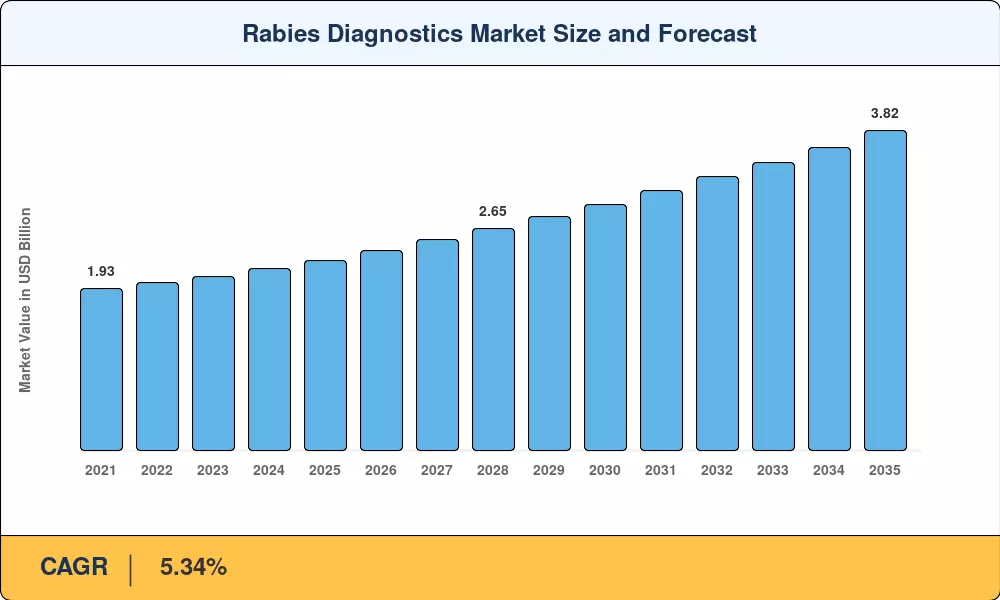
As per MRFR analysis, the Rabies Diagnostics Market Size was estimated at 3566.1 USD Million in 2024. The Rabies Diagnostics industry is projected to grow from 3784.2 in 2025 to 6106.81 by 2035, exhibiting a compound annual growth rate (CAGR) of 4.97 during the forecast period 2025 - 2035.

Key Market Trends & Highlights

The Rabies Diagnostics Market is experiencing robust growth driven by technological advancements and heightened awareness.

  • Technological advancements are revolutionizing diagnostic methods, enhancing accuracy and speed.
  • Increased awareness and education about rabies are driving demand for effective diagnostic solutions in North America.
  • Collaborative research initiatives are fostering innovation, particularly in the Asia-Pacific region, which is the fastest-growing market.
  • The rising incidence of rabies cases and government initiatives are key drivers propelling the market forward.

Market Size & Forecast

2024 Market Size 3566.1 (USD Million)
2035 Market Size 6106.81 (USD Million)
CAGR (2025 - 2035) 4.97%

Major Players

Fujirebio (JP), Bio-Rad Laboratories (US), Thermo Fisher Scientific (US), Merck KGaA (DE), IDEXX Laboratories (US), Abbott Laboratories (US), Roche Diagnostics (CH), Boehringer Ingelheim (DE)

Rabies Diagnostics Market Trends

The Rabies Diagnostics Market is currently experiencing a notable evolution, driven by advancements in technology and increasing awareness regarding the disease's impact on public health. The growing incidence of rabies, particularly in developing regions, has prompted a surge in demand for effective diagnostic tools. This market appears to be characterized by a diverse range of products, including rapid tests and laboratory-based assays, which are essential for timely diagnosis and management of rabies. Furthermore, the integration of innovative technologies, such as molecular diagnostics, is likely to enhance the accuracy and speed of rabies detection, thereby improving patient outcomes. In addition to technological advancements, the Rabies Diagnostics Market is influenced by collaborative efforts among various stakeholders, including government agencies, non-profit organizations, and private companies. These collaborations seem to foster research and development initiatives aimed at creating more efficient diagnostic solutions. Moreover, educational campaigns aimed at raising awareness about rabies prevention and control are expected to further drive market growth. As the global health community continues to prioritize rabies elimination, the market is poised for continued expansion, reflecting a commitment to addressing this preventable yet deadly disease.

Technological Advancements

The Rabies Diagnostics Market is witnessing a shift towards the adoption of advanced technologies, such as molecular diagnostics and rapid testing methods. These innovations are likely to enhance the speed and accuracy of rabies detection, facilitating timely intervention and treatment.

Increased Awareness and Education

There is a growing emphasis on public education regarding rabies prevention and control. Awareness campaigns led by health organizations are expected to drive demand for diagnostic tools, as communities become more informed about the importance of early detection.

Collaborative Research Initiatives

Partnerships among governmental bodies, non-profits, and private enterprises are fostering research in the Rabies Diagnostics Market. These collaborations may lead to the development of novel diagnostic solutions, ultimately improving rabies management and control efforts.

Rabies Diagnostics Market Drivers

Market Growth Projections

The Global Rabies Diagnostics Market Industry is projected to experience substantial growth in the coming years. With a market value of 2.26 USD Billion in 2024, it is expected to reach 4.15 USD Billion by 2035. This growth reflects a compound annual growth rate of 5.67% from 2025 to 2035. Factors contributing to this upward trajectory include increasing rabies cases, advancements in diagnostic technologies, and enhanced government initiatives. The market's expansion is indicative of a growing recognition of the importance of rabies diagnostics in public health and animal health management.

Global Travel and Trade Expansion

The expansion of global travel and trade is influencing the Global Rabies Diagnostics Market Industry. Increased movement of people and animals across borders raises the risk of rabies transmission, particularly in regions where the disease is endemic. This interconnectedness necessitates robust diagnostic measures to prevent outbreaks. Countries are increasingly recognizing the importance of rabies surveillance and diagnostics as part of their public health strategies. As international travel continues to rise, the demand for effective rabies diagnostics is likely to grow, potentially leading to a compound annual growth rate of 5.67% from 2025 to 2035.

Government Initiatives and Funding

Government initiatives and funding play a crucial role in shaping the Global Rabies Diagnostics Market Industry. Many countries are implementing national rabies control programs, which often include increased funding for diagnostic research and development. For example, the Centers for Disease Control and Prevention in the United States has allocated resources to enhance rabies surveillance and diagnostics. Such initiatives not only promote awareness but also stimulate the market by encouraging the development of innovative diagnostic solutions. As governments prioritize rabies control, the market is likely to experience growth, with projections indicating a market value of 2.26 USD Billion in 2024.

Increasing Incidence of Rabies Cases

The rising incidence of rabies cases globally is a primary driver for the Global Rabies Diagnostics Market Industry. Rabies, a preventable viral disease, continues to pose a significant health threat, particularly in developing regions. According to the World Health Organization, rabies causes approximately 59,000 deaths annually, predominantly in Asia and Africa. This alarming statistic underscores the urgent need for effective diagnostics to facilitate timely treatment and control measures. As awareness of rabies transmission and prevention grows, the demand for diagnostic tools is likely to increase, contributing to the market's expansion.

Technological Advancements in Diagnostic Tools

Technological advancements in diagnostic tools are significantly influencing the Global Rabies Diagnostics Market Industry. Innovations such as rapid diagnostic tests, molecular techniques, and improved serological assays enhance the accuracy and speed of rabies detection. For instance, the development of point-of-care testing devices allows for immediate results, which is crucial in managing rabies exposure. These advancements not only improve diagnostic capabilities but also encourage healthcare providers to adopt new technologies, thereby driving market growth. As these technologies become more accessible, the market is expected to witness substantial growth, particularly in regions with high rabies prevalence.

Rising Pet Ownership and Animal Health Awareness

The increasing trend of pet ownership and heightened awareness of animal health are driving factors in the Global Rabies Diagnostics Market Industry. As more households adopt pets, the risk of rabies transmission from animals to humans rises, necessitating effective diagnostic measures. Public campaigns aimed at educating pet owners about rabies prevention and vaccination further contribute to this trend. This growing awareness is expected to lead to increased demand for rabies diagnostics, as pet owners seek to ensure the health of their animals. Consequently, the market is projected to grow, with an anticipated value of 4.15 USD Billion by 2035.

Market Segment Insights

By Application: Diagnostic Testing (Largest) vs. Research and Development (Fastest-Growing)

In the Rabies Diagnostics Market, Diagnostic Testing emerges as the largest segment, commanding a significant share due to its critical role in identifying rabies infections. The demand for accurate and quick diagnostic tests is paramount, especially in regions where rabies is prevalent. Following closely is the Research and Development segment, which is rapidly gaining momentum as advancements in technology and new methodologies in rabies diagnostics continue to evolve, enhancing diagnostic capabilities and overall effectiveness.

Diagnostic Testing (Dominant) vs. Research and Development (Emerging)

The Diagnostic Testing segment, known for its wide-ranging applications, remains dominant in the Rabies Diagnostics Market. It includes various testing methodologies such as serology and molecular diagnostics, all aimed at the precise identification of rabies in animals and humans. Its prominence is fueled by increasing awareness of rabies outbreaks and strict regulatory requirements for diagnostics. In contrast, the Research and Development segment is emerging as a key player, driven by the need for innovative solutions and next-generation diagnostics that provide faster, more reliable results, thus signifying significant growth potential as investments in rabies research escalate.

By Test Type: Serological Tests (Largest) vs. Molecular Tests (Fastest-Growing)

The Rabies Diagnostics Market is increasingly characterized by diverse test types that cater to varying diagnostic needs. Among these, Serological Tests hold the largest market share, owing to their established presence and widespread use in both veterinary and human diagnostics. Meanwhile, Molecular Tests are showing rapid acceptance, driven by their superior sensitivity and specificity compared to traditional methods, appealing especially to research and specialized clinical settings. Growth trends in the Rabies Diagnostics Market indicate a significant increase in the adoption of Molecular Tests, as healthcare providers seek rapid and accurate diagnosis. The shift towards these advanced testing methods is further fueled by rising awareness of rabies as a critical public health issue and the increasing investments in healthcare infrastructure. Additionally, technological advancements and the development of faster and more efficient testing kits are expected to enhance the growth of this segment over the coming years.

Serological Tests (Dominant) vs. Rapid Tests (Emerging)

Serological Tests, dominating the Rabies Diagnostics Market, are well-established in providing reliable diagnostic results through the detection of antibodies. Their strength lies in the ability to conduct sero-surveillance effectively, especially in endemic regions. Conversely, Rapid Tests are emerging as a significant alternative, providing quick results that are crucial in urgent cases. These tests are particularly beneficial in field settings where traditional laboratory analyses are unfeasible. The increasing demand for immediacy in diagnosis and the growing need for portable testing solutions are propelling the adoption of Rapid Tests. As technology progresses, these tests are anticipated to improve in accuracy and availability, further altering the competitive landscape of rabies diagnostics.

By End User: Hospitals (Largest) vs. Diagnostic Laboratories (Fastest-Growing)

The Rabies Diagnostics Market is characterized by a diverse array of end users, including hospitals, diagnostic laboratories, research institutions, and public health organizations. Hospitals account for the largest share of the market as they serve as primary healthcare providers, offering rabies diagnostics as an integral part of their services. In contrast, diagnostic laboratories are experiencing rapid growth due to increasing demand for specialized testing and advanced diagnostic technologies. This shift is enabling laboratories to expand their offerings and reach a wider patient base, ultimately contributing to their fast-growing market presence. Market dynamics are further influenced by a growing awareness of rabies-related health risks and the need for immediate diagnosis following potential exposure. Public health organizations play a vital role in steering diagnostic trends by implementing nationwide rabies prevention programs, which reflects positively on diagnostic service demand. Additionally, research institutions are continuously innovating, seeking to enhance diagnostic methodologies, thereby pushing boundaries for improved accuracy and speed in testing, and marking them as an essential player in the evolving landscape of rabies diagnostics.

Hospitals (Dominant) vs. Research Institutions (Emerging)

Hospitals remain the dominant force in the Rabies Diagnostics Market, providing a wide range of services, including rapid screening, patient care, and management of rabies cases. These institutions have well-established protocols and infrastructures to handle rabies diagnostics effectively, ensuring timely access to treatment, which is critical in rabies cases. In contrast, research institutions are emerging as significant players, focusing on innovative approaches and advancements in diagnostic technologies. They conduct extensive research to develop new diagnostic tests that could offer higher sensitivity and specificity for rabies detection. While hospitals prioritize immediate patient care, research institutions are crucial for long-term improvements and innovations in rabies diagnostics, thus complementing the healthcare ecosystem.

By Technology: Polymerase Chain Reaction (Largest) vs. Enzyme-Linked Immunosorbent Assay (Fastest-Growing)

In the Rabies Diagnostics Market, the Polymerase Chain Reaction (PCR) technology leads the segment with the largest share due to its accuracy and rapid results. This method allows for the detection of rabies virus genes, making it a preferred choice among laboratories. Conversely, the Enzyme-Linked Immunosorbent Assay (ELISA) is notable for its rapid advancement, capturing a significant portion of the market as it offers a cost-effective and scalable solution for diagnosing rabies. This difference in market share highlights the diverse approaches employed in rabies diagnostics.

Technology: PCR (Dominant) vs. ELISA (Emerging)

PCR technology dominates the rabies diagnostics market with its unparalleled sensitivity and specificity. It enables the detection of viral RNA, providing a reliable confirmation of infection in various specimens. The method is highly favored by clinical laboratories for its quick turnaround time and efficiency in handling multiple samples. Meanwhile, ELISA is recognized as an emerging technology in this field, characterized by its simplicity and cost-effectiveness. It primarily detects antibodies against the rabies virus, making it a practical option for large-scale screening and surveillance, especially in resource-limited settings.

Get more detailed insights about Rabies Diagnostics Market

Regional Insights

North America : Market Leader in Diagnostics

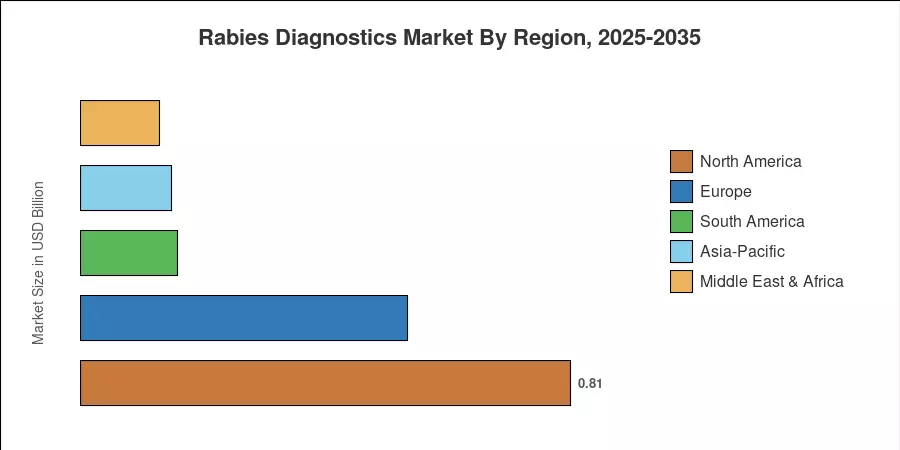
North America is poised to maintain its leadership in the Rabies Diagnostics Market, holding a significant market share of $1785.0M in 2024. The region's growth is driven by increasing awareness of rabies prevention, advancements in diagnostic technologies, and supportive regulatory frameworks. The demand for rapid and accurate diagnostic tests is on the rise, fueled by public health initiatives and the need for effective disease management. The competitive landscape in North America is robust, featuring key players such as Thermo Fisher Scientific, Abbott Laboratories, and IDEXX Laboratories. These companies are investing heavily in R&D to innovate and enhance diagnostic solutions. The presence of established healthcare infrastructure and a strong focus on veterinary health further bolster the market, ensuring that North America remains at the forefront of rabies diagnostics.

Europe : Emerging Market Dynamics

Europe is witnessing a growing Rabies Diagnostics Market, valued at $1070.0M in 2024. The region's growth is propelled by stringent regulations aimed at rabies control and prevention, alongside increasing public awareness. The European Union's initiatives to enhance animal health and welfare are significant drivers, fostering demand for effective diagnostic solutions. Regulatory bodies are emphasizing the importance of rapid testing methods to ensure timely responses to rabies outbreaks. Leading countries in this region include Germany, France, and the UK, where key players like Merck KGaA and Roche Diagnostics are actively engaged. The competitive landscape is characterized by collaborations and partnerships aimed at advancing diagnostic technologies. The presence of a well-established healthcare system and funding for research initiatives further supports market growth, positioning Europe as a vital player in rabies diagnostics.

Asia-Pacific : Rapidly Growing Market

The Asia-Pacific region is emerging as a significant player in the Rabies Diagnostics Market, with a market size of $550.0M in 2024. The growth is driven by increasing incidences of rabies, particularly in developing countries, and rising awareness about animal health. Government initiatives aimed at rabies elimination and the introduction of advanced diagnostic technologies are key factors contributing to market expansion. The region is witnessing a shift towards more efficient and rapid testing methods to combat the disease effectively. Countries like India, China, and Australia are leading the charge in this market. The competitive landscape features companies such as Fujirebio and Bio-Rad Laboratories, which are focusing on innovation and accessibility of diagnostic solutions. The growing veterinary sector and increasing investments in healthcare infrastructure are expected to further enhance the market dynamics in Asia-Pacific, making it a focal point for rabies diagnostics.

Middle East and Africa : Emerging Health Challenges

The Middle East and Africa region, with a market size of $161.1M in 2024, is facing unique challenges in rabies diagnostics. The growth is driven by increasing awareness of rabies as a public health issue and the need for effective diagnostic solutions. Government initiatives aimed at controlling rabies outbreaks and improving animal health are crucial in shaping the market landscape. The region's diverse healthcare needs necessitate tailored diagnostic approaches to address local challenges effectively. Leading countries in this region include South Africa and Kenya, where the presence of key players like Boehringer Ingelheim is notable. The competitive landscape is characterized by collaborations between governments and private entities to enhance diagnostic capabilities. The focus on improving healthcare infrastructure and increasing funding for veterinary health initiatives is expected to drive market growth, positioning the Middle East and Africa as a critical area for rabies diagnostics.

Key Players and Competitive Insights

The Rabies Diagnostics Market is characterized by a competitive landscape that is increasingly shaped by innovation, strategic partnerships, and regional expansions. Key players such as Fujirebio (JP), Bio-Rad Laboratories (US), and Thermo Fisher Scientific (US) are at the forefront, leveraging their technological expertise to enhance diagnostic capabilities. Fujirebio (JP) has focused on developing advanced serological tests that improve the accuracy of rabies diagnosis, while Bio-Rad Laboratories (US) emphasizes the integration of digital solutions to streamline laboratory processes. Thermo Fisher Scientific (US) appears to be investing heavily in research and development to introduce novel diagnostic tools, thereby positioning itself as a leader in the market. Collectively, these strategies foster a competitive environment that prioritizes innovation and responsiveness to emerging health challenges.

In terms of business tactics, companies are increasingly localizing manufacturing to reduce costs and enhance supply chain efficiency. The market structure is moderately fragmented, with several players vying for market share, yet the influence of major companies remains substantial. This dynamic allows for a diverse range of diagnostic solutions, catering to various regional needs while also fostering competition among established and emerging players.

In November 2025, Merck KGaA (DE) announced a strategic partnership with a leading biotechnology firm to co-develop a rapid rabies diagnostic test. This collaboration is expected to leverage both companies' strengths in biotechnology and diagnostics, potentially accelerating the availability of effective testing solutions in underserved markets. The strategic importance of this partnership lies in its potential to enhance Merck KGaA's product portfolio and expand its reach in the global market.

In October 2025, Abbott Laboratories (US) launched a new point-of-care rabies diagnostic device aimed at improving accessibility in rural areas. This device is designed to provide rapid results, which could significantly impact rabies management in regions where timely diagnosis is critical. The introduction of this technology underscores Abbott's commitment to addressing public health challenges and reflects a broader trend towards decentralizing diagnostic capabilities.

In September 2025, Roche Diagnostics (CH) unveiled a digital platform that integrates rabies diagnostic data with patient management systems. This innovation is poised to enhance data sharing among healthcare providers, thereby improving patient outcomes. Roche's focus on digital transformation indicates a shift towards more interconnected healthcare solutions, which may redefine how rabies diagnostics are approached in clinical settings.

As of December 2025, current trends in the Rabies Diagnostics Market are increasingly influenced by digitalization, sustainability, and the integration of artificial intelligence (AI). Strategic alliances are becoming more prevalent, as companies recognize the value of collaboration in driving innovation. The competitive differentiation is likely to evolve from traditional price-based competition to a focus on technological advancements, reliability in supply chains, and the ability to deliver innovative solutions that meet the changing needs of healthcare providers and patients alike.

Key Companies in the Rabies Diagnostics Market market include

Industry Developments

In April 2022

Cadila Pharmaceuticals announced that it had developed the world's first novel three-dose vaccine against rabies. The three-dose vaccine, named 'ThRabis,' is a recombinant nano-particle-based G protein vaccine prepared using Virus-like Particle technology.

The company added that the three-dose schedule is spread over one week.

The new vaccine will prove to be a game-changer because all the other rabies vaccines require five injections over 28 days to eliminate the threatCadila, Pharmaceuticals said at the launch ceremony of the new vaccine.

Future Outlook

Rabies Diagnostics Market Future Outlook

The Rabies Diagnostics Market is projected to grow at a 4.97% CAGR from 2024 to 2035, driven by advancements in diagnostic technologies and increasing awareness of rabies prevention.

New opportunities lie in:

  • Development of rapid point-of-care diagnostic kits
  • Expansion of telemedicine services for rabies consultation
  • Partnerships with veterinary clinics for integrated diagnostic solutions

By 2035, the market is expected to achieve substantial growth, enhancing global rabies management efforts.

Market Segmentation

Rabies Diagnostics Market End User Outlook

  • Hospitals
  • Diagnostic Laboratories
  • Research Institutions
  • Public Health Organizations

Rabies Diagnostics Market Test Type Outlook

  • Serological Tests
  • Molecular Tests
  • Histopathological Tests
  • Rapid Tests

Rabies Diagnostics Market Technology Outlook

  • Polymerase Chain Reaction
  • Enzyme-Linked Immunosorbent Assay
  • Immunofluorescence Assay
  • Next-Generation Sequencing

Rabies Diagnostics Market Application Outlook

  • Diagnostic Testing
  • Research and Development
  • Surveillance
  • Vaccination Programs

Report Scope

MARKET SIZE 20243566.1(USD Million)
MARKET SIZE 20253784.2(USD Million)
MARKET SIZE 20356106.81(USD Million)
COMPOUND ANNUAL GROWTH RATE (CAGR)4.97% (2024 - 2035)
REPORT COVERAGERevenue Forecast, Competitive Landscape, Growth Factors, and Trends
BASE YEAR2024
Market Forecast Period2025 - 2035
Historical Data2019 - 2024
Market Forecast UnitsUSD Million
Key Companies ProfiledFujirebio (JP), Bio-Rad Laboratories (US), Thermo Fisher Scientific (US), Merck KGaA (DE), IDEXX Laboratories (US), Abbott Laboratories (US), Roche Diagnostics (CH), Boehringer Ingelheim (DE)
Segments CoveredApplication, Test Type, End User, Technology
Key Market OpportunitiesAdvancements in rapid testing technologies enhance early detection capabilities in the Rabies Diagnostics Market.
Key Market DynamicsTechnological advancements in diagnostic tools enhance rabies detection efficiency, influencing market dynamics and competitive landscape.
Countries CoveredNorth America, Europe, APAC, South America, MEA

Market Highlights

Author
Rahul Gotadki
Assistant Manager

He holds an experience of about 7+ years in Market Research and Business Consulting, working under the spectrum of Life Sciences and Healthcare domains. Rahul conceptualizes and implements a scalable business strategy and provides strategic leadership to the clients. His expertise lies in market estimation, competitive intelligence, pipeline analysis, customer assessment, etc. In addition to the above, his other responsibility includes strategic tracking of high growth markets & advising clients on the potential areas of focus they could direct their business initiatives

Leave a Comment

FAQs

What is the valuation of the Rabies Diagnostics Market?

Rabies diagnostics market was valued at USD 3.56 Billion in 2032.

What is the CAGR of the Rabies Diagnostics Market?

Rabies diagnostics market is expected to exhibit a strong 5.21% CAGR over the forecast period from 2024 to 2032.

What is the leading driver for the Rabies Diagnostics Market?

The increasing prevalence of rabies among animals is the major driver for the global rabies diagnostics market.

What is the leading regional Rabies Diagnostics Market?

Asia Pacific holds a dominant share of more than 50% in the global rabies diagnostics market.

What are the key players in the Rabies Diagnostics Market?

Leading players in the rabies diagnostics market include Bio-Rad, Merck, Demeditec Diagnostics, Abbexa, BioNote, and Biogen Technologies, among others.

Download Free Sample

Kindly complete the form below to receive a free sample of this Report

Compare Licence

×
Features License Type
Single User Multiuser License Enterprise User
Price $4,950 $5,950 $7,250
Maximum User Access Limit 1 User Upto 10 Users Unrestricted Access Throughout the Organization
Free Customization
Direct Access to Analyst
Deliverable Format
Platform Access
Discount on Next Purchase 10% 15% 15%
Printable Versions