×
Request Free Sample ×

Kindly complete the form below to receive a free sample of this Report

* Please use a valid business email

Leading companies partner with us for data-driven Insights

clients tt-cursor
Hero Background

Series Compensation System Market

ID: MRFR/EnP/2673-HCR
111 Pages
Anshula Mandaokar
October 2025

Series Compensation System Market Research Report Information Report by Voltage (Low voltage, Medium Voltage and High Voltage), by Type, (Static Series Compensation and Thyristor Controlled Series Compensation), by End User (Utilities, Industries and Others) and by Region - Global Forecast To 2035

Share:
Download PDF ×

We do not share your information with anyone. However, we may send you emails based on your report interest from time to time. You may contact us at any time to opt-out.

Series Compensation System Market Infographic
Purchase Options

Series Compensation System Market Summary

As per MRFR analysis, the Series Compensation System Market Size was estimated at 9.43 USD Million in 2024. The Series Compensation System industry is projected to grow from 9.74 in 2025 to 13.36 by 2035, exhibiting a compound annual growth rate (CAGR) of 3.21 during the forecast period 2025 - 2035.

Key Market Trends & Highlights

The Series Compensation System Market is poised for substantial growth driven by technological advancements and regulatory support.

  • Technological advancements are reshaping the Series Compensation System Market, enhancing efficiency and reliability.
  • North America remains the largest market, while Asia-Pacific is emerging as the fastest-growing region in this sector.
  • The Power Generation segment continues to dominate, whereas the Renewable Energy segment is experiencing rapid growth.
  • Increasing demand for efficient energy solutions and rising integration of renewable energy sources are key drivers propelling market expansion.

Market Size & Forecast

2024 Market Size 9.43 (USD Million)
2035 Market Size 13.36 (USD Million)
CAGR (2025 - 2035) 3.21%

Major Players

General Electric (US), Siemens (DE), Schneider Electric (FR), Mitsubishi Electric (JP), ABB (CH), Eaton (US), Rockwell Automation (US), Honeywell (US), Emerson Electric (US)

Series Compensation System Market Trends

The Series Compensation System Market is currently experiencing a transformative phase, driven by advancements in technology and increasing demand for efficient power management solutions. This market encompasses a range of products designed to enhance the performance of electrical systems, particularly in high-voltage applications. As industries seek to optimize their operations, the integration of series compensation systems is becoming more prevalent. These systems not only improve voltage stability but also enhance the overall reliability of power transmission networks. Furthermore, the growing emphasis on renewable energy sources is likely to propel the adoption of series compensation technologies, as they play a crucial role in managing the complexities associated with integrating variable energy sources into existing grids. In addition to technological advancements, regulatory frameworks are evolving to support the deployment of series compensation systems. Governments and regulatory bodies are increasingly recognizing the importance of maintaining grid stability and reliability, which may lead to favorable policies and incentives for adopting these systems. The Series Compensation System Market appears poised for growth, as stakeholders across various sectors, including utilities and industrial players, seek to leverage these solutions to address their unique challenges. Overall, the market's trajectory suggests a promising future, characterized by innovation and a commitment to enhancing power system performance.

Technological Advancements

The Series Compensation System Market is witnessing rapid technological innovations that enhance system efficiency and reliability. New materials and designs are being developed to improve performance, which may lead to increased adoption across various sectors.

Regulatory Support

There is a growing trend of supportive regulatory frameworks aimed at promoting the use of series compensation systems. Governments are recognizing the need for stable and reliable power systems, which could result in favorable policies and incentives.

Integration with Renewable Energy

The integration of series compensation systems with renewable energy sources is becoming increasingly important. As the energy landscape evolves, these systems may play a vital role in managing the challenges associated with variable energy generation.

Series Compensation System Market Drivers

Market Growth Projections

The Global Series Compensation System Market Industry is poised for substantial growth in the coming years. Projections indicate that the market will reach 204.5 USD Million in 2024 and expand significantly to 850.9 USD Million by 2035. This growth trajectory reflects a compound annual growth rate (CAGR) of 13.84% from 2025 to 2035. The increasing adoption of advanced compensation management systems across various sectors is likely to drive this expansion. Organizations are recognizing the need for innovative solutions to enhance employee engagement and ensure compliance with regulatory standards. This upward trend in market growth underscores the evolving landscape of compensation management on a global scale.

Globalization of Workforce

The globalization of the workforce is reshaping the Global Series Compensation System Market Industry, as companies expand their operations across borders. This trend necessitates the development of compensation strategies that accommodate diverse labor markets and cultural expectations. Organizations are increasingly adopting global compensation frameworks to ensure equity and competitiveness in their offerings. As businesses navigate the complexities of international compensation, the demand for tailored solutions is expected to rise. This shift indicates a growing recognition of the importance of aligning compensation practices with global standards, thereby driving the expansion of the Global Series Compensation System Market.

Regulatory Compliance and Transparency

Regulatory compliance is a significant driver for the Global Series Compensation System Market Industry, as organizations strive to adhere to evolving labor laws and compensation regulations. Governments worldwide are implementing stricter guidelines to ensure fair pay practices, which necessitates the adoption of comprehensive compensation systems. Companies are investing in solutions that enhance transparency and facilitate compliance with these regulations. This trend not only mitigates legal risks but also fosters trust among employees. As organizations prioritize compliance, the demand for sophisticated compensation management systems is likely to increase, further contributing to the growth trajectory of the Global Series Compensation System Market.

Focus on Performance-Based Compensation

The emphasis on performance-based compensation is a key driver in the Global Series Compensation System Market Industry. Organizations are increasingly shifting away from traditional salary structures towards performance-linked pay models that reward employees based on their contributions. This approach not only motivates employees but also aligns their goals with organizational objectives. As companies adopt these models, the demand for sophisticated compensation management systems that can effectively track and analyze performance metrics is likely to increase. This trend suggests a transformative shift in compensation strategies, further propelling the growth of the Global Series Compensation System Market.

Increasing Demand for Employee Engagement

The Global Series Compensation System Market Industry experiences a notable surge in demand driven by the need for enhanced employee engagement. Organizations are increasingly recognizing that competitive compensation packages are essential for attracting and retaining top talent. In 2024, the market is projected to reach 204.5 USD Million, reflecting a growing investment in comprehensive compensation systems that align with employee expectations. Companies are adopting innovative compensation strategies, including performance-based incentives and flexible benefits, to foster a motivated workforce. This trend suggests that businesses are prioritizing employee satisfaction as a critical component of their overall strategy, thereby propelling the growth of the Global Series Compensation System Market.

Technological Advancements in Compensation Management

Technological innovations play a pivotal role in shaping the Global Series Compensation System Market Industry. The integration of advanced analytics and artificial intelligence into compensation management systems enables organizations to make data-driven decisions regarding employee remuneration. These technologies facilitate real-time analysis of compensation trends, ensuring that companies remain competitive in their offerings. As organizations increasingly adopt these sophisticated tools, the market is expected to witness substantial growth. By 2035, the market could expand to 850.9 USD Million, indicating a robust CAGR of 13.84% from 2025 to 2035. This evolution underscores the importance of technology in optimizing compensation strategies and enhancing overall organizational performance.

Market Segment Insights

By Application: Power Generation (Largest) vs. Renewable Energy (Fastest-Growing)

In the Series Compensation System Market, Power Generation holds the largest share, reflecting its critical role in maintaining the stability and reliability of electrical grids. This segment benefits from a burgeoning demand for energy, driven by increasing consumption rates and the necessity for efficient transmission systems. On the other hand, segments such as Industrial Automation and Transportation contribute significantly but with comparatively smaller shares, indicating a diversification in application areas for series compensation systems. The fastest growth is observed in Renewable Energy, propelled by the global shift towards sustainable sources. As investments in green energy technologies rise, companies are increasingly reliant on series compensation systems to enhance the efficiency of power delivery. Transportation also shows potential, driven by advancements in electric vehicles and their integration into smart grids, emphasizing the need for robust compensation methods in this evolving landscape.

Power Generation (Dominant) vs. Telecommunications (Emerging)

Power Generation remains the dominant application in the Series Compensation System Market, primarily due to its fundamental necessity in ensuring uninterrupted power supply and system stability. The deployment of series compensation systems in this segment aims to reduce transmission losses and enhance the overall efficiency of power systems. Conversely, Telecommunications is evolving into an emerging application area, driven by the increasing need for superior signal integrity and reduction of power losses in communication networks. Telecommunication companies are gradually adopting series compensation systems to optimize performance and accommodate the rising data traffic. This shift highlights how diverse applications are gaining prominence as technological advancements reshape traditional industries, paving the way for innovative solutions.

By End Use: Utilities (Largest) vs. Transportation (Fastest-Growing)

The Series Compensation System Market exhibits distinct segment values based on end use, with Utilities commanding the largest share. This segment benefits from its critical role in maintaining efficient power transmission and reducing losses in electrical networks. Following Utilities, Manufacturing and Transportation are notable segments, however, they lag comparatively in market size. Construction and Telecommunications, while important, contribute less significantly to the overall market dynamics. Growth trends in the Series Compensation System Market are primarily driven by the increasing demand for reliable power distribution in Utilities and advancements in transportation infrastructure. The Transportation segment shows significant potential for rapid growth due to shifts towards more modernized systems and the integration of technology. Moreover, as worldwide urbanization scales up, the necessity for efficient power solutions in Transportation will likely accelerate its growth trajectory further, making it a sector to watch in the coming years.

Utilities: Dominant vs. Transportation: Emerging

The Utilities sector remains the dominant end use in the Series Compensation System Market due to its established infrastructure and consistent demand for enhanced power quality solutions. Utilities rely heavily on series compensation technologies to improve voltage control and reduce losses, making it vital for operational efficiency. In contrast, the Transportation sector represents an emerging market, driven by rapid advancements in electric transportation and the need for reliable power support in modern transport systems. Transportation applications are tapping into series compensation for enhanced performance and reliability amidst increasing electrification. This sector's growth potential lies in its ability to leverage innovative technologies, making it one of the areas with the greatest growth prospects for series compensation systems.

By Technology: Dynamic Compensation (Largest) vs. Active Compensation (Fastest-Growing)

In the Series Compensation System Market, the distribution of market share among the technology segment values shows Dynamic Compensation as the largest contributor. This segment achieves a significant foothold due to its ability to dynamically adjust compensation based on real-time data, allowing for enhanced performance and reliability. Static Compensation and Hybrid Compensation follow, catering to specific use cases where fixed or a mix of compensation strategies are preferable. Active Compensation, while currently smaller in market share, is quickly gaining traction as it enhances adaptability in various applications.

Technology: Dynamic Compensation (Dominant) vs. Active Compensation (Emerging)

Dynamic Compensation stands out as the dominant technology in the Series Compensation System Market, primarily due to its advanced capabilities in adapting to varying operational demands and optimizing performance. This segment is characterized by its reliance on real-time data to adjust compensation strategies, ensuring maximum efficiency. In contrast, Active Compensation is emerging as a notable player, driven by innovations that enhance responsiveness in electrical applications. Its growth is fueled by increasing demand for systems that provide real-time adjustments to enhance overall system stability and efficiency.

By Component Type: Transformers (Largest) vs. Control Systems (Fastest-Growing)

In the Series Compensation System Market, the distribution of market share among component types is led by Transformers, which dominate due to their critical role in voltage regulation and stability in power transmission. They hold the largest market share, supported by extensive deployment in various utility applications. Capacitors and Inductors follow but play more specialized roles, enhancing system efficiency rather than serving as primary components. Control Systems, while currently smaller in market share, are gaining traction in modern applications due to the increasing automation of electrical networks.

Transformers (Dominant) vs. Control Systems (Emerging)

Transformers play a dominant role within the Series Compensation System Market, acting as crucial elements that manage electrical voltage and mitigate harmonics in power systems. They are essential for ensuring stable and reliable energy transmission across various infrastructures. On the other hand, Control Systems are emerging as a pivotal component in this segment, enabling more sophisticated monitoring and management of electric power flows. The growing complexity of grid systems and the push towards smart grid technology are key factors driving interest and investment in Control Systems, positioning them for significant growth as utilities seek enhanced operational efficiencies.

By Voltage Level: Medium Voltage (Largest) vs. High Voltage (Fastest-Growing)

The Voltage Level segment of the Series Compensation System Market is characterized by three primary classifications: Low Voltage, Medium Voltage, and High Voltage. Among these, Medium Voltage holds the largest share, being widely utilized in various industrial applications due to its efficient performance and cost-effectiveness. High Voltage follows closely behind as a segment characterized by rapid technological advancements, capturing increasing attention due to the rising demand for more efficient and high-capacity transmission systems.

Voltage Level: Medium Voltage (Dominant) vs. High Voltage (Emerging)

Medium Voltage systems are essential in the Series Compensation System Market, serving as the backbone for most industrial and utility applications. They offer a balance of power handling capacity and operational efficiency, making them a preferred choice for many applications. On the other hand, High Voltage segments are emerging as critical players, driven by the need for enhanced efficiency in power transmission across longer distances. This segment benefits from advancements in technology, such as voltage regulation and efficient energy transfer methods, positioning High Voltage systems as a significant contributor to future market growth as industries seek to modernize their energy infrastructure.

Get more detailed insights about Series Compensation System Market

Regional Insights

North America : Market Leader in Innovation

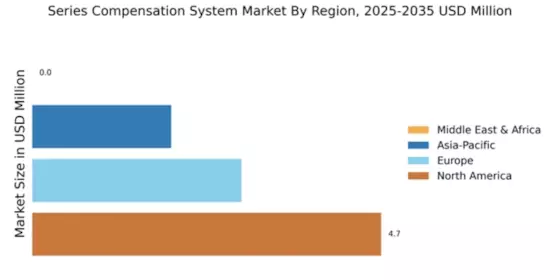
North America continues to lead the Series Compensation System market, holding a significant share of 4.72 in 2024. The region's growth is driven by increasing investments in smart grid technologies and renewable energy integration. Regulatory support, such as incentives for energy efficiency and modernization of electrical infrastructure, further catalyzes demand. The focus on sustainability and reliability in power systems is also a key driver for market expansion. The competitive landscape in North America is robust, featuring major players like General Electric, Siemens, and Schneider Electric. The U.S. stands out as the leading country, with substantial contributions from Canada and Mexico. These companies are investing heavily in R&D to innovate and enhance their product offerings, ensuring they remain at the forefront of the market. The presence of established firms and a growing number of startups fosters a dynamic environment for growth and competition.

Europe : Emerging Market with Growth Potential

Europe's Series Compensation System market is poised for growth, with a market size of 2.83. The region is experiencing a shift towards renewable energy sources, driven by stringent EU regulations aimed at reducing carbon emissions. This regulatory framework encourages investments in advanced compensation systems, enhancing grid stability and efficiency. The increasing demand for energy management solutions is also a significant growth driver, as countries strive for energy independence and sustainability. Leading countries in this region include Germany, France, and the UK, where major players like Siemens and Schneider Electric are actively expanding their market presence. The competitive landscape is characterized by innovation and collaboration among industry leaders and startups. The European market is expected to benefit from ongoing technological advancements and regulatory support, positioning it as a key player in The Series Compensation System.

Asia-Pacific : Rapidly Growing Market Segment

The Asia-Pacific region, with a market size of 1.88, is witnessing rapid growth in the Series Compensation System market. This growth is fueled by increasing urbanization, industrialization, and the rising demand for reliable power supply. Governments in countries like China and India are investing heavily in infrastructure development and smart grid technologies, which are essential for modernizing their energy systems. Regulatory initiatives aimed at enhancing energy efficiency and sustainability are also driving market demand. China is the leading country in this region, followed by India and Japan, where key players like Mitsubishi Electric and ABB are making significant inroads. The competitive landscape is evolving, with both established companies and new entrants vying for market share. The focus on innovation and technology adoption is critical for companies looking to capitalize on the growing opportunities in this dynamic market.

Middle East and Africa : Untapped Market Potential

The Middle East and Africa region currently shows a market size of 0.0, indicating significant untapped potential in the Series Compensation System market. The growth in this region is expected to be driven by increasing investments in energy infrastructure and the need for reliable power supply. Governments are recognizing the importance of modernizing their electrical systems to support economic growth and sustainability initiatives. Regulatory frameworks are gradually evolving to encourage investments in energy efficiency and renewable energy sources. Countries like South Africa and the UAE are leading the charge in adopting advanced technologies, with key players beginning to establish a presence. The competitive landscape is still developing, but there is a growing interest from international firms looking to enter this market. As infrastructure projects gain momentum, the region is likely to see increased activity in the Series Compensation System sector, paving the way for future growth.

Key Players and Competitive Insights

The Series Compensation System Market is characterized by a dynamic competitive landscape, driven by technological advancements and increasing demand for efficient power management solutions. Key players such as General Electric (US), Siemens (DE), and Schneider Electric (FR) are at the forefront, each adopting distinct strategies to enhance their market positioning. General Electric (US) emphasizes innovation through its investment in digital technologies, aiming to integrate AI and IoT into its compensation systems. Siemens (DE) focuses on regional expansion, particularly in emerging markets, to capitalize on the growing infrastructure needs. Schneider Electric (FR) is leveraging partnerships with local firms to enhance its supply chain resilience and customer reach, thereby shaping a competitive environment that is increasingly collaborative and innovation-driven.

The business tactics employed by these companies reflect a concerted effort to optimize operations and adapt to market demands. Localizing manufacturing has become a prevalent strategy, allowing firms to reduce lead times and costs while enhancing responsiveness to regional market needs. The market structure appears moderately fragmented, with several key players exerting influence, yet the collective actions of these companies suggest a trend towards consolidation through strategic alliances and partnerships.

In November 2025, General Electric (US) announced a significant partnership with a leading renewable energy firm to develop advanced compensation systems tailored for wind energy applications. This strategic move is likely to position General Electric as a leader in the renewable sector, aligning with The Series Compensation System.

In October 2025, Siemens (DE) unveiled a new series of compensation systems designed for smart grids, integrating cutting-edge digital technologies. This initiative not only reinforces Siemens' commitment to innovation but also addresses the increasing demand for smart energy solutions, potentially setting a new standard in the industry.

In September 2025, Schneider Electric (FR) launched a comprehensive digital platform aimed at optimizing the performance of its compensation systems. This platform is expected to enhance customer engagement and operational efficiency, reflecting a broader trend towards digital transformation in the market. Such initiatives may provide Schneider Electric with a competitive edge as customers increasingly seek integrated solutions that offer real-time data and analytics.

As of December 2025, the competitive trends in the Series Compensation System Market are heavily influenced by digitalization, sustainability, and AI integration. Strategic alliances are becoming pivotal, enabling companies to pool resources and expertise to innovate more effectively. The shift from price-based competition to a focus on technological advancement and supply chain reliability is evident, suggesting that future differentiation will hinge on the ability to deliver innovative, sustainable solutions that meet the evolving needs of customers.

Key Companies in the Series Compensation System Market market include

Future Outlook

Series Compensation System Market Future Outlook

The Series Compensation System Market is projected to grow at a 3.21% CAGR from 2024 to 2035, driven by technological advancements and increasing demand for efficient power transmission solutions.

New opportunities lie in:

  • Integration of AI-driven monitoring systems for predictive maintenance.
  • Development of modular compensation solutions for diverse applications.
  • Expansion into emerging markets with tailored product offerings.

By 2035, the market is expected to achieve robust growth, positioning itself as a leader in power management solutions.

Market Segmentation

Series Compensation System Market End Use Outlook

  • Utilities
  • Manufacturing
  • Transportation
  • Construction
  • Telecommunications

Series Compensation System Market Technology Outlook

  • Static Compensation
  • Dynamic Compensation
  • Hybrid Compensation
  • Active Compensation

Series Compensation System Market Application Outlook

  • Power Generation
  • Industrial Automation
  • Transportation
  • Renewable Energy
  • Telecommunications

Series Compensation System Market Voltage Level Outlook

  • Low Voltage
  • Medium Voltage
  • High Voltage

Series Compensation System Market Component Type Outlook

  • Transformers
  • Capacitors
  • Inductors
  • Control Systems

Report Scope

MARKET SIZE 20249.43(USD Million)
MARKET SIZE 20259.74(USD Million)
MARKET SIZE 203513.36(USD Million)
COMPOUND ANNUAL GROWTH RATE (CAGR)3.21% (2024 - 2035)
REPORT COVERAGERevenue Forecast, Competitive Landscape, Growth Factors, and Trends
BASE YEAR2024
Market Forecast Period2025 - 2035
Historical Data2019 - 2024
Market Forecast UnitsUSD Million
Key Companies ProfiledGeneral Electric (US), Siemens (DE), Schneider Electric (FR), Mitsubishi Electric (JP), ABB (CH), Eaton (US), Rockwell Automation (US), Honeywell (US), Emerson Electric (US)
Segments CoveredApplication, End Use, Technology, Component Type, Voltage Level
Key Market OpportunitiesIntegration of artificial intelligence in Series Compensation System Market enhances efficiency and predictive maintenance capabilities.
Key Market DynamicsRising demand for efficient power transmission drives innovation in Series Compensation System technology and competitive market dynamics.
Countries CoveredNorth America, Europe, APAC, South America, MEA

Market Highlights

Author
Anshula Mandaokar
Team Lead - Research

Anshula Mandaokar holds an academic degree in Chemical Engineering and has been contributing to the field for more than 5 years. She has expertise in Market Research and Business Consulting and serves as a Team Lead for a reputed Market Research firm under the Chemicals and Materials domain spectrum. She has worked on multiple projects, generating explicit results in a quick turnaround time. Her understanding of data interpretation justifies her role as a leader.

Leave a Comment

FAQs

What is the market value of the global Series compensation market?

The global Series compensation is expected to record a substantial market valuation due to the high operational efficiency, improved system stability, among others.

What is the estimated growth rate of the global Series compensation?

The global Series compensation is projected to register a moderate 5% CAGR in the forecast period.

What is the type segment of the global Series compensation market expected to witness the highest growth?

The fixed series compensation segment is slated to expand as the fastest-growing segment.

What is the end-user segment of the global Series compensation market is expected to witness the highest growth?

The utilities segment is slated to expand as the fastest-growing segment.

Who are the key players operative in the global Series compensation market?

A few major market players operating in the global Series compensation are ABB Ltd. (Switzerland), Siemens AG (Germany), Adani Transmission Limited (India), among others.

Download Free Sample

Kindly complete the form below to receive a free sample of this Report

Compare Licence

×
Features License Type
Single User Multiuser License Enterprise User
Price $4,950 $5,950 $7,250
Maximum User Access Limit 1 User Upto 10 Users Unrestricted Access Throughout the Organization
Free Customization
Direct Access to Analyst
Deliverable Format
Platform Access
Discount on Next Purchase 10% 15% 15%
Printable Versions