Download Free Sample
Kindly complete the form below to receive a free sample of this Report
South America Soft Tissue Repair Market Research Report By Application (Orthopedics, Cardiovascular, Neurology, General Surgery), By Material (Sutures, Mesh, Adhesives, Grafts), By Procedure Type (Open Surgery, Minimally Invasive Surgery, Robotic Surgery), By End Use (Hospitals, Ambulatory Surgical Centers, Specialty Clinics) and By Regional (Brazil, Mexico, Argentina, Rest of South America) - Growth & Industry Forecast 2025 To 2035
As per Market Research Future analysis, the Soft Tissue-repair market size was estimated at 851.87 USD Million in 2024. The soft tissue-repair market is projected to grow from 893.7 USD Million in 2025 to 1443.3 USD Million by 2035, exhibiting a compound annual growth rate (CAGR) of 4.9% during the forecast period 2025 - 2035
The South America soft tissue-repair market is experiencing robust growth driven by technological advancements and increasing healthcare demands.
| 2024 Market Size | 851.87 (USD Million) |
| 2035 Market Size | 1443.3 (USD Million) |
| CAGR (2025 - 2035) | 4.91% |
The soft tissue-repair market in South America is currently experiencing notable growth, driven by an increasing prevalence of sports injuries and a rising geriatric population. The demand for advanced surgical techniques and innovative products is on the rise, as healthcare providers seek to enhance patient outcomes. Furthermore, the expansion of healthcare infrastructure in various South American countries is likely to facilitate access to soft tissue-repair solutions, thereby promoting market development. The integration of technology in surgical procedures, such as minimally invasive techniques, appears to be a key factor influencing this market's evolution. In addition, the soft tissue-repair market is witnessing a shift towards biologics and regenerative medicine. These advancements may offer improved healing and recovery times, appealing to both patients and healthcare professionals. As awareness of these innovative treatments grows, it is expected that the market will continue to expand. Overall, the soft tissue-repair market in South America is poised for significant advancements, driven by technological innovations and an increasing focus on patient-centered care.
There is a growing preference for minimally invasive surgical techniques within the soft tissue-repair market. These methods are associated with reduced recovery times and lower complication rates, making them attractive options for both patients and surgeons. As healthcare facilities adopt these techniques, the market is likely to see increased utilization of advanced repair products.
The soft tissue-repair market is increasingly leaning towards regenerative medicine approaches. This trend is characterized by the use of biologics and tissue engineering to enhance healing processes. As research progresses, these innovative solutions may become more prevalent, potentially transforming treatment paradigms in South America.
The ongoing development of healthcare infrastructure in South America is expected to positively impact the soft tissue-repair market. Improved access to medical facilities and advanced technologies may lead to higher adoption rates of soft tissue-repair products. This expansion could facilitate better patient outcomes and drive market growth.
The demographic shift towards an aging population in South America is poised to impact the soft tissue-repair market significantly. Older adults are more susceptible to soft tissue injuries due to age-related factors such as decreased elasticity and strength of connective tissues. This demographic trend suggests a rising demand for effective repair solutions tailored to the needs of older patients. By 2030, it is estimated that the population aged 65 and older will constitute approximately 15% of the total population in South America. This increase may lead to a higher incidence of conditions requiring soft tissue repair, thereby driving market growth. Healthcare providers are likely to focus on developing specialized treatments that cater to this demographic, further expanding the soft tissue-repair market.
The upward trend in healthcare expenditure across South America is likely to bolster the soft tissue-repair market. Governments and private sectors are increasingly investing in healthcare infrastructure, which includes the procurement of advanced medical technologies and training for healthcare professionals. As healthcare spending rises, patients may gain better access to innovative treatment options for soft tissue injuries. Recent reports indicate that healthcare expenditure in the region has increased by approximately 5% annually, reflecting a commitment to improving healthcare services. This financial support may lead to enhanced availability of soft tissue-repair products and services, ultimately driving market growth. The soft tissue-repair market stands to benefit from this trend as more resources are allocated to injury prevention and treatment.
The rising incidence of sports-related injuries in South America appears to be a significant driver for the soft tissue-repair market. As more individuals engage in recreational and professional sports, the demand for effective treatment options for soft tissue injuries, such as sprains and strains, is likely to increase. According to recent data, sports injuries account for approximately 30% of all injuries in the region, necessitating advanced repair solutions. This trend indicates a growing market for surgical and non-surgical interventions, thereby propelling the soft tissue-repair market forward. Furthermore, the increasing awareness of sports medicine and rehabilitation programs may contribute to the demand for innovative repair techniques, enhancing recovery times and improving patient outcomes.
The growing awareness of the importance of rehabilitation programs in South America is emerging as a key driver for the soft tissue-repair market. Patients and healthcare providers are increasingly recognizing that effective rehabilitation is essential for optimal recovery from soft tissue injuries. This awareness is likely to lead to a higher demand for specialized rehabilitation services and products, including physical therapy and post-operative care. As a result, the soft tissue-repair market may experience growth as healthcare facilities expand their offerings to include comprehensive rehabilitation programs. Furthermore, educational initiatives aimed at promoting the benefits of rehabilitation could further enhance patient engagement and adherence to treatment plans, thereby positively impacting the market.
Technological innovations in surgical techniques are transforming the landscape of the soft tissue-repair market in South America. The introduction of advanced imaging technologies, such as MRI and ultrasound, facilitates precise diagnosis and treatment planning, which is crucial for successful outcomes. Additionally, minimally invasive surgical techniques, including arthroscopy and endoscopy, are gaining traction, as they reduce recovery times and minimize patient discomfort. The market for these technologies is projected to grow at a CAGR of around 8% over the next five years, reflecting the increasing adoption of these methods by healthcare professionals. As surgical techniques continue to evolve, the soft tissue-repair market is likely to benefit from enhanced procedural efficiency and improved patient satisfaction.
In the South America soft tissue repair market, the application segment demonstrates a diverse distribution with orthopedic surgery leading due to its extensive utilization of soft tissue repair products. Orthopedic procedures have shown stable and significant demand, bolstered by an increase in sports injuries and age-related degenerative conditions. Meanwhile, trauma surgery is experiencing rapid growth, fueled by a rising incidence of road accidents and an expanding focus on emergency medical services, positioning it as a key area of interest for market stakeholders.
Orthopedic Surgery (Dominant) vs. Trauma Surgery (Emerging)
Orthopedic surgery stands out as the dominant application in the South America soft tissue repair market, driven by an increasing number of surgical procedures aimed at treating sports injuries, fractures, and degenerative joint diseases. The established healthcare infrastructure and the growing prevalence of musculoskeletal disorders contribute to its strong market position. In contrast, trauma surgery is emerging as a significant area of growth, primarily due to the rising incidence of traumatic injuries and the demand for quick intervention. This segment is characterized by advancements in surgical techniques and an increase in trauma centers, enhancing the effectiveness of soft tissue repair solutions.
In the South America soft tissue repair market, sutures hold the largest market share, owing to their long-standing usage and reliability in surgical procedures. Staples and wound closure strips also contribute to the market, but sutures remain the go-to choice for many surgeons due to their versatility and effectiveness in various surgical settings. Tissue adhesives, while currently smaller in share, are rapidly gaining traction among healthcare providers.
Sutures (Dominant) vs. Tissue Adhesives (Emerging)
Sutures are the dominant product type in the soft tissue repair market, recognized for their established role in a wide range of surgical procedures. They offer reliable wound closure, catering to both superficial and deep tissue needs. On the other hand, tissue adhesives are an emerging segment illustrating significant growth potential. They are increasingly favored for their ease of application and ability to reduce surgical time. This innovative product provides effective bonding for specific types of wounds, driving demand as more healthcare professionals recognize their benefits in minimally invasive surgeries.
In the South America soft tissue repair market, hospitals constitute the largest segment, capturing a significant share due to their comprehensive resources and specialized expertise in performing complex surgeries. Ambulatory surgical centers, while smaller currently, are rising swiftly, providing a cost-effective alternative for many procedures and catering to a growing patient base seeking less invasive options. Specialty clinics also hold their ground by focusing on specific types of repairs but are not as dominant as the larger entities in this segment.
Hospitals (Dominant) vs. Ambulatory Surgical Centers (Emerging)
Hospitals dominate the South America soft tissue repair market owing to their established infrastructure, skilled workforce, and ability to handle a variety of surgical procedures requiring soft tissue repairs. Their extensive resources enable them to invest in advanced technologies and surgical techniques, enhancing patient outcomes. Conversely, ambulatory surgical centers are rapidly emerging as a preferred choice for soft tissue repairs, thanks to their efficiency and lower costs. These centers specialize in outpatient services, allowing patients to have surgeries performed without the need for prolonged hospital stays. This shift reflects changing patient preferences towards day surgeries that provide quicker recovery times and reduced healthcare expenses.
In the South America soft tissue repair market, natural materials hold the largest share among the various material types utilized in surgical procedures. These materials are often favored for their biocompatibility and ability to integrate with the body’s tissues, making them a preferred choice for many surgeons. On the other hand, synthetic materials are gaining traction due to their cost-effectiveness and versatility, catering to a wide range of procedures and patient needs.
Materials: Natural (Dominant) vs. Synthetic (Emerging)
Natural materials, such as collagen and acellular dermal matrices, are dominant in the South America soft tissue repair market due to their established efficacy and safety profiles. Their ability to promote healing and decrease rejection rates has positioned them favorably among healthcare providers. Conversely, synthetic materials, including polypropylene and polyester, are emerging as competitive alternatives, driven by technological advancements that enhance their performance. These materials offer advantages like lower costs and tailored properties, appealing to an evolving market focused on efficiency and patient outcomes.
In the South America soft tissue repair market, the distribution of sales channels highlights a robust preference for direct sales, which remains the largest contributor to overall revenue. This traditional mode of transaction allows manufacturers to build strong relationships with healthcare providers, ensuring a streamlined approach to product delivery. Meanwhile, online sales, though currently smaller in scale, demonstrate marked potential for growth as patients and healthcare facilities increasingly shift towards digital procurement methods.
Direct Sales (Dominant) vs. Online Sales (Emerging)
Direct sales channels have established a dominant presence in the South America soft tissue repair market, driven by close-knit relationships between manufacturers and healthcare stakeholders. This approach facilitates tailored solutions and immediate customer service, reinforcing brand loyalty. Conversely, online sales are emerging rapidly, capitalizing on the growing trend of digitalization in healthcare. This shift is fueled by the convenience of online ordering, better access to product information, and competitive pricing. As digital channels continue to evolve, they are poised to capture an increasing share of the market, particularly among tech-savvy healthcare professionals and organizations.
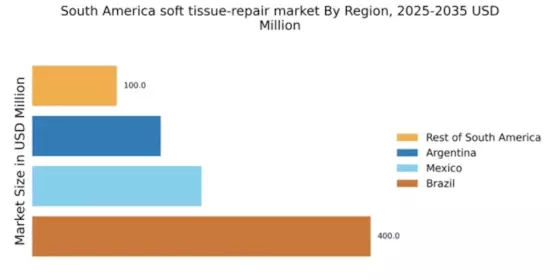
Brazil holds a commanding market share of 400.0, representing a significant portion of the South American soft tissue-repair market. Key growth drivers include an increasing prevalence of sports injuries and a rising geriatric population. Demand trends indicate a shift towards minimally invasive procedures, supported by government initiatives aimed at improving healthcare access. Regulatory policies are becoming more favorable, enhancing the industrial infrastructure necessary for market expansion.
Mexico's soft tissue-repair market is valued at 200.0, showcasing a growing demand for advanced medical solutions. The market is driven by increasing healthcare expenditure and a rising awareness of sports-related injuries. Regulatory frameworks are being updated to facilitate faster approvals for new technologies. The industrial landscape is improving, with investments in healthcare infrastructure and training programs for medical professionals.
Argentina's market value stands at 151.87, reflecting steady growth despite economic challenges. Key growth drivers include government initiatives aimed at enhancing healthcare accessibility and a growing demand for surgical interventions. Consumption patterns show a preference for high-quality, cost-effective solutions. Regulatory policies are evolving, with a focus on improving patient safety and product efficacy.
The Rest of South America accounts for a market value of 100.0, characterized by diverse healthcare needs and varying levels of market maturity. Key growth drivers include increasing urbanization and healthcare investments. Regulatory environments differ significantly, impacting market entry for foreign players. Local dynamics are influenced by regional healthcare policies and the presence of both multinational and local companies.
The soft tissue-repair market in South America is characterized by a dynamic competitive landscape, driven by increasing healthcare expenditures and a growing prevalence of sports-related injuries. Key players such as Medtronic (US), Johnson & Johnson (US), and Stryker (US) are strategically positioned to leverage innovation and regional expansion. Medtronic (US) focuses on enhancing its product portfolio through advanced technologies, while Johnson & Johnson (US) emphasizes partnerships with local healthcare providers to improve market penetration. Stryker (US) is actively pursuing mergers and acquisitions to bolster its market presence, indicating a trend towards consolidation in the sector. Collectively, these strategies contribute to a competitive environment that is increasingly focused on technological advancement and localized solutions.In terms of business tactics, companies are localizing manufacturing to reduce costs and optimize supply chains, which is particularly relevant in the context of South America’s diverse economic landscape. The market appears moderately fragmented, with several players vying for market share. However, the influence of major companies is significant, as they set benchmarks for innovation and operational efficiency that smaller firms often strive to emulate.
In October Medtronic (US) announced the launch of a new line of biodegradable sutures designed to enhance healing while minimizing the risk of infection. This strategic move not only aligns with the growing demand for sustainable medical solutions but also positions Medtronic (US) as a leader in innovative soft tissue-repair technologies. The introduction of these sutures could potentially reshape surgical practices across the region, emphasizing the importance of product differentiation in a competitive market.
In September Johnson & Johnson (US) expanded its partnership with local hospitals in Brazil to enhance the distribution of its advanced wound care products. This initiative reflects a strategic focus on regional collaboration, which may facilitate quicker access to innovative solutions for healthcare providers. By strengthening ties with local institutions, Johnson & Johnson (US) is likely to enhance its market presence and foster brand loyalty among healthcare professionals.
In August Stryker (US) completed the acquisition of a local medical device company specializing in soft tissue repair technologies. This acquisition is indicative of Stryker’s commitment to expanding its product offerings and enhancing its competitive edge in the South American market. By integrating local expertise and technologies, Stryker (US) may improve its operational capabilities and better address the specific needs of the regional healthcare landscape.
As of November current trends in the soft tissue-repair market include a pronounced shift towards digitalization and sustainability, with companies increasingly integrating AI technologies into their operations. Strategic alliances are becoming more prevalent, as firms recognize the value of collaboration in driving innovation. Looking ahead, competitive differentiation is likely to evolve, with a greater emphasis on technological advancements and supply chain reliability rather than solely on price. This shift suggests that companies that prioritize innovation and sustainable practices will be better positioned to thrive in the evolving market landscape.






In recent months, the South America Soft Tissue Repair Market has witnessed significant developments. Companies such as Medtronic and Boston Scientific are focusing on expanding their product portfolios, particularly in surgical sutures and mesh devices, to meet the growing healthcare demands in countries like Brazil and Argentina.
Growth in the region is spurred by an increasing incidence of sports injuries and the rising aging population, which is elevating the need for soft tissue repair products. Notably, in August 2023, Zimmer Biomet announced plans to enhance its market presence in South America by introducing advanced orthopedic soft tissue repair solutions.
Similarly, in July 2023, Smith and Nephew launched a new product range specifically designed for hernia repairs, emphasizing the region’s market potential. On the M&A front, C. R. Bard's acquisition of a regional medical device firm in April 2023 signifies strategic expansion efforts in South America’s dynamic market environment.
Furthermore, organizations such as the Latin American Orthopedic Association are increasingly supporting research initiatives that drive innovation and adoption of advanced soft tissue repair technologies across the continent, reflecting a growing commitment to improving patient care in South America.
The Soft Tissue Repair Market is projected to grow at a 4.91% CAGR from 2025 to 2035, driven by technological advancements, increasing surgical procedures, and rising healthcare expenditure.
New opportunities lie in:
By 2035, the market is expected to achieve substantial growth, reflecting evolving healthcare needs.
| MARKET SIZE 2024 | 851.87(USD Million) |
| MARKET SIZE 2025 | 893.7(USD Million) |
| MARKET SIZE 2035 | 1443.3(USD Million) |
| COMPOUND ANNUAL GROWTH RATE (CAGR) | 4.91% (2025 - 2035) |
| REPORT COVERAGE | Revenue Forecast, Competitive Landscape, Growth Factors, and Trends |
| BASE YEAR | 2024 |
| Market Forecast Period | 2025 - 2035 |
| Historical Data | 2019 - 2024 |
| Market Forecast Units | USD Million |
| Key Companies Profiled | Medtronic (US), Johnson & Johnson (US), Stryker (US), Smith & Nephew (GB), B. Braun Melsungen AG (DE), Zimmer Biomet (US), MediWound Ltd. (IL), Integra LifeSciences (US), Acelity (US) |
| Segments Covered | Application, Material, Procedure Type, End Use |
| Key Market Opportunities | Emerging biocompatible materials enhance healing processes in the soft tissue-repair market. |
| Key Market Dynamics | Rising demand for minimally invasive procedures drives innovation in soft tissue-repair technologies across South America. |
| Countries Covered | Brazil, Mexico, Argentina, Rest of South America |
As of 2024, the South America soft tissue repair market was valued at 1.28 USD Billion.
The market is projected to reach a valuation of 2.16 USD Billion by 2035.
The expected CAGR for the market during the forecast period 2025 - 2035 is 4.91%.
The market includes application segments such as Orthopedic Surgery, General Surgery, Plastic Surgery, and Trauma Surgery.
By 2035, both the Orthopedic Surgery and General Surgery segments are projected to reach valuations of 0.648 USD Billion.
The market features product types including Sutures, Staples, Tissue Adhesives, and Wound Closure Strips.
The Sutures segment is projected to reach a valuation of 0.75 USD Billion by 2035.
End-use segments include Hospitals, Ambulatory Surgical Centers, and Specialty Clinics.
The Hospitals segment is expected to reach a valuation of 1.08 USD Billion by 2035.
Key players in the market include Medtronic, Johnson & Johnson, Stryker, Smith & Nephew, B. Braun Melsungen AG, Zimmer Biomet, Boston Scientific, and Conmed Corporation.


Kindly complete the form below to receive a free sample of this Report

“This is really good guys. Excellent work on a tight deadline. I will continue to use you going forward and recommend you to others. Nice job”


“Thanks. It’s been a pleasure working with you, please use me as reference with any other Intel employees.”


“Thanks for sending the report it gives us a good global view of the Betaïne market.”


“Thank you, this will be very helpful for OQS.”


“We found the report very insightful! we found your research firm very helpful. I'm sending this email to secure our future business.”


“I am very pleased with how market segments have been defined in a relevant way for my purposes (such as "Portable Freezers & refrigerators" and "last-mile"). In general the report is well structured. Thanks very much for your efforts.”


“I have been reading the first document or the study, ,the Global HVAC and FP market report 2021 till 2026. Must say, good info! I have not gone in depth at all parts, but got a good indication of the data inside!”


“We got the report in time, we really thank you for your support in this process. I also thank to all of your team as they did a great job.”


“The Automotive 48V ECU Components Procurement Intelligence Study” was a complex project, but the Market Research Future (MRFR) team handled it with quality, agility, and customer-centricity. They delivered all requested data on time and within the agreed scope. The team, including Shubhendra Anand and Rahul Gotadki, was always readily available to clarify questions and swiftly implement necessary adjustments, driving the project to a successful conclusion within a very demanding timeframe.
I would also like to specifically commend Akshay Agarwal for his responsiveness and support at every stage—from our initial inquiry on May 6th through to final delivery on June 18th. His dedication made the entire process seamless.”



