×
Request Free Sample ×

Kindly complete the form below to receive a free sample of this Report

* Please use a valid business email

Leading companies partner with us for data-driven Insights

clients tt-cursor
Hero Background

South America Ultrasound Gastroscopes Market

ID: MRFR/HC/52355-HCR
200 Pages
Garvit Vyas
October 2025

South America Ultrasound Gastroscopes Market Research Report By Product Type (Optic Ultrasound Gastroscopes, Others), By Application (Oncology, Others), By Procedure (Upper Endoscopic Ultrasound, Others), By End-user (Hospitals and Clinics, Others), and By Regional (Brazil, Mexico, Argentina, Rest of South America)- Forecast to 2035

Share:
Download PDF ×

We do not share your information with anyone. However, we may send you emails based on your report interest from time to time. You may contact us at any time to opt-out.

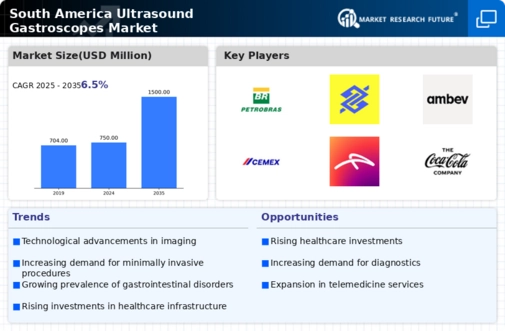
South America Ultrasound Gastroscopes Market Infographic
Purchase Options

South America Ultrasound Gastroscopes Market Summary

As per MRFR analysis, the South America ultrasound gastroscopes market Size was estimated at 90.04 USD Million in 2024. The South America ultrasound gastroscopes market is projected to grow from 97.49 USD Million in 2025 to 215.69 USD Million by 2035, exhibiting a compound annual growth rate (CAGR) of 8.27% during the forecast period 2025 - 2035.

Key Market Trends & Highlights

The South America ultrasound gastroscopes market is experiencing robust growth driven by technological advancements and increasing demand for non-invasive procedures.

  • Brazil remains the largest market for ultrasound gastroscopes, reflecting a strong healthcare infrastructure.
  • Mexico is emerging as the fastest-growing region, indicating a rising investment in healthcare technologies.
  • Technological advancements are enhancing the capabilities of ultrasound gastroscopes, leading to improved diagnostic accuracy.
  • The rising prevalence of gastrointestinal disorders and growing awareness of preventive healthcare are key drivers propelling market expansion.

Market Size & Forecast

2024 Market Size 90.04 (USD Million)
2035 Market Size 215.69 (USD Million)
CAGR (2025 - 2035) 8.27%

Major Players

Olympus Corporation (JP), Fujifilm Holdings Corporation (JP), Medtronic plc (IE), Boston Scientific Corporation (US), Pentax Medical (JP), Conmed Corporation (US), Hoya Corporation (JP), Smith & Nephew plc (GB)

South America Ultrasound Gastroscopes Market Trends

The ultrasound gastroscopes market is experiencing notable developments, particularly in South America. The region's healthcare infrastructure is evolving, with an increasing emphasis on advanced diagnostic tools. This shift is driven by a growing awareness of gastrointestinal disorders and the need for effective diagnostic solutions. As healthcare providers seek to enhance patient outcomes, the adoption of ultrasound gastroscopes is likely to rise. Furthermore, the integration of innovative technologies in medical devices is fostering a competitive landscape, encouraging manufacturers to invest in research and development. In addition, regulatory frameworks in South America are adapting to accommodate new medical technologies. This evolution may facilitate smoother market entry for ultrasound gastroscopes, potentially leading to increased availability and accessibility for healthcare facilities. The collaboration between public and private sectors is also expected to play a crucial role in promoting the adoption of these devices. Overall, the ultrasound gastroscopes market appears poised for growth, driven by technological advancements and a supportive regulatory environment.

Technological Advancements

The ultrasound gastroscopes market is witnessing rapid technological advancements, which enhance the capabilities of these devices. Innovations such as improved imaging quality and miniaturization are making ultrasound gastroscopes more effective and user-friendly. These developments are likely to attract more healthcare providers, as they seek to offer better diagnostic services.

Regulatory Support

Regulatory bodies in South America are increasingly supportive of new medical technologies, including ultrasound gastroscopes. This support may lead to streamlined approval processes, enabling faster market entry for innovative devices. As regulations evolve, manufacturers could find it easier to introduce their products, thereby expanding the market.

Growing Demand for Non-Invasive Procedures

There is a rising demand for non-invasive diagnostic procedures in South America, which is positively impacting the ultrasound gastroscopes market. Patients and healthcare providers are increasingly favoring methods that minimize discomfort and recovery time. This trend suggests a shift towards ultrasound gastroscopes as a preferred option for gastrointestinal examinations.

South America Ultrasound Gastroscopes Market Drivers

Investment in Healthcare Infrastructure

Significant investments in healthcare infrastructure across South America are propelling the ultrasound gastroscopes market. Governments and private entities are increasingly allocating funds to enhance medical facilities, particularly in urban areas. This investment is aimed at improving access to advanced medical technologies, including ultrasound gastroscopes, which are essential for accurate diagnosis and treatment of gastrointestinal conditions. Reports indicate that healthcare spending in South America is projected to grow by 5% annually, creating a favorable environment for the ultrasound gastroscopes market. Enhanced infrastructure not only facilitates the adoption of new technologies but also improves patient outcomes, thereby driving demand for these diagnostic tools.

Growing Awareness of Preventive Healthcare

There is a notable increase in awareness regarding preventive healthcare in South America, which is influencing the ultrasound gastroscopes market. As individuals become more informed about the importance of early detection of gastrointestinal issues, the demand for non-invasive diagnostic procedures is likely to rise. Educational campaigns and health initiatives are encouraging regular screenings, which include the use of ultrasound gastroscopes. This shift towards preventive care is expected to expand the market, as healthcare providers adapt to meet the needs of a more health-conscious population. The ultrasound gastroscopes market stands to gain from this trend, as patients seek out advanced diagnostic options to proactively manage their health.

Technological Integration in Medical Practices

The integration of advanced technologies in medical practices is a significant driver for the ultrasound gastroscopes market. Innovations such as artificial intelligence and machine learning are being incorporated into ultrasound gastroscopes, enhancing their diagnostic capabilities. This technological evolution is appealing to healthcare providers in South America, as it allows for more accurate and efficient patient assessments. The ultrasound gastroscopes market is likely to experience growth as these technologies become more prevalent, improving the overall quality of care. Furthermore, the ability to provide real-time imaging and analysis is expected to attract more healthcare facilities to adopt these advanced diagnostic tools.

Rising Prevalence of Gastrointestinal Disorders

The increasing incidence of gastrointestinal disorders in South America is a primary driver for the ultrasound gastroscopes market. Conditions such as gastroesophageal reflux disease (GERD), peptic ulcers, and inflammatory bowel disease are becoming more prevalent, leading to a heightened demand for diagnostic tools. According to health statistics, approximately 30% of the population in some South American countries report symptoms related to these disorders. This trend necessitates advanced diagnostic equipment, including ultrasound gastroscopes, which are favored for their non-invasive nature. The ultrasound gastroscopes market is thus positioned to benefit from this growing patient population, as healthcare providers seek efficient and effective diagnostic solutions to address these rising health concerns.

Increasing Demand for Minimally Invasive Procedures

The rising preference for minimally invasive procedures among patients in South America is driving the ultrasound gastroscopes market. Patients are increasingly opting for diagnostic methods that reduce recovery time and minimize discomfort. Ultrasound gastroscopes, known for their non-invasive nature, align with this demand, offering a viable alternative to traditional endoscopic procedures. Market analysis suggests that the demand for minimally invasive techniques is growing at a rate of 6% annually, indicating a robust market potential. The ultrasound gastroscopes market is well-positioned to capitalize on this trend, as healthcare providers seek to enhance patient satisfaction and outcomes through less invasive diagnostic options.


Market Segment Insights

By Product Type: Optic Ultrasound Gastroscope (Largest) vs. Endoscopic Ultrasound Needle (Fastest-Growing)

In the South America ultrasound gastroscopes market, the segment is predominantly led by the Optic Ultrasound Gastroscope, which captures a significant market share due to its widespread adoption and advanced imaging capabilities. The Linear Array Ultrasound Gastroscope and Others occupy smaller portions of the market, reflecting the niche applications they cater to. The Endoscopic Ultrasound Needle, while currently having a smaller share, is gaining ground as a specialized tool for tissue biopsy and improved diagnostic accuracy, appealing to healthcare providers seeking advanced solutions. Growth trends indicate a robust demand for innovative ultrasound technologies, with factors driving this segment's expansion including increasing incidences of gastrointestinal disorders and rising awareness regarding early diagnostic procedures. The Optic Ultrasound Gastroscope remains the cornerstone of this segment, reflecting the existing technological advancements. In contrast, the Endoscopic Ultrasound Needle is witnessing rapidly growing adoption, driven by its effectiveness and precision, positioning it as a key player in shaping future market dynamics.

Optic Ultrasound Gastroscope (Dominant) vs. Endoscopic Ultrasound Needle (Emerging)

The Optic Ultrasound Gastroscope stands out as the dominant product in the South America ultrasound gastroscopes market, characterized by its exceptional imaging quality and user-friendly designs that facilitate greater efficiency in medical procedures. Its established presence in clinical settings ensures that it meets the high standards demanded by healthcare professionals. Conversely, the Endoscopic Ultrasound Needle is marked as an emerging segment, primarily due to its ability to provide precise tissue sampling that supports accurate diagnostics. As healthcare facilities increasingly adopt minimally invasive techniques, the Endoscopic Ultrasound Needle is expected to see accelerated growth, reinforcing its market position and appeal among practitioners seeking advanced solutions.

By Application: Upper GI Oncology (Largest) vs. Lower GI Oncology (Fastest-Growing)

In the South America ultrasound gastroscopes market, the application segment is characterized by diverse needs driven by medical advancements and rising healthcare priorities. Among the segment values, Upper GI Oncology captures the largest market share, primarily due to the increasing prevalence of upper gastrointestinal cancers and the growing preference for non-invasive diagnostic techniques. Lower GI Oncology, on the other hand, is gaining momentum as healthcare providers enhance their focus on early detection and treatment options, showing significant growth potential. The growth trends across the application segment indicate a strong drive towards technologically advanced ultrasound gastroscopes that offer improved accuracy and patient comfort. The escalating incidence of gastrointestinal diseases in South America has prompted healthcare systems to adopt innovative solutions, thereby propelling both Upper and Lower GI Oncology segments. Additionally, the shift towards outpatient procedures and patient-centered healthcare models is expected to further boost the demand for ultrasound applications tailored to oncological care.

Oncology: Upper GI Oncology (Dominant) vs. Lower GI Oncology (Emerging)

Upper GI Oncology occupies a leading position in the South America ultrasound gastroscopes market, driven by the increasing focus on early detection and treatment of upper gastrointestinal cancers. This segment benefits from advanced ultrasound technologies that enhance diagnostic capabilities and patient outcomes. Conversely, Lower GI Oncology, while currently emerging, is rapidly gaining traction due to rising awareness and healthcare investments aimed at improving diagnostic methods for lower gastrointestinal conditions. Both segments are characterized by a shift towards minimally invasive techniques, offering significant advantages in terms of patient safety and recovery time, thus attracting a growing number of healthcare providers and patients seeking effective solutions.

By Procedure: Upper Endoscopic Ultrasound (Largest) vs. Endoscopic Ultrasound-Guided Fine-Needle Aspiration (Fastest-Growing)

In the South America ultrasound gastroscopes market, Upper Endoscopic Ultrasound (EUS) holds the largest share, significantly leading other segments due to its advanced imaging capabilities and widespread clinical adoption. Following this, Lower Endoscopic Ultrasound (EUS) provides valuable insights though it remains secondary in market share. The Endoscopic Ultrasound-Guided Fine-Needle Aspiration segment, while smaller, displays rapid growth and increasing integration in diagnostic processes, reflecting its emerging importance in the market. The growth trends within the procedure segment are heavily driven by technological advancements and the increasing prevalence of gastrointestinal disorders, prompting more healthcare facilities to adopt endoscopic ultrasound techniques. Additionally, an increase in awareness among clinicians and patients about the benefits of minimally invasive procedures is also contributing to the rapid expansion of this segment. As EUS technologies continue to evolve, they are likely to capture a larger share of the market, enhancing diagnostic precision and patient outcomes.

Upper Endoscopic Ultrasound (Dominant) vs. Endoscopic Ultrasound-Guided Fine-Needle Aspiration (Emerging)

Upper Endoscopic Ultrasound (EUS) remains the dominant procedural choice within the segment due to its efficiency in providing detailed visualization of abdominal organs, making it invaluable for diagnosing various conditions. This technique is particularly favored in complex cases as it offers higher resolution images. Conversely, Endoscopic Ultrasound-Guided Fine-Needle Aspiration is recognized as an emerging method that is gaining traction for its ability to facilitate biopsies and advanced diagnostic capabilities. The rise of this technique is attributed to its precision and the growing emphasis on early detection and lesser invasive procedures, positioning it favorably in the market's evolving landscape.

By End-User: Hospitals (Largest) vs. Ambulatory Surgical Centers (Fastest-Growing)

In the South America ultrasound gastroscopes market, hospitals hold the largest market share, primarily due to their comprehensive facilities and higher patient volumes. Clinics also contribute significantly, but their share is comparatively smaller, while ambulatory surgical centers are gaining traction as outpatient services are increasingly favored by patients seeking convenience and lower costs. This distribution highlights the dominant position of hospitals, supported by a solid infrastructure. The growth trend within this segment showcases an increasing preference for ambulatory surgical centers which are perceived as cost-effective and efficient. Hospitals, while still dominant, are now facing competition as these centers expand services and technologies for outpatient procedures. This shift is further propelled by advancements in technology, coupled with changes in healthcare policies encouraging outpatient care, driving the market dynamics.

Hospitals (Dominant) vs. Ambulatory Surgical Centers (Emerging)

Hospitals remain a dominant force in the ultrasound gastroscopes market, characterized by their well-established healthcare systems, extensive resources, and a wide range of diagnostic capabilities. They are equipped to handle more complex cases, thus retaining a loyal patient base. In contrast, ambulatory surgical centers are emerging as innovative alternatives, offering specialized services with less overhead. Their allure lies in shorter wait times and reduced costs, making them increasingly popular among patients. This duality reflects a significant shift in patient preferences, emphasizing convenience and efficiency in care, which could reshape market strategies for both segments.

Get more detailed insights about South America Ultrasound Gastroscopes Market

Regional Insights

Brazil : Strong Demand and Growth Drivers

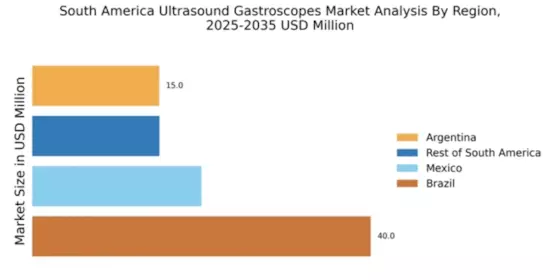
Brazil holds a commanding 40.0% market share in the ultrasound gastroscopes sector, valued at approximately $200 million in 2024. Key growth drivers include an increasing prevalence of gastrointestinal diseases and a rising demand for minimally invasive procedures. Government initiatives aimed at improving healthcare infrastructure and regulatory policies supporting medical technology adoption further bolster market growth. The expansion of healthcare facilities and investment in advanced medical technologies are also significant factors contributing to this robust market landscape.

Mexico : Growing Demand and Investment Opportunities

Mexico accounts for 20.0% of the South American ultrasound gastroscopes market, valued at around $100 million in 2024. The market is driven by increasing healthcare expenditure and a growing awareness of gastrointestinal health. Demand trends indicate a shift towards advanced diagnostic tools, supported by government initiatives to modernize healthcare facilities. Regulatory frameworks are becoming more favorable, encouraging foreign investment in medical technologies and infrastructure development.

Argentina : Focus on Healthcare Infrastructure Development

Argentina holds a 15.0% share of the ultrasound gastroscopes market, valued at approximately $75 million in 2024. The growth is fueled by rising healthcare investments and a focus on improving diagnostic capabilities. Demand for ultrasound gastroscopes is increasing due to a higher incidence of gastrointestinal disorders and a shift towards outpatient procedures. Government policies promoting healthcare access and technological advancements are pivotal in shaping the market landscape.

Rest of South America : Varied Demand Across Sub-regions

The Rest of South America represents a 15.04% market share in ultrasound gastroscopes, valued at about $75 million in 2024. This sub-region exhibits diverse demand patterns influenced by local healthcare policies and economic conditions. Key growth drivers include increasing healthcare access and rising awareness of gastrointestinal health. However, challenges such as regulatory hurdles and varying infrastructure levels impact market dynamics across countries like Chile, Colombia, and Peru.

South America Ultrasound Gastroscopes Market Regional Image

Key Players and Competitive Insights

The ultrasound gastroscopes market in South America is characterized by a competitive landscape that is increasingly shaped by innovation, strategic partnerships, and regional expansion. Key players such as Olympus Corporation (Japan), Fujifilm Holdings Corporation (Japan), and Medtronic plc (Ireland) are at the forefront, each adopting distinct strategies to enhance their market presence. Olympus Corporation (Japan) focuses on technological advancements in imaging and minimally invasive procedures, while Fujifilm Holdings Corporation (Japan) emphasizes the integration of AI in diagnostic imaging, aiming to improve accuracy and efficiency. Medtronic plc (Ireland) is actively pursuing mergers and acquisitions to bolster its product portfolio, indicating a trend towards consolidation in the market. Collectively, these strategies contribute to a dynamic competitive environment, where innovation and operational efficiency are paramount.

In terms of business tactics, companies are increasingly localizing manufacturing to reduce costs and enhance supply chain resilience. This approach not only mitigates risks associated with The ultrasound gastroscopes market demands. The market structure appears moderately fragmented, with several key players holding substantial market shares, yet leaving room for smaller entities to compete. The collective influence of these major companies shapes pricing strategies and product offerings, fostering a competitive atmosphere that encourages continuous improvement and adaptation.

In October 2025, Olympus Corporation (Japan) announced the launch of its latest ultrasound gastroscope model, which incorporates advanced imaging technology designed to enhance diagnostic capabilities. This strategic move is likely to reinforce Olympus's position as a leader in the market, as it addresses the growing demand for high-quality imaging solutions in gastrointestinal procedures. The introduction of this model not only showcases Olympus's commitment to innovation but also reflects a broader trend towards the integration of cutting-edge technology in medical devices.

In September 2025, Fujifilm Holdings Corporation (Japan) entered into a partnership with a leading South American healthcare provider to enhance the distribution of its ultrasound gastroscopes. This collaboration is expected to expand Fujifilm's market reach and improve access to its advanced imaging solutions. By aligning with local healthcare entities, Fujifilm is strategically positioning itself to better understand regional needs and tailor its offerings accordingly, which may lead to increased market penetration and customer loyalty.

In August 2025, Medtronic plc (Ireland) completed the acquisition of a smaller medical device company specializing in endoscopic technologies. This acquisition is anticipated to enhance Medtronic's product portfolio and strengthen its competitive edge in the ultrasound gastroscopes market. By integrating innovative technologies from the acquired company, Medtronic is likely to accelerate its research and development efforts, thereby fostering a culture of innovation that could redefine its market strategy.

As of November 2025, current competitive trends in the ultrasound gastroscopes market are heavily influenced by digitalization, sustainability, and the integration of AI technologies. Strategic alliances are becoming increasingly vital, as companies seek to leverage complementary strengths to enhance their offerings. The competitive differentiation is expected to evolve, shifting from traditional price-based competition to a focus on innovation, technological advancements, and supply chain reliability. This transition suggests that companies that prioritize R&D and strategic partnerships will likely emerge as leaders in the market.

Key Companies in the South America Ultrasound Gastroscopes Market market include

Industry Developments

Recent developments in the South America Ultrasound Gastroscopes Market have been dynamic, with key players like Siemens Healthineers, Bracco Imaging, and Philips Healthcare actively engaging in the region. The market has seen a notable uptick in demand for minimally invasive procedures, driving innovations in gastroscope technology and enhancing patient outcomes.

Major happenings over the last few years include the increased focus on digital healthcare solutions and telemedicine, catalyzed by the COVID-19 pandemic, which has led companies to adapt their business models accordingly.

In terms of mergers and acquisitions, there have been significant movements, such as when Boston Scientific acquired EndoChoice in March 2021, expanding its capabilities in gastrointestinal interventions. Fujifilm has also been proactive and is reportedly increasing its market share in ultrasound gastroscopes across South America through strategic partnerships.

As market valuations rise, driven by technological advancements and an aging population, companies like Hitachi and Medtronic are proactively investing in Research and Development to introduce next-generation gastroscopes. The growth of the market is expected to be bolstered further by expanding healthcare infrastructure and supportive government initiatives in several South American countries.

Future Outlook

South America Ultrasound Gastroscopes Market Future Outlook

The Ultrasound Gastroscopes Market is projected to grow at an 8.27% CAGR from 2024 to 2035, driven by technological advancements, increasing healthcare expenditure, and rising demand for minimally invasive procedures.

New opportunities lie in:

  • Development of portable ultrasound gastroscopes for remote diagnostics.
  • Partnerships with telemedicine platforms for enhanced patient access.
  • Investment in AI-driven analytics for improved diagnostic accuracy.

By 2035, the market is expected to achieve substantial growth, driven by innovation and strategic partnerships.

Market Segmentation

South America Ultrasound Gastroscopes Market End-User Outlook

  • Hospitals and Clinics
  • Ambulatory Surgical Centers
  • Others

South America Ultrasound Gastroscopes Market Procedure Outlook

  • Upper Endoscopic Ultrasound (EUS)
  • Lower Endoscopic Ultrasound (EUS)
  • Endoscopic Ultrasound-Guided Fine-Needle Aspiration
  • Others

South America Ultrasound Gastroscopes Market Application Outlook

  • Oncology
  • Upper GI Oncology
  • Lower GI Oncology
  • Pancreatic Conditions
  • Others

South America Ultrasound Gastroscopes Market Product Type Outlook

  • Optic Ultrasound Gastroscope
  • Linear Array Ultrasound Gastroscope
  • Endoscopic Ultrasound Needle
  • Others

Report Scope

MARKET SIZE 202490.04(USD Million)
MARKET SIZE 202597.49(USD Million)
MARKET SIZE 2035215.69(USD Million)
COMPOUND ANNUAL GROWTH RATE (CAGR)8.27% (2024 - 2035)
REPORT COVERAGERevenue Forecast, Competitive Landscape, Growth Factors, and Trends
BASE YEAR2024
Market Forecast Period2025 - 2035
Historical Data2019 - 2024
Market Forecast UnitsUSD Million
Key Companies Profiled["Olympus Corporation (JP)", "Fujifilm Holdings Corporation (JP)", "Medtronic plc (IE)", "Boston Scientific Corporation (US)", "Pentax Medical (JP)", "Conmed Corporation (US)", "Hoya Corporation (JP)", "Smith & Nephew plc (GB)"]
Segments CoveredProduct Type, Application, Procedure, End-User
Key Market OpportunitiesAdvancements in imaging technology enhance diagnostic capabilities in the ultrasound gastroscopes market.
Key Market DynamicsTechnological advancements and regulatory changes drive growth in the ultrasound gastroscopes market across South America.
Countries CoveredBrazil, Mexico, Argentina, Rest of South America

Leave a Comment

FAQs

What is the expected market size of the South America Ultrasound Gastroscopes Market in 2024?

The South America Ultrasound Gastroscopes Market is expected to be valued at 40.0 million USD in 2024.

What is the projected market value by 2035 for the South America Ultrasound Gastroscopes Market?

The market is projected to reach a valuation of 60.0 million USD by 2035.

What is the expected compound annual growth rate (CAGR) for the South America Ultrasound Gastroscopes Market from 2025 to 2035?

The expected CAGR for the market from 2025 to 2035 is 3.755%.

Which region holds the largest market share in the South America Ultrasound Gastroscopes Market?

Brazil holds the largest market share, valued at 16.0 million USD in 2024.

How is the market for Optic Ultrasound Gastroscopes expected to grow by 2035?

The market for Optic Ultrasound Gastroscopes is expected to grow from 22.0 million USD in 2024 to 33.0 million USD by 2035.

What are the projected market values for Argentina in 2024 and 2035?

Argentina's market is anticipated to be valued at 8.0 million USD in 2024 and grow to 12.0 million USD by 2035.

Who are the key players in the South America Ultrasound Gastroscopes Market?

Key players include Siemens Healthineers, Philips Healthcare, and Fujifilm among others.

What is the expected market value for the 'Others' product segment in 2024?

The 'Others' product segment is expected to be valued at 18.0 million USD in 2024.

What is the projected market value for Mexico in 2035?

The market value for Mexico is projected to reach 18.0 million USD by 2035.

What is a significant challenge facing the South America Ultrasound Gastroscopes Market?

A significant challenge is the competition among key players who are continuously innovating in ultrasound technology.

Download Free Sample

Kindly complete the form below to receive a free sample of this Report

Compare Licence

×
Features License Type
Single User Multiuser License Enterprise User
Price $4,950 $5,950 $7,250
Maximum User Access Limit 1 User Upto 10 Users Unrestricted Access Throughout the Organization
Free Customization
Direct Access to Analyst
Deliverable Format
Platform Access
Discount on Next Purchase 10% 15% 15%
Printable Versions