×
Request Free Sample ×

Kindly complete the form below to receive a free sample of this Report

* Please use a valid business email

Leading companies partner with us for data-driven Insights

clients tt-cursor
Hero Background

South America Viscosupplementation Market

ID: MRFR/HC/47664-HCR
200 Pages
Rahul Gotadki
October 2025

South America Viscosupplementation Market Research Report By Type (Stabilized Hyaluronic Acid, Standard hyaluronic), By Procedure (Three-Injection Procedure) and By Regional (Brazil, Mexico, Argentina, Rest of South America)- Forecast to 2035

Share:
Download PDF ×

We do not share your information with anyone. However, we may send you emails based on your report interest from time to time. You may contact us at any time to opt-out.

South America Viscosupplementation Market Infographic
Purchase Options

South America Viscosupplementation Market Summary

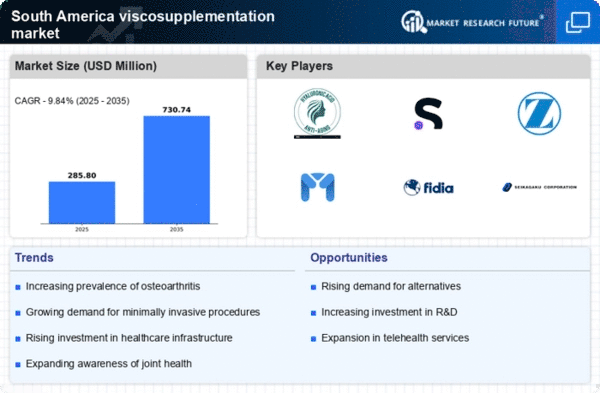
As per MRFR analysis, the South America viscosupplementation market Size was estimated at 260.2 USD Million in 2024. The South America viscosupplementation market is projected to grow from 285.8 USD Million in 2025 to 730.74 USD Million by 2035, exhibiting a compound annual growth rate (CAGR) of 9.84% during the forecast period 2025 - 2035.

Key Market Trends & Highlights

The South America viscosupplementation market is experiencing robust growth driven by increasing demand for non-surgical treatment options.

  • Brazil remains the largest market for viscosupplementation, reflecting a strong preference for non-invasive therapies.
  • Mexico is emerging as the fastest-growing region, indicating a rising acceptance of viscosupplementation among healthcare providers and patients.
  • Technological advancements in product development are enhancing the efficacy and safety of viscosupplementation treatments.
  • The growing aging population and increased incidence of joint disorders are key drivers propelling market expansion.

Market Size & Forecast

2024 Market Size 260.2 (USD Million)
2035 Market Size 730.74 (USD Million)
CAGR (2025 - 2035) 9.84%

Major Players

Hyaluronic Acid (US), Sanofi (FR), Zimmer Biomet (US), MediKine (US), Fidia Farmaceutici (IT), Seikagaku Corporation (JP), Evolva Holding SA (CH), Stryker Corporation (US)

South America Viscosupplementation Market Trends

The viscosupplementation market in South America is currently experiencing notable growth, driven by an increasing prevalence of osteoarthritis and a rising aging population. This demographic shift appears to be influencing demand for non-surgical treatment options, as patients seek alternatives to invasive procedures. Additionally, advancements in technology and product formulations are enhancing the efficacy and safety profiles of viscosupplementation products, which may further stimulate market expansion. Regulatory bodies in the region are also playing a crucial role in ensuring product quality and safety, thereby fostering consumer confidence in these therapies. Moreover, the market landscape is characterized by a growing awareness of joint health and the benefits of viscosupplementation. Educational initiatives and outreach programs are likely contributing to a more informed patient base, which could lead to increased adoption rates. The presence of key players in the region, along with strategic partnerships and collaborations, may also enhance market dynamics. As the market evolves, it is essential to monitor these trends closely to understand their implications for future growth and development.

Rising Demand for Non-Surgical Treatments

There is a noticeable shift towards non-surgical options for managing joint pain, particularly among older adults. This trend is likely fueled by the desire for less invasive procedures that offer quicker recovery times and fewer complications.

Technological Advancements in Product Development

Innovations in viscosupplementation products are enhancing their effectiveness and safety. New formulations and delivery methods may improve patient outcomes, making these treatments more appealing to healthcare providers and patients alike.

Increased Awareness and Education

Efforts to educate the public about joint health and the benefits of viscosupplementation are gaining traction. This heightened awareness could lead to greater acceptance and utilization of these therapies across South America.

South America Viscosupplementation Market Drivers

Growing Aging Population

The aging population in South America is a crucial driver for the viscosupplementation market. As individuals age, they often experience joint-related issues, particularly osteoarthritis, which leads to increased demand for effective treatment options. It is estimated that by 2030, the population aged 60 and above in South America will reach approximately 20% of the total population. This demographic shift suggests a growing need for viscosupplementation therapies, which provide relief from joint pain and improve mobility. The viscosupplementation market is likely to benefit from this trend, as older adults seek non-invasive alternatives to surgery. Furthermore, the rising prevalence of obesity among older adults exacerbates joint problems, further driving the demand for viscosupplementation solutions. Thus, the intersection of an aging population and increasing joint health issues presents a significant opportunity for growth in the viscosupplementation market.

Rising Healthcare Expenditure

In South America, the increase in healthcare expenditure is a notable driver for the viscosupplementation market. Governments and private sectors are investing more in healthcare services, which enhances access to advanced treatment options. According to recent data, healthcare spending in South America is projected to grow at a CAGR of 5% over the next five years. This increase in funding allows for the adoption of innovative therapies, including viscosupplementation, which are becoming more widely available in clinics and hospitals. The viscosupplementation market stands to gain from this trend, as patients are more likely to seek out these treatments when they are covered by insurance or available through public health systems. Additionally, the focus on improving healthcare infrastructure in the region supports the distribution and accessibility of viscosupplementation products, further propelling market growth.

Advancements in Product Formulations

Innovations in product formulations are driving the viscosupplementation market in South America. Manufacturers are continuously developing new and improved viscosupplementation products that enhance efficacy and patient outcomes. Recent advancements include the introduction of cross-linked hyaluronic acid formulations, which have shown to provide longer-lasting relief from joint pain. The viscosupplementation market is likely to benefit from these innovations, as healthcare providers seek the most effective treatments for their patients. Additionally, the focus on developing products that are easier to administer and have fewer side effects is expected to attract more patients to viscosupplementation therapies. As the market evolves, the introduction of novel formulations may lead to increased competition among manufacturers, ultimately benefiting consumers through improved treatment options.

Increased Incidence of Joint Disorders

The rising incidence of joint disorders in South America is a significant driver for the viscosupplementation market. Conditions such as osteoarthritis and rheumatoid arthritis are becoming increasingly prevalent, particularly among the aging population. Recent studies indicate that approximately 15% of adults in South America suffer from some form of arthritis, leading to a growing demand for effective treatment options. Viscosupplementation offers a non-surgical alternative that can alleviate pain and improve joint function. The viscosupplementation market is likely to see increased adoption of these therapies as awareness of their benefits grows among healthcare providers and patients alike. Furthermore, the correlation between lifestyle factors, such as sedentary behavior and obesity, and the rise in joint disorders suggests that the market may continue to expand as these issues persist in the region.

Growing Awareness of Non-Surgical Options

The increasing awareness of non-surgical treatment options among patients and healthcare professionals is a key driver for the viscosupplementation market in South America. Educational initiatives and marketing campaigns are effectively informing the public about the benefits of viscosupplementation as a viable alternative to invasive surgical procedures. This heightened awareness is likely to lead to a greater acceptance of viscosupplementation therapies among patients suffering from joint pain. The viscosupplementation market is poised to capitalize on this trend, as more individuals seek out non-invasive solutions for their health concerns. Furthermore, as healthcare providers become more knowledgeable about the advantages of viscosupplementation, they are more inclined to recommend these treatments to their patients, further driving market growth. The synergy between patient education and professional endorsement is expected to enhance the overall adoption of viscosupplementation in the region.


Market Segment Insights

By Application: Osteoarthritis (Largest) vs. Sports Injuries (Fastest-Growing)

In the market landscape of viscosupplementation, osteoarthritis emerges as the largest segment, commanding a significant share due to its prevalence in the aging population. Following closely are rheumatoid arthritis and sports injuries, with the latter showcasing a burgeoning interest fueled by a rising fitness culture and increased participation in sports activities. Other orthopedic conditions are also noted but carry a smaller share overall. Growth trends indicate a robust demand for viscosupplementation treatments, particularly as sports injuries become more recognized as a legitimate health concern. Advances in medical technology and a focus on minimally invasive procedures are catapulting the demand for these treatments. Furthermore, the prevalence of chronic conditions and a growing emphasis on quality of life are critical drivers in this segment, suggesting positive momentum for the foreseeable future.

Osteoarthritis (Dominant) vs. Sports Injuries (Emerging)

Osteoarthritis represents a dominant force in this market, characterized by a large patient base seeking effective relief from joint pain and stiffness. The treatment path for osteoarthritis often includes both surgical and non-surgical options, with viscosupplementation being an appealing solution. In contrast, sports injuries are marked as an emerging segment due to the increasing number of athletes and weekend warriors alike. Treatments for sports injuries prioritize quick recovery and mobility restoration, attracting a younger demographic. This segment is particularly responsive to innovative treatment options that enhance performance and speed up recovery, making it the fastest-growing area within this landscape.

By Product Type: Hyaluronic Acid (Largest) vs. Platelet-Rich Plasma (Fastest-Growing)

The viscosupplementation market is predominantly led by hyaluronic acid products, which account for a significant portion of the market share due to their widespread use and recognition among healthcare providers and patients. Other segment values, such as protein-based products and steroid injections, also contribute to the market but do not capture the same level of dominance as hyaluronic acid. In recent years, the growth of platelet-rich plasma injections has been noteworthy, emerging as a popular trend driven by their regenerative properties. The increasing acceptance among orthopedic practitioners and patients seeking alternatives to traditional therapies is spurring further investments and developments within this segment. The ongoing advancements in technology and research related to PRP are likely to accelerate its market presence.

Hyaluronic Acid (Dominant) vs. Platelet-Rich Plasma (Emerging)

Hyaluronic acid remains the dominant player in the viscosupplementation market, characterized by its effectiveness in treating osteoarthritis and joint issues. It provides notable pain relief and maintains joint lubrication, making it favored by both patients and healthcare providers. On the other hand, platelet-rich plasma (PRP) is emerging as a promising alternative treatment due to its potential for healing and regeneration. PRP therapies are gaining traction as they utilize the body's own growth factors, thus minimizing the risk of adverse reactions. The combination of hyaluronic acid's established efficacy and the innovative nature of PRP positions these two products uniquely within the market, with hyaluronic acid serving as the mainstay and PRP paving the way for future market expansion.

By Route of Administration: Intra-Articular Injection (Largest) vs. Intravenous Injection (Fastest-Growing)

In the South America viscosupplementation market, the distribution of the route of administration segment reveals that Intra-Articular Injection holds a substantial share, making it the leading choice among healthcare professionals. This route is favored for its direct delivery to the affected joint, resulting in effective pain relief and improved functionality for patients suffering from osteoarthritis and other joint disorders. Conversely, Intravenous Injection, while smaller in market share, is witnessing rapid growth due to its advantages in systemic distribution and quicker onset of action, appealing to a different patient demographic. Growth trends indicate that the Intra-Articular Injection segment is expected to continue its dominance, driven by increasing patient populations and rising awareness of viscosupplementation benefits. The fastest-growing Intravenous Injection segment is propelled by advancements in formulation technologies and an increasing focus on outpatient treatment options. Moreover, the emphasis on innovative therapies and personalized medicine is likely to further bolster the appeal of both routes of administration, responding effectively to diverse clinical needs and preferences in South America.

Intra-Articular Injection (Dominant) vs. Intravenous Injection (Emerging)

Intra-Articular Injection is characterized by its targeted approach, delivering the treatment directly into the joint space, which maximizes therapeutic efficacy and minimizes systemic side effects. This method is well-established, particularly among arthritis patients, and continues to dominate due to its long-standing track record of effectiveness. On the other hand, Intravenous Injection, although emerging, demonstrates significant growth potential as it allows for rapid distribution of viscoelastic agents across the body, providing effective pain relief for joint issues and enhancing patient recovery times. As the landscape of medical treatments evolves, both routes showcase valuable clinical applications, catering to the specific needs of different patient populations.

By End-Use: Hospitals (Largest) vs. Clinics (Fastest-Growing)

The market share distribution among various end-use segments showcases hospitals as the largest contributors, reflecting their critical role in delivering viscosupplementation treatments. Clinics, while smaller in share, are rapidly expanding and adapting to the growing demand for outpatient procedures, indicating a dynamic shift in treatment settings. Growth trends reveal that hospitals continue to dominate the market due to their established infrastructure and patient base. Meanwhile, clinics are emerging as the fastest-growing segment, driven by increased patient preference for minimally invasive treatments and the rise of outpatient care models. This shift is further amplified by technological advancements and rising healthcare awareness, propelling the demand for viscosupplementation services in more accessible settings.

Hospitals: Dominant vs. Clinics: Emerging

Hospitals are recognized as the dominant force in the end-use segment, benefiting from extensive resources, specialized personnel, and comprehensive patient care capabilities. They often engage in advanced treatment protocols and have the ability to handle complex cases associated with viscosupplementation. Conversely, clinics are swiftly emerging as a vital segment by providing convenient and cost-effective treatment options. They leverage shorter waiting times and personalized care to attract patients, capitalizing on the trend towards outpatient services. This duality in market positioning highlights the diversification of treatment facilities and their adaptation to patient needs in an evolving healthcare landscape.

Get more detailed insights about South America Viscosupplementation Market

Regional Insights

Brazil : Leading Market with Strong Growth Drivers

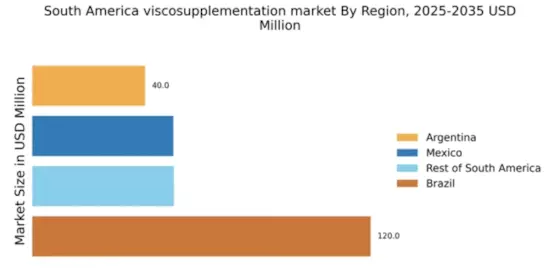
Brazil holds a commanding market share of 120.0, representing a significant portion of the South American viscosupplementation market. Key growth drivers include an aging population, increasing prevalence of osteoarthritis, and rising healthcare expenditure. Demand trends indicate a shift towards minimally invasive treatments, supported by government initiatives promoting advanced medical technologies. Regulatory policies are becoming more favorable, enhancing the industrial infrastructure necessary for production and distribution.

Mexico : Growing Demand Amidst Regulatory Changes

With a market value of 50.0, Mexico is witnessing a burgeoning demand for viscosupplementation products. Key growth drivers include increasing awareness of joint health and the rising incidence of sports-related injuries. Regulatory changes are facilitating faster approvals for new products, while government initiatives aim to enhance healthcare access. The market is characterized by a growing preference for hyaluronic acid-based treatments, reflecting changing consumption patterns.

Argentina : Stable Market with Local Innovations

Argentina's viscosupplementation market is valued at 40.0, driven by a stable healthcare system and increasing demand for joint therapies. Key growth factors include a rising elderly population and a focus on innovative treatment options. Regulatory frameworks are evolving to support new product introductions, while local manufacturers are gaining traction. The market is characterized by a preference for cost-effective solutions, reflecting economic conditions and consumer behavior.

Rest of South America : Varied Markets with Unique Challenges

The Rest of South America holds a market value of 50.2, showcasing diverse opportunities across different countries. Key growth drivers include increasing healthcare investments and a rising awareness of joint health. Regulatory environments vary significantly, impacting market entry strategies for international players. The competitive landscape features both local and multinational companies, with a focus on tailored solutions for specific regional needs.

South America Viscosupplementation Market Regional Image

Key Players and Competitive Insights

The viscosupplementation market exhibits a dynamic competitive landscape characterized by a blend of innovation, strategic partnerships, and regional expansion. Key players such as Hyaluronic Acid (US), Sanofi (FR), and Zimmer Biomet (US) are actively shaping the market through their distinct operational focuses. Hyaluronic Acid (US) emphasizes product innovation, particularly in developing advanced formulations that enhance patient outcomes. Meanwhile, Sanofi (FR) is strategically positioned through mergers and acquisitions, aiming to consolidate its market presence and expand its product portfolio. Zimmer Biomet (US) focuses on regional expansion, particularly in emerging markets, to capture a larger share of the growing demand for viscosupplementation therapies. Collectively, these strategies contribute to a competitive environment that is increasingly driven by technological advancements and patient-centric solutions.

In terms of business tactics, companies are localizing manufacturing and optimizing supply chains to enhance efficiency and reduce costs. The market structure appears moderately fragmented, with several players vying for market share. However, the influence of key players is substantial, as they leverage their resources and expertise to establish a competitive edge. This competitive structure fosters an environment where innovation and strategic collaborations are paramount for success.

In October 2025, Hyaluronic Acid (US) launched a new line of viscosupplementation products specifically designed for the South American market. This strategic move is significant as it not only addresses the unique needs of local patients but also positions the company to capitalize on the growing demand for effective joint pain management solutions in the region. By tailoring products to regional preferences, Hyaluronic Acid (US) enhances its competitive positioning.

In September 2025, Sanofi (FR) announced a partnership with a local biotechnology firm to co-develop a novel viscosupplementation therapy. This collaboration is indicative of Sanofi's commitment to innovation and its strategy to leverage local expertise to accelerate product development. Such partnerships are likely to enhance the company's ability to bring new therapies to market more efficiently, thereby strengthening its competitive stance.

In August 2025, Zimmer Biomet (US) expanded its distribution network in Brazil, aiming to improve access to its viscosupplementation products. This expansion is crucial as it not only increases the company's market reach but also aligns with the growing trend of localized supply chains. By enhancing distribution capabilities, Zimmer Biomet (US) is well-positioned to meet the rising demand for joint health solutions in South America.

As of November 2025, current competitive trends in the viscosupplementation market are increasingly defined by digitalization, sustainability, and the integration of artificial intelligence (AI) in product development. Strategic alliances are shaping the landscape, enabling companies to pool resources and expertise for enhanced innovation. Looking ahead, competitive differentiation is likely to evolve from traditional price-based competition to a focus on technological advancements, innovative solutions, and reliable supply chains. This shift underscores the importance of adaptability and forward-thinking strategies in navigating the complexities of the market.

Key Companies in the South America Viscosupplementation Market market include

Industry Developments

Recent developments in the South America Viscosupplementation Market have shown growth in demand for innovative treatments for osteoarthritis and other joint-related ailments. Companies like HyaluroniX and Bioventus are expanding their product lines, while Allergan remains a key player with its established portfolio. In recent months, Merz Pharmaceuticals has been enhancing its market presence through strategic partnerships aimed at improving patient access to viscosupplementation therapies. In particular, Merz's collaboration with local health authorities has facilitated better distribution channels across Brazil and Argentina. 

Additionally, significant acquisitions focus on expanding market share, such as Stryker Corporation's acquisition moves earlier in 2023 to bolster its product range in the region. The total market valuation in South America has reportedly increased as organizations invest in Research and Development to innovate their offerings. 

Over the past two to three years, the region has experienced a notable shift, with South American countries increasingly adopting advanced viscosupplementation injections, reflecting a growing recognition of their efficacy. This trend is also supported by increasing health awareness among the population and the aging demographic, leading to a heightened consumer interest in treatments that relieve joint pain and improve mobility.

Future Outlook

South America Viscosupplementation Market Future Outlook

The Viscosupplementation Market is projected to grow at a 9.84% CAGR from 2024 to 2035, driven by increasing aging populations, rising prevalence of osteoarthritis, and advancements in product formulations.

New opportunities lie in:

  • Development of customized viscosupplementation products for niche markets
  • Expansion of telehealth services for remote patient consultations
  • Partnerships with orthopedic clinics for integrated treatment solutions

By 2035, the viscosupplementation market is expected to achieve substantial growth and innovation.

Market Segmentation

South America Viscosupplementation Market End-Use Outlook

  • Hospitals
  • Clinics
  • Ambulatory Surgical Centers
  • Rehabilitation Centers

South America Viscosupplementation Market Application Outlook

  • Osteoarthritis
  • Rheumatoid Arthritis
  • Sports Injuries
  • Joint Surgery
  • Other Orthopedic Conditions

South America Viscosupplementation Market Product Type Outlook

  • Hyaluronic Acid
  • Protein-Based Products
  • Steroid Injections
  • Platelet-Rich Plasma
  • Other Viscosupplements

South America Viscosupplementation Market Route of Administration Outlook

  • Intra-Articular Injection
  • Intravenous Injection
  • Intrasynovial Injection

Report Scope

MARKET SIZE 2024260.2(USD Million)
MARKET SIZE 2025285.8(USD Million)
MARKET SIZE 2035730.74(USD Million)
COMPOUND ANNUAL GROWTH RATE (CAGR)9.84% (2024 - 2035)
REPORT COVERAGERevenue Forecast, Competitive Landscape, Growth Factors, and Trends
BASE YEAR2024
Market Forecast Period2025 - 2035
Historical Data2019 - 2024
Market Forecast UnitsUSD Million
Key Companies Profiled["Hyaluronic Acid (US)", "Sanofi (FR)", "Zimmer Biomet (US)", "MediKine (US)", "Fidia Farmaceutici (IT)", "Seikagaku Corporation (JP)", "Evolva Holding SA (CH)", "Stryker Corporation (US)"]
Segments CoveredApplication, Product Type, Route of Administration, End-Use
Key Market OpportunitiesGrowing demand for innovative viscosupplementation solutions driven by aging population and increasing osteoarthritis prevalence.
Key Market DynamicsRising demand for minimally invasive treatments drives growth in the viscosupplementation market in South America.
Countries CoveredBrazil, Mexico, Argentina, Rest of South America

Leave a Comment

FAQs

What is the expected market size of the South America Viscosupplementation Market in 2024?

The South America Viscosupplementation Market is expected to be valued at 130.0 million USD in 2024.

What is the projected market size of the South America Viscosupplementation Market by 2035?

By 2035, the market is projected to reach a value of 365.0 million USD.

What is the expected CAGR for the South America Viscosupplementation Market from 2025 to 2035?

The expected CAGR for the market during this period is 9.84%.

Which region is anticipated to have the dominant share in the South America Viscosupplementation Market?

Brazil is anticipated to hold the dominant share, valued at 42.0 million USD in 2024.

What will be the market size for Stabilized Hyaluronic Acid in 2035?

The market size for Stabilized Hyaluronic Acid is expected to reach 160.0 million USD by 2035.

What is the expected value of the Standard Hyaluronic segment in 2024?

The Standard Hyaluronic segment is expected to be valued at 70.0 million USD in 2024.

What market size is expected for Mexico in the Viscosupplementation space by 2035?

Mexico's market size is projected to reach 65.0 million USD by 2035.

What are some key players in the South America Viscosupplementation Market?

Major players include HyaluroniX, Merz Pharmaceuticals, and Takeda Pharmaceutical.

What is the forecasted market value for Rest of South America in 2024?

The Rest of South America is expected to be valued at 41.0 million USD in 2024.

What will be the market size of the Argentina segment in 2035?

The Argentina segment is anticipated to reach 75.0 million USD by 2035.

Download Free Sample

Kindly complete the form below to receive a free sample of this Report

Compare Licence

×
Features License Type
Single User Multiuser License Enterprise User
Price $4,950 $5,950 $7,250
Maximum User Access Limit 1 User Upto 10 Users Unrestricted Access Throughout the Organization
Free Customization
Direct Access to Analyst
Deliverable Format
Platform Access
Discount on Next Purchase 10% 15% 15%
Printable Versions