Rising Cybersecurity Concerns
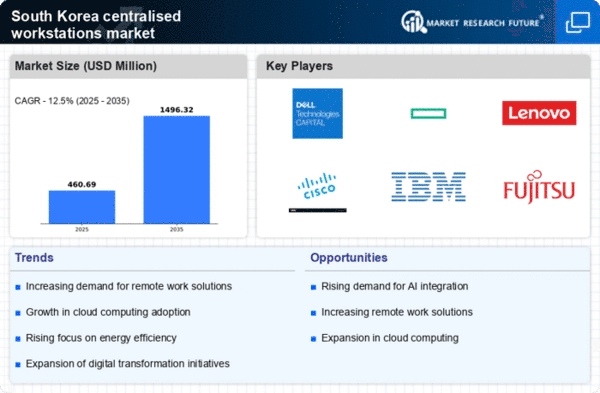
In the context of the centralised workstations market, rising cybersecurity concerns are becoming a significant driver. With the increasing frequency of cyberattacks, organizations in South Korea are prioritizing the security of their IT infrastructure. Centralized workstations offer enhanced security features, such as centralized data management and improved access controls, which are crucial for protecting sensitive information. Recent statistics indicate that cybercrime costs South Korean businesses over $1 billion annually, prompting a shift towards more secure computing environments. As companies seek to mitigate risks, the demand for centralized workstations equipped with robust cybersecurity measures is likely to grow, thereby influencing market dynamics.
Advancements in Cloud Computing
Advancements in cloud computing technology are significantly impacting the centralised workstations market in South Korea. The integration of cloud services allows organizations to access centralized workstations remotely, enhancing flexibility and scalability. This shift is particularly beneficial for businesses that require access to high-performance computing resources without the need for extensive on-premises infrastructure. Recent reports suggest that the cloud computing market in South Korea is projected to grow by 20% annually, indicating a strong trend towards cloud-based solutions. As organizations increasingly adopt cloud technologies, the demand for centralized workstations that leverage these advancements is expected to rise, shaping the future of the market.
Increased Focus on Cost Efficiency
Cost efficiency is a pivotal driver in the centralised workstations market, particularly in South Korea's competitive business landscape. Organizations are increasingly recognizing the financial benefits of centralized systems, which can reduce operational costs associated with IT management and maintenance. By consolidating resources, companies can achieve economies of scale, leading to potential savings of up to 30% in IT expenditures. This trend is particularly relevant for small and medium-sized enterprises (SMEs) that are looking to optimize their budgets while maintaining high productivity levels. As a result, the centralised workstations market is likely to see a surge in demand as businesses strive for cost-effective solutions.
Regulatory Compliance and Standards
Regulatory compliance and standards are emerging as critical drivers in the centralised workstations market. South Korean businesses are facing increasing pressure to adhere to stringent regulations regarding data protection and privacy. Centralized workstations can facilitate compliance by providing centralized control over data management and security protocols. Organizations that implement these systems are better positioned to meet regulatory requirements, thereby reducing the risk of penalties and enhancing their reputation. As compliance becomes a priority, the demand for centralized workstations that support regulatory adherence is likely to grow, influencing market trends and driving innovation in the sector.
Growing Need for Enhanced Collaboration
The centralised workstations market in South Korea is experiencing a growing need for enhanced collaboration among teams. As organizations increasingly adopt hybrid work models, the demand for centralized systems that facilitate seamless communication and collaboration is rising. This trend is particularly evident in sectors such as technology and finance, where teams require real-time access to shared resources. According to recent data, approximately 65% of companies in South Korea are investing in collaborative technologies to improve productivity. This shift towards centralized workstations is likely to drive market growth, as businesses seek solutions that enable efficient teamwork and project management, ultimately enhancing overall operational efficiency.

















Leave a Comment