Download Free Sample
Kindly complete the form below to receive a free sample of this Report
Sports Sponsorship by Automotive Market Size, Share, Industry Trend & Analysis Research Report By Sponsorship Type (Title Sponsorship, Official Partner, Event Sponsorship, Team Sponsorship), By Sports Category (Football, Basketball, Motorsport, Tennis), By Audience Engagement (Brand Activation, Promotional Campaigns, Experiential Marketing), By Automotive Segment (Passenger Vehicles, Commercial Vehicles, Luxury Cars) and By Regional (North America, Europe, South America, Asia Pacific, Middle East and Africa)- Forecast to 2035
As per Market Research Future analysis, the Sports Sponsorship by Automotive Market was estimated at 20.14 USD Billion in 2024. The Sports Sponsorship by Automotive industry is projected to grow from 20.88 USD Billion in 2025 to 30.0 USD Billion by 2035, exhibiting a compound annual growth rate (CAGR) of 3.69% during the forecast period 2025 - 2035
The Sports Sponsorship by Automotive Market is evolving towards greater technological integration and sustainability.
| 2024 Market Size | 20.14 (USD Billion) |
| 2035 Market Size | 30.0 (USD Billion) |
| CAGR (2025 - 2035) | 3.69% |
The Sports Sponsorship by Automotive Market is currently experiencing a dynamic evolution, driven by the increasing integration of technology and the growing emphasis on sustainability. Automotive brands are increasingly aligning themselves with sports entities to enhance their visibility and connect with diverse audiences. This trend appears to be fueled by the desire to engage younger demographics who are more inclined towards brands that demonstrate social responsibility and innovation. Furthermore, the rise of digital platforms has transformed how sponsorships are executed, allowing for more interactive and engaging experiences for fans. As a result, automotive companies are likely to invest in partnerships that not only promote their products but also resonate with the values of their target consumers. In addition, the Sports Sponsorship by Automotive Market seems to be shifting towards a more strategic approach, where brands are focusing on long-term collaborations rather than one-off sponsorship deals. This shift indicates a recognition of the need for deeper connections with audiences, fostering brand loyalty and enhancing overall brand equity. Moreover, the increasing competition among automotive manufacturers to differentiate themselves in a crowded marketplace suggests that innovative sponsorship strategies will become essential. As the market continues to evolve, it is anticipated that automotive brands will increasingly leverage sports sponsorships to not only promote their vehicles but also to align with the cultural narratives that resonate with consumers today.
The incorporation of advanced technologies into sports sponsorships is becoming more prevalent. Automotive brands are utilizing augmented reality, virtual reality, and data analytics to create immersive experiences for fans. This trend enhances engagement and allows for personalized marketing strategies that resonate with specific audience segments.
There is a growing emphasis on sustainability within the Sports Sponsorship by Automotive Market. Brands are increasingly seeking partnerships with sports organizations that prioritize environmental responsibility. This alignment not only enhances brand image but also appeals to consumers who value eco-friendly practices.
The market is witnessing a shift towards long-term sponsorship agreements rather than short-term engagements. Automotive companies are recognizing the benefits of building enduring relationships with sports entities, which fosters deeper connections with fans and enhances brand loyalty.
The Sports Sponsorship by Automotive Market is witnessing a notable trend towards expansion in emerging markets. As automotive manufacturers seek new growth opportunities, they are increasingly turning to sports sponsorships as a means to penetrate these markets. For example, regions such as Southeast Asia and Africa are experiencing a surge in sports popularity, presenting automotive brands with unique opportunities to establish their presence. Sponsorships in these regions can lead to increased brand awareness and market share, with reports indicating that automotive sales in these areas could grow by over 15% annually. This strategic focus on emerging markets not only diversifies revenue streams but also aligns with the global trend of sports becoming a unifying force across cultures.
The Sports Sponsorship by Automotive Market is characterized by a growing emphasis on brand visibility. Automotive companies are increasingly investing in sponsorships to enhance their brand recognition among diverse consumer segments. For instance, sponsorship of major sporting events can lead to a substantial increase in brand exposure, with studies indicating that brands can achieve up to 70% higher recall rates during such events. This heightened visibility is particularly crucial in a competitive market where differentiation is key. As automotive brands seek to connect with younger demographics, the strategic alignment with popular sports can create a lasting impression, thereby driving consumer loyalty and engagement. Furthermore, the integration of digital platforms allows for real-time engagement, amplifying the impact of sponsorships and ensuring that brands remain top-of-mind for consumers.
In the Sports Sponsorship by Automotive Market, consumer engagement strategies are evolving rapidly. Automotive brands are leveraging sponsorships to create immersive experiences that resonate with fans. By integrating interactive elements such as contests, social media campaigns, and exclusive access to events, brands can foster deeper connections with their target audience. Data suggests that brands that actively engage consumers through sponsorships can see a 30% increase in customer interaction. This approach not only enhances brand loyalty but also encourages word-of-mouth marketing, which is invaluable in the automotive sector. As consumers increasingly seek authentic experiences, the ability of automotive brands to create memorable interactions through sports sponsorships becomes a critical driver of market growth.
Sustainability is becoming a pivotal driver in the Sports Sponsorship by Automotive Market. As consumers increasingly prioritize environmental responsibility, automotive brands are aligning their sponsorship strategies with sustainability initiatives. This alignment can enhance brand reputation and appeal to eco-conscious consumers. For example, partnerships with sports organizations that promote sustainability can lead to positive brand associations and increased consumer trust. Reports indicate that brands that actively engage in sustainable practices can see a 20% increase in consumer preference. Furthermore, as regulatory pressures around sustainability intensify, automotive companies are likely to leverage sports sponsorships to showcase their commitment to environmental stewardship, thereby enhancing their market position.
Technological advancements are reshaping the Sports Sponsorship by Automotive Market, particularly in how sponsorships are activated and measured. The integration of augmented reality (AR) and virtual reality (VR) into sponsorship experiences allows automotive brands to create innovative and engaging interactions with consumers. For instance, brands can utilize AR to provide virtual test drives during sporting events, enhancing consumer engagement. Additionally, data analytics tools enable brands to measure the effectiveness of their sponsorships in real-time, providing insights that can inform future strategies. This technological evolution not only enhances the consumer experience but also allows automotive companies to optimize their sponsorship investments, ensuring a higher return on investment.
In the Sports Sponsorship by Automotive Market, the distribution of market share across various types demonstrates a healthy diversity. Title Sponsorship leads this sector, providing automotive brands with prominent visibility and engagement opportunities at major events. It's followed by Official Partner and Team Sponsorship, which offer valuable associations with sports teams and events, enhancing brand recognition. Event Sponsorship, while smaller in scale, is poised for growth as brands focus on targeted local marketing strategies to connect with niche audiences at specific events.
Title Sponsorship (Dominant) vs. Event Sponsorship (Emerging)
Title Sponsorship holds a dominant position in the Sports Sponsorship by Automotive Market due to its high visibility and extensive promotional opportunities. Brands invest significantly to be the main sponsor of major sports events, leveraging the massive viewership to enhance brand recall. Event Sponsorship, while initially seen as a less impactful segment, is emerging rapidly as sponsors recognize the potential of localized events to attract specific demographics. This segment benefits from tailored marketing efforts while often requiring lower investment compared to title sponsorships, making it appealing for brands looking to engage directly with targeted consumer bases.
In the Sports Sponsorship by Automotive Market, the distribution of market share among various sports categories reveals Football as the largest category, commanding a significant portion of sponsorship investments. On the other hand, Basketball emerges as the fastest-growing segment, capturing the attention of automotive sponsors looking to engage with a diverse audience. Other segments like Motorsport and Tennis follow, appealing to niche markets with unique partnerships and brand activations. The growth trends in this segment of sports sponsorship are driven by increasing viewership, particularly among younger demographics, and the rising popularity of events like the NBA. This trend is further supported by strategic marketing initiatives from automotive brands, which are leveraging the emotional connection fans have with these sports. As the landscape evolves, brands are finding innovative ways to integrate into these sports, making Basketball an attractive opportunity.
Football: Dominant vs. Basketball: Emerging
Football holds a dominant position in the sports sponsorship landscape, especially for automotive brands that seek broad visibility and brand association. The sport's massive global audience and cultural significance provide sponsors with unrivaled exposure and engagement potential. Conversely, Basketball is rapidly emerging as a key segment, particularly in urban markets and among younger audiences who are increasingly passionate about the game. This segment features vibrant marketing opportunities, including social media tie-ins and experiential marketing, making it appealing for brands looking to connect more intimately with fans. Together, these sports categories present distinct avenues for automotive companies to enhance their brand presence and foster loyalty among diverse consumer groups.
In the Sports Sponsorship by Automotive Market, Audience Engagement is pivotal for connecting brands with consumers. The market share distribution among Brand Activation, Promotional Campaigns, and Experiential Marketing reveals Brand Activation as the largest segment, often leveraging high-profile sports events to promote brand visibility. Promotional Campaigns hold a significant share but are less impactful than Brand Activation in sheer audience engagement. Experiential Marketing, while currently smaller, demonstrates rapid growth due to its ability to create memorable interactions and foster strong emotional connections between brands and consumers. The growth trends in this segment are driven by changing consumer preferences towards interactive and personalized experiences. As digital transformation continues to reshape marketing strategies, brands increasingly invest in experiential marketing to meet consumer expectations. The shift towards more immersive and experiential brand engagements echoes broader trends in consumer behavior, highlighting a demand for authenticity and emotional resonance in marketing efforts.
Brand Activation (Dominant) vs. Experiential Marketing (Emerging)
Brand Activation serves as the dominant force in the Audience Engagement segment, primarily focusing on creating immediate consumer reactions through strategic promotional events aligned with sporting activities. This approach enhances brand visibility, allowing automotive companies to rally support around their products during high-stakes moments. Conversely, Experiential Marketing is an emerging trend that engages consumers through immersive experiences, such as live events and interactive installations. This method allows automotive brands to foster deeper connections and brand loyalty by enabling direct consumer interactions. While Brand Activation benefits from its established position in the market, Experiential Marketing is gaining traction, reflecting a shift towards richer audience interactions in the ever-evolving landscape of sports sponsorship.
In the Sports Sponsorship by Automotive Market, the passenger vehicles segment holds the largest share, largely due to their high volume of sales and brand visibility. Sponsorship deals with mainstream automotive brands create significant marketing opportunities, enhancing brand awareness across various sports platforms. Additionally, commercial vehicles, while substantial, do not command the same audience engagement due to their targeted nature, limiting their sponsorship leverage. On the other hand, the luxury cars segment is emerging as the fastest-growing within the sports sponsorship landscape. Driven by affluent consumers' passion for sports and luxury lifestyle, brands are investing in targeted sponsorships that align with high-profile events. This trend is not only elevating brand prestige but also attracting a younger demographic, propelling growth for luxury automotive sponsors.
Passenger Vehicles (Dominant) vs. Commercial Vehicles (Emerging)
The passenger vehicles segment is characterized by its extensive range of models targeting diverse consumer needs, making it dominant in the sports sponsorship arena. This segment engages with a wider audience, allowing sponsors to maximize visibility across various sports channels. Sponsorships focus on mainstream sports events that resonate with everyday consumers, ensuring strong brand connections. In contrast, the commercial vehicles segment, while emerging, is typically associated with niche markets focusing on business consumers. Its sponsorship strategies may involve industry-specific events or local sports initiatives, emphasizing functionality and reliability over mass appeal. As commercial vehicle manufacturers begin to enter broader sports sponsorships, they seek to enhance brand perception and connect with a more extensive audience.
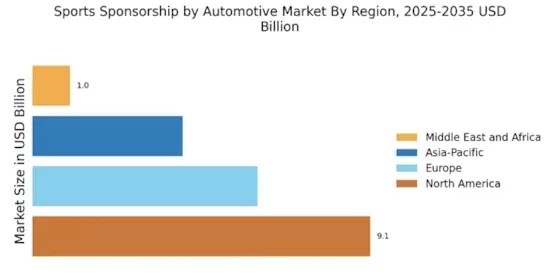
North America is the largest market for sports sponsorship by the automotive sector, holding approximately 45% of the global market share. The region's growth is driven by high consumer engagement in sports, significant advertising budgets from automotive companies, and favorable regulations promoting sponsorship activities. The increasing popularity of sports events and the rise of digital platforms further fuel demand for sponsorships. The United States is the leading country in this market, with major players like Ford, General Motors, and Toyota heavily investing in sports sponsorships. Canada also plays a significant role, contributing to the market's growth. The competitive landscape is characterized by strategic partnerships and collaborations between automotive brands and sports organizations, enhancing brand visibility and consumer loyalty.
Europe is witnessing a surge in sports sponsorship by automotive companies, accounting for approximately 30% of the global market share. Key growth drivers include the increasing popularity of motorsports, regulatory support for sports initiatives, and a strong cultural affinity for sports among European consumers. Countries like Germany and the UK are at the forefront, with a growing trend towards sustainable sponsorship practices that align with environmental regulations. Germany, home to major automotive brands like Volkswagen and BMW, leads the market, while the UK follows closely with significant investments from companies like Ford and Mercedes-Benz. The competitive landscape is marked by innovative sponsorship strategies, including digital engagement and community-focused initiatives, which enhance brand loyalty and consumer interaction. The European market is evolving, with a focus on integrating sustainability into sponsorship activities.
Asia-Pacific is rapidly emerging as a significant player in the sports sponsorship by automotive market, holding about 20% of the global market share. The region's growth is driven by increasing disposable incomes, a growing middle class, and heightened interest in sports, particularly in countries like China and India. Regulatory frameworks are becoming more supportive, encouraging investments in sports sponsorships as a means to enhance brand visibility and consumer engagement. China is the largest market in the region, with major automotive companies like Honda and Nissan actively investing in sports sponsorships. India is also witnessing growth, with local and international brands seeking to capitalize on the rising popularity of sports. The competitive landscape is characterized by aggressive marketing strategies and partnerships with sports leagues, enhancing brand recognition and consumer loyalty in a diverse market.
The Middle East and Africa region is gradually emerging in the sports sponsorship by automotive market, accounting for approximately 5% of the global market share. The growth is driven by increasing investments in sports infrastructure, a rising interest in sports events, and government initiatives promoting sports as a means of economic development. Countries like South Africa and the UAE are leading the way, with a focus on attracting international sporting events to boost local economies. In South Africa, local automotive brands are increasingly engaging in sports sponsorships to enhance brand visibility and connect with consumers. The UAE is also seeing significant investments from international automotive companies, leveraging high-profile events to promote their brands. The competitive landscape is evolving, with a mix of local and international players seeking to capitalize on the growing interest in sports sponsorships in the region.
The Global Sports Sponsorship by Automotive Market is characterized by a dynamic interplay between automotive manufacturers and various sports franchises, events, and athletes, creating a landscape rich in opportunities for branding and market penetration. The market is significantly influenced by the rising demand for strategic marketing and customer engagement avenues within the automotive sector. Companies are increasingly recognizing the value of associating their brands with popular sports, leveraging the emotional connection fans have with their teams and athletes to enhance brand loyalty and visibility.
This sponsorship ecosystem is not only a tool for advertising but also a platform for fostering community relations and forging long-term relationships with consumers, thus contributing to a competitive edge in an increasingly saturated automotive market.Mazda has established itself as a formidable player in the Global Sports Sponsorship by Automotive Market, utilizing sponsorships to enhance its brand visibility and connect effectively with target demographics. The company’s marketing strategy is built around its commitment to performance and innovation, which resonates well within the sports community.
Mazda's strength lies in its ability to align its brand messages with sporting events that appeal to its customer base, creating memorable experiences that reinforce brand loyalty. By sponsoring automotive-related sporting events, Mazda enhances its presence on a global stage, showcasing its latest models and technological advancements while engaging with sports fans in meaningful ways. This strategic positioning not only bolsters Mazda's reputation but also drives customer engagement and supports its overall marketing objectives.Audi's approach within the Global Sports Sponsorship by Automotive Market encompasses a multifaceted strategy aimed at enhancing its brand prestige and market presence.
Known for its luxury vehicles and innovative technology, Audi sponsors high-profile events and teams globally, contributing to its reputation as a premium automotive brand. The company's strengths lie in its partnerships with top-tier sports organizations, which enable it to reach affluent and discerning consumers. Audi’s key products, such as its performance vehicles and electric models, are prominently featured in various sporting events, aligning with the brand’s image of cutting-edge design and performance. Furthermore, Audi has pursued strategic mergers and acquisitions that complement its sports sponsorship initiatives, facilitating a stronger foothold within the market.
These alliances help Audi leverage synergies between its products and the sports it supports, thereby enhancing its market share and reinforcing its brand identity on an international level.

The Global Sports Sponsorship by Automotive Market has seen significant activity lately, with notable developments involving key players like Mazda, Audi, Honda, and Toyota exploring fresh partnerships to bolster their brand visibility through sports events. In September 2023, Mercedes-Benz expanded its sponsorship portfolio by acquiring rights to multiple major league events, enhancing its presence in the sports sphere. Kia and Hyundai have also ramped up their investment in sponsorship agreements, targeting major sporting events to connect with younger audiences.
The market valuation for companies such as General Motors and Ford has surged due to strategic sponsorship initiatives aimed at promoting sports innovation and sustainability. Additionally, Volkswagen's recent collaborations with various esport teams have opened new avenues for digital engagement, indicating a trend towards the intersection of traditional and digital sports sponsorships. Over the last two to three years, automotive companies have increasingly utilized sports sponsorships as a dynamic marketing strategy to improve brand equity and customer loyalty, reflecting a robust shift in consumer engagement in a post-pandemic world, where experiential marketing has gained traction.
The Sports Sponsorship by Automotive Market is projected to grow at a 3.69% CAGR from 2025 to 2035, driven by increasing consumer engagement and innovative marketing strategies.
New opportunities lie in:
By 2035, the market is expected to solidify its position as a vital component of automotive marketing strategies.
| MARKET SIZE 2024 | 20.14(USD Billion) |
| MARKET SIZE 2025 | 20.88(USD Billion) |
| MARKET SIZE 2035 | 30.0(USD Billion) |
| COMPOUND ANNUAL GROWTH RATE (CAGR) | 3.69% (2025 - 2035) |
| REPORT COVERAGE | Revenue Forecast, Competitive Landscape, Growth Factors, and Trends |
| BASE YEAR | 2024 |
| Market Forecast Period | 2025 - 2035 |
| Historical Data | 2019 - 2024 |
| Market Forecast Units | USD Billion |
| Key Companies Profiled | Toyota Motor Corporation (JP), Volkswagen AG (DE), Ford Motor Company (US), General Motors Company (US), Honda Motor Co., Ltd. (JP), BMW AG (DE), Mercedes-Benz Group AG (DE), Nissan Motor Co., Ltd. (JP), Hyundai Motor Company (KR) |
| Segments Covered | Automotive Market Size, Share, Industry Trend & Analysis Research Report By Sponsorship Type, Sports Category, Audience Engagement, Automotive Segment, Regional |
| Key Market Opportunities | Integration of electric vehicle technology in sports sponsorship enhances brand visibility and consumer engagement. |
| Key Market Dynamics | Rising consumer demand for electric vehicles drives automotive brands to enhance sports sponsorship strategies. |
| Countries Covered | North America, Europe, APAC, South America, MEA |
The projected market valuation for the Sports Sponsorship by Automotive Market in 2035 is 30.0 USD Billion.
The overall market valuation for the Sports Sponsorship by Automotive Market in 2024 was 20.14 USD Billion.
The expected CAGR for the Sports Sponsorship by Automotive Market during the forecast period 2025 - 2035 is 3.69%.
Key players in the Sports Sponsorship market include Toyota Motor Corporation, Volkswagen AG, Ford Motor Company, and General Motors Company.
In 2024, the segment of sports sponsorship with the highest valuation was Event Sponsorship, valued at 6.0 USD Billion.
The Team Sponsorship segment is projected to grow from 4.64 USD Billion in 2024 to 8.5 USD Billion by 2035.
The valuation range for Football sponsorship is expected to increase from 8.0 USD Billion in 2024 to 12.0 USD Billion by 2035.
The Passenger Vehicles segment is expected to have the highest sponsorship valuation, projected to reach 12.0 USD Billion by 2035.
The projected valuation for Brand Activation in the Sports Sponsorship market is expected to rise from 6.0 USD Billion in 2024 to 9.0 USD Billion by 2035.
The projected growth across different sports categories indicates that Football sponsorship is likely to see the most substantial increase, from 8.0 USD Billion in 2024 to 12.0 USD Billion by 2035.



Kindly complete the form below to receive a free sample of this Report

“This is really good guys. Excellent work on a tight deadline. I will continue to use you going forward and recommend you to others. Nice job”


“Thanks. It’s been a pleasure working with you, please use me as reference with any other Intel employees.”


“Thanks for sending the report it gives us a good global view of the Betaïne market.”


“Thank you, this will be very helpful for OQS.”


“We found the report very insightful! we found your research firm very helpful. I'm sending this email to secure our future business.”


“I am very pleased with how market segments have been defined in a relevant way for my purposes (such as "Portable Freezers & refrigerators" and "last-mile"). In general the report is well structured. Thanks very much for your efforts.”


“I have been reading the first document or the study, ,the Global HVAC and FP market report 2021 till 2026. Must say, good info! I have not gone in depth at all parts, but got a good indication of the data inside!”


“We got the report in time, we really thank you for your support in this process. I also thank to all of your team as they did a great job.”


“The Automotive 48V ECU Components Procurement Intelligence Study” was a complex project, but the Market Research Future (MRFR) team handled it with quality, agility, and customer-centricity. They delivered all requested data on time and within the agreed scope. The team, including Shubhendra Anand and Rahul Gotadki, was always readily available to clarify questions and swiftly implement necessary adjustments, driving the project to a successful conclusion within a very demanding timeframe.
I would also like to specifically commend Akshay Agarwal for his responsiveness and support at every stage—from our initial inquiry on May 6th through to final delivery on June 18th. His dedication made the entire process seamless.”



