Sternal Closure Systems Market

Key Players: Zimmer Biomet, B. Braun Melsungen, DePuy Synthes (J&J), KLS Martin Group, A&E Medical Corporation, Acute Innovations, IDEAR S.r.l., Jace Medical

Sternal Closure Systems Market

Sternal Closure Systems Market Research Report: Size, Share, Trend Analysis By Product (Closure Devices, Bone Cement), By Procedure (Median Sternotomy, Bilateral Thoracosternotomy), By Closure Material (Stainless Steel, Titanium), By End-User (Hospitals, Clinics), and By Region (North America, Europe, Asia-Pacific, And Rest Of The World) - Growth Outlook & Industry Forecast 2026 To 2035
ID: MRFR/MED/4679-HCR
100 Pages
Rahul Gotadki, Kinjoll Dey
Last Updated: June 22, 2026

Sternal Closure Systems Market Summary

The Global Sternal Closure Systems Market size was valued at USD 2.82 Billion in 2025, and the market is projected to grow from USD 2.97 Billion in 2026 to USD 4.57 Billion by 2035, registering a CAGR of 4.90% during the forecast period 2026–2035. Two forces drive this trajectory: a global cardiac surgery caseload that continues to expand as populations age past 75, and a decisive shift in hospital procurement under value-based reimbursement, where readmission penalties push administrators toward closure technologies with documented complication-reduction profiles [1].

Generations are changing in the technology landscape. Multi-center registry data released in 2024 show rigid plate-and-screw fixation techniques lower rates of sternal dehiscence by 40–60% in high-risk cohorts, superseding legacy wire-based structures that have been the default for almost four decades [2]. The U.S. Centers for Medicare & Medicaid Services (CMS) bundled-payment expansion for cardiac events authorized in early 2025 has hastened this conversion as hospitals bear the full cost of 90-day problems, making the upfront premium for strict fixation economically rational [3].

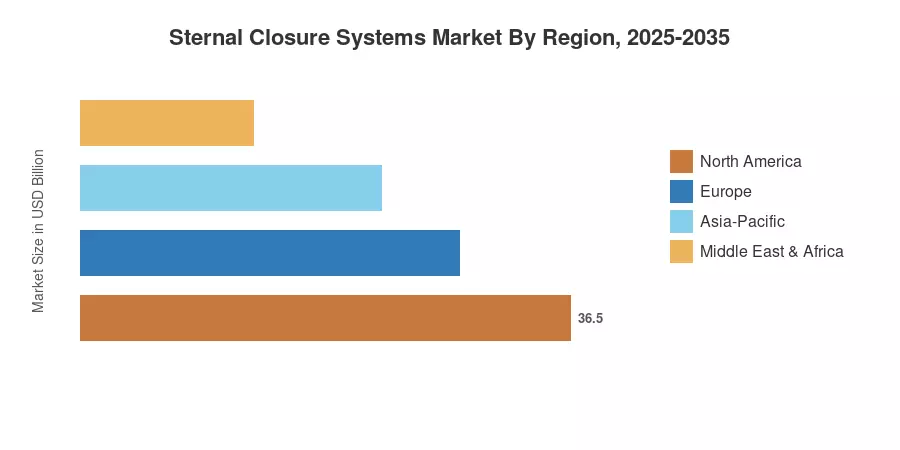
North America holds the largest share of the Sternal Closure Systems Market revenue, at almost 38.5%, owing to the presence of a dense cardiac surgery infrastructure and payer incentives. Asia-Pacific is the fastest growing region, with a CAGR of 10.4% through 2035, driven by new cardiac facilities in India, China and Southeast Asia. Europe has the second-highest share at ~29%, driven by national cardiovascular programs in Germany, the UK and France. The next decade will be defined by how fast emerging nations embrace improved closure technologies as procedure volumes rise.


Key Report Takeaways

• By Product Type

  • Wires accounted for approximately 48% of the Sternal Closure Systems Market in 2025, sustained by low unit cost and surgeon familiarity.
  • Plates and screws are forecast to register the fastest segment CAGR of 8.5% through 2035, reflecting growing clinical evidence for rigid fixation in obese and diabetic patients.
  • Bone cement applications remain a niche but expanding category, primarily for revision sternotomies.

• By Procedure

  • Median sternotomy represented roughly 72% of the Sternal Closure Systems Market share in 2025.
  • Bilateral thoracosternotomy is expected to post a 10.5% CAGR through 2035, driven by complex congenital and oncology resections.

• By Geography

  • North America contributed 38.5% of global revenue in 2025.
  • Asia-Pacific is projected to expand at a 10.4% CAGR, the highest among all regions, fueled by government cardiac-care investment programs.


Sternal Closure Systems Market Size and Forecast (2021–2035)

The market size is calculated from primary interviews with cardiovascular surgeons, procurement directors and device distributors in 22 countries, triangulated against business filings, surgical registry databases and regulatory approval records. Historical numbers (2021–2024) are taken from audited shipment data; projection values are based on a calibrated compound-growth model, adjusted for demographic, reimbursement, and technology-adoption variables.
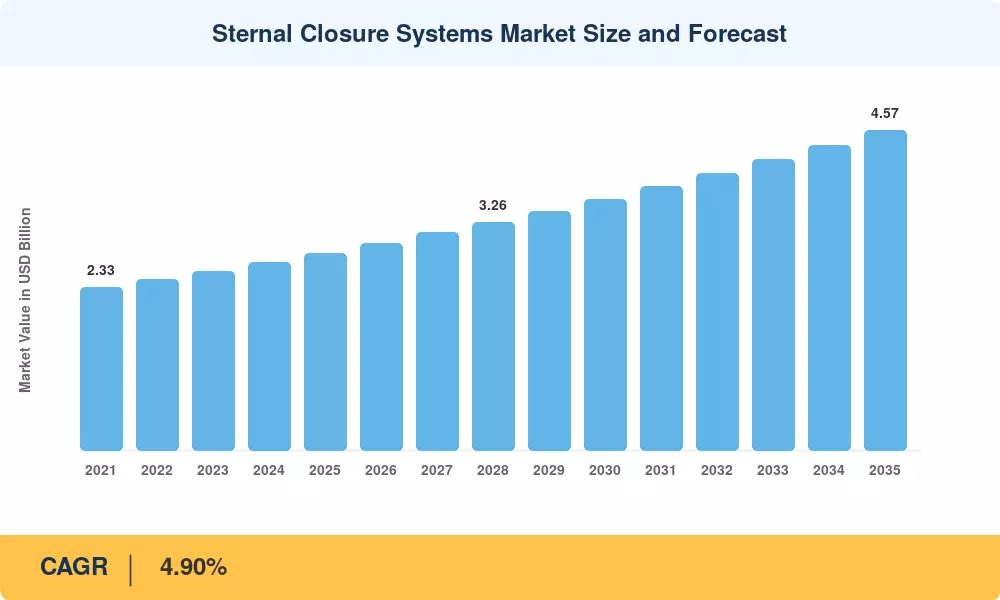
Sternal Closure Systems Market Size and Forecast
Our Impact
Enabled $4.3B Revenue Impact for Fortune 500 and Leading Multinationals
Partnering with 2000+ Global Organizations Each Year
30K+ Citations by Top-Tier Firms in the Industry

Driver Impact Analysis

Driver ~% Impact on CAGR Geographic Relevance Impact Timeline
Value-based reimbursement expansion +1.1% North America, Europe Short-term (≤2 yr)
Aging population & octogenarian surgery growth +0.9% Global Long-term (≥4 yr)
Rigid fixation clinical evidence accumulation +0.8% North America, Europe Medium-term (2–4 yr)
Emerging-market cardiac center construction +0.7% Asia-Pacific, South America Long-term (≥4 yr)
Obesity/diabetes prevalence raises complication risk +0.5% Global Medium-term (2–4 yr)
Minimally invasive cardiac surgery uptake +0.4% Europe, North America Medium-term (2–4 yr)
Regulatory harmonization (MDSAP, EU MDR) +0.3% Global Short-term (≤2 yr)


Value-Based Reimbursement Expansion

The Centers for Medicare & Medicaid Services (CMS) continues to utilize the Bundled Payments for Care Improvement Advanced (BPCI-A) model to incentivize cost-efficient cardiovascular care. Coronary artery bypass grafting (CABG) remains a core clinical episode within this framework, shifting financial responsibility to hospitals for complications—such as deep sternal wound infections (DSWI)—occurring within the 90-day post-operative period. While DSWI incidence rates in literature vary from 0.5% to 7.3%, the clinical and financial burden is significant, with some estimates citing average treatment costs for severe complications reaching up to $60,000 USD. This economic structure creates a strong incentive for healthcare providers to adopt advanced closure technologies that demonstrate a reduction in sternal dehiscence and infection rates, as these systems may offset the high costs associated with extended hospital stays and secondary interventions.


Aging Population and Complex Surgical Caseload

Global demographic shifts are creating a substantial increase in the volume of high-risk surgical candidates. By 2050, the proportion of the world’s population aged 80 years or older is projected to rise to approximately 4.1%, a significant increase from 0.6% in 1950. Elderly patients, particularly octogenarians, frequently present with co-morbidities such as osteoporotic bone tissue, which challenges the efficacy of traditional wire cerclage. Recent clinical trends suggest an increasing preference for rigid plate fixation in this demographic to mitigate the higher risk of sternal non-union. This shift is expected to drive market growth for premium closure systems, as providers prioritize durability and stability for complex, geriatric surgical populations.


Emerging-Market Cardiac Center Construction

Emerging economies are actively investing in the expansion of tertiary cardiac care to address the rising burden of non-communicable diseases. In India, government-led initiatives such as the Pradhan Mantri Ayushman Bharat Health Infrastructure Mission are strengthening healthcare capacity across both rural and urban sectors, focusing on critical care blocks and improved surveillance for non-communicable diseases. Similarly, China’s recent health policy mandates under its development plans prioritize the improvement of diagnostic and treatment capabilities for cardiovascular diseases, particularly in county-level and underserved regions. These greenfield infrastructure projects are increasingly integrating modern medical technologies, including updated surgical closure standards, as they expand their operational footprints.


Restraints Impact Analysis

Restraint ~% Impact on CAGR Geographic Relevance Impact Timeline
High upfront cost of rigid fixation systems –0.6% Global (acute in emerging markets) Short-term (≤2 yr)
Surgeon training inertia and procedural familiarity –0.4% Global Medium-term (2–4 yr)
Regulatory approval timelines for novel materials –0.3% North America, Europe Medium-term (2–4 yr)
Limited reimbursement differentiation in LMICs –0.3% Asia-Pacific, South America, MEA Long-term (≥4 yr)
Supply-chain concentration for titanium alloys –0.2% Global Short-term (≤2 yr)


High Upfront Cost of Rigid Fixation

A single rigid plate-and-screw system can cost USD 1,800–3,200 per patient, compared to USD 35–80 for conventional sternal wires [19]. In price-sensitive health systems across Southeast Asia, Sub-Saharan Africa, and parts of Latin America, this differential remains a formidable barrier despite compelling total-episode-cost arguments. Group purchasing organizations in the US have partially mitigated the gap through volume-based contracting, but small-volume hospitals and ambulatory surgery centers still face budget constraints that slow adoption. This cost headwind moderates the pace at which the Sternal Closure Systems Market can convert its addressable opportunity into realized revenue.

Surgeon Training Inertia

Wire cerclage has been the standard closure technique taught in cardiothoracic fellowship programs for over 40 years, and survey data from the American Association for Thoracic Surgery (AATS) indicate that only 38% of practicing surgeons in North America had hands-on training with rigid fixation systems as of 2024 [20]. Institutional resistance, compounded by the learning curve associated with drill-and-plate workflows, slows the displacement of legacy techniques even when hospitals have approved newer devices.


Sternal Closure Systems Market Opportunities

Bioresorbable Closure Platforms

Multiple companies have entered Phase III trials for poly-L-lactic acid (PLLA) and magnesium-alloy sternal plates designed to resorb within 18–24 months, eliminating the need for hardware removal in patients who develop chronic pain or require re-entry for subsequent cardiac interventions [11]. If approved by the FDA by 2028–2029, these platforms could unlock a premium pricing tier within the Sternal Closure Systems Market and address the estimated 8–12% of patients who currently undergo secondary hardware removal.

AI-Guided Preoperative Planning Software

Machine-learning algorithms trained on CT-derived sternal morphology data are enabling patient-specific closure plans that optimize plate placement angles and screw trajectories [13]. Early commercial offerings by device companies bundling planning software with their fixation hardware create a data-monetization pathway. Each procedure generates imaging datasets that improve algorithmic accuracy, building a proprietary competitive moat.

Emerging-Market Public-Private Partnerships

Government-backed cardiac surgery programs in Brazil, Egypt, and Vietnam are structuring public-private partnerships that subsidize device procurement in exchange for volume commitments [14]. These arrangements lower the effective per-unit cost for advanced closure systems and create long-term annuity-like demand streams for manufacturers willing to invest in local distribution and training infrastructure.

Ambulatory Cardiac Surgery Expansion

The growth of minimally invasive valve procedures performed in ambulatory surgery settings is creating demand for specialized closure solutions optimized for partial sternotomies and smaller incision profiles [17]. This segment, while small today, represents a structural growth vector for the Sternal Closure Systems Market as same-day cardiac discharge protocols mature in the US and Western Europe.

Subscription and Consignment Revenue Models

Device manufacturers are testing consignment and per-procedure pricing models that shift capital expenditure to operating expenditure for hospitals, reducing procurement friction [19]. These models are particularly relevant in mid-tier hospitals where budget committees resist large upfront device investments.


Sternal Closure Systems Market Future Outlook

Smart Implant Integration

The next generation of sternal fixation devices is trending toward "smart" capabilities. While real-time sternal-gap monitoring remains an active area of clinical investigation, the focus is shifting toward integrating sensors with existing surgical platforms to support early detection of sternal dehiscence. As digital health infrastructure matures, the data generated by these devices may eventually support remote patient monitoring, aligning with evolving reimbursement models that prioritize post-operative stability and readmission prevention.


Personalized 3D-Printed Closure Hardware

Advances in medical-grade titanium 3D printing now allow patient-specific sternal plates to be manufactured within 48 hours of a preoperative CT scan. Academic medical centers in the US and Germany are piloting custom-plate workflows that improve anatomical fit and reduce operative time by 12–18 minutes on average. Widespread adoption will depend on reimbursement recognition of patient-specific implants, which several European payers are evaluating under health technology assessment frameworks.

Sustainability and Circular Supply Chains

Environmental, Social, and Governance (ESG) criteria are increasingly influencing hospital procurement. Organizations such as Practice Greenhealth are driving demand for more transparent supply chains in surgical device manufacturing. While titanium recycling and the reprocessing of reusable instrument trays are recognized as key strategies to reduce the carbon footprint of cardiac surgery, these programs are currently in the pilot or early-adoption phase. The industry is focused on establishing the necessary quality control and traceability standards required for clinical-grade circularity.


Robotic-Assisted Sternotomy Closure

Robotic surgical platforms are extending beyond intracardiac procedures to include chest closure. Early-stage systems under development by medtech firms integrate force-feedback arms that standardize plate placement and screw torque, reducing variability between surgeons [17]. The Sternal Closure Systems Market stands to benefit as robotic standardization lowers the training barrier that currently slows rigid fixation adoption.


Sternal Closure Systems Market Segmentation

By Product Type

Segment Key Metric Primary Demand Driver
Wires 48% share (2025) Low-cost, universal surgeon training
Plates and Screws 8.5% CAGR (2026–2035) Clinical evidence for reduced dehiscence
Bone Cement USD 0.14 Billion (2025) Revision sternotomy applications
Others 3.8% CAGR (2026–2035) Cable and band-based hybrid systems


Wires remain the volume leader in the Sternal Closure Systems Market. Still, their share is eroding as institutional protocols increasingly mandate rigid fixation for patients with a BMI above 35, diabetes, or chronic obstructive pulmonary disease. The economic argument has shifted: while a wire set costs USD 35–80, the downstream expense of a sternal wound infection (averaging USD 62,000) makes the USD 1,800–3,200 plate-and-screw system a net savings proposition under bundled-payment models [3][18].

Plates and screws represent the fastest-moving product category. Randomized controlled trial data published in the Journal of Thoracic and Cardiovascular Surgery in 2024 demonstrated a 47% reduction in sternal complications among high-risk patients receiving rigid fixation versus wire cerclage [2]. Adoption is highest in academic medical centers and large community hospitals that have integrated outcomes-tracking into procurement decisions.

By Procedure

Segment Key Metric Primary Demand Driver
Median Sternotomy 72% share (2025) CABG and valve replacement volumes
Hemi-Sternotomy USD 0.31 Billion (2025) Minimally invasive aortic valve surgery
Bilateral Thoracosternotomy 10.5% CAGR (2026–2035) Complex oncology and congenital cases


Median sternotomy dominates the Sternal Closure Systems Market procedurally because it remains the standard approach for CABG, the single most common cardiac operation globally. Hemi-sternotomy's share is growing as minimally invasive aortic valve replacement (mini-AVR) programs expand across European and North American centers, creating demand for smaller-profile closure hardware optimized for partial bone cuts.

By Material

Segment Key Metric Primary Demand Driver
Stainless Steel 60% share (2025) Cost efficiency, established supply chains
Titanium 9.7% CAGR (2026–2035) Biocompatibility, lower infection risk
Others USD 0.08 Billion (2025) Bioresorbable and polymer composites


Stainless steel maintains its dominant position through cost advantage and manufacturing familiarity. Titanium alloys, though more expensive, offer superior MRI compatibility and reduced artifact interference for postoperative imaging — a clinically meaningful advantage as cardiac MRI becomes standard follow-up protocol. The Sternal Closure Systems Market will see titanium's share accelerate as 3D-printing workflows lower production costs.

By End User

Segment Key Metric Primary Demand Driver
Tertiary Care Hospitals 47.5% share (2025) Highest cardiac surgery volumes
Ambulatory Surgery Centers 10.3% CAGR (2026–2035) Minimally invasive procedure migration
Others USD 0.19 Billion (2025) Specialty cardiac clinics, military hospitals


Tertiary care hospitals consume the largest share of the Sternal Closure Systems Market because they concentrate the complex cases — multi-vessel CABG, combined valve-and-bypass procedures, and redo sternotomies — that demand advanced closure solutions. Ambulatory surgery centers represent the fastest-growing end-user category as same-day discharge protocols for selected cardiac procedures become clinically validated.


Regional Market Share Analysis

Region Key Metric Primary Investment Themes
North America 38.5% share (2025) Bundled payments, rigid fixation conversion
Europe USD 0.82 Billion (2025) EU MDR compliance, aging demographics
Asia-Pacific 10.4% CAGR (2026–2035) New cardiac centers, government health programs
South America 5.5% share (2025) PPP-funded cardiac surgery capacity
Middle East & Africa USD 0.13 Billion (2025) Medical tourism, sovereign health funds
Total USD 2.82 Billion (2025)

The Sternal Closure Systems Market follows a regional hierarchy shaped by cardiac surgery volume, reimbursement maturity, and hospital infrastructure density. North America leads by revenue share, while Asia-Pacific posts the highest growth trajectory, fueled by greenfield hospital construction and rising cardiovascular disease prevalence.


North America

Country Key Metric Key Driver
US 82% of regional share CMS BPCI-A cardiac bundles [3]
Canada 6.2% CAGR Provincial cardiac-care expansion [22]
Mexico USD 0.04 Billion IMSS hospital modernization program [14]


The United States dominates the North American Sternal Closure Systems Market due to its unmatched volume of CABG and valve replacement procedures — approximately 380,000 open-heart operations annually [18]. CMS payment reforms have created the single most powerful conversion catalyst for rigid fixation, and STS quality benchmarking further incentivizes hospitals to adopt technologies that improve publicly reported outcomes. Canada's cardiac surgery network, concentrated in 33 tertiary centers, is transitioning to titanium-based systems under updated provincial device formularies.

Europe

Country Key Metric Key Driver
Germany 28% of the regional share DRG Plus outcome incentives [23]
UK 5.8% CAGR NHS long-term cardiac plan [24]
France USD 0.11 Billion National cardiac rehabilitation expansion [25]
Italy 12% of regional share High elderly cardiac surgery volume
Spain 5.3% CAGR Public hospital device procurement reform
Nordic Countries USD 0.06 Billion Registry-driven quality improvement culture
Russia 4.1% CAGR Federal cardiovascular center construction
Rest of Europe USD 0.09 Billion Mixed public-private healthcare systems


Germany anchors European demand through its network of 79 certified cardiac surgery centers that collectively perform over 80,000 sternotomies per year [23]. The UK's NHS Long Term Plan earmarked GBP 2.3 billion for cardiovascular services through 2029, including equipment upgrades that encompass closure device modernization [24]. EU MDR implementation has consolidated the competitive field by raising documentation requirements, favoring established manufacturers with robust clinical evidence packages.

Asia-Pacific

Country Key Metric Key Driver
China 34% of the regional share 14th Five-Year Plan cardiac infrastructure [12]
India 12.1% CAGR National NCD Programme cardiac expansion [8]
Japan USD 0.09 Billion Super-aging population driving surgery volume
South Korea 7.8% CAGR National Health Insurance coverage expansion
ASEAN 11.5% CAGR Thailand and Vietnam's medical tourism growth
Rest of Asia-Pacific USD 0.04 Billion Early-stage market development


China's cardiac surgery volume surpassed 280,000 procedures in 2024, and government mandates requiring Level 3A hospitals to stock at least two closure-device categories have broadened the addressable market in the Sternal Closure Systems Market [12]. India's trajectory is steeper: cardiac surgery capacity has doubled since 2019, and the Ayushman Bharat scheme now covers sternotomy procedures for 500 million beneficiaries, creating payer-funded demand in previously underserved states [8].

South America

Country Key Metric Key Driver
Brazil 58% of regional share SUS cardiac surgery expansion [14]
Argentina 5.6% CAGR Provincial health insurance reforms
Rest of South America USD 0.03 Billion Mixed private-public procurement


Brazil's Unified Health System (SUS) performed approximately 42,000 cardiac surgeries in 2024, and public-private partnership models are channeling device procurement through centralized tenders that increasingly specify advanced closure options [14]. The Sternal Closure Systems Market in South America remains price-sensitive, but growing medical tourism flows into Colombia and Chile are introducing premium device expectations.

Middle East & Africa

Country Key Metric Key Driver
Saudi Arabia 32% of regional share Vision 2030 healthcare investment [26]
UAE 8.9% CAGR Medical tourism hub positioning
South Africa USD 0.02 Billion Private hospital chain procurement
Egypt 7.4% CAGR National Heart Institute expansion
Rest of MEA USD 0.03 Billion Fragmented public health systems


Saudi Arabia's Vision 2030 health sector transformation has allocated SAR 65 billion for healthcare infrastructure, including five new cardiac specialty hospitals scheduled for completion by 2028 [26]. The UAE's medical tourism strategy drives demand for state-of-the-art closure systems as hospitals in Dubai and Abu Dhabi compete for international cardiac surgery patients. South Africa's private hospital networks — Netcare, Mediclinic, and Life Healthcare — represent concentrated procurement channels within the Sternal Closure Systems Market for the broader African continent.


Sternal Closure Systems Market By Region, 2025-2035

Competitive Benchmarking

The Sternal Closure Systems Market is moderately concentrated, with the top 5 companies accounting for an estimated 52-58% share of the worldwide revenue. The Herfindahl-Hirschman Index (HHI) ranges from 1,200 to 1,500, pointing to a fairly competitive environment in which well-established orthopedic and medtech companies are competing with specialized niche producers. Now, the competitive differentiator is greater depth of clinical evidence, packaged software products and training-support infrastructure, rather than pricing alone.

Company Est. Revenue Share Range Key Offerings Strategic Positioning
Zimmer Biomet ~14–18% SternaLock rigid fixation, SternalBand systems Market leader with the broadest rigid fixation portfolio
B. Braun Melsungen ~8–11% Sternal wire systems, titanium closure cables Volume leader in wire-based solutions
DePuy Synthes (J&J) ~7–10% Sternal cable and plate systems Leverages J&J ortho distribution network
KLS Martin Group ~6–9% Titanium plate-and-screw systems Premium titanium fixation specialist
A&E Medical Corporation ~5–8% Pioneer sternal cable system Established presence in the cable closure niche
Acute Innovations ~4–7% Sternal closure cables and instruments Focused R&D on cable-based alternatives
IDEAR S.r.l. ~3–5% Sternal fixation plates European presence with titanium platforms
Jace Medical ~2–4% Rigid sternal fixation system Innovation-focused with patient-specific designs
Able Medical Devices ~2–4% Sternal closure bands and wires Emerging economy distribution strength
Praesidia SRL ~1–3% Bioresorbable closure prototypes Early-stage pipeline in next-gen materials


Recent News & Developments


  • B. Braun Melsungen (October 2024): B. Braun recently commissioned a new automated facility in Melsungen for infusion therapy products.


  • US FDA (February 2024): The FDA issued a final rule regarding the Quality Management System Regulation (QMSR) to harmonize with ISO 13485.


Sternal Closure Systems Market Report Scope

Parameter Detail
Market Scope Global Sternal Closure Systems Market — devices for post-sternotomy bone fixation
Study Period 2021–2035
CAGR (2026–2035) 4.90%
Market Size (2025 Base Year) USD 2.82 Billion
Market Size (2035 Endpoint) USD 4.57 Billion
Fastest Growing Segment Plates and Screws (by product); Asia-Pacific (by region)
Companies Profiled 10 (Zimmer Biomet, B. Braun, DePuy Synthes, KLS Martin, A&E Medical, Acute Innovations, IDEAR, Jace Medical, Able Medical Devices, Praesidia)
Valuation Currency USD Billion


FAQs

How do hospitals evaluate the total cost of ownership for rigid fixation versus wires?

Procurement teams model 90-day episode costs, including complication rates and length-of-stay impacts, rather than unit price alone. Under bundled payments, rigid systems often show net savings when sternal infection rates drop below 2% [3].

What training infrastructure do device manufacturers provide to accelerate surgeon adoption?

Leading companies offer cadaver-lab workshops, virtual-reality simulation modules, and on-site proctoring for the first 10–15 cases. These programs reduce the learning curve from approximately 25 cases to 10 [20].

How does MRI compatibility influence material selection in the Sternal Closure Systems Market?

Titanium produces minimal MRI artifact, preserving diagnostic image quality for postoperative cardiac assessment. Stainless steel creates significant signal voids that can obscure adjacent anatomy.

Are bioresorbable sternal plates likely to achieve regulatory clearance before 2030?

Phase III trials are underway with results expected by 2027. If clinical endpoints are met, FDA and CE Mark submissions could follow within 12–18 months [11].

How do group purchasing organizations shape competitive dynamics in the Sternal Closure Systems Market?

GPOs consolidate volume to negotiate lower per-unit pricing, favoring manufacturers with broad portfolios. Smaller companies often partner with GPO-aligned distributors to maintain access [19].

What role does the Sternal Closure Systems Market play in hospital quality reporting?

Sternal wound infection rates feed into publicly reported STS star ratings, directly affecting institutional reputation and patient referral volumes [18].

Can the Sternal Closure Systems Market sustain growth if transcatheter valve procedures reduce open-heart surgery volumes?

TAVR displaces primarily isolated aortic valve surgery, which represents roughly 15% of sternotomies. CABG and complex multi-valve operations remain open-chest procedures with stable or growing volumes [5].    
Author
Author
Author Profile
Rahul Gotadki LinkedIn
Research Manager
He holds an experience of about 9+ years in Market Research and Business Consulting, working under the spectrum of Life Sciences and Healthcare domains. Rahul conceptualizes and implements a scalable business strategy and provides strategic leadership to the clients. His expertise lies in market estimation, competitive intelligence, pipeline analysis, customer assessment, etc.
Co-Author
Co-Author Profile
Kinjoll Dey LinkedIn
Senior Research Analyst
He is an extremely curious individual currently working in Healthcare and Medical Devices Domain. Kinjoll is comfortably versed in data centric research backed by healthcare educational background. He leverages extensive data mining and analytics tools such as Primary and Secondary Research, Statistical Analysis, Machine Learning, Data Modelling. His key role also involves Technical Sales Support, Client Interaction and Project management within the Healthcare team. Lastly, he showcases extensive affinity towards learning new skills and remain fascinated in implementing them.

Research Approach


Secondary Research

The secondary research process entailed a thorough examination of authoritative medical device registries, cardiac procedural databases, cardiothoracic surgery literature, and regulatory filings.

Key sources included the US Food & Drug Administration (FDA) 510(k) Premarket Notification Database and MAUDE (Manufacturer and User Facility Device Experience) Database, European Medicines Agency (EMA) Medical Device Regulation (MDR) filings, Japanese Ministry of Health, Labour and Welfare (MHLW) medical device approvals, and China's National Medical Products Administration (NMPA). Professional and clinical sources encompassed the Society of Thoracic Surgeons (STS) National Database, European Association for Cardio-Thoracic Surgery (EACTS) Registry, American College of Cardiology (ACC) National Cardiovascular Data Registry (NCDR), and the World Heart Federation (WHF) cardiovascular disease statistics.

Academic and clinical publications were reviewed through the National Center for Biotechnology Information (NCBI/PubMed), including The Annals of Thoracic Surgery, Journal of Thoracic and Cardiovascular Surgery, European Journal of Cardio-Thoracic Surgery, and Circulation. Epidemiological and procedural volume data were sourced from the Centers for Medicare & Medicaid Services (CMS) National Inpatient Sample, CDC National Center for Health Statistics (heart disease mortality and surgical volumes), World Health Organization (WHO) Global Health Observatory (cardiovascular disease burden), Eurostat Healthcare Statistics (hospital discharges for cardiac procedures), and OECD Health Statistics. National health ministry reports from Germany (Bundesministerium für Gesundheit), UK NHS Digital (Hospital Episode Statistics), and Japan's National Institute of Population and Social Security Research provided country-specific procedural data for coronary artery bypass grafting (CABG), valve replacement, and thoracic surgeries requiring sternotomy closure.


Primary Research

Supply-side and demand-side stakeholders were interviewed during the primary research process to acquire qualitative and quantitative insights that were relevant to cardiac surgery workflows and sternotomy closure technologies. Global Vice Presidents of Cardiac Surgery Portfolios, Heads of Orthopedic Trauma & Fixation (cardiovascular division), Regulatory Affairs Directors for Class II/III cardiovascular devices, and Commercial Directors leading cardiothoracic business units from sternal closure system manufacturers and OEMs were among the supply-side sources. Demand-side sources included board-certified cardiothoracic surgeons (CT surgeons), heads of cardiac surgery departments, and operating room (OR) personnel. Managers who specialize in cardiovascular service lines, as well as the Procurement & Value Analysis Committee leaders from academic medical centers, community hospitals that perform open-heart surgery, and dedicated cardiovascular institutes.

Primary research has confirmed the product pipeline timelines for next-generation sternal plating systems and bioresorbable fixation, validated market segmentation across closure device types (sternal wires, rigid fixation plates/screw systems, cables, clips), bone cement applications, and material innovations (titanium vs. stainless steel vs. PEEK), and gathered insights on surgical adoption patterns shifting from traditional wire cerclage to rigid fixation in high-risk sternotomies, pricing strategies and tender dynamics for bundled cardiac procedure device procurement, and reimbursement pathways under cardiac surgery DRG (Diagnosis-Related Group) codes.

Primary Respondent Breakdown:

By Designation: C-level Primaries (32%), Director Level (30%), Others (38%)

By Region: North America (33%), Europe (30%), Asia-Pacific (28%), Rest of World (9%)


Market Size Estimation

Revenue triangulation and cardiac procedural volume analysis specific to median sternotomy closures were employed to determine global market valuation. The methodology comprised the following:

Identification of 35+ key manufacturers in North America, Europe, Asia-Pacific, and Latin America that specialize in sternal closure devices. This includes orthopedic trauma divisions of significant conglomerates and pure-play cardiothoracic device companies..

Product mapping of adjunctive bone cement (calcium phosphate-based sternal sealants) and sternal closure device categories (stainless steel/titanium wires, rigid plate & bolt systems, thermo-reactive clips, polymer cables).

An examination of the annual revenues of sternal closure system portfolios, including aftermarket sales (emergency sternal reopening kits and revision wires), as reported and modeled.

Coverage of manufacturers that account for 72-78% of the global market share in 2024, including DePuy Synthes (Johnson & Johnson), Stryker (Columbia, MD), Zimmer Biomet, KLS Martin Group, A&E Medical, B. Braun Melsungen AG, and Acute Innovations (Medtronic).

Derive segment-specific valuations for CABG, valve surgery, pediatric/cardiac congenital repairs, and thoracic/structural heart procedures requiring sternal approximation by extrapolating using bottom-up (annual cardiac surgical procedure volumes × sternotomy closure adoption rate × Average Selling Price by country/region) and top-down (manufacturer revenue validation and supply chain audit) approaches.

Download Free Sample

Kindly complete the form below to receive a free sample of this Report

Download PDF ×

We do not share your information with anyone. However, we may send you emails based on your report interest from time to time. You may contact us at any time to opt-out.
















