Tetanus Toxoid Vaccine Market

Key Players: Sanofi Pasteur, GlaxoSmithKline (GSK), Pfizer, Serum Institute of India, Bharat Biotech, Biological E, Panacea Biotec, Mitsubishi Tanabe Pharma

Tetanus Toxoid Vaccine Market

Tetanus Toxoid Vaccine Market Research Report By Formulation (Liquid, Lyophilized, Suspension), By End User (Hospitals, Clinics, Pharmaceutical Companies, Public Health Organizations), By Route of Administration (Intramuscular, Subcutaneous, Intradermal), By Target Population (Infants, Children, Adults, Pregnant Women) and By Regional (North America, Europe, South America, Asia Pacific, Middle East and Africa) - Growth & Industry Forecast 2025 To 2035
ID: MRFR/Pharma/2707-HCR
90 Pages
Vikita Thakur, Kinjoll Dey
Last Updated: June 19, 2026

Tetanus Toxoid Vaccine Market Summary

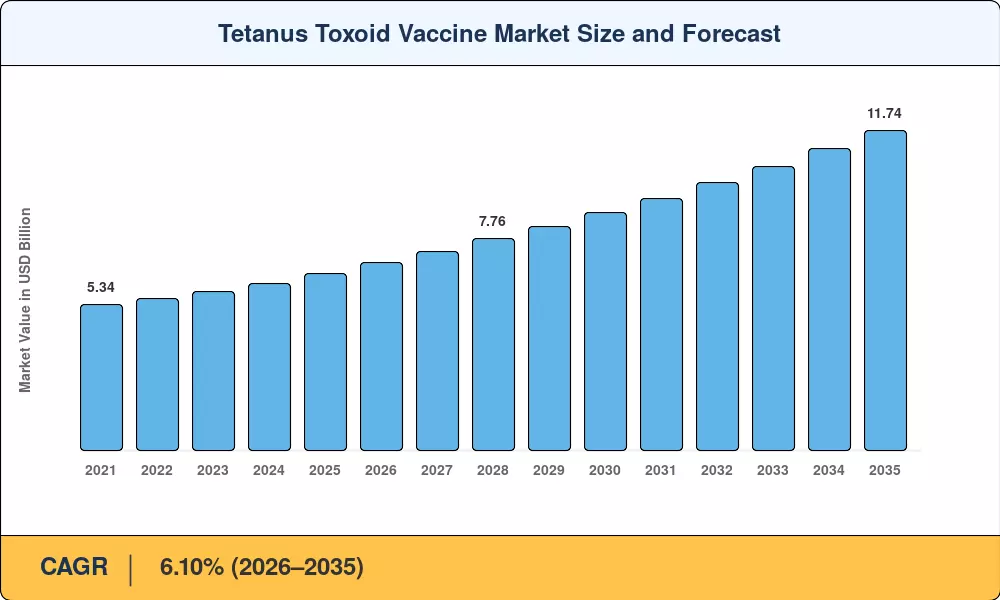
The Global Tetanus Toxoid Vaccine Market size was valued at USD 6.50 Billion in 2025, and the market is projected to grow from USD 6.89 Billion in 2026 to USD 11.74 Billion by 2035, registering a CAGR of 6.10% during the forecast period 2026–2035. Two forces are pulling investment into this space: the WHO's expanded Immunization Agenda 2030, which targets a 50% reduction in zero-dose children by the decade's end [1], and a wave of national adult booster mandates that are widening the addressable population beyond paediatric cohorts. Gavi, the Vaccine Alliance, committed over USD 1.3 billion in 2024–2025 procurement cycles for combination vaccines that include tetanus antigens, signalling sustained multilateral demand [2].

The product pipelines are shifting away from stand-alone tetanus toxoid formulations towards acellular combination treatments, primarily Tdap and DTaP, which combine diphtheria and pertussis antigens in a single injection. This move alleviates the burden of clinic visits and is aligned with life-course vaccination regimens now codified in the national schedules of the U.S., EU and India. The next turning point is thermostable vaccine technology – a Phase I trial of a fridge-free Td formulation initiated in April 2025 seeks to halve cold-chain losses across sub-Saharan Africa and South Asia [3].

North America accounts for over 38.2% of the revenue share of the Tetanus Toxoid Vaccine Market due to the strong insurance reimbursement and universal childhood vaccination. Asia-Pacific is the fastest expanding area with a CAGR of 7.65%, mainly due to India’s Universal Immunization Programme (UIP) and China’s enhanced EPI schedule. Europe has the second greatest proportion of the total market at around 27%, supported by robust public procurement regimes. The Tetanus Toxoid Vaccine Market is undergoing a period of regulatory modernization and geographic diversification that will determine its trajectory through 2035 as manufacturer consolidation reshapes supply chains.

Key Report Takeaways

• By Vaccine Type

  • DTaP held an estimated 44.2% share of the Tetanus Toxoid Vaccine Market in 2025, driven by universal paediatric immunization mandates across 130+ countries.
  • Tdap formulations are forecast to expand at an 8.35% CAGR through 2035 as adult booster adoption accelerates and maternal immunization programmes scale.
  • Standalone TT vaccines accounted for approximately USD 0.52 billion in 2025, though regulatory trends favour combination products.

• By End User & Distribution

  • Hospitals and trauma centres captured approximately 72.0% of the Tetanus Toxoid Vaccine Market revenue in 2025
  • Government procurement channels represented 66.5% of 2025 distribution volume, reflecting the dominance of public-sector purchasing.
  • The private and self-pay channel is projected to register a 7.55% CAGR as out-of-pocket booster demand grows in middle-income economies.

• By Geography

  • North America controlled 38.2% of the Tetanus Toxoid Vaccine Market in 2025
  • Asia-Pacific is positioned as the fastest-growing region at 7.65% CAGR through 2035, fuelled by public health budget expansion across India, Indonesia, and the Philippines.


Market Size and Forecast (2021–2035)

Market Research Future (MRFR)’s estimates are based on proprietary demand models and triangulated against WHO/UNICEF procurement data, firm filings, and country immunization programme budgets. Historical numbers include reported tender volumes and ex-factory pricing. Forecast forecasts include population growth rates, planned policy expansions and pipeline readiness assessments.
Tetanus Toxoid Vaccine Market Size and Forecast
Our Impact
Enabled $4.3B Revenue Impact for Fortune 500 and Leading Multinationals
Partnering with 2000+ Global Organizations Each Year
30K+ Citations by Top-Tier Firms in the Industry

Driver Impact Analysis

Driver ~% Impact on CAGR Geographic Relevance Impact Timeline
Universal childhood immunization mandates ~1.6% Global Long-term (≥4 yr)
Adult and maternal booster expansion ~1.2% North America, Europe, India Medium-term (2–4 yr)
Combination vaccine preference (DTaP/Tdap) ~1.0% Global Short-term (≤2 yr)
Gavi/multilateral procurement funding ~0.8% Sub-Saharan Africa, SE Asia Medium-term (2–4 yr)
Thermostable and cold-chain-free technology ~0.6% Africa, South Asia Long-term (≥4 yr)
Private-sector booster demand in middle-income countries ~0.5% Latin America, ASEAN Medium-term (2–4 yr)
Post-disaster and conflict-zone tetanus prophylaxis ~0.4% MEA, South Asia Short-term (≤2 yr)


Universal Childhood Immunization Mandates

The WHO’s Immunization Agenda 2030 aims for 90% national DTP3 coverage in every member state. As of the latest 2024 data, global DTP3 coverage reached 85%, leaving approximately 14.3 million "zero-dose" children—those who have not received any routine vaccines. This population is concentrated primarily in countries such as Nigeria, the Democratic Republic of the Congo, Ethiopia, Sudan, and Indonesia. To bridge these coverage gaps, national governments are increasingly implementing mandatory school-entry vaccination policies and strengthening community health worker outreach, ensuring a sustained, high-volume baseline for the Tetanus Toxoid vaccine market.


Adult and Maternal Booster Expansion

The U.S. Advisory Committee on Immunization Practices (ACIP) updated its adult Tdap guidance in 2023, recommending decennial boosters and a dose during every pregnancy regardless of prior vaccination history [7]. Europe followed suit through ECDC advisory updates. India's Ministry of Health extended its maternal TT schedule to include Td boosters for women of reproductive age under the UIP, covering approximately 30 million pregnancies annually [12]. These policy shifts are migrating the Tetanus Toxoid Vaccine Market addressable population well beyond the paediatric segment.

Combination Vaccine Preference

Healthcare systems increasingly favour pentavalent and hexavalent formulations that combine tetanus antigens with diphtheria, pertussis, hepatitis B, Hib, and IPV in a single vial. UNICEF Supply Division reports that combination vaccine procurement volumes grew 11% year-over-year in 2024 [13]. This consolidation reduces injection burden, simplifies cold-chain logistics, and lowers per-dose administration costs—factors that directly reinforce the Tetanus Toxoid Vaccine Market growth trajectory.

Gavi and Multilateral Procurement Funding

Gavi, the Vaccine Alliance, plays a critical role in de-risking vaccine supply chains. Under its "Gavi 6.0" strategy for 2026–2030, the Alliance has committed to an ambitious investment framework aimed at protecting 500 million children and saving over 8 million lives. By prioritizing market-shaping efforts and strengthening country-led procurement transitions, Gavi provides a stable demand floor for manufacturers. This multilateral financial commitment supports sustained capacity investments, particularly as Gavi-eligible countries transition toward greater domestic co-financing responsibility.


Restraints Impact Analysis

Restraint ~% Impact on CAGR Geographic Relevance Impact Timeline
Manufacturer consolidation and supply fragility ~–0.7% Global Short-term (≤2 yr)
Cold-chain infrastructure gaps ~–0.6% Sub-Saharan Africa, South Asia Long-term (≥4 yr)
Vaccine hesitancy and misinformation ~–0.5% North America, Europe Medium-term (2–4 yr)
Pricing pressure from public-sector tenders ~–0.4% Global Long-term (≥4 yr)
Regulatory divergence across national agencies ~–0.3% Multi-regional Medium-term (2–4 yr)


Manufacturer Consolidation and Supply Fragility

The exit of MassBiologics from Td production in 2024 exposed concentrated manufacturing nodes in the Tetanus Toxoid Vaccine Market [14]. Fewer than six facilities worldwide supply the bulk of WHO-prequalified tetanus-containing vaccines, and any single plant shutdown can trigger 6–12 month supply gaps across Gavi-supported countries. This fragility constrains the pace at which the Tetanus Toxoid Vaccine Market can scale, especially in regions dependent on a single-source supplier.

Cold-Chain Infrastructure Gaps

Global vaccine wastage remains a critical challenge, primarily driven by temperature excursions during transit and storage. While significant progress has been made in cold-chain expansion, last-mile delivery in rural areas of sub-Saharan Africa and South Asia continues to face infrastructure deficits. The integration of digital monitoring and investment in thermostable formulations remains essential to reducing product loss and increasing market penetration.


Vaccine Hesitancy

Vaccine hesitancy continues to pose a significant hurdle to achieving public health targets. Low adult booster uptake, often due to misinformation or lack of awareness regarding the necessity of decennial Tdap boosters, hinders the achievement of national coverage goals. Strengthening communication strategies and normalizing adult immunization through provider-led reminders are vital to reversing these trends.


Tetanus Toxoid Vaccine Market Opportunities

Thermostable Vaccine Technology

Innovations in Controlled-Temperature Chain (CTC) and lyophilized (freeze-dried) Tetanus-containing formulations are critical to overcoming logistics barriers. These technologies are designed to maintain potency outside of strict cold-chain environments, which is expected to reduce dose attrition in last-mile delivery settings significantly. While exact wastage reduction varies by region, the transition to thermostable alternatives is a priority for WHO-aligned procurement strategies to improve the efficiency of immunization programs in tropical and remote geographies.


Maternal Neonatal Tetanus Elimination Campaigns

Significant progress has been made globally toward Maternal and Neonatal Tetanus Elimination (MNTE). As of 2026, only a small subset of countries (approximately 10) have yet to reach validation. For these remaining nations, including those in the Sahel and Horn of Africa, the WHO continues to prioritize supplementary immunization activities (SIAs). These campaigns represent a concentrated, high-priority procurement opportunity for tetanus-containing vaccines, essential for closing the final gaps in global elimination efforts.


Local Manufacturing Expansion in Africa and Southeast Asia

The African Union's Partnerships for African Vaccine Manufacturing (PAVM) initiative targets 60% continental vaccine self-sufficiency by 2040 [18]. Several fill-finish facilities in Senegal, Rwanda, and South Africa are expected to begin tetanus-containing vaccine production by 2028, creating new supply nodes and reducing import dependence for the Tetanus Toxoid Vaccine Market.

Digital Immunization Registries and Demand Forecasting

Governments are investing in electronic immunization registries (EIR) that improve dose tracking, reduce wastage, and generate demand forecasts. India's CoWIN and eVIN platforms already cover over 700 million vaccination records [19]. Integrating these systems with procurement planning could improve supply-demand matching and reduce stockout risk in the Tetanus Toxoid Vaccine Market.

Private-Sector Travel and Occupational Health Channels

Rising international travel and occupational safety regulations are creating a premium-priced private demand channel. Travellers to endemic regions and workers in agriculture, construction, and military sectors increasingly seek pre-exposure boosters through private clinics and pharmacies, expanding the Tetanus Toxoid Vaccine Market beyond traditional public-sector procurement.


Tetanus Toxoid Vaccine Market Future Outlook

Life-Course Immunization Integration

The integration of life-course immunization is a core strategic priority under the WHO Immunization Agenda 2030. National advisory bodies are increasingly emphasizing boosters for adolescents, pregnant women, and older adults. This shift away from pediatric-only models broadens the addressable market for Td/Tdap vaccines, positioning them as essential components of preventative care across all age groups.


Thermostable and Microarray Patch Technologies

Research into microarray patches (MAPs) and thermostable formulations remains a primary focus for overcoming logistics barriers. These delivery platforms aim to minimize the burden of cold-chain infrastructure, potentially increasing vaccine reach in remote or tropical regions. While still in developmental phases, these technologies represent the next frontier in improving immunization equity.


Regional Manufacturing Sovereignty

Post-pandemic supply chain disruptions have accelerated regional manufacturing sovereignty initiatives. The African Union's PAVM framework, India's Production-Linked Incentive (PLI) scheme for pharmaceuticals, and ASEAN's collective procurement strategy are all designed to localize vaccine production [18]. These programmes will reshape competitive dynamics within the Tetanus Toxoid Vaccine Market by creating new entrants with cost advantages in high-growth geographies.

Digital Health and Demand Forecasting

The deployment of AI-driven demand forecasting and electronic immunization registries is enhancing supply chain precision. By integrating real-time consumption data with procurement planning, nations are reducing vaccine wastage and stockout risks. This digital transformation is setting new benchmarks for operational efficiency in global public health procurement.


Tetanus Toxoid Vaccine Market Segmentation

By Vaccine Type

Segment Key Metric Primary Demand Driver
Diphtheria, Tetanus, and Pertussis (DTaP) 44.2% share (2025) Universal paediatric schedules
Tetanus, Diphtheria, and Pertussis (Tdap) 8.35% CAGR (2026–2035) Adult/maternal booster mandates
Tetanus-Diphtheria (Td) USD 1.04 Billion (2025) Post-exposure prophylaxis, wound management
Standalone Tetanus Toxoid (TT) 3.90% CAGR (2026–2035) MNTE campaigns in LMICs


DTaP remains the revenue backbone of the Tetanus Toxoid Vaccine Market, embedded in national childhood immunization schedules across more than 130 countries. Procurement volumes are stable but price-constrained by public-sector tender mechanisms. Tdap, by contrast, is the segment gaining the most momentum as maternal immunization programmes expand. ACIP's 2023 update recommending Tdap during every pregnancy—regardless of interval since last dose—has substantially widened the addressable cohort in the U.S. alone [7].

TD formulations continue to serve as the primary wound-management prophylaxis product in emergency departments globally. At the same time, standalone TT is gradually being phased out in WHO guidance in favour of Td, which provides broader antigen coverage. This regulatory migration is reshaping tender specifications across the Tetanus Toxoid Vaccine Market, with implications for manufacturers' product portfolios.

By Age Group

Segment Key Metric Primary Demand Driver
Paediatric (0–16 years) 78.5% share (2025) School-entry mandates, EPI schedules
Adult (17+ years) 6.85% CAGR (2026–2035) Booster compliance, occupational health requirements


The paediatric segment dominates the Tetanus Toxoid Vaccine Market by volume, reflecting the foundational role of DTP in childhood schedules worldwide. The adult segment, however, is growing faster as policy shifts—decennial booster recommendations, mandatory prenatal Tdap, and occupational health regulations—bring previously under-vaccinated populations into the immunization funnel.

By End User

Segment Key Metric Primary Demand Driver
Hospitals & Trauma Centres 72.0% share (2025) Emergency prophylaxis, inpatient immunization
Public Immunization Clinics 7.35% CAGR (2026–2035) Government-funded routine immunization campaigns
Pharmacies & Retail Clinics USD 0.42 Billion (2025) Walk-in adult booster convenience


By Distribution Channel

Segment Key Metric Primary Demand Driver
Government Procurement 66.5% share (2025) UNICEF/Gavi tenders, national EPI budgets
Private / Self-Pay 7.55% CAGR (2026–2035) Travel health, pharmacy-based boosters


Government procurement channels dominate the Tetanus Toxoid Vaccine Market distribution landscape. UNICEF Supply Division alone procures approximately 2.5 billion vaccine doses annually across all antigens, and tetanus-containing vaccines represent a significant share of this portfolio [13]. The private channel, though smaller, is growing rapidly as pharmacy-based vaccination services expand in the U.S., UK, India, and Brazil.


Regional Market Share Analysis

Region Key Metric Primary Investment Themes
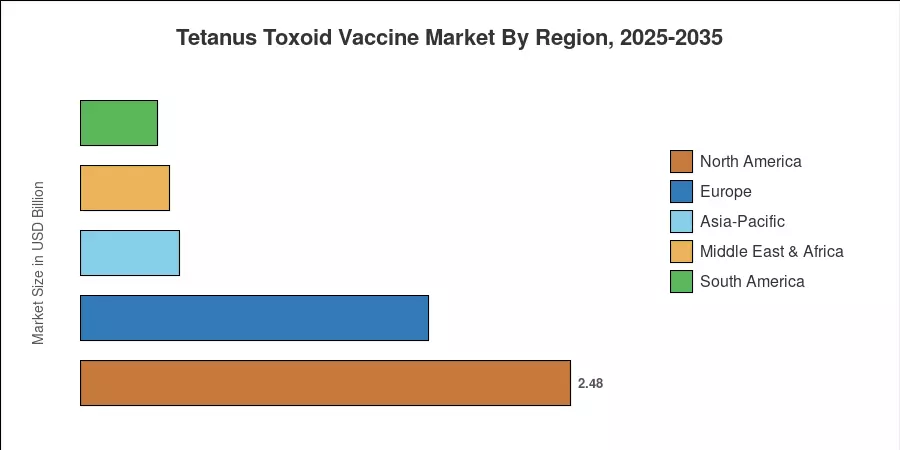
North America 38.2% revenue share (2025) Insurance reimbursement, adult booster compliance
Europe USD 1.76 Billion (2025) Public procurement harmonization, refugee health
Asia-Pacific 7.65% CAGR (2026–2035) UIP expansion, local manufacturing scale-up
South America USD 0.39 Billion (2025) PAHO Revolving Fund procurement
Middle East & Africa 6.85% CAGR (2026–2035) MNTE campaigns, AU vaccine manufacturing
Total USD 6.50 Billion (2025)

The Tetanus Toxoid Vaccine Market exhibits a distinct geographic hierarchy: mature markets in North America and Europe contribute the lion's share of revenue. At the same time, Asia-Pacific and parts of Africa represent the volume-growth frontier.


North America

Country Key Metric Key Driver
US 82.4% of regional share ACIP booster schedules, CDC Vaccines for Children programme
Canada 10.8% of regional share Provincial immunization mandates
Mexico 6.8% of regional share CENSIA universal vaccination programme


The U.S. remains the anchor of the Tetanus Toxoid Vaccine Market in North America, with the CDC's Vaccines for Children (VFC) programme covering approximately 40 million eligible children annually [20]. Canada's provincial health plans provide universal coverage, while Mexico's expanded national immunization schedule under CENSIA has driven catch-up campaigns targeting adolescent Tdap boosters.

Europe

Country Key Metric Key Driver
Germany 5.45% CAGR STIKO booster recommendations
UK USD 0.31 Billion (2025) NHS childhood scheduling
France 26.1% of regional share Mandatory vaccination law (2018)
Italy 5.30% CAGR Lorenzin Law enforcement
Spain USD 0.13 Billion (2025) Regional health system procurement
Nordic Countries 8.5% of regional share High adult booster compliance
Russia 5.15% CAGR National immunization calendar updates
Rest of Europe USD 0.22 Billion (2025) EU joint procurement framework


France's 2018 mandatory vaccination law, which extended compulsory childhood vaccines from three to eleven, including DTP, has been a benchmark policy for the Tetanus Toxoid Vaccine Market in Europe [17]. Germany's STIKO committee has reinforced decennial Td booster recommendations, while the UK's NHS maintains one of the most structured prenatal pertussis-tetanus programmes in the region.

Asia-Pacific

Country Key Metric Key Driver
China 31.5% of regional share Expanded Programme on Immunization (EPI)
India 8.10% CAGR Universal Immunization Programme (UIP)
Japan USD 0.19 Billion (2025) Routine DPT schedule, ageing population boosters
South Korea 5.90% CAGR KCDC adult immunization guidelines
ASEAN 8.45% CAGR WHO-supported coverage expansion
Rest of Asia-Pacific USD 0.11 Billion (2025) Gavi co-financing transitions


India's UIP reaches over 26 million newborns each year and provides five doses of DPT through the public health system [12]. China's EPI reform integrated a broader set of combination vaccines in 2024, increasing per-child procurement value. ASEAN nations—particularly Indonesia, the Philippines, and Vietnam—are scaling domestic production under WHO prequalification pathways, reinforcing the Tetanus Toxoid Vaccine Market growth trajectory in this region.

South America

Country Key Metric Key Driver
Brazil 58.3% of regional share SUS public health system coverage
Argentina 5.70% CAGR Mandatory schedule compliance
Rest of South America USD 0.08 Billion (2025) PAHO Revolving Fund procurement


Brazil's Sistema Único de Saúde (SUS) provides free vaccination across 38,000 health posts, making it the single largest procurement node for the Tetanus Toxoid Vaccine Market in Latin America. PAHO's Revolving Fund continues to pool procurement volumes, achieving negotiated prices 30–40% below bilateral contract levels [16].

Middle East & Africa

Country Key Metric Key Driver
Saudi Arabia 28.4% of regional share MOH mandatory health card requirements
UAE 5.95% CAGR Public-private health system investment
South Africa USD 0.05 Billion (2025) EPI-SA expanded coverage
Egypt 7.20% CAGR MOHP universal vaccination schedule
Rest of MEA 7.50% CAGR MNTE campaigns, Gavi support


Sub-Saharan Africa remains the epicentre of maternal and neonatal tetanus burden, with MNTE campaigns driving supplementary immunization activity in Nigeria, Chad, and South Sudan [1]. Gulf states maintain high coverage through mandatory vaccination for school entry and employment health cards, contributing stable demand for the Tetanus Toxoid Vaccine Market in the MEA region.


Tetanus Toxoid Vaccine Market By Region, 2025-2035

Competitive Benchmarking

The Tetanus Toxoid Vaccine Market is moderately concentrated, with the top five players accounting for an estimated 58–65% of the worldwide revenue. The landscape seems to be of moderate concentration, with an estimated Herfindahl-Hirschman Index (HHI) of around 1,100–1,300. Competitive distinction is based on WHO prequalification status, breadth of combination vaccination portfolio, size of manufacture and cold-chain technologies. Recent withdrawals of manufacturers are presenting the Tetanus Toxoid Vaccine Market with increased hurdles to entry and a tighter supply base.

Company Est. Revenue Share Range Key Offerings Strategic Positioning
Sanofi Pasteur ~14–18% Adacel (Tdap), Daptacel (DTaP), Imovax TT Global leader with the broadest combination portfolio
GlaxoSmithKline (GSK) ~12–16% Boostrix (Tdap), Infanrix (DTaP) Strong in adult booster and maternal segments
Pfizer ~8–11% Prevnar combinations, pipeline Td products Leveraging distribution scale post-Wyeth integration
Serum Institute of India ~9–13% Pentavalent DTP-HepB-Hib, EasyFive Largest global supplier by dose volume
Bharat Biotech ~5–8% ComBE Five, standalone TT Cost-competitive, WHO-prequalified
Biological E ~4–7% BEpenta, TT injection Key Gavi-eligible supplier, expanding capacity
Panacea Biotec ~3–5% EasySix, DTP combinations Indian domestic leader, UNICEF contract holder
Mitsubishi Tanabe Pharma ~2–4% DPT-IPV, Td products Japanese market anchor, regional distributor
PT Bio Farma ~2–4% DTP-HB-Hib, standalone TT Indonesian state producer, ASEAN supplier
LG Chem (Life Sciences) ~1–3% Tdap, combination pipeline Emerging entrant, Korean market focus


Recent News & Developments

  • Sanofi Pasteur (March 2025): Initiated a Phase I clinical trial for a thermostable Td vaccine designed for controlled-temperature-chain distribution in tropical climates, targeting regulatory submission by 2028 [3]
  • WHO (January 2025): Published updated position paper recommending Td over standalone TT for all primary and booster immunization schedules, accelerating regulatory convergence across member states [9]
  • Serum Institute of India (November 2024): Announced a USD 400 million capacity expansion at its Pune facility, adding two new fill-finish lines dedicated to pentavalent and DTaP vaccines [22]
  • GSK (September 2024): Received EU Marketing Authorization variation for Boostrix to include a maternal immunization indication, expanding the labelled use for prenatal Tdap vaccination [8]
  • Gavi Alliance (June 2024): Approved its 2025–2030 Vaccine Investment Strategy, allocating USD 1.5 billion for combination vaccines including tetanus-containing formulations across 57 eligible countries [2]
  • Biological E (April 2024): Obtained WHO prequalification for its hexavalent vaccine (DTaP-IPV-Hib-HepB), expanding its addressable Tetanus Toxoid Vaccine Market footprint in Gavi-supported nations [23]
  • U.S. CDC (February 2024): Updated the Advisory Committee on Immunization Practices recommendations, reinforcing decennial Tdap boosters for all adults aged 19 and older regardless of previous Td history [7]
  • African Union (October 2023): Launched the PAVM framework's first implementation phase, designating six countries for fill-finish facility development targeting tetanus-containing vaccines among priority products [18]


Tetanus Toxoid Vaccine Market Report Scope

Parameter Detail
Market Scope Global Tetanus Toxoid Vaccine Market
Study Period 2021–2035
CAGR 6.10% (2026–2035)
Market Size (2025) USD 6.50 Billion
Market Size (2035) USD 11.74 Billion
Fastest Growing Segment Tdap (by vaccine type); Asia-Pacific (by region)
Companies Profiled 10 major players
Valuation Currency USD Billion
Methodology Bottom-up demand modelling, triangulated with WHO/UNICEF procurement data, company filings, and national immunization programme budgets.


FAQs

How does the WHO prequalification status affect a vaccine manufacturer's competitive position in the Tetanus Toxoid Vaccine Market?

WHO prequalification is mandatory for UNICEF and Gavi procurement eligibility, which represent over 60% of global dose volumes. Manufacturers without it are effectively locked out of the largest tender pools [13].

What shelf-life improvements are thermostable formulations expected to deliver for the Tetanus Toxoid Vaccine Market?

Current Td vaccines require 2–8°C storage and have 24–36 month shelf lives. Thermostable candidates in clinical trials target 40°C-stable formulations with projected shelf lives exceeding 48 months [3].

How do combination vaccine economics compare to standalone tetanus toxoid products in the Tetanus Toxoid Vaccine Market?

Combination vaccines carry higher per-dose prices but lower total cost of administration because they reduce clinic visits and injection supplies. Net cost savings reach 20–30% on a per-antigen basis [13].

What procurement model do Gavi-transitioning countries adopt for the Tetanus Toxoid Vaccine Market?

Transitioning countries shift from full Gavi subsidy to co-financing, then self-financing over 5–7 years. Domestic budget allocation for vaccines typically rises 15–25% during this window [2].

How does the Tetanus Toxoid Vaccine Market address supply resilience after a single-source manufacturer exits?

WHO and UNICEF maintain multi-source tender strategies requiring at least two prequalified suppliers per antigen. Capacity expansion investments by SII and Biological E are designed to close single-source gaps [14].

What role do pharmacy-based vaccination services play in the Tetanus Toxoid Vaccine Market growth?

Pharmacies now administer Tdap boosters in 46 U.S. states and several EU countries. This channel reduces access barriers for adults and captures demand outside hospital settings [7].

How are microarray patch delivery platforms expected to influence the Tetanus Toxoid Vaccine Market?

Microarray patches eliminate needle waste and enable self-administration. WHO has prioritized Td-MAP development, with Phase II trials expected by 2029 and potential commercial launch by 2032 [3].


FAQs

What is the projected market valuation of the Tetanus Toxoid Vaccine Market by 2035?

The projected market valuation for the Tetanus Toxoid Vaccine Market is expected to reach 0.5826 USD Million by 2035.

What was the overall market valuation of the Tetanus Toxoid Vaccine Market in 2024?

The overall market valuation of the Tetanus Toxoid Vaccine Market was 0.346 USD Million in 2024.

What is the expected CAGR for the Tetanus Toxoid Vaccine Market during the forecast period 2025 - 2035?

The expected CAGR for the Tetanus Toxoid Vaccine Market during the forecast period 2025 - 2035 is 4.85%.

Which companies are the key players in the Tetanus Toxoid Vaccine Market?

Key players in the Tetanus Toxoid Vaccine Market include Sanofi, GlaxoSmithKline, Merck & Co., Pfizer, Bharat Biotech, Serum Institute of India, Novartis, AstraZeneca, and Johnson & Johnson.

What are the different formulations available in the Tetanus Toxoid Vaccine Market?

The Tetanus Toxoid Vaccine Market includes formulations such as Liquid, Lyophilized, and Suspension, with valuations ranging from 0.1035 to 0.227 USD Million.

What are the primary end users of the Tetanus Toxoid Vaccine?

Primary end users of the Tetanus Toxoid Vaccine include Hospitals, Clinics, Pharmaceutical Companies, and Public Health Organizations, with valuations from 0.07 to 0.227 USD Million.

What routes of administration are utilized for the Tetanus Toxoid Vaccine?

The Tetanus Toxoid Vaccine is administered via Intramuscular, Subcutaneous, and Intradermal routes, with valuations ranging from 0.069 to 0.2953 USD Million.

Who are the target populations for the Tetanus Toxoid Vaccine?

Target populations for the Tetanus Toxoid Vaccine include Infants, Children, Adults, and Pregnant Women, with valuations from 0.086 to 0.164 USD Million.

How does the market valuation of the Tetanus Toxoid Vaccine in 2024 compare to the projected valuation in 2035?

The market valuation of the Tetanus Toxoid Vaccine increased from 0.346 USD Million in 2024 to a projected 0.5826 USD Million in 2035.

What trends are influencing the growth of the Tetanus Toxoid Vaccine Market?

Trends influencing the growth of the Tetanus Toxoid Vaccine Market include increasing awareness of vaccination, advancements in vaccine technology, and a growing focus on public health initiatives.

Author
Author
Author Profile
Vikita Thakur LinkedIn
Senior Research Analyst
She holds an experience of about 5+ years in market research and business consulting projects for sectors such as life sciences, medical devices, and healthcare IT. She possesses a robust background in data analysis, market estimation, competitive intelligence, pipeline analysis market trend identification, and consumer behavior insights. Her expertise lies in technical Sales support, client interaction and project management, designing and implementing market research studies, conducting competitive analysis, and synthesizing complex data into actionable recommendations that drive business growth.
Co-Author
Co-Author Profile
Kinjoll Dey LinkedIn
Senior Research Analyst
He is an extremely curious individual currently working in Healthcare and Medical Devices Domain. Kinjoll is comfortably versed in data centric research backed by healthcare educational background. He leverages extensive data mining and analytics tools such as Primary and Secondary Research, Statistical Analysis, Machine Learning, Data Modelling. His key role also involves Technical Sales Support, Client Interaction and Project management within the Healthcare team. Lastly, he showcases extensive affinity towards learning new skills and remain fascinated in implementing them.

Research Approach


Secondary Research

The secondary research process involved comprehensive analysis of regulatory databases, peer-reviewed medical journals, epidemiological surveillance data, and authoritative public health organizations. Key sources included the US Centers for Disease Control and Prevention (CDC), US Food & Drug Administration (FDA), European Centre for Disease Prevention and Control (ECDC), European Medicines Agency (EMA), World Health Organization (WHO) Immunization Data Portal, UNICEF Immunization Coverage Data, Gavi The Vaccine Alliance, Pan American Health Organization (PAHO), National Institute of Allergy and Infectious Diseases (NIAID), National Center for Immunization and Respiratory Diseases (NCIRD), Coalition for Epidemic Preparedness Innovations (CEPI), Vaccine Adverse Event Reporting System (VAERS), EudraVigilance Database, national immunization registries from key markets, and WHO-UNICEF Joint Reporting Form on Immunization (JRF). These sources were used to collect vaccination coverage statistics, disease surveillance data, regulatory approval timelines, safety monitoring reports, procurement volumes, and immunization policy frameworks for tetanus toxoid vaccines across liquid, lyophilized, and suspension formulations.


Primary Research

In the primary research process, supply-side and demand-side stakeholders were conducted interviews to gather both quantitative and qualitative information. CEOs, VPs of vaccine development, heads of international medical affairs, and commercial directors from tetanus vaccine producers, biotechnology companies, and contract manufacturing organizations (CMOs) were examples of supply-side sources. National vaccination program managers, pediatricians, infectious disease experts, procurement officers from health ministries, hospital pharmacy directors, and logistics coordinators from humanitarian and public health organizations were examples of demand-side sources. In addition to verifying booster schedule compliance rates and validating formulation-specific uptake patterns, primary research also collected information on cold chain logistics, tender price procedures, and the dynamics of public-private partnerships.

Primary Respondent Breakdown:

By Designation: C-level Primaries (32%), Director Level (31%), Others (37%)

By Region: North America (32%), Europe (30%), Asia-Pacific (28%), Rest of World (10%)


Market Size Estimation

Global market valuation was derived through procurement volume analysis and revenue mapping across public and private channels. The methodology included:

Identification of 40+ key manufacturers and suppliers across North America, Europe, Asia-Pacific, Latin America, Middle East, and Africa

Product mapping across liquid formulations, lyophilized vaccines, and suspension-based delivery systems

Analysis of reported and modeled annual revenues specific to tetanus toxoid vaccine portfolios, including combination vaccines (DTP, DT, Td, TT)

Coverage of manufacturers representing 75-80% of global market share in 2024

Extrapolation using bottom-up (dose volume × ASP by country/institution) and top-down (manufacturer revenue validation) approaches to derive segment-specific valuations for hospitals, clinics, pharmaceutical companies, and public health organizations

Download Free Sample

Kindly complete the form below to receive a free sample of this Report

Download PDF ×

We do not share your information with anyone. However, we may send you emails based on your report interest from time to time. You may contact us at any time to opt-out.
















