×
Request Free Sample ×

Kindly complete the form below to receive a free sample of this Report

* Please use a valid business email

Leading companies partner with us for data-driven Insights

clients tt-cursor
Hero Background

Vaccine Conjugates Market

ID: MRFR/Pharma/0601-HCR
110 Pages
Rahul Gotadki
October 2025

Vaccine Conjugates Market Research Report Information By Type (Monovalent, Multivalent), Disease Indication (Pneumococcal, Influenza, Meningococcal), Pathogen Type (Bacterial, Viral, Combination), Patient Stage (Pediatrics, Adult), End-User-Forecast to 2035

Share:
Download PDF ×

We do not share your information with anyone. However, we may send you emails based on your report interest from time to time. You may contact us at any time to opt-out.

Vaccine Conjugates Market Infographic
Purchase Options

Vaccine Conjugates Market Summary

As per MRFR analysis, the Vaccine Conjugates Market Size was estimated at 5.72 USD Billion in 2024. The Vaccine Conjugates industry is projected to grow from 6.27 USD Billion in 2025 to 13.87 USD Billion by 2035, exhibiting a compound annual growth rate (CAGR) of 8.34 during the forecast period 2025 - 2035.

Key Market Trends & Highlights

The Vaccine Conjugates Market is experiencing robust growth driven by technological advancements and rising demand for pediatric vaccines.

  • North America remains the largest market for vaccine conjugates, driven by high healthcare expenditure and advanced medical infrastructure.
  • The Asia-Pacific region is emerging as the fastest-growing market, fueled by increasing investments in healthcare and rising awareness of vaccination.
  • Pneumococcal vaccines dominate the market, while meningococcal vaccines are witnessing rapid growth due to heightened focus on preventive healthcare.
  • Key market drivers include the rising incidence of infectious diseases and increased government funding for vaccination programs.

Market Size & Forecast

2024 Market Size 5.72 (USD Billion)
2035 Market Size 13.87 (USD Billion)
CAGR (2025 - 2035) 8.34%

Major Players

Pfizer (US), Merck (US), GlaxoSmithKline (GB), Sanofi (FR), Novartis (CH), AstraZeneca (GB), Bristol-Myers Squibb (US), Johnson & Johnson (US), Takeda (JP)

Vaccine Conjugates Market Trends

The Vaccine Conjugates Market is currently experiencing a notable evolution, driven by advancements in immunology and the increasing prevalence of infectious diseases. This market encompasses a range of conjugate vaccines that combine polysaccharides from pathogens with proteins to enhance immunogenicity. The growing awareness of vaccine efficacy and safety among healthcare professionals and the general public is fostering a more robust demand for these innovative solutions. Furthermore, the ongoing research and development efforts aimed at expanding the applications of conjugate vaccines are likely to contribute to market growth. In addition, the Vaccine Conjugates Market is witnessing a shift towards personalized medicine, where vaccines are tailored to meet the specific needs of diverse populations. This trend is indicative of a broader movement within the healthcare sector, emphasizing the importance of targeted therapies. Regulatory bodies are also playing a crucial role in shaping the landscape, as they establish guidelines that ensure the safety and effectiveness of new vaccine formulations. As the market continues to evolve, collaboration between public and private sectors may enhance the development and distribution of conjugate vaccines, ultimately improving global health outcomes.

Rising Demand for Pediatric Vaccines

There is an increasing focus on developing conjugate vaccines specifically for pediatric populations. This trend is driven by the need to protect children from various infectious diseases, as they are often more vulnerable to severe outcomes. Manufacturers are investing in research to create vaccines that are not only effective but also safe for younger age groups.

Technological Advancements in Vaccine Development

Innovations in biotechnology are significantly impacting the Vaccine Conjugates Market. New techniques in vaccine formulation and delivery systems are emerging, which may enhance the efficacy and stability of conjugate vaccines. These advancements could lead to more effective immunization strategies and broaden the scope of diseases that can be targeted.

Increased Collaboration in Research and Development

The Vaccine Conjugates Market is witnessing a trend towards greater collaboration among academic institutions, government agencies, and private companies. This cooperative approach aims to accelerate the development of new vaccines and improve access to existing ones. Such partnerships may facilitate knowledge sharing and resource allocation, ultimately benefiting public health initiatives.

Vaccine Conjugates Market Drivers

Market Growth Projections

The Global Vaccine Conjugates Market Industry is projected to experience substantial growth over the next decade. With an anticipated market size of 5.86 USD Billion in 2024 and a remarkable increase to 26.3 USD Billion by 2035, the industry is poised for significant expansion. The compound annual growth rate of 14.64% from 2025 to 2035 indicates a robust demand for conjugate vaccines, driven by various factors such as technological advancements, government initiatives, and increasing awareness of vaccination benefits. This growth trajectory suggests a dynamic and evolving landscape within the Global Vaccine Conjugates Market Industry.

Government Initiatives and Funding

Government initiatives and funding are pivotal drivers of the Global Vaccine Conjugates Market Industry. Various countries are increasing their investments in vaccine research and development to enhance public health outcomes. For example, national immunization programs are being expanded to include conjugate vaccines, particularly in low- and middle-income countries. This commitment to vaccination is likely to bolster market growth, as evidenced by the projected compound annual growth rate of 14.64% from 2025 to 2035. Such initiatives not only improve access to vaccines but also stimulate innovation within the Global Vaccine Conjugates Market Industry.

Growing Awareness of Vaccine Benefits

The growing awareness of the benefits of vaccination significantly influences the Global Vaccine Conjugates Market Industry. Public health campaigns and educational programs are effectively communicating the importance of immunization, leading to increased vaccination rates. This heightened awareness is particularly evident in regions where vaccine hesitancy has historically been a challenge. As more individuals recognize the protective benefits of conjugate vaccines against serious diseases, demand is expected to rise. This trend is likely to contribute to the market's expansion, aligning with the overall growth trajectory of the Global Vaccine Conjugates Market Industry.

Rising Incidence of Infectious Diseases

The Global Vaccine Conjugates Market Industry is experiencing growth due to the increasing incidence of infectious diseases worldwide. The World Health Organization reports that vaccine-preventable diseases continue to pose significant health threats, particularly in developing regions. This trend drives demand for conjugate vaccines, which are known for their efficacy in preventing diseases such as pneumococcal infections and meningitis. The market is projected to reach 5.86 USD Billion in 2024, reflecting a heightened focus on immunization strategies to combat these diseases. As public health initiatives expand, the Global Vaccine Conjugates Market Industry is likely to see sustained investment and innovation.

Emerging Markets and Global Health Initiatives

Emerging markets are becoming increasingly important in the Global Vaccine Conjugates Market Industry. Countries in Asia, Africa, and Latin America are witnessing a surge in demand for vaccines due to population growth and urbanization. Global health initiatives, such as the GAVI Alliance, are facilitating access to conjugate vaccines in these regions, thereby enhancing immunization coverage. This trend is expected to drive market growth, as these initiatives aim to reduce the burden of vaccine-preventable diseases. The Global Vaccine Conjugates Market Industry is likely to benefit from these developments, as they align with global health goals.

Technological Advancements in Vaccine Development

Technological advancements play a crucial role in the expansion of the Global Vaccine Conjugates Market Industry. Innovations in conjugate vaccine formulations and delivery methods enhance their effectiveness and safety profiles. For instance, the development of novel adjuvants and carrier proteins has improved immune responses, making vaccines more effective against various pathogens. This progress is expected to contribute to the market's growth, with projections indicating a rise to 26.3 USD Billion by 2035. The continuous evolution of vaccine technology suggests that the Global Vaccine Conjugates Market Industry will remain at the forefront of public health solutions.

Market Segment Insights

By Application: Pneumococcal Vaccine (Largest) vs. Meningococcal Vaccine (Fastest-Growing)

In the Vaccine Conjugates Market, the application segment reveals notable disparities in market share among key players. The Pneumococcal Vaccine stands out as the largest segment, primarily due to its critical role in preventing pneumonia, particularly in young children and the elderly. Meanwhile, the Meningococcal Vaccine is gaining traction, benefiting from an increasing awareness of meningitis and associated health risks, positioning it as a significant contender in the market. As vaccine coverage expands globally, these vaccines are integral to public health initiatives. Growth trends in this segment are influenced by various factors, including increasing vaccination programs supported by government initiatives and healthcare organizations. The urgency to combat infectious diseases has propelled investment in vaccine research and development. Furthermore, the rising prevalence of vaccine-preventable diseases fosters considerable demand for diverse vaccine conjugates, encouraging pharmaceutical companies to focus on innovation and broaden their product offerings. This dynamic landscape is expected to continue evolving, strengthening the position of both dominant and emerging vaccines within the market.

Pneumococcal Vaccine (Dominant) vs. Haemophilus Influenzae Type B Vaccine (Emerging)

The Pneumococcal Vaccine remains the dominant application in the Vaccine Conjugates Market, primarily due to its proven efficacy in reducing pneumonia incidences. Its widespread use in childhood vaccination programs bolsters its market presence. Conversely, the Haemophilus Influenzae Type B (Hib) Vaccine is emerging as a critical player, driven by rising recognition of Hib-related diseases and the benefits of conjugate vaccines. As healthcare systems prioritize immunization strategies, both vaccines are poised to play vital roles in enhancing child health outcomes. The Hib vaccine's growth is supported by expanding vaccination guidelines and the integration of combination vaccines that include Hib, thus ensuring broader protection against infectious diseases.

By End Use: Hospitals (Largest) vs. Clinics (Fastest-Growing)

The Vaccine Conjugates Market's end-use distribution shows hospitals as the largest segment, owing to their central role in patient care and vaccine administration. Clinics, on the other hand, are emerging rapidly, catching up with an increasing number of vaccination campaigns that take place in these settings. Research laboratories and pharmaceutical companies also hold significant shares, driven by their involvement in vaccine research and development. Public health organizations contribute massively to the market by focusing on large-scale vaccination initiatives, though they represent a smaller proportion of the overall market compared to hospitals and clinics. Growth trends in the Vaccine Conjugates Market are largely shaped by increasing vaccination awareness and initiatives led by health organizations. The push for immunization against diseases, particularly in clinics, indicates a shift towards accessible vaccination points. Hospitals remain critical for complex vaccine administration, while clinics are becoming pivotal due to their ability to cater to urban and rural populations through community outreach, expanding vaccination opportunities, and enhancing public health measures.

Hospitals (Dominant) vs. Clinics (Emerging)

Hospitals play a dominant role in the Vaccine Conjugates Market, providing comprehensive healthcare services and representing a primary point for administering vaccines. Their extensive infrastructure and capacity to manage patient data allow for efficient vaccine distribution and tracking. In contrast, clinics are emerging rapidly due to their convenience and accessibility for patients. They have become essential for community health, providing straightforward services including vaccination. The rise of community clinics supports localized immunization efforts, especially in under-served areas, increasing public health access and contributing to the overall growth of the market. This dynamic between hospitals and clinics reflects a broader trend towards decentralization in healthcare, highlighting the need for various settings to collaborate for effective vaccination strategies.

By Type: Conjugate Vaccines (Largest) vs. Live Attenuated Vaccines (Fastest-Growing)

The Vaccine Conjugates Market exhibits a varied distribution among its segment values. Conjugate Vaccines dominate the market due to their established efficacy in preventing diseases like pneumonia and meningitis. Following closely are Live Attenuated Vaccines, which are gaining traction for their effectiveness and immune response benefits. Meanwhile, Recombinant and Inactivated Vaccines represent niche segments with specified applications but capture less market share compared to the foremost types.

Vaccine Type: Conjugate (Dominant) vs. Live Attenuated (Emerging)

Conjugate Vaccines stand out as the dominant segment in the Vaccine Conjugates Market, exemplifying a robust track record in preventing bacterial infections through their unique mechanism of linking polysaccharide antigens to proteins. This method enhances the immune response, making them crucial in pediatric vaccination schedules. Conversely, Live Attenuated Vaccines are emerging swiftly, interesting healthcare providers with their potential for inducing long-lasting immunity. They replicate in the body, thereby evoking a strong immune reaction, which is particularly beneficial across a spectrum of diseases. As public and healthcare interests shift to more sustainable vaccination strategies, both segments are likely to play pivotal roles in the future.

By Route of Administration: Intramuscular (Largest) vs. Subcutaneous (Fastest-Growing)

The Vaccine Conjugates Market exhibits a diverse landscape when it comes to the routes of administration, with intramuscular injections leading the pack in terms of market share. Intramuscular administration is favored due to its efficacy and ability to stimulate a strong immune response, making it the predominant choice among healthcare providers. In contrast, subcutaneous administration has been gaining momentum, particularly due to its ease of use and patient preference, positioning it as a formidable competitor in the segment.

Intramuscular (Dominant) vs. Subcutaneous (Emerging)

Intramuscular administration of vaccine conjugates remains the dominant route, characterized by its ability to deliver vaccines effectively deep into muscle tissue, ensuring optimal absorption and immune activation. This method is widely accepted and preferred for various vaccines, leveraging established techniques and protocols that enhance patient compliance. On the other hand, subcutaneous administration is emerging as a popular alternative, primarily due to its less invasive nature and the potential for self-administration. This shift reflects broader trends towards patient-centric healthcare solutions, with subcutaneous methods allowing for more flexible administration settings, including at home. As more vaccines enter this format, it is expected to reshape distribution and usage paradigms in the market.

By Target Population: Infants (Largest) vs. Elderly (Fastest-Growing)

Within the Vaccine Conjugates Market, the target population is segmented into four key categories: Infants, Children, Adults, and Elderly. The largest share is held by the Infants category, as early vaccination programs are essential for preventing infectious diseases in this vulnerable group. Following closely are Children and Adults, with the Elderly segment observing a significant rise in market interest due to the increasing need for preventive care in this aging population. This distribution showcases the prioritization of vaccination in early and at-risk demographics, ensuring community health and safety.

Infants (Dominant) vs. Elderly (Emerging)

The Infants segment remains dominant in the Vaccine Conjugates Market, driven by widespread immunization programs targeting newborns and infants. This category benefits from government initiatives and healthcare policies aimed at safeguarding infants against prevalent infectious diseases, leading to a high uptake of vaccines in this group. Conversely, the Elderly segment is emerging rapidly, influenced by the growing awareness of healthcare needs in older adults. As the global population ages, the demand for conjugate vaccines to combat diseases such as pneumonia and meningitis is increasing, establishing this segment as a critical focus for vaccine developers and public health efforts.

Get more detailed insights about Vaccine Conjugates Market

Regional Insights

North America : Market Leader in Innovation

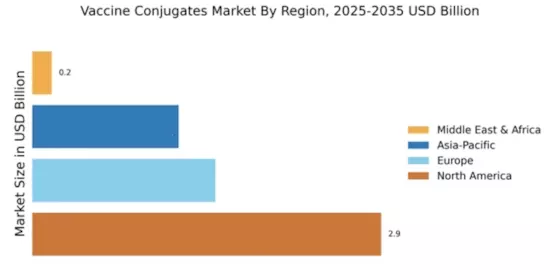
North America continues to lead the Vaccine Conjugates Market, holding a significant share of 2.86B in 2025. The region's growth is driven by advanced healthcare infrastructure, high R&D investments, and increasing vaccination rates. Regulatory support from agencies like the FDA further catalyzes market expansion, ensuring rapid approval of innovative vaccines. The rising prevalence of infectious diseases also boosts demand for conjugate vaccines, making this region a focal point for pharmaceutical advancements. The competitive landscape in North America is robust, featuring key players such as Pfizer, Merck, and Johnson & Johnson. These companies are at the forefront of developing novel conjugate vaccines, leveraging cutting-edge technology and extensive distribution networks. The U.S. and Canada are the leading countries, with substantial investments in public health initiatives aimed at increasing vaccination coverage. This competitive environment fosters innovation and ensures a steady supply of effective vaccines to meet public health needs.

Europe : Emerging Market with Growth Potential

Europe's Vaccine Conjugates Market is valued at 1.5B in 2025, reflecting a growing demand for innovative vaccines. The region benefits from strong regulatory frameworks and collaborative efforts among EU member states to enhance vaccination programs. Increased awareness of vaccine-preventable diseases and government initiatives to improve public health are key drivers of market growth. The European Medicines Agency (EMA) plays a crucial role in facilitating the approval of new conjugate vaccines, ensuring safety and efficacy for the population. Leading countries in Europe include Germany, France, and the UK, where major pharmaceutical companies like GlaxoSmithKline and Sanofi are actively involved in vaccine development. The competitive landscape is characterized by strategic partnerships and collaborations aimed at enhancing research capabilities. As the region focuses on addressing public health challenges, the presence of established players and emerging biotech firms is expected to drive further innovation in the vaccine conjugates sector.

Asia-Pacific : Rapidly Growing Market Dynamics

The Asia-Pacific region, with a market size of 1.2B in 2025, is witnessing a surge in demand for vaccine conjugates. Factors such as increasing population, rising healthcare expenditure, and government initiatives to enhance immunization coverage are driving this growth. Countries like India and China are focusing on expanding their vaccination programs, supported by regulatory bodies that facilitate the introduction of new vaccines. The region's diverse healthcare needs create opportunities for innovative vaccine solutions tailored to local populations. Key players in the Asia-Pacific market include Takeda and other local manufacturers, who are increasingly investing in R&D to develop effective conjugate vaccines. The competitive landscape is evolving, with collaborations between multinational corporations and local firms to enhance distribution and accessibility. As the region grapples with infectious diseases, the demand for conjugate vaccines is expected to rise, positioning Asia-Pacific as a critical market for future growth.

Middle East and Africa : Emerging Market with Challenges

The Middle East and Africa region, with a market size of 0.16B in 2025, is an emerging market for vaccine conjugates. The growth is primarily driven by increasing awareness of vaccine-preventable diseases and efforts to improve healthcare infrastructure. However, challenges such as limited access to vaccines and varying regulatory environments hinder market expansion. Governments are working to enhance immunization programs, supported by international organizations aiming to improve public health outcomes across the region. Leading countries in this region include South Africa and Nigeria, where local and international players are collaborating to develop and distribute conjugate vaccines. The competitive landscape is characterized by partnerships aimed at addressing public health challenges. As the region continues to develop its healthcare systems, the demand for effective vaccines is expected to grow, presenting opportunities for innovation and investment in the vaccine conjugates market.

Key Players and Competitive Insights

The Vaccine Conjugates Market is currently characterized by a dynamic competitive landscape, driven by innovation, strategic partnerships, and a focus on expanding therapeutic applications. Major players such as Pfizer (US), Merck (US), and GlaxoSmithKline (GB) are actively engaged in enhancing their product portfolios through research and development initiatives. Pfizer (US) has positioned itself as a leader in the market by investing heavily in novel conjugate technologies, while Merck (US) emphasizes strategic collaborations to bolster its vaccine offerings. GlaxoSmithKline (GB) focuses on regional expansion and local manufacturing capabilities, which collectively shape a competitive environment that is increasingly focused on innovation and responsiveness to market needs.

Key business tactics within the Vaccine Conjugates Market include localizing manufacturing and optimizing supply chains to enhance efficiency and reduce costs. The market structure appears moderately fragmented, with several key players exerting influence over various segments. This fragmentation allows for a diverse range of products and strategies, fostering competition that drives advancements in vaccine conjugate technologies.

In November 2025, Pfizer (US) announced a groundbreaking partnership with a leading biotechnology firm to develop a next-generation conjugate vaccine targeting multiple pathogens. This strategic move is likely to enhance Pfizer's competitive edge by diversifying its product pipeline and addressing unmet medical needs in the vaccine space. The collaboration underscores the importance of innovation in maintaining market leadership and responding to evolving health challenges.

In October 2025, Merck (US) launched a new conjugate vaccine aimed at pediatric populations, which is expected to significantly reduce the incidence of bacterial infections. This initiative reflects Merck's commitment to addressing public health concerns and expanding its market share in the pediatric segment. The launch is indicative of a broader trend towards developing targeted vaccines that cater to specific demographics, thereby enhancing overall vaccine efficacy.

In September 2025, GlaxoSmithKline (GB) completed the acquisition of a smaller biotech company specializing in conjugate vaccine technology. This acquisition is anticipated to bolster GSK's research capabilities and accelerate the development of innovative vaccine solutions. The strategic importance of this move lies in GSK's ability to integrate advanced technologies and expertise, positioning itself favorably in a competitive market.

As of December 2025, current trends in the Vaccine Conjugates Market are increasingly defined by digitalization, sustainability, and the integration of artificial intelligence in research and development processes. Strategic alliances are shaping the landscape, enabling companies to leverage shared resources and expertise. Looking ahead, competitive differentiation is likely to evolve from traditional price-based competition to a focus on innovation, technological advancements, and supply chain reliability, suggesting a transformative shift in how companies approach market challenges.

Key Companies in the Vaccine Conjugates Market market include

Industry Developments

July 2023:According to a company press release from July 2023, Biosynth has acquired celares, a leader in the development and manufacture of conjugate vaccines and bioconjugate drugs, activated PEGs, and polymer-based drug delivery excipients. The acquisition will continue to enhance the area of conjugate vaccines and bioconjugate pharmaceuticals and expand Biosynth's capabilities at its Berlin, Germany, good manufacturing practice facilities.

July 2023:The World Health Organization (WHO) has prequalified MenFive, the first conjugate vaccine to protect against the five most prevalent causes of meningococcal meningitis in Africa, as of July 2023. MenFive protects against meningococcal serogroups A, C, W, Y, and X and is designed to eliminate annual meningitis outbreaks and epidemics in the African meningitis belt. It was developed through a 13-year collaboration between Serum Institute of India Pvt Ltd (SII) and PATH, with crucial funding from the UK government's Foreign, Commonwealth and Development Office. 

August 2023:The International Vaccine Institute (IVI) and the Madagascar Institute for Vaccine Research (MIVR) at the University of Antanararivo have launched a mass vaccination campaign against typhoid in the Arivonimamo and Antananarivo-Atsimondrano districts of Madagascar.

Future Outlook

Vaccine Conjugates Market Future Outlook

The Vaccine Conjugates Market is projected to grow at 8.34% CAGR from 2024 to 2035, driven by technological advancements, increasing disease prevalence, and rising healthcare investments.

New opportunities lie in:

  • Development of novel conjugate vaccines targeting emerging pathogens.
  • Expansion of partnerships with biotech firms for innovative delivery systems.
  • Investment in digital health platforms for vaccine tracking and management.

By 2035, the Vaccine Conjugates Market is expected to achieve substantial growth and innovation.

Market Segmentation

Vaccine Conjugates Market Type Outlook

  • Conjugate Vaccines
  • Recombinant Vaccines
  • Inactivated Vaccines
  • Live Attenuated Vaccines

Vaccine Conjugates Market End Use Outlook

  • Hospitals
  • Clinics
  • Research Laboratories
  • Pharmaceutical Companies
  • Public Health Organizations

Vaccine Conjugates Market Application Outlook

  • Pneumococcal Vaccine
  • Meningococcal Vaccine
  • Haemophilus Influenzae Type B Vaccine
  • Typhoid Vaccine
  • Diphtheria Vaccine

Vaccine Conjugates Market Target Population Outlook

  • Infants
  • Children
  • Adults
  • Elderly

Vaccine Conjugates Market Route of Administration Outlook

  • Intramuscular
  • Subcutaneous
  • Intranasal
  • Oral

Report Scope

MARKET SIZE 20245.72(USD Billion)
MARKET SIZE 20256.27(USD Billion)
MARKET SIZE 203513.87(USD Billion)
COMPOUND ANNUAL GROWTH RATE (CAGR)8.34% (2024 - 2035)
REPORT COVERAGERevenue Forecast, Competitive Landscape, Growth Factors, and Trends
BASE YEAR2024
Market Forecast Period2025 - 2035
Historical Data2019 - 2024
Market Forecast UnitsUSD Billion
Key Companies ProfiledPfizer (US), Merck (US), GlaxoSmithKline (GB), Sanofi (FR), Novartis (CH), AstraZeneca (GB), Bristol-Myers Squibb (US), Johnson & Johnson (US), Takeda (JP)
Segments CoveredApplication, End Use, Type, Route of Administration, Target Population
Key Market OpportunitiesAdvancements in targeted delivery systems enhance efficacy in the Vaccine Conjugates Market.
Key Market DynamicsRising demand for innovative vaccine conjugates drives competitive dynamics and regulatory adaptations in the pharmaceutical landscape.
Countries CoveredNorth America, Europe, APAC, South America, MEA

Market Highlights

Author
Rahul Gotadki
Assistant Manager

He holds an experience of about 7+ years in Market Research and Business Consulting, working under the spectrum of Life Sciences and Healthcare domains. Rahul conceptualizes and implements a scalable business strategy and provides strategic leadership to the clients. His expertise lies in market estimation, competitive intelligence, pipeline analysis, customer assessment, etc. In addition to the above, his other responsibility includes strategic tracking of high growth markets & advising clients on the potential areas of focus they could direct their business initiatives

Leave a Comment

FAQs

What is the growth rate of the Vaccine Conjugates market?

The market is projected to grow at a CAGR of 15.2% during the forecast period, 2024 - 2032

Why is the vaccine conjugates market growing?

The vaccine conjugates market is growing due to the increasing incidence of infectious diseases, the rising demand for vaccines to combat antibiotic-resistant bacteria, and the growing emphasis on immunization programs worldwide.

What are the key factors driving the demand for vaccine conjugates?

Key drivers include the need for effective vaccines for diseases that have high mortality rates, such as pneumococcal infections and meningitis.

Download Free Sample

Kindly complete the form below to receive a free sample of this Report

Compare Licence

×
Features License Type
Single User Multiuser License Enterprise User
Price $4,950 $5,950 $7,250
Maximum User Access Limit 1 User Upto 10 Users Unrestricted Access Throughout the Organization
Free Customization
Direct Access to Analyst
Deliverable Format
Platform Access
Discount on Next Purchase 10% 15% 15%
Printable Versions