Download Free Sample
Kindly complete the form below to receive a free sample of this Report
UK Body Composition Analyzers Market Research Report: Size, Share, Trend Analysis By Applications (Fitness Centers, Healthcare, Sports Organizations, Research Institutions), By Product Type (Bioelectrical Impedance Analysis Devices, Dual-Energy X-ray Absorptiometry Devices, Infrared Body Composition Analyzers, Skinfold Calipers), By End Users (Individuals, Clinics, Gyms and Fitness Centers, Hospitals, Sports Teams) and By Distribution Channel (Online Retail, Offline Retail, Direct Sales) - Growth Outlook & Industry Forecast 2025 To 2035
As per Market Research Future analysis, the UK body composition-analyzers market size was estimated at 163.35 $ Million in 2024. The UK body composition-analyzers market is projected to grow from 174.83 $ Million in 2025 to 345.0 $ Million by 2035, exhibiting a compound annual growth rate (CAGR) of 7.0%
The UK The UK body composition-analyzers market is experiencing robust growth. This growth is driven by health awareness and technological advancements.
| 2024 Market Size | 163.35 (USD Million) |
| 2035 Market Size | 345.0 (USD Million) |
| CAGR (2025 - 2035) | 7.03% |
InBody (KR), Tanita (JP), Omron (JP), Withings (FR), Bioelectrical Impedance Analysis (BIA) (US), Seca (DE), Fitbit (US), Nutritional Sciences (US)
Our Impact
Enabled $4.3B Revenue Impact for Fortune 500 and Leading Multinationals
Partnering with 2000+ Global Organizations Each Year
30K+ Citations by Top-Tier Firms in the Industry
The body composition-analyzers market is experiencing notable growth, driven by increasing health awareness among consumers. Individuals are becoming more conscious of their body metrics, leading to a rising demand for devices that provide detailed insights into body fat, muscle mass, and hydration levels. This trend is further supported by the growing prevalence of lifestyle-related health issues, prompting consumers to seek effective solutions for monitoring their physical well-being. As a result, manufacturers are innovating and enhancing their product offerings to meet the evolving needs of health-conscious individuals. Moreover, technological advancements are playing a crucial role in shaping the body composition-analyzers market. The integration of smart technology into these devices allows for improved accuracy and user experience. Features such as mobile app connectivity and real-time data tracking are becoming increasingly common, appealing to tech-savvy consumers. Additionally, the rise of fitness and wellness trends is encouraging more individuals to invest in personal health monitoring tools. This shift towards proactive health management is likely to sustain the momentum of the body composition-analyzers market in the foreseeable future.
There is a growing trend of health awareness among consumers, leading to increased interest in body composition analysis. Individuals are actively seeking tools to monitor their health metrics, which drives demand for body composition-analyzers.
The incorporation of advanced technology into body composition-analyzers is becoming prevalent. Features such as app connectivity and enhanced data accuracy are appealing to consumers, making these devices more user-friendly.
Consumers are increasingly looking for personalized health solutions. Body composition-analyzers that offer tailored insights and recommendations are gaining traction, as individuals seek to optimize their health and fitness journeys.
The body composition-analyzers market is experiencing a notable surge in demand as individuals increasingly seek effective fitness solutions. This trend is driven by a growing awareness of the importance of maintaining a healthy lifestyle. In the UK, the fitness industry has seen a growth rate of approximately 5.5% annually, indicating a robust interest in health and wellness. As consumers become more health-conscious, they are turning to body composition analyzers to gain insights into their physical health metrics. This demand is further fueled by the rise of fitness influencers and social media platforms that promote fitness tracking. Consequently, the body composition-analyzers market is likely to expand as more individuals invest in personal health monitoring tools to achieve their fitness goals.
The increasing prevalence of lifestyle diseases in the UK is a critical driver for the body composition-analyzers market. Conditions such as obesity, diabetes, and cardiovascular diseases are on the rise, prompting individuals to seek proactive measures for health management. According to recent statistics, approximately 28% of adults in the UK are classified as obese, highlighting the urgent need for effective monitoring solutions. Body composition analyzers provide valuable insights into body fat percentage, muscle mass, and overall health, enabling users to make informed decisions regarding their lifestyle choices. As healthcare professionals recommend regular monitoring of body composition as part of disease prevention strategies, the market is poised for growth, catering to a population increasingly focused on health management.
The body composition-analyzers market benefits from a growing interest in preventive healthcare among the UK population. As individuals become more aware of the long-term benefits of monitoring their health metrics, there is a shift towards proactive health management. Preventive healthcare emphasizes the importance of early detection and lifestyle modifications to avert potential health issues. This trend is reflected in the increasing sales of body composition analyzers, as consumers seek tools that provide comprehensive insights into their health status. The market is likely to expand as more people recognize the value of regular health assessments and the role of body composition analysis in achieving optimal health outcomes. This shift towards preventive measures is expected to sustain growth in the body composition-analyzers market.
Government initiatives aimed at promoting health and wellness are significantly impacting the body composition-analyzers market. In the UK, various public health campaigns encourage citizens to adopt healthier lifestyles, which includes monitoring body composition. The National Health Service (NHS) has launched several programs focusing on obesity prevention and management, which indirectly boosts the demand for body composition analyzers. As these initiatives gain traction, the market is expected to benefit from increased awareness and accessibility of health monitoring tools. Furthermore, funding for health-related research and technology development may enhance the capabilities of body composition analyzers, making them more appealing to consumers. This supportive environment is likely to foster growth within the body composition-analyzers market.
Technological advancements are playing a pivotal role in shaping the body composition-analyzers market. Innovations in sensor technology, data analytics, and mobile applications are enhancing the functionality and user experience of these devices. For instance, the integration of Bluetooth and Wi-Fi capabilities allows users to sync their body composition data with smartphones, facilitating easier tracking and analysis. The UK market is witnessing a trend towards smart health devices, with an estimated growth rate of 7% in the wearable technology sector. As consumers become more tech-savvy, the demand for advanced body composition analyzers that offer real-time data and personalized insights is likely to increase. This technological evolution is expected to drive the body composition-analyzers market forward.
In the UK body composition-analyzers market, the application segment showcases diverse use cases, with fitness centers leading in market share due to the rising health consciousness among individuals and the growing trend of fitness tracking. This segment benefits from the increasing number of gyms and fitness studios that incorporate body composition analyzers for member assessments and personalized workout plans, thereby enhancing their service offerings. Healthcare is emerging as the fastest-growing segment driven by the increasing prevalence of obesity and chronic diseases that necessitate regular health monitoring. The integration of body composition analysis into preventive healthcare practices and rehabilitation programs is further propelling this growth. Increasing investments in healthcare infrastructure and technological advancements also play significant roles, ensuring that healthcare professionals are equipped with precise and reliable analyzers for patient assessments.
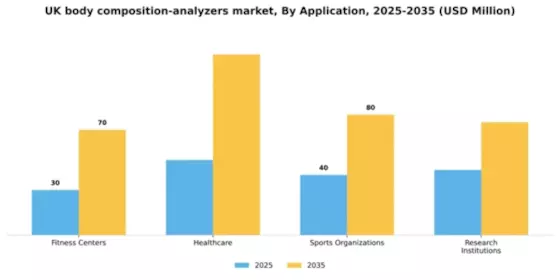
Fitness Centers (Dominant) vs. Healthcare (Emerging)
Fitness centers are the dominant application in the UK body composition-analyzers market due to their extensive use in monitoring client progress and customizing fitness regimes, thus attracting more members through enhanced service offerings. These facilities utilize body composition analyzers for routine assessments, resulting in higher customer satisfaction and retention rates. On the other hand, the healthcare sector emerges as a key player with growing adoption in diagnostic and therapeutic applications. Healthcare organizations leverage these analyzers to provide precise body composition insights, aiding in personalized treatment plans for patients. The increasing focus on preventive healthcare emphasizes the rising demand for reliable body composition data, indicating a robust future for this segment.
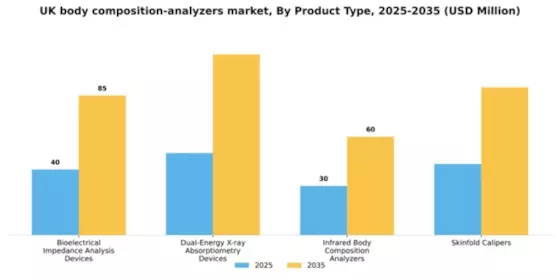
In the UK body composition-analyzers market, Bioelectrical Impedance Analysis (BIA) Devices command the largest share due to their affordability and ease of use, making them popular among fitness enthusiasts and health professionals alike. Meanwhile, Dual-Energy X-ray Absorptiometry (DEXA) Devices exhibit significant growth, increasingly adopted in clinical settings for their accuracy in assessing body fat and bone density, reflecting a shift toward more precise measurement tools in the healthcare sector. The growth trends within this segment are fueled by rising health consciousness and the growing prevalence of obesity, which drive demand for effective body composition analysis. Technological advancements in analysis devices have also contributed to their increased adoption, with manufacturers continuously improving accuracy, portability, and user experience. The combination of these factors positions the market for both BIA and DEXA devices for sustained growth, catering to an evolving health-centric consumer base.
Bioelectrical Impedance Analysis Devices (Dominant) vs. Dual-Energy X-ray Absorptiometry Devices (Emerging)
Bioelectrical Impedance Analysis (BIA) Devices serve as the dominant force in the UK body composition-analyzers market, attributed to their user-friendly designs and accessibility at various price points, making them suitable for both personal and professional use. In contrast, Dual-Energy X-ray Absorptiometry (DEXA) Devices are emerging rapidly, recognized for their advanced capabilities to provide precise insights into body composition, including fat distribution and bone density. This makes DEXA devices particularly appealing to healthcare facilities and research institutions focused on comprehensive health assessments. As technology continues to advance, both segments are adapting to meet the diverse needs of consumers, ensuring robust competition and innovation within the market.
The UK body composition-analyzers market exhibits a diverse segmentation based on end users. Individuals represent the largest segment, as the increasing awareness of health and fitness motivations drives demand for personal body composition analyzers. Following closely, clinics have emerged as a significant segment, supported by rising healthcare interests and personalized wellness routines among patients. Growth trends in this segment indicate a strong inclination towards health tracking, especially within gyms and fitness centers, where clients seek precise metrics to optimize their training regimes. Additionally, clinics and hospitals benefit from an increase in preventive healthcare practices, amplifying the need for advanced diagnostic tools. Sports teams further contribute to this growth, utilizing these devices for performance enhancements and athlete management.
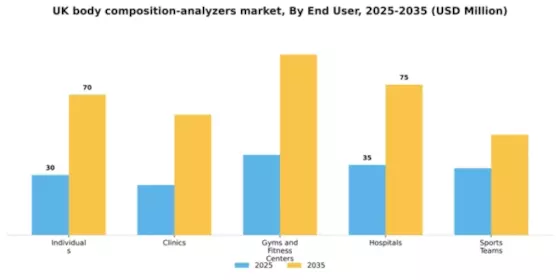
Individuals: Dominant vs. Clinics: Emerging
In the realm of end users, Individuals stand out as the dominant segment, driven by a surge in health consciousness and the desire for personal monitoring tools. This segment encompasses a wide range of consumers from fitness enthusiasts to those managing chronic health conditions. On the other hand, the emerging segment of Clinics highlights a significant trend towards integrated health services, providing enhanced patient care through advanced technology. Clinics are increasingly adopting body composition analyzers for precise diagnostics and tailored treatment plans, resulting in improved health outcomes. As technology evolves, both segments show promising opportunities for growth, influenced by advancements in data analytics and user-friendly interfaces.
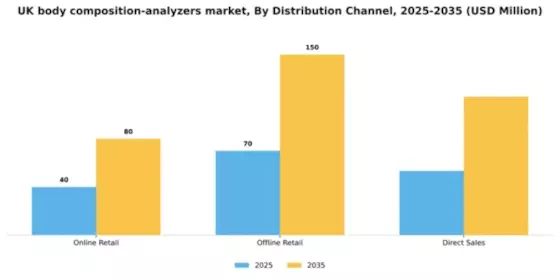
In the UK body composition-analyzers market, the distribution channel landscape is diversified, with Online Retail emerging as the dominant player, capturing a significant market share. This channel benefits from the increasing consumer preference for digital shopping and the convenience it provides. Offline Retail, while still relevant, is witnessing a gradual decline as more consumers shift towards online platforms, affecting traditional retail dynamics. The growth trends in this segment are substantially driven by the rising popularity of e-commerce and advancements in digital marketing strategies. Direct Sales are emerging as the fastest-growing channel, reflecting an increasing trend towards personalized customer engagement. This growth is further fueled by health and fitness influencers advocating body composition analyzers directly to consumers, augmenting brand awareness and driving sales through innovative sales tactics.
Online Retail (Dominant) vs. Direct Sales (Emerging)
Online Retail stands as the dominant distribution channel within the UK body composition-analyzers market, leveraging significant advantages such as higher accessibility, wider reach, and convenience for consumers. This channel's robust growth is supported by comprehensive digital marketing strategies and user-friendly e-commerce platforms, which enhance the purchasing experience. In contrast, Direct Sales represent an emerging distribution model that focuses on direct interaction with consumers. This method allows brands to provide tailored information and engage customers more personally, leading to increased trust and brand loyalty. As health consciousness rises, Direct Sales are projected to gain traction, particularly among niche markets seeking specialized products.
Get more detailed insights about UK Body Composition Analyzers Market Request Free Sample
The body composition-analyzers market is currently characterized by a dynamic competitive landscape, driven by increasing health awareness and the growing demand for personalized fitness solutions. Key players such as InBody (KR), Tanita (JP), and Withings (FR) are strategically positioned to leverage innovation and technological advancements. In particular, InBody (KR) focuses on enhancing its product line with advanced bioelectrical impedance analysis technology, while Tanita (JP) emphasizes the integration of smart technology into its devices, thereby appealing to tech-savvy consumers. Withings (FR) has adopted a digital transformation strategy, enhancing its ecosystem of health monitoring devices, which collectively shapes a competitive environment that prioritizes innovation and user engagement. The market structure appears moderately fragmented, with several players vying for market share through various business tactics. Companies are increasingly localizing manufacturing to reduce costs and optimize supply chains, which is crucial in maintaining competitive pricing. The collective influence of these key players fosters a competitive atmosphere where differentiation is achieved through technological advancements and customer-centric solutions. In October 2025, InBody (KR) launched a new line of portable body composition analyzers aimed at fitness enthusiasts and health professionals. This strategic move is significant as it not only expands their product portfolio but also addresses the growing demand for on-the-go health monitoring solutions. The introduction of these portable devices is likely to enhance user accessibility and engagement, positioning InBody (KR) favorably in a competitive market. In September 2025, Tanita (JP) announced a partnership with a leading health app developer to integrate its body composition analyzers with mobile health applications. This collaboration is pivotal as it allows Tanita (JP) to tap into the digital health ecosystem, enhancing user experience through seamless data sharing and personalized health insights. Such strategic alliances may strengthen Tanita's market presence and foster customer loyalty. In August 2025, Withings (FR) unveiled an AI-driven feature in its body composition analyzers that provides users with personalized health recommendations based on their data. This innovation underscores the growing trend of AI integration in health technology, potentially setting a new standard for user engagement and health management. By leveraging AI, Withings (FR) not only differentiates its products but also enhances the overall value proposition for consumers. As of November 2025, the competitive trends in the body composition-analyzers market are increasingly defined by digitalization, sustainability, and the integration of advanced technologies such as AI. Strategic alliances are shaping the landscape, enabling companies to enhance their offerings and reach broader audiences. Looking ahead, competitive differentiation is likely to evolve from traditional price-based competition to a focus on innovation, technological advancements, and supply chain reliability, suggesting a shift towards a more sophisticated and consumer-oriented market.





Recent developments in the UK Body Composition Analyzers Market have shown notable progress and interest, particularly from key companies such as Withings, BioSpace, and Tanita. As of September 2023, Withings announced a new line of smart body composition products, addressing increased consumer demand for health-monitoring technologies amid rising health awareness post-pandemic.
Additionally, BodyMetrix has been expanding its partnerships with local fitness facilities, enhancing accessibility for users aiming to optimize their health outcomes through accurate body composition analysis. In related news, Xiaomi launched an updated version of its smart body scale series, emphasizing affordability and efficiency, driving competitive dynamics in the market. Amid mergers and acquisitions, Tanita has acquired Nutritional Bioanalysis, confirming its commitment to advancing its product offerings, as reported in October 2022.
The UK government’s focus on healthcare and fitness has contributed to an increased market valuation, with some estimates projecting growth towards 50 million by 2025. This is reflective of the rising trend of personal health management systems, aligning with ongoing public health initiatives that highlight preventative care and lifestyle adjustments, influencing user engagement with body composition analyzers across various demographics in the UK.
The Body Composition Analyzers Market is projected to grow at a 7.03% CAGR from 2025 to 2035, driven by technological advancements, increasing health awareness, and rising demand for fitness solutions.
New opportunities lie in:
By 2035, the market is expected to achieve substantial growth, reflecting evolving consumer health trends.
| MARKET SIZE 2024 | 163.35(USD Million) |
| MARKET SIZE 2025 | 174.83(USD Million) |
| MARKET SIZE 2035 | 345.0(USD Million) |
| COMPOUND ANNUAL GROWTH RATE (CAGR) | 7.03% (2025 - 2035) |
| REPORT COVERAGE | Revenue Forecast, Competitive Landscape, Growth Factors, and Trends |
| BASE YEAR | 2024 |
| Market Forecast Period | 2025 - 2035 |
| Historical Data | 2019 - 2024 |
| Market Forecast Units | USD Million |
| Key Companies Profiled | InBody (KR), Tanita (JP), Omron (JP), Withings (FR), Bioelectrical Impedance Analysis (BIA) (US), Seca (DE), Fitbit (US), Nutritional Sciences (US) |
| Segments Covered | Application, Product Type, End User, Distribution Channel |
| Key Market Opportunities | Integration of advanced analytics and AI in body composition-analyzers market enhances personalized health insights. |
| Key Market Dynamics | Rising consumer health awareness drives demand for advanced body composition-analyzers in the UK market. |
| Countries Covered | UK |
The market valuation of body composition-analyzers was $163.35 Million in 2024.
The projected market valuation for body composition-analyzers is $345.0 Million by 2035.
The expected CAGR for the UK body composition-analyzers market during 2025 - 2035 is 7.03%.
In 2024, the healthcare application segment had the highest valuation at $120.0 Million.
Key product types include Bioelectrical Impedance Analysis Devices, Dual-Energy X-ray Absorptiometry Devices, Infrared Body Composition Analyzers, and Skinfold Calipers.
In 2024, the offline retail distribution channel is expected to generate the most revenue, valued at $150.0 Million.
The valuation range for fitness centers in the application segment is between $30.0 Million and $70.0 Million.
Leading players in the market include InBody, Tanita, Omron, Withings, and Fitbit.
The valuation range for dual-energy X-ray absorptiometry devices is between $50.0 Million and $110.0 Million.
The gyms and fitness centers end user segment is projected to grow significantly, with a valuation range of $40.0 Million to $90.0 Million.



Kindly complete the form below to receive a free sample of this Report

“This is really good guys. Excellent work on a tight deadline. I will continue to use you going forward and recommend you to others. Nice job”


“Thanks. It’s been a pleasure working with you, please use me as reference with any other Intel employees.”


“Thanks for sending the report it gives us a good global view of the Betaïne market.”


“Thank you, this will be very helpful for OQS.”


“We found the report very insightful! we found your research firm very helpful. I'm sending this email to secure our future business.”


“I am very pleased with how market segments have been defined in a relevant way for my purposes (such as "Portable Freezers & refrigerators" and "last-mile"). In general the report is well structured. Thanks very much for your efforts.”


“I have been reading the first document or the study, ,the Global HVAC and FP market report 2021 till 2026. Must say, good info! I have not gone in depth at all parts, but got a good indication of the data inside!”


“We got the report in time, we really thank you for your support in this process. I also thank to all of your team as they did a great job.”


“The Automotive 48V ECU Components Procurement Intelligence Study” was a complex project, but the Market Research Future (MRFR) team handled it with quality, agility, and customer-centricity. They delivered all requested data on time and within the agreed scope. The team, including Shubhendra Anand and Rahul Gotadki, was always readily available to clarify questions and swiftly implement necessary adjustments, driving the project to a successful conclusion within a very demanding timeframe.
I would also like to specifically commend Akshay Agarwal for his responsiveness and support at every stage—from our initial inquiry on May 6th through to final delivery on June 18th. His dedication made the entire process seamless.”



