Ureteral Stents Market

Key Players: Boston Scientific Corporation, Coloplast A/S, Cook Medical, Olympus Corporation, Teleflex Incorporated, BD (Becton, Dickinson), Applied Medical Resources, Medi-Globe GmbH

Ureteral Stents Market

Ureteral Stents Market Research Report: Size, Share, Trend Analysis By Types (Double Pigtail Ureteral Stent, Others), By Material (Metallic Stents, Polymers Stents, others), By Treatment (Kidney Stones, Kidney Transplant, Others), By End-User (Hospitals, Nephrological Centers, Ambulatory Surgical Centers), And By Region (North America, Europe, Asia-Pacific, And Rest Of The World) - Growth Outlook & Industry Forecast Till 2035
ID: MRFR/MED/0880-HCR
95 Pages
Nidhi Mandole, Rahul Gotadki
Last Updated: June 22, 2026

Ureteral Stents Market Summary

The Global Ureteral Stents Market size was valued at USD 668.0 Million in 2025, and the market is projected to grow from USD 711.8 Million in 2026 to USD 1,259.9 Million by 2035, registering a CAGR of 6.55% during the forecast period 2026–2035. Rising kidney stone prevalence—now affecting roughly 10% of US adults according to recent epidemiological data [1]—drives procedure volumes higher each year, while aging populations across developed economies amplify demand for less invasive drainage interventions. FDA clearances for next-generation biodegradable designs are accelerating product turnover cycles and reshaping how urologists approach post-procedural stent management [2].

Material science is transforming this space at its foundation. Legacy polyurethane and silicone stents still dominate operating theaters, but anti-encrustation nano-coatings and radiopaque biodegradable polymers are redefining performance benchmarks. Manufacturers invested over USD 280 million in urology-specific R&D during 2024 alone, with a significant portion directed toward drug-eluting platforms and AI-guided placement technologies [14]. These innovations target the persistent clinical challenge of encrustation-related complications that affect up to 58% of indwelling stents beyond 12 weeks [17].

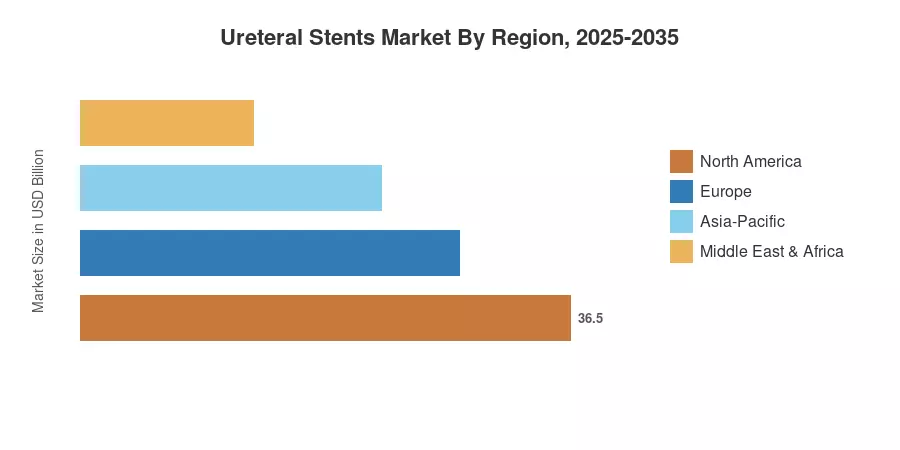
North America commands roughly 38.5% of the Ureteral Stents Market, underpinned by high procedural volumes and favorable reimbursement structures. Asia-Pacific is the fastest-growing region, projected to expand at an 8.15% CAGR through 2035, propelled by rising healthcare expenditure in China and India [21]. Europe holds the second-largest share at approximately 27.2%, with Germany and the UK leading adoption of double-J stent devices in ambulatory settings. The decade ahead will reward companies that balance biocompatibility innovation with cost containment across diverse healthcare systems.


Key Report Takeaways

• By Product Type

  • Double pigtail stents captured approximately 42.1% of the Ureteral Stents Market share in 2025, reflecting their broad clinical versatility across stone management, transplant, and tumor indications
  • Biodegradable stent designs are expanding at a projected 10.75% CAGR through 2035, driven by clinician demand for the elimination of secondary removal procedures


• By Material


  • Polyurethane remains the dominant material category, holding approximately 44.8% of segment revenue in the base year

• By Application

  • Kidney stone management represented roughly 56.8% of the Ureteral Stents Market in 2025, correlating directly with escalating global nephrolithiasis incidence
  • Tumor-related ureteral obstruction procedures are forecast to grow at an 8.95% CAGR as oncology survival rates improve, and palliative stenting demand increases


• By End User


  • Hospitals accounted for 63.0% of end-user demand, though ambulatory surgical centers are gaining share rapidly

• By Region

  • North America led all regions by revenue in 2025, supported by mature insurance frameworks and high per-capita procedure rates
  • Asia-Pacific is the fastest-growing regional segment, registering an 8.15% CAGR driven by infrastructure investment in China, India, and ASEAN nations
  • Europe contributed USD 181.7 million in 2025, with Western European countries anchoring demand through established urology referral networks


Ureteral Stents Market Size and Forecast (2021–2035)

Market Research Future constructed the forecast model using a triangulated methodology combining bottom-up device shipment analysis, top-down healthcare expenditure benchmarks, and validated company revenue disclosures. Historical figures (2021–2024) draw on hospital procurement databases and regulatory filing volumes, while 2026–2035 projections apply the calibrated 6.55% CAGR alongside demographic growth adjustments and procedure rate assumptions per regional epidemiological trends.
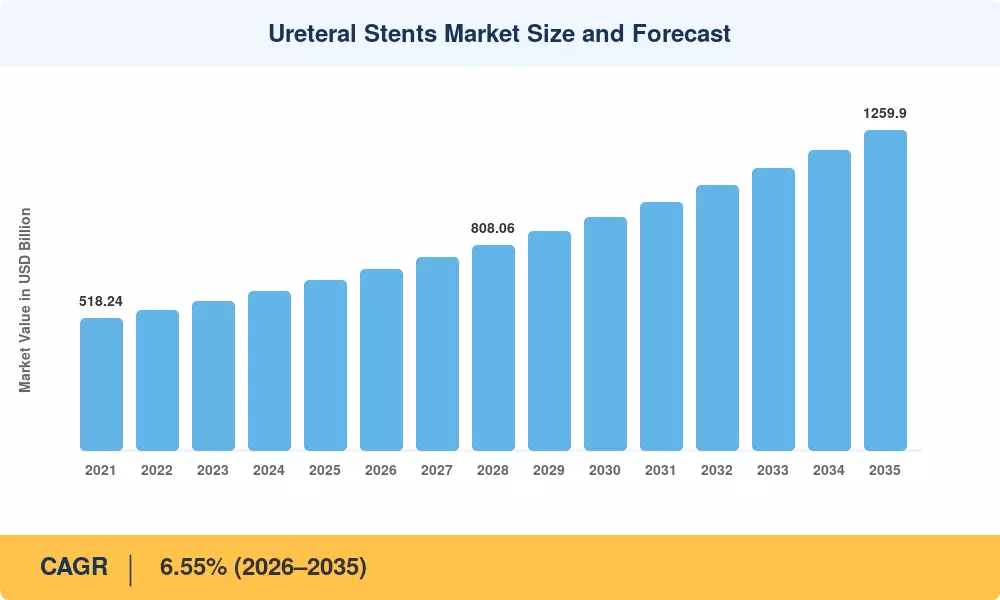
Ureteral Stents Market Size and Forecast
Our Impact
Enabled $4.3B Revenue Impact for Fortune 500 and Leading Multinationals
Partnering with 2000+ Global Organizations Each Year
30K+ Citations by Top-Tier Firms in the Industry

Driver Impact Analysis

Driver ~% Impact on CAGR Geographic Relevance Impact Timeline
Rising kidney stone prevalence +1.4% Global, strongest in North America Short-term (≤2 yr)
Aging population demographics +1.1% Europe, Japan, North America Long-term (≥4 yr)
Biodegradable stent innovation +0.9% North America, Europe Medium-term (2–4 yr)
ASC procedural migration +0.8% North America, Asia-Pacific Medium-term (2–4 yr)
Anti-encrustation coating advances +0.7% Global Short-term (≤2 yr)
Minimally invasive surgery preference +0.6% Global Long-term (≥4 yr)
Reimbursement code expansion +0.5% North America, Europe Short-term (≤2 yr)


Rising Kidney Stone Prevalence

Kidney stone incidence has climbed steadily across industrialized nations, with US prevalence reaching approximately 10% of the adult population according to recent urological survey data [1]. The condition's gender gap is narrowing—women under 60 now represent the fastest-growing patient cohort, increasing stent placement volumes in previously underserved demographics. Climate change and dietary shifts toward high-sodium processed foods compound this trend globally, with the WHO projecting a 25% increase in nephrolithiasis cases across South and Southeast Asia by 2030 [4]. Each diagnosis typically triggers at least one stent placement cycle, directly expanding the Ureteral Stents Market addressable base.

Biodegradable Stent Innovation

A significant paradigm shift has occurred with the commercialization of bioresorbable polymers, which confirms the practical feasibility of temporary platforms designed to safely resorb within 4–8 weeks following surgery. Standard secondary removals include acute complication risks, such as ureteral perforation, and are projected to cost healthcare systems between $1,200 and $1,800 per event. By doing away with these follow-up steps, biodegradable designs are positioned as premium, high-margin products throughout the Ureteral Stents Market value chain, addressing both clinical safety and economic efficiency.


Ambulatory Surgical Center Migration

CMS expanded outpatient reimbursement codes for ureteral stent procedures in January 2025, enabling ambulatory surgical centers to perform a broader range of stenting interventions [6]. ASCs offer 30–45% cost savings over hospital-based settings and reduce patient throughput times. North American ASC capacity grew 8.2% year-over-year in 2024, and similar models are expanding across urban India, China, and Brazil.

Aging Global Demographics

The United Nations projects that adults aged 65 and older will comprise 16% of the global population by 2035, up from 10% in 2022 [12]. Age-related conditions—benign prostatic hyperplasia, ureteral strictures, and oncological obstructions—drive proportionally higher stent utilization rates in geriatric patients. Japan and Germany, where median ages already exceed 46 years, demonstrate per-capita stent consumption rates roughly 40% above the global average [19].


Restraints Impact Analysis

Restraint ~% Impact on CAGR Geographic Relevance Impact Timeline
Stent encrustation and migration complications –0.6% Global Long-term (≥4 yr)
Secondary removal procedure burden –0.5% Global Medium-term (2–4 yr)
Stringent regulatory approval timelines –0.4% Europe, North America Medium-term (2–4 yr)
Price compression and reimbursement caps –0.3% Europe, Asia-Pacific Short-term (≤2 yr)
Limited clinician awareness in developing regions –0.3% South America, MEA Long-term (≥4 yr)


Encrustation and Migration Complications

Despite advances in coating technology, encrustation remains the most common stent-related complication, affecting 30–58% of devices left in situ beyond 12 weeks, depending on patient metabolic profiles [17]. Encrusted stents require complex ureteroscopic or percutaneous retrieval, inflating per-patient costs and deterring some clinicians from prolonged stenting protocols. These complications also generate adverse event reports that slow regulatory approvals for newer materials, creating a feedback loop that constrains market expansion.

Regulatory Complexity Under EU MDR

The clearance timelines for new high-risk stent platforms have been extended beyond 21 months for technical documentation reviews alone due to the introduction of significantly stricter conformity assessment standards by the European Union Medical Device Regulation (MDR). Product rollouts have been significantly interrupted, and numerous mid-size manufacturers have been forced to postpone their European debuts due to these lengthy review periods and past notified body capacity limitations. Smaller innovators are disproportionately affected by this harsh regulatory environment because they lack the structural cash reserves and regulatory personnel necessary to maintain parallel filing strategies across the FDA, MDR, and PMDA routes.


Price Pressure in Public Healthcare Systems

National health systems in Europe and Asia-Pacific increasingly apply reference pricing and procurement tenders that compress stent margins by 10–15% annually [19]. Group purchasing organizations in the US negotiate volume discounts that further limit pricing power. While coating and material innovations justify premium positioning, manufacturers face sustained pressure to demonstrate cost-effectiveness data rather than clinical superiority alone.


Ureteral Stents Market Opportunities

Commercialization of Biodegradable Platforms

The commercial pathway for biodegradable ureteral stents is accelerating due to the emergence of defined regulatory frameworks for innovative urological materials. Producers of radiopaque, bioresorbable polymers, which preserve structural integrity during the crucial post-procedural healing phase before dissolving safely into the urinary tract, hope to gain a market share that is expanding at a rate of more than 10% per year. A strong financial incentive that will determine long-term market share in this high-margin category will be provided by obtaining early hospital formulary listings for these resorbable platforms, which will minimize secondary removal procedures.


Emerging Market Infrastructure Expansion

India's Ayushman Bharat program covers ureteral stenting for over 500 million beneficiaries, while China's Healthy China 2030 initiative directs investment toward urology department expansion in tier-2 and tier-3 hospitals [18]. Brazil's SUS public system similarly increased urological procedure coverage in 2024. These policy-driven volume expansions create entry points for manufacturers willing to adapt pricing and distribution for emerging healthcare ecosystems.

AI-Guided Stent Placement Systems

AI-powered fluoroscopy interpretation tools improve first-time placement accuracy to above 95%, reducing revision rates and procedural time [14]. Integrating these platforms with existing C-arm infrastructure creates a recurring software licensing revenue stream alongside hardware sales. Early adopter hospitals report 20% reductions in operating room utilization per stent case.

Ambulatory Surgical Center Penetration

ASC-based stent procedures grew from 18% to 26% of total US volume between 2020 and 2025, a shift that rewards device companies offering single-use kits and streamlined inventory programs [6]. The trend is replicable across Western Europe, Australia, and urban India, where outpatient facility construction is accelerating.

Drug-Eluting Stent Platforms and Value-Based Contracting

Drug-eluting ureteral stents that release anti-inflammatory or antimicrobial agents represent a new business model opportunity through value-based procurement contracts. Under these arrangements, manufacturers share financial risk tied to complication rates, aligning incentives with payer cost-containment goals. Early-stage clinical data supports 30% reductions in stent-related pain scores, strengthening the pharmacoeconomic case for premium pricing [17].


Ureteral Stents Market Future Outlook

AI-Integrated Digital Urology Platforms

Over the next ten years, artificial intelligence will change how urologists plan and perform stent placements. Over 95% accuracy in predicting the ideal stent length and location has already been demonstrated by machine learning systems trained on fluoroscopic imaging datasets [14]. By 2030, high-volume urology clinics will use integrated digital systems that combine automated follow-up scheduling, remote patient monitoring, and AI placement guidance. Urology applications are expected to account for an increasing portion of the worldwide medical AI industry, which is expected to surpass USD 45 billion by 2032 [14].


Biodegradable and Bioabsorbable Material Revolution

Biodegradable stents will transition from niche applications to mainstream adoption during the forecast period. Advances in poly(lactic-co-glycolic acid) and magnesium alloy composites are enabling controlled resorption timelines that match diverse clinical indications—from 3-week post-ureteroscopy drainage to 12-week tumor palliation. The elimination of secondary removal procedures, which account for an estimated USD 1.5 billion in global healthcare costs annually [15], provides a compelling economic rationale that will drive formulary adoption across public and private healthcare systems alike.

Ambulatory and Outpatient Care Expansion

The migration of ureteral stent procedures from inpatient hospital settings to ambulatory surgical centers will accelerate through 2035. ASC procedure volumes for urological interventions are growing at roughly twice the rate of hospital-based procedures in the US, a pattern spreading to Europe and urban Asia-Pacific markets. Device manufacturers that develop single-use procedure kits optimized for ASC workflows—compact packaging, simplified deployment mechanisms, and reduced sterilization requirements—will capture a disproportionate share in this channel.

Personalized Stent Design and Gender-Tailored Solutions

Patient-specific stent customization, informed by CT urography and 3D anatomical modeling, will move from research prototypes to clinical reality by the early 2030s. Gender-tailored designs addressing anatomical differences in ureteral length, caliber, and pelvic geometry are already in late-stage development at several major manufacturers [1]. The WHO's emphasis on gender-responsive medical device design [4] will further incentivize R&D spending on differentiated product lines that improve comfort and clinical outcomes for female patients.


Ureteral Stents Market Segmentation

By Product Type

Segment Key Metric Primary Demand Driver
Double Pigtail 42.1% share (2025) Broad clinical versatility
Open-Ended 5.85% CAGR (2026–2035) Nephrostomy drainage applications
Close-Ended USD 72.5 Million (2025) Short-term post-surgical use
Biodegradable 10.75% CAGR (2026–2035) Elimination of removal procedures


Double pigtail stents remain the workhorse of the Ureteral Stents Market, deployed across virtually every indication from routine stone management to post-transplant drainage. Their coiled retention mechanism provides reliable positioning across diverse anatomies, and decades of clinical experience make them the default choice for most urologists. Biodegradable designs represent the most dynamic growth segment, attracting R&D investment from both established device companies and venture-backed startups. The commercial trajectory of biodegradable products hinges on demonstrating consistent resorption kinetics across patient populations while maintaining adequate radiopacity for post-placement monitoring [15].

By Material

Segment Key Metric Primary Demand Driver
Polyurethane 44.8% share (2025) Cost-effectiveness, durability
Silicone USD 148.3 Million (2025) Biocompatibility, flexibility
Biodegradable Polymers 11.10% CAGR (2026–2035) Resorbable stent demand


Polyurethane dominates the material landscape due to its favorable balance of tensile strength, flexibility, and manufacturing cost. Silicone stents command premium pricing in applications requiring extended indwell times, where their superior biocompatibility reduces patient discomfort. Biodegradable polymers—including PLGA and polydioxanone formulations—are capturing development-stage investment as the technical bridge between bioabsorbable performance and radiographic visibility matures.

By Coating/Technology

Segment Key Metric Primary Demand Driver
Hydrophilic-Coated 45.8% share (2025) Ease of insertion, patient comfort
Drug-Eluting USD 58.4 Million (2025) Anti-inflammatory release
Anti-Encrustation Nano-Coated 8.45% CAGR (2026–2035) Extended indwell performance


Hydrophilic coatings have become the de facto standard across the Ureteral Stents Market, reducing insertion friction and improving patient tolerance during both placement and removal. Anti-encrustation nano-coatings represent the technology frontier, with silver-nanoparticle and diamond-like carbon formulations showing strong clinical potential for indwell periods exceeding 90 days [17].

By Application

Segment Key Metric Primary Demand Driver
Kidney Stones 56.8% share (2025) Nephrolithiasis prevalence growth
Kidney Transplant USD 78.6 Million (2025) Organ transplant volume increases
Tumor-Related Obstruction 8.95% CAGR (2026–2035) Oncology survival improvement


Kidney stone management dominates application demand in the Ureteral Stents Market, driven by epidemiological trends that show no sign of plateau. Tumor-related procedures represent the fastest-growing application, reflecting improved oncological survival rates that extend the need for palliative ureteral drainage.

By End User

Segment Key Metric Primary Demand Driver
Hospitals 63.0% share (2025) Complex case management
Ambulatory Surgical Centers 8.70% CAGR (2026–2035) Cost efficiency, reimbursement shift


Hospitals retain the majority share of end-user demand, handling complex stent placements involving tumor obstructions, transplant patients, and pediatric cases. Ambulatory surgical centers are the fastest-growing end-user channel, fueled by reimbursement policy changes and patient preference for outpatient settings [6].


Regional Market Share Analysis

Region Key Metric Primary Investment Themes
North America 38.5% global share (2025) ASC expansion, biodegradable adoption
Europe USD 181.7 Million (2025) MDR compliance, aging population, stenting
Asia-Pacific 8.15% CAGR (2026–2035) Hospital infrastructure, stone prevalence
South America USD 41.4 Million (2025) Public system coverage expansion
Middle East & Africa 7.20% CAGR (2026–2035) Private hospital investment, medical tourism
Total USD 668.0 Million (2025)

The Ureteral Stents Market exhibits distinct regional adoption patterns driven by epidemiological burden, reimbursement maturity, and healthcare infrastructure investment levels.


North America

Country Key Metric Key Driver
United States 72% of regional share High kidney stone prevalence, CMS policy
Canada 5.95% CAGR (2026–2035) Provincial formulary updates
Mexico USD 28.3 Million (2025) Private urology clinic growth


The United States accounts for the vast majority of North American demand, driven by nephrolithiasis rates that rank among the highest globally and a reimbursement environment that supports both hospital and ambulatory stent placements [1]. CMS coding updates in 2025 broadened outpatient stent procedure eligibility, accelerating the shift toward ASC-based care delivery. Canada's provincial health authorities are progressively adding next-generation coated stents to formulary lists, while Mexico's private urology sector expands to serve growing middle-class demand.

Europe

Country Key Metric Key Driver
Germany USD 47.2 Million (2025) Advanced urology infrastructure
United Kingdom 21% of regional share NHS pathway optimization
France 6.30% CAGR (2026–2035) Hospital outpatient reform
Italy 5.90% CAGR (2026–2035) Aging demographics
Spain USD 16.4 Million (2025) Ambulatory procedure growth
Nordic Countries 6% of regional share Digital health integration
Russia 5.40% CAGR (2026–2035) Public hospital modernization
Rest of Europe USD 5.4 Million (2025) Emerging adoption


Germany leads European demand through its extensive network of university urology departments and early adoption of nano-coated platforms. The UK's NHS is consolidating stent procurement through regional frameworks that favor coated designs with demonstrated cost-effectiveness [16]. EU MDR compliance timelines have temporarily slowed product introductions across the continent, though manufacturers with completed certifications benefit from reduced competitive pressure during the transition period.

Asia-Pacific

Country Key Metric Key Driver
China 34% of the regional share Healthy China 2030 hospital buildout
Japan USD 36.6 Million (2025) Geriatric urology demand
India 9.10% CAGR (2026–2035) Ayushman Bharat coverage expansion
South Korea USD 18.3 Million (2025) Advanced medical technology adoption
ASEAN 8.50% CAGR (2026–2035) Healthcare infrastructure investment
Rest of Asia-Pacific USD 4.4 Million (2025) Early-stage market development


China's aggressive hospital construction program—adding over 1,200 urology-equipped facilities between 2022 and 2025—has created substantial volume growth across the Ureteral Stents Market in Asia-Pacific [21]. India's combination of high nephrolithiasis prevalence and expanding insurance coverage under Ayushman Bharat positions it as the region's fastest-growing individual country. Japan's super-aged society generates disproportionate demand for geriatric stenting procedures, particularly for tumor-related ureteral obstructions.

South America

Country Key Metric Key Driver
Brazil 58% of regional share SUS public system coverage
Argentina USD 9.9 Million (2025) Private sector urology growth
Rest of South America 7.80% CAGR (2026–2035) Rising diagnostic access


Brazil's SUS public healthcare system expanded urological procedure coverage in late 2024, driving measurable volume increases in stent placements across public hospitals [18]. Argentina's private healthcare sector continues to absorb advanced stent technologies faster than public institutions, creating a dual-tier adoption dynamic across the region.

Middle East & Africa

Country Key Metric Key Driver
Saudi Arabia 28% of the regional share Vision 2030 healthcare investment
UAE USD 8.5 Million (2025) Medical tourism hubs
South Africa 7.40% CAGR (2026–2035) Private hospital chain expansion
Egypt USD 5.0 Million (2025) Public hospital modernization
Rest of MEA 6.80% CAGR (2026–2035) Emerging adoption


Saudi Arabia's Vision 2030 healthcare investment program has catalyzed the construction of modern urology centers across Riyadh, Jeddah, and the Eastern Province, positioning the Kingdom as the regional revenue leader [18]. The UAE leverages its medical tourism infrastructure to attract stent procedures from neighboring countries, while South Africa's private hospital chains drive adoption of premium coated devices.


Ureteral Stents Market By Region, 2025-2035

Competitive Benchmarking

The Ureteral Stents Market exhibits medium concentration, with the top five companies holding an estimated 48–55% combined revenue share. The Herfindahl-Hirschman Index (HHI) suggests a moderately competitive structure where established medtech conglomerates compete alongside specialized urology-focused firms. Strategic consolidation—exemplified by Teleflex's EUR 760 Million acquisition of BIOTRONIK's vascular intervention unit [11]—signals that cross-selling synergies between vascular and urological product lines are reshaping competitive positioning.

Company Est. Revenue Share Range Key Offerings Strategic Positioning
Boston Scientific Corporation ~12–16% Percuflex Plus, Contour Broad urology portfolio leader
Coloplast A/S ~9–13% Vortek, Polaris Ultra Coated stent innovation
Cook Medical ~8–12% Resonance, C-Flex Metallic stent specialist
Olympus Corporation ~7–10% HydroPlus, UroPass Endoscopy integration
Teleflex Incorporated ~6–9% Woven Endo-Sof Vascular-urology synergy
BD (Becton, Dickinson) ~5–8% Bardex, Lubri-Sil Hospital channel dominance
Applied Medical Resources ~3–5% Kii Fios, Access sheaths Minimally invasive systems
Medi-Globe GmbH ~2–4% EndoSTAR, OptiFlow European niche focus
Urotech GmbH ~2–4% Urosoft, Tandem Gender-specific designs
Pnn Medical A/S ~1–3% Biosoft, UniStent Biodegradable polymer R&D


Recent News & Developments


  • U.S. FDA (January 2024): Granted 510(k) clearance to the RELIEF biodegradable ureteral stent for vesicoureteral reflux prevention, marking the first biodegradable design authorized for this indication [2]


  • Coloplast (September 2023): Announced expansion of its urological stent solutions portfolio with a next-generation anti-encrustation coating line developed in partnership with a nanotechnology research institute [7]
  • Cook Medical (November 2024): Introduced an AI-assisted stent length selection tool integrated with its Resonance metallic stent platform for ambulatory surgical centers [8]
  • Olympus (February 2025): Filed 510(k) premarket notification for a drug-eluting ureteral stent platform designed to reduce post-placement inflammation [20]
  • BD (May 2023): Entered a multi-center clinical collaboration with three academic medical centers to evaluate biodegradable polymer stent resorption kinetics in a 400-patient trial [22]
  • CMS (January 2025): Expanded CPT reimbursement codes for outpatient ureteral stent placement and removal procedures, broadening ASC eligibility [6]


Ureteral Stents Market Report Scope

Parameter Detail
Market Scope Global Ureteral Stents Market across all product types, materials, coatings, applications, and end users
Study Period 2021–2035
CAGR (Forecast) 6.55% (2026–2035)
Base Year Market Size USD 668.0 Million (2025)
2026 Market Size USD 711.8 Million
2035 Market Size USD 1,259.9 Million
Fastest Growing Segment Biodegradable stents by product type (10.75% CAGR)
Companies Profiled Boston Scientific, Coloplast, Cook Medical, Olympus, Teleflex, BD, Applied Medical Resources, Medi-Globe, Urotech, Pnn Medical
Valuation Currency USD Million


FAQs

How do anti-encrustation nano-coatings affect long-term stent performance?

Nano-coatings reduce biofilm formation by up to 60%, extending functional indwell times and lowering emergency retrieval rates. Clinical data show fewer complications within six-month placements [17].

What procurement factors should hospitals prioritize when selecting stent suppliers?

Evaluate radiopacity quality, coating durability under extended dwell, and supplier inventory consignment programs. Total cost of ownership, including secondary removals, matters more than unit price [9].

Are biodegradable stents ready to replace conventional designs across the Ureteral Stents Market?

Not yet broadly. Current options suit short-term drainage after ureteroscopy but lack mechanical stability for prolonged use [15]. Wider adoption requires multi-center validation of 90-day resorption consistency.

How does the Ureteral Stents Market address pediatric sizing requirements?

Manufacturers are developing 3 Fr and 4.7 Fr stents with softer durometers for pediatric ureters. Regulatory pathways remain slower due to limited pediatric trial enrollment [9].

What role does 3D printing play in custom stent fabrication?

Patient-specific 3D-printed stents shaped from CT data reduce migration and discomfort. Early prototypes show 40% fewer repositioning events, though commercial scaling requires certified manufacturing [14].

How do drug-eluting stents compare with standard coated options in the Ureteral Stents Market?

Drug-eluting variants release anti-inflammatory agents, reducing ureteral edema and pain. They cost roughly 35% more than hydrophilic-coated stents, with adoption tied to payer premium reimbursement [17].

What cybersecurity considerations apply to AI-guided placement platforms?

Connected systems must meet FDA premarket cybersecurity guidance and hospital HIPAA infrastructure requirements. Data encryption during fluoroscopy, AI integration, and vendor patch management verification are essential [14].    
Author
Author
Author Profile
Nidhi Mandole LinkedIn
Senior Research Analyst
She is an extremely curious individual currently working in Healthcare and Medical Devices Domain. Nidhi is comfortably versed in data centric research backed by healthcare educational background. She leverages extensive data mining and analytics tools such as Primary and Secondary Research, Statistical Analysis, Machine Learning, Data Modelling. Her key role also involves Technical Sales Support, Client Interaction and Project management within the Healthcare team. Lastly, she showcases extensive affinity towards learning new skills and remain fascinated in implementing them.
Co-Author
Co-Author Profile
Rahul Gotadki LinkedIn
Research Manager
He holds an experience of about 9+ years in Market Research and Business Consulting, working under the spectrum of Life Sciences and Healthcare domains. Rahul conceptualizes and implements a scalable business strategy and provides strategic leadership to the clients. His expertise lies in market estimation, competitive intelligence, pipeline analysis, customer assessment, etc.

Research Approach


Secondary Research

The secondary research process involved comprehensive analysis of regulatory databases, peer-reviewed urology and nephrology journals, clinical publications, and authoritative health organizations. Key sources included the US Food & Drug Administration (FDA) Center for Devices and Radiological Health, European Medicines Agency (EMA) Medical Device Coordination Group, Centers for Medicare & Medicaid Services (CMS) Physician Fee Schedule and procedure databases, Healthcare Cost and Utilization Project (HCUP) National Inpatient Sample, American Urological Association (AUA) Quality Registry and Market Research Data, European Association of Urology (EAU) Guidelines Office and Registry Data, National Kidney Foundation (NKF) Epidemiology Reports, British Association of Urological Surgeons (BAUS) Registry, CMS Open Payments Database for device utilization, National Institutes of Health (NIH) / National Institute of Diabetes and Digestive and Kidney Diseases (NIDDK) Urologic Diseases Database, PubMed/MEDLINE for peer-reviewed literature on ureteral stenting outcomes, World Health Organization (WHO) Global Health Observatory (kidney disease burden data), Eurostat Healthcare Statistics, Organ Procurement and Transplantation Network (OPTN) kidney transplant statistics, and national health ministry surveillance reports from key markets. These sources were used to collect procedure volumes (nephrostomy and ureteral stent placements), regulatory 510(k) and PMA approval data, clinical safety studies regarding encrustation and biofilm formation, demographic trends in urolithiasis and renal transplantation, and market landscape analysis for polymer-based stents, metallic stents (nitinol), bioabsorbable materials, and anti-reflux stent technologies.


Primary Research

To gather both qualitative and quantitative information, the primary research process involved interviewing players from both the supply and demand sides. Executives from ureteral stent makers (Boston Scientific, Cook Medical, Coloplast) and contract manufacturing organizations (CMOs) that work with extruded medical polymers and nitinol were among the supply-side sources. Members on the demand side included nephrologists, transplant surgeons, interventional radiologists, board-certified urologists and endourologists, procurement leaders from tertiary care hospitals, nephrological centers, and directors of ambulatory surgery centers (ASCs). We confirmed product pipeline timelines for drug-eluting and biodegradable stents, gathered insights on clinical adoption patterns, pricing strategies (cost-per-stent vs. bundled payment models), and reimbursement dynamics for lithotripsy-assisted stenting procedures. Primary research validated market segmentation across different types of stents (double pigtail/JJ stents versus straight stents, silicone versus polyurethane, metallic materials), as well as by treatment indications (kidney stones versus transplant vs. malignancy-related obstruction).

Primary Respondent Breakdown:

• By Designation: C-level Primaries (32%), Director Level (30%), Others (38%)

• By Region: North America (32%), Europe (30%), Asia-Pacific (28%), Rest of World (10%)


Market Size Estimation

Global market valuation was derived through revenue mapping and procedural volume analysis. The methodology included:

• Identification of 35+ key manufacturers across North America, Europe, Asia-Pacific, and Latin America specializing in urological stents and endourology devices

• Product mapping across polyurethane stents, silicone stents, metallic (nitinol) stents, bioabsorbable polymer stents, and specialized stents (tumor-specific, drug-eluting, magnetic retrieval systems)

• Analysis of reported and modeled annual revenues specific to ureteral stent portfolios, including OEM and private label manufacturing arrangements

• Coverage of manufacturers representing 75-80% of global market share in 2024

• Extrapolation using bottom-up (procedure volume × ASP by country, segmented by hospital inpatient, ASC, and office-based settings) and top-down (manufacturer revenue validation) approaches to derive segment-specific valuations for kidney stone management, transplant ureteral anastomosis, and malignant obstruction applications

• Cross-validation against national procedure databases (HCUP, NHS Hospital Episode Statistics, German Federal Statistical Office) for ureteroscopy and percutaneous nephrolithotomy (PCNL) volumes with associated stent placement rates

Download Free Sample

Kindly complete the form below to receive a free sample of this Report

Download PDF ×

We do not share your information with anyone. However, we may send you emails based on your report interest from time to time. You may contact us at any time to opt-out.
















