×
Request Free Sample ×

Kindly complete the form below to receive a free sample of this Report

* Please use a valid business email

Leading companies partner with us for data-driven Insights

clients tt-cursor
Hero Background

US Aluminum Trihydrate Market

ID: MRFR/CnM/13026-HCR
100 Pages
Chitranshi Jaiswal
October 2025

US Aluminum Trihydrate Market Research Report By End User (Building & Construction, Electric & Electronics, Automotive, Paints & Coatings, Plastics, Pharmaceuticals, Others) and By Application (Flame Retardant, Filler, Antacid, Other) - Forecast to 2035

Share:
Download PDF ×

We do not share your information with anyone. However, we may send you emails based on your report interest from time to time. You may contact us at any time to opt-out.

US Aluminum Trihydrate Market Infographic
Purchase Options

US Aluminum Trihydrate Market Summary

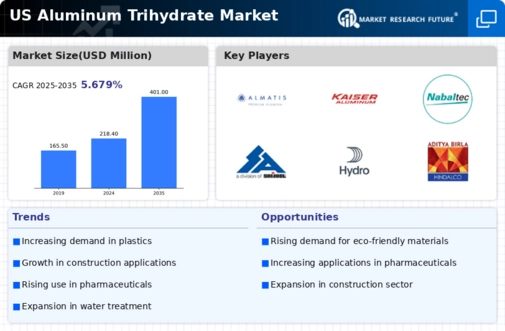
As per analysis, the US aluminum trihydrate market is projected to grow from USD 230.85 Million in 2025 to USD 401.95 Million by 2035, exhibiting a compound annual growth rate (CAGR) of 5.7% during the forecast period (2025 - 2035).

Key Market Trends & Highlights

The US aluminum trihydrate market is poised for growth driven by sustainability and technological advancements.

  • The flame retardant segment remains the largest contributor to the market, reflecting its critical role in safety applications.
  • The automotive sector is currently the fastest-growing segment, indicating a shift towards lightweight materials for improved efficiency.
  • Sustainability initiatives and regulatory compliance are increasingly shaping market dynamics, pushing manufacturers towards eco-friendly practices.
  • Growing demand in the construction sector and increased focus on environmental regulations are key drivers propelling market expansion.

Market Size & Forecast

2024 Market Size 218.4 (USD Million)
2035 Market Size 401.95 (USD Million)
CAGR (2025 - 2035) 5.7%

Major Players

Alcoa Corporation (US), Hindalco Industries Limited (IN), Nabaltec AG (DE), Sibelco (BE), J.M. Huber Corporation (US), Bodal Chemicals Limited (IN), Sierra Aluminum Company (US), Alumina Limited (AU)

US Aluminum Trihydrate Market Trends

The US aluminum trihydrate market is currently experiencing a notable evolution, driven by various factors that influence demand and supply dynamics. This compound, primarily utilized as a flame retardant and filler in plastics, paints, and coatings, has garnered attention due to its environmentally friendly properties. The increasing emphasis on sustainability and regulatory compliance in manufacturing processes appears to bolster the market's growth. Furthermore, the construction sector's ongoing expansion, particularly in residential and commercial projects, seems to create additional opportunities for aluminum trihydrate applications, particularly in fire-resistant materials. In addition, the US aluminum trihydrate market is likely to benefit from advancements in production technologies, which may enhance efficiency and reduce costs. As manufacturers seek to optimize their operations, innovations in extraction and processing methods could lead to improved product quality and performance. Moreover, the rising awareness of health and safety standards among consumers and industries may further drive the adoption of aluminum trihydrate in various applications. Overall, the market appears poised for growth, with several factors contributing to its positive trajectory.

Sustainability Initiatives

The US aluminum trihydrate market is increasingly influenced by sustainability initiatives. Manufacturers are focusing on eco-friendly production methods and materials, aligning with consumer preferences for greener products. This trend is likely to enhance the appeal of aluminum trihydrate as a non-toxic, environmentally safe option in various applications.

Regulatory Compliance

Regulatory compliance is becoming a critical factor in the US aluminum trihydrate market. Stricter environmental regulations and safety standards are prompting industries to adopt materials that meet these requirements. As a result, aluminum trihydrate is gaining traction due to its compliance with health and safety guidelines.

Technological Advancements

Technological advancements in production processes are shaping the US aluminum trihydrate market. Innovations aimed at improving efficiency and reducing costs are likely to enhance the quality of aluminum trihydrate. This could lead to increased adoption across various sectors, including construction and manufacturing.

Market Segment Insights

By Application: Flame Retardant (Largest) vs. Filler (Fastest-Growing)

In the US aluminum trihydrate market, the application segment is primarily dominated by flame retardants, capturing the largest market share. Flame retardants are extensively used in various industries, especially construction and textiles, owing to their effectiveness in improving fire safety. Following flame retardants, fillers hold a significant position as they augment the properties of materials by enhancing durability and stability. Their usage is prevalent in applications like plastics and paints, aiding in the overall performance of end products.

Filler: (Dominant) vs. Polishing Agent (Emerging)

The filler segment is regarded as the dominant application in the US aluminum trihydrate market, serving pivotal roles in enhancing material performance across several industries. It is characterized by its ability to improve the physical properties of products such as paints, plastics, and rubber. In contrast, the polishing agent segment is emerging rapidly, primarily due to increasing preferences for aesthetic finishes in various sectors, including automotive and consumer goods. While fillers are integral to industrial applications, polishing agents are gaining momentum as manufacturers seek to achieve high-quality surface finishes, significantly impacting consumer satisfaction and driving demand.

By End Use: Construction (Largest) vs. Automotive (Fastest-Growing)

In the US aluminum trihydrate market, the end use segment is primarily dominated by construction applications, which significantly contribute to the overall demand. The construction sector utilizes aluminum trihydrate for its fire-resistant properties, making it ideal for various building materials such as insulation and wallboard. Following closely, the automotive sector also has a noteworthy share, leveraging aluminum trihydrate in applications to enhance materials used in lightweight vehicle components. Recent trends indicate a robust growth trajectory for the automotive end use segment, driven by the increasing emphasis on lightweight materials to improve fuel efficiency. With manufacturers adopting more innovative formulations incorporating aluminum trihydrate, the automotive applications are expected to grow at an accelerated pace as the industry pivots towards sustainability and efficiency in vehicle design.

Construction: Dominant vs. Automotive: Emerging

In the US aluminum trihydrate market, the construction sector stands out as the dominant segment due to its extensive applications in fireproofing and lightweight materials needed for modern architectural designs. Construction not only utilizes aluminum trihydrate for its inherent safety and fire-resistance qualities but also for its environmental benefits of being a sustainable choice in building materials. On the other hand, while the automotive segment is currently in its emerging phase, it is witnessing rapid technological advancements that favor the use of aluminum trihydrate in producing lightweight components. This shift is largely driven by the automotive industry's push for enhanced fuel efficiency and reduced emissions. Both segments, therefore, create a balanced dynamic in the market, with construction leading and automotive swiftly gaining ground.

By Form: Dry Powder (Largest) vs. Wet Slurry (Fastest-Growing)

In the US aluminum trihydrate market, the distribution among the segment values reveals that Dry Powder holds the largest share due to its widespread application in various industries, particularly as a flame retardant and filler in plastics. Wet Slurry, while not as dominant, is rapidly gaining traction due to its favorable properties in specific applications, reflecting a shift in user preference toward formulations that enhance performance and reduce dust exposure during handling. The growth trends in the aluminum trihydrate segment are being driven by several factors. The increasing demand for sustainable and non-toxic materials in manufacturing processes greatly influences the expansion of both Dry Powder and Wet Slurry. Moreover, regulatory pressures advocating for safer production practices further support the adoption of these forms, with Wet Slurry positioned to benefit significantly from these changes as industries seek efficient and eco-friendly alternatives.

Dry Powder (Dominant) vs. Wet Slurry (Emerging)

Dry Powder is recognized as the dominant form in the US aluminum trihydrate market due to its extensive use and versatility across multiple industries. Its dry nature makes it easy to transport and incorporate into various composites, providing significant advantages in processing and formulation. In contrast, Wet Slurry is emerging as a valuable alternative, especially in applications demanding higher performance and reduced dust in handling. As manufacturers increasingly prioritize user safety and environmental considerations, Wet Slurry's appeal is on the rise. This segment is gaining interest for its ability to deliver enhanced efficiency in production processes, positioning it as a key player in the future landscape of the aluminum trihydrate market.

By Purity Level: High Purity (Largest) vs. Ultra High Purity (Fastest-Growing)

In the US aluminum trihydrate market, the segment distribution reveals that High Purity holds the largest share, indicating its prevalent use in applications requiring exceptional quality. Standard Purity follows, catering to various general applications, while Ultra High Purity, though currently smaller in market share, is rapidly gaining traction due to its specialized applications in high-tech industries. As industries strive for improved performance in their products, Ultra High Purity is emerging as a key player in the market.

Purity Level: High Purity (Dominant) vs. Ultra High Purity (Emerging)

High Purity aluminum trihydrate is widely recognized for its superior quality and performance, making it a dominant choice across numerous applications including flame retardants and fillers. Its established market presence allows it to dominate the share, obtaining the trust of manufacturers seeking reliability. On the other hand, Ultra High Purity aluminum trihydrate is carving out an emerging position as demand in advanced technological sectors grows. This segment is characterized by rigorous production processes aimed at achieving maximum purity levels, thus catering to niche applications in pharmaceuticals, electronics, and aerospace. As industries continue to advance, Ultra High Purity is expected to become increasingly relevant.

By Distribution Channel: Direct Sales (Largest) vs. Distributors (Fastest-Growing)

In the US aluminum trihydrate market, the distribution of sales across various channels reveals that Direct Sales holds the largest share, primarily due to the established relationships between manufacturers and large-scale consumers. Conversely, Distributors are gaining traction in the market, catering to a diverse array of clients and facilitating access to aluminum trihydrate for smaller businesses and localized markets. This growing acceptance of distributor-led channels is indicative of a shift towards more streamlined inventory management and supply chain efficiency. The growth trends for distribution channels in this market reflect the evolving landscape of consumer preferences and industrial demands. The ongoing expansion of the construction and automotive sectors is propelling a rise in aluminum trihydrate consumption. This trend is further supported by the increasing adoption of e-commerce platforms, leading to a surge in Online Sales, which are anticipated to become a significant player in the coming years. As industries seek convenience and efficiency, the demand for reliable distribution channels will continue to grow, marking a transformative phase in the market.

Direct Sales (Dominant) vs. Online Sales (Emerging)

Direct Sales remain a dominant force in the US aluminum trihydrate market, primarily due to their ability to offer tailored solutions directly to large-scale customers, fostering long-term partnerships and ensuring reliable supply. This channel thrives on the trust established over years of service with well-known manufacturers. On the other hand, Online Sales are emerging rapidly, driven by tech-savvy consumers seeking convenient purchasing options. This growth is spurred by advancements in logistics and a shift towards digitalization, allowing customers to easily compare prices and suppliers. As Online Sales continue to evolve, they are expected to complement the Direct Sales model, providing customers with more flexibility and choice in sourcing aluminum trihydrate.

Get more detailed insights about US Aluminum Trihydrate Market

Key Players and Competitive Insights

The aluminum trihydrate market exhibits a dynamic competitive landscape characterized by a blend of established players and emerging companies. Key growth drivers include the increasing demand for flame retardants, the rising need for environmentally friendly materials, and the expansion of the construction and automotive sectors. Major companies such as Alcoa Corporation (US), J.M. Huber Corporation (US), and Nabaltec AG (DE) are strategically positioned to leverage these trends. Alcoa Corporation (US) focuses on innovation in sustainable production methods, while J.M. Huber Corporation (US) emphasizes partnerships to enhance its product offerings. Nabaltec AG (DE) is actively pursuing regional expansion to tap into new markets, collectively shaping a competitive environment that prioritizes sustainability and technological advancement.

In terms of business tactics, companies are increasingly localizing manufacturing to reduce transportation costs and enhance supply chain efficiency. The market structure appears moderately fragmented, with several key players exerting influence over pricing and product development. This fragmentation allows for a diverse range of products and innovations, although it also intensifies competition among established firms and new entrants.

In November 2025, Alcoa Corporation (US) announced a partnership with a leading technology firm to develop advanced aluminum trihydrate production techniques aimed at reducing carbon emissions. This strategic move underscores Alcoa's commitment to sustainability and positions the company as a leader in environmentally responsible manufacturing practices. The collaboration is expected to enhance operational efficiency and reduce costs, thereby strengthening Alcoa's competitive edge in the market.

In October 2025, J.M. Huber Corporation (US) expanded its production capacity by investing in a new facility dedicated to aluminum trihydrate. This investment reflects the company's strategy to meet the growing demand for high-quality materials in various applications, including construction and automotive. By increasing production capabilities, J.M. Huber aims to solidify its market position and respond effectively to customer needs, which may lead to enhanced market share.

In September 2025, Nabaltec AG (DE) launched a new line of aluminum trihydrate products specifically designed for the construction industry. This product line aims to meet the increasing demand for sustainable building materials. The introduction of these innovative products not only diversifies Nabaltec's portfolio but also aligns with the broader industry trend towards sustainability, potentially attracting environmentally conscious customers and enhancing brand loyalty.

As of December 2025, current competitive trends in the aluminum trihydrate market are increasingly defined by digitalization, sustainability initiatives, and the integration of artificial intelligence in production processes. Strategic alliances among key players are shaping the landscape, fostering innovation and enhancing supply chain reliability. The shift from price-based competition to a focus on technological advancement and sustainable practices is evident, suggesting that future competitive differentiation will hinge on the ability to innovate and adapt to changing market demands.


Key Companies in the US Aluminum Trihydrate Market market include

Industry Developments

Recent developments in the US Aluminum Trihydrate Market indicate a steady growth trajectory, primarily driven by increasing demand in applications such as flame retardants, ceramics, and mineral fillers. Companies like Alcoa and Hindalco have been focusing on expanding their production capabilities to meet this rising demand. In September 2023, Nabaltec announced plans to enhance its manufacturing capacity in the US, reflecting a growing commitment to meet North American market needs. In the mergers and acquisitions landscape, Almatis acquired certain assets from a competitor in August 2023, strengthening its position in the market.

Recent reports from October 2023 highlight that the Aluminum Corporation of China is exploring partnerships within the US to bolster its presence and leverage local demand. Market valuation for major players like Kaiser Aluminum and Norsk Hydro has seen an uptick, attributed to investments in sustainable practices and innovations in production techniques. The U.S. aluminum sector has been actively supported through policy enhancements related to infrastructure, further boosting prospects for the aluminum trihydrate market. The competitive nature of this industry is becoming increasingly pronounced, with firms continually evaluating strategies to enhance operational efficiency and market reach.

Future Outlook

US Aluminum Trihydrate Market Future Outlook

The US aluminum trihydrate market is projected to grow at a 5.7% CAGR from 2024 to 2035, driven by increasing demand in flame retardants and environmental regulations.

New opportunities lie in:

  • Expansion into eco-friendly packaging solutions
  • Development of high-purity aluminum trihydrate for pharmaceuticals
  • Strategic partnerships with construction firms for fire-resistant materials

By 2035, the market is expected to solidify its position as a leader in sustainable materials.

Market Segmentation

US Aluminum Trihydrate Market Form Outlook

  • Dry Powder
  • Wet Slurry
  • Granules

US Aluminum Trihydrate Market End Use Outlook

  • Construction
  • Automotive
  • Consumer Goods
  • Electrical and Electronics

US Aluminum Trihydrate Market Application Outlook

  • Flame Retardant
  • Filler
  • Chemical Intermediate
  • Polishing Agent

US Aluminum Trihydrate Market Purity Level Outlook

  • Standard Purity
  • High Purity
  • Ultra High Purity

US Aluminum Trihydrate Market Distribution Channel Outlook

  • Direct Sales
  • Distributors
  • Online Sales

Report Scope

MARKET SIZE 2024218.4(USD Million)
MARKET SIZE 2025230.85(USD Million)
MARKET SIZE 2035401.95(USD Million)
COMPOUND ANNUAL GROWTH RATE (CAGR)5.7% (2024 - 2035)
REPORT COVERAGERevenue Forecast, Competitive Landscape, Growth Factors, and Trends
BASE YEAR2024
Market Forecast Period2025 - 2035
Historical Data2019 - 2024
Market Forecast UnitsUSD Million
Key Companies ProfiledAlcoa Corporation (US), Hindalco Industries Limited (IN), Nabaltec AG (DE), Sibelco (BE), J.M. Huber Corporation (US), Bodal Chemicals Limited (IN), Sierra Aluminum Company (US), Alumina Limited (AU)
Segments CoveredApplication, End Use, Form, Purity Level, Distribution Channel
Key Market OpportunitiesGrowing demand for flame retardants in construction materials enhances opportunities in the US aluminum trihydrate market.
Key Market DynamicsRising demand for aluminum trihydrate in flame retardants drives competitive dynamics in the US market.
Countries CoveredUS

Leave a Comment

FAQs

What is the projected market size of the US Aluminum Trihydrate Market by 2035?

The US Aluminum Trihydrate Market is projected to be valued at 401.0 USD Million by 2035.

What will be the expected compound annual growth rate (CAGR) for the US Aluminum Trihydrate Market from 2025 to 2035?

The expected CAGR for the US Aluminum Trihydrate Market from 2025 to 2035 is 5.679%.

What was the market size of the US Aluminum Trihydrate Market in 2024?

The market size of the US Aluminum Trihydrate Market in 2024 was valued at 218.4 USD Million.

Which segment is expected to dominate the US Aluminum Trihydrate Market by 2035?

The Building & Construction segment is expected to dominate the US Aluminum Trihydrate Market, valued at 140.0 USD Million by 2035.

Who are the key players in the US Aluminum Trihydrate Market?

Major players in the US Aluminum Trihydrate Market include Almatis, Kaiser Aluminum, and Alcoa among others.

What will be the market size for the Automotive segment of the US Aluminum Trihydrate Market by 2035?

The Automotive segment is expected to be valued at 75.0 USD Million in the US Aluminum Trihydrate Market by 2035.

What growth opportunities exist in the Electric & Electronics segment of the US Aluminum Trihydrate Market?

The Electric & Electronics segment is projected to grow to 85.0 USD Million by 2035, presenting considerable growth opportunities.

How has the market for Aluminum Trihydrate grown in the Paints & Coatings segment from 2024 to 2035?

The Paints & Coatings segment is expected to grow from 30.0 USD Million in 2024 to 55.0 USD Million by 2035.

What are the main drivers of growth for the US Aluminum Trihydrate Market?

Key drivers of growth for the US Aluminum Trihydrate Market include increasing demand in various industries such as construction and automotive.

What is the market size forecast for the Plastics segment by 2035?

The Plastics segment is forecasted to reach a market size of 46.0 USD Million by 2035.

Download Free Sample

Kindly complete the form below to receive a free sample of this Report

Compare Licence

×
Features License Type
Single User Multiuser License Enterprise User
Price $4,950 $5,950 $7,250
Maximum User Access Limit 1 User Upto 10 Users Unrestricted Access Throughout the Organization
Free Customization
Direct Access to Analyst
Deliverable Format
Platform Access
Discount on Next Purchase 10% 15% 15%
Printable Versions