×
Request Free Sample ×

Kindly complete the form below to receive a free sample of this Report

* Please use a valid business email

Leading companies partner with us for data-driven Insights

clients tt-cursor
Hero Background

US Dichroic Glass Market

ID: MRFR/CnM/16968-HCR
100 Pages
Garvit Vyas
October 2025

US Dichroic Glass Market

Share:
Download PDF ×

We do not share your information with anyone. However, we may send you emails based on your report interest from time to time. You may contact us at any time to opt-out.

US Dichroic Glass Market Infographic
Purchase Options

US Dichroic Glass Market Summary

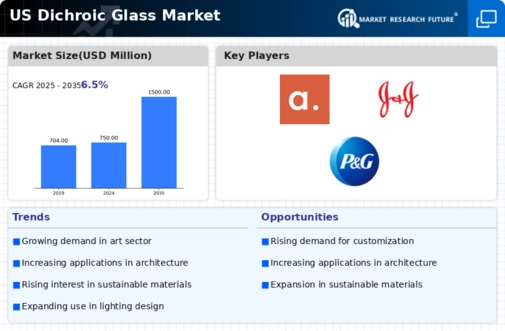
As per analysis, the US dichroic glass market is projected to grow from USD 19.67 Million in 2024 to USD 55.69 Million by 2035, exhibiting a compound annual growth rate (CAGR) of 9.92% during the forecast period (2025 - 2035).

Key Market Trends & Highlights

The US dichroic glass market is experiencing a dynamic shift driven by customization and technological advancements.

  • The artistic segment remains the largest contributor to the market, reflecting a strong demand for unique and personalized designs.
  • Optical applications are emerging as the fastest-growing segment, driven by innovations in technology and manufacturing processes.
  • The construction sector continues to dominate, integrating dichroic glass into architectural designs for aesthetic and functional purposes.
  • Key market drivers include the growing interest in sustainable materials and the expansion of the art and design sector, which are fueling demand.

Market Size & Forecast

2024 Market Size 19.67 (USD Million)
2035 Market Size 55.69 (USD Million)
CAGR (2025 - 2035) 9.92%

Major Players

Spectrum Glass (US), Uroboros Glass (US), Bullseye Glass (US), Dichroic Glass (US), Dichroic Art (US), Kremer Pigments (US), Art Glass (US), Glasstron (US)

US Dichroic Glass Market Trends

The US dichroic glass market is currently experiencing a notable evolution, driven by a combination of artistic innovation and technological advancements. This unique glass, characterized by its ability to change color based on the angle of light, has found applications in various sectors, including art, architecture, and jewelry. The increasing interest in custom and personalized products appears to be fueling demand, as consumers seek distinctive items that reflect their individual tastes. Furthermore, the integration of dichroic glass in architectural designs suggests a growing trend towards incorporating artistic elements into functional spaces, enhancing aesthetic appeal while maintaining utility. In addition to artistic applications, the US dichroic glass market is witnessing a rise in its use within the technology sector. The potential for this material to be utilized in optical devices and displays indicates a promising avenue for future growth. As manufacturers continue to explore innovative uses, the market may see an influx of new products that leverage the unique properties of dichroic glass. Overall, the current landscape of the US dichroic glass market reflects a dynamic interplay between creativity and technology, suggesting a vibrant future for this specialized material.

Rising Demand for Customization

The US dichroic glass market is witnessing an increasing consumer preference for customized products. This trend is driven by a desire for unique and personalized items, particularly in the realms of art and jewelry. As artisans and manufacturers respond to this demand, the market is likely to see a proliferation of bespoke designs that cater to individual tastes.

Integration in Architectural Design

Dichroic glass is becoming more prevalent in architectural applications across the United States. Its ability to enhance visual aesthetics while providing functional benefits makes it an attractive choice for architects and designers. This trend indicates a shift towards incorporating artistic elements into building designs, potentially transforming public and private spaces.

Technological Advancements in Applications

The US dichroic glass market is experiencing a surge in interest from the technology sector. Innovations in optical devices and display technologies suggest that dichroic glass may play a crucial role in future advancements. As research and development continue, new applications are likely to emerge, further expanding the market's potential.

Market Segment Insights

By Application: Artistic (Largest) vs. Optical (Fastest-Growing)

In the US dichroic glass market, the 'Artistic' application segment holds the largest share, driven by demand in craft and artistic endeavors. This segment thrives on the unique color-changing properties of dichroic glass that appeal to artists, designers, and hobbyists alike. Meanwhile, the 'Optical' segment is rapidly gaining traction, catering to industries in need of precise and specialized optical components. This shift highlights the diverse applications of dichroic glass in both creative and technical fields.

Artistic (Dominant) vs. Optical (Emerging)

The 'Artistic' segment of the US dichroic glass market is characterized by its vibrant colors and versatility, making it a favorite among artists and craft enthusiasts. This sector enjoys a strong base due to the aesthetic appeal of dichroic glass in sculptures, jewelry, and home decor. In contrast, the 'Optical' segment represents an emerging market, driven by technological advancements and the growing need for high-performance optical lenses and filters. While 'Artistic' continues to dominate with its well-established demand, 'Optical' is gaining importance as innovations in optics create new opportunities for dichroic glass applications.

By End Use: Construction (Largest) vs. Automotive (Fastest-Growing)

The US dichroic glass market exhibits a diverse range of end-use applications, with construction taking the lead as the largest segment. This sector benefits significantly from the rising demand for aesthetically appealing architectural features and energy-efficient building materials. Applications in facades, interior spaces, and decorative elements are driving the widespread adoption of dichroic glass, contributing to its substantial market share. In contrast, the automotive sector is marked by faster growth. This segment is evolving rapidly as manufacturers increasingly incorporate advanced materials for enhanced vehicle aesthetics and performance, positioning dichroic glass as an attractive option in vehicle design and customization.

Construction (Dominant) vs. Automotive (Emerging)

In the US dichroic glass market, the construction segment stands out as a dominant force, largely due to its appeal in architectural projects that seek to merge functionality with striking visual effects. Designers and architects are leveraging the unique optical properties of dichroic glass to create eye-catching exteriors and interiors. Conversely, the automotive sector is emerging as a promising segment, driven by innovation and a focus on unique design aesthetics. As automobile manufacturers strive to differentiate their vehicles, the integration of dichroic glass not only enhances the visual appeal but also supports multifunctionality, making it a noteworthy player in automotive design.

By Material Type: Glass (Largest) vs. Plastic (Fastest-Growing)

In the US dichroic glass market, the material type segment reveals a diverse distribution with glass holding the largest market share. This is primarily due to its superior aesthetic qualities, durability, and ability to interact with light, making it a popular choice among artists and architects. In contrast, plastic is emerging as a significant player, capturing the attention of manufacturers looking to provide more cost-effective solutions without compromising on visual effects. This trend reflects a growing acceptance of plastic as a viable alternative in various applications.

Glass (Dominant) vs. Plastic (Emerging)

Glass remains the dominant material in the US dichroic glass market, favored for its exceptional light interaction and vibrant color display. Artists and designers appreciate its traditional appeal and reliability. However, plastic is rapidly becoming an emerging alternative due to its lightweight nature and lower production costs. While glass is cherished for its artistic authenticity, the growing advancements in plastic technology are enabling manufacturers to create products that mimic the effects of glass while being more affordable and versatile. This dual presence of glass and plastic indicates a market in transition, where innovation is key to meeting diverse consumer demands.

By Production Method: Blown (Largest) vs. Cast (Fastest-Growing)

In the US dichroic glass market, the production method segment reveals a diverse assortment of techniques, with blown glass accounting for the largest market share. This method has gained popularity due to its ability to create intricate and unique designs, appealing to both artists and commercial manufacturers. In contrast, cast glass is rapidly emerging, driven by its versatility and the increasing demand for customized glass products, which resonate strongly with current design trends.

Blown (Dominant) vs. Molded (Emerging)

Blown glass stands as the dominant production method within the US dichroic glass market, celebrated for its exceptional craftsmanship and artistic flexibility. This method allows artisans to create intricate shapes and variations in color, meeting the customization needs of high-end clientele. Meanwhile, molded glass is gaining traction as an emerging technique, well-regarded for its ability to produce uniform shapes and intricate designs with efficiency. As more manufacturers adopt molded processes to cater to production scales, its reputation is soaring, appealing to a broad set of consumers seeking quality and aesthetics.

By Thickness: Medium (Largest) vs. Thick (Fastest-Growing)

In the US dichroic glass market, the thickness segment is primarily dominated by medium thickness options, which account for the largest share due to their versatile applications in various industries. Thin and ultra-thin variants also have a significant presence but are generally preferred for niche applications, limiting their overall market share. Conversely, thick dichroic glass is witnessing increasing demand as it offers added durability and aesthetic appeal, leading to its rapid growth in various decorative and architectural settings. The growth trends within the thickness segment are driven by an increase in demand for durable and visually impactful installations, particularly in commercial and artistic applications. The rising trend of customization in design is encouraging manufacturers to introduce diverse thickness options. Additionally, advancements in glass-making technology have facilitated the production of thicker glass with enhanced properties, leading to a shift in consumer preference towards such offerings, contributing to the segment’s dynamic growth landscape.

Thickness: Medium (Dominant) vs. Thick (Emerging)

Medium thickness dichroic glass stands out as the dominant segment within the US market due to its wide-ranging applicability in various settings, including interior design and art installations, striking a balance between aesthetic appeal and functionality. Its flexibility in design options makes it a favored choice among architects and designers. On the other hand, thick dichroic glass is emerging as a compelling option, especially in sectors demanding enhanced durability and safety features. This thick variant is sought after for its ideal applications in both artistic and structural frameworks, providing a robust solution that doesn’t compromise on the spectacular color-play dichroic glass is known for.

Get more detailed insights about US Dichroic Glass Market

Key Players and Competitive Insights

The dichroic glass market exhibits a dynamic competitive landscape characterized by innovation and strategic partnerships. Key players such as Spectrum Glass (US), Bullseye Glass (US), and Uroboros Glass (US) are at the forefront, each leveraging unique operational focuses to enhance their market positions. Spectrum Glass (US) emphasizes product innovation, particularly in developing new color technologies that appeal to artists and designers. Bullseye Glass (US) has adopted a strategy of regional expansion, establishing new distribution channels to reach a broader customer base. Uroboros Glass (US) appears to be concentrating on sustainability initiatives, integrating eco-friendly practices into their production processes, which resonates well with the growing consumer demand for environmentally responsible products. Collectively, these strategies contribute to a competitive environment that is increasingly focused on differentiation through quality and innovation.

The market structure is moderately fragmented, with numerous players vying for market share. Key business tactics such as localizing manufacturing and optimizing supply chains are prevalent among these companies. For instance, Bullseye Glass (US) has localized its production to reduce lead times and enhance responsiveness to customer needs. This approach not only streamlines operations but also fosters a more agile market presence, allowing companies to adapt swiftly to changing consumer preferences and market conditions.

In November 2025, Spectrum Glass (US) launched a new line of dichroic glass products designed specifically for architectural applications. This strategic move is significant as it positions the company to tap into the growing demand for unique architectural features in commercial and residential buildings. By catering to this niche market, Spectrum Glass (US) enhances its competitive edge and diversifies its product offerings.

In October 2025, Bullseye Glass (US) announced a partnership with a leading design firm to create exclusive glass art installations. This collaboration not only showcases Bullseye's innovative capabilities but also strengthens its brand presence in the art community. Such partnerships are likely to enhance customer loyalty and drive sales through unique, co-branded products that appeal to high-end consumers.

In September 2025, Uroboros Glass (US) implemented a new recycling program aimed at reducing waste in its production processes. This initiative aligns with the increasing consumer preference for sustainable products and positions Uroboros Glass (US) as a leader in eco-conscious manufacturing. The strategic importance of this move lies in its potential to attract environmentally aware customers and enhance the company's reputation in the market.

As of December 2025, current trends in the dichroic glass market are heavily influenced by digitalization, sustainability, and the integration of advanced technologies. Companies are increasingly forming strategic alliances to enhance their competitive positioning, with a notable shift from price-based competition to a focus on innovation and supply chain reliability. This evolution suggests that future differentiation will hinge on the ability to leverage technology and sustainable practices, ultimately reshaping the competitive landscape in the dichroic glass market.


Key Companies in the US Dichroic Glass Market market include

Future Outlook

US Dichroic Glass Market Future Outlook

The US dichroic glass market is projected to grow at a 9.92% CAGR from 2024 to 2035, driven by increasing demand in architectural and artistic applications.

New opportunities lie in:

  • Expansion into eco-friendly dichroic glass products
  • Development of customizable dichroic glass solutions for artists
  • Partnerships with architectural firms for innovative installations

By 2035, the market is expected to achieve robust growth, solidifying its position in various industries.

Market Segmentation

US Dichroic Glass Market End Use Outlook

  • Construction
  • Automotive
  • Aerospace
  • Consumer Electronics
  • Medical

US Dichroic Glass Market Thickness Outlook

  • Thin
  • Medium
  • Thick
  • Ultra-Thin
  • Variable

US Dichroic Glass Market Application Outlook

  • Artistic
  • Architectural
  • Jewelry
  • Optical
  • Industrial

US Dichroic Glass Market Material Type Outlook

  • Glass
  • Plastic
  • Ceramic
  • Metal
  • Composite

US Dichroic Glass Market Production Method Outlook

  • Blown
  • Cast
  • Molded
  • Coated
  • Printed

Report Scope

MARKET SIZE 202419.67(USD Million)
MARKET SIZE 202521.63(USD Million)
MARKET SIZE 203555.69(USD Million)
COMPOUND ANNUAL GROWTH RATE (CAGR)9.92% (2024 - 2035)
REPORT COVERAGERevenue Forecast, Competitive Landscape, Growth Factors, and Trends
BASE YEAR2024
Market Forecast Period2025 - 2035
Historical Data2019 - 2024
Market Forecast UnitsUSD Million
Key Companies ProfiledSpectrum Glass (US), Uroboros Glass (US), Bullseye Glass (US), Dichroic Glass (US), Dichroic Art (US), Kremer Pigments (US), Art Glass (US), Glasstron (US)
Segments CoveredApplication, End Use, Material Type, Production Method, Thickness
Key Market OpportunitiesGrowing demand for sustainable and innovative design solutions in the US dichroic glass market.

Key Market DynamicsRising demand for artistic applications drives innovation and competition in the US dichroic glass market.

Countries CoveredUS

Leave a Comment

Download Free Sample

Kindly complete the form below to receive a free sample of this Report

Compare Licence

×
Features License Type
Single User Multiuser License Enterprise User
Price $4,950 $5,950 $7,250
Maximum User Access Limit 1 User Upto 10 Users Unrestricted Access Throughout the Organization
Free Customization
Direct Access to Analyst
Deliverable Format
Platform Access
Discount on Next Purchase 10% 15% 15%
Printable Versions