Download Free Sample
Kindly complete the form below to receive a free sample of this Report
US Drug Screening Market Research Report: Size, Share, Trend Analysis By Types (Urine Testing, Saliva Testing, Blood Testing, Hair Testing), By Technology (Immunoassay, Chromatography, Mass Spectrometry, PCR Testing), By End Use (Workplace, Drug Rehabilitation Centers, Hospitals and Clinics, Law Enforcement) and By Panel Size (Single Panel, Multi-Panel, Expanded Panel) - Growth Outlook & Industry Forecast 2025 To 2035
As per Market Research Future analysis, the US drug screening market Size was estimated at 705.44 USD Million in 2024. The US drug screening market is projected to grow from 731.4 USD Million in 2025 to 1049.79 USD Million by 2035, exhibiting a compound annual growth rate (CAGR) of 3.6% during the forecast period 2025 - 2035
The US drug screening market is experiencing robust growth driven by regulatory compliance and technological advancements.
| 2024 Market Size | 705.44 (USD Million) |
| 2035 Market Size | 1049.79 (USD Million) |
| CAGR (2025 - 2035) | 3.68% |
Thermo Fisher Scientific (US), Abbott Laboratories (US), Roche Diagnostics (CH), Siemens Healthineers (DE), Quest Diagnostics (US), Alere (US), LabCorp (US), Bio-Rad Laboratories (US)
Our Impact
Enabled $4.3B Revenue Impact for Fortune 500 and Leading Multinationals
Partnering with 2000+ Global Organizations Each Year
30K+ Citations by Top-Tier Firms in the Industry
The drug screening market is currently experiencing notable growth, driven by increasing awareness regarding substance abuse and the need for workplace safety. Regulatory bodies are emphasizing the importance of drug testing in various sectors, including healthcare, transportation, and manufacturing. This heightened focus on compliance and safety standards is likely to propel demand for advanced drug screening technologies. Moreover, the rise in illicit drug use and the opioid crisis has further intensified the need for effective screening solutions. As a result, organizations are investing in comprehensive drug testing programs to mitigate risks associated with substance abuse. In addition, technological advancements are reshaping the landscape of the drug screening market. Innovations such as rapid testing devices and mobile applications are enhancing the efficiency and accuracy of drug testing processes. These developments not only streamline operations but also provide real-time results, which are crucial for timely decision-making. Furthermore, the integration of artificial intelligence and machine learning in drug screening methodologies appears to offer significant potential for improving detection rates and reducing false positives. Overall, the drug screening market is poised for continued evolution, driven by regulatory pressures and technological innovations.
Regulatory agencies are mandating stricter drug testing protocols across various industries. This trend is particularly evident in sectors such as transportation and healthcare, where safety is paramount. Organizations are compelled to adopt comprehensive drug screening measures to comply with these regulations, thereby driving market growth.
The emergence of innovative technologies is transforming the drug screening market. Rapid testing devices and mobile applications are becoming increasingly prevalent, allowing for quicker and more accurate results. These advancements enhance operational efficiency and facilitate timely decision-making in drug testing.
There is a growing emphasis on maintaining a drug-free workplace, particularly in high-risk industries. Employers are recognizing the importance of drug screening as a means to ensure safety and productivity. This focus on workplace safety is likely to sustain demand for drug testing solutions.
The legalization of cannabis in several states has introduced complexities to the drug screening market. As more states adopt laws permitting recreational and medicinal use, employers face challenges in establishing effective drug testing policies. This evolving legal landscape necessitates the development of new testing protocols that can accurately differentiate between legal use and impairment. Consequently, the drug screening market is adapting to these changes, with an increasing focus on developing reliable testing methods that address the nuances of cannabis use. This trend may lead to a surge in demand for specialized drug screening solutions tailored to meet the needs of employers navigating this new regulatory environment.
The drug screening market is experiencing growth due to the alarming rise in substance abuse rates across the United States. According to the National Institute on Drug Abuse, approximately 21 million Americans suffer from substance use disorders. This escalating crisis necessitates increased drug screening efforts in various sectors, including healthcare, law enforcement, and workplaces. Organizations are increasingly adopting drug testing protocols to ensure safety and compliance, thereby driving demand for drug screening services and products. The market is projected to expand as more entities recognize the importance of early detection and intervention in combating substance abuse, which is likely to enhance the overall drug screening market.
The implementation of stringent workplace drug testing policies is a significant driver for the drug screening market. Many employers are adopting comprehensive drug testing programs to maintain a safe and productive work environment. According to the Substance Abuse and Mental Health Services Administration, around 70% of substance abusers are employed, highlighting the need for effective screening measures. As companies face legal liabilities and safety concerns, the demand for reliable drug testing solutions is expected to rise. This trend is likely to bolster the drug screening market, as organizations seek to mitigate risks associated with substance abuse among employees.
Growing awareness of the health risks associated with drug use is propelling the drug screening market forward. Public health campaigns and educational initiatives are informing individuals and organizations about the dangers of substance abuse, leading to a heightened demand for drug testing services. This awareness is particularly pronounced in sectors such as education and healthcare, where institutions are implementing drug screening policies to promote safety and well-being. As the public becomes more informed about the implications of drug use, the drug screening market is likely to see sustained growth, driven by proactive measures aimed at prevention and intervention.
Technological advancements are reshaping the drug screening market, introducing innovative testing methods that enhance accuracy and efficiency. The development of rapid testing kits and point-of-care testing devices allows for immediate results, which is increasingly appealing to employers and healthcare providers. The market is witnessing a shift towards non-invasive testing methods, such as saliva and hair testing, which are gaining traction due to their convenience and reliability. As these technologies evolve, they are expected to drive growth in the drug screening market, catering to the rising demand for efficient and user-friendly testing solutions.
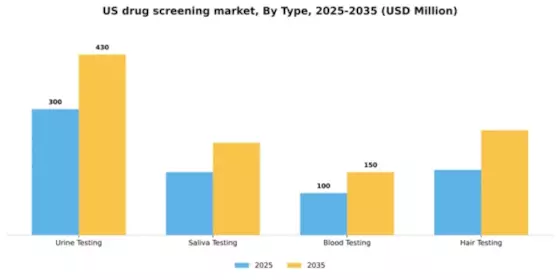
In the US drug screening market, Urine Testing holds the largest market share due to its established presence and widespread acceptance in various testing environments. This method is favored for its effectiveness and the extensive data supporting its reliability. In contrast, Saliva Testing, while currently smaller in market share, is gaining traction among consumers and organizations as an alternative diagnostic tool thanks to its non-invasive nature and ease of use, making it an appealing option for rapid testing scenarios. The growth trends within this segment indicate a shift towards more convenient testing methods, with Saliva Testing leading the charge as the fastest-growing segment. Increased demand for rapid results and user-friendly testing solutions are driving this trend. Moreover, the changing regulations and growing emphasis on workplace safety and drug-free environments further propel the adoption of these testing methods, highlighting a dynamic shift in preferences in the US drug screening landscape.
Urine Testing (Dominant) vs. Saliva Testing (Emerging)
Urine Testing remains the dominant player in the US drug screening market, widely recognized for its thoroughness and comprehensive data analysis capabilities. This method is frequently used in various settings, including workplaces and rehabilitation programs, owing to its established protocols and reliability in detecting a wide array of substances. Conversely, Saliva Testing is an emerging alternative that is gaining popularity due to its non-invasive approach and rapid test results. This method is particularly attractive for on-site testing, offering ease of use and a more relaxed testing atmosphere. As organizations continue to prioritize efficient and user-friendly testing options, Saliva Testing is positioned to expand its market reach significantly.
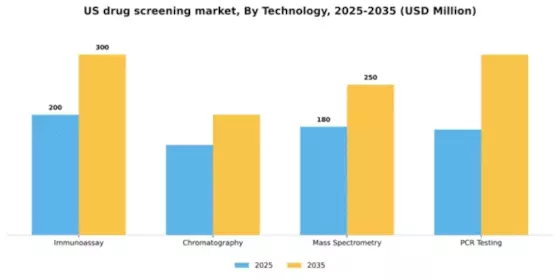
In the US drug screening market, Immunoassay holds the largest market share among various technology segments, benefiting from its cost-effectiveness and wide acceptance in various testing environments. Chromatography and PCR Testing also contribute significantly, but they do not match the extensive utilization of Immunoassay. Mass Spectrometry, while smaller in share, is rapidly gaining traction due to its high accuracy and reliability in detecting a wide range of substances. The growth trends within the technology segment indicate a shift towards more advanced testing methods, particularly as regulations tighten and the need for precise results increases. Mass Spectrometry is becoming a favored choice for laboratories seeking to enhance their testing capabilities. Furthermore, the continuous innovation and development in technology drive the market, promoting more efficient and rapid testing processes across different applications.
Technology: Immunoassay (Dominant) vs. Mass Spectrometry (Emerging)
Immunoassay remains the dominant technology in the US drug screening market, celebrated for its rapid testing capabilities and cost-effectiveness, making it a popular choice for preliminary screenings. The technology encompasses a range of tests that are easy to perform, thus appealing to clinics and hospitals alike. On the other hand, Mass Spectrometry is an emerging technology that, although currently smaller in market share, shows great promise due to its unparalleled accuracy and ability to identify complex substances. This method's increasing adoption by forensic labs and its integration with other technologies suggest that it could soon play a larger role in the market, reflecting a trend towards more sophisticated testing methodologies.
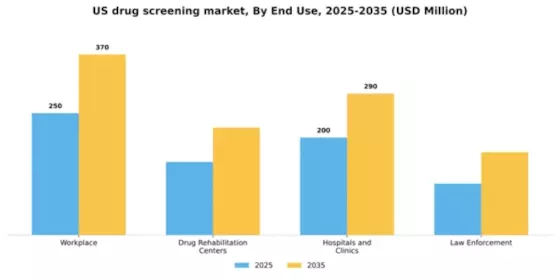
In the US drug screening market, the major segment is Workplace, which accounts for a substantial share of the overall market. This segment is driven by increasing regulations and policies ensuring drug-free environments in workplaces across various industries. Following closely is the Drug Rehabilitation Centers segment, which is seeing a rapid rise in demand due to heightened awareness of substance abuse and the need for effective recovery programs. Growth trends indicate a significant surge in the adoption of drug screening practices in both Workplace and Drug Rehabilitation Centers. As organizations become more vigilant about employee wellness and drug-related issues, the need for reliable screening solutions continues to expand. Furthermore, the evolving landscape of regulations around drug testing is accelerating growth in these segments, making them vital players in the market landscape.
Workplace: Dominant vs. Drug Rehabilitation Centers: Emerging
The Workplace segment remains dominant in the US drug screening market, driven by stringent employer policies and the necessity for maintaining safety standards. Employers are increasingly investing in comprehensive drug testing programs to tackle substance abuse issues and ensure workforce reliability. On the other hand, Drug Rehabilitation Centers are emerging as a rapidly growing segment, fueled by the rising incidence of addiction and the societal shift towards rehabilitation rather than punishment. These centers are integrating advanced drug testing technologies to monitor patients effectively, highlighting the dynamic interplay between prevention and recovery. This evolving market landscape is characterized by a blend of traditional practices and innovative approaches to drug screening.
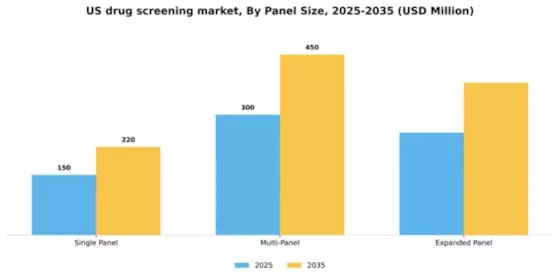
The segment distribution reveals that Multi-Panel drug screening tests hold the largest share within the US drug screening market, reflecting a growing preference among healthcare providers for their efficiency and comprehensive results. Meanwhile, Single Panel tests cater to specific drug detection needs but represent a smaller share compared to their multi-panel counterparts, highlighting a trend towards more complex testing methodologies that can detect multiple substances simultaneously. In terms of growth trends, the Expanded Panel segment is emerging rapidly as the fastest-growing segment in the US drug screening market. The increasing complexity of substance abuse patterns calls for more advanced testing options, and Expanded Panel testing is gaining traction as it offers an extensive range of drug detection capabilities. Additionally, the rise of synthetic and designer drugs necessitates a shift towards more comprehensive testing solutions, further driving the growth of this segment.
Multi-Panel (Dominant) vs. Expanded Panel (Emerging)
Multi-Panel drug screening tests are considered the dominant choice in the market due to their ability to simultaneously detect various substances, which streamlines the screening process and enhances efficiency for healthcare providers. Frequently utilized in clinical and workplace settings, these tests offer immediate results, making them highly favored. On the other hand, Expanded Panel tests are gaining popularity as an emerging option, allowing for the detection of a broader array of drugs, including newer and less common substances. This capability positions Expanded Panels as critical in addressing the evolving landscape of substance use, appealing to organizations seeking thorough and reliable testing options. The shift towards a more comprehensive testing approach illustrates a significant market trend as users demand more from drug screening technologies.
Get more detailed insights about US Drug Screening Market Request Free Sample
The drug screening market in the US is characterized by a competitive landscape that is increasingly shaped by innovation, regulatory changes, and the growing demand for rapid testing solutions. Key players such as Thermo Fisher Scientific (US), Abbott Laboratories (US), and Quest Diagnostics (US) are at the forefront, leveraging their technological capabilities to enhance product offerings. These companies focus on expanding their portfolios through strategic partnerships and acquisitions, which not only bolster their market presence but also facilitate entry into emerging segments. The collective strategies of these firms indicate a trend towards integrated solutions that combine testing with data analytics, thereby enhancing the overall efficiency of drug screening processes. In terms of business tactics, companies are increasingly localizing manufacturing to mitigate supply chain disruptions and optimize operational efficiencies. The market structure appears moderately fragmented, with several players vying for market share while also collaborating on various initiatives. This competitive environment is influenced by the need for compliance with stringent regulatory standards, which necessitates continuous innovation and adaptation among key players. In October 2025, Abbott Laboratories (US) announced the launch of a new rapid drug screening device designed to provide results within minutes, significantly reducing the time required for testing. This strategic move is likely to enhance Abbott's competitive edge by addressing the growing demand for quick and reliable testing solutions, particularly in clinical and workplace settings. The introduction of this device aligns with the broader trend of increasing efficiency in drug screening processes, positioning Abbott as a leader in rapid testing technology. In September 2025, Quest Diagnostics (US) expanded its partnership with a leading telehealth provider to integrate drug screening services into virtual healthcare platforms. This initiative reflects a strategic pivot towards digital health solutions, enabling Quest to reach a broader audience and streamline the testing process for patients. By embracing telehealth, Quest is not only enhancing accessibility but also aligning with the ongoing digital transformation in healthcare, which is becoming increasingly relevant in the current market landscape. In November 2025, Thermo Fisher Scientific (US) unveiled a new AI-driven analytics platform aimed at improving the accuracy and efficiency of drug screening results. This development underscores the growing importance of artificial intelligence in the sector, as companies seek to leverage technology to enhance testing capabilities. The integration of AI into drug screening processes may lead to more precise outcomes, thereby fostering greater trust in testing results and potentially reshaping competitive dynamics in the market. As of November 2025, the drug screening market is witnessing a shift towards digitalization, sustainability, and the integration of advanced technologies such as AI. Strategic alliances among key players are becoming increasingly common, facilitating the sharing of resources and expertise. This trend suggests that future competitive differentiation will likely hinge on innovation and technological advancements rather than solely on price. Companies that prioritize supply chain reliability and invest in cutting-edge solutions may emerge as leaders in this evolving landscape.
The US Drug Screening Market has seen various developments in recent months. In September 2023, Quest Diagnostics announced a partnership with LabCorp to enhance access to drug screening services across the nation. This collaboration aims to expand their market reach and improve efficiency in testing. Additionally, Medtox Scientific has been focusing on the integration of advanced technologies to improve the accuracy and speed of drug tests, responding to the increasing demand for rapid testing solutions.
Meanwhile, Abbott Laboratories has reported significant growth in its drug testing segment, contributing to the overall market valuation increase as the government emphasizes workplace drug testing regulations. Over the past two years, companies like Thermo Fisher Scientific and Drägerwerk have also expanded their product lines to include more comprehensive screening options, adapting to evolving market needs. Notably, in April 2023, Psychemedics Corporation announced its acquisition of a leading genetic testing firm, further strengthening its position in the market. This consolidation trend reflects the industry's focus on enhancing testing capabilities and meeting growing consumer demand for more effective drug testing solutions.
The Drug Screening Market is projected to grow at a 3.68% CAGR from 2025 to 2035, driven by technological advancements, regulatory changes, and increasing demand for workplace safety.
New opportunities lie in:
By 2035, the market is expected to achieve robust growth, reflecting evolving industry needs.
| MARKET SIZE 2024 | 705.44(USD Million) |
| MARKET SIZE 2025 | 731.4(USD Million) |
| MARKET SIZE 2035 | 1049.79(USD Million) |
| COMPOUND ANNUAL GROWTH RATE (CAGR) | 3.68% (2025 - 2035) |
| REPORT COVERAGE | Revenue Forecast, Competitive Landscape, Growth Factors, and Trends |
| BASE YEAR | 2024 |
| Market Forecast Period | 2025 - 2035 |
| Historical Data | 2019 - 2024 |
| Market Forecast Units | USD Million |
| Key Companies Profiled | Thermo Fisher Scientific (US), Abbott Laboratories (US), Roche Diagnostics (CH), Siemens Healthineers (DE), Quest Diagnostics (US), Alere (US), LabCorp (US), Bio-Rad Laboratories (US) |
| Segments Covered | Type, Technology, End Use, Panel Size |
| Key Market Opportunities | Integration of advanced technologies enhances accuracy and efficiency in the drug screening market. |
| Key Market Dynamics | Technological advancements drive innovation in drug screening methods, enhancing accuracy and efficiency in testing processes. |
| Countries Covered | US |
The market valuation was $705.44 Million in 2024.
The projected valuation for 2035 is $1049.79 Million.
The expected CAGR during the forecast period is 3.68%.
Key players include Thermo Fisher Scientific, Abbott Laboratories, Roche Diagnostics, Siemens Healthineers, Quest Diagnostics, Alere, LabCorp, and Bio-Rad Laboratories.
The main types include Urine Testing, Saliva Testing, Blood Testing, and Hair Testing.
The Urine Testing segment generated between $300.0 Million and $430.0 Million in 2024.
Technologies include Immunoassay, Chromatography, Mass Spectrometry, and PCR Testing.
The Mass Spectrometry technology generated between $180.0 Million and $250.0 Million in 2024.
Prominent end-use segments include Workplace, Drug Rehabilitation Centers, Hospitals and Clinics, and Law Enforcement.
The Multi-Panel segment generated between $300.0 Million and $450.0 Million in 2024.



Kindly complete the form below to receive a free sample of this Report

“This is really good guys. Excellent work on a tight deadline. I will continue to use you going forward and recommend you to others. Nice job”


“Thanks. It’s been a pleasure working with you, please use me as reference with any other Intel employees.”


“Thanks for sending the report it gives us a good global view of the Betaïne market.”


“Thank you, this will be very helpful for OQS.”


“We found the report very insightful! we found your research firm very helpful. I'm sending this email to secure our future business.”


“I am very pleased with how market segments have been defined in a relevant way for my purposes (such as "Portable Freezers & refrigerators" and "last-mile"). In general the report is well structured. Thanks very much for your efforts.”


“I have been reading the first document or the study, ,the Global HVAC and FP market report 2021 till 2026. Must say, good info! I have not gone in depth at all parts, but got a good indication of the data inside!”


“We got the report in time, we really thank you for your support in this process. I also thank to all of your team as they did a great job.”


“The Automotive 48V ECU Components Procurement Intelligence Study” was a complex project, but the Market Research Future (MRFR) team handled it with quality, agility, and customer-centricity. They delivered all requested data on time and within the agreed scope. The team, including Shubhendra Anand and Rahul Gotadki, was always readily available to clarify questions and swiftly implement necessary adjustments, driving the project to a successful conclusion within a very demanding timeframe.
I would also like to specifically commend Akshay Agarwal for his responsiveness and support at every stage—from our initial inquiry on May 6th through to final delivery on June 18th. His dedication made the entire process seamless.”



