Download Free Sample
Kindly complete the form below to receive a free sample of this Report
US Luxury Perfumes Market Size, Share, Industry Trend & Analysis Research Report By Type Outlook ( Eau de Parfum, Eau de Toilette, Parfum, Eau Fraiche, Cologne ), Gender Outlook ( Male, Female, Unisex ), Fragrance Family Outlook ( Floral, Woody, Oriental, Fresh, Citrus ), and Distribution Channel Outlook ( Online Retail, Department Stores, Specialty Stores, Perfume Boutiques, Supermarkets )forecast by 2035
As per Market Research Future analysis, the US luxury perfumes market size was estimated at 7.5 USD Billion in 2024.. The US luxury perfumes market is projected to grow from 7.72 USD Billion in 2025 to 10.3 USD Billion by 2035, exhibiting a compound annual growth rate (CAGR) of 2.9% during the forecast period 2025 - 2035
The US luxury perfumes market is experiencing a dynamic shift towards niche offerings and sustainability.
| 2024 Market Size | 7.5 (USD Billion) |
| 2035 Market Size | 10.3 (USD Billion) |
| CAGR (2025 - 2035) | 2.93% |
L'Oreal (FR), Estée Lauder (US), Coty (US), Chanel (FR), Dior (FR), Gucci (IT), Hermès (FR), Prada (IT), Burberry (GB)
Our Impact
Enabled $4.3B Revenue Impact for Fortune 500 and Leading Multinationals
Partnering with 2000+ Global Organizations Each Year
30K+ Citations by Top-Tier Firms in the Industry
The luxury perfumes market is currently experiencing a dynamic evolution, characterized by shifting consumer preferences and an increasing emphasis on sustainability. As individuals become more discerning in their choices, there is a noticeable trend towards artisanal and niche fragrances that offer unique olfactory experiences. This shift is likely driven by a desire for personalization and exclusivity, as consumers seek to express their individuality through scent. Furthermore, the rise of e-commerce platforms has transformed the way luxury perfumes are marketed and sold, allowing brands to reach a broader audience while providing consumers with the convenience of online shopping. In addition to these changes, the luxury perfumes market is witnessing a growing focus on eco-friendly practices. Brands are increasingly adopting sustainable sourcing methods and environmentally friendly packaging to appeal to the environmentally conscious consumer. This trend suggests a potential shift in the market landscape, where ethical considerations play a crucial role in purchasing decisions. As the luxury perfumes market continues to adapt to these evolving demands, it appears poised for further growth, driven by innovation and a commitment to sustainability.
There is a growing preference for niche and artisanal fragrances, as consumers seek unique and personalized scent experiences. This trend reflects a desire for individuality and exclusivity, moving away from mass-market offerings.
Brands are increasingly focusing on sustainable practices, including eco-friendly sourcing and packaging. This shift indicates a response to consumer demand for environmentally responsible products, influencing purchasing decisions.
The rise of online shopping platforms is reshaping the luxury perfumes market. Brands are leveraging e-commerce to reach wider audiences, providing convenience and accessibility to consumers seeking luxury fragrances.
The luxury perfumes market is increasingly influenced by the clean beauty movement, which emphasizes transparency and the use of natural ingredients. Consumers are becoming more conscious of the ingredients in their fragrances, leading to a demand for products that are free from harmful chemicals and synthetic additives. Reports suggest that around 40% of consumers in the luxury segment prioritize clean and sustainable products when making purchasing decisions. This shift is prompting brands to reformulate their offerings and highlight their commitment to clean beauty principles. As a result, the luxury perfumes market is likely to see a rise in products that align with these values, appealing to a more health-conscious consumer base.
The luxury perfumes market is experiencing a notable shift towards personalization, as consumers increasingly seek unique and tailored fragrance experiences. This trend is driven by a desire for individuality and self-expression, leading brands to offer customizable options. According to recent data, approximately 30% of consumers in the luxury segment express interest in personalized fragrances. This growing demand for personalization is reshaping the luxury perfumes market, prompting brands to innovate and create bespoke offerings that cater to individual preferences. As a result, companies are investing in technology and customer engagement strategies to enhance the personalization experience, which is likely to further drive growth in the luxury perfumes market.
Celebrity endorsements play a pivotal role in shaping consumer perceptions and driving sales within the luxury perfumes market. High-profile figures often collaborate with fragrance brands to create signature scents, leveraging their influence to attract a dedicated following. Recent statistics indicate that fragrances endorsed by celebrities can see sales increases of up to 20% compared to non-endorsed products. This trend highlights the power of celebrity culture in the luxury sector, where consumers are drawn to products associated with their favorite personalities. As the luxury perfumes market continues to evolve, the strategic use of celebrity endorsements is likely to remain a key driver of brand visibility and consumer interest.
The luxury perfumes market is benefiting from the expansion of immersive retail experiences that enhance consumer engagement. High-end retailers are increasingly focusing on creating luxurious environments that allow customers to explore fragrances in a sensory-rich setting. This trend is supported by data indicating that experiential retail can increase customer loyalty by up to 25%. By offering personalized consultations, scent discovery sessions, and exclusive events, brands are fostering deeper connections with consumers. This emphasis on experiential retail is likely to drive foot traffic and sales in the luxury perfumes market, as consumers seek memorable shopping experiences that go beyond traditional purchasing.
The luxury perfumes market is witnessing a growing interest in gender-neutral fragrances, reflecting broader societal shifts towards inclusivity and diversity. Consumers are increasingly rejecting traditional gender norms in fragrance, seeking scents that resonate with their personal identity rather than conforming to binary classifications. Recent surveys indicate that nearly 35% of consumers are open to purchasing gender-neutral fragrances, suggesting a significant market opportunity. This trend is prompting brands to develop unisex offerings that appeal to a wider audience, thereby expanding their consumer base. As the luxury perfumes market adapts to these changing preferences, the introduction of gender-neutral fragrances is likely to become a prominent driver of innovation and growth.
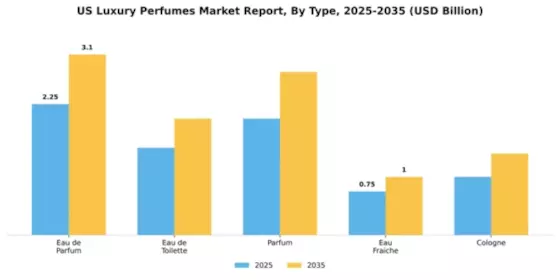
In the US luxury perfumes market, Eau de Parfum holds the largest market share, stemming from its balanced and long-lasting fragrance profile, making it a favorite among consumers seeking richness in scent. Following closely, Eau de Toilette and Cologne cater to a different demographic focused on lighter and more casual fragrance options. Parfum, characterized by its higher concentration of fragrance oils, is emerging rapidly, gaining traction among consumers who prefer potency in their scents. The growth trends in this segment are significantly driven by changing consumer preferences favoring long-lasting and luxurious fragrances. Marketing strategies that highlight the artistry of perfume-making and personalized scents are receiving heightened attention. Furthermore, the rising importance of sustainability is prompting brands to develop eco-friendly and ethically sourced products, making Eau Parfum a compelling choice and elevating Parfum to faster growth due to its premium nature.
Eau de Parfum (Dominant) vs. Eau Fraiche (Emerging)
Eau de Parfum is recognized as the dominant force in the luxury perfumes segment due to its optimal blend of lasting fragrance and affordability compared to the more concentrated Parfum. It encapsulates opulence while catering to a wider audience, appealing to those who appreciate quality without being overly extravagant. Conversely, Eau Fraiche has emerged as an attractive option for consumers who prefer a lighter scent that is refreshing and ideal for warmer climates. This segment targets a lifestyle shift towards more casual and everyday luxury, with brands increasingly innovating scents that resonate with younger consumers pursuing a more relaxed, yet upscale fragrance experience.
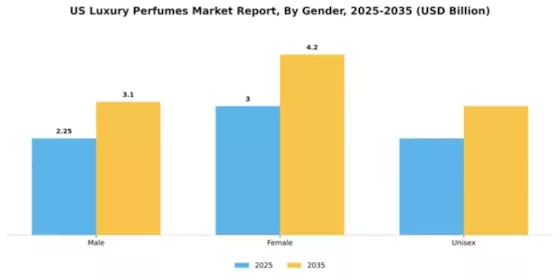
In the US luxury perfumes market, the distribution of market share among gender segments reveals that female fragrances overwhelmingly dominate, accounting for a significant majority. This is largely driven by the strong demand for diverse scent profiles and premium branding in the female segment, appealing to a broad consumer base with a variety of preferences and occasions for use. On the other hand, the male fragrance segment is the fastest-growing category, reflecting a noticeable shift in male consumer behavior towards luxury products. Factors such as increased marketing efforts focused on young men and a rise in grooming culture are propelling growth as more men seek luxurious fragrances to express individuality and style in their daily lives.
Female: Dominant vs. Male: Emerging
The female segment in the US luxury perfumes market stands out as the dominant force, characterized by extensive product ranges that cater to varied consumer tastes, from floral to woody scents. It benefits from established brand loyalty and frequent launches that enhance its allure. Conversely, the male segment, although smaller, is emerging rapidly, showcasing a trend towards elaborate scents that go beyond traditional options, fueled by collaborations with celebrities and influencers. This shift not only attracts younger male consumers but also elevates the perception of fragrances as essential lifestyle products, paving the way for continuous growth.
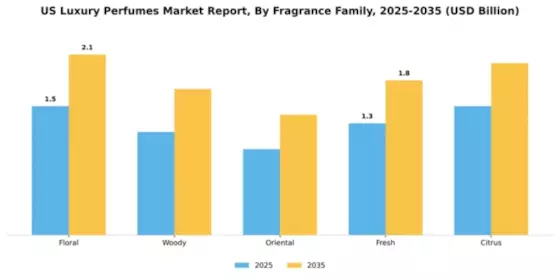
In the fragrance landscape, Floral fragrances hold the largest share within the segment, highly favored for their romantic and soft characteristics, appealing to a wide audience. Following closely, Woody fragrances are gaining traction, reflecting a significant rise in popularity among consumers seeking earthy and sophisticated notes, positioning themselves as an emerging preference in the segment. The growth trends in the fragrance family segment are influenced by shifts in consumer preferences towards both nostalgic and contemporary scent profiles. Floral fragrances continue to win over consumers for everyday use, while the surge in interest in natural and sustainable ingredients has propelled Woody fragrances into the fast lane of growth, appealing particularly to the eco-conscious demographic in the market.
Floral (Dominant) vs. Woody (Emerging)
Floral fragrances are characterized by their sweet and inviting notes, often drawing inspiration from various blooming flowers. This segment dominates the market due to its versatility, suitable for both casual and formal occasions, which appeals to a broad range of consumers. In contrast, Woody fragrances are becoming an emerging trend, recognized for their complex, earthy scents that evoke feelings of warmth and sophistication. Many consumers are now gravitating towards these fragrances, particularly younger demographics, looking for authenticity and depth, leading to their rapid growth. As the preferences evolve, the presence of both Floral and Woody fragrances reflects diverse consumer tastes and the dynamic nature of the fragrance landscape.
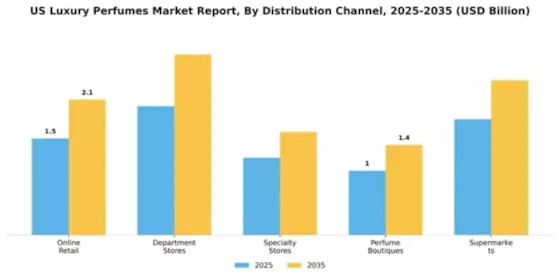
In the US luxury perfumes market, the distribution channel landscape is prominently led by Online Retail, which captures the largest share of market sales. This segment has experienced significant growth, aided by the rising trend of e-commerce and the increasing comfort of consumers in purchasing high-end fragrances online. Conversely, Department Stores maintain a strong market presence but are experiencing rapid growth as consumers seek personalized shopping experiences and exclusive offerings that enhance the luxury purchasing journey. Growth trends indicate a shift in consumer behavior, with a growing preference for convenience and the ability to explore a wide range of products online. Specialty Stores and Perfume Boutiques are also carving a niche for themselves, focusing on personalized customer experiences and exclusive product lines. However, the online segment continues to thrive as digital marketing strategies enhance brand visibility and customer engagement, making it a dominant force in the future.
Online Retail: Dominant vs. Department Stores: Emerging
Online Retail has emerged as the dominant force in the distribution of luxury perfumes, driven by consumer preferences for convenience and a comprehensive selection of products available at their fingertips. This channel is characterized by the ability to rapidly adapt to trends and offer exclusive online promotions, making it a favored choice among consumers. On the other hand, Department Stores, which are attaining emerging status, focus on creating immersive shopping experiences through personalized services and exclusive in-store offerings. While Department Stores may currently have a smaller share, their strategic collaborations with luxury brands and emphasis on enhancing customer experience position them well for growth in the competitive landscape.
Get more detailed insights about US Luxury Perfumes Market Request Free Sample
The luxury perfumes market in the US is characterized by a dynamic competitive landscape, driven by innovation, brand loyalty, and evolving consumer preferences. Key players such as Estée Lauder (US), L'Oreal (FR), and Chanel (FR) are at the forefront, each adopting distinct strategies to enhance their market presence. Estée Lauder (US) focuses on digital transformation and personalized marketing, leveraging data analytics to tailor offerings to consumer preferences. L'Oreal (FR), on the other hand, emphasizes sustainability and eco-friendly practices, aligning its product development with growing environmental concerns. Chanel (FR) maintains a strong emphasis on exclusivity and heritage, which resonates with its affluent customer base, thereby reinforcing its brand positioning in the luxury segment.The business tactics employed by these companies reflect a concerted effort to optimize supply chains and localize manufacturing, which enhances responsiveness to market demands. The competitive structure of the luxury perfumes market appears moderately fragmented, with a few dominant players exerting considerable influence. This fragmentation allows for niche brands to emerge, yet the collective strength of established companies shapes pricing strategies and market accessibility.
In October Estée Lauder (US) announced a partnership with a leading tech firm to develop an AI-driven fragrance customization tool. This strategic move is likely to enhance customer engagement by offering personalized scent experiences, thereby positioning Estée Lauder (US) as a pioneer in integrating technology with luxury fragrances. Such innovations may redefine consumer interactions with perfume brands, fostering deeper loyalty and satisfaction.
In September L'Oreal (FR) launched a new line of sustainable perfumes, utilizing biodegradable packaging and ethically sourced ingredients. This initiative not only aligns with global sustainability trends but also caters to the increasing consumer demand for environmentally responsible products. By prioritizing sustainability, L'Oreal (FR) could potentially capture a larger share of the eco-conscious market segment, enhancing its competitive edge.
In August Chanel (FR) unveiled a limited-edition fragrance collection inspired by its iconic heritage. This strategic release aims to reinforce brand loyalty among existing customers while attracting new clientele through exclusivity. By leveraging its rich history, Chanel (FR) appears to be effectively differentiating itself in a crowded market, emphasizing the emotional connection consumers have with luxury brands.
As of November the luxury perfumes market is witnessing trends such as digitalization, sustainability, and the integration of AI technologies. Strategic alliances are increasingly shaping the competitive landscape, enabling companies to pool resources and expertise. The shift from price-based competition to a focus on innovation, technology, and supply chain reliability is evident. Moving forward, differentiation will likely hinge on the ability to offer unique, personalized experiences that resonate with consumers, thereby redefining the parameters of competition in this sector.

The Luxury Perfumes Market is projected to grow at a 2.93% CAGR from 2025 to 2035, driven by rising disposable incomes, evolving consumer preferences, and innovative marketing strategies.
New opportunities lie in:
By 2035, the luxury perfumes market is expected to achieve robust growth, reflecting evolving consumer trends and preferences.
| MARKET SIZE 2024 | 7.5(USD Billion) |
| MARKET SIZE 2025 | 7.72(USD Billion) |
| MARKET SIZE 2035 | 10.3(USD Billion) |
| COMPOUND ANNUAL GROWTH RATE (CAGR) | 2.93% (2025 - 2035) |
| REPORT COVERAGE | Revenue Forecast, Competitive Landscape, Growth Factors, and Trends |
| BASE YEAR | 2024 |
| Market Forecast Period | 2025 - 2035 |
| Historical Data | 2019 - 2024 |
| Market Forecast Units | USD Billion |
| Key Companies Profiled | L'Oreal (FR), Estée Lauder (US), Coty (US), Chanel (FR), Dior (FR), Gucci (IT), Hermès (FR), Prada (IT), Burberry (GB) |
| Segments Covered | Type, Gender, Fragrance Family, Distribution Channel |
| Key Market Opportunities | Growing consumer interest in sustainable and eco-friendly luxury perfumes presents a unique market opportunity. |
| Key Market Dynamics | Shifting consumer preferences towards sustainable ingredients drive innovation in the luxury perfumes market. |
| Countries Covered | US |


Kindly complete the form below to receive a free sample of this Report

“This is really good guys. Excellent work on a tight deadline. I will continue to use you going forward and recommend you to others. Nice job”


“Thanks. It’s been a pleasure working with you, please use me as reference with any other Intel employees.”


“Thanks for sending the report it gives us a good global view of the Betaïne market.”


“Thank you, this will be very helpful for OQS.”


“We found the report very insightful! we found your research firm very helpful. I'm sending this email to secure our future business.”


“I am very pleased with how market segments have been defined in a relevant way for my purposes (such as "Portable Freezers & refrigerators" and "last-mile"). In general the report is well structured. Thanks very much for your efforts.”


“I have been reading the first document or the study, ,the Global HVAC and FP market report 2021 till 2026. Must say, good info! I have not gone in depth at all parts, but got a good indication of the data inside!”


“We got the report in time, we really thank you for your support in this process. I also thank to all of your team as they did a great job.”


“The Automotive 48V ECU Components Procurement Intelligence Study” was a complex project, but the Market Research Future (MRFR) team handled it with quality, agility, and customer-centricity. They delivered all requested data on time and within the agreed scope. The team, including Shubhendra Anand and Rahul Gotadki, was always readily available to clarify questions and swiftly implement necessary adjustments, driving the project to a successful conclusion within a very demanding timeframe.
I would also like to specifically commend Akshay Agarwal for his responsiveness and support at every stage—from our initial inquiry on May 6th through to final delivery on June 18th. His dedication made the entire process seamless.”



