Download Free Sample
Kindly complete the form below to receive a free sample of this Report
United States Population Health Management Market Research Report: Size, Share, Trend Analysis - Growth Outlook & Industry Forecast 2025 To 2035
As per Market Research Future analysis, the US population health management market size was estimated at 11.07 USD Billion in 2024. The US population health-management market is projected to grow from 11.8 USD Billion in 2025 to 22.54 USD Billion by 2035, exhibiting a compound annual growth rate (CAGR) of 6.6% during the forecast period 2025 - 2035
The US population health management market is experiencing a transformative shift towards data-driven and value-based care models.
| 2024 Market Size | 11.07 (USD Billion) |
| 2035 Market Size | 22.54 (USD Billion) |
| CAGR (2025 - 2035) | 6.68% |
Optum (US), Cerner (US), Epic Systems (US), Allscripts (US), IBM Watson Health (US), McKesson (US), Philips Healthcare (NL), Cognizant (US), Medtronic (US)
Our Impact
Enabled $4.3B Revenue Impact for Fortune 500 and Leading Multinationals
Partnering with 2000+ Global Organizations Each Year
30K+ Citations by Top-Tier Firms in the Industry
The population health-management market is currently experiencing a transformative phase, driven by advancements in technology and a growing emphasis on preventive care. Stakeholders are increasingly recognizing the importance of data analytics in managing health outcomes, which appears to enhance the ability to identify at-risk populations. This shift towards a more proactive approach in healthcare delivery suggests a potential reduction in overall healthcare costs while improving patient outcomes. Furthermore, the integration of telehealth services is likely to play a crucial role in expanding access to care, particularly for underserved communities. As healthcare systems adapt to these changes, the focus on personalized care plans and community-based interventions is becoming more pronounced, indicating a significant evolution in how health services are delivered. In addition, regulatory frameworks are evolving to support innovative practices within the population health-management market. Policymakers are increasingly advocating for value-based care models, which may incentivize healthcare providers to prioritize patient outcomes over service volume. This trend could lead to a more sustainable healthcare system, where resources are allocated more efficiently. Overall, the landscape of the population health-management market is shifting towards a model that emphasizes collaboration, technology integration, and a holistic view of patient health, which may ultimately lead to improved health equity across diverse populations.
The population health-management market is witnessing a surge in the utilization of data analytics tools. These tools enable healthcare providers to analyze patient data effectively, identifying trends and risk factors that can inform targeted interventions. By leveraging data, organizations can enhance their decision-making processes, leading to improved health outcomes and more efficient resource allocation.
Telehealth services are becoming increasingly prevalent within the population health-management market. This trend reflects a growing recognition of the need for accessible healthcare solutions, particularly in rural and underserved areas. By facilitating remote consultations and monitoring, telehealth can enhance patient engagement and adherence to treatment plans, ultimately contributing to better health management.
There is a notable shift towards value-based care models in the population health-management market. This approach emphasizes the quality of care provided rather than the quantity of services rendered. As healthcare systems adopt this model, providers are incentivized to focus on patient outcomes, which may lead to improved health services and reduced costs over time.
The population health-management market is increasingly influenced by a focus on health equity. There is a growing recognition of the disparities in health outcomes among different demographic groups in the US. As a result, healthcare organizations are prioritizing initiatives aimed at addressing these inequities. This includes targeted outreach programs and culturally competent care models designed to engage underserved populations. Recent studies indicate that addressing social determinants of health can lead to a 30% improvement in health outcomes for marginalized communities. Consequently, this emphasis on health equity is expected to drive the population health-management market forward.
The population health-management market is experiencing a notable increase in demand for preventive care services. This shift is largely driven by a growing awareness among patients regarding the importance of early detection and management of chronic diseases. As healthcare providers focus on improving patient outcomes, they are increasingly adopting population health strategies that emphasize preventive measures. According to recent data, nearly 70% of healthcare organizations in the US are investing in preventive care initiatives. This trend not only enhances patient health but also reduces overall healthcare costs, thereby creating a favorable environment for the population health-management market.
The integration of advanced technology into healthcare systems is a significant driver of the population health-management market. Technologies such as artificial intelligence (AI), machine learning, and big data analytics are being utilized to analyze patient data more effectively. This technological advancement allows healthcare providers to identify at-risk populations and tailor interventions accordingly. In fact, it is estimated that the adoption of AI in healthcare could save the US healthcare system approximately $150 billion annually by 2026. Such innovations are likely to enhance the efficiency and effectiveness of population health management, thereby propelling market growth.
Regulatory support for value-based care models is emerging as a crucial driver of the population health-management market. The US government has implemented various policies aimed at incentivizing healthcare providers to focus on patient outcomes rather than service volume. Programs such as the Medicare Shared Savings Program encourage providers to adopt population health strategies that improve care quality while reducing costs. As a result, healthcare organizations are increasingly aligning their practices with these regulatory frameworks, which is likely to enhance the growth of the population health-management market. The potential for financial rewards under these models further motivates providers to invest in population health initiatives.
Increased collaboration among various stakeholders in the healthcare ecosystem is a key driver of the population health-management market. Healthcare providers, payers, and community organizations are recognizing the importance of working together to improve health outcomes. Collaborative efforts often lead to the sharing of resources, data, and best practices, which can enhance the effectiveness of population health initiatives. For instance, partnerships between hospitals and local health departments have been shown to reduce hospital readmission rates by up to 20%. This trend towards collaboration is likely to foster innovation and efficiency in the population health-management market.
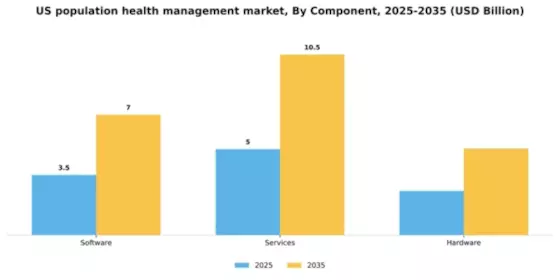
In the US population health-management market, the Component segment is dominated by Software, which holds the largest market share due to its critical role in data analytics, patient engagement, and care coordination. Coupled with the rising adoption of cloud-based solutions, Software is cementing its position, while Services follow closely, contributing significantly through consulting, implementation, and support, which are essential for driving effective health management. The growth trends in this segment reveal a clear preference for integrated, technology-driven solutions. The increasing demand for personalized care, driven by patient-centric models, has made Services the fastest-growing aspect, as healthcare entities are leaning towards consultative and managed services to optimize operational efficiency. Meanwhile, Software continues to evolve and expand functionalities, addressing the complexities of population health.
Software (Dominant) vs. Services (Emerging)
Software remains the dominant component in the US population health-management market, effectively facilitating data handling and analytics, while also enhancing patient interaction through innovative applications. On the other hand, Services are seen as an emerging force, focusing on specialized consulting and tailored implementations that are necessary for achieving operational success. This dual dynamic enhances overall health management strategies, with Software providing the foundational technology and Services ensuring that healthcare organizations can successfully navigate implementation challenges. As the market adapts, the synergy between these components is expected to foster improved patient outcomes and operational efficiencies.
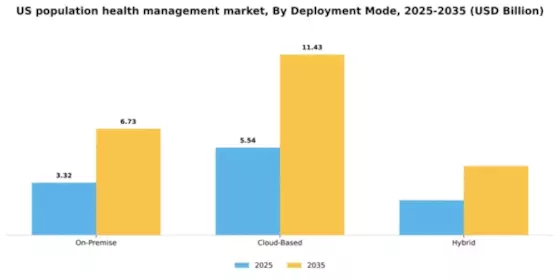
In the US population health-management market, deployment modes have shown significant differentiation, with Cloud-Based solutions commanding the highest market share. As healthcare organizations prioritize remote access and data sharing, Cloud-Based platforms have become the preferred choice, fostering a more integrated approach to health management. On-Premise solutions, while still prevalent, have notably receded in market share due to the increasing reliance on cost-effective and flexible Cloud solutions. Growth trends indicate that the Hybrid deployment mode is emerging rapidly, driven by the need for balancing security with flexibility. Many organizations are adopting Hybrid solutions that combine On-Premise security with Cloud-based accessibility, responding to the demand for customizable health management systems. This shift is also propelled by advancements in technology, as healthcare providers look for scalable solutions that cater to varying operational needs.
Cloud-Based (Dominant) vs. Hybrid (Emerging)
Cloud-Based platforms are characterized by their ability to deliver scalable solutions that enhance collaborative patient care while reducing operational overhead. These solutions offer real-time data analytics and seamless integration with third-party applications, allowing healthcare providers to streamline workflows and improve patient outcomes. On the other hand, Hybrid deployment models present a unique opportunity for organizations to leverage both Cloud versatility and On-Premise security. Such flexibility allows entities to maintain sensitive data locally while enjoying the benefits of Cloud infrastructure. This emerging segment is particularly attractive to organizations that are cautious about data privacy yet still desire the agility and innovative capabilities provided by the Cloud.
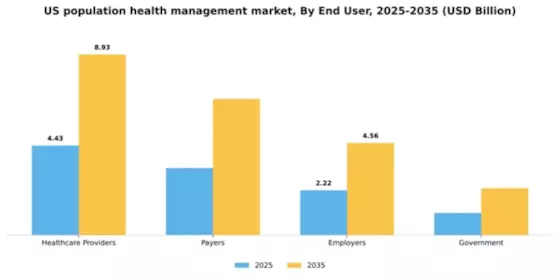
In the US population health-management market, the distribution among end-user segments reveals a significant dominance of healthcare providers, who hold the largest share due to their pivotal role in direct patient care and management. Payers, however, are rapidly gaining traction, driven by their increasing involvement in healthcare reimbursement models and cost containment strategies that leverage health management solutions. Growth trends indicate that while healthcare providers remain the mainstay of the market, payers are emerging as the fastest-growing segment, propelled by changes in regulations and a stronger focus on value-based care. The drive toward improved health outcomes and reduced costs is encouraging payers to adopt innovative solutions, subsequently reshaping their role in the health management landscape.
Healthcare Providers: Dominant vs. Payers: Emerging
Healthcare providers represent the dominant segment within the US population health-management market due to their essential function in delivering medical services, managing patient care, and implementing health programs. They utilize health management platforms to streamline operations and enhance patient outcomes, thereby ensuring their leading position. Conversely, payers are emerging as a crucial segment, driven by the need for efficient management of healthcare costs and increased interest in preventive care initiatives. With the transition towards value-based care, payers are leveraging data analytics and digital health solutions, marking a transformation in their strategies that align closely with patient-centered approaches, thus enhancing their market presence.
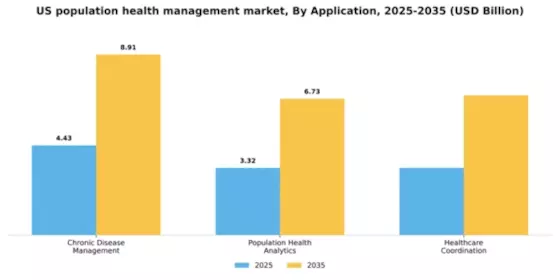
In the US population health-management market, Chronic Disease Management holds the largest market share, primarily due to the increasing prevalence of chronic diseases necessitating consistent monitoring and care. This segment has garnered significant attention from healthcare providers aiming to implement effective management strategies to minimize hospital readmissions and improve patient outcomes. Following closely, Population Health Analytics is emerging as a transformative force, leading to innovative solutions for enhanced decision-making and resource allocation. The growth dynamics of these segments are heavily influenced by factors such as technological advancements in data analytics and the rising emphasis on value-based care. Chronic Disease Management continues to receive funding and initiative support as healthcare systems strive for personalized care models. On the other hand, Population Health Analytics is recognized for its rapid growth potential as healthcare organizations increasingly leverage big data to understand health trends and patterns more effectively.
Chronic Disease Management (Dominant) vs. Population Health Analytics (Emerging)
Chronic Disease Management is positioned as the dominant application in the US population health-management market, focusing on tailored interventions for patients suffering from conditions like diabetes and hypertension. This segment is characterized by a growing implementation of telehealth solutions, enabling ongoing patient engagement and real-time monitoring. Conversely, Population Health Analytics is an emerging segment that harnesses advanced data analytics to provide insights into health determinants and outcomes. It is crucial for identifying at-risk populations and planning community health strategies. Both segments showcase complementary benefits, with Chronic Disease Management emphasizing direct patient interaction while Population Health Analytics supports broader health initiatives through data-driven insights.
Get more detailed insights about US Population Health Management Market Request Free Sample
The population health-management market is currently characterized by a dynamic competitive landscape, driven by the increasing demand for integrated healthcare solutions and the need for improved patient outcomes. Key players such as Optum (US), Cerner (US), and Epic Systems (US) are strategically positioned to leverage their technological capabilities and extensive data analytics to enhance service delivery. Optum (US), for instance, focuses on expanding its digital health solutions, while Cerner (US) emphasizes interoperability and data integration to streamline healthcare processes. These strategies collectively foster a competitive environment that prioritizes innovation and patient-centric care. In terms of business tactics, companies are increasingly localizing their operations and optimizing supply chains to enhance efficiency and responsiveness. The market appears moderately fragmented, with several players vying for market share, yet the influence of major companies remains substantial. This competitive structure allows for a diverse range of offerings, catering to various healthcare needs while also driving advancements in technology and service delivery. In October 2025, Optum (US) announced a partnership with a leading telehealth provider to enhance its virtual care capabilities. This strategic move is likely to bolster Optum's position in the market by expanding access to care and improving patient engagement through digital platforms. Such partnerships are indicative of a broader trend towards integrating technology into healthcare delivery, which is essential for meeting the evolving needs of patients. In September 2025, Cerner (US) launched a new analytics platform aimed at improving population health management through predictive modeling. This initiative is significant as it enables healthcare providers to identify at-risk populations more effectively, thereby facilitating timely interventions. The emphasis on data-driven decision-making reflects a growing recognition of the importance of analytics in enhancing healthcare outcomes. In August 2025, Epic Systems (US) introduced a suite of tools designed to support care coordination across various healthcare settings. This development underscores Epic's commitment to interoperability and seamless information exchange, which are critical for effective population health management. By enhancing care coordination, Epic is likely to improve patient outcomes and streamline healthcare delivery processes. As of November 2025, the competitive trends in the population health-management market are increasingly defined by digitalization, sustainability, and the integration of artificial intelligence (AI). Strategic alliances among key players are shaping the landscape, fostering innovation and enhancing service delivery capabilities. The shift from price-based competition to a focus on technological advancement and supply chain reliability is evident, suggesting that future competitive differentiation will hinge on the ability to innovate and adapt to changing market demands.



The Population Health Management Market is projected to grow at a 6.68% CAGR from 2025 to 2035, driven by technological advancements, increasing healthcare costs, and a focus on preventive care.
New opportunities lie in:
By 2035, the market is expected to achieve substantial growth, driven by innovation and strategic investments.
| MARKET SIZE 2024 | 11.07(USD Billion) |
| MARKET SIZE 2025 | 11.8(USD Billion) |
| MARKET SIZE 2035 | 22.54(USD Billion) |
| COMPOUND ANNUAL GROWTH RATE (CAGR) | 6.68% (2025 - 2035) |
| REPORT COVERAGE | Revenue Forecast, Competitive Landscape, Growth Factors, and Trends |
| BASE YEAR | 2024 |
| Market Forecast Period | 2025 - 2035 |
| Historical Data | 2019 - 2024 |
| Market Forecast Units | USD Billion |
| Key Companies Profiled | Optum (US), Cerner (US), Epic Systems (US), Allscripts (US), IBM Watson Health (US), McKesson (US), Philips Healthcare (NL), Cognizant (US), Medtronic (US) |
| Segments Covered | Component, Deployment Mode, End User, Application |
| Key Market Opportunities | Integration of advanced analytics and artificial intelligence enhances patient engagement in the population health-management market. |
| Key Market Dynamics | Growing emphasis on data analytics and technology integration drives innovation in population health management solutions. |
| Countries Covered | US |



Kindly complete the form below to receive a free sample of this Report

“This is really good guys. Excellent work on a tight deadline. I will continue to use you going forward and recommend you to others. Nice job”


“Thanks. It’s been a pleasure working with you, please use me as reference with any other Intel employees.”


“Thanks for sending the report it gives us a good global view of the Betaïne market.”


“Thank you, this will be very helpful for OQS.”


“We found the report very insightful! we found your research firm very helpful. I'm sending this email to secure our future business.”


“I am very pleased with how market segments have been defined in a relevant way for my purposes (such as "Portable Freezers & refrigerators" and "last-mile"). In general the report is well structured. Thanks very much for your efforts.”


“I have been reading the first document or the study, ,the Global HVAC and FP market report 2021 till 2026. Must say, good info! I have not gone in depth at all parts, but got a good indication of the data inside!”


“We got the report in time, we really thank you for your support in this process. I also thank to all of your team as they did a great job.”


“The Automotive 48V ECU Components Procurement Intelligence Study” was a complex project, but the Market Research Future (MRFR) team handled it with quality, agility, and customer-centricity. They delivered all requested data on time and within the agreed scope. The team, including Shubhendra Anand and Rahul Gotadki, was always readily available to clarify questions and swiftly implement necessary adjustments, driving the project to a successful conclusion within a very demanding timeframe.
I would also like to specifically commend Akshay Agarwal for his responsiveness and support at every stage—from our initial inquiry on May 6th through to final delivery on June 18th. His dedication made the entire process seamless.”



