Download Free Sample
Kindly complete the form below to receive a free sample of this Report
US Vacation Rental Market Size, Share, Industry Trend & Analysis Research Report: By Accommodation Type (Home, Apartments, Resort/Condominium, Others) andBy Booking Mode (Online, Offline)- Forecast to 2035
As per Market Research Future analysis, the US vacation rental market size was estimated at 20.08 USD Billion in 2024.. The US vacation rental market is projected to grow from 21.18 USD Billion in 2025 to 36.19 USD Billion by 2035, exhibiting a compound annual growth rate (CAGR) of 5% during the forecast period 2025 - 2035
The US vacation rental market is experiencing a dynamic shift towards unique and flexible accommodation options.
| 2024 Market Size | 20.08 (USD Billion) |
| 2035 Market Size | 36.19 (USD Billion) |
| CAGR (2025 - 2035) | 5.5% |
Airbnb (US), Vrbo (US), Booking.com (NL), Tripadvisor (US), HomeAway (US), FlipKey (US), Vacasa (US), Sonder (US), OYO Rooms (IN)
Our Impact
Enabled $4.3B Revenue Impact for Fortune 500 and Leading Multinationals
Partnering with 2000+ Global Organizations Each Year
30K+ Citations by Top-Tier Firms in the Industry
the vacation rental market is currently experiencing a dynamic shift, driven by changing consumer preferences and technological advancements. Travelers increasingly seek unique and personalized experiences, which vacation rentals can provide. This shift is evident as more individuals opt for accommodations that offer local flavor and amenities not typically found in traditional hotels. Additionally, the rise of remote work has led to longer stays, with many individuals choosing to work from vacation rentals, thereby blurring the lines between leisure and business travel. This trend appears to be reshaping the landscape of the market, as property owners adapt to meet the demands of this new clientele. Moreover, the integration of technology into the vacation rental market is noteworthy. Platforms facilitating bookings have enhanced user experiences, making it easier for guests to find and reserve properties. The use of smart home technology within rentals is also on the rise, providing added convenience and security for guests. As the market continues to evolve, it seems likely that these technological advancements will play a crucial role in shaping future offerings, ensuring that property owners remain competitive and responsive to consumer needs. Overall, the vacation rental market is expected to continue growing, driven by innovation and changing traveler expectations.
Travelers are increasingly seeking distinctive accommodations that reflect local culture and provide personalized experiences. This trend indicates a shift away from conventional lodging options, as guests prioritize authenticity and local engagement during their stays.
The blending of work and leisure travel is becoming more prevalent, with many individuals opting for extended stays in vacation rentals. This trend suggests that property owners may need to cater to remote workers by offering amenities conducive to productivity.
The incorporation of smart technology in vacation rentals is gaining traction, enhancing guest convenience and security. This trend highlights the importance of adapting to technological advancements to meet evolving consumer expectations.
The proliferation of online booking platforms has revolutionized the vacation rental market, making it easier for consumers to find and book accommodations. These platforms provide a user-friendly interface, allowing travelers to compare options, read reviews, and secure reservations with ease. Recent figures show that over 60% of vacation rentals in the US are booked through online platforms, highlighting their significance in the market. This expansion has also led to increased competition among property owners, driving innovation and improvements in service quality within the vacation rental market.
Economic conditions play a crucial role in shaping the vacation rental market. As disposable income levels rise, consumers are more inclined to allocate funds towards travel and leisure activities. Recent statistics indicate that travel spending in the US has increased by 5% year-over-year, with a significant portion directed towards vacation rentals. This trend suggests that as the economy strengthens, the vacation rental market may continue to flourish, attracting a diverse range of travelers. Additionally, fluctuations in fuel prices and inflation can influence travel decisions, potentially impacting the demand for vacation rentals in various regions.
In the wake of heightened awareness regarding health and safety, the vacation rental market is adapting to meet new consumer expectations. Property owners are implementing rigorous cleaning protocols and safety measures to ensure guest confidence. Data indicates that 70% of travelers prioritize cleanliness when selecting accommodations, which has prompted many vacation rental operators to enhance their hygiene practices. This focus on health and safety not only addresses consumer concerns but also positions the vacation rental market as a responsible choice for travelers seeking peace of mind during their stays.
Sustainability is becoming an increasingly important consideration for travelers, influencing their choices in the vacation rental market. Many consumers are actively seeking eco-friendly accommodations that align with their values. Recent surveys indicate that approximately 40% of travelers are willing to pay a premium for sustainable lodging options. This trend is prompting property owners to adopt environmentally friendly practices, such as energy-efficient appliances and waste reduction strategies. As awareness of sustainability grows, the vacation rental market is likely to see a surge in demand for properties that prioritize eco-consciousness.
The vacation rental market is experiencing a notable shift as travelers increasingly favor alternative accommodations over traditional hotels. This trend is driven by a desire for unique and personalized experiences, which vacation rentals can provide. According to recent data, approximately 30% of travelers in the US now prefer vacation rentals for their flexibility and home-like amenities. This growing preference is reshaping the vacation rental market, as property owners adapt to meet the evolving demands of consumers seeking distinctive lodging options. The ability to offer tailored experiences, such as local insights and personalized services, positions vacation rentals as a compelling choice for modern travelers.
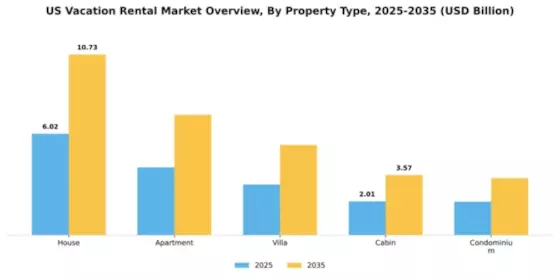
In the US vacation rental market, the distribution of property types showcases a diverse range of offerings, with houses dominating the segment. They account for a significant portion of overall rentals, attracting families and larger groups seeking comfort and space. Apartments, meanwhile, are carving a niche for themselves, especially in urban areas, catering to travelers looking for convenience and accessibility, representing a growing share. Growth trends indicate that while houses remain the most preferred option, apartments are rapidly gaining traction as the fastest-growing segment. The rise in demand for short-term rentals in city centers, coupled with the increasing number of remote workers, has fueled this shift. Additionally, villas, cabins, and condominiums add unique experiences, appealing to different traveler preferences, contributing to a competitive landscape.
House (Dominant) vs. Apartment (Emerging)
Houses stand as the dominant property type in the US vacation rental market, attracting diverse clientele due to their spacious layouts and family-friendly amenities. They offer a variety of options, from luxury homes to cozy retreats, catering to large groups or families seeking home-like experiences during their travels. On the other hand, apartments represent an emerging segment, especially popular among millennials and young professionals who value convenience and proximity to urban attractions. As cities evolve and remote work becomes more prevalent, the demand for apartment rentals continues to surge, reflecting a shift in traveler preferences towards flexible living spaces that accommodate both leisure and work.
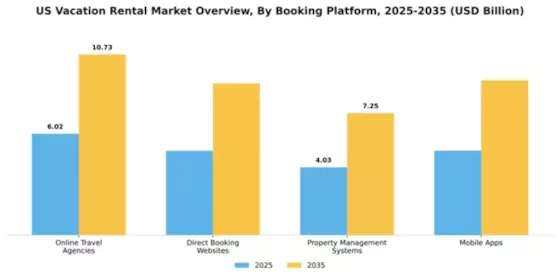
In the US vacation rental market, Online Travel Agencies (OTAs) hold the largest market share, showcasing their strong presence and popularity among travelers seeking rental options. These platforms benefit from extensive marketing reach and established brand reputations, further solidifying their position. On the other hand, Direct Booking Websites are gaining ground due to increasing consumer preference for direct deals and lower fees. As a result, their market share is steadily growing, reflecting a significant shift in consumer behavior towards personal engagement with property owners. Growth trends in the booking platform segment are being driven by technological advancements and changing consumer preferences. The convenience offered by mobile apps is making them a preferred choice for many users, leading to swift adoption and high growth rates in this area. Additionally, the market is witnessing a trend towards integrated platforms that combine various services, providing a seamless experience for users. As consumers become more digitally savvy and seek personalized interactions, platforms that facilitate direct bookings are projected to experience the fastest growth.
Online Travel Agencies (Dominant) vs. Direct Booking Websites (Emerging)
Online Travel Agencies are well-established platforms that dominate the US vacation rental market due to their extensive inventory of properties and user-friendly interfaces. They offer robust search and filtering options, making it easy for consumers to find suitable accommodations. In contrast, Direct Booking Websites are emerging as a strong alternative, appealing to consumers by highlighting the benefits of personal interaction with property owners and often lower costs. These platforms focus on building trust and offering unique experiences that are sometimes not available through OTAs. As both segments evolve, the competition between them is likely to drive innovation and enhance customer satisfaction.
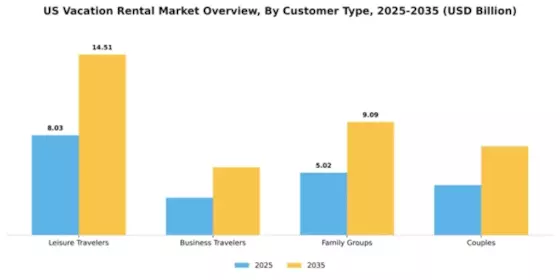
The US vacation rental market is primarily dominated by Leisure Travelers, who account for a substantial share of bookings due to their inclination towards exploring diverse destinations. Family Groups and Couples also contribute significantly to the market, but they have relatively smaller shares compared to Leisure Travelers. Meanwhile, Business Travelers are gaining traction, showcasing a steady growth in demand as more professionals opt for vacation rentals for their travel needs. The growth trends in the customer type segment are largely driven by evolving travel preferences and the rise of remote work culture. Leisure Travelers continue to show strong interest due to affordability and unique accommodations. Business Travelers, on the other hand, are increasingly seeking vacation rentals as alternatives to traditional hotels, attracted by the flexibility and comfort that these properties offer. This shift is indicative of broader changes in work and leisure habits, making Business Travelers an emerging focus area for rental companies.
Leisure Travelers: Dominant vs. Business Travelers: Emerging
Leisure Travelers have established themselves as the dominant force in the US vacation rental market by prioritizing unique experiences and affordable options over conventional hotel stays. Their preferences often lead to high demand for properties that offer local culture, amenities, and comfort, appealing mainly to tourists and vacationers seeking enjoyable getaways. Conversely, Business Travelers represent an emerging segment with distinct needs, including certainty in connectivity and amenities conducive to work. As remote work increases and professionals combine leisure with business trips, the demand for vacation rentals catering to this segment is expected to rise significantly, influencing property offerings and marketing strategies in the industry.
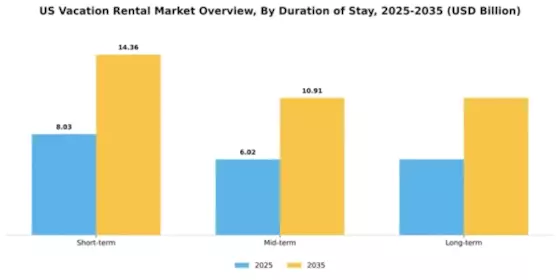
The US vacation rental market exhibits a diverse distribution among various duration of stay segments, with mid-term rentals capturing the largest share. This segment has gained significant traction, especially among digital nomads and remote workers, who seek fully furnished accommodations for extended periods. Meanwhile, short-term rentals, traditionally dominated by vacationers, are experiencing rapid growth driven by the increasing popularity of platforms facilitating spontaneous getaways. Recent trends indicate a surge in demand for short-term rentals as consumers prioritize flexibility and unique experiences over traditional hotel stays. The post-pandemic recovery has further fueled this growth, as more travelers opt for short-term stays to avoid crowded hotels. Additionally, mid-term rentals are bolstered by a rising trend in housing shortages, pushing individuals toward such options as viable living solutions during transitional periods.
Mid-term: Rental Living (Dominant) vs. Short-term: Spontaneous Getaways (Emerging)
Mid-term rentals have become a dominant force within the US vacation rental market, appealing to a demographic seeking longer stay durations that allow for a more integrated experience in local communities. These rentals often provide additional amenities like home offices and full kitchens, catering to remote workers and long-term travelers. In contrast, short-term rentals emphasize spontaneity and flexibility, attracting vacationers looking for unique and immersive experiences. While these rentals often prioritize location and price, they also leverage similarly furnished spaces to appeal to quick getaways. Both segments reflect evolving consumer preferences, with mid-term rentals standing strong amidst shifting housing dynamics, while short-term options rapidly adapt to meet the cravings for memorable, immediate getaways.
Get more detailed insights about US Vacation Rental Market Request Free Sample
The vacation rental market in the US is characterized by a dynamic competitive landscape, driven by evolving consumer preferences and technological advancements. Major players such as Airbnb (US), Vrbo (US), and Vacasa (US) are at the forefront, each adopting distinct strategies to enhance their market positioning. Airbnb (US) continues to innovate its platform, focusing on user experience and expanding its offerings to include unique stays and experiences. Vrbo (US), on the other hand, emphasizes family-oriented vacation rentals, leveraging its brand heritage to attract a specific demographic. Vacasa (US) is increasingly investing in technology to streamline property management, indicating a trend towards operational efficiency that is reshaping the competitive environment.The business tactics employed by these companies reflect a moderately fragmented market structure, where localized strategies and supply chain optimization play crucial roles. Companies are increasingly localizing their offerings to cater to regional preferences, which enhances customer satisfaction and loyalty. The collective influence of key players is significant, as they not only compete for market share but also set industry standards that smaller operators often follow.
In October Airbnb (US) announced a partnership with a leading travel technology firm to enhance its AI-driven customer service capabilities. This strategic move is likely to improve user engagement and streamline booking processes, positioning Airbnb (US) as a leader in customer experience within the vacation rental sector. The integration of advanced AI tools may also provide insights into consumer behavior, allowing for more personalized marketing strategies.
In September Vrbo (US) launched a new marketing campaign targeting multi-generational families, highlighting properties that accommodate larger groups. This initiative appears to be a strategic response to the growing trend of family travel, suggesting that Vrbo (US) is keen on solidifying its niche in the market. By focusing on family-friendly features, Vrbo (US) may enhance its appeal and drive bookings during peak travel seasons.
In August Vacasa (US) expanded its portfolio by acquiring a regional property management company, which is indicative of its aggressive growth strategy. This acquisition not only increases Vacasa's inventory but also enhances its operational capabilities in key markets. Such strategic actions may allow Vacasa (US) to leverage economies of scale and improve service delivery, thereby strengthening its competitive position.
As of November the vacation rental market is witnessing trends such as digitalization, sustainability, and the integration of AI technologies. Companies are increasingly forming strategic alliances to enhance their service offerings and operational efficiencies. The competitive differentiation is likely to evolve from traditional price-based competition to a focus on innovation, technology, and reliability in supply chains. This shift suggests that companies that prioritize technological advancements and sustainable practices may gain a competitive edge in the future.






Recent developments in the US Vacation Rental Market have seen significant shifts, particularly in the realms of growth and competition among key players like Airbnb, Vrbo, and Expedia Group. Airbnb has continued to expand its offerings and introduce new features to enhance user experience, while Vrbo is focusing on family-oriented vacation options to capture a wider market. In September 2023, OYO Rooms announced a strategic partnership with TurnKey Vacation Rentals to expand its footprint in the US, aiming to augment its portfolio of vacation rental properties.
In addition, Plum Guide has been gaining traction, emphasizing high-quality listings and a rigorous vetting process to attract discerning travelers. The market valuation of companies such as Vacasa and Sonder has shown upward momentum, driven by increased travel demand post-pandemic. Notably, the US vacation rental sector has experienced substantial growth over the past few years, with reported revenue leaps in 2022 and 2023 as travel restrictions lifted. The Federal Reserve's interest rate decisions also play a role in shaping the market dynamics, influencing consumer spending on travel and accommodations.
As competition intensifies, businesses in the US vacation rental market are strategizing to enhance their offerings in this expanding landscape.
The Vacation Rental Market is projected to grow at a 5.5% CAGR from 2025 to 2035, driven by increased travel demand, technological advancements, and evolving consumer preferences.
New opportunities lie in:
By 2035, the vacation rental market is expected to be robust, reflecting strong growth and innovation.
| MARKET SIZE 2024 | 20.08(USD Billion) |
| MARKET SIZE 2025 | 21.18(USD Billion) |
| MARKET SIZE 2035 | 36.19(USD Billion) |
| COMPOUND ANNUAL GROWTH RATE (CAGR) | 5.5% (2025 - 2035) |
| REPORT COVERAGE | Revenue Forecast, Competitive Landscape, Growth Factors, and Trends |
| BASE YEAR | 2024 |
| Market Forecast Period | 2025 - 2035 |
| Historical Data | 2019 - 2024 |
| Market Forecast Units | USD Billion |
| Key Companies Profiled | Airbnb (US), Vrbo (US), Booking.com (NL), Tripadvisor (US), HomeAway (US), FlipKey (US), Vacasa (US), Sonder (US), OYO Rooms (IN) |
| Segments Covered | Property Type, Booking Platform, Customer Type, Duration of Stay |
| Key Market Opportunities | Integration of smart home technology enhances guest experience in the vacation rental market. |
| Key Market Dynamics | Rising consumer preference for unique accommodations drives competition and innovation in the vacation rental market. |
| Countries Covered | US |
The overall market valuation was $20.08 Billion in 2024.
The projected valuation for 2035 is $36.19 Billion.
The expected CAGR for the market during the forecast period 2025 - 2035 is 5.5%.
In 2024, houses generated the highest revenue at $10.73 Billion.
Leisure travelers contributed $8.03 Billion to the market in 2024.
Online travel agencies generated $6.02 Billion in revenue in 2024.
The projected revenue for apartments by 2035 is $7.15 Billion.
Mid-term stays are expected to generate $10.91 Billion by 2035.
Property management systems generated $4.03 Billion in revenue in 2024.
Family groups are projected to see the highest revenue growth, reaching $9.09 Billion by 2035.


Kindly complete the form below to receive a free sample of this Report

“This is really good guys. Excellent work on a tight deadline. I will continue to use you going forward and recommend you to others. Nice job”


“Thanks. It’s been a pleasure working with you, please use me as reference with any other Intel employees.”


“Thanks for sending the report it gives us a good global view of the Betaïne market.”


“Thank you, this will be very helpful for OQS.”


“We found the report very insightful! we found your research firm very helpful. I'm sending this email to secure our future business.”


“I am very pleased with how market segments have been defined in a relevant way for my purposes (such as "Portable Freezers & refrigerators" and "last-mile"). In general the report is well structured. Thanks very much for your efforts.”


“I have been reading the first document or the study, ,the Global HVAC and FP market report 2021 till 2026. Must say, good info! I have not gone in depth at all parts, but got a good indication of the data inside!”


“We got the report in time, we really thank you for your support in this process. I also thank to all of your team as they did a great job.”


“The Automotive 48V ECU Components Procurement Intelligence Study” was a complex project, but the Market Research Future (MRFR) team handled it with quality, agility, and customer-centricity. They delivered all requested data on time and within the agreed scope. The team, including Shubhendra Anand and Rahul Gotadki, was always readily available to clarify questions and swiftly implement necessary adjustments, driving the project to a successful conclusion within a very demanding timeframe.
I would also like to specifically commend Akshay Agarwal for his responsiveness and support at every stage—from our initial inquiry on May 6th through to final delivery on June 18th. His dedication made the entire process seamless.”



