Vehicle Roadside Assistance Market
Vehicle Roadside Assistance Market Summary
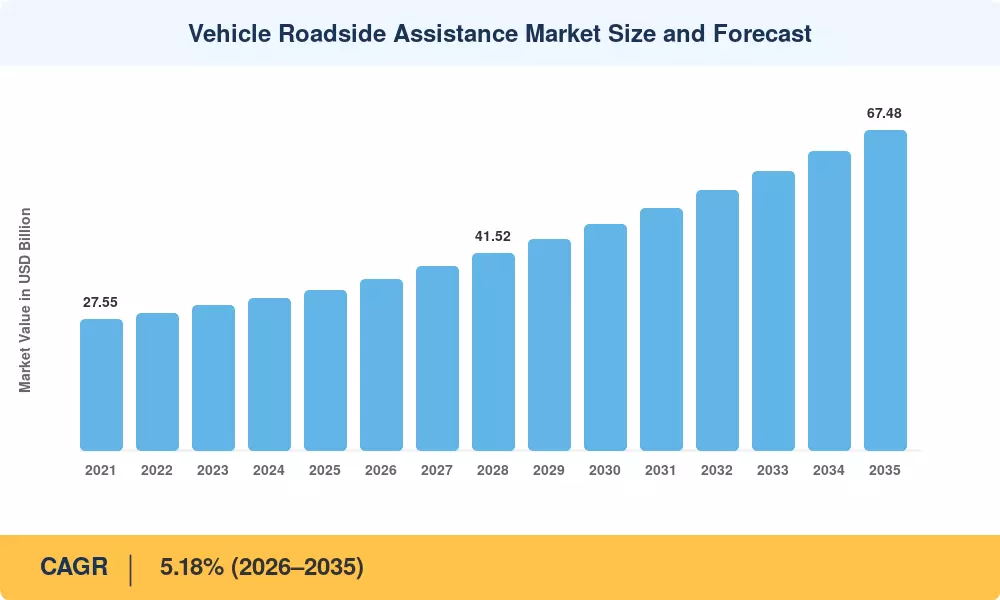
As per Market Research Future analysis, the Vehicle Roadside Assistance Market Size was estimated at 94.58 USD Billion in 2024. The Vehicle Roadside Assistance industry is projected to grow from 99.84 USD Billion in 2025 to 171.38 USD Billion by 2035, exhibiting a compound annual growth rate (CAGR) of 5.55% during the forecast period 2025 - 2035
Key Market Trends & Highlights
The Vehicle Roadside Assistance Market is experiencing dynamic growth driven by technological advancements and evolving consumer expectations.
- Technological integration is reshaping service delivery in the Vehicle Roadside Assistance Market, particularly in North America.
- Consumer expectations are shifting towards more immediate and efficient roadside assistance solutions, especially in the Asia-Pacific region.
- The towing segment remains the largest, while tire repair and replacement services are emerging as the fastest-growing segment.
- Market drivers such as increasing vehicle ownership and partnerships with automotive manufacturers are propelling growth in both passenger cars and heavy commercial vehicles.
Market Size & Forecast
| 2024 Market Size | 94.58 (USD Billion) |
| 2035 Market Size | 171.38 (USD Billion) |
| CAGR (2025 - 2035) | 5.55% |
Major Players
AAA (US), Allstate (US), Agero (US), RAC (GB), Nationwide (US), BCAA (CA), Good Sam (US), Roadside Masters (US), Emergency Roadside Assistance (US)
Vehicle Roadside Assistance Market Trends
The Vehicle Roadside Assistance Market is currently experiencing a notable transformation, driven by advancements in technology and changing consumer expectations. As vehicles become increasingly sophisticated, the demand for comprehensive roadside assistance services appears to be on the rise. Consumers now seek not only traditional services such as towing and fuel delivery but also more innovative solutions, including mobile app integration and real-time tracking. This shift indicates a growing preference for convenience and efficiency, compelling service providers to adapt their offerings accordingly. Furthermore, the increasing prevalence of electric vehicles may also influence the types of assistance required, as these vehicles often necessitate specialized support. In addition to technological advancements, the Vehicle Roadside Assistance Market is likely influenced by the evolving landscape of mobility services. The rise of ride-sharing and car-sharing platforms suggests that consumers are becoming more reliant on flexible transportation options. This trend may lead to a greater emphasis on-demand assistance services, as users expect immediate support in various situations. Moreover, the integration of artificial intelligence and data analytics into service operations could enhance response times and customer satisfaction. Overall, the Vehicle Roadside Assistance Market appears poised for growth, driven by innovation and changing consumer behaviors.
Technological Integration
The incorporation of advanced technologies into roadside assistance services is becoming increasingly prevalent. Mobile applications and GPS tracking systems are enhancing the customer experience by providing real-time updates and streamlined communication. This trend suggests that consumers value immediacy and transparency in service delivery.
Shift in Consumer Expectations
As consumer preferences evolve, there is a noticeable shift towards more comprehensive and flexible roadside assistance options. Customers are now seeking services that extend beyond traditional offerings, indicating a demand for tailored solutions that cater to individual needs and preferences.
Impact of Electric Vehicles
The growing adoption of electric vehicles is likely to reshape the Vehicle Roadside Assistance Market. These vehicles often require specialized support, which may lead to the development of new service categories. This trend indicates a potential shift in the types of assistance that consumers will seek in the future.
Vehicle Roadside Assistance Market Drivers
Technological Advancements
The Vehicle Roadside Assistance Market is experiencing a notable transformation due to rapid technological advancements. Innovations such as mobile applications and GPS tracking systems have enhanced the efficiency of roadside assistance services. These technologies enable service providers to locate stranded vehicles quickly, reducing response times significantly. In 2025, the integration of artificial intelligence and machine learning is expected to further optimize service delivery, allowing for predictive analytics that can anticipate customer needs. This technological evolution not only improves customer satisfaction but also streamlines operational processes for service providers, thereby driving growth in the Vehicle Roadside Assistance Market.
Growth of Electric Vehicles
The proliferation of electric vehicles (EVs) is poised to influence the Vehicle Roadside Assistance Market significantly. As the adoption of EVs continues to rise, the nature of roadside assistance services is evolving to accommodate the unique needs of electric vehicle owners. This includes specialized services such as battery charging assistance and knowledge of EV-specific issues. The increasing number of EVs on the road is expected to create new opportunities for service providers to tailor their offerings, thereby expanding their market reach. Consequently, the Vehicle Roadside Assistance Market is likely to adapt to these changes, ensuring that it meets the demands of a diversifying vehicle landscape.
Increasing Vehicle Ownership
The rise in vehicle ownership is a critical driver for the Vehicle Roadside Assistance Market. As more individuals acquire vehicles, the demand for roadside assistance services is likely to increase correspondingly. Recent statistics indicate that vehicle ownership rates have surged, with millions of new cars registered annually. This trend is particularly pronounced in urban areas, where the density of vehicles leads to a higher likelihood of breakdowns and accidents. Consequently, service providers are expanding their offerings to cater to this growing customer base, thereby propelling the Vehicle Roadside Assistance Market forward. The increasing reliance on personal vehicles underscores the necessity for reliable roadside assistance.
Consumer Awareness and Expectations
Consumer awareness regarding the benefits of roadside assistance is on the rise, significantly impacting the Vehicle Roadside Assistance Market. As individuals become more informed about the potential risks associated with vehicle ownership, they are increasingly seeking comprehensive roadside assistance plans. This heightened awareness is reflected in the growing number of subscriptions to roadside assistance services, with many consumers viewing them as essential rather than optional. Furthermore, the expectation for 24/7 availability and quick response times is shaping service offerings, compelling providers to enhance their service quality. This shift in consumer expectations is likely to drive competition within the Vehicle Roadside Assistance Market.
Partnerships with Automotive Manufacturers
Strategic partnerships between roadside assistance providers and automotive manufacturers are emerging as a significant driver in the Vehicle Roadside Assistance Market. Many manufacturers are now including complimentary roadside assistance services with new vehicle purchases, thereby enhancing the value proposition for consumers. This trend not only increases the visibility of roadside assistance services but also fosters customer loyalty towards both the manufacturer and the service provider. As a result, the Vehicle Roadside Assistance Market is witnessing a surge in demand, as consumers are more inclined to utilize services that are seamlessly integrated with their vehicle ownership experience. Such collaborations are likely to shape the future landscape of the industry.
Market Segment Insights
By Service Type: Towing (Largest) vs. Tire Repair/Replacement (Fastest-Growing)
In the Vehicle Roadside Assistance Market, the service type segment shows a diverse distribution of services provided to drivers in distress. Among these, towing remains the largest service offered, capturing a significant portion of the market share due to its core necessity in roadside assistance. Following behind, tire repair/replacement services are gaining traction, increasingly capturing the attention of service providers and customers alike.
Towing (Dominant) vs. Tire Repair/Replacement (Emerging)
Towing services play a dominant role in the Vehicle Roadside Assistance Market, as they cater to a wide range of vehicles, from cars to heavy-duty trucks. This segment is characterized by its necessity in various emergency situations, ensuring that vehicles are safely transported to nearby garages or repair shops. On the other hand, tire repair/replacement is an emerging service area, driven by the rising incidence of tire-related issues on the road. Factors such as improved tire technology and increased consumer awareness about maintenance have contributed to the growing demand for these services. Together, they reflect the evolving needs of consumers, showcasing a shift towards more specialized roadside assistance components.
By Vehicle Type: Passenger Cars (Largest) vs. Heavy Commercial Vehicles (Fastest-Growing)
In the Vehicle Roadside Assistance Market, Passenger Cars hold the largest market share due to their widespread use and dependence on reliable assistance services. This segment is crucial as it comprises the majority of vehicles on the road, thus driving the demand for timely and efficient roadside assistance. Conversely, Heavy Commercial Vehicles, while currently having a smaller market share, are the fastest-growing segment. The increasing reliance on logistics and transportation services for goods movement fuels this growth, as businesses seek to minimize downtime in their operations.
Passenger Cars (Dominant) vs. Heavy Commercial Vehicles (Emerging)
Passenger Cars are the dominant vehicle type in the Vehicle Roadside Assistance Market, benefiting from a large customer base and a high rate of on-road incidents that necessitate assistance services. Their popularity stems from diverse consumer needs, ranging from personal use to daily commuting. In contrast, Heavy Commercial Vehicles are an emerging segment, propelled by the expansion of e-commerce and logistics. Companies are investing in these vehicles for their ability to transport larger payloads, making efficient roadside assistance crucial to maintaining operational continuity and reducing overhead costs. As these vehicles become more prevalent, the demand for specialized roadside services tailored to their unique needs is expected to rise.
By Roadside Assistance Provider: Insurance Companies (Largest) vs. Independent Providers (Fastest-Growing)
In the Vehicle Roadside Assistance Market, Insurance Companies dominate the landscape, capturing a significant portion of the market share. These providers leverage their established customer base and infrastructure, making them a go-to option for individuals seeking quick and reliable roadside help. Alternatively, the market shares of Independent Providers are growing rapidly as consumers increasingly favor personalized services and flexibility in their roadside assistance choices. This shift reflects a changing consumer preference towards more tailored and accessible solutions. The growth trends in this segment reveal a marked preference for services that offer rapid response times and multi-faceted support. As vehicle technology becomes more advanced, the demand for specialized services from Independent Providers is on the rise, prompting these companies to innovate and adapt. Meanwhile, Insurance Companies continue to expand their offerings to include added value services, catering to a market that demands comprehensive protection while on the road.
Insurance Companies (Dominant) vs. Independent Providers (Emerging)
Insurance Companies hold a dominant position in the Vehicle Roadside Assistance Market due to their extensive resources and established reputation. They often bundle roadside assistance with various insurance products, making it a convenient choice for consumers. On the other hand, Independent Providers are emerging as strong competitors, focusing on customizable service options and competitive pricing. These providers often emphasize a customer-centric approach, appealing to those who desire more personalized interaction and flexibility. As innovation and technology continue to drive the sector, these Independent Providers are rapidly enhancing their services, enabling them to carve out a niche market for consumers seeking alternatives to traditional roadside assistance options.
By Assistance Channel: Telephone (Largest) vs. Mobile Application (Fastest-Growing)
In the Vehicle Roadside Assistance Market, the distribution of market share among various assistance channels reveals that the telephone remains the dominant mode of communication for consumers seeking assistance. Despite the rapid evolution of technology and the rise of mobile platforms, traditional telephone services still account for a significant portion of interactions. Meanwhile, the mobile application segment has been gaining traction as more consumers shift to digital solutions, reflecting a growing preference for convenience and immediacy in roadside assistance.
Telephone (Dominant) vs. Mobile Application (Emerging)
The telephone service dominates the Vehicle Roadside Assistance Market, widely preferred for its reliability and familiarity among users. This traditional channel allows customers to communicate directly with assistance providers, fostering trust and quick response times. On the other hand, the mobile application segment is emerging as a significant player, driven by advancements in mobile technology and consumer demand for on-the-go solutions. With features such as GPS tracking, real-time updates, and seamless navigation to service locations, mobile applications are enhancing user experiences. As both segments compete, the telephone’s strength lies in its established presence, while mobile applications exemplify the future potential for growth and innovation in this market.
By Value-Added Services: Vehicle Diagnostics (Largest) vs. Emergency Medical Assistance (Fastest-Growing)
The Vehicle Roadside Assistance Market is significantly shaped by its value-added services, notably Vehicle Diagnostics, which commands the largest share. This segment offers comprehensive diagnostic solutions that can quickly identify vehicle issues, enabling rapid resolutions for stranded motorists. On the other hand, Emergency Medical Assistance is experiencing rapid growth, driven by an increasing emphasis on customer safety and immediate health care response during roadside emergencies. This segment aims to provide timely medical assistance, enhancing the overall value proposition of roadside assistance services.
Vehicle Diagnostics (Dominant) vs. Emergency Medical Assistance (Emerging)
Vehicle Diagnostics stands out as a dominant player in the Vehicle Roadside Assistance Market, offering services that equip drivers with essential insights into their vehicle's condition. This includes the ability to diagnose mechanical issues remotely and streamline repair processes, ultimately reducing downtime and enhancing customer satisfaction. In contrast, Emergency Medical Assistance is an emerging service that focuses on delivering acute medical care during roadside incidents. As awareness of health and safety grows, this service is becoming increasingly vital, appealing to customers who prioritize their wellbeing in emergencies. Together, these services underline the evolving nature of roadside assistance, integrating technology with critical human services to meet diverse customer needs.
Regional Insights
North America : Market Leader in Assistance Services
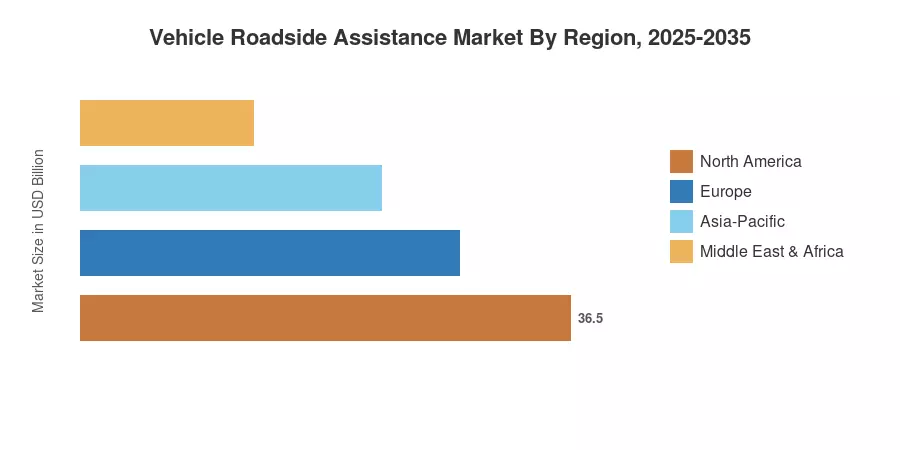
North America is the largest market for vehicle roadside assistance, holding approximately 45% of the global market share. The growth is driven by increasing vehicle ownership, urbanization, and a rising demand for emergency services. Regulatory support, such as the National Highway Traffic Safety Administration's initiatives, further catalyzes market expansion. The region's robust infrastructure and high disposable income contribute to the demand for premium roadside assistance services. The competitive landscape is characterized by key players like AAA, Allstate, and Agero, which dominate the market. The U.S. and Canada are the leading countries, with the U.S. accounting for the majority of the market share. The presence of established companies and a growing trend towards subscription-based services are shaping the competitive dynamics, ensuring a diverse range of offerings for consumers.
Europe : Emerging Market with Growth Potential
Europe is witnessing significant growth in the vehicle roadside assistance market, holding around 30% of the global share. Factors such as increasing vehicle registrations, a focus on customer service, and regulatory frameworks promoting safety are driving this growth. The European Commission's initiatives to enhance road safety and mobility are pivotal in shaping market dynamics, encouraging service providers to innovate and expand their offerings. Leading countries in this region include the UK, Germany, and France, where companies like RAC and Allianz are prominent players. The competitive landscape is evolving, with a mix of traditional insurers and new entrants focusing on technology-driven solutions. The demand for integrated services, including telematics and real-time assistance, is reshaping the market, making it more customer-centric and efficient.
Asia-Pacific : Rapidly Growing Assistance Sector
Asia-Pacific is emerging as a significant player in the vehicle roadside assistance market, accounting for approximately 20% of the global share. The growth is fueled by rising vehicle ownership, urbanization, and increasing disposable incomes. Government initiatives aimed at improving road safety and infrastructure are also contributing to market expansion. Countries like China and India are leading this growth, with a focus on enhancing service accessibility and efficiency. The competitive landscape is characterized by a mix of local and international players, with companies like Agero and local startups vying for market share. The demand for innovative solutions, such as mobile apps for assistance requests, is on the rise. As the region continues to develop, the focus on customer experience and technology integration will be crucial for companies looking to thrive in this dynamic market.
Middle East and Africa : Untapped Market with Opportunities
The Middle East and Africa region is an emerging market for vehicle roadside assistance, holding about 5% of the global share. The growth is driven by increasing vehicle ownership, urbanization, and a growing middle class. Regulatory bodies are beginning to recognize the importance of roadside assistance in enhancing road safety, which is expected to catalyze market growth. Countries like South Africa and the UAE are at the forefront of this development, with investments in infrastructure and service quality. The competitive landscape is still developing, with a mix of local and international players entering the market. Companies are focusing on building brand trust and expanding service networks. The demand for reliable and efficient roadside assistance services is growing, driven by the increasing number of vehicles on the road and the need for safety and convenience in travel.
Key Players and Competitive Insights
The Vehicle Roadside Assistance Market is currently characterized by a dynamic competitive landscape, driven by increasing consumer expectations for rapid and reliable service. Key players such as AAA (US), Allstate (US), and Agero (US) are strategically positioning themselves through a combination of technological innovation and enhanced service offerings. AAA (US) has focused on expanding its digital platforms, allowing for seamless service requests via mobile applications, which appears to resonate well with tech-savvy consumers. Meanwhile, Allstate (US) has been investing in partnerships with automotive manufacturers to integrate roadside assistance features directly into vehicles, thereby enhancing customer convenience and loyalty. Agero (US) is also notable for its emphasis on data analytics to optimize service delivery, suggesting a trend towards data-driven decision-making in the industry.The business tactics employed by these companies reflect a moderately fragmented market structure, where localized strategies and supply chain optimization play crucial roles. Companies are increasingly localizing their service operations to better meet regional demands, which may enhance customer satisfaction and operational efficiency. This localized approach, combined with the competitive influence of major players, indicates a market that is both competitive and responsive to consumer needs.
In August AAA (US)announced a partnership with a leading telematics provider to enhance its roadside assistance capabilities. This strategic move is likely to improve response times and service accuracy, positioning AAA as a frontrunner in leveraging technology for customer service. The integration of telematics data could potentially streamline operations and reduce costs, thereby reinforcing AAA's competitive edge in the market.
In September Allstate (US) launched a new mobile app feature that allows users to track the arrival of roadside assistance in real-time. This innovation not only enhances user experience but also aligns with the growing consumer demand for transparency and immediacy in service delivery. By prioritizing user-friendly technology, Allstate seems to be solidifying its market position and appealing to a younger demographic that values convenience.
In July Agero (US) expanded its service offerings by introducing a subscription model for roadside assistance, which includes additional benefits such as vehicle maintenance reminders and discounts on repairs. This strategic pivot towards subscription services may indicate a shift in consumer preferences towards more comprehensive service packages, potentially increasing customer retention and lifetime value.
As of October the competitive trends in the Vehicle Roadside Assistance Market are increasingly defined by digitalization, sustainability, and the integration of artificial intelligence. Companies are forming strategic alliances to enhance their service capabilities and expand their market reach. The shift from price-based competition to a focus on innovation and technology suggests that future differentiation will hinge on the ability to provide reliable, tech-enabled services that meet evolving consumer expectations. This evolution may ultimately redefine competitive dynamics, emphasizing the importance of supply chain reliability and customer-centric solutions.
Key Companies in the Vehicle Roadside Assistance Market include
Industry Developments
The Vehicle Roadside Assistance Market is projected to grow from USD 84.9 billion in 2023 to USD 138.0 billion by 2032, at a CAGR of 5.55% during the forecast period. The market growth is attributed to increasing vehicle ownership, growing demand for on-demand services, and technological advancements in the automotive industry. The market is expected to witness significant growth in emerging economies, such as China, India, and Brazil, due to rising disposable income and increasing vehicle penetration.Recent news developments in the market include the launch of new services by major players and partnerships between roadside assistance providers and insurance companies.
For instance, in 2023, AAA launched a new mobile app that allows members to request roadside assistance, track their service technicians, and receive real-time updates on their vehicle's status. Additionally, partnerships between roadside assistance providers and insurance companies are becoming increasingly common as insurers seek to offer value-added services to their customers.
Future Outlook
Vehicle Roadside Assistance Market Future Outlook
The Vehicle Roadside Assistance Market is projected to grow at a 5.55% CAGR from 2025 to 2035, driven by increasing vehicle ownership, technological advancements, and consumer demand for enhanced services.
New opportunities lie in:
- Integration of AI-driven dispatch systems for efficiency
- Expansion of subscription-based service models
- Development of mobile app platforms for real-time assistance
By 2035, the market is expected to be robust, reflecting substantial growth and innovation.
Market Segmentation
Vehicle Roadside Assistance Market Service Type Outlook
- Towing
- Tire Repair/Replacement
- Fuel Delivery
- Battery Jump-start
- Lock-out Assistance
- Flatbed Towing
- Accident Recovery
Vehicle Roadside Assistance Market Vehicle Type Outlook
- Passenger Cars
- Light Commercial Vehicles
- Heavy Commercial Vehicles
- Motorcycles
Vehicle Roadside Assistance Market Assistance Channel Outlook
- Telephone
- Mobile Application
- Website
- Roadside Assistance App
Vehicle Roadside Assistance Market Value-Added Services Outlook
- Vehicle Diagnostics
- Emergency Medical Assistance
- Roadside Safety Checks
- Vehicle Inspection
Vehicle Roadside Assistance Market Roadside Assistance Provider Outlook
- Insurance Companies
- Auto Clubs
- Car Manufacturers
- Independent Providers
Report Scope
| MARKET SIZE 2024 | 94.58(USD Billion) |
| MARKET SIZE 2025 | 99.84(USD Billion) |
| MARKET SIZE 2035 | 171.38(USD Billion) |
| COMPOUND ANNUAL GROWTH RATE (CAGR) | 5.55% (2025 - 2035) |
| REPORT COVERAGE | Revenue Forecast, Competitive Landscape, Growth Factors, and Trends |
| BASE YEAR | 2024 |
| Market Forecast Period | 2025 - 2035 |
| Historical Data | 2019 - 2024 |
| Market Forecast Units | USD Billion |
| Key Companies Profiled | AAA (US), Allstate (US), Agero (US), RAC (GB), Nationwide (US), BCAA (CA), Good Sam (US), Roadside Masters (US), Emergency Roadside Assistance (US) |
| Segments Covered | Service Type, Vehicle Type, Roadside Assistance Provider, Assistance Channel, Value-Added Services, Regional |
| Key Market Opportunities | Integration of telematics and mobile applications enhances efficiency in the Vehicle Roadside Assistance Market. |
| Key Market Dynamics | Rising consumer demand for instant support drives innovation and competition in the Vehicle Roadside Assistance Market. |
| Countries Covered | North America, Europe, APAC, South America, MEA |
FAQs
What is the current valuation of the Vehicle Roadside Assistance Market?
The market valuation reached 94.58 USD Billion in 2024.
What is the projected market size for the Vehicle Roadside Assistance Market by 2035?
The market is expected to grow to 171.38 USD Billion by 2035.
What is the expected CAGR for the Vehicle Roadside Assistance Market during the forecast period?
The market is projected to experience a CAGR of 5.55% from 2025 to 2035.
Which service type segment is anticipated to have the highest valuation in 2035?
Accident Recovery is likely to dominate with a projected valuation of 59.38 USD Billion by 2035.
How do passenger cars compare to other vehicle types in the market?
Passenger Cars are expected to lead the market with a valuation of 75.0 USD Billion in 2035.
What role do insurance companies play in the Vehicle Roadside Assistance Market?
Insurance Companies are projected to account for 55.0 USD Billion by 2035, indicating their significant market presence.
What assistance channels are gaining traction in the Vehicle Roadside Assistance Market?
Mobile Applications are anticipated to grow to 40.0 USD Billion by 2035, reflecting a shift towards digital solutions.
Which key players are leading the Vehicle Roadside Assistance Market?
Key players include AAA, Allstate, and Agero, all of which are influential in shaping market dynamics.
What value-added services are expected to see growth in the coming years?
Vehicle Inspection is projected to reach 64.38 USD Billion by 2035, highlighting its importance in the market.
How does the market for heavy commercial vehicles compare to light commercial vehicles?
Heavy Commercial Vehicles are expected to reach 35.0 USD Billion by 2035, while Light Commercial Vehicles are projected at 45.0 USD Billion.
Research Approach
Secondary Research
The secondary research process involved comprehensive analysis of regulatory databases, industry publications, automotive sector reports, and authoritative transportation organizations. Key sources included the National Highway Traffic Safety Administration (NHTSA), European Automobile Manufacturers' Association (ACEA), International Organization of Motor Vehicle Manufacturers (OICA), US Department of Transportation (DOT), Federal Motor Carrier Safety Administration (FMCSA), European Commission Directorate-General for Mobility and Transport, International Road Federation (IRF), American Automobile Association (AAA) Foundation for Traffic Safety, Insurance Information Institute (III), National Association of Insurance Commissioners (NAIC), Society of Automotive Engineers (SAE International), International Telecommunication Union (ITU) for telematics standards, World Bank Transport Data, OECD International Transport Forum, and national automotive associations from key markets including China Association of Automobile Manufacturers (CAAM), Society of Indian Automobile Manufacturers (SIAM), and Japan Automobile Manufacturers Association (JAMA). These sources were utilized to collect vehicle registration statistics, roadside incident data, insurance penetration rates, telematics adoption trends, regulatory compliance requirements, and competitive landscape analysis for towing services, tire replacement, battery assistance, fuel delivery, and digital assistance platforms.
Primary Research
In order to gather both qualitative and quantitative insights, supply-side and demand-side stakeholders were interviewed during the primary research process. CEOs, VPs of operations, chief technology officers, fleet management directors, and heads of business development from roadside assistance providers, automakers, insurance companies, and telematics solution providers were examples of supply-side sources. Fleet managers, commercial vehicle owners, insurance policyholders, service managers at car dealerships, and logistics coordinators from ride-sharing services, transportation businesses, and commercial fleet operations were examples of demand-side suppliers. In addition to gathering information on service acceptance trends, pricing models, subscription renewal rates, and integration dynamics between connected car systems and assistance networks, primary research validated service type segmentation and verified technology implementation timetables.
Primary Respondent Breakdown:
By Designation: C-level Primaries (28%), Director Level (35%), Others (37%)
By Region: North America (32%), Europe (30%), Asia-Pacific (28%), Rest of World (10%)
Market Size Estimation
Global market valuation was derived through revenue mapping and service volume analysis. The methodology included:
Identification of 50+ key service providers across North America, Europe, Asia-Pacific, Latin America, and Middle East & Africa
Service mapping across towing, tire repair/replacement, fuel delivery, battery jump-start, lock-out assistance, flatbed towing, and accident recovery categories
Vehicle type segmentation analysis covering passenger cars, light commercial vehicles, heavy commercial vehicles, and motorcycles
Provider channel analysis spanning insurance companies, auto clubs, car manufacturers, and independent providers
Assessment of assistance channels including telephone, mobile application, website, and integrated roadside assistance apps
Evaluation of value-added services such as vehicle diagnostics, emergency medical assistance, roadside safety checks, and vehicle inspection
Analysis of reported and modeled annual revenues specific to roadside assistance portfolios
Coverage of providers representing 75-80% of global market share in 2024
Extrapolation using bottom-up (service volume × ASP by country/vehicle type) and top-down (provider revenue validation) approaches to derive segment-specific valuations
Kindly complete the form below to receive a free sample of this Report
Customer Stories
“This is really good guys. Excellent work on a tight deadline. I will continue to use you going forward and recommend you to others. Nice job”
“Thanks. It’s been a pleasure working with you, please use me as reference with any other Intel employees.”
“Thanks for sending the report it gives us a good global view of the Betaïne market.”
“Thank you, this will be very helpful for OQS.”
“We found the report very insightful! we found your research firm very helpful. I'm sending this email to secure our future business.”
“I am very pleased with how market segments have been defined in a relevant way for my purposes (such as "Portable Freezers & refrigerators" and "last-mile"). In general the report is well structured. Thanks very much for your efforts.”
“I have been reading the first document or the study, ,the Global HVAC and FP market report 2021 till 2026. Must say, good info! I have not gone in depth at all parts, but got a good indication of the data inside!”
“We got the report in time, we really thank you for your support in this process. I also thank to all of your team as they did a great job.”